



How to be a culture architect
Laura Hamill, Ph.D., Limeade Chief People Officer
It’s totally possible.
#LimeadeCulture
Today’s speaker
Laura Hamill, Ph.D.,
Limeade Chief People Officer
As Chief People Officer, Dr. Hamill leads the People (Human
Resources) team and is responsible for nurturing the Limeade
culture. She earned her Ph.D. in Industrial Organizational
Psychology from Old Dominion University and her B.S. in
Psychology from the University of North Carolina, Chapel Hill.
Overview
#LimeadeCulture
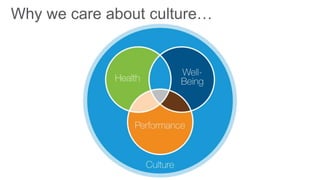
Why we care about culture…
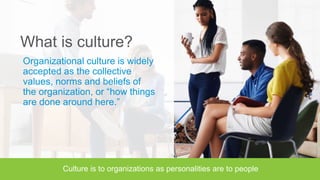
What is culture?
Organizational culture is widely
accepted as the collective
values, norms and beliefs of
the organization, or “how things
are done around here.”
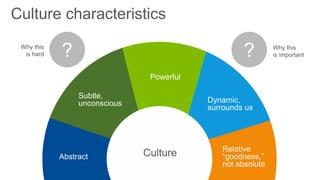
Culture characteristics
Why this
is hard
Why this
is important
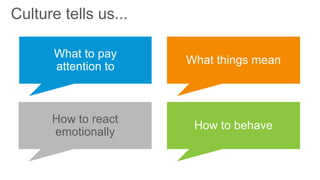
Culture tells us...
How to react
emotionally
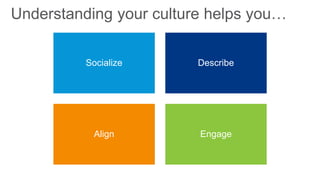
Understanding your culture helps you…
Socialize Describe
Align Engage
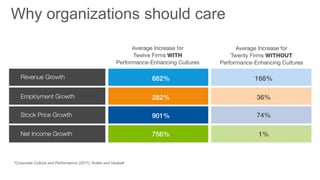
Why organizations should care
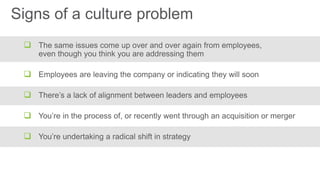
Signs of a culture problem





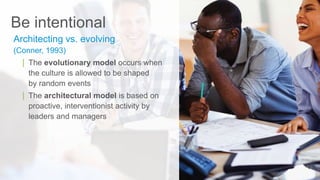
Be intentional
Architecting vs. evolving
(Conner, 1993)
|
|
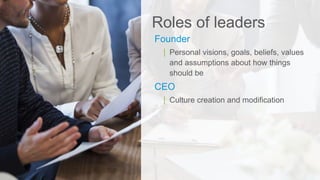
Roles of leaders
Founder
|
CEO
|
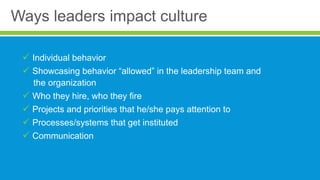
Ways leaders impact culture
 Individual behavior
 Showcasing behavior “allowed” in the leadership team and
the organization
 Who they hire, who they fire
 Projects and priorities that he/she pays attention to
 Processes/systems that get instituted
 Communication
Living our culture at Limeade
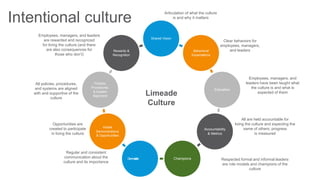
Intentional culture
Shared Vision
Behavioral
Expectations
Education
Accountability
& Metrics
ChampionsCommunication
Visible
Demonstrations
& Opportunities
Policies,
Procedures,
& System
Alignment
Rewards &
Recognition
Articulation of what the culture
is and why it matters
Clear behaviors for
employees, managers,
and leaders
Employees, managers, and
leaders have been taught what
the culture is and what is
expected of them
All are held accountable for
living the culture and expecting the
same of others; progress
is measured
Respected formal and informal leaders
are role models and champions of the
culture
Regular and consistent
communication about the
culture and its importance
All policies, procedures,
and systems are aligned
with and supportive of the
culture
Employees, managers, and leaders
are rewarded and recognized
for living the culture (and there
are also consequences for
those who don’t)
Limeade
Culture
Opportunities are
created to participate
in living the culture
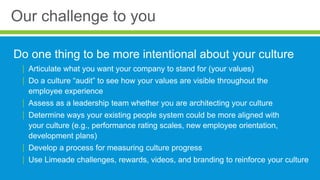
Our challenge to you
Do one thing to be more intentional about your culture
| Articulate what you want your company to stand for (your values)
| Do a culture “audit” to see how your values are visible throughout the
employee experience
| Assess as a leadership team whether you are architecting your culture
| Determine ways your existing people system could be more aligned with
your culture (e.g., performance rating scales, new employee orientation,
development plans)
| Develop a process for measuring culture progress
| Use Limeade challenges, rewards, videos, and branding to reinforce your culture
Get in touch
Download e-book:
sip.limeade.com/culture-architect
Laura Hamill
laura.hamill@limeade.com
limeade.com
sales@limeade.com

How to be a culture architect

  • 2.
    How to bea culture architect Laura Hamill, Ph.D., Limeade Chief People Officer It’s totally possible. #LimeadeCulture
  • 3.
    Today’s speaker Laura Hamill,Ph.D., Limeade Chief People Officer As Chief People Officer, Dr. Hamill leads the People (Human Resources) team and is responsible for nurturing the Limeade culture. She earned her Ph.D. in Industrial Organizational Psychology from Old Dominion University and her B.S. in Psychology from the University of North Carolina, Chapel Hill.
  • 4.
  • 5.
    Why we careabout culture…
  • 6.
    What is culture? Organizationalculture is widely accepted as the collective values, norms and beliefs of the organization, or “how things are done around here.”
  • 8.
    Culture characteristics Why this ishard Why this is important
  • 9.
    Culture tells us... Howto react emotionally
  • 10.
    Understanding your culturehelps you… Socialize Describe Align Engage
  • 11.
  • 12.
    Signs of aculture problem     
  • 13.
    Be intentional Architecting vs.evolving (Conner, 1993) | |
  • 14.
  • 15.
    Ways leaders impactculture  Individual behavior  Showcasing behavior “allowed” in the leadership team and the organization  Who they hire, who they fire  Projects and priorities that he/she pays attention to  Processes/systems that get instituted  Communication
  • 16.
  • 17.
    Intentional culture Shared Vision Behavioral Expectations Education Accountability &Metrics ChampionsCommunication Visible Demonstrations & Opportunities Policies, Procedures, & System Alignment Rewards & Recognition Articulation of what the culture is and why it matters Clear behaviors for employees, managers, and leaders Employees, managers, and leaders have been taught what the culture is and what is expected of them All are held accountable for living the culture and expecting the same of others; progress is measured Respected formal and informal leaders are role models and champions of the culture Regular and consistent communication about the culture and its importance All policies, procedures, and systems are aligned with and supportive of the culture Employees, managers, and leaders are rewarded and recognized for living the culture (and there are also consequences for those who don’t) Limeade Culture Opportunities are created to participate in living the culture
  • 18.
    Our challenge toyou Do one thing to be more intentional about your culture | Articulate what you want your company to stand for (your values) | Do a culture “audit” to see how your values are visible throughout the employee experience | Assess as a leadership team whether you are architecting your culture | Determine ways your existing people system could be more aligned with your culture (e.g., performance rating scales, new employee orientation, development plans) | Develop a process for measuring culture progress | Use Limeade challenges, rewards, videos, and branding to reinforce your culture
  • 20.
    Get in touch Downloade-book: sip.limeade.com/culture-architect Laura Hamill laura.hamill@limeade.com limeade.com sales@limeade.com