How the Americas Changed: The Long 19th Century By: Twyla Gollery
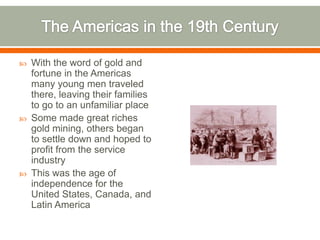
The Americas in the 19th CenturyWith the word of gold and fortune in the Americas many young men traveled there, leaving their families to go to an unfamiliar placeSome made great riches gold mining, others began to settle down and hoped to profit from the service industryThis was the age of independence for the United States, Canada, and Latin America
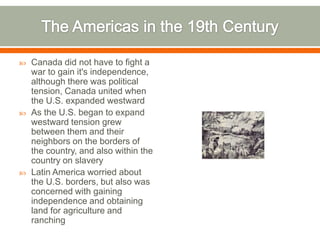
The Americas in the 19th CenturyCanada did not have to fight a war to gain it's independence, although there was political tension, Canada united when the U.S. expanded westwardAs the U.S. began to expand westward tension grew between them and their neighbors on the borders of the country, and also within the country on slaveryLatin America worried about the U.S. borders, but also was concerned with gaining independence and obtaining land for agriculture and ranching
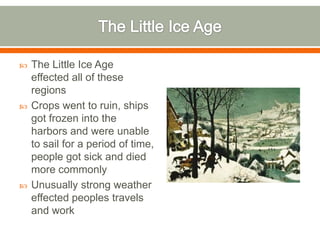
The Little Ice AgeThe Little Ice Age effected all of these regionsCrops went to ruin, ships got frozen into the harbors and were unable to sail for a period of time, people got sick and died more commonlyUnusually strong weather effected peoples travels and work
Frontiers of the AmericasOn April 30, 1803 the Louisiana Purchase took place and doubled the size of the United States at that timeThomas Jefferson found it vital to buy this territory because he didn't want the New Orleans port to be blocked by the French or SpanishOn offering to buy the port the French want to sell the whole territory and a price is agreed onThis is now part of 15 U.S. states and two Canadian provinces
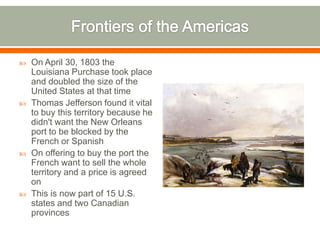
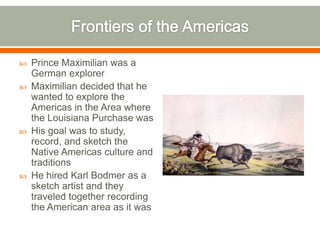
Frontiers of the AmericasPrince Maximilian was a German explorerMaximilian decided that he wanted to explore the Americas in the Area where the Louisiana Purchase wasHis goal was to study, record, and sketch the Native Americas culture and traditions He hired Karl Bodmer as a sketch artist and they traveled together recording the American area as it was
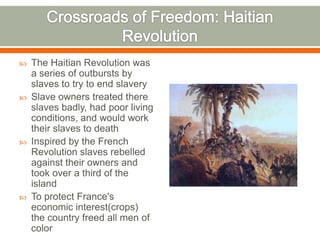
Crossroads of Freedom: Haitian RevolutionThe Haitian Revolution was a series of outbursts by slaves to try to end slaverySlave owners treated there slaves badly, had poor living conditions, and would work their slaves to deathInspired by the French Revolution slaves rebelled against their owners and took over a third of the islandTo protect France's economic interest(crops) the country freed all men of color
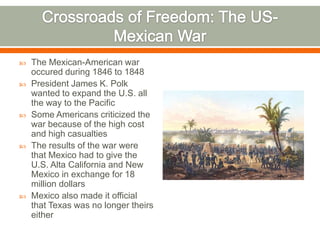
Crossroads of Freedom: The US-Mexican WarThe Mexican-American war occured during 1846 to 1848President James K. Polk wanted to expand the U.S. all the way to the Pacific Some Americans criticized the war because of the high cost and high casualtiesThe results of the war were that Mexico had to give the U.S. Alta California and New Mexico in exchange for 18 million dollarsMexico also made it official that Texas was no longer theirs either
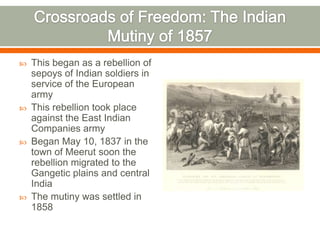
Crossroads of Freedom: The Indian Mutiny of 1857This began as a rebellion of sepoys of Indian soldiers in service of the European armyThis rebellion took place against the East Indian Companies armyBegan May 10, 1837 in the town of Meerut soon the rebellion migrated to the Gangetic plains and central IndiaThe mutiny was settled in 1858
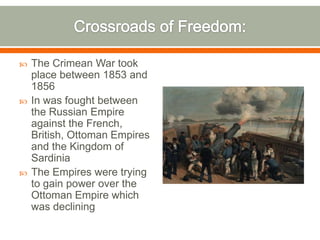
Crossroads of Freedom: The Crimean War took place between 1853 and 1856In was fought between the Russian Empire against the French, British, Ottoman Empires and the Kingdom of Sardinia The Empires were trying to gain power over the Ottoman Empire which was declining

How the americas changed

  • 1.
    How the AmericasChanged: The Long 19th Century By: Twyla Gollery
  • 2.
    The Americas inthe 19th CenturyWith the word of gold and fortune in the Americas many young men traveled there, leaving their families to go to an unfamiliar placeSome made great riches gold mining, others began to settle down and hoped to profit from the service industryThis was the age of independence for the United States, Canada, and Latin America
  • 3.
    The Americas inthe 19th CenturyCanada did not have to fight a war to gain it's independence, although there was political tension, Canada united when the U.S. expanded westwardAs the U.S. began to expand westward tension grew between them and their neighbors on the borders of the country, and also within the country on slaveryLatin America worried about the U.S. borders, but also was concerned with gaining independence and obtaining land for agriculture and ranching
  • 4.
    The Little IceAgeThe Little Ice Age effected all of these regionsCrops went to ruin, ships got frozen into the harbors and were unable to sail for a period of time, people got sick and died more commonlyUnusually strong weather effected peoples travels and work
  • 5.
    Frontiers of theAmericasOn April 30, 1803 the Louisiana Purchase took place and doubled the size of the United States at that timeThomas Jefferson found it vital to buy this territory because he didn't want the New Orleans port to be blocked by the French or SpanishOn offering to buy the port the French want to sell the whole territory and a price is agreed onThis is now part of 15 U.S. states and two Canadian provinces
  • 6.
    Frontiers of theAmericasPrince Maximilian was a German explorerMaximilian decided that he wanted to explore the Americas in the Area where the Louisiana Purchase wasHis goal was to study, record, and sketch the Native Americas culture and traditions He hired Karl Bodmer as a sketch artist and they traveled together recording the American area as it was
  • 7.
    Crossroads of Freedom:Haitian RevolutionThe Haitian Revolution was a series of outbursts by slaves to try to end slaverySlave owners treated there slaves badly, had poor living conditions, and would work their slaves to deathInspired by the French Revolution slaves rebelled against their owners and took over a third of the islandTo protect France's economic interest(crops) the country freed all men of color
  • 8.
    Crossroads of Freedom:The US-Mexican WarThe Mexican-American war occured during 1846 to 1848President James K. Polk wanted to expand the U.S. all the way to the Pacific Some Americans criticized the war because of the high cost and high casualtiesThe results of the war were that Mexico had to give the U.S. Alta California and New Mexico in exchange for 18 million dollarsMexico also made it official that Texas was no longer theirs either
  • 9.
    Crossroads of Freedom:The Indian Mutiny of 1857This began as a rebellion of sepoys of Indian soldiers in service of the European armyThis rebellion took place against the East Indian Companies armyBegan May 10, 1837 in the town of Meerut soon the rebellion migrated to the Gangetic plains and central IndiaThe mutiny was settled in 1858
  • 10.
    Crossroads of Freedom:The Crimean War took place between 1853 and 1856In was fought between the Russian Empire against the French, British, Ottoman Empires and the Kingdom of Sardinia The Empires were trying to gain power over the Ottoman Empire which was declining