A Difficult Past - How the Americas ChangeSvetlana BogdanovaHist 141
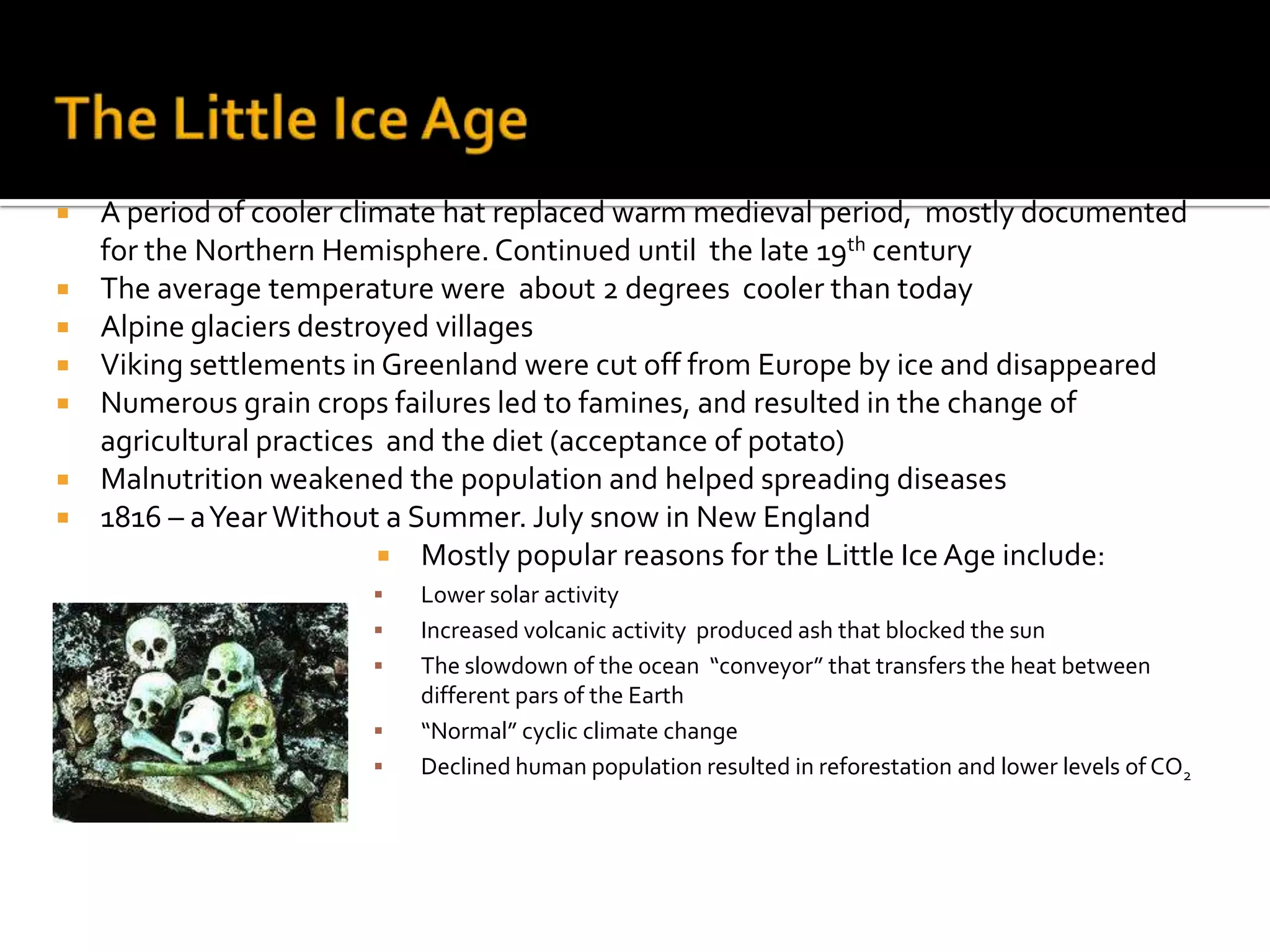
The Little Ice AgeA period of cooler climate hat replaced warm medieval period,  mostly documented for the Northern Hemisphere. Continued until  the late 19th centuryThe average temperature were  about 2 degrees  cooler than todayAlpine glaciers destroyed villagesViking settlements in Greenland were cut off from Europe by ice and disappearedNumerous grain crops failures led to famines, and resulted in the change of agricultural practices  and the diet (acceptance of potato)Malnutrition weakened the population and helped spreading diseases 1816 – a Year Without a Summer. July snow in New EnglandMostly popular reasons for the Little Ice Age include:Lower solar activityIncreased volcanic activity  produced ash that blocked the sun The slowdown of the ocean  “conveyor” that transfers the heat between different pars of the Earth“Normal” cyclic climate changeDeclined human population resulted in reforestation and lower levels of CO2
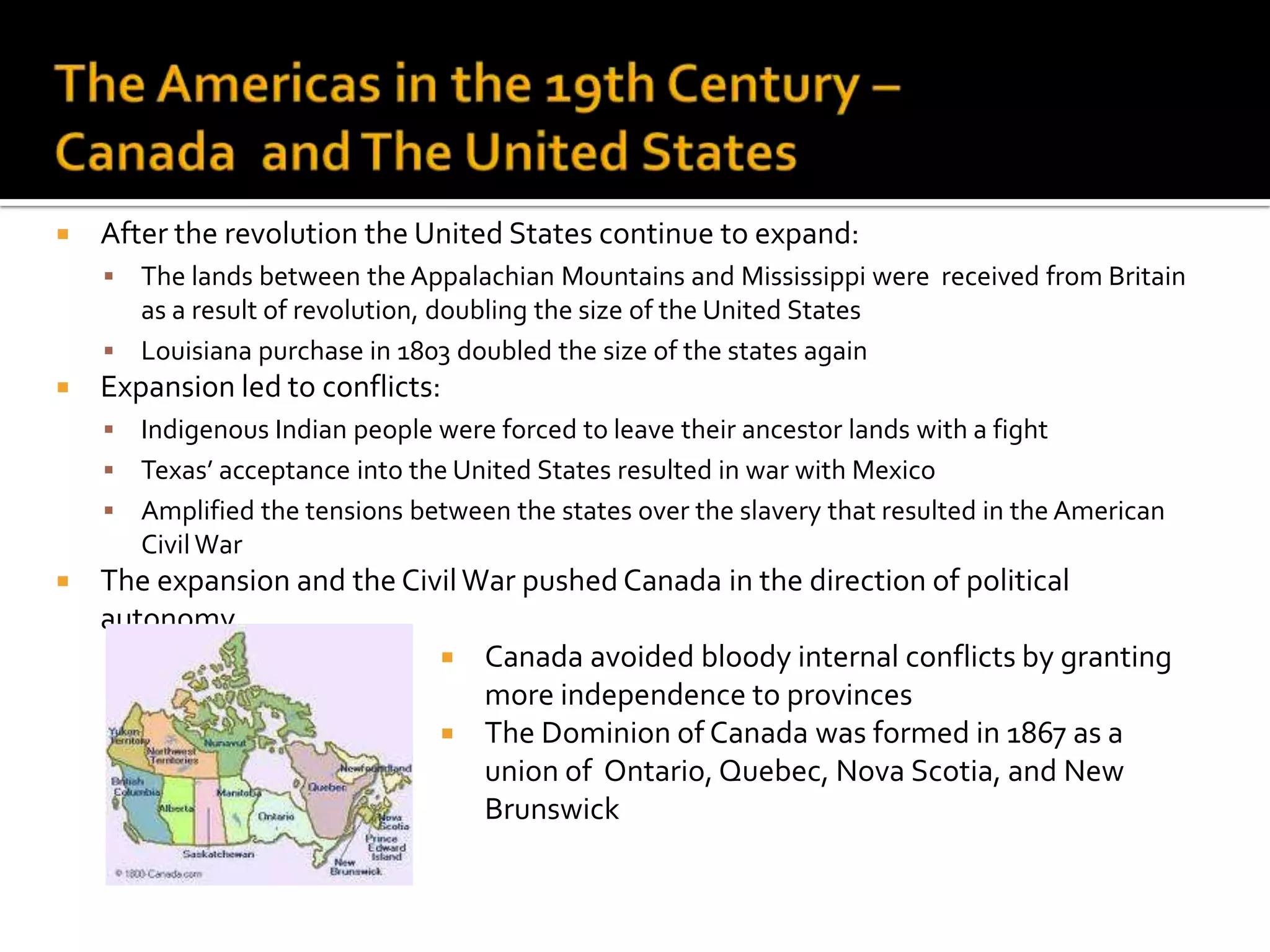
The Americas in the 19th Century – Canada  and The United StatesAfter the revolution the United States continue to expand:The lands between the Appalachian Mountains and Mississippi were  received from Britain as a result of revolution, doubling the size of the United StatesLouisiana purchase in 1803 doubled the size of the states againExpansion led to conflicts:Indigenous Indian people were forced to leave their ancestor lands with a fightTexas’ acceptance into the United States resulted in war with MexicoAmplified the tensions between the states over the slavery that resulted in the American Civil WarThe expansion and the Civil War pushed Canada in the direction of political autonomyCanada avoided bloody internal conflicts by granting more independence to provincesThe Dominion of Canada was formed in 1867 as a union of  Ontario, Quebec, Nova Scotia, and New Brunswick
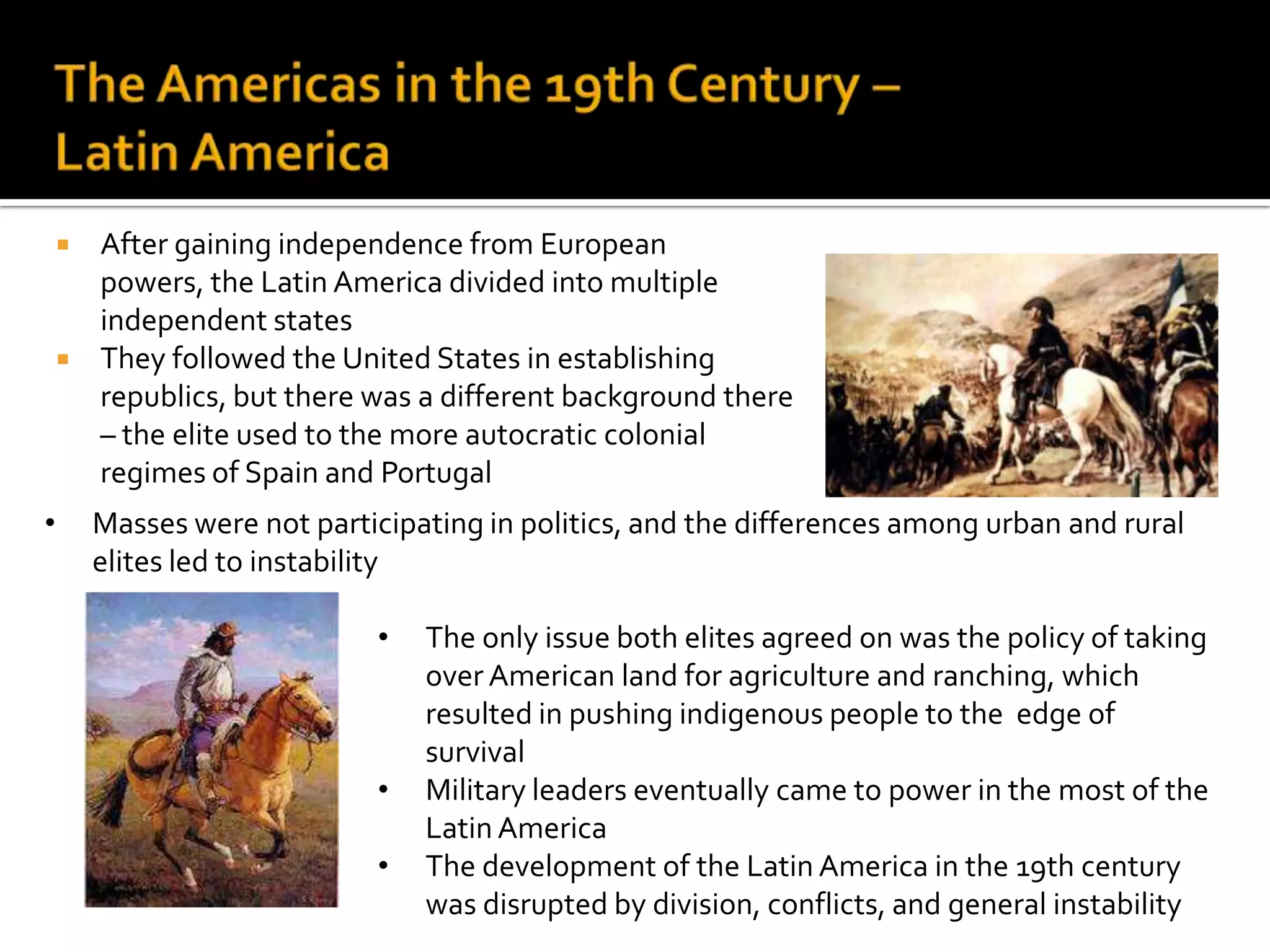
The Americas in the 19th Century – Latin AmericaAfter gaining independence from European powers, the Latin America divided into multiple independent statesThey followed the United States in establishing republics, but there was a different background there – the elite used to the more autocratic colonial regimes of Spain and PortugalMasses were not participating in politics, and the differences among urban and rural elites led to instability
The only issue both elites agreed on was the policy of taking over American land for agriculture and ranching, which resulted in pushing indigenous people to the  edge of survival
Military leaders eventually came to power in the most of the Latin America
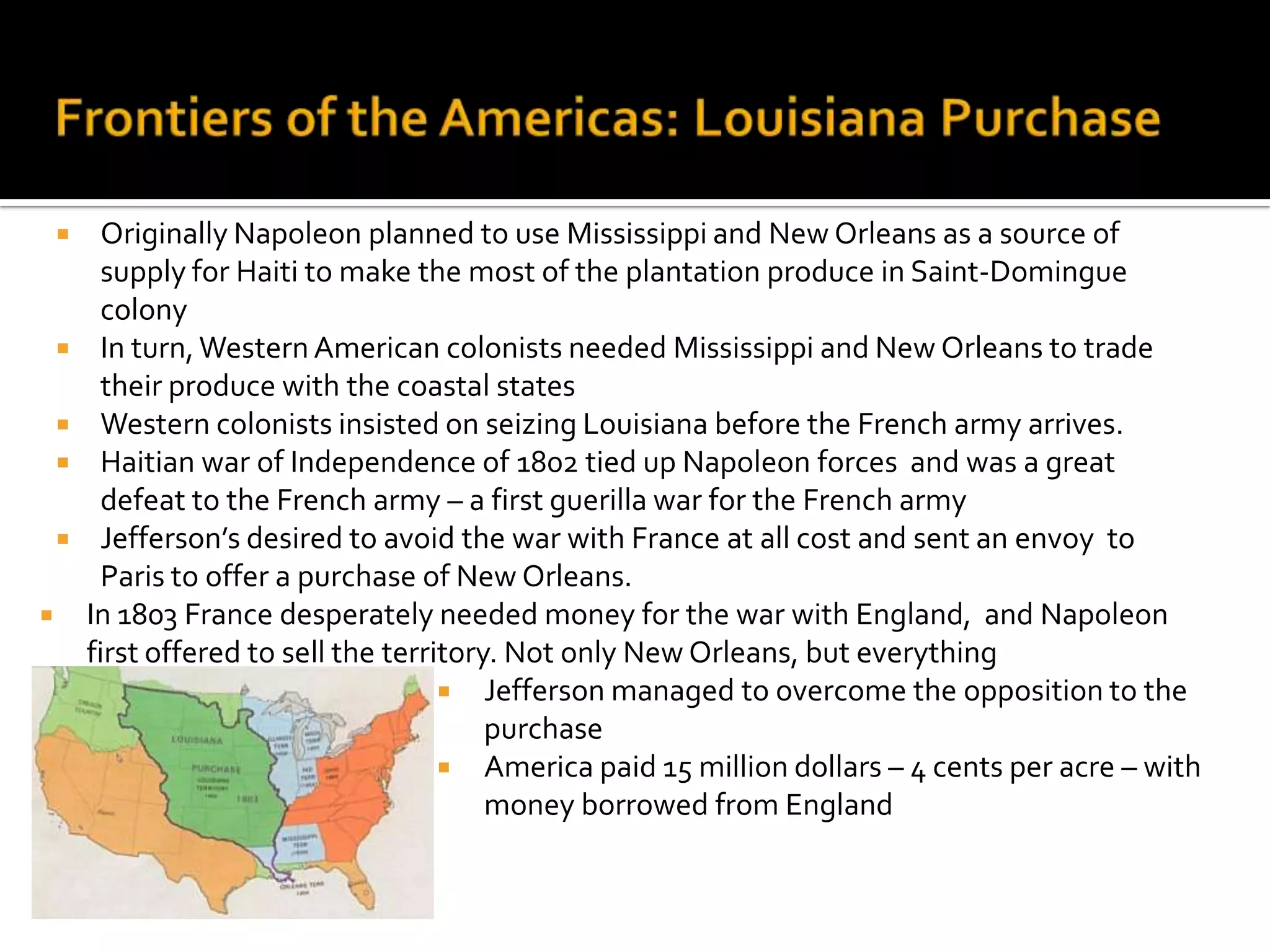
The development of the Latin America in the 19th century was disrupted by division, conflicts, and general instabilityFrontiers of the Americas: Louisiana PurchaseOriginally Napoleon planned to use Mississippi and New Orleans as a source of supply for Haiti to make the most of the plantation produce in Saint-Domingue colonyIn turn, Western American colonists needed Mississippi and New Orleans to trade their produce with the coastal states Western colonists insisted on seizing Louisiana before the French army arrives.Haitian war of Independence of 1802 tied up Napoleon forces  and was a great defeat to the French army – a first guerilla war for the French armyJefferson’s desired to avoid the war with France at all cost and sent an envoy  to Paris to offer a purchase of New Orleans.In 1803 France desperately needed money for the war with England,  and Napoleon first offered to sell the territory. Not only New Orleans, but everythingJefferson managed to overcome the opposition to the purchase America paid 15 million dollars – 4 cents per acre – with money borrowed from England
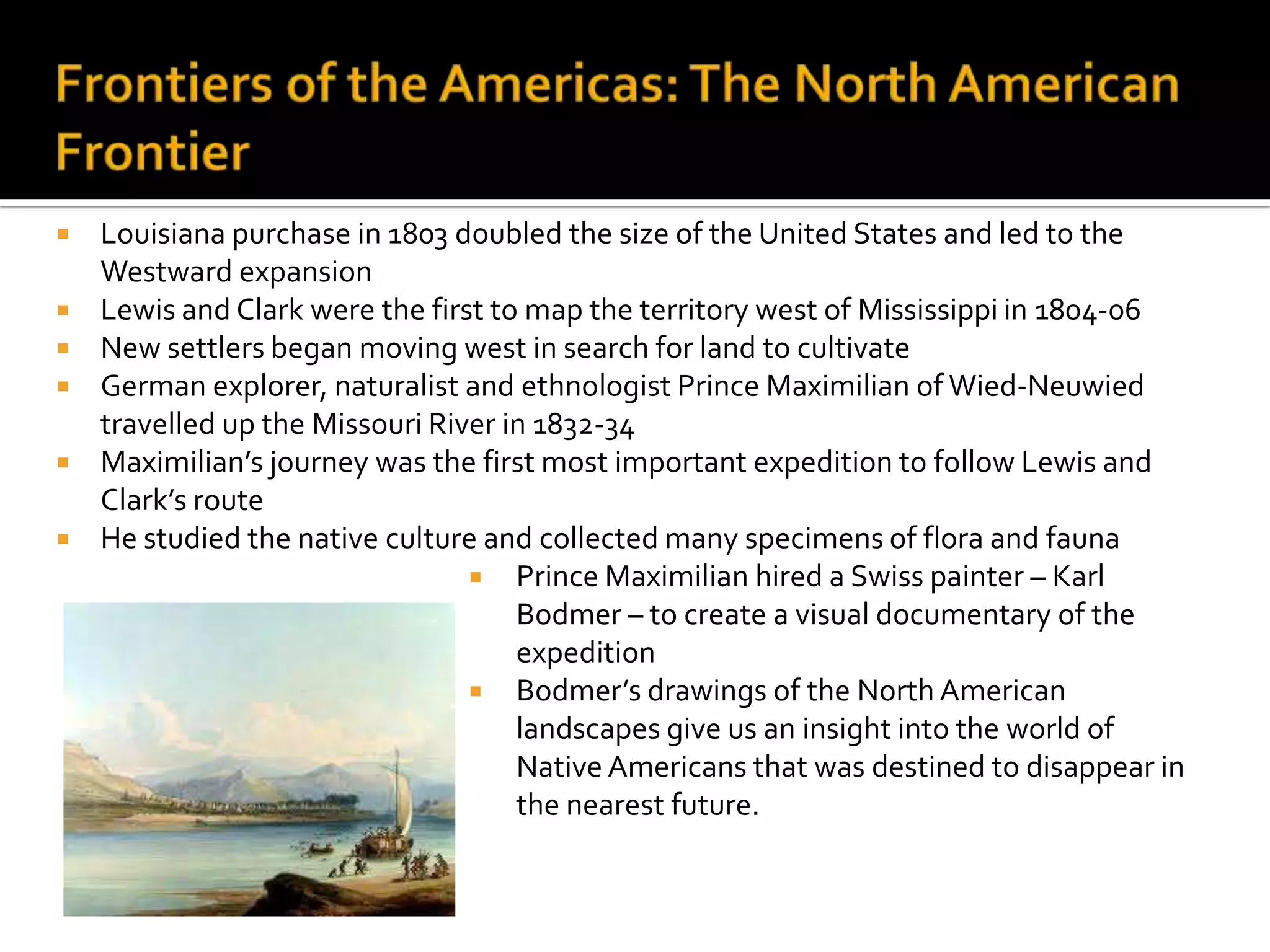
Frontiers of the Americas: The North American Frontier Louisiana purchase in 1803 doubled the size of the United States and led to the Westward expansion Lewis and Clark were the first to map the territory west of Mississippi in 1804-06New settlers began moving west in search for land to cultivateGerman explorer, naturalist and ethnologist Prince Maximilian of Wied-Neuwied travelled up the Missouri River in 1832-34Maximilian’s journey was the first most important expedition to follow Lewis and Clark’s routeHe studied the native culture and collected many specimens of flora and faunaPrince Maximilian hired a Swiss painter – Karl Bodmer – to create a visual documentary of the expeditionBodmer’s drawings of the North American landscapes give us an insight into the world of Native Americans that was destined to disappear in the nearest future.
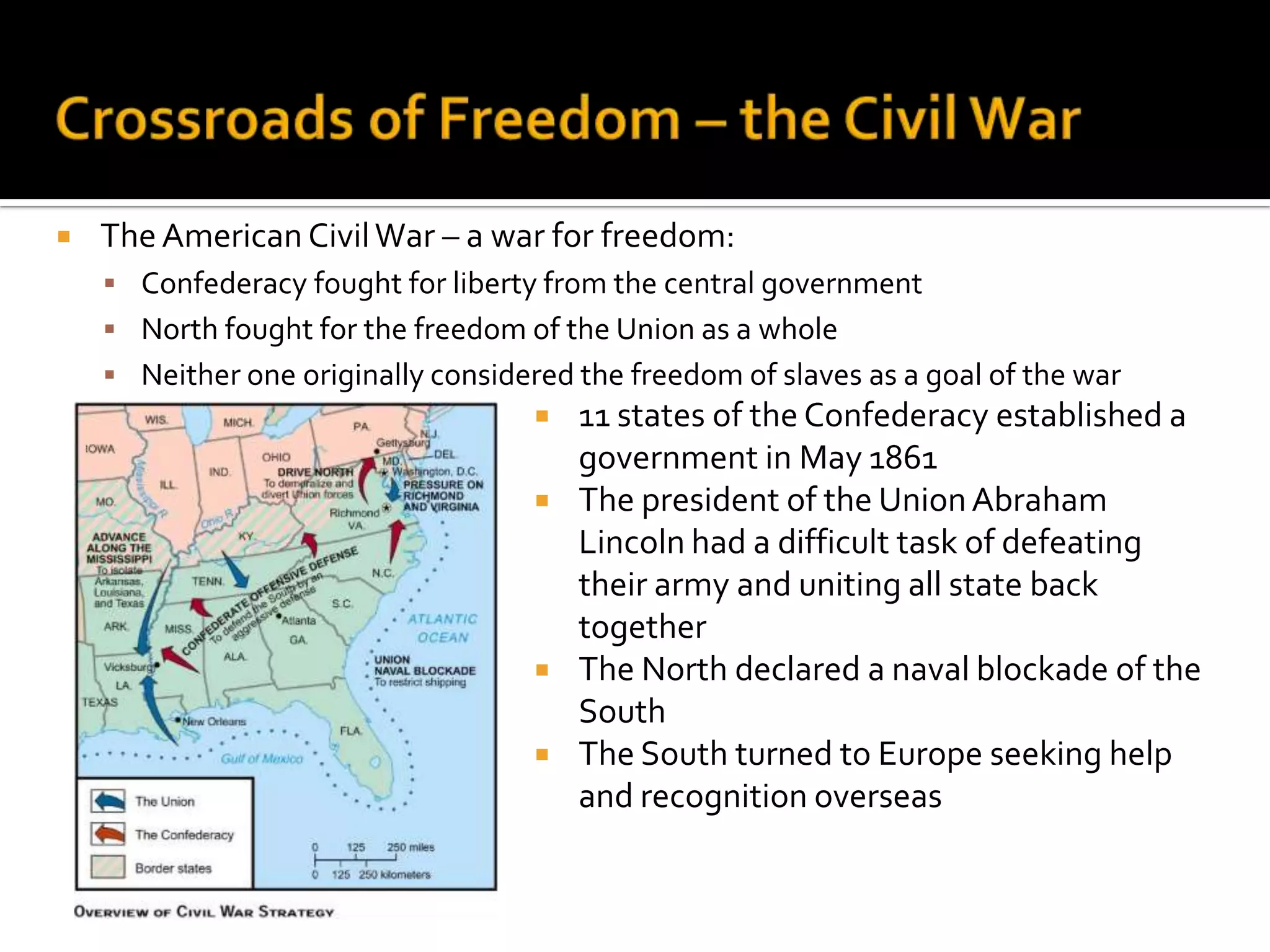
Crossroads of Freedom – the Civil WarThe American Civil War – a war for freedom:Confederacy fought for liberty from the central governmentNorth fought for the freedom of the Union as a whole Neither one originally considered the freedom of slaves as a goal of the war11 states of the Confederacy established a government in May 1861The president of the Union Abraham Lincoln had a difficult task of defeating their army and uniting all state back togetherThe North declared a naval blockade of the SouthThe South turned to Europe seeking help and recognition overseas
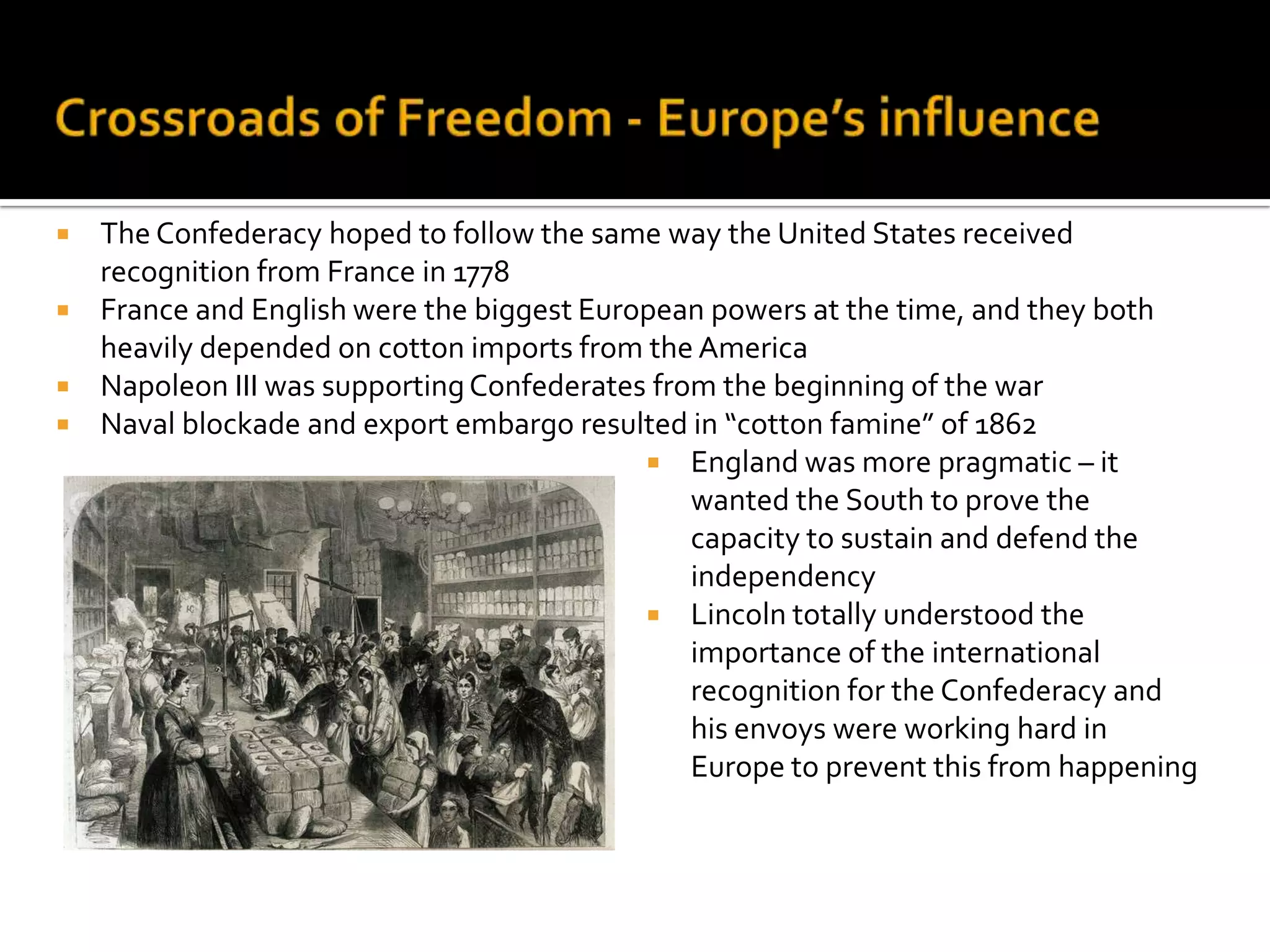
Crossroads of Freedom - Europe’s influenceThe Confederacy hoped to follow the same way the United States received recognition from France in 1778France and English were the biggest European powers at the time, and they both heavily depended on cotton imports from the AmericaNapoleon III was supporting Confederates from the beginning of the warNaval blockade and export embargo resulted in “cotton famine” of 1862England was more pragmatic – it wanted the South to prove the capacity to sustain and defend the independency Lincoln totally understood the importance of the international recognition for the Confederacy and his envoys were working hard in Europe to prevent this from happening

Assignment 1. A Difficult Past - How the Americas Change

  • 1.
    A Difficult Past- How the Americas ChangeSvetlana BogdanovaHist 141
  • 2.
    The Little IceAgeA period of cooler climate hat replaced warm medieval period, mostly documented for the Northern Hemisphere. Continued until the late 19th centuryThe average temperature were about 2 degrees cooler than todayAlpine glaciers destroyed villagesViking settlements in Greenland were cut off from Europe by ice and disappearedNumerous grain crops failures led to famines, and resulted in the change of agricultural practices and the diet (acceptance of potato)Malnutrition weakened the population and helped spreading diseases 1816 – a Year Without a Summer. July snow in New EnglandMostly popular reasons for the Little Ice Age include:Lower solar activityIncreased volcanic activity produced ash that blocked the sun The slowdown of the ocean “conveyor” that transfers the heat between different pars of the Earth“Normal” cyclic climate changeDeclined human population resulted in reforestation and lower levels of CO2
  • 3.
    The Americas inthe 19th Century – Canada and The United StatesAfter the revolution the United States continue to expand:The lands between the Appalachian Mountains and Mississippi were received from Britain as a result of revolution, doubling the size of the United StatesLouisiana purchase in 1803 doubled the size of the states againExpansion led to conflicts:Indigenous Indian people were forced to leave their ancestor lands with a fightTexas’ acceptance into the United States resulted in war with MexicoAmplified the tensions between the states over the slavery that resulted in the American Civil WarThe expansion and the Civil War pushed Canada in the direction of political autonomyCanada avoided bloody internal conflicts by granting more independence to provincesThe Dominion of Canada was formed in 1867 as a union of Ontario, Quebec, Nova Scotia, and New Brunswick
  • 4.
    The Americas inthe 19th Century – Latin AmericaAfter gaining independence from European powers, the Latin America divided into multiple independent statesThey followed the United States in establishing republics, but there was a different background there – the elite used to the more autocratic colonial regimes of Spain and PortugalMasses were not participating in politics, and the differences among urban and rural elites led to instability
  • 5.
    The only issueboth elites agreed on was the policy of taking over American land for agriculture and ranching, which resulted in pushing indigenous people to the edge of survival
  • 6.
    Military leaders eventuallycame to power in the most of the Latin America
  • 7.
    The development ofthe Latin America in the 19th century was disrupted by division, conflicts, and general instabilityFrontiers of the Americas: Louisiana PurchaseOriginally Napoleon planned to use Mississippi and New Orleans as a source of supply for Haiti to make the most of the plantation produce in Saint-Domingue colonyIn turn, Western American colonists needed Mississippi and New Orleans to trade their produce with the coastal states Western colonists insisted on seizing Louisiana before the French army arrives.Haitian war of Independence of 1802 tied up Napoleon forces and was a great defeat to the French army – a first guerilla war for the French armyJefferson’s desired to avoid the war with France at all cost and sent an envoy to Paris to offer a purchase of New Orleans.In 1803 France desperately needed money for the war with England, and Napoleon first offered to sell the territory. Not only New Orleans, but everythingJefferson managed to overcome the opposition to the purchase America paid 15 million dollars – 4 cents per acre – with money borrowed from England
  • 8.
    Frontiers of theAmericas: The North American Frontier Louisiana purchase in 1803 doubled the size of the United States and led to the Westward expansion Lewis and Clark were the first to map the territory west of Mississippi in 1804-06New settlers began moving west in search for land to cultivateGerman explorer, naturalist and ethnologist Prince Maximilian of Wied-Neuwied travelled up the Missouri River in 1832-34Maximilian’s journey was the first most important expedition to follow Lewis and Clark’s routeHe studied the native culture and collected many specimens of flora and faunaPrince Maximilian hired a Swiss painter – Karl Bodmer – to create a visual documentary of the expeditionBodmer’s drawings of the North American landscapes give us an insight into the world of Native Americans that was destined to disappear in the nearest future.
  • 9.
    Crossroads of Freedom– the Civil WarThe American Civil War – a war for freedom:Confederacy fought for liberty from the central governmentNorth fought for the freedom of the Union as a whole Neither one originally considered the freedom of slaves as a goal of the war11 states of the Confederacy established a government in May 1861The president of the Union Abraham Lincoln had a difficult task of defeating their army and uniting all state back togetherThe North declared a naval blockade of the SouthThe South turned to Europe seeking help and recognition overseas
  • 10.
    Crossroads of Freedom- Europe’s influenceThe Confederacy hoped to follow the same way the United States received recognition from France in 1778France and English were the biggest European powers at the time, and they both heavily depended on cotton imports from the AmericaNapoleon III was supporting Confederates from the beginning of the warNaval blockade and export embargo resulted in “cotton famine” of 1862England was more pragmatic – it wanted the South to prove the capacity to sustain and defend the independency Lincoln totally understood the importance of the international recognition for the Confederacy and his envoys were working hard in Europe to prevent this from happening
  • 11.
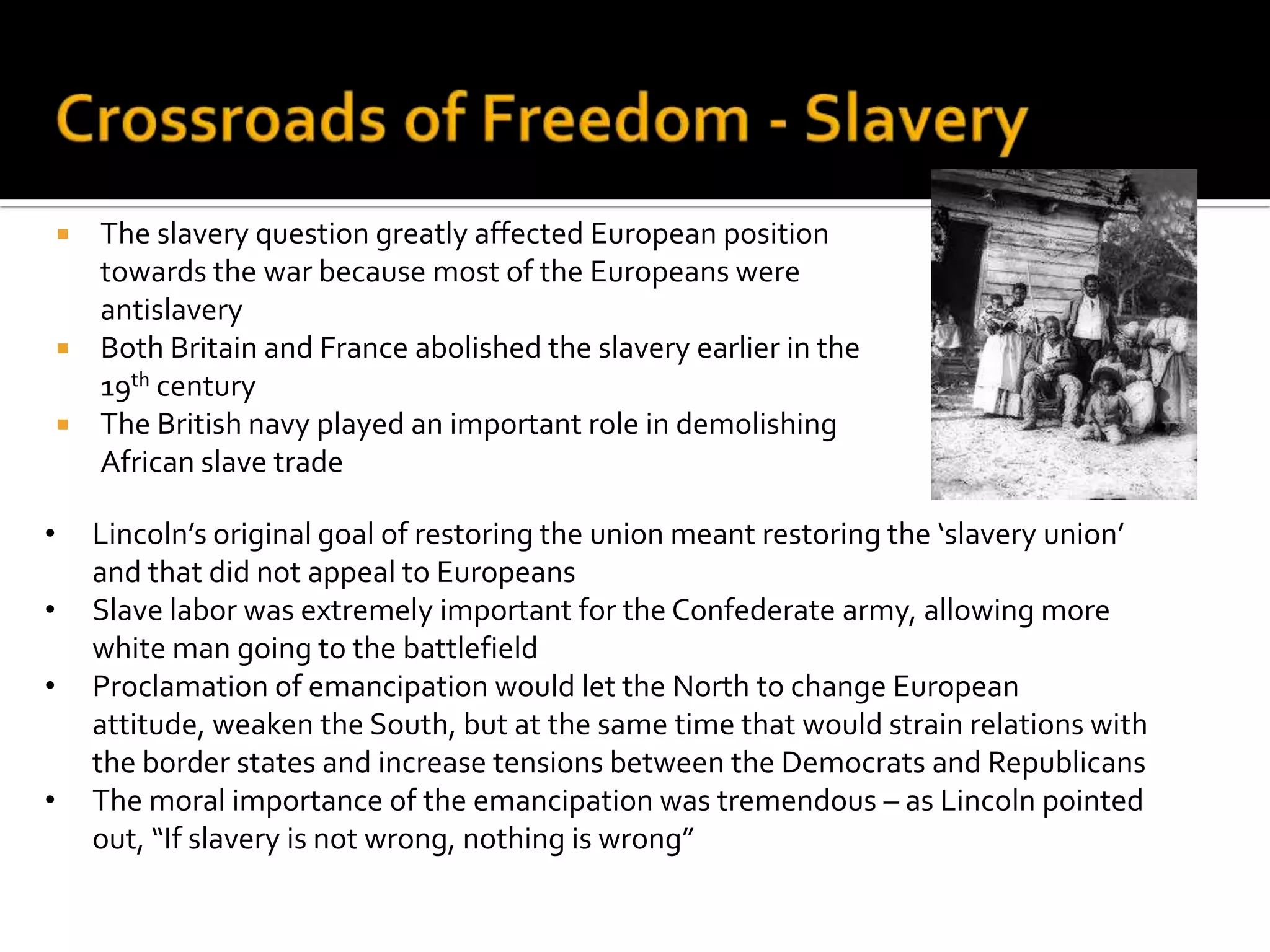
    Crossroads of Freedom- SlaveryThe slavery question greatly affected European position towards the war because most of the Europeans were antislaveryBoth Britain and France abolished the slavery earlier in the 19th centuryThe British navy played an important role in demolishing African slave tradeLincoln’s original goal of restoring the union meant restoring the ‘slavery union’ and that did not appeal to Europeans
  • 12.
    Slave labor wasextremely important for the Confederate army, allowing more white man going to the battlefield
  • 13.
    Proclamation of emancipationwould let the North to change European attitude, weaken the South, but at the same time that would strain relations with the border states and increase tensions between the Democrats and Republicans
  • 14.
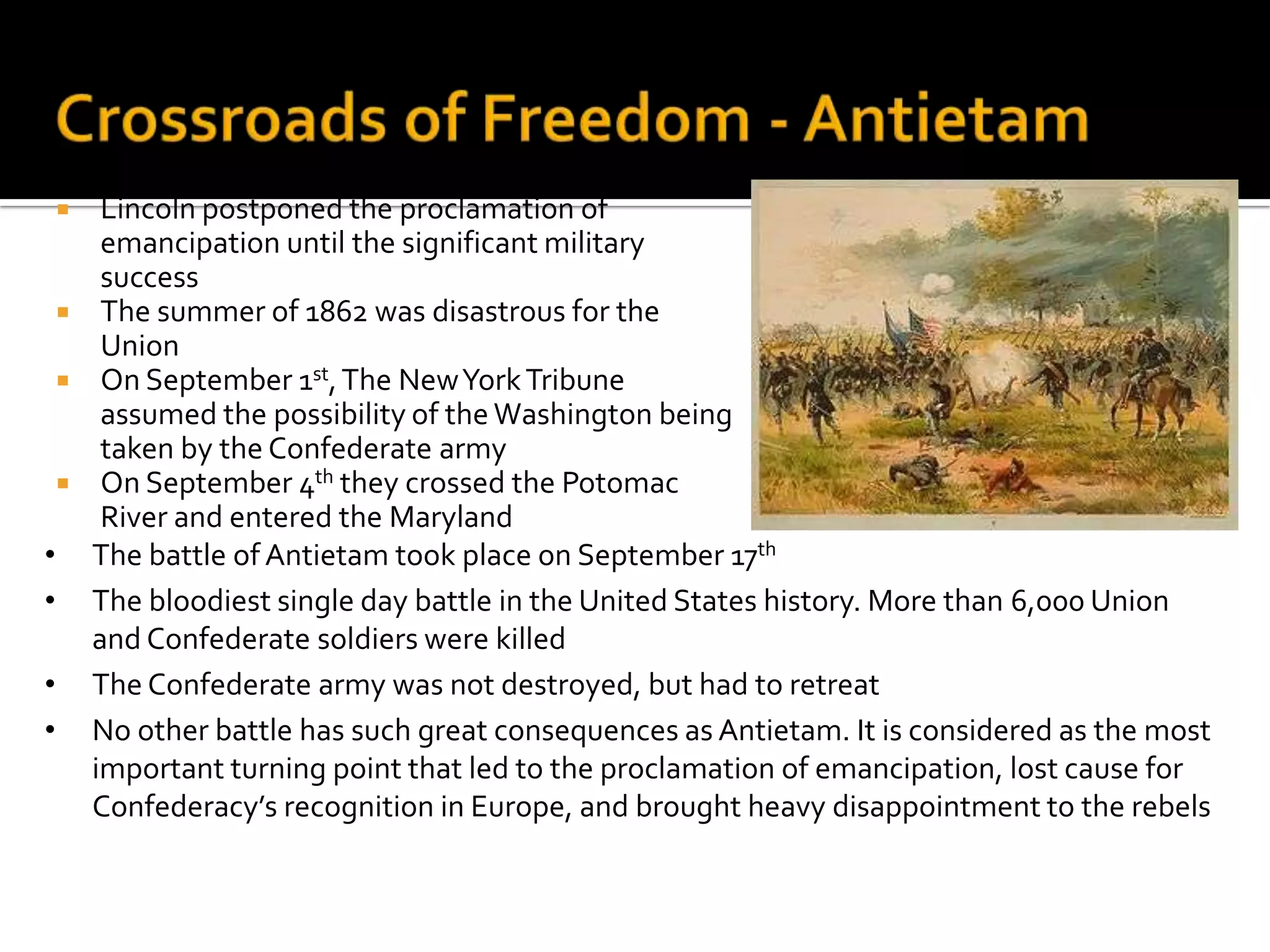
    The moral importanceof the emancipation was tremendous – as Lincoln pointed out, “If slavery is not wrong, nothing is wrong”Crossroads of Freedom - AntietamLincoln postponed the proclamation of emancipation until the significant military successThe summer of 1862 was disastrous for the UnionOn September 1st, The New York Tribune assumed the possibility of the Washington being taken by the Confederate armyOn September 4th they crossed the Potomac River and entered the Maryland The battle of Antietam took place on September 17th
  • 15.
    The bloodiest singleday battle in the United States history. More than 6,000 Union and Confederate soldiers were killed
  • 16.
    The Confederate armywas not destroyed, but had to retreat
  • 17.
    No other battlehas such great consequences as Antietam. It is considered as the most important turning point that led to the proclamation of emancipation, lost cause for Confederacy’s recognition in Europe, and brought heavy disappointment to the rebels