Group 01
Mineral Resources and Technology
1
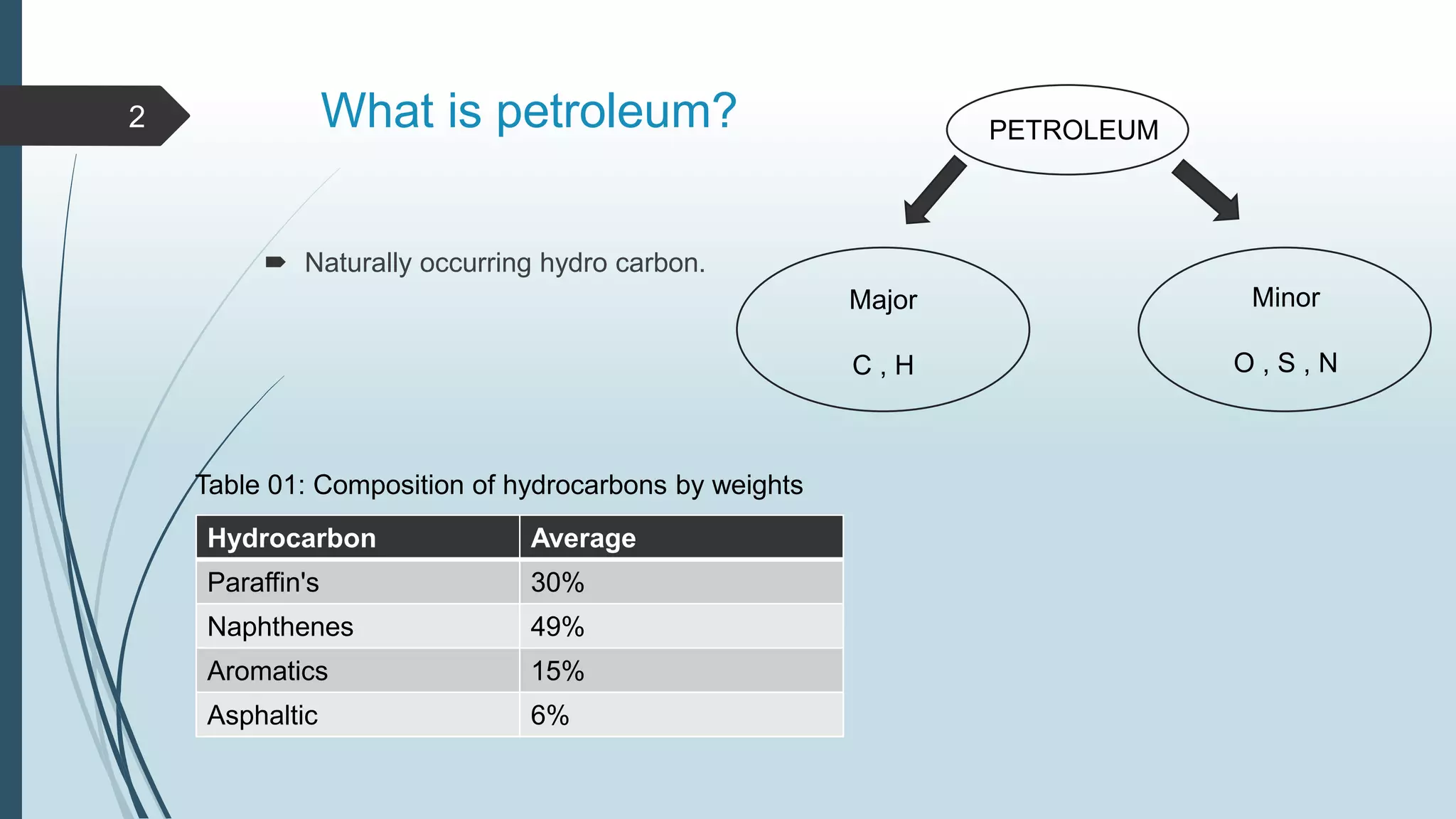
What is petroleum?
 Naturally occurring hydro carbon.
2 PETROLEUM
Major
C , H
Minor
O , S , N
Hydrocarbon Average
Paraffin's 30%
Naphthenes 49%
Aromatics 15%
Asphaltic 6%
Table 01: Composition of hydrocarbons by weights
Hydrocarbon Generation3
Two major phases of oil
generation:
 Oil window
• 100-150 °C 2.5-4.5 km
 Gas window
• 150-230°C
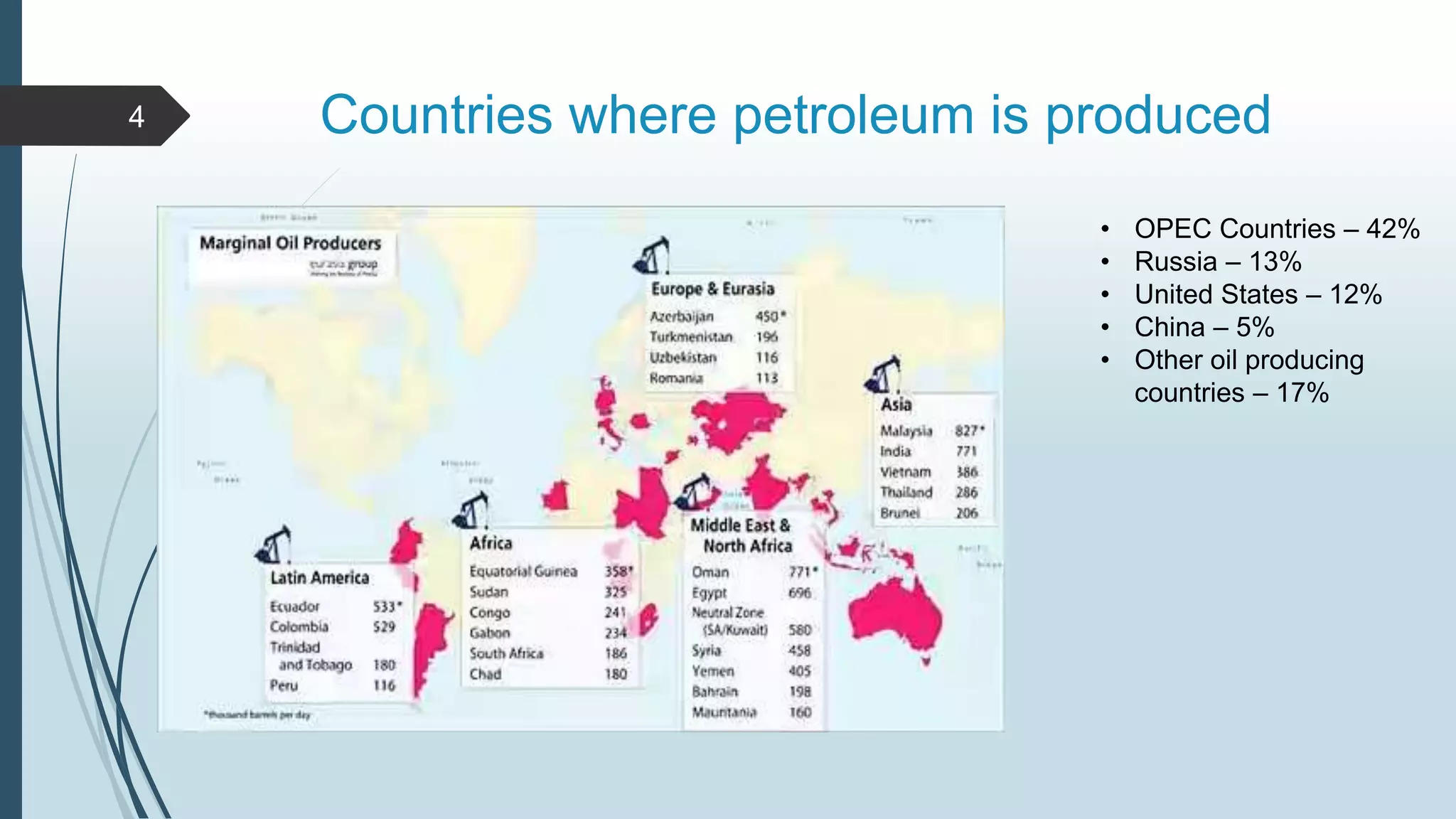
Countries where petroleum is produced4
• OPEC Countries – 42%
• Russia – 13%
• United States – 12%
• China – 5%
• Other oil producing
countries – 17%
Uses of Petroleum5
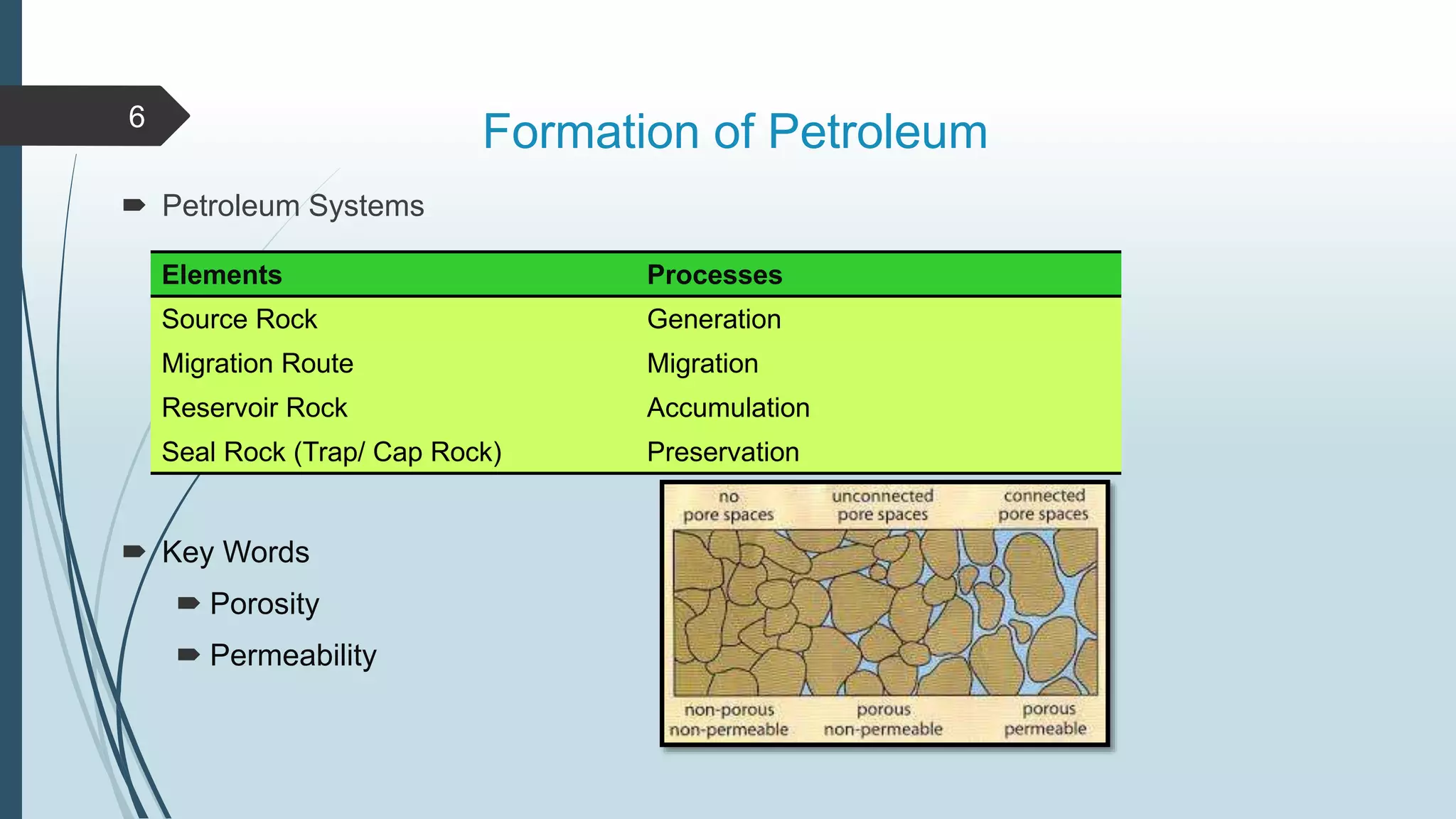
Formation of Petroleum
 Petroleum Systems
 Key Words
 Porosity
 Permeability
6
Elements Processes
Source Rock Generation
Migration Route Migration
Reservoir Rock Accumulation
Seal Rock (Trap/ Cap Rock) Preservation
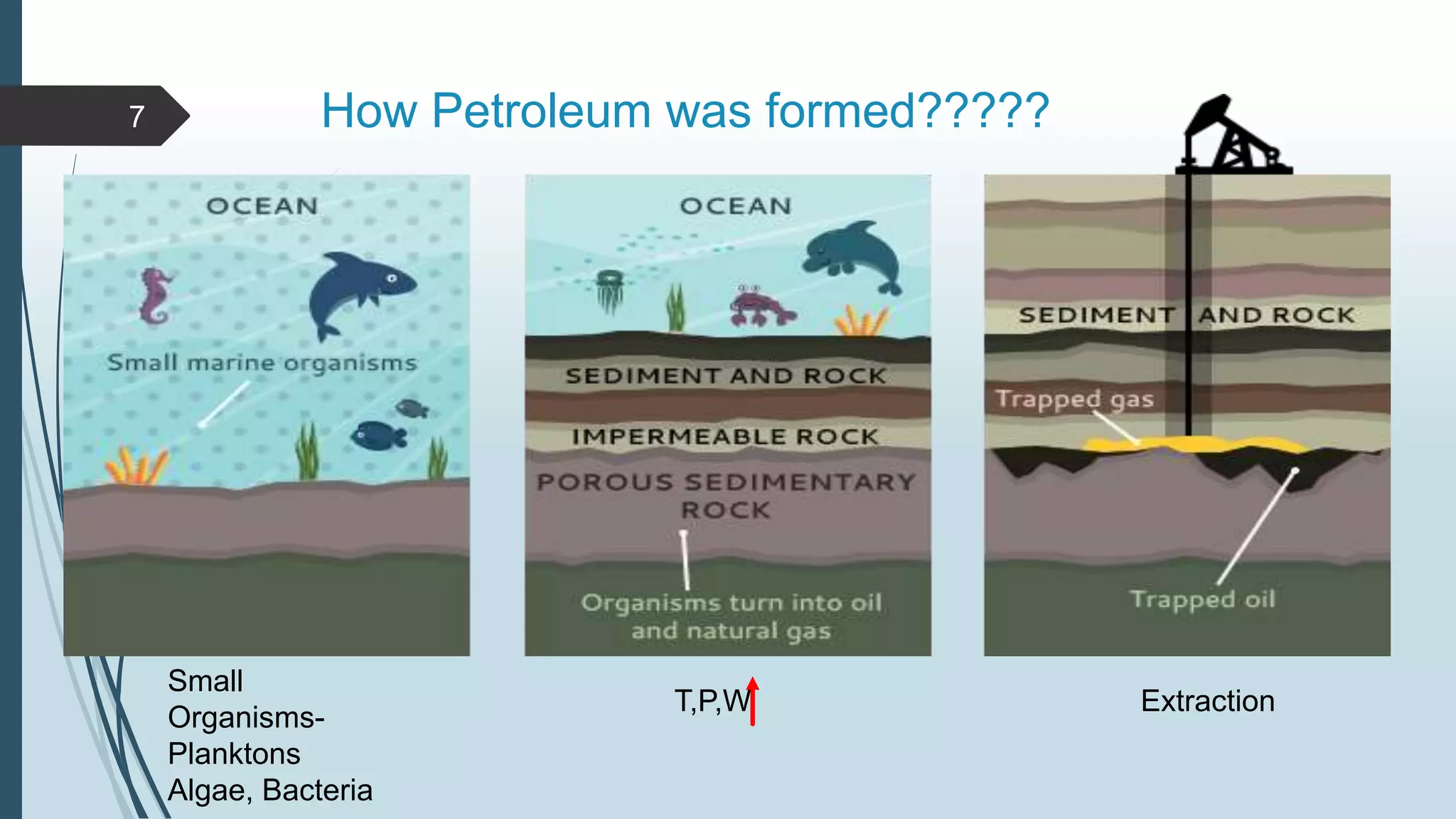
How Petroleum was formed?????7
Small
Organisms-
Planktons
Algae, Bacteria
T,P,W Extraction
How petroleum was created cont’d…,
 Pre-historic planktons (zoo planktons, Phytoplankton) were preserved in
the ocean basins.
 Eg:- Diatoms, Foraminifera, Radiolarian, Benthic algae
 OM mixed with mud were buried and covered with sediments.
 Temperature, Pressure, increased with depth.
 Chemical changes were occurred.
 Mainly under 3 steps
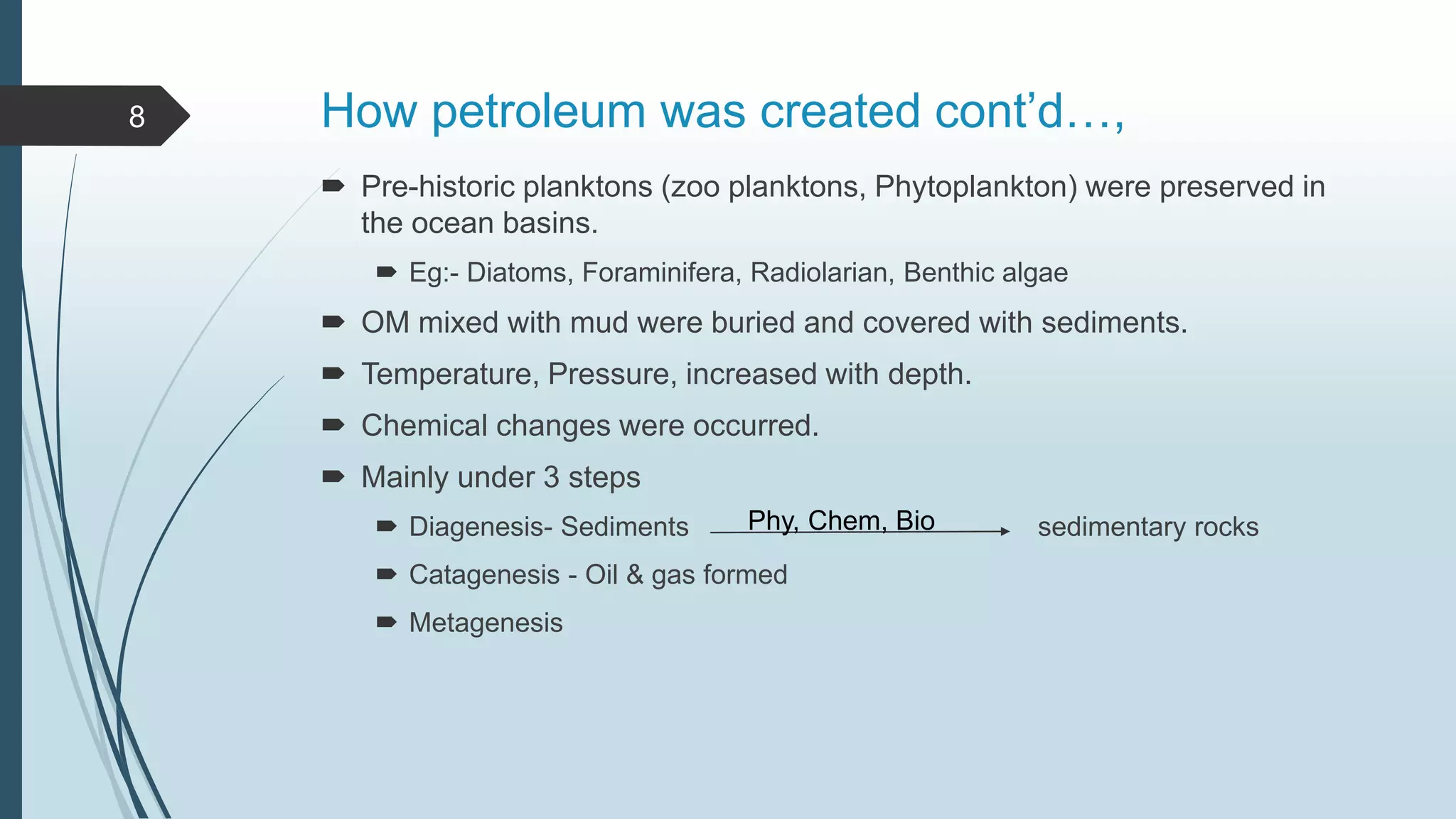
 Diagenesis- Sediments sedimentary rocks
 Catagenesis - Oil & gas formed
 Metagenesis
8
Phy, Chem, Bio
Kerogen
 Insoluble waxy substance derived from organic matter
 Algae, Wood, Pollen, Vitrinite etc..
 Found in various oil shale.
 Four kerogen types
 Contain different amount of H relative to O and C
9
Kerogen Type Hydrocarbon Potential Amount of H
i Crude oil prone Higher
ii Crude oil & Natural gas prone Moderate
iii Gas prone Low
iv Inert material . Non-Prone None
Source Rock
 What is source rock?
 Sedimentary rock
 Contains sufficient organic matter (Hydrocarbons)
 Fine Grained
 When buried and heated, produce petroleum
 Preferable Conditions
 High productivity
 Stagnant Water Body
 Anoxic Conditions
 Swamps, Shallow seas, Coastal Upwelling, Lakes
 Quality depend on;
 Abundance of Organic Matter (OM)
 Preservation Potential
10
Source Rock contd…
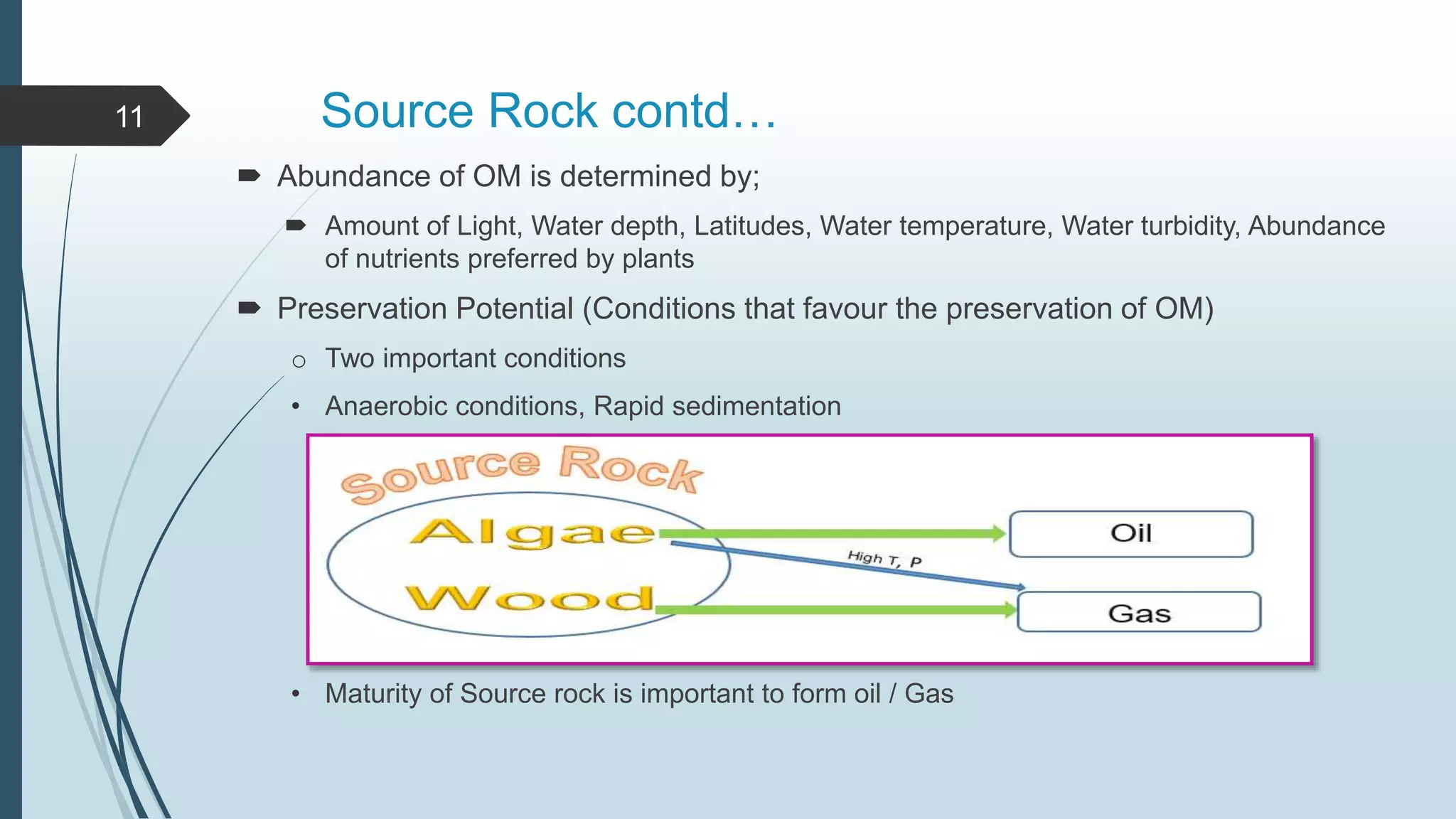
 Abundance of OM is determined by;
 Amount of Light, Water depth, Latitudes, Water temperature, Water turbidity, Abundance
of nutrients preferred by plants
 Preservation Potential (Conditions that favour the preservation of OM)
o Two important conditions
• Anaerobic conditions, Rapid sedimentation
• Maturity of Source rock is important to form oil / Gas
11
Maturity of Source Rock
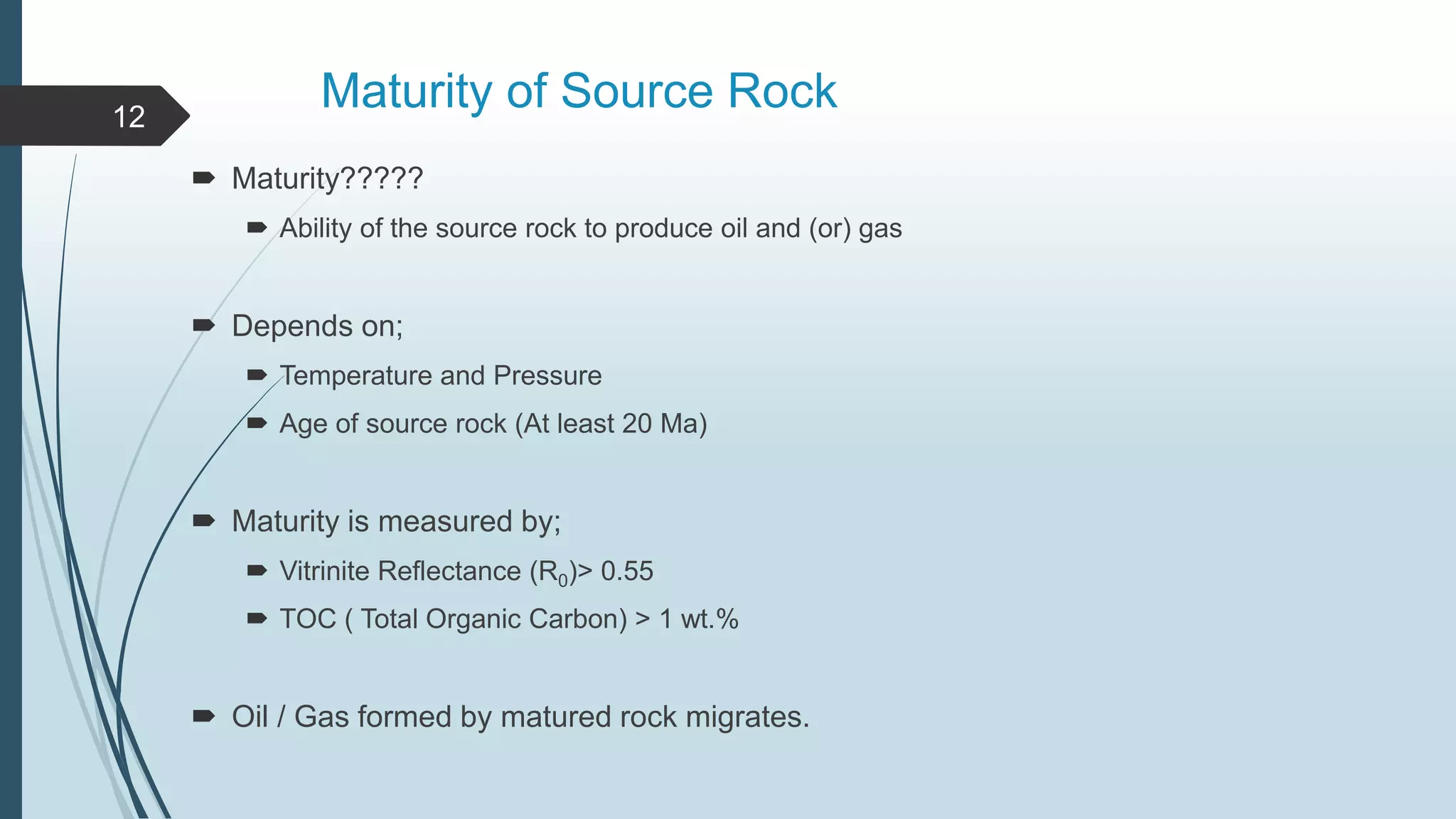
 Maturity?????
 Ability of the source rock to produce oil and (or) gas
 Depends on;
 Temperature and Pressure
 Age of source rock (At least 20 Ma)
 Maturity is measured by;
 Vitrinite Reflectance (R0)> 0.55
 TOC ( Total Organic Carbon) > 1 wt.%
 Oil / Gas formed by matured rock migrates.
12
Reservoir Rock
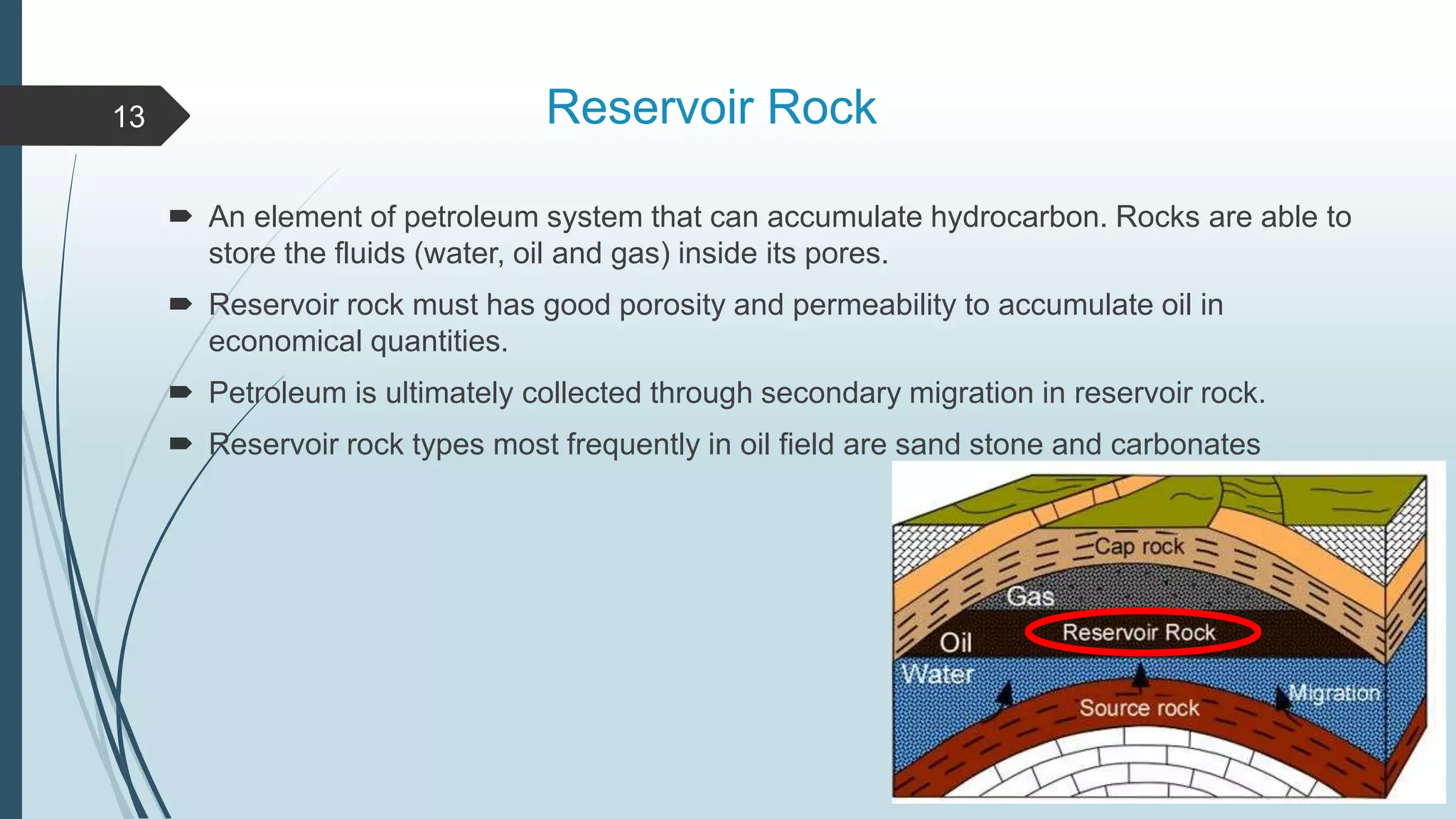
 An element of petroleum system that can accumulate hydrocarbon. Rocks are able to
store the fluids (water, oil and gas) inside its pores.
 Reservoir rock must has good porosity and permeability to accumulate oil in
economical quantities.
 Petroleum is ultimately collected through secondary migration in reservoir rock.
 Reservoir rock types most frequently in oil field are sand stone and carbonates
13
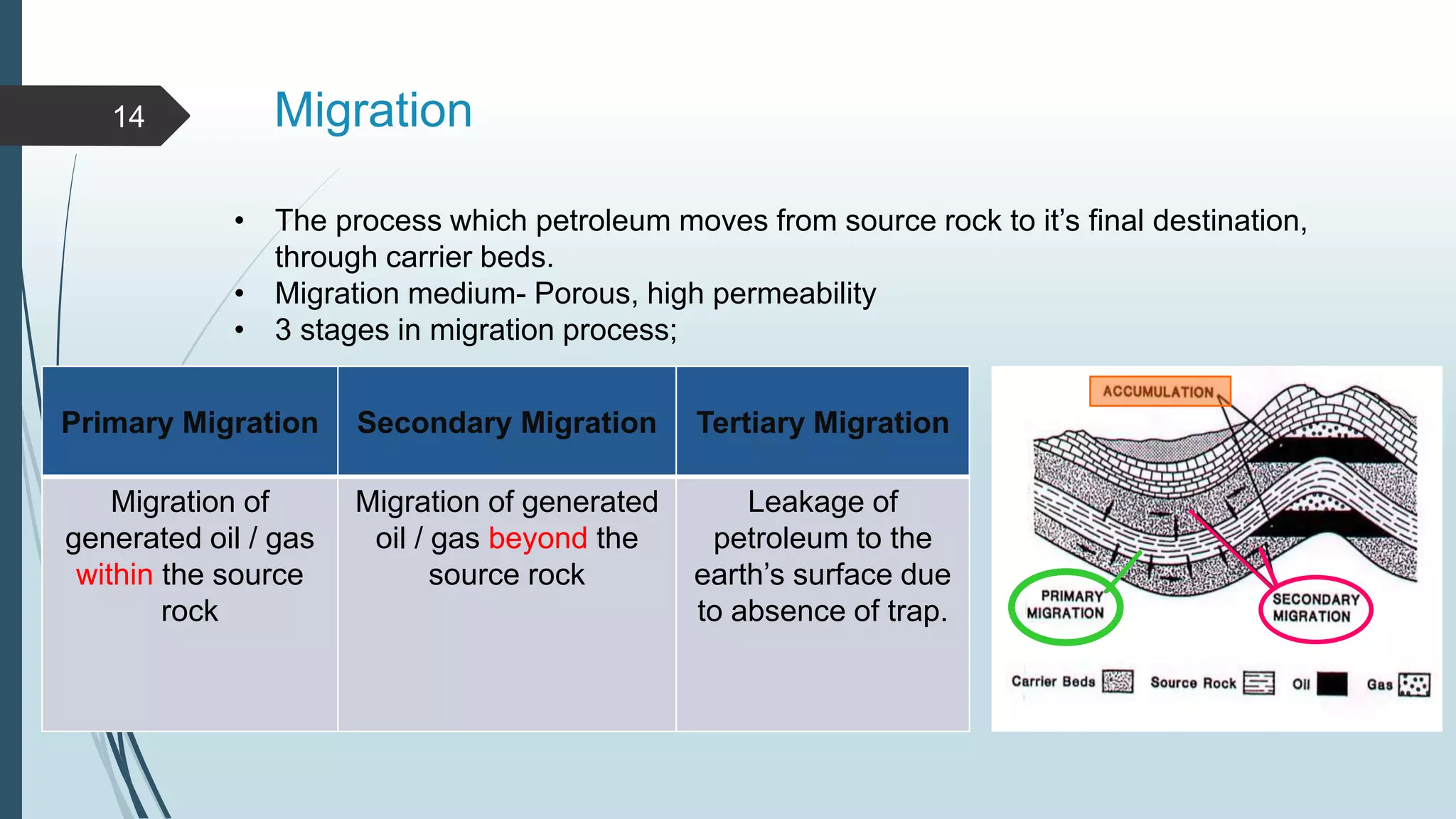
Migration
Primary Migration Secondary Migration Tertiary Migration
Migration of
generated oil / gas
within the source
rock
Migration of generated
oil / gas beyond the
source rock
Leakage of
petroleum to the
earth’s surface due
to absence of trap.
14
• The process which petroleum moves from source rock to it’s final destination,
through carrier beds.
• Migration medium- Porous, high permeability
• 3 stages in migration process;
Cap Rock/ Seal Rock/ Trap rock15
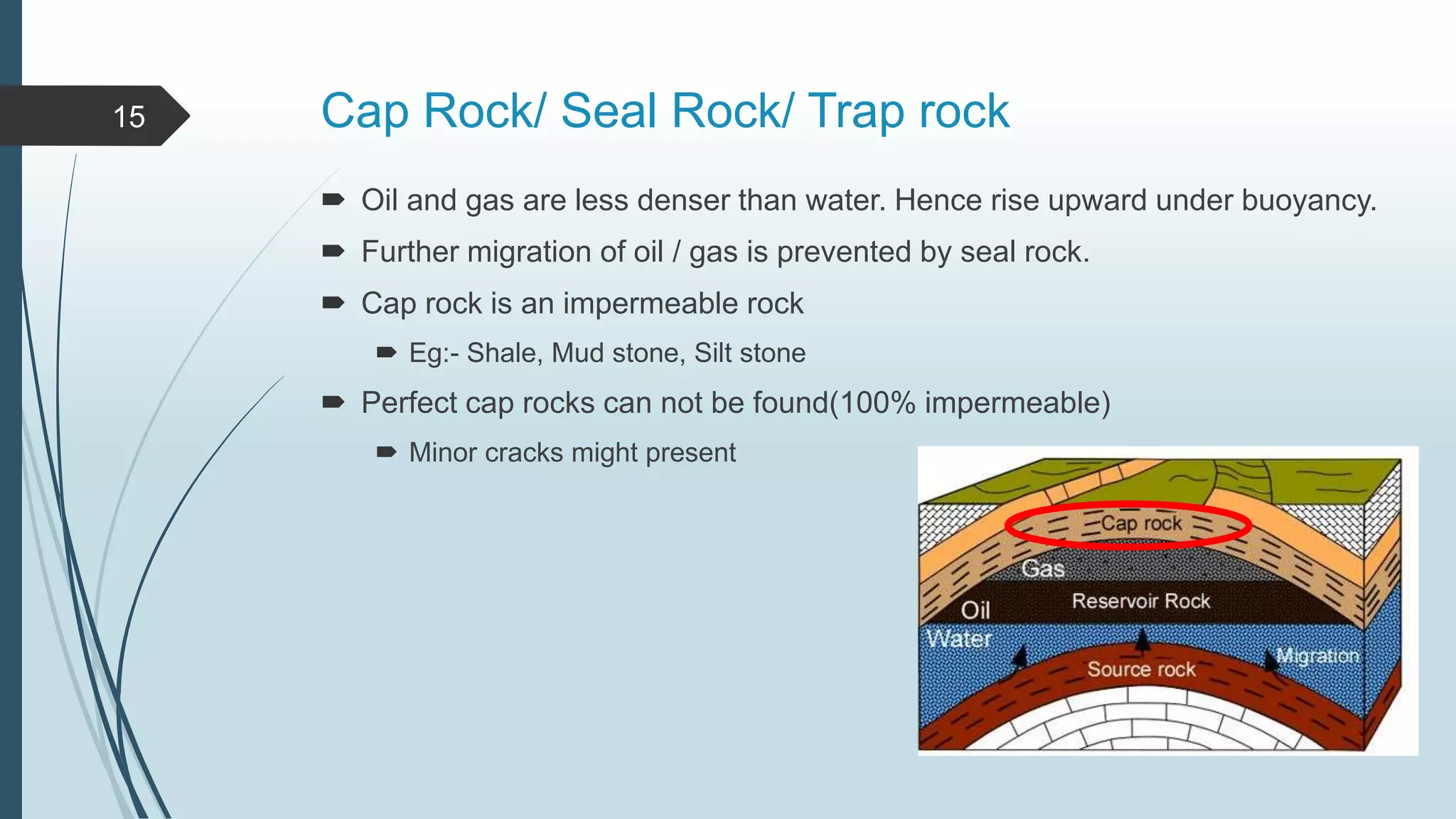
 Oil and gas are less denser than water. Hence rise upward under buoyancy.
 Further migration of oil / gas is prevented by seal rock.
 Cap rock is an impermeable rock
 Eg:- Shale, Mud stone, Silt stone
 Perfect cap rocks can not be found(100% impermeable)
 Minor cracks might present
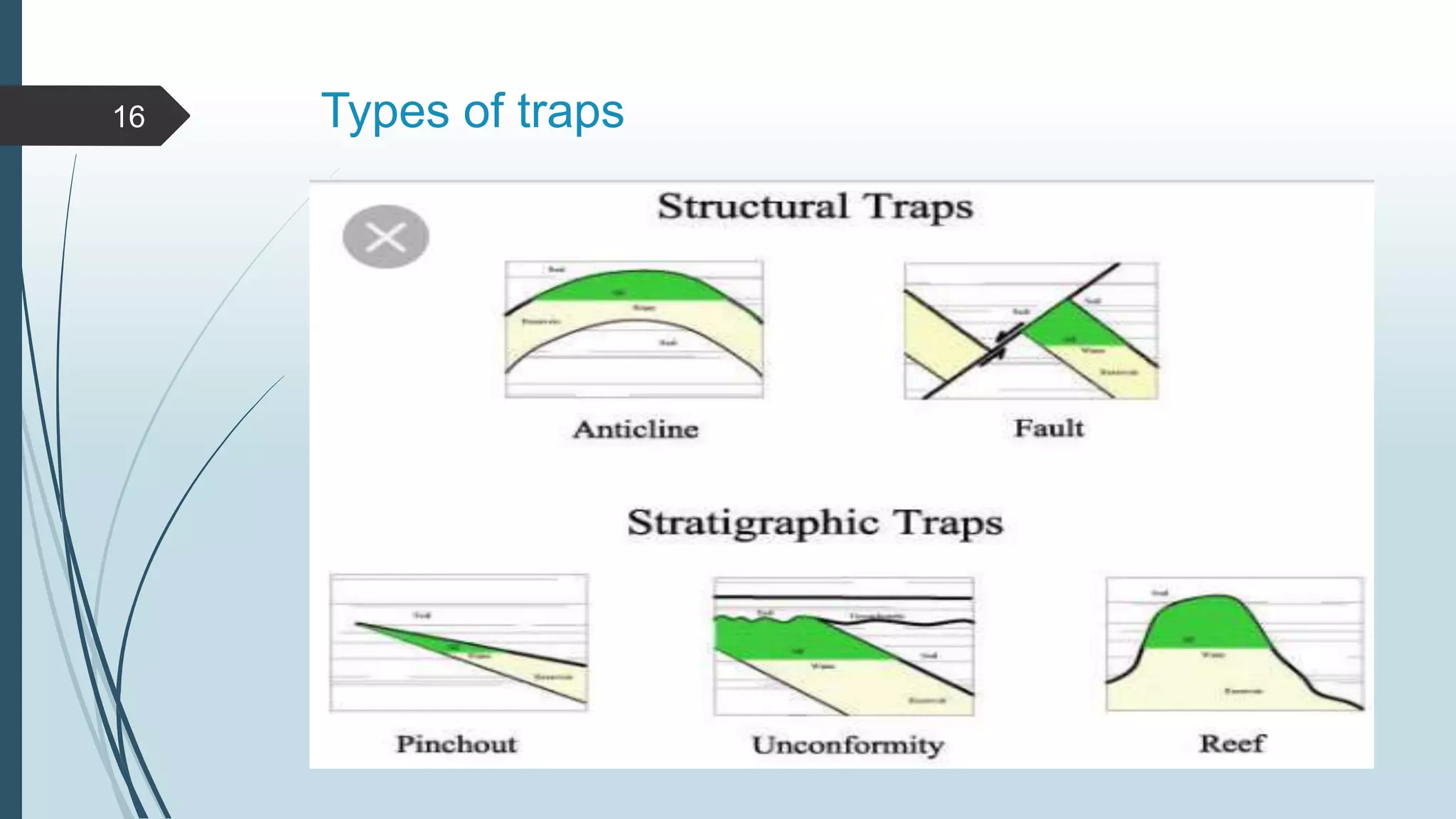
Types of traps16
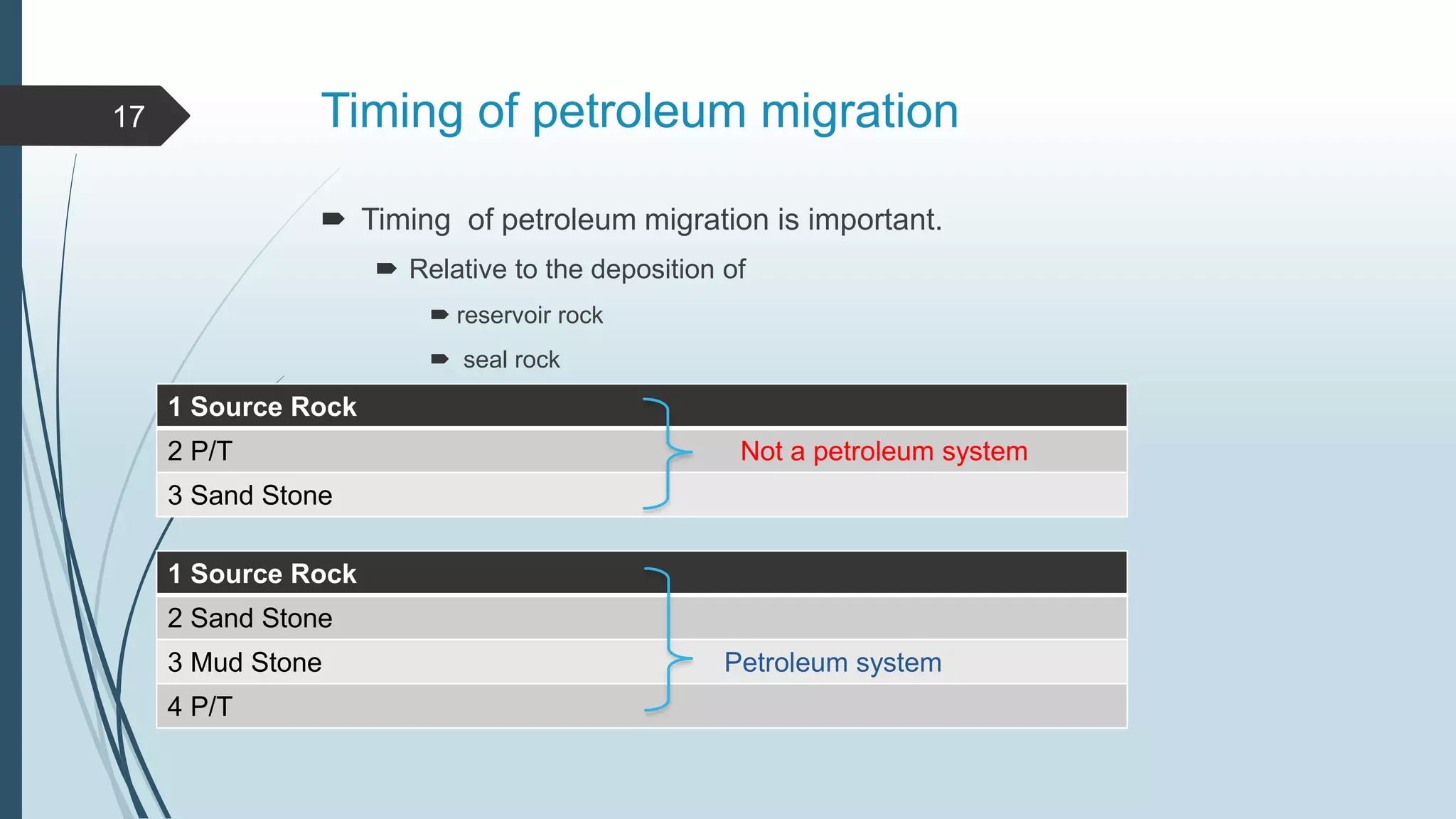
Timing of petroleum migration
 Timing of petroleum migration is important.
 Relative to the deposition of
 reservoir rock
 seal rock
17
1 Source Rock
2 P/T Not a petroleum system
3 Sand Stone
1 Source Rock
2 Sand Stone
3 Mud Stone Petroleum system
4 P/T
18
Group Members
 Athputhan S.
 Balasooriya I.A.
 Bandara T.G.T.A.
 Bogahawatte P.M.B.M.V.
 Chiranjaya Y.A.S.U.
19
UWU/MRT/15/001
UWU/MRT/15/002
UWU/MRT/15/003
UWU/MRT/15/004
UWU/MRT/15/006

how petroleum form

  • 1.
  • 2.
    What is petroleum? Naturally occurring hydro carbon. 2 PETROLEUM Major C , H Minor O , S , N Hydrocarbon Average Paraffin's 30% Naphthenes 49% Aromatics 15% Asphaltic 6% Table 01: Composition of hydrocarbons by weights
  • 3.
    Hydrocarbon Generation3 Two majorphases of oil generation:  Oil window • 100-150 °C 2.5-4.5 km  Gas window • 150-230°C
  • 4.
    Countries where petroleumis produced4 • OPEC Countries – 42% • Russia – 13% • United States – 12% • China – 5% • Other oil producing countries – 17%
  • 5.
  • 6.
    Formation of Petroleum Petroleum Systems  Key Words  Porosity  Permeability 6 Elements Processes Source Rock Generation Migration Route Migration Reservoir Rock Accumulation Seal Rock (Trap/ Cap Rock) Preservation
  • 7.
    How Petroleum wasformed?????7 Small Organisms- Planktons Algae, Bacteria T,P,W Extraction
  • 8.
    How petroleum wascreated cont’d…,  Pre-historic planktons (zoo planktons, Phytoplankton) were preserved in the ocean basins.  Eg:- Diatoms, Foraminifera, Radiolarian, Benthic algae  OM mixed with mud were buried and covered with sediments.  Temperature, Pressure, increased with depth.  Chemical changes were occurred.  Mainly under 3 steps  Diagenesis- Sediments sedimentary rocks  Catagenesis - Oil & gas formed  Metagenesis 8 Phy, Chem, Bio
  • 9.
    Kerogen  Insoluble waxysubstance derived from organic matter  Algae, Wood, Pollen, Vitrinite etc..  Found in various oil shale.  Four kerogen types  Contain different amount of H relative to O and C 9 Kerogen Type Hydrocarbon Potential Amount of H i Crude oil prone Higher ii Crude oil & Natural gas prone Moderate iii Gas prone Low iv Inert material . Non-Prone None
  • 10.
    Source Rock  Whatis source rock?  Sedimentary rock  Contains sufficient organic matter (Hydrocarbons)  Fine Grained  When buried and heated, produce petroleum  Preferable Conditions  High productivity  Stagnant Water Body  Anoxic Conditions  Swamps, Shallow seas, Coastal Upwelling, Lakes  Quality depend on;  Abundance of Organic Matter (OM)  Preservation Potential 10
  • 11.
    Source Rock contd… Abundance of OM is determined by;  Amount of Light, Water depth, Latitudes, Water temperature, Water turbidity, Abundance of nutrients preferred by plants  Preservation Potential (Conditions that favour the preservation of OM) o Two important conditions • Anaerobic conditions, Rapid sedimentation • Maturity of Source rock is important to form oil / Gas 11
  • 12.
    Maturity of SourceRock  Maturity?????  Ability of the source rock to produce oil and (or) gas  Depends on;  Temperature and Pressure  Age of source rock (At least 20 Ma)  Maturity is measured by;  Vitrinite Reflectance (R0)> 0.55  TOC ( Total Organic Carbon) > 1 wt.%  Oil / Gas formed by matured rock migrates. 12
  • 13.
    Reservoir Rock  Anelement of petroleum system that can accumulate hydrocarbon. Rocks are able to store the fluids (water, oil and gas) inside its pores.  Reservoir rock must has good porosity and permeability to accumulate oil in economical quantities.  Petroleum is ultimately collected through secondary migration in reservoir rock.  Reservoir rock types most frequently in oil field are sand stone and carbonates 13
  • 14.
    Migration Primary Migration SecondaryMigration Tertiary Migration Migration of generated oil / gas within the source rock Migration of generated oil / gas beyond the source rock Leakage of petroleum to the earth’s surface due to absence of trap. 14 • The process which petroleum moves from source rock to it’s final destination, through carrier beds. • Migration medium- Porous, high permeability • 3 stages in migration process;
  • 15.
    Cap Rock/ SealRock/ Trap rock15  Oil and gas are less denser than water. Hence rise upward under buoyancy.  Further migration of oil / gas is prevented by seal rock.  Cap rock is an impermeable rock  Eg:- Shale, Mud stone, Silt stone  Perfect cap rocks can not be found(100% impermeable)  Minor cracks might present
  • 16.
  • 17.
    Timing of petroleummigration  Timing of petroleum migration is important.  Relative to the deposition of  reservoir rock  seal rock 17 1 Source Rock 2 P/T Not a petroleum system 3 Sand Stone 1 Source Rock 2 Sand Stone 3 Mud Stone Petroleum system 4 P/T
  • 18.
  • 19.
    Group Members  AthputhanS.  Balasooriya I.A.  Bandara T.G.T.A.  Bogahawatte P.M.B.M.V.  Chiranjaya Y.A.S.U. 19 UWU/MRT/15/001 UWU/MRT/15/002 UWU/MRT/15/003 UWU/MRT/15/004 UWU/MRT/15/006