Petroleum Systems
By
Abbas falah gharib
PhD student
Osmangazi University
• What is a Petroleum system?
A petroleum system encompasses a pod of active source rock and all genetically related
oil and gas accumulations. It includes all the geologic elements and processes that are
essential if an oil and gas accumulation is to exist.
Petroleum describes a compound that includes high concentrations of any of the
following substances:
• Thermal and biological hydrocarbon gas found in conventional reservoirs as well as in
gas hydrates, tight reservoirs, fractured shale, and coal
• Condensates
• Crude oils
• Natural bitumen in reservoirs, generally in siliciclastic and carbonate rocks
System describes the interdependent elements and processes that form the functional
unit that creates hydrocarbon accumulations.
The essential elements of a petroleum system include the following:
• Source rock
• Reservoir rock
• Seal rock
• Overburden rock
Petroleum systems have two processes:
• Trap formation
• Generation–migration–accumulation of hydrocarbons
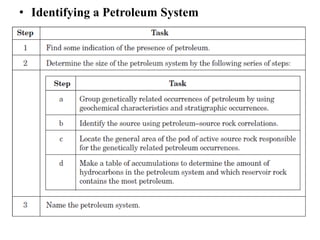
• Identifying a Petroleum System
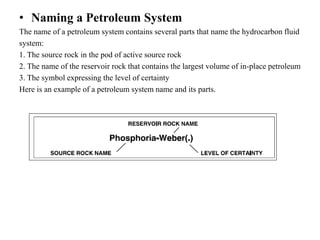
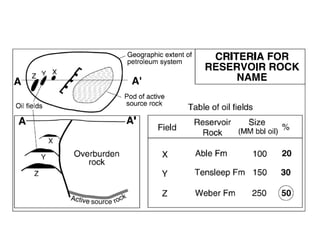
• Naming a Petroleum System
The name of a petroleum system contains several parts that name the hydrocarbon fluid
system:
1. The source rock in the pod of active source rock
2. The name of the reservoir rock that contains the largest volume of in-place petroleum
3. The symbol expressing the level of certainty
Here is an example of a petroleum system name and its parts.
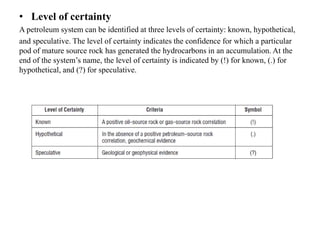
• Level of certainty
A petroleum system can be identified at three levels of certainty: known, hypothetical,
and speculative. The level of certainty indicates the confidence for which a particular
pod of mature source rock has generated the hydrocarbons in an accumulation. At the
end of the system’s name, the level of certainty is indicated by (!) for known, (.) for
hypothetical, and (?) for speculative.
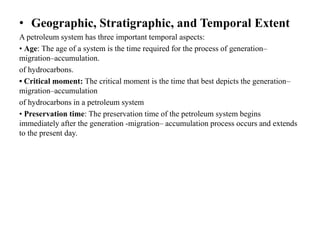
• Geographic, Stratigraphic, and Temporal Extent
A petroleum system has three important temporal aspects:
• Age: The age of a system is the time required for the process of generation–
migration–accumulation.
of hydrocarbons.
• Critical moment: The critical moment is the time that best depicts the generation–
migration–accumulation
of hydrocarbons in a petroleum system
• Preservation time: The preservation time of the petroleum system begins
immediately after the generation -migration– accumulation process occurs and extends
to the present day.
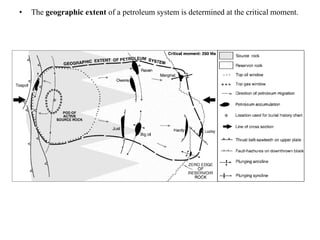
• The geographic extent of a petroleum system is determined at the critical moment.
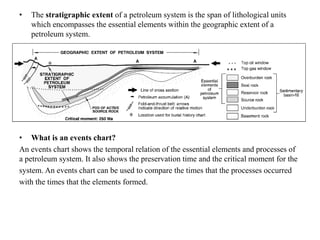
• The stratigraphic extent of a petroleum system is the span of lithological units
which encompasses the essential elements within the geographic extent of a
petroleum system.
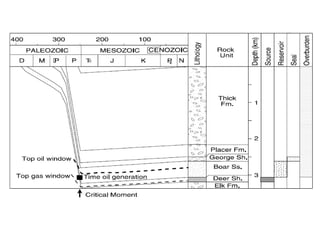
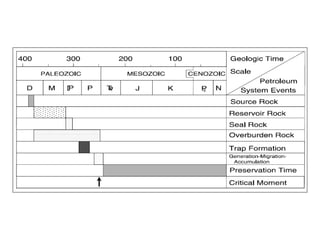
• What is an events chart?
An events chart shows the temporal relation of the essential elements and processes of
a petroleum system. It also shows the preservation time and the critical moment for the
system. An events chart can be used to compare the times that the processes occurred
with the times that the elements formed.
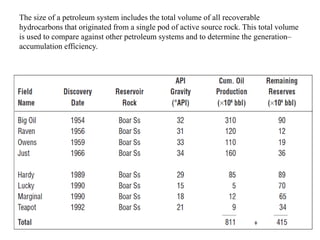
The size of a petroleum system includes the total volume of all recoverable
hydrocarbons that originated from a single pod of active source rock. This total volume
is used to compare against other petroleum systems and to determine the generation–
accumulation efficiency.
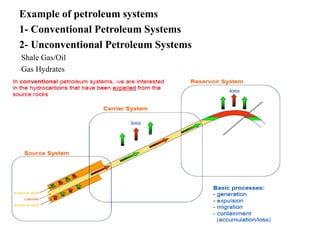
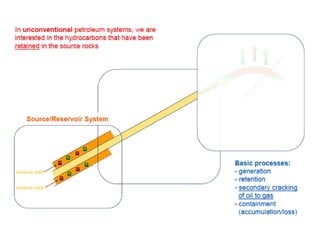
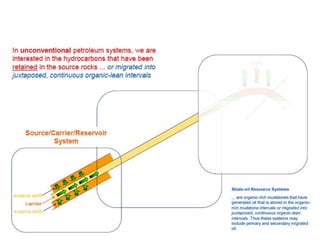
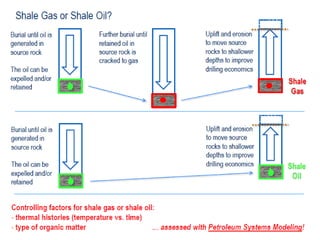
Example of petroleum systems
1- Conventional Petroleum Systems
2- Unconventional Petroleum Systems
Shale Gas/Oil
Gas Hydrates
Petroleum system
Petroleum system
Petroleum system
Petroleum system
Petroleum system
Petroleum system
Petroleum system
Petroleum system
Petroleum system
Petroleum system
Petroleum system
Petroleum system
Petroleum system
Petroleum system
Petroleum system
Petroleum system
Petroleum system
Petroleum system
Petroleum system
Petroleum system
Petroleum system

Petroleum system

  • 1.
    Petroleum Systems By Abbas falahgharib PhD student Osmangazi University
  • 2.
    • What isa Petroleum system? A petroleum system encompasses a pod of active source rock and all genetically related oil and gas accumulations. It includes all the geologic elements and processes that are essential if an oil and gas accumulation is to exist. Petroleum describes a compound that includes high concentrations of any of the following substances: • Thermal and biological hydrocarbon gas found in conventional reservoirs as well as in gas hydrates, tight reservoirs, fractured shale, and coal • Condensates • Crude oils • Natural bitumen in reservoirs, generally in siliciclastic and carbonate rocks System describes the interdependent elements and processes that form the functional unit that creates hydrocarbon accumulations. The essential elements of a petroleum system include the following: • Source rock • Reservoir rock • Seal rock • Overburden rock Petroleum systems have two processes: • Trap formation • Generation–migration–accumulation of hydrocarbons
  • 3.
    • Identifying aPetroleum System
  • 4.
    • Naming aPetroleum System The name of a petroleum system contains several parts that name the hydrocarbon fluid system: 1. The source rock in the pod of active source rock 2. The name of the reservoir rock that contains the largest volume of in-place petroleum 3. The symbol expressing the level of certainty Here is an example of a petroleum system name and its parts.
  • 5.
    • Level ofcertainty A petroleum system can be identified at three levels of certainty: known, hypothetical, and speculative. The level of certainty indicates the confidence for which a particular pod of mature source rock has generated the hydrocarbons in an accumulation. At the end of the system’s name, the level of certainty is indicated by (!) for known, (.) for hypothetical, and (?) for speculative.
  • 7.
    • Geographic, Stratigraphic,and Temporal Extent A petroleum system has three important temporal aspects: • Age: The age of a system is the time required for the process of generation– migration–accumulation. of hydrocarbons. • Critical moment: The critical moment is the time that best depicts the generation– migration–accumulation of hydrocarbons in a petroleum system • Preservation time: The preservation time of the petroleum system begins immediately after the generation -migration– accumulation process occurs and extends to the present day.
  • 9.
    • The geographicextent of a petroleum system is determined at the critical moment.
  • 10.
    • The stratigraphicextent of a petroleum system is the span of lithological units which encompasses the essential elements within the geographic extent of a petroleum system. • What is an events chart? An events chart shows the temporal relation of the essential elements and processes of a petroleum system. It also shows the preservation time and the critical moment for the system. An events chart can be used to compare the times that the processes occurred with the times that the elements formed.
  • 12.
    The size ofa petroleum system includes the total volume of all recoverable hydrocarbons that originated from a single pod of active source rock. This total volume is used to compare against other petroleum systems and to determine the generation– accumulation efficiency.
  • 13.
    Example of petroleumsystems 1- Conventional Petroleum Systems 2- Unconventional Petroleum Systems Shale Gas/Oil Gas Hydrates