Finding Journal Articles

Traci Welch Moritz
Public Services Librarian
Assistant Professor
Heterick Memorial Library
Figure

out which journals are
germane to your major
Find out how to access those journals
Find out how to manage what you find
Find out how to track references
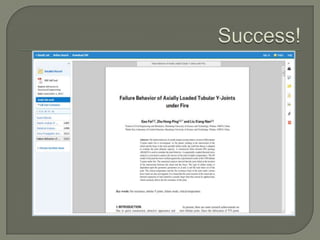
Leave with an article
The means by which individuals engaged in
 academic research and
 creative endeavor inform their peers, formally or informally, of the
work they are engaged in or have accomplished.
Following a tradition that began with the Academy in ancient
Athens, scholars communicate by
 writing monographs and
 journal articles for publication,
 presenting conference papers that may subsequently be published in
proceedings and transactions,
 submitting reports in fulfillment of grant requirements,
 creating and maintaining Web sites for the academic community, and
corresponding with peers via e-mail and electronic mailing lists.
Broadly defined, the process includes not only the creation and
dissemination of scholarly works but also evaluation of quality (peer
review) and preservation for future use. One of the goals of academic
libraries is to facilitate scholarly communication in
all its
forms.
What is a periodical?
Periodicals are publications which are:
 Issued at regular intervals (usually)
 Are also often referred to as serials
 Composed of a collection of articles, which
may range from a single page story in a
newspaper to a 40 page study in a
scholarly journal.
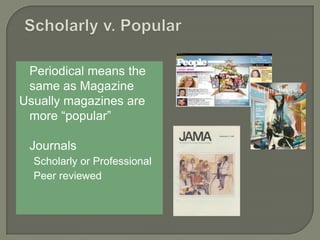
 Periodical

means the
same as Magazine
Usually magazines are
more “popular”
 Journals

Scholarly or Professional
Peer reviewed
 Periodicals

are numerous (212,140)
 Growth enhanced by online publishing –

56,329 online pubs. in Ulrich’s
 A “volatile” format
• Periodicals merge
• Publications cease
• Frequency of publication can change
• Volume/ issue numbering can change

• Titles change
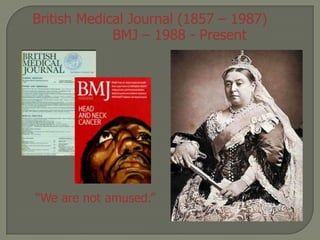
British Medical Journal (1857 – 1987)
BMJ – 1988 - Present

“We are not amused.”
 What

are the top 5 journals in your field?
 Where is the “body of work” published?
 Where is a good place to begin?
• Ask your advisor
• Discipline Associations
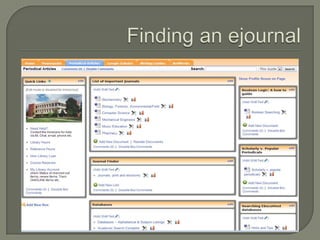
 Several options from here
• Research Guide
• Library catalog
• Library journal finder
• Library current periodicals
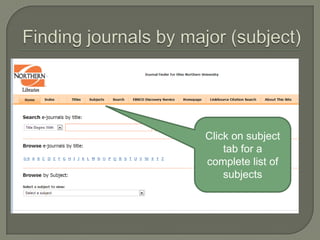
Click on subject
tab for a
complete list of
subjects
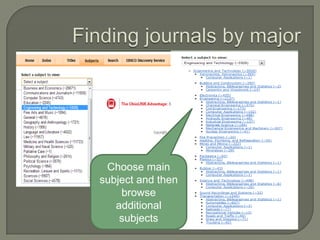
Choose main
subject and then
browse
additional
subjects
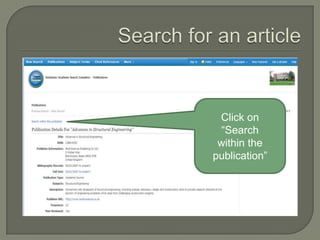
Click on
“Search
within the
publication”
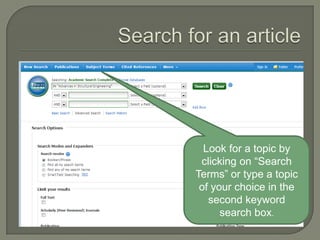
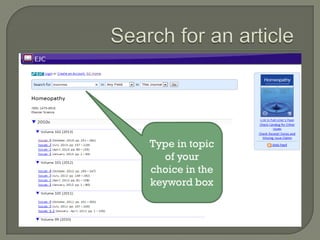
Look for a topic by
clicking on “Search
Terms” or type a topic
of your choice in the
second keyword
search box.
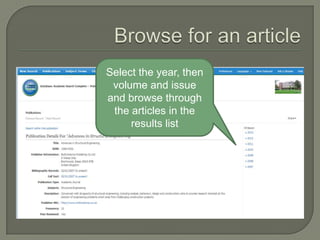
Select the year, then
volume and issue
and browse through
the articles in the
results list
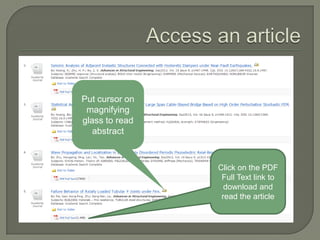
Put cursor on
magnifying
glass to read
abstract

Click on the PDF
Full Text link to
download and
read the article
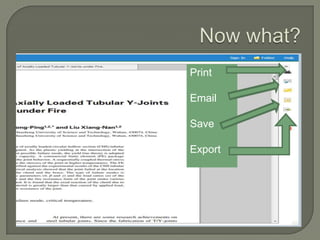
Print
Email
Save
Export
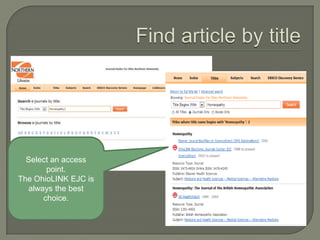
Select an access
point.
The OhioLINK EJC is
always the best
choice.
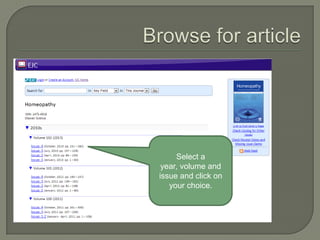
Select a
year, volume and
issue and click on
your choice.
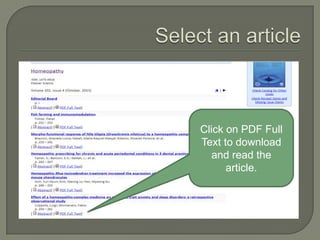
Click on PDF Full
Text to download
and read the
article.
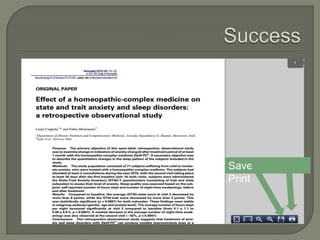
Save
Print
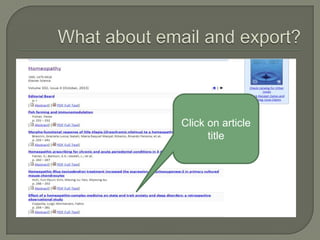
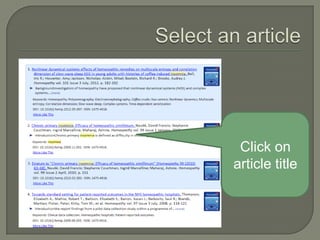
Click on article
title
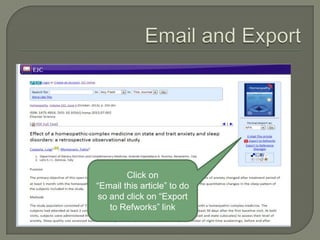
Click on
“Email this article” to do
so and click on “Export
to Refworks” link
Click on
article title
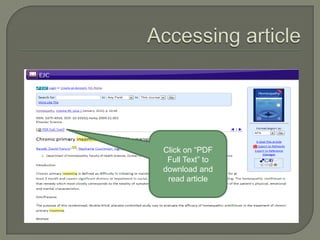
Click on “PDF
Full Text” to
download and
read article
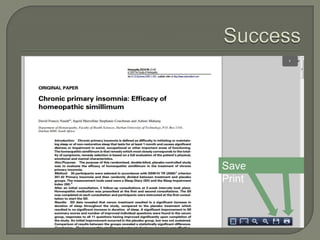
Save
Print
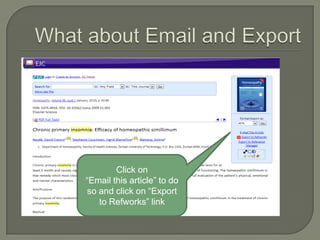
Click on
“Email this article” to do
so and click on “Export
to Refworks” link
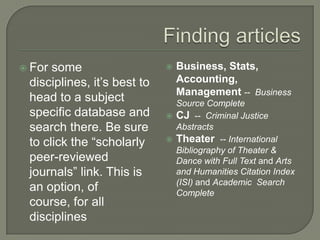
 For

some
disciplines, it’s best to
head to a subject
specific database and
search there. Be sure
to click the “scholarly
peer-reviewed
journals” link. This is
an option, of
course, for all
disciplines



Business, Stats,
Accounting,
Management -- Business

Source Complete
 CJ -- Criminal Justice
Abstracts
 Theater -- International
Bibliography of Theater &
Dance with Full Text and Arts
and Humanities Citation Index
(ISI) and Academic Search
Complete
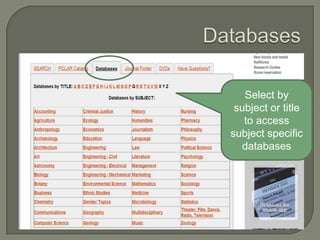
Select by
subject or title
to access
subject specific
databases
Reference librarians on duty 8a-4:30p, 6-9p
Monday – Thursday, 8a-4:30p Friday
and 10a-3:30p Sundays
1-2-1 sessions available by appointment
reference@onu.edu
Email t-moritz@onu.edu
Phone 2473
Instant Messaging
Chat Reference
Honr 1001 fall 2013

Honr 1001 fall 2013

  • 1.
    Finding Journal Articles TraciWelch Moritz Public Services Librarian Assistant Professor Heterick Memorial Library
  • 2.
    Figure out which journalsare germane to your major Find out how to access those journals Find out how to manage what you find Find out how to track references Leave with an article
  • 4.
    The means bywhich individuals engaged in  academic research and  creative endeavor inform their peers, formally or informally, of the work they are engaged in or have accomplished. Following a tradition that began with the Academy in ancient Athens, scholars communicate by  writing monographs and  journal articles for publication,  presenting conference papers that may subsequently be published in proceedings and transactions,  submitting reports in fulfillment of grant requirements,  creating and maintaining Web sites for the academic community, and corresponding with peers via e-mail and electronic mailing lists. Broadly defined, the process includes not only the creation and dissemination of scholarly works but also evaluation of quality (peer review) and preservation for future use. One of the goals of academic libraries is to facilitate scholarly communication in all its forms.
  • 5.
    What is aperiodical? Periodicals are publications which are:  Issued at regular intervals (usually)  Are also often referred to as serials  Composed of a collection of articles, which may range from a single page story in a newspaper to a 40 page study in a scholarly journal.
  • 6.
     Periodical means the sameas Magazine Usually magazines are more “popular”  Journals Scholarly or Professional Peer reviewed
  • 7.
     Periodicals are numerous(212,140)  Growth enhanced by online publishing – 56,329 online pubs. in Ulrich’s  A “volatile” format • Periodicals merge • Publications cease • Frequency of publication can change • Volume/ issue numbering can change • Titles change
  • 8.
    British Medical Journal(1857 – 1987) BMJ – 1988 - Present “We are not amused.”
  • 9.
     What are thetop 5 journals in your field?  Where is the “body of work” published?  Where is a good place to begin? • Ask your advisor • Discipline Associations  Several options from here • Research Guide • Library catalog • Library journal finder • Library current periodicals
  • 11.
    Click on subject tabfor a complete list of subjects
  • 12.
    Choose main subject andthen browse additional subjects
  • 15.
  • 16.
    Look for atopic by clicking on “Search Terms” or type a topic of your choice in the second keyword search box.
  • 17.
    Select the year,then volume and issue and browse through the articles in the results list
  • 18.
    Put cursor on magnifying glassto read abstract Click on the PDF Full Text link to download and read the article
  • 20.
  • 21.
    Select an access point. TheOhioLINK EJC is always the best choice.
  • 22.
    Select a year, volumeand issue and click on your choice.
  • 23.
    Click on PDFFull Text to download and read the article.
  • 24.
  • 25.
  • 26.
    Click on “Email thisarticle” to do so and click on “Export to Refworks” link
  • 28.
  • 29.
    Click on “PDF FullText” to download and read article
  • 30.
  • 31.
    Click on “Email thisarticle” to do so and click on “Export to Refworks” link
  • 32.
     For some disciplines, it’sbest to head to a subject specific database and search there. Be sure to click the “scholarly peer-reviewed journals” link. This is an option, of course, for all disciplines  Business, Stats, Accounting, Management -- Business Source Complete  CJ -- Criminal Justice Abstracts  Theater -- International Bibliography of Theater & Dance with Full Text and Arts and Humanities Citation Index (ISI) and Academic Search Complete
  • 33.
    Select by subject ortitle to access subject specific databases
  • 34.
    Reference librarians onduty 8a-4:30p, 6-9p Monday – Thursday, 8a-4:30p Friday and 10a-3:30p Sundays 1-2-1 sessions available by appointment reference@onu.edu Email t-moritz@onu.edu Phone 2473 Instant Messaging Chat Reference