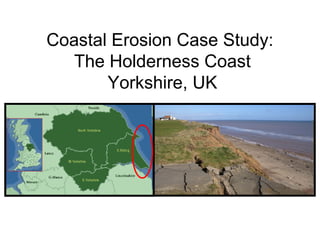
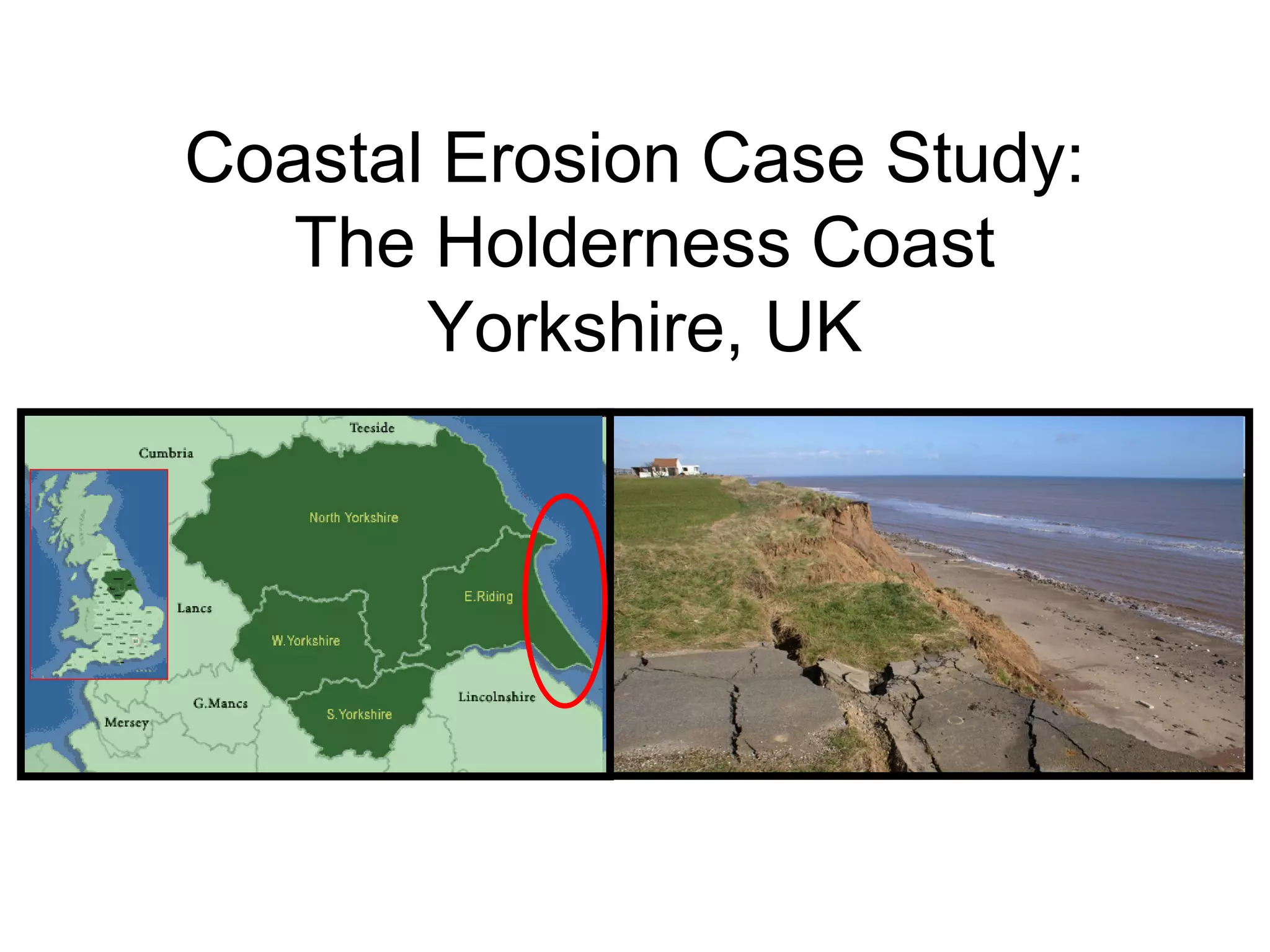
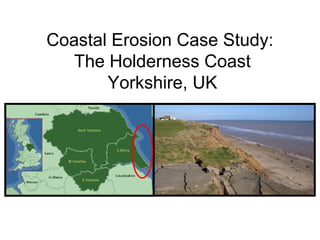
Coastal Erosion Case Study:
The Holderness Coast
Yorkshire, UK
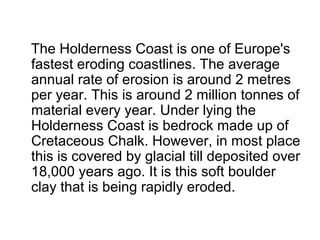
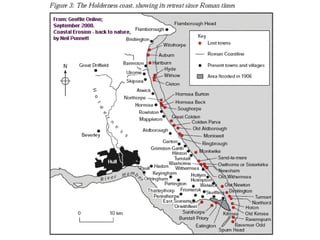
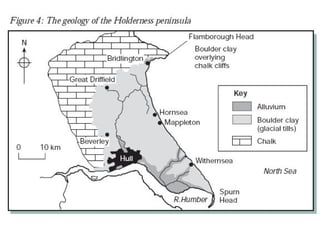
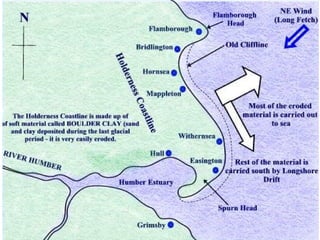
The Holderness Coast is one of Europe's
fastest eroding coastlines. The average
annual rate of erosion is around 2 metres
per year. This is around 2 million tonnes of
material every year. Under lying the
Holderness Coast is bedrock made up of
Cretaceous Chalk. However, in most place
this is covered by glacial till deposited over
18,000 years ago. It is this soft boulder
clay that is being rapidly eroded.
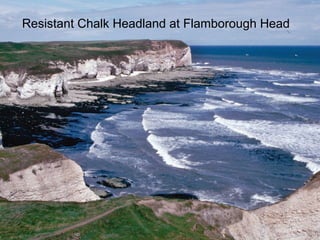
Resistant Chalk Headland at Flamborough Head
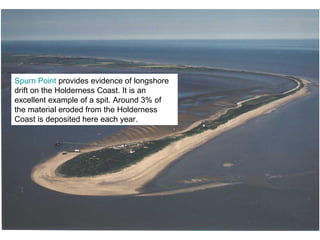
Spurn Point provides evidence of longshore
drift on the Holderness Coast. It is an
excellent example of a spit. Around 3% of
the material eroded from the Holderness
Coast is deposited here each year.
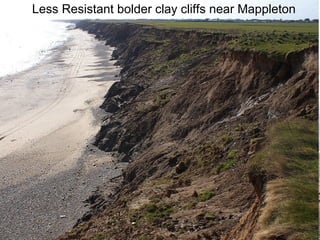
Less Resistant bolder clay cliffs near Mappleton
9
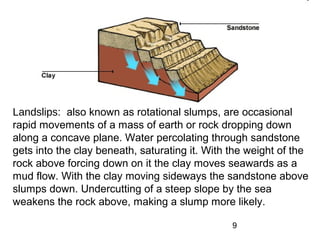
Landslips: also known as rotational slumps, are occasional
rapid movements of a mass of earth or rock dropping down
along a concave plane. Water percolating through sandstone
gets into the clay beneath, saturating it. With the weight of the
rock above forcing down on it the clay moves seawards as a
mud flow. With the clay moving sideways the sandstone above
slumps down. Undercutting of a steep slope by the sea
weakens the rock above, making a slump more likely.
10
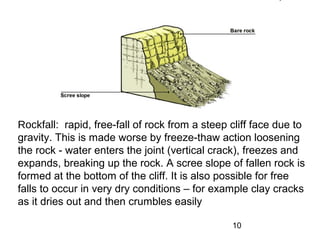
Rockfall: rapid, free-fall of rock from a steep cliff face due to
gravity. This is made worse by freeze-thaw action loosening
the rock - water enters the joint (vertical crack), freezes and
expands, breaking up the rock. A scree slope of fallen rock is
formed at the bottom of the cliff. It is also possible for free
falls to occur in very dry conditions – for example clay cracks
as it dries out and then crumbles easily
11
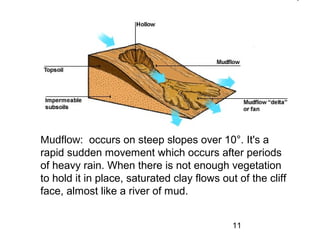
Mudflow: occurs on steep slopes over 10°. It's a
rapid sudden movement which occurs after periods
of heavy rain. When there is not enough vegetation
to hold it in place, saturated clay flows out of the cliff
face, almost like a river of mud.
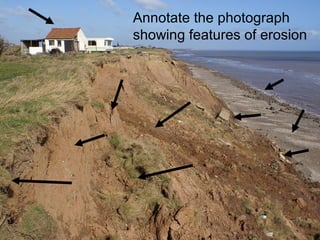
Annotate the photograph
showing features of erosion
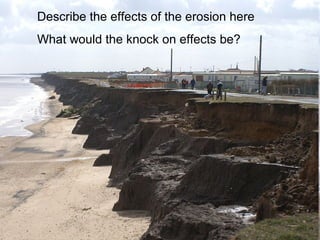
Describe the effects of the erosion here
What would the knock on effects be?
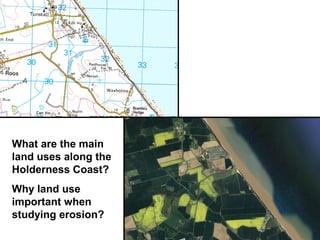
What are the main
land uses along the
Holderness Coast?
Why land use
important when
studying erosion?
Coastal Erosion Case Study:
The Holderness Coast
Yorkshire, UK

Holderness coastal erosion case study

  • 1.
    Coastal Erosion CaseStudy: The Holderness Coast Yorkshire, UK
  • 2.
    The Holderness Coastis one of Europe's fastest eroding coastlines. The average annual rate of erosion is around 2 metres per year. This is around 2 million tonnes of material every year. Under lying the Holderness Coast is bedrock made up of Cretaceous Chalk. However, in most place this is covered by glacial till deposited over 18,000 years ago. It is this soft boulder clay that is being rapidly eroded.
  • 5.
    Resistant Chalk Headlandat Flamborough Head
  • 7.
    Spurn Point providesevidence of longshore drift on the Holderness Coast. It is an excellent example of a spit. Around 3% of the material eroded from the Holderness Coast is deposited here each year.
  • 8.
    Less Resistant bolderclay cliffs near Mappleton
  • 9.
    9 Landslips: also knownas rotational slumps, are occasional rapid movements of a mass of earth or rock dropping down along a concave plane. Water percolating through sandstone gets into the clay beneath, saturating it. With the weight of the rock above forcing down on it the clay moves seawards as a mud flow. With the clay moving sideways the sandstone above slumps down. Undercutting of a steep slope by the sea weakens the rock above, making a slump more likely.
  • 10.
    10 Rockfall: rapid, free-fallof rock from a steep cliff face due to gravity. This is made worse by freeze-thaw action loosening the rock - water enters the joint (vertical crack), freezes and expands, breaking up the rock. A scree slope of fallen rock is formed at the bottom of the cliff. It is also possible for free falls to occur in very dry conditions – for example clay cracks as it dries out and then crumbles easily
  • 11.
    11 Mudflow: occurs onsteep slopes over 10°. It's a rapid sudden movement which occurs after periods of heavy rain. When there is not enough vegetation to hold it in place, saturated clay flows out of the cliff face, almost like a river of mud.
  • 12.
  • 13.
    Describe the effectsof the erosion here What would the knock on effects be?
  • 14.
    What are themain land uses along the Holderness Coast? Why land use important when studying erosion?
  • 15.
    Coastal Erosion CaseStudy: The Holderness Coast Yorkshire, UK