A2GEOGRAPHY
ENVIRONMENTALMANAGEMENT
12.3 ENVIRONMENTALDEGRADATION
CASESTUDIESCHINA
POLLUTION
Pollution means contamination of some kind. It is usually
referred to in the context of the environment, where the
pollution can take many forms – air, water, soil, noise,
visual and many others.
Pollution is the dominant factor in the environmental
degradation of land, air and water.
The most serious polluters are the large-scale processing
industries.
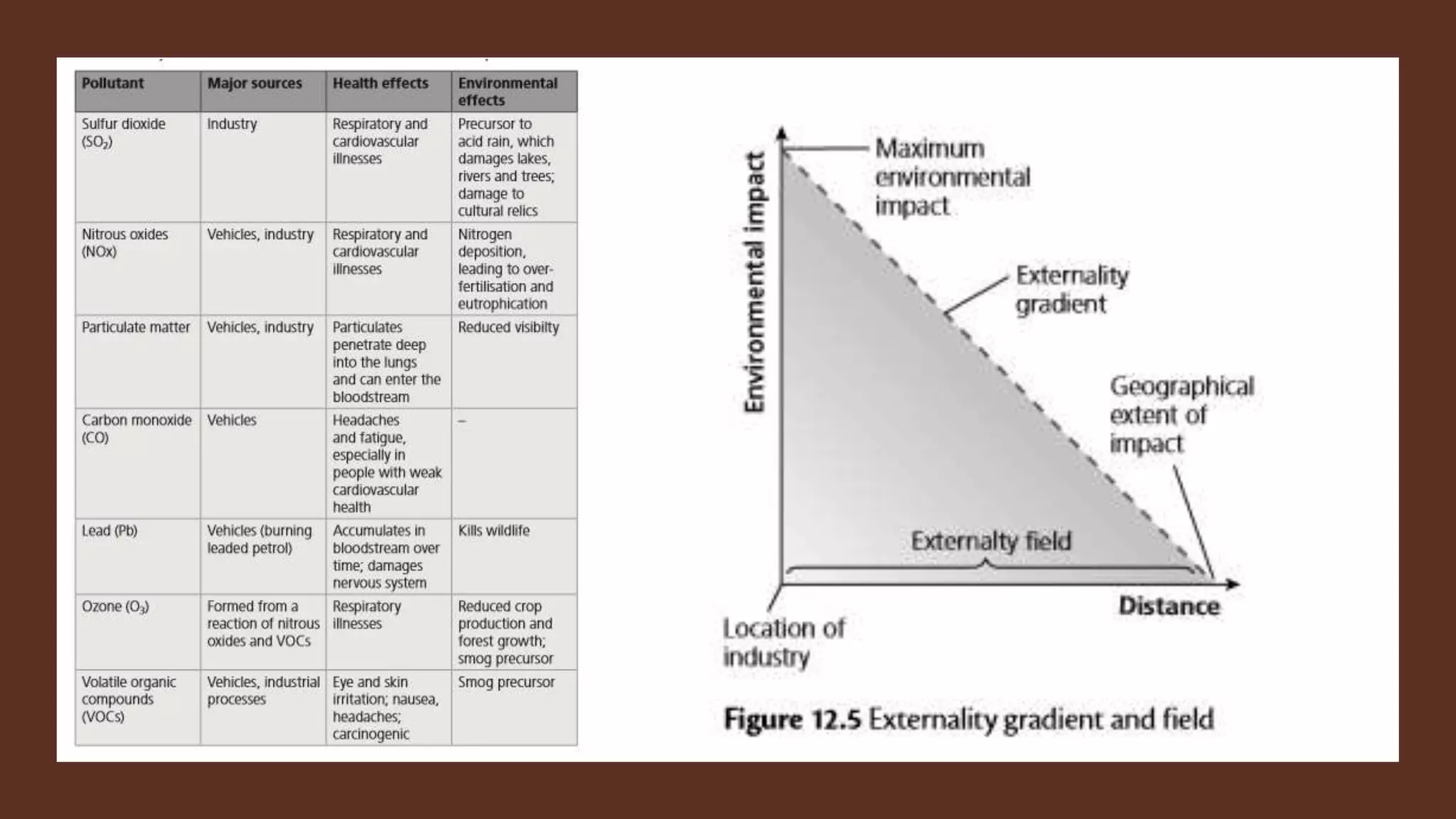
Pollution is the major externality of industrial and urban
areas.
It is at its most intense at the focus of pollution-causing
activities, declining with distance from such concentration.
GLOSSARY
Environmental degradation is the deterioration of the
environment through depletion of resources such as air,
water and soil.
Externalities are the side effects (positive and negative) of
an economic activity that are experienced beyond its site.
POLLUTION CONTROL IN HIC’s
Levels of pollution have generally declined in the developed
world because of:
• increasingly strict environmental legislation
• industry spending increasing amounts on research and
development to reduce pollution
• the relocation of the most polluting activities to the
emerging market economies
The expectation is that after a certain stage of economic
development in a country the level of pollution and the
degradation it causes will decline.
INCIDENTAL AND SUSTAINED POLLUTION
It is important to consider the different impacts of incidental
pollution and sustained pollution.
The former is mainly linked to major accidents caused by
technological failures and human error.
Results of the latter include ozone depletion and global
warming.
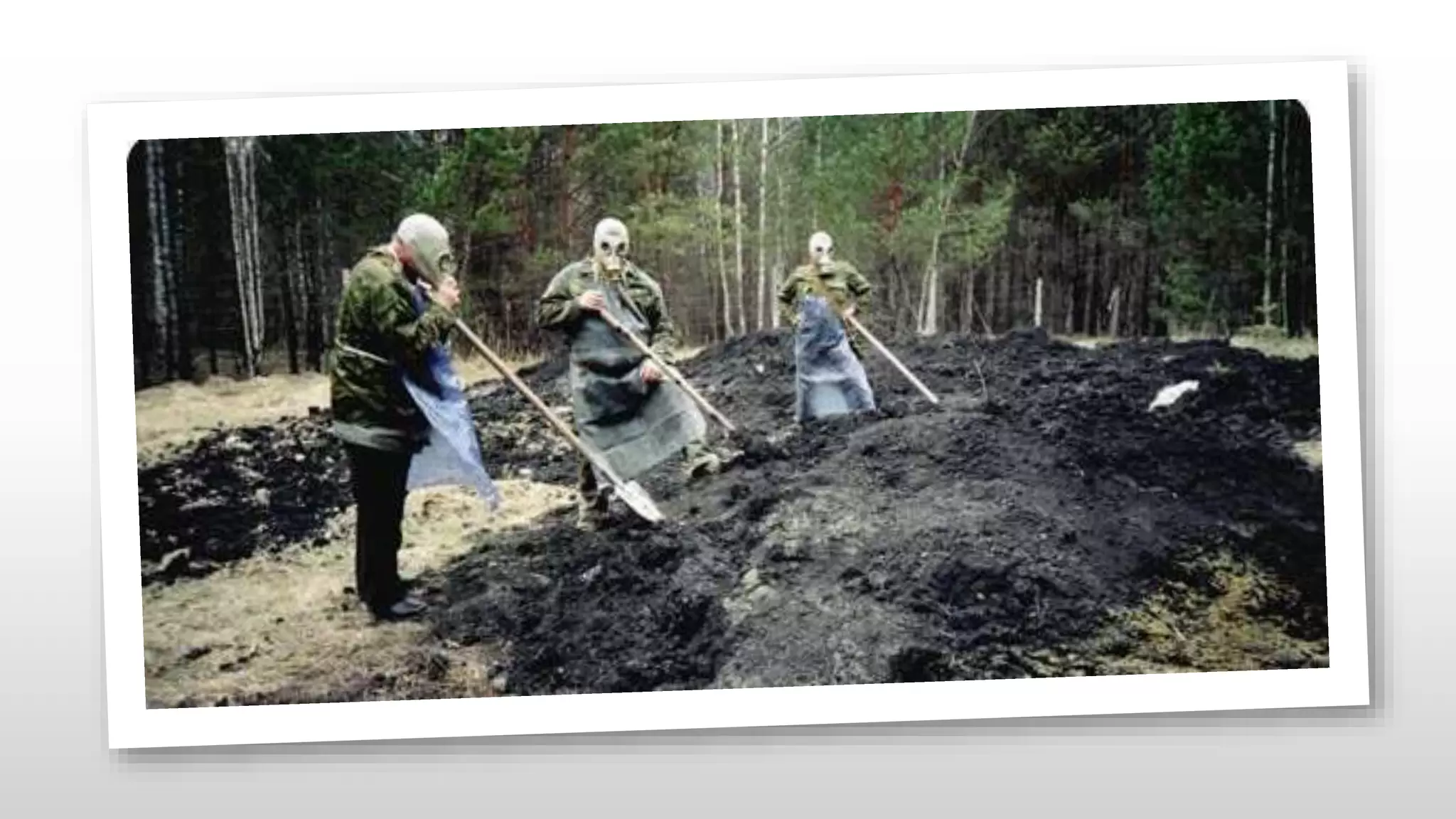
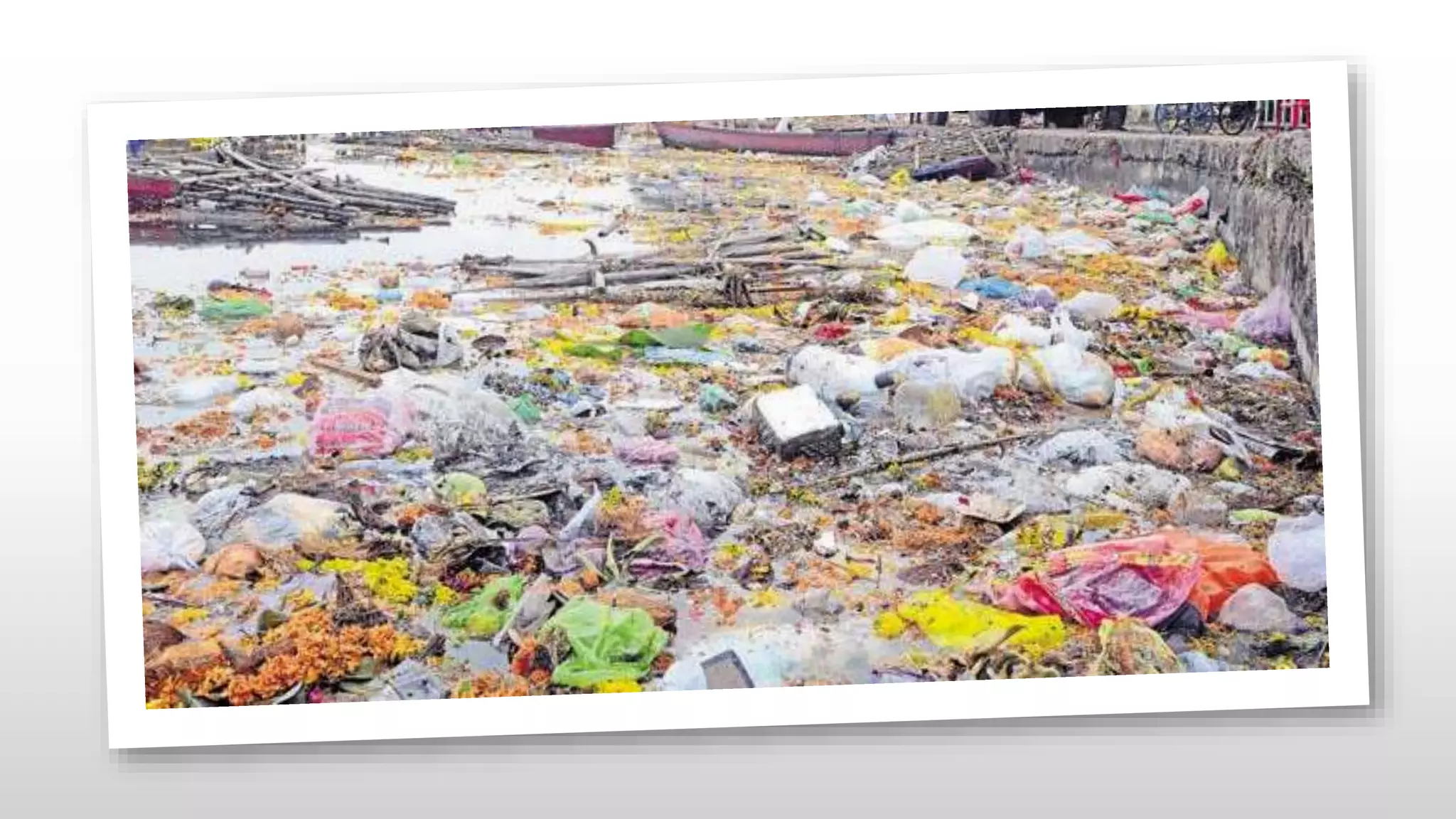
Major examples of incidental pollution such as Chernobyl and
Bhopal can have extremely long-lasting consequences.
It is usually the poorest people in a society who are exposed to
the risks from both incidental and sustained pollution.
GLOSSARY
Incidental pollution is a one-off pollution incident.
Sustained pollution is longer-term pollution.
SUSTAINED POLLUTION: OZONE HOLE
The ozone layer in the stratosphere prevents most harmful UV
radiation from passing through the atmosphere.
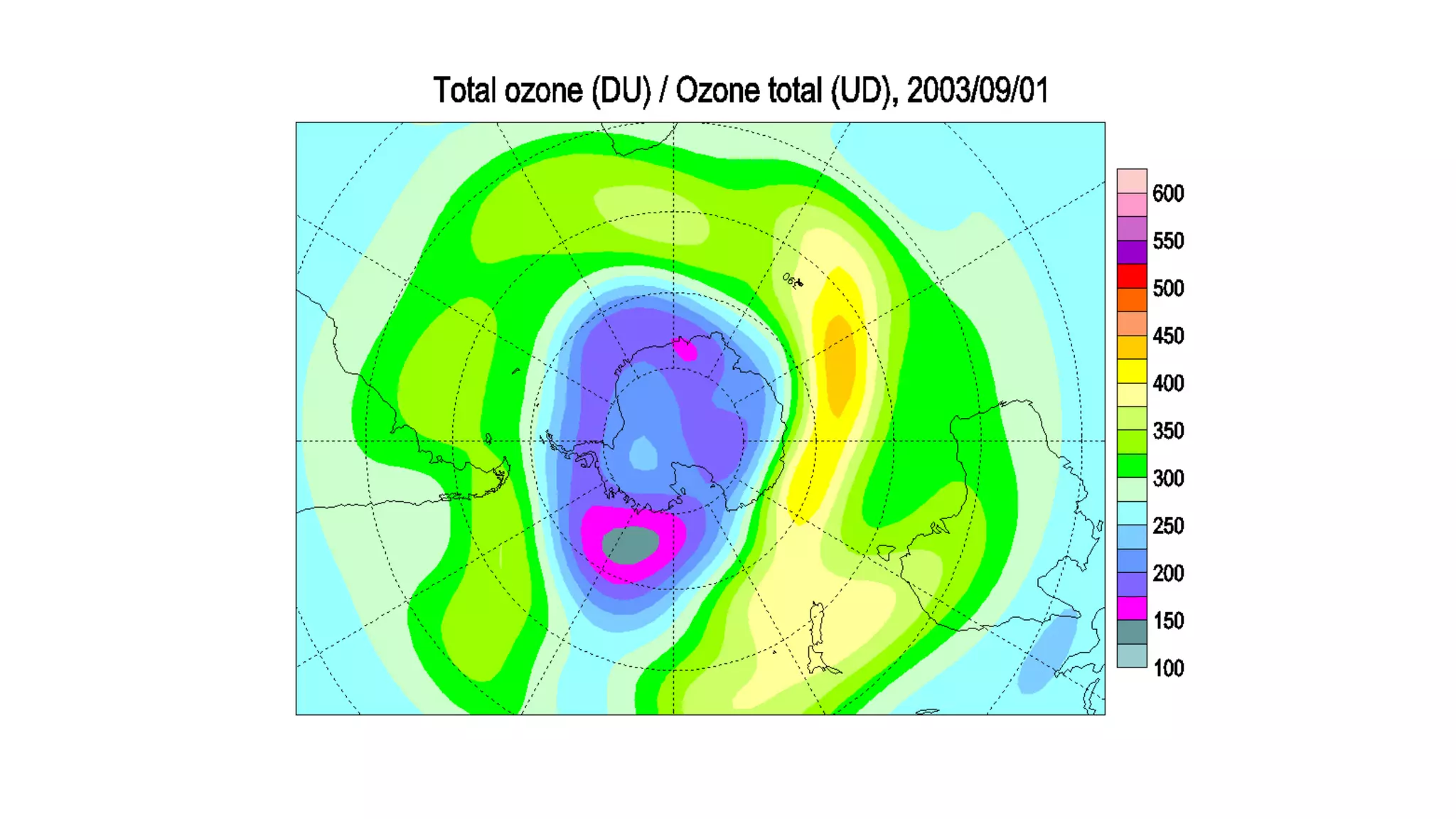
However, CFCs and other ozone-depleting substances have
caused an estimated decline of about 4% a decade in the ozone
layer since the late 1970s.
This has allowed more UV radiation to reach the ground,
leading to more cases of skin cancer, cataracts and other health
and environmental problems.
MEASURES TO ADDRESS THE PROBLEM
Widespread global concern resulted in the Montreal Protocol
banning the production of CFCs and related ozone depleting
chemicals.
Sustained pollution, such as that caused by ozone-depleting
substances, usually takes much longer to have a substantial
impact on human populations than incidental pollution, but it
is likely to affect many more people in the long term.
WATER: DEMAND, SUPPLY, QUALITY
For about 80 countries, with 40% of the world’s population,
lack of water is a constant threat.
And the situation is getting worse, with demand for water
doubling every 20 years.
In the poorest nations it is not just a question of lack of water;
the paltry supplies available are often polluted.
Securing access to clean water is a vital aspect of development.
Out of the 2.2 million unsafe drinking water deaths in 2004,
90% were children under the age of 5.
It has been estimated that 2.3 billion people live in water-
stressed areas with 1.7 billion resident in water-scarce areas.
GLOSSARY
Water-stressed areas are where water supply is below 1700
m3 per person per year.
Water-scarce areas are where water supply falls below 1000
m3 per person a year.
WATER UTILISATION – REGIONAL SCALE
There is a great imbalance in water demand and supply.
Over 60% of the world’s population live in areas receiving only
25% of global annual precipitation.
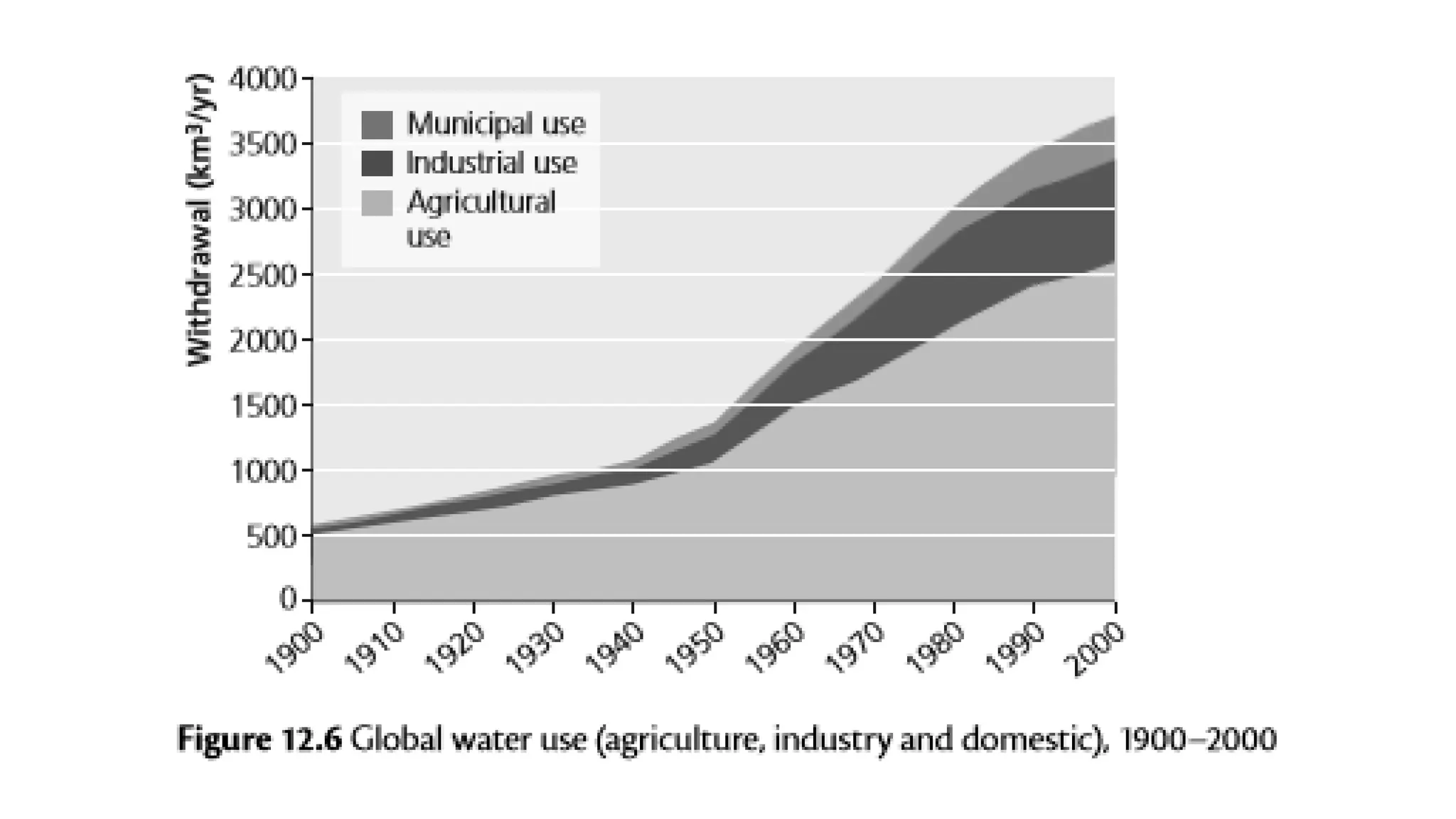
In the next slide you can see how global water use has
increased.
In the developing world agriculture accounts for over 80% of
total water use, with industry using more of the remainder
than domestic allocation.
In the developed world, agriculture accounts for slightly more
than 40% of total water use.
This is lower than the amount allocated to industry. As in the
developing world domestic use is in third place.
ENVIRO AND HUMAN FACTORS
The environmental and human factors affecting water scarcity
Water scarcity is to do with the availability of potable water.
Physical water scarcity is when physical access to water is
limited.
This is when demand outstrips a region’s ability to provide the
water needed by the population.
It is the arid and semi-arid regions of the world that are most
associated with physical water scarcity.
ENVIRO AND HUMAN FACTORS
Economic water scarcity exists when a population does not
have the necessary monetary means to utilise an adequate
source of water.
The unequal distribution of resources is central to economic
water scarcity, where the problem is lack of investment.
Much of Sub-Saharan Africa is affected by this type of water
scarcity. Scientists expect water scarcity to become more
severe largely because:
• the world’s population continues to increase significantly
• increasing affluence is inflating per capita demand for water
• of the increasing demands of biofuel production (biofuel crops are
heavy users of water)
• climate change is increasing aridity and reducing supply in many
regions
• many water sources are threatened by various forms of pollution
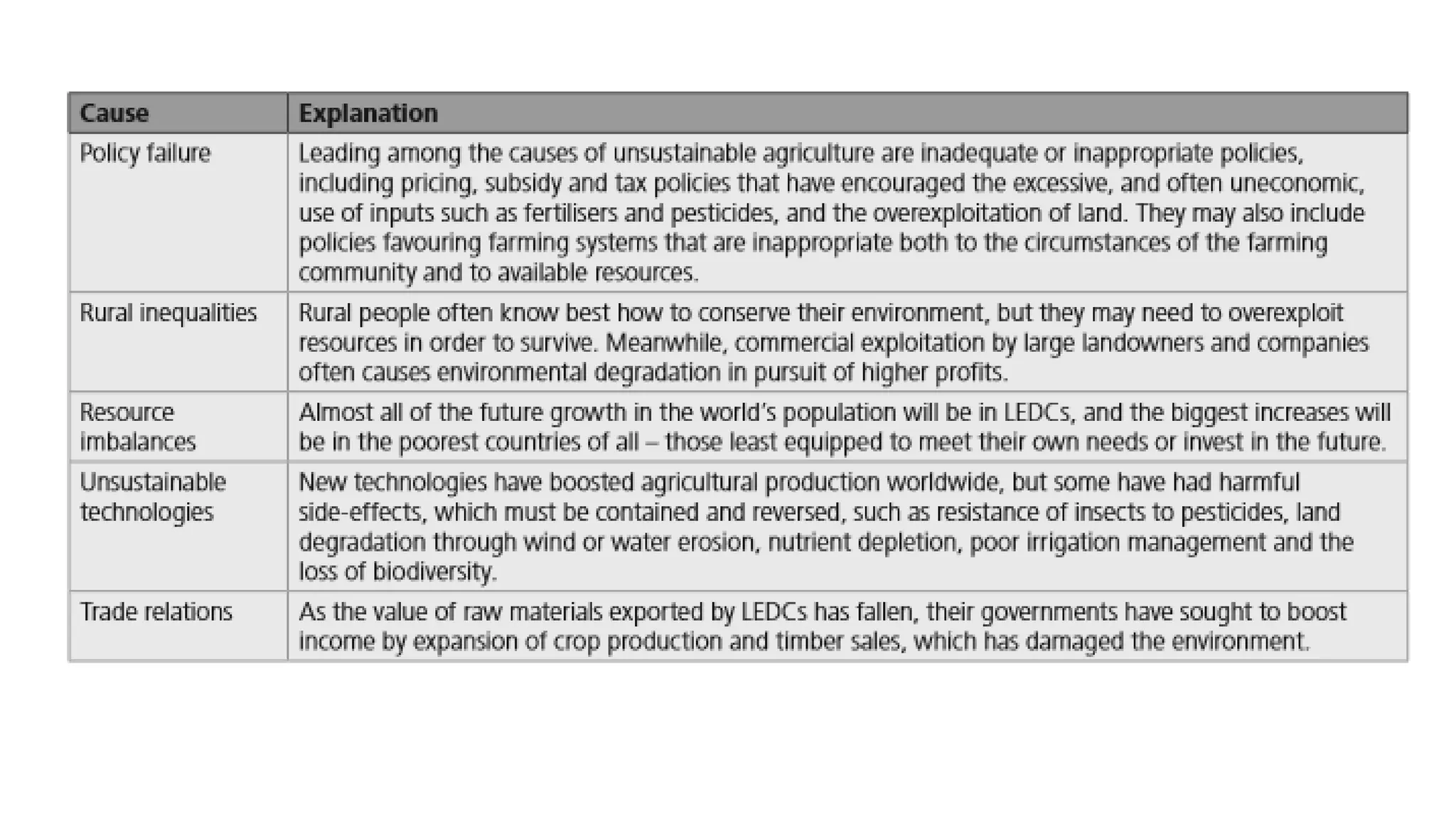
THE DEGRADATION OF RURAL ENVIRO
Rural environments supply people with most of their food and
contain the vast majority of the world’s forested land.
However, rural areas all around the world have been degraded
at a rapid rate due to a range of factors, including
overpopulation, poor agricultural practices and deforestation.
Agroindustrialisation has had a massive impact on rural
ecosystems.
THE DEGRADATION OF RURAL ENVIRO
The modes of production, processing, distribution and
consumption prevail because in the short-to-medium term they
are the most profitable.
They are not necessarily the most healthy or the most
environmentally sustainable.
In many parts of the world agroindustrialisation is having a
devastating impact on the environment, causing:
• deforestation
• land degradation and desertification
• salinisation and contamination of water supplies
• air pollution
• increasing concerns about the health of long-term farm workers
• landscape change and declines in biodiversity
AGRO-INDUSTRIALISATION
Agro-industrialisation is characterised by large areas of
monoculture, which leaves crops more vulnerable to disease
due to the depletion of natural systems of pest control.
Monoculture results in reliance on pesticides, which leads to a
downward environmental cycle.
Large-scale farming has been expanding geographically into a
number of fragile environments, particularly into areas of
rainforest.
The global cattle population is currently around 1.5 billion.
The balance between livestock and grass is sustainable at
present, but as the demand for meat increases, the pressures
that cattle make on the land may well soon exceed supply.
POOR HOUSEHOLDS
Poor households are often compelled to degrade environmental
resources.
They can also suffer significantly from the actions of large-
scale rural operations and may be pushed onto more marginal
lands by logging, ranching or mining operations.
Remember that urban
areas can affect the
environmental
degradation of their
rural surroundings in
a number of ways.
For example,
untreated urban
wastewater is a
major pollutant of
rivers and landfill
sites for urban waste
may have adverse
impacts.
URBAN ENVIRONMENTAL
The degradation of urban environments occurs mainly through
urbanisation, industrial development and inadequate
infrastructure.
Next slide shows how urban environmental problems can
impact at the household, community and city scales.
The urban poor are particularly affected by poor environmental
services such as sub-standard housing, lack of sanitation and
other aspects of urban poverty.
CHINA’S RECORD
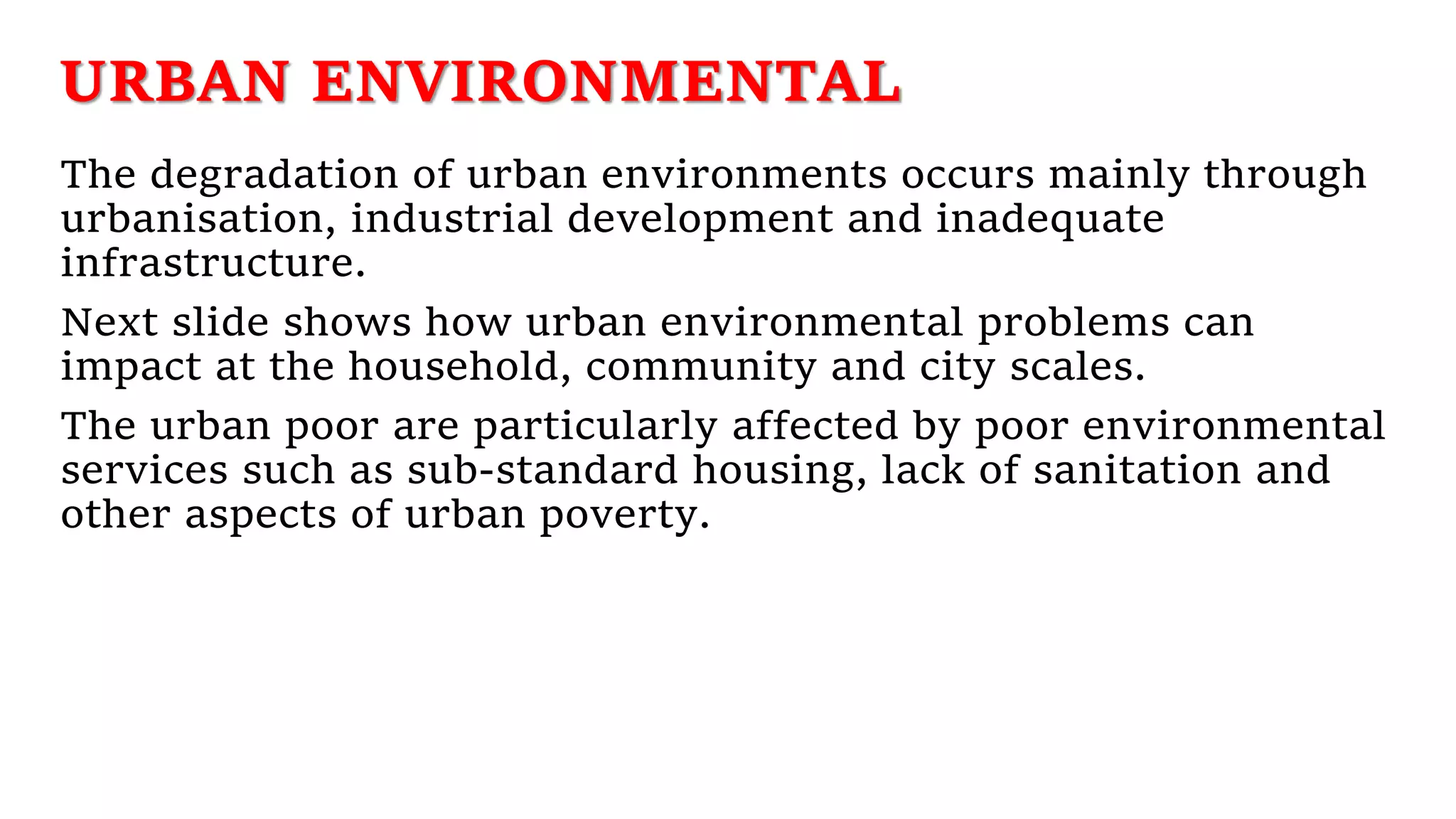
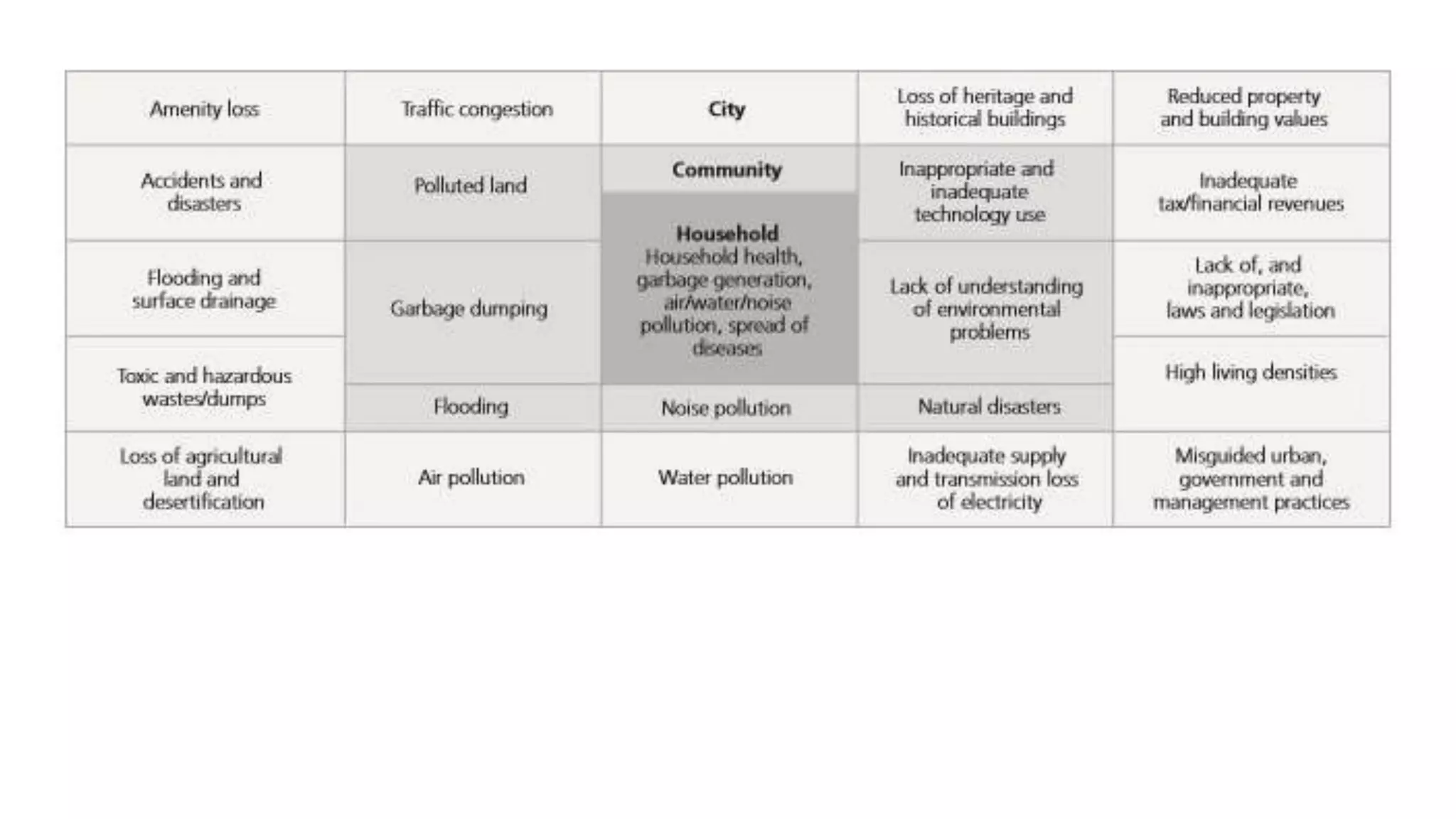
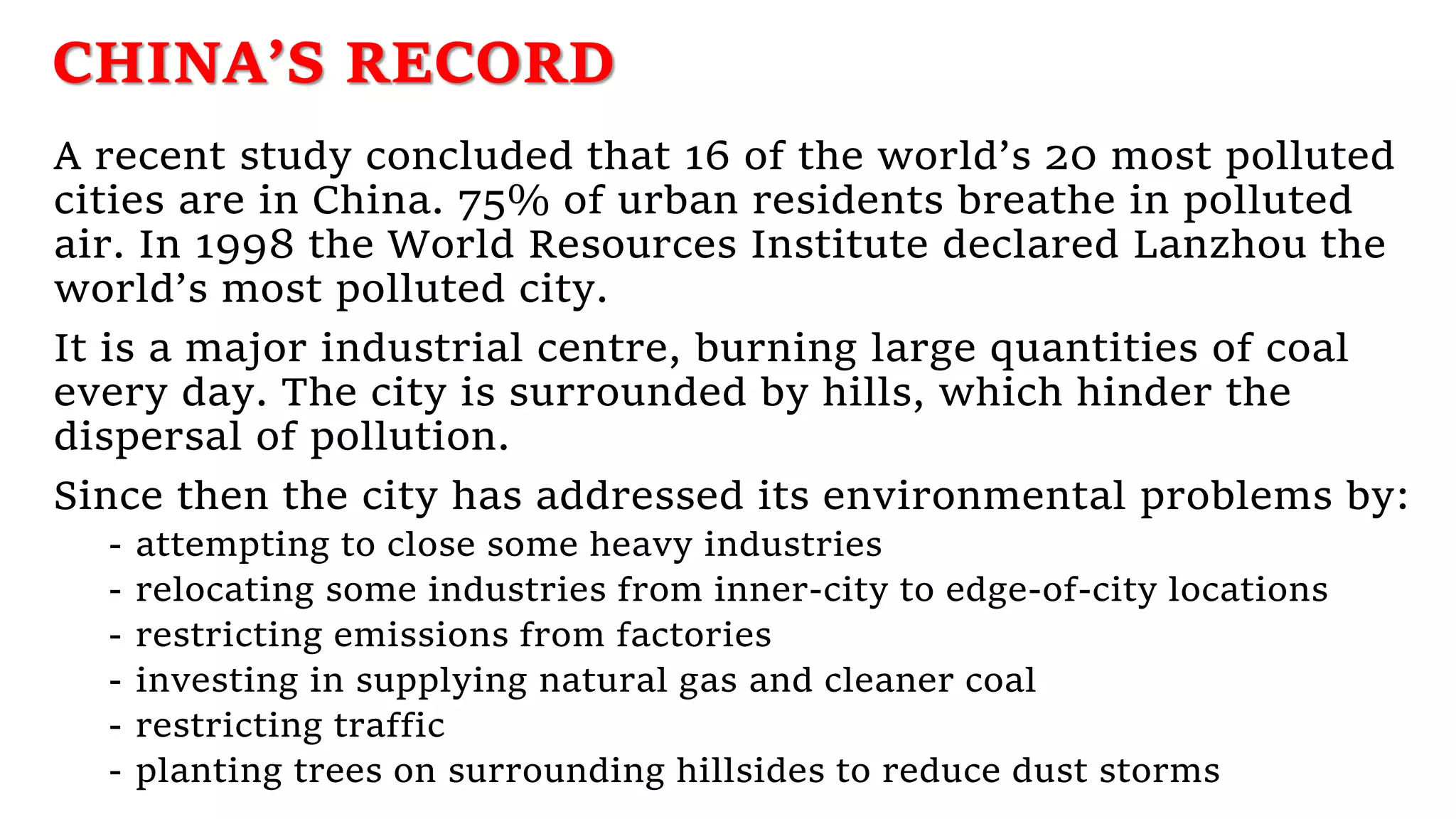
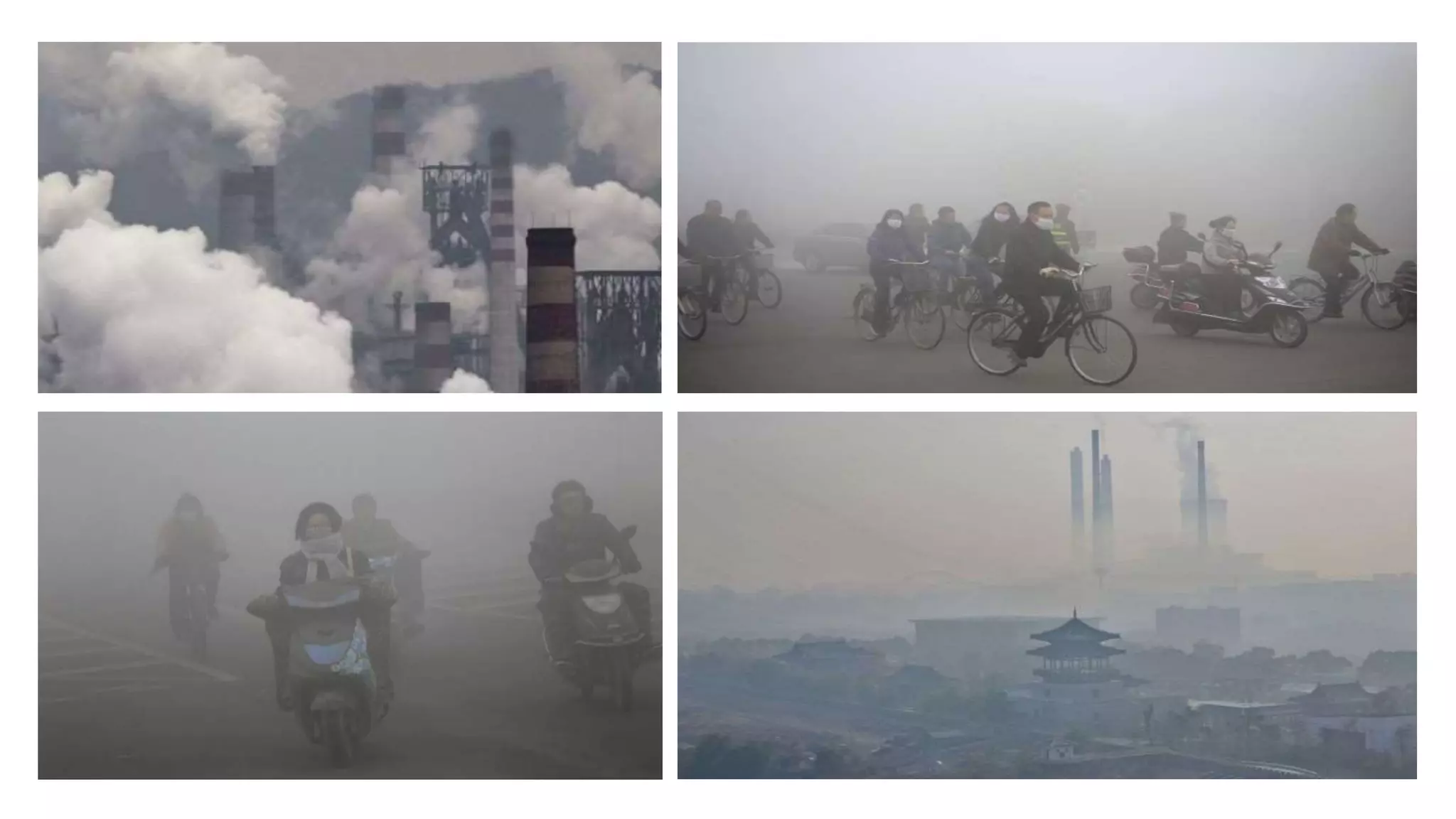
A recent study concluded that 16 of the world’s 20 most polluted
cities are in China. 75% of urban residents breathe in polluted
air. In 1998 the World Resources Institute declared Lanzhou the
world’s most polluted city.
It is a major industrial centre, burning large quantities of coal
every day. The city is surrounded by hills, which hinder the
dispersal of pollution.
Since then the city has addressed its environmental problems by:
- attempting to close some heavy industries
- relocating some industries from inner-city to edge-of-city locations
- restricting emissions from factories
- investing in supplying natural gas and cleaner coal
- restricting traffic
- planting trees on surrounding hillsides to reduce dust storms
STRATEGIES FOR IMPROVED DISPOSAL
In July 2009, the Beijing municipal government launched a
strategy for the improved disposal of the 18,410 tonnes of
domestic refuse generated by the city every day.
These measures include building more environmentally friendly
disposal sites, improving incineration technologies, and
enforcing household waste separation and recycling.
The last Saturday of every month has been designated as a
‘recyclable resources collecting day’.
However, people in China are not yet as ‘recycling aware’ as
populations in richer countries.
Much needs to be done in terms of environmental education to
improve this situation.
NO MORE LANDFILLS
Beijing will run out of space for landfills in just 4 years.
More than a third of Chinese cities are facing a similar crisis.
At present, only 10% of waste is incinerated.
However, significantly increasing incineration requires
substantial investment and there is always considerable
opposition from people living close to the sites selected for new
incinerators.
The main concern is the significant amounts of heavy metals and
dioxins released into the atmosphere by incinerators.
CONSTRAINTS ON IMPROVING
DEGRADED ENVIRONMENTS
There are numerous constraints on improving the quality of
degraded environments:
• In many parts of the developing world population growth
continues at a high rate.
• High rates of rural–urban migration can lead to rapidly
deteriorating environmental conditions in large urban
areas.
• Environmental hazards, often made worse by climate
change, present an increasing challenge in some world
regions.
CONSTRAINTS ON IMPROVING
DEGRADED ENVIRONMENTS cont.
• Poor knowledge about the environmental impact of human
actions is a significant factor in many locations.
• Poor management at both central and local government levels
may result in problems that can be at least partially rectified,
not being addressed.
• Many degraded environments require substantial investment to
bring in realistic solutions.
• Civil war has put back development by decades in some
countries.
• Corruption and crime can also reduce the effectiveness of
schemes to reduce environmental degradation.
THE PROTECTION OF ENVIRONMENTS AT RISK
At the most extreme, human activity and access can be totally
banned, such as in Wilderness Areas, or extremely limited, as is
usually the case in National Parks. In many areas it is usually
necessary to sustain significant populations and rates of
economic activity, particularly in developing countries. In these
cases various types of sustainable development policies need to
be implemented. Individual environments can be assessed in
terms of:
• needs – what needs to be done to reduce environmental
degradation as far as possible without destroying the
livelihoods of the resident population?
• measures – what are the policies and practices that can be
implemented to achieve these aims at various time scales?
• outcomes – how successful have these policies been at different
stages of their implementation? Have policies been modified to
cope with initially unforeseen circumstances?
TEST YOURSELF
1. Define environmental degradation.
2. Give two reasons why levels of pollution have generally declined
in the developed world.
3. Distinguish between water-stressed areas and water-scarce
areas.
4. How has agro-industrialisation degraded rural environments?
ANSWERS
1. The deterioration of the environment through depletion of
resources such as air, water and soil.
2. Two from: increasingly strict environmental legislation;
industry has spent increasing amounts on research and
development to reduce pollution; the relocation of the most
polluting activities to the emerging market economies.
3. Water-stressed areas occur where water supply is below 1700
m3 per person per year. Water-scarce areas occur where water
supply falls below 1000 m3 per person per year.
4. The main impacts of agro-industrialisation have been:
deforestation; land degradation and desertification; salinisation
and contamination of water supplies; air pollution; increasing
concerns about the health of long-term farm workers; landscape
change; declines in biodiversity.

A2 CAMBRIDGE GEOGRAPHY: ENVIRONMENTAL MANAGEMENT - ENVIRONMENTAL DEGRADATION

  • 1.
  • 2.
    POLLUTION Pollution means contaminationof some kind. It is usually referred to in the context of the environment, where the pollution can take many forms – air, water, soil, noise, visual and many others. Pollution is the dominant factor in the environmental degradation of land, air and water. The most serious polluters are the large-scale processing industries. Pollution is the major externality of industrial and urban areas. It is at its most intense at the focus of pollution-causing activities, declining with distance from such concentration.
  • 3.
    GLOSSARY Environmental degradation isthe deterioration of the environment through depletion of resources such as air, water and soil. Externalities are the side effects (positive and negative) of an economic activity that are experienced beyond its site.
  • 5.
    POLLUTION CONTROL INHIC’s Levels of pollution have generally declined in the developed world because of: • increasingly strict environmental legislation • industry spending increasing amounts on research and development to reduce pollution • the relocation of the most polluting activities to the emerging market economies The expectation is that after a certain stage of economic development in a country the level of pollution and the degradation it causes will decline.
  • 6.
    INCIDENTAL AND SUSTAINEDPOLLUTION It is important to consider the different impacts of incidental pollution and sustained pollution. The former is mainly linked to major accidents caused by technological failures and human error. Results of the latter include ozone depletion and global warming. Major examples of incidental pollution such as Chernobyl and Bhopal can have extremely long-lasting consequences. It is usually the poorest people in a society who are exposed to the risks from both incidental and sustained pollution.
  • 9.
    GLOSSARY Incidental pollution isa one-off pollution incident. Sustained pollution is longer-term pollution.
  • 10.
    SUSTAINED POLLUTION: OZONEHOLE The ozone layer in the stratosphere prevents most harmful UV radiation from passing through the atmosphere. However, CFCs and other ozone-depleting substances have caused an estimated decline of about 4% a decade in the ozone layer since the late 1970s. This has allowed more UV radiation to reach the ground, leading to more cases of skin cancer, cataracts and other health and environmental problems.
  • 12.
    MEASURES TO ADDRESSTHE PROBLEM Widespread global concern resulted in the Montreal Protocol banning the production of CFCs and related ozone depleting chemicals. Sustained pollution, such as that caused by ozone-depleting substances, usually takes much longer to have a substantial impact on human populations than incidental pollution, but it is likely to affect many more people in the long term.
  • 13.
    WATER: DEMAND, SUPPLY,QUALITY For about 80 countries, with 40% of the world’s population, lack of water is a constant threat. And the situation is getting worse, with demand for water doubling every 20 years. In the poorest nations it is not just a question of lack of water; the paltry supplies available are often polluted. Securing access to clean water is a vital aspect of development. Out of the 2.2 million unsafe drinking water deaths in 2004, 90% were children under the age of 5. It has been estimated that 2.3 billion people live in water- stressed areas with 1.7 billion resident in water-scarce areas.
  • 14.
    GLOSSARY Water-stressed areas arewhere water supply is below 1700 m3 per person per year. Water-scarce areas are where water supply falls below 1000 m3 per person a year.
  • 15.
    WATER UTILISATION –REGIONAL SCALE There is a great imbalance in water demand and supply. Over 60% of the world’s population live in areas receiving only 25% of global annual precipitation. In the next slide you can see how global water use has increased. In the developing world agriculture accounts for over 80% of total water use, with industry using more of the remainder than domestic allocation. In the developed world, agriculture accounts for slightly more than 40% of total water use. This is lower than the amount allocated to industry. As in the developing world domestic use is in third place.
  • 17.
    ENVIRO AND HUMANFACTORS The environmental and human factors affecting water scarcity Water scarcity is to do with the availability of potable water. Physical water scarcity is when physical access to water is limited. This is when demand outstrips a region’s ability to provide the water needed by the population. It is the arid and semi-arid regions of the world that are most associated with physical water scarcity.
  • 18.
    ENVIRO AND HUMANFACTORS Economic water scarcity exists when a population does not have the necessary monetary means to utilise an adequate source of water. The unequal distribution of resources is central to economic water scarcity, where the problem is lack of investment. Much of Sub-Saharan Africa is affected by this type of water scarcity. Scientists expect water scarcity to become more severe largely because: • the world’s population continues to increase significantly • increasing affluence is inflating per capita demand for water • of the increasing demands of biofuel production (biofuel crops are heavy users of water) • climate change is increasing aridity and reducing supply in many regions • many water sources are threatened by various forms of pollution
  • 19.
    THE DEGRADATION OFRURAL ENVIRO Rural environments supply people with most of their food and contain the vast majority of the world’s forested land. However, rural areas all around the world have been degraded at a rapid rate due to a range of factors, including overpopulation, poor agricultural practices and deforestation. Agroindustrialisation has had a massive impact on rural ecosystems.
  • 20.
    THE DEGRADATION OFRURAL ENVIRO The modes of production, processing, distribution and consumption prevail because in the short-to-medium term they are the most profitable. They are not necessarily the most healthy or the most environmentally sustainable. In many parts of the world agroindustrialisation is having a devastating impact on the environment, causing: • deforestation • land degradation and desertification • salinisation and contamination of water supplies • air pollution • increasing concerns about the health of long-term farm workers • landscape change and declines in biodiversity
  • 22.
    AGRO-INDUSTRIALISATION Agro-industrialisation is characterisedby large areas of monoculture, which leaves crops more vulnerable to disease due to the depletion of natural systems of pest control. Monoculture results in reliance on pesticides, which leads to a downward environmental cycle. Large-scale farming has been expanding geographically into a number of fragile environments, particularly into areas of rainforest. The global cattle population is currently around 1.5 billion. The balance between livestock and grass is sustainable at present, but as the demand for meat increases, the pressures that cattle make on the land may well soon exceed supply.
  • 23.
    POOR HOUSEHOLDS Poor householdsare often compelled to degrade environmental resources. They can also suffer significantly from the actions of large- scale rural operations and may be pushed onto more marginal lands by logging, ranching or mining operations.
  • 24.
    Remember that urban areascan affect the environmental degradation of their rural surroundings in a number of ways. For example, untreated urban wastewater is a major pollutant of rivers and landfill sites for urban waste may have adverse impacts.
  • 25.
    URBAN ENVIRONMENTAL The degradationof urban environments occurs mainly through urbanisation, industrial development and inadequate infrastructure. Next slide shows how urban environmental problems can impact at the household, community and city scales. The urban poor are particularly affected by poor environmental services such as sub-standard housing, lack of sanitation and other aspects of urban poverty.
  • 27.
    CHINA’S RECORD A recentstudy concluded that 16 of the world’s 20 most polluted cities are in China. 75% of urban residents breathe in polluted air. In 1998 the World Resources Institute declared Lanzhou the world’s most polluted city. It is a major industrial centre, burning large quantities of coal every day. The city is surrounded by hills, which hinder the dispersal of pollution. Since then the city has addressed its environmental problems by: - attempting to close some heavy industries - relocating some industries from inner-city to edge-of-city locations - restricting emissions from factories - investing in supplying natural gas and cleaner coal - restricting traffic - planting trees on surrounding hillsides to reduce dust storms
  • 29.
    STRATEGIES FOR IMPROVEDDISPOSAL In July 2009, the Beijing municipal government launched a strategy for the improved disposal of the 18,410 tonnes of domestic refuse generated by the city every day. These measures include building more environmentally friendly disposal sites, improving incineration technologies, and enforcing household waste separation and recycling. The last Saturday of every month has been designated as a ‘recyclable resources collecting day’. However, people in China are not yet as ‘recycling aware’ as populations in richer countries. Much needs to be done in terms of environmental education to improve this situation.
  • 30.
    NO MORE LANDFILLS Beijingwill run out of space for landfills in just 4 years. More than a third of Chinese cities are facing a similar crisis. At present, only 10% of waste is incinerated. However, significantly increasing incineration requires substantial investment and there is always considerable opposition from people living close to the sites selected for new incinerators. The main concern is the significant amounts of heavy metals and dioxins released into the atmosphere by incinerators.
  • 31.
    CONSTRAINTS ON IMPROVING DEGRADEDENVIRONMENTS There are numerous constraints on improving the quality of degraded environments: • In many parts of the developing world population growth continues at a high rate. • High rates of rural–urban migration can lead to rapidly deteriorating environmental conditions in large urban areas. • Environmental hazards, often made worse by climate change, present an increasing challenge in some world regions.
  • 32.
    CONSTRAINTS ON IMPROVING DEGRADEDENVIRONMENTS cont. • Poor knowledge about the environmental impact of human actions is a significant factor in many locations. • Poor management at both central and local government levels may result in problems that can be at least partially rectified, not being addressed. • Many degraded environments require substantial investment to bring in realistic solutions. • Civil war has put back development by decades in some countries. • Corruption and crime can also reduce the effectiveness of schemes to reduce environmental degradation.
  • 33.
    THE PROTECTION OFENVIRONMENTS AT RISK At the most extreme, human activity and access can be totally banned, such as in Wilderness Areas, or extremely limited, as is usually the case in National Parks. In many areas it is usually necessary to sustain significant populations and rates of economic activity, particularly in developing countries. In these cases various types of sustainable development policies need to be implemented. Individual environments can be assessed in terms of: • needs – what needs to be done to reduce environmental degradation as far as possible without destroying the livelihoods of the resident population? • measures – what are the policies and practices that can be implemented to achieve these aims at various time scales? • outcomes – how successful have these policies been at different stages of their implementation? Have policies been modified to cope with initially unforeseen circumstances?
  • 34.
    TEST YOURSELF 1. Defineenvironmental degradation. 2. Give two reasons why levels of pollution have generally declined in the developed world. 3. Distinguish between water-stressed areas and water-scarce areas. 4. How has agro-industrialisation degraded rural environments?
  • 35.
    ANSWERS 1. The deteriorationof the environment through depletion of resources such as air, water and soil. 2. Two from: increasingly strict environmental legislation; industry has spent increasing amounts on research and development to reduce pollution; the relocation of the most polluting activities to the emerging market economies. 3. Water-stressed areas occur where water supply is below 1700 m3 per person per year. Water-scarce areas occur where water supply falls below 1000 m3 per person per year. 4. The main impacts of agro-industrialisation have been: deforestation; land degradation and desertification; salinisation and contamination of water supplies; air pollution; increasing concerns about the health of long-term farm workers; landscape change; declines in biodiversity.