H.M.I.S.


HEALTH MANAGEMENT
INFORMATION SYSTEM
HMIS


 A System that provides specific
INFORMATION SUPPORT to the
 DECISION MAKING process at
  each Level of an Organization
Essentials of HMIS
 INPUT   - The data on selected activities or
  happenings that will produce information
 PROCESS - Data is transformed into
  information--- Collection, Aggregation,
  Analysis & presentation on time in a legible
  & understandable format.
 OUTPUT - Processed information to satisfy
  one or more user needs.
Essentials Contnd….
 RELEVANCE
 STANDARDIZATION(uniformity            in
  definitions of variables collected e.g.IMR)
 Data Collecting & Aggregation Instruments
 Data Presentation
ESSENTIALS----Contd.
 Flow   of Information
 Use of the Information
 Filtration of Information
 Feedback
 Indicators (Variables which measure the
  changes e.g. IMR)
USES OF HMIS
 Measurement    of Health status of people
 To quantify their Health problems &
  Medical & Health care needs
 Comparison of Health status (Local,
  National, International)
USES----Contd.
 Planningand administration
 Management of Health Services and
  Programmes
 Assessment of Health Services
USES----Contd.
 Assessment   of the attitudes & degree of
  satisfaction of the beneficiaries
 Surveillance of Diseases
 Research
SOURCES OF COLLECTION
OF HEALTH INFORMATION
Sources----Contd.
 THE   CENSUS
 VITAL EVENTS(Births & Deaths)
 A.---- In Rural Areas
 B.---- In Urban Areas (Municipal Registration
  Office within 4 Days)
 In Sind (Revenue Officials)
 In Medical Institutions (Local Health Authorities-
  To DDO(H),DO(H), Civil Surgeon)
 INFECTIOUS DISEASES (Only 18 Priority
  Health Problems are to be reported)
Sources Contnd….
    HOSPITAL & DISPENSARY RECORD:
a.   OPD Register
b.   Indoor Register
c.   Abstract Register (Daily Tabulation of
     Diseases)
d.   Annual Return (Daily, Monthly, Quarterly
     Reports)
Contnd…….
 HEALTH     MANPOWER :
  STATISTICS(PMDC, Nursing Council)
 POPULATION SURVEYS : (Morbidity,
  Mortality, Nutritional Surveys)
 EPIDEMIOLOGICAL SURVIELLANCE :
  ( Malaria, T.B.)
DEFINITIONS
    Health Institutions
A. First Level Care Facility (FLCF)
    A facility where there is first contact between a Client /
     Patient and a health care provider.
1.   Basic Health Unit (BHU)
2.   Rural Health Centre (RHC)
3.   Dispensary (Disp)
4.   Sub Health Centre (SHC)
5.   First Aid Post (FAP)
6.   MCH Centre (MCH)
7.   OPD of Hospital
Cotnd……..
B. Referral Level Care Facility (RLCF)
 Care Provider

a. For Curative Care
b. For Preventive Care
 Patient / Client
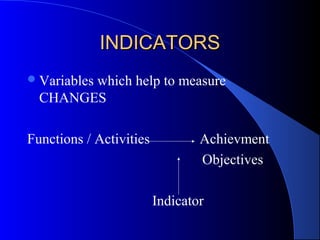
INDICATORS
 Variables
        which help to measure
  CHANGES

Functions / Activities           Achievment
                                 Objectives

                         Indicator
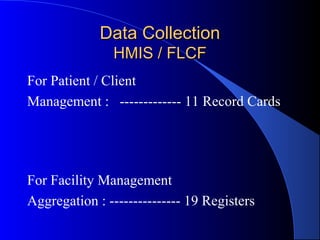
Data Collection
               HMIS / FLCF
For Patient / Client
Management : ------------- 11 Record Cards


For Facility Management
Aggregation : --------------- 19 Registers
Use of Information
1. Immediate Feedback
•  Use by data Collector


2. Feedback From Higher Levels
Data Collection Instruments
             (Facility Based)
 REPORT   FORMS

 Immediate Report
 Monthly Report
 Yearly Report
Transmission of Monthly & Yearly FLCF
               Reports

               FEDERAL


              PROVINCE


               DISTRICT


                 FLCF

Hmis

  • 1.
  • 2.
    HMIS A Systemthat provides specific INFORMATION SUPPORT to the DECISION MAKING process at each Level of an Organization
  • 4.
    Essentials of HMIS INPUT - The data on selected activities or happenings that will produce information  PROCESS - Data is transformed into information--- Collection, Aggregation, Analysis & presentation on time in a legible & understandable format.  OUTPUT - Processed information to satisfy one or more user needs.
  • 5.
    Essentials Contnd….  RELEVANCE STANDARDIZATION(uniformity in definitions of variables collected e.g.IMR)  Data Collecting & Aggregation Instruments  Data Presentation
  • 6.
    ESSENTIALS----Contd.  Flow of Information  Use of the Information  Filtration of Information  Feedback  Indicators (Variables which measure the changes e.g. IMR)
  • 7.
    USES OF HMIS Measurement of Health status of people  To quantify their Health problems & Medical & Health care needs  Comparison of Health status (Local, National, International)
  • 8.
    USES----Contd.  Planningand administration Management of Health Services and Programmes  Assessment of Health Services
  • 9.
    USES----Contd.  Assessment of the attitudes & degree of satisfaction of the beneficiaries  Surveillance of Diseases  Research
  • 10.
    SOURCES OF COLLECTION OFHEALTH INFORMATION
  • 11.
    Sources----Contd.  THE CENSUS  VITAL EVENTS(Births & Deaths)  A.---- In Rural Areas  B.---- In Urban Areas (Municipal Registration Office within 4 Days)  In Sind (Revenue Officials)  In Medical Institutions (Local Health Authorities- To DDO(H),DO(H), Civil Surgeon)  INFECTIOUS DISEASES (Only 18 Priority Health Problems are to be reported)
  • 12.
    Sources Contnd….  HOSPITAL & DISPENSARY RECORD: a. OPD Register b. Indoor Register c. Abstract Register (Daily Tabulation of Diseases) d. Annual Return (Daily, Monthly, Quarterly Reports)
  • 13.
    Contnd…….  HEALTH MANPOWER : STATISTICS(PMDC, Nursing Council)  POPULATION SURVEYS : (Morbidity, Mortality, Nutritional Surveys)  EPIDEMIOLOGICAL SURVIELLANCE : ( Malaria, T.B.)
  • 14.
    DEFINITIONS  Health Institutions A. First Level Care Facility (FLCF)  A facility where there is first contact between a Client / Patient and a health care provider. 1. Basic Health Unit (BHU) 2. Rural Health Centre (RHC) 3. Dispensary (Disp) 4. Sub Health Centre (SHC) 5. First Aid Post (FAP) 6. MCH Centre (MCH) 7. OPD of Hospital
  • 15.
    Cotnd…….. B. Referral LevelCare Facility (RLCF)  Care Provider a. For Curative Care b. For Preventive Care  Patient / Client
  • 16.
    INDICATORS  Variables which help to measure CHANGES Functions / Activities Achievment Objectives Indicator
  • 17.
    Data Collection HMIS / FLCF For Patient / Client Management : ------------- 11 Record Cards For Facility Management Aggregation : --------------- 19 Registers
  • 18.
    Use of Information 1.Immediate Feedback • Use by data Collector 2. Feedback From Higher Levels
  • 19.
    Data Collection Instruments (Facility Based)  REPORT FORMS  Immediate Report  Monthly Report  Yearly Report
  • 20.
    Transmission of Monthly& Yearly FLCF Reports FEDERAL PROVINCE DISTRICT FLCF