BETA BLOCKERS
IN
ACUTE MYOCARDIAL
INFARCTION
Dr. Satyam Rajvanshi
SR Cardiology
OVERVIEW
Overview
 Introduction
 Mechanism of benefit in AMI
 Indications and Recommendation
 Evidence behind the Recommendations
 With and without Reperfusion therapy
 IV vs Oral initiation
 Early vs Late
 Contraindications
 Choice of Drug
INTRODUCTION
Introduction
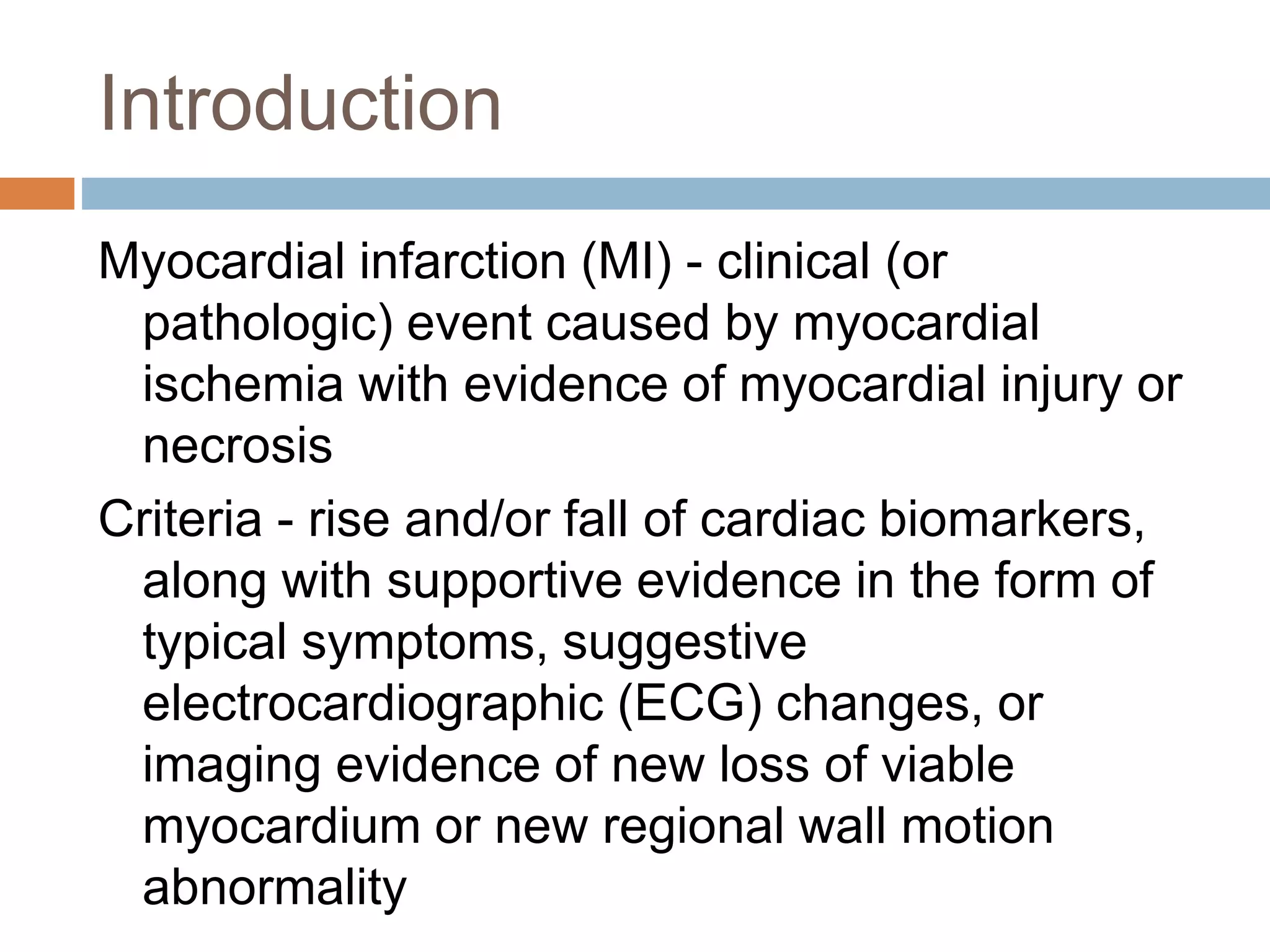
Myocardial infarction (MI) - clinical (or
pathologic) event caused by myocardial
ischemia with evidence of myocardial injury or
necrosis
Criteria - rise and/or fall of cardiac biomarkers,
along with supportive evidence in the form of
typical symptoms, suggestive
electrocardiographic (ECG) changes, or
imaging evidence of new loss of viable
myocardium or new regional wall motion
abnormality
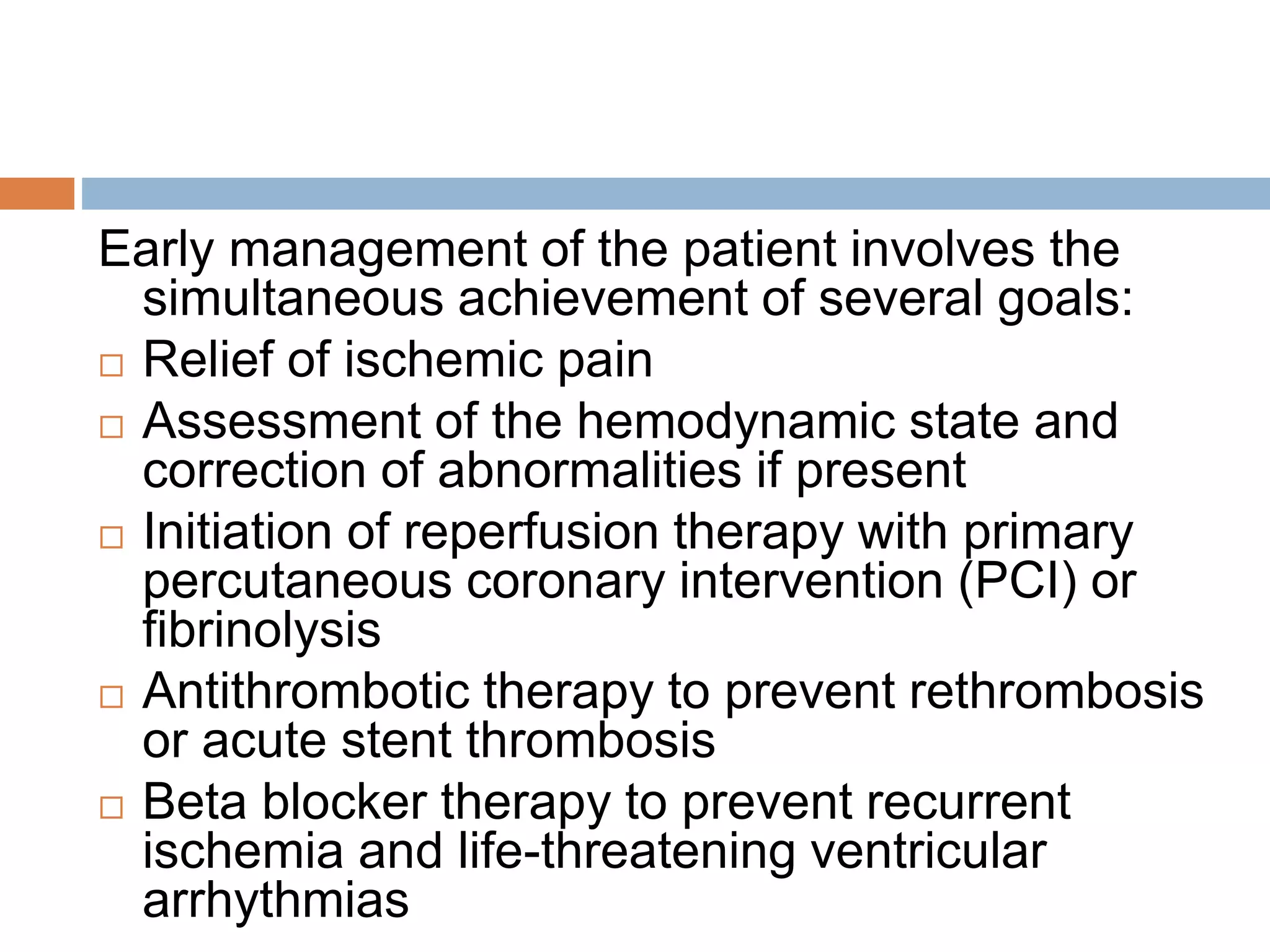
Early management of the patient involves the
simultaneous achievement of several goals:
 Relief of ischemic pain
 Assessment of the hemodynamic state and
correction of abnormalities if present
 Initiation of reperfusion therapy with primary
percutaneous coronary intervention (PCI) or
fibrinolysis
 Antithrombotic therapy to prevent rethrombosis
or acute stent thrombosis
 Beta blocker therapy to prevent recurrent
ischemia and life-threatening ventricular
arrhythmias
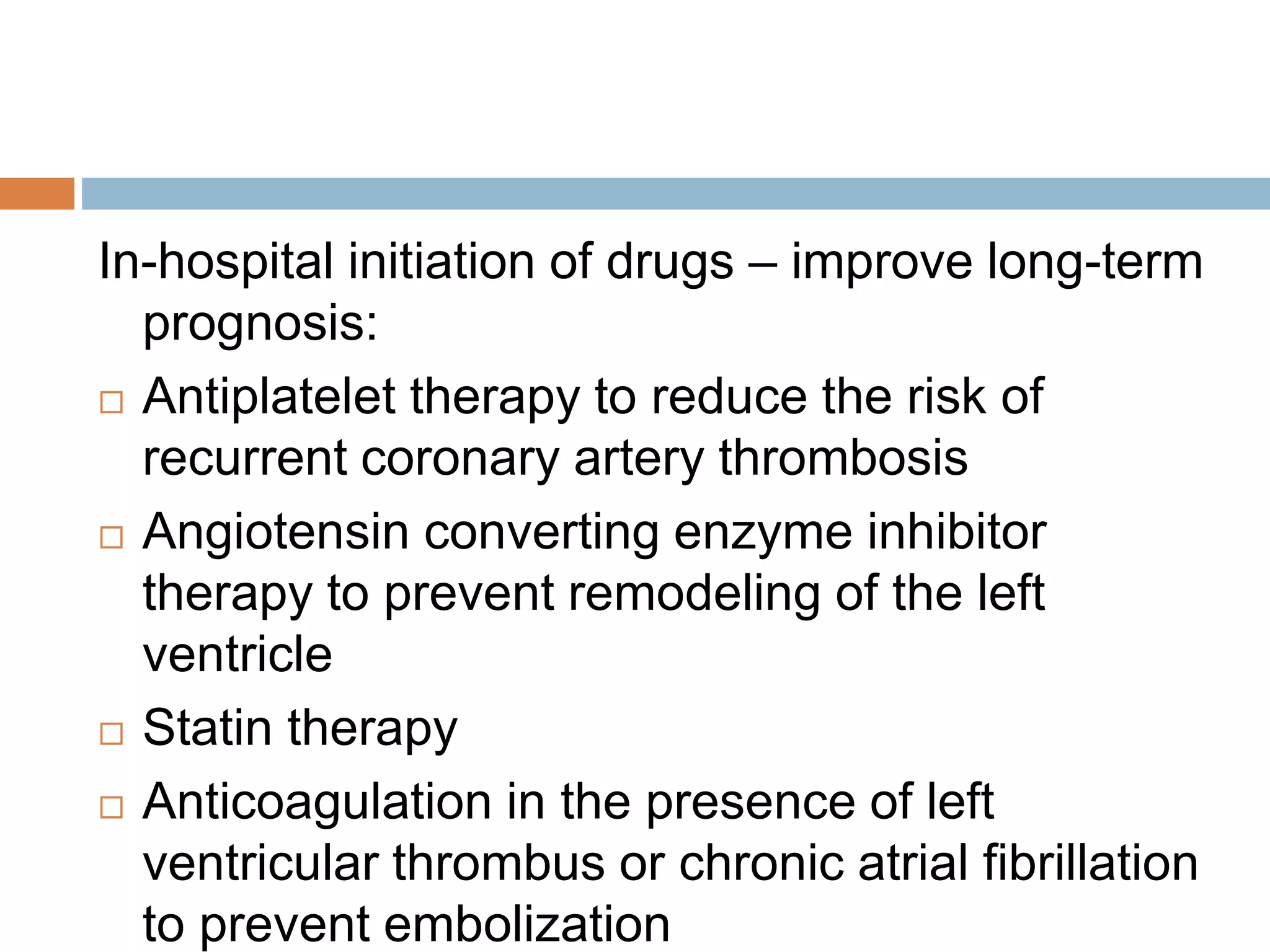
In-hospital initiation of drugs – improve long-term
prognosis:
 Antiplatelet therapy to reduce the risk of
recurrent coronary artery thrombosis
 Angiotensin converting enzyme inhibitor
therapy to prevent remodeling of the left
ventricle
 Statin therapy
 Anticoagulation in the presence of left
ventricular thrombus or chronic atrial fibrillation
to prevent embolization
 Beta blocker therapy reduces infarct size and
early mortality when started early and lowers
the risk of death when continued long term
Evidence supporting the benefit of beta blockers
has been obtained primarily from randomized
trials that included predominantly patients with
ST-elevation MI (STEMI).
No randomized trials specifically addressing the
efficacy of these drugs in non-ST elevation MI
(NSTEMI); however, no observational
evidence to suggest different outcomes in
MECHANISM OF BENEFIT
Beneficial
Pharmacodynamics
 Decreased oxygen demand - reductions in heart
rate, blood pressure, and contractility, and the
consequent relief of ischemic chest pain
 Decreased risk of ventricular fibrillation
experimental studies demonstrating an
increase in the ventricular fibrillation threshold
clinical trials showing a relative risk reduction
in sudden cardiac death (30 to 47 percent)
 Decreased automaticity, increased
electrophysiologic threshold for activation, and
slowing of conduction.
 Bradycardia prolongs diastole and therefore
improves coronary diastolic perfusion and reduces
after-depolarizations and triggered activity.
 Reduction in remodeling and improvement in left
ventricular hemodynamic function (depending
upon infarct size and the timing of treatment)
 Improved left ventricular diastolic function with a
less restrictive filling pattern
 Slowing progression of coronary atherosclerosis
 Inhibition of platelet aggregation and thromboxane
synthesis
 Reduction in reperfusion injury.
INDICATIONS/RECOMMENDATI
ONS
INDICATIONS
 Unless contraindicated, all patients with acute
myocardial infarction (MI) should receive beta
blocker therapy.
2013 ACC/AHA STEMI
Guideline
EVIDENCE
 While the evidence is robust for patients with
ST-elevation MI (STEMI) treated without
fibrinolysis or percutaneous coronary
intervention (PCI), this recommendation also
applies to STEMI patients who are treated with
reperfusion as well as those with non-ST
elevation MI (NSTEMI).
 Many of the relevant studies were performed
before the routine use of long-term antiplatelet
and statin therapy.
 It is possible that the absolute magnitude of
the mortality benefit from beta blocker
described below may be smaller due to the
beneficial impact of these preventative
medications as well as the use of reperfusion
therapies.
Evidence with no reperfusion
EVIDENCE
Evidence with no reperfusion
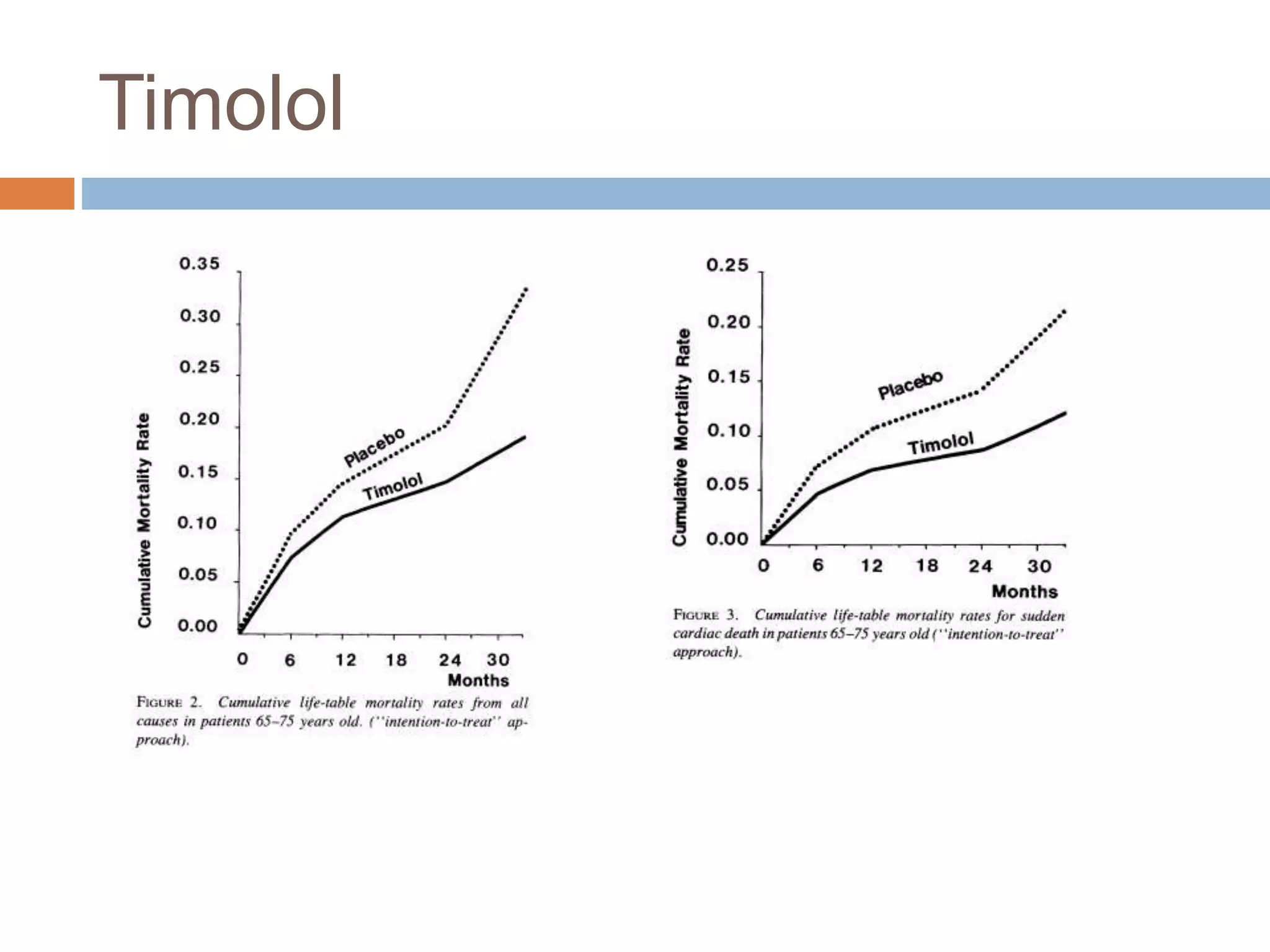
Randomized trials performed before the use of
reperfusion therapy with either fibrinolysis or
PCI consistently showed a reduction in
cardiovascular mortality of 10 to 25 percent in
patients treated with metoprolol, propranolol,
or atenolol
Meta-analysis of these studies found a 25
percent reduction in mortality at one year
Metoprolol: Gotenberg trial
Propranolol: Oral – BHAT trial
Timolol
Timolol
IV Metoprolol: MIAMI trial
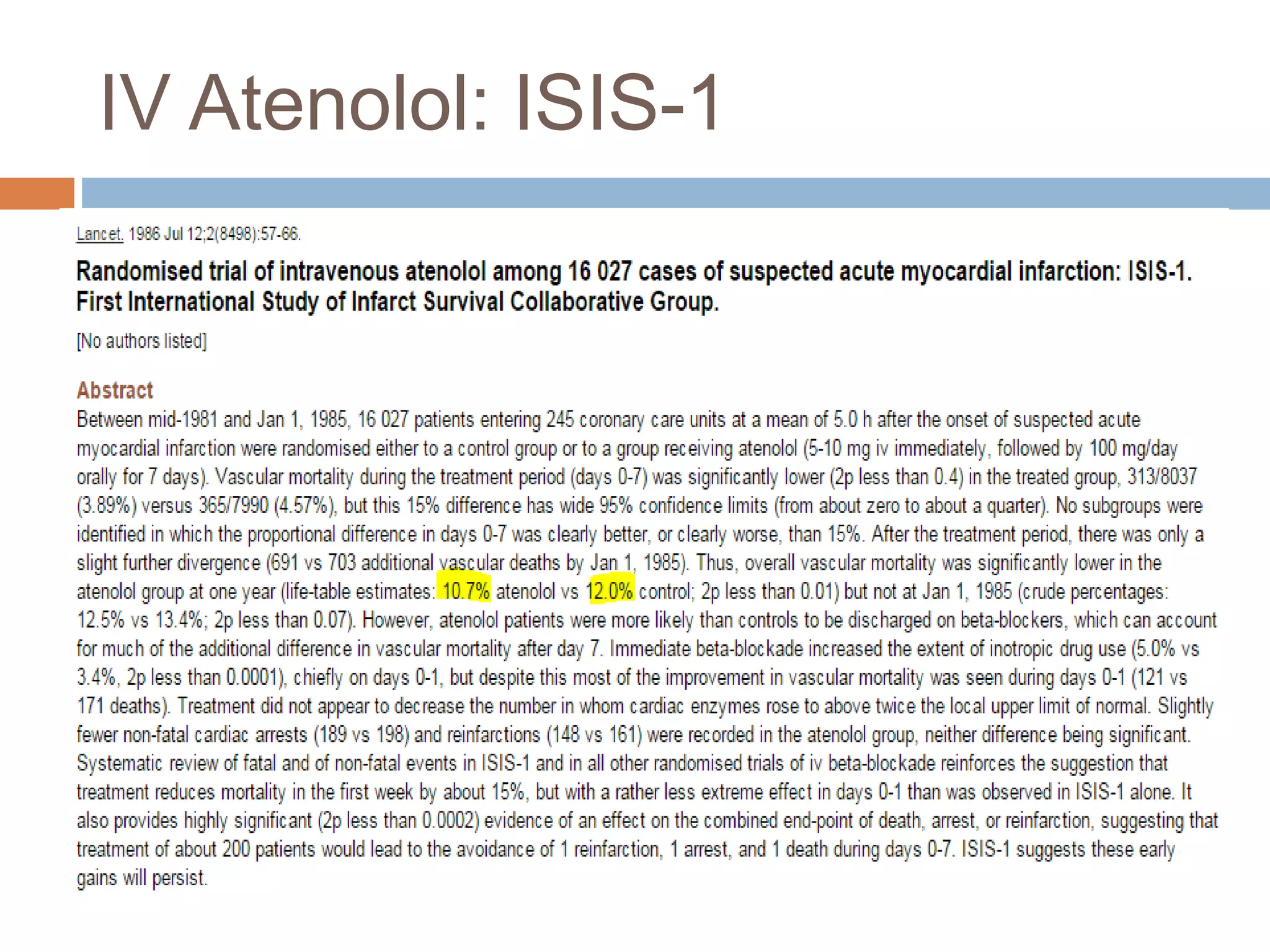
IV Atenolol: ISIS-1
Evidence with Fibrinolytic therapy
EVIDENCE
Evidence with Fibrinolytic
therapy
 No high quality evidence demonstrating a
beneficial impact of long-term beta blocker use
in patients treated with fibrinolytic therapy.
 Much of the evidence is indirect - from the
benefit shown in patients not receiving
reperfusion.
 Individual studies that evaluated the long-term
impact of beta blockade in patients treated
with fibrinolysis were limited by small size,
early termination, observational design, or
relatively short duration follow-up.
Evidence with PCI
EVIDENCE
Evidence with PCI
 The same evidence supporting long-term beta
blocker use in patients treated with or without
fibrinolysis - basis for a similar
recommendation in patients who undergo
primary PCI.
 Some experts suggest - the benefit of beta
blockers in this subpopulation may be reduced
by the improvement in outcome afforded by
revascularization - no randomized trials and
few observational studies of long-term beta
blocker therapy patients treated with primary
54% RRR in all-cause death!
Evidence of ‘Early Intravenous’ initiation
EVIDENCE
“EARLY” Initiation
 For patients without contraindications - treat
ALL patients with an oral beta blocker within
the first 24 hours after diagnosis
 Some earlier trials tested IV beta blockade
 Intravenous beta blocker - potential for
development of hemodynamic instability.
 Some authors recommend - reserve the
intravenous route principally for patients with
refractory angina who have ongoing ischemia
prior to percutaneous coronary intervention
(PCI) in whom there is no hemodynamic
instability including heart failure.
Early vs Late in fibrinolytic t/t
 Available evidence does not support routine,
early initiation of intravenous beta blockade in
patients treated with fibrinolytic therapy - oral
therapy is recommended
 This recommendation for these patients is
based on the overall benefit of beta blockers
 Three randomized trials (1989, 1991, and
1993) of ST-elevation myocardial infarction
(STEMI) patients treated with fibrinolytic
therapy compared early and deferred beta
blocker therapy and found no clear evidence
of a mortality benefit with early beta blocker.
 In these studies, deferred therapy occurred
within 24 hours to up to six days.
 The optimal timing of beta blocker therapy was evaluated in a study of
patients enrolled in the TIMI II trial [30]. (See "Trials of conservative versus
early invasive therapy in unstable angina and non-ST elevation myocardial
infarction", section on 'TIMI IIIB trial'.) A subset of 1390 patients who were
eligible for intravenous beta blockade were randomly assigned to 15 mg of
IV metoprolol tartrate (followed by oral metoprolol) or oral metoprolol begun
on day six. There was no significant difference between the two groups in
the in-hospital left ventricular ejection fraction or in mortality at 6 and 42
days. However, by day six, the early therapy group had significant
reductions in nonfatal reinfarction (16 versus 31 patients) and recurrent
ischemic episodes (107 versus 147 patients).
 In an observational study of 2537 patients enrolled in primary angioplasty
trials, those who received beta blocker therapy before primary angioplasty,
compared to those who did not, had lower adjusted in-hospital mortality
(odds ratio [OR] 0.41, 95% CI 0.20-0.84) and nonsignificantly lower one-
year mortality (OR 0.72, 95% CI 0.47-1.08). The dose and route of
administration of beta blocker was not reported.
 Patients who do not receive a beta blocker during the first 24 hours
because of early contraindications should be re-evaluated for beta blocker
candidacy for subsequent therapy.
 COMMIT/CCS2 trial
- 46,000 MI patients, 50% fibrinolytic
therapy
- Placebo or to three 5 mg intravenous
boluses of metoprolol followed by oral
metoprolol extended release (succinate)
200 mg/day for 30 days.
No overall mortality benefit from early
intravenous beta blocker therapy.
Immediate beta blocker therapy may reduce the
incidence of intracerebral hemorrhage.
 This effect was suggested in a review of data from
60,329 patients treated with Alteplase in the
National Registry of Myocardial Infarction.
 Immediate beta blocker use was associated with a
lower incidence of intracerebral hemorrhage (0.67
versus 1 percent for no immediate beta blocker;
odds ratio 0.69, 95% CI 0.57-0.84). This apparent
benefit was seen in all age groups and in both
men and women.
Hemodynamic stability appeared to be an
important determinant of the response to beta
blockers. There was a significant increase in
mortality in patients who presented with
hemodynamic compromise that was balanced
by a trend toward reduced mortality in patients
who were hemodynamically stable.
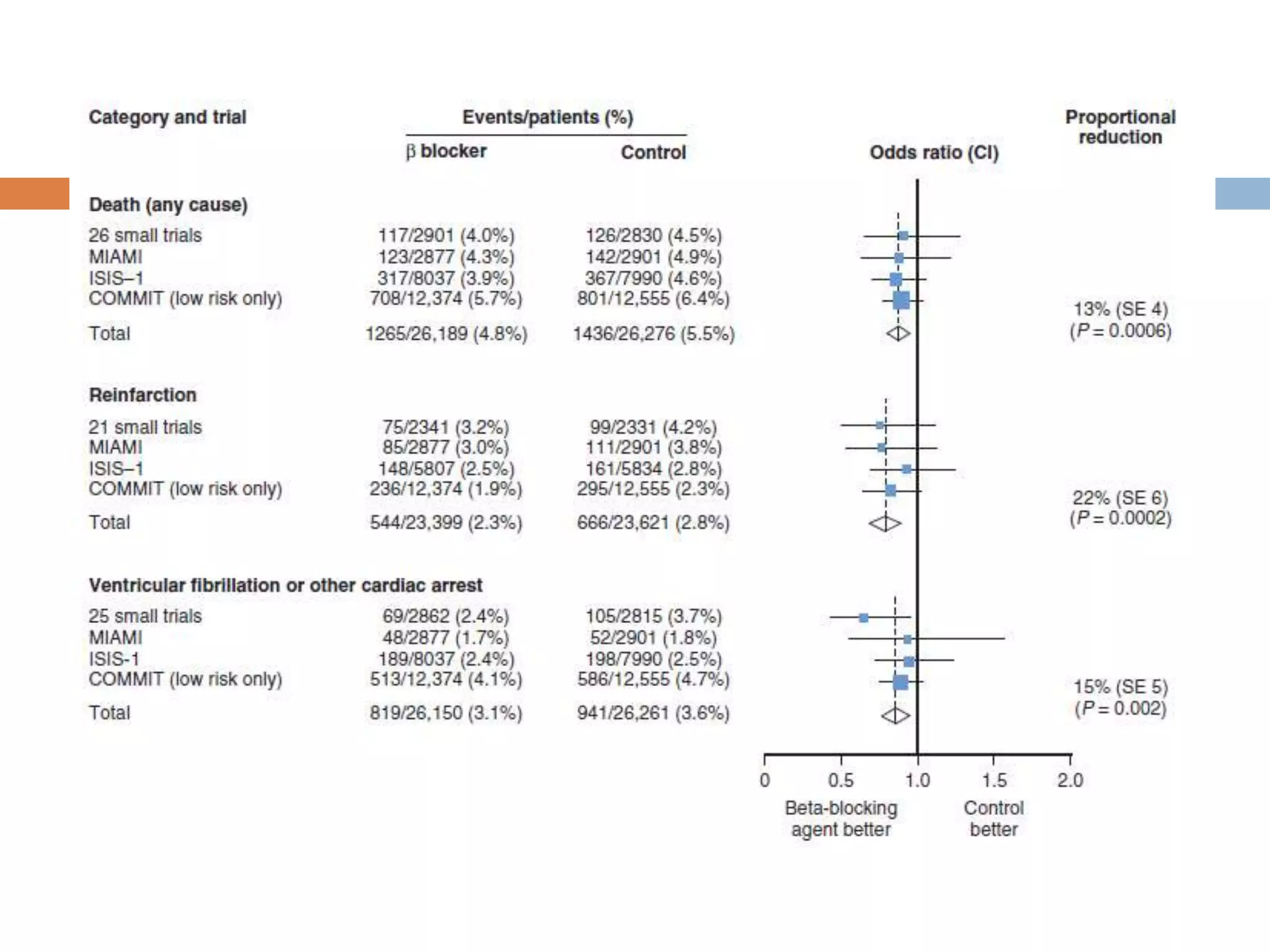
Combining the results of the low-risk patients
from COMMIT with the data from earlier trials
13% reduction in all-cause mortality (7 lives
saved/1000 patients treated)
22% reduction in reinfarction (5 fewer
events/1000 patients treated)
15% reduction in ventricular fibrillation or
cardiac arrest (5 fewer events/1000 patients
treated)
To achieve these benefits safely, it is important
to avoid the early administration of beta
blockers to patients with relative
contraindications
Contraindications to Early IV Beta
Blockade (High Risk Cohort)
 Signs of heart failure
 Evidence of a low-output state
 Increased risk for cardiogenic shock*
age older than 70 years,
systolic blood pressure <120 mm Hg,
HR >110 beats/min or <60 beats/min
increased time since onset of symptom of
STEMI
* The more risk factors present, the higher the
risk of developing cardiogenic shock
Early beta blockade in PCI
Evidence for early beta blockade initiation in
patients treated with current recommended
therapies - METOCARD-CNIC trial (2013)
270 patients with Killip class II or less
anterior STEMI were randomly assigned to
receive intravenous metoprolol (up to three 5
mg boluses of metoprolol tartrate given two
minutes apart) or not before reperfusion and
all patients received oral metoprolol within 24
hours.
The primary end point of infarct size on magnetic
resonance imaging performed five to seven
days was significantly smaller in the group that
was treated early (25.6 versus 32.0 grams; p =
0.012). In addition, left ventricular ejection
fraction was higher in the treated group at five
to seven days and at six months (adjusted
treatment difference 2.67 percent; p = 0.045
and 3.49 percent; p = 0.025)
There was no difference in the safety end point.
Limitations of the study include lack of a placebo
control and exclusion of patients with inferior
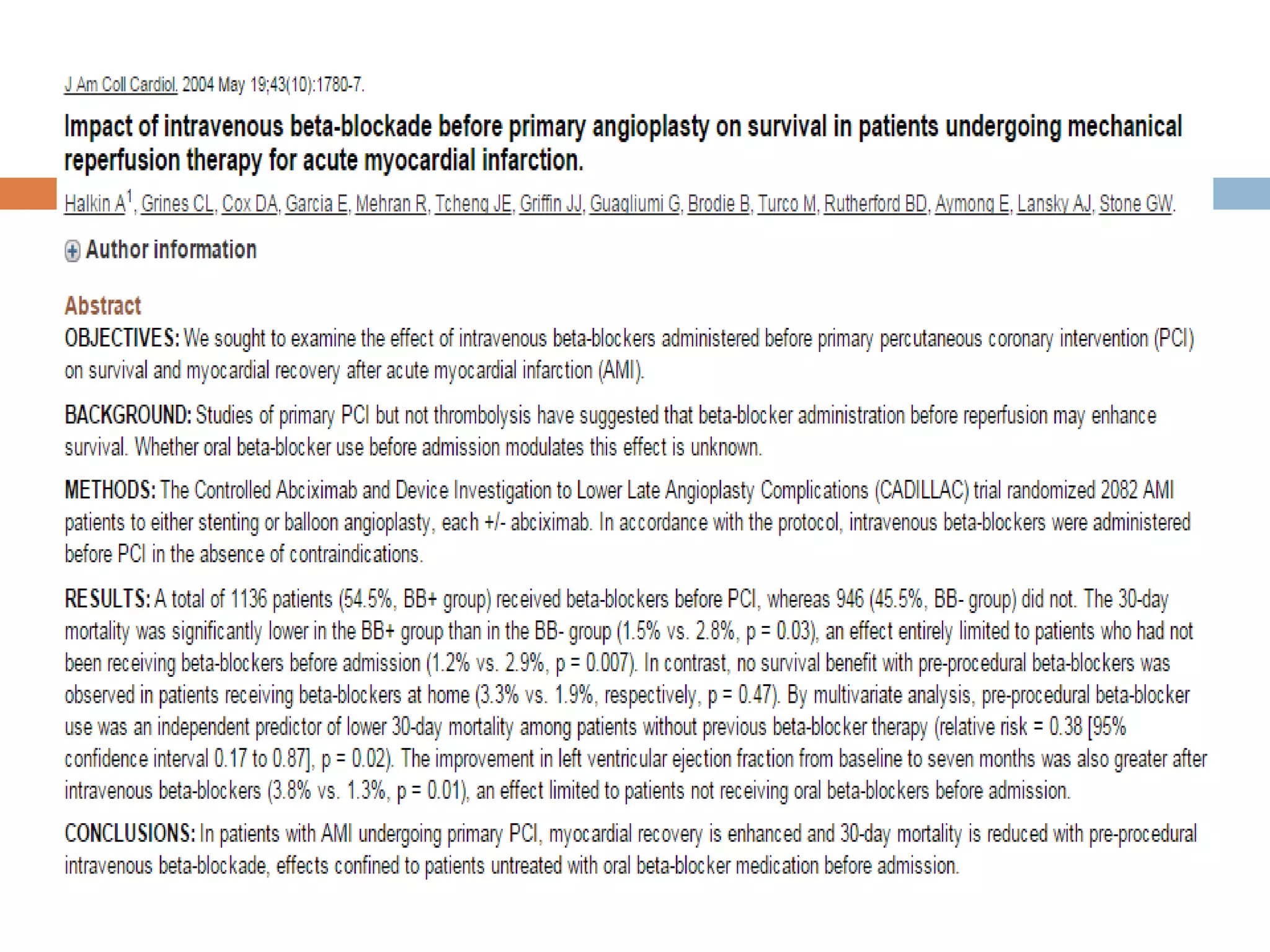
Retrospective analysis from the CADILLAC trial
of 2082 patients. At 30 days, patients who had
received a preprocedural beta blocker had a
significantly lower mortality than those who
had not (1.5 versus 2.8 percent);
The lower mortality was limited to patients who
had not been receiving an oral beta blocker
before admission
CHOICE OF DRUG
Which Beta blocker?
 Cardioselective oral beta blocker, such
as Metoprolol or Atenolol preferred
 Use oral Metoprolol tartrate 25 to 50 mg every
6 to 12 hours or Atenolol 25 to 50 mg twice
daily, initially, titrating upward as needed.
 Short-acting beta blockers are preferred early
to allow for more rapid adjustment of dose
based on the patient’s blood pressure and
heart rate response.
 Near the time of discharge - switch to longer-
acting beta blockers.
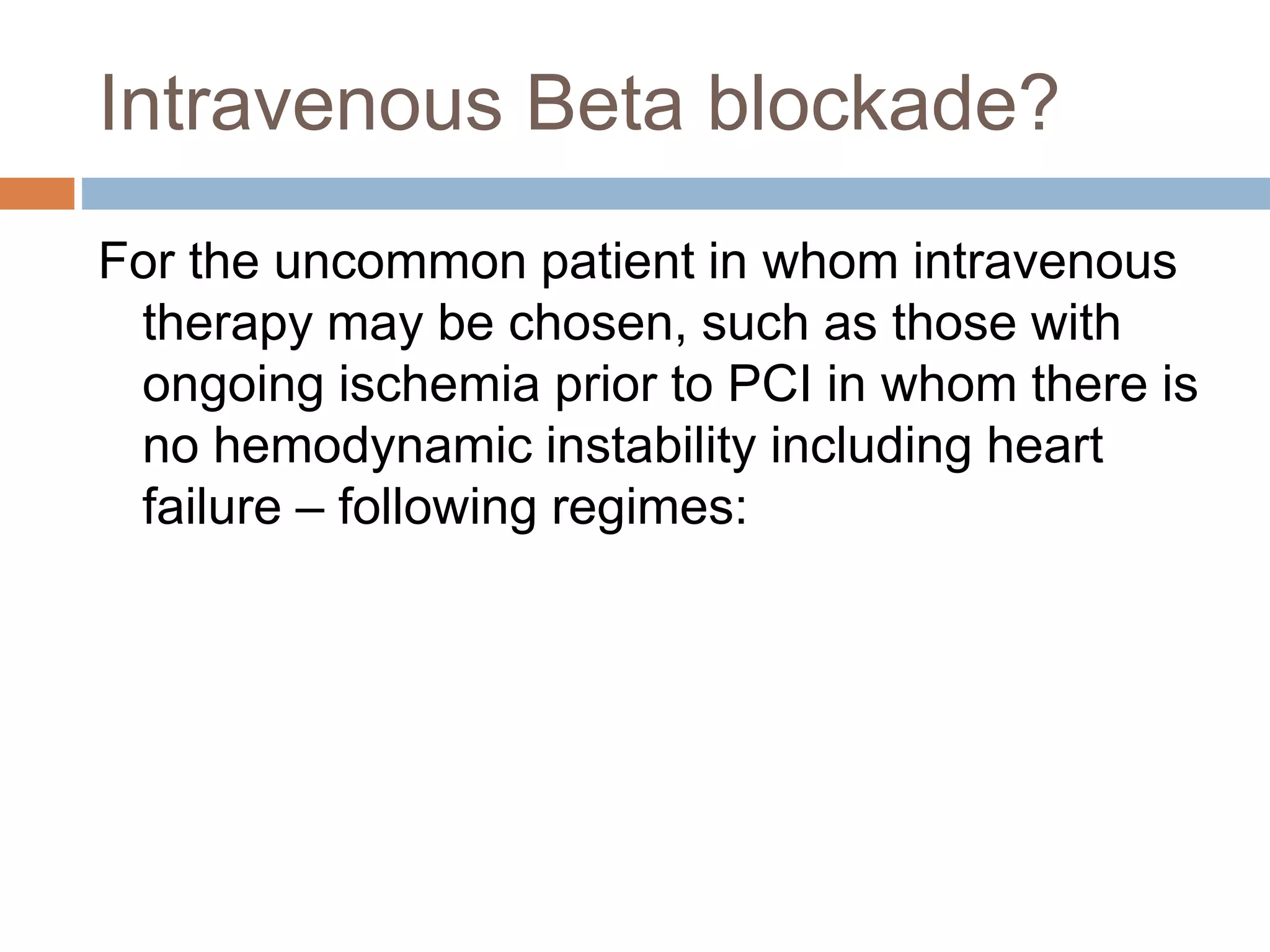
Intravenous Beta blockade?
For the uncommon patient in whom intravenous
therapy may be chosen, such as those with
ongoing ischemia prior to PCI in whom there is
no hemodynamic instability including heart
failure – following regimes:
 Intravenous Metoprolol tartrate - 5 mg
increments by slow intravenous administration
(5 mg over one to two minutes), repeated
every five minutes for a total initial dose of 15
mg (three doses). Patients who tolerate this
regimen should then receive maintenance oral
therapy with metoprolol succinate 50 mg daily
beginning 15 min after the last intravenous
dose.
 Intravenous Atenolol - 5 mg dose followed by
another 5 mg five minutes later. Patients who
tolerate this regimen should then receive
maintenance oral therapy with atenolol 50 mg
twice daily beginning one to two hours after
the last intravenous dose.
 Intravenous Esmolol (50 mcg/kg per min
increasing to a maximum of 200 to
300 mcg/kg per min), an ultra-short-acting beta
blocker, can be given to assess tolerance to
beta blockade in patients with borderline or
questionable left ventricular function.
 Bradycardia and hypotension are the most
common limitations to achieving the full dose.
In this setting, the rate of administration should
be slowed or oral therapy initiated.
 A rigid "cookbook" regimen should not be used
since there is a variable sympathetic response
to acute MI.
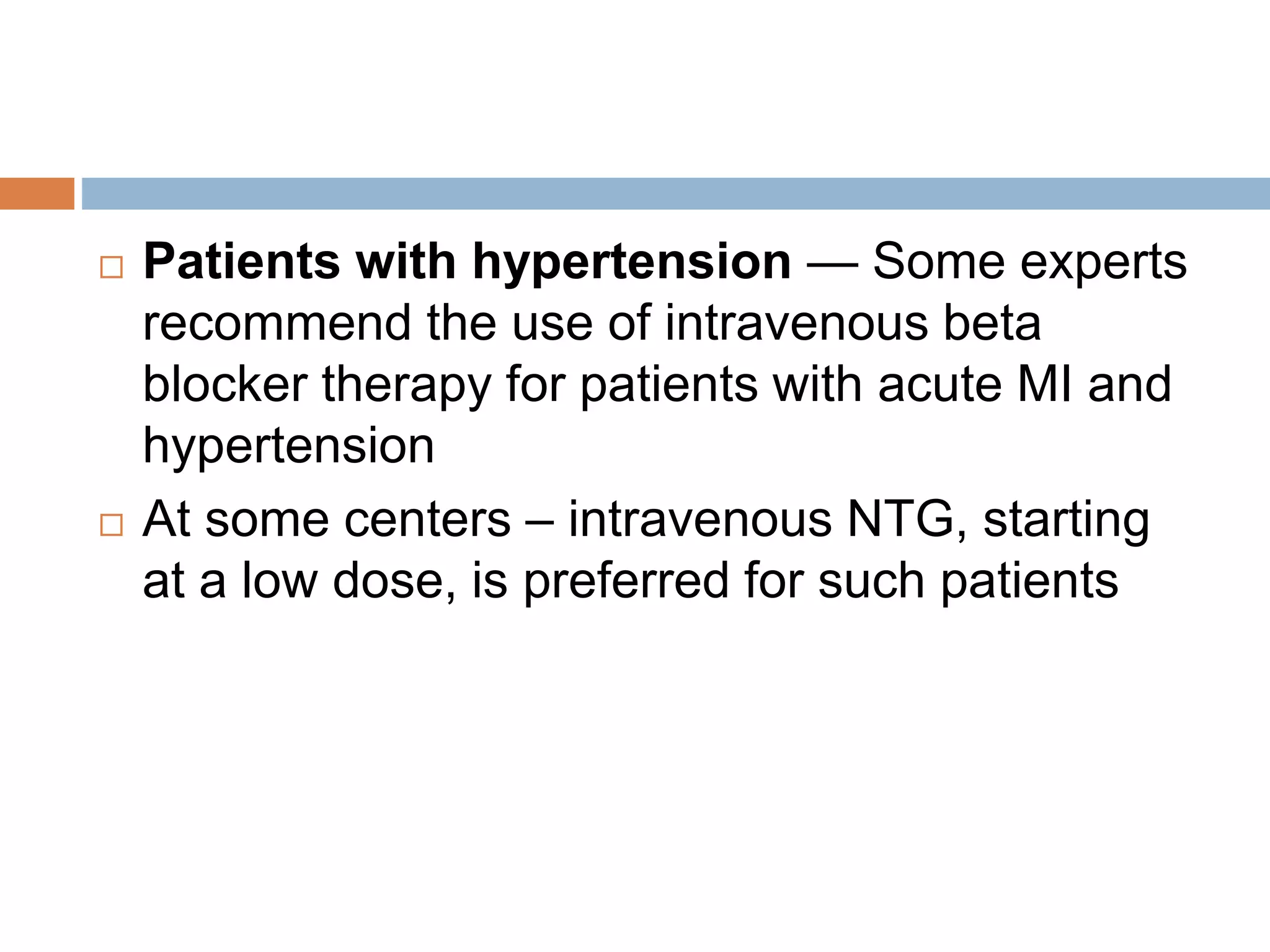
 Patients with hypertension — Some experts
recommend the use of intravenous beta
blocker therapy for patients with acute MI and
hypertension
 At some centers – intravenous NTG, starting
at a low dose, is preferred for such patients
2013 ACC/AHA STEMI
Guideline
LONG TERM THERAPY
 Optimal duration of beta blocker therapy after
myocardial infarction (MI) is not known
 Evidence supports the use of beta blockers in
patients with MI for as long as 3 years
 Evidence supporting a longer duration, or
indefinite therapy, is limited - preferred in
patients with high-risk features at presentation
such as cardiogenic shock, heart failure, or
chronic kidney disease
 For patients without these high-risk features -
the potential benefits and risks of continued
 Many patients have been continued on this
therapy indefinitely based on a 1999 meta-
analysis of over 50,000 patients that showed a
23 percent reduction in death at a mean
follow-up of 1.4 years.
 Limitations - relatively short duration of follow-
up, Reperfusion and Current GDMT were
underutilized
 More recent evaluation of the potential benefit
from long-term beta blocker use - 2012
observational study of over 14,000 patients
with known prior MI enrolled in the
international REACH registry.
 Patients were enrolled in 2003 and 2004 and
followed prospectively for up to four years.
 The primary outcome was a composite of
cardiovascular death, nonfatal MI, or nonfatal
stroke - 3599 pairs of patients with and without
beta blocker use.
 After a median follow-up of 44 months, there was
a trend toward a lower incidence of the primary
outcome with beta blocker therapy (16.9 versus
18.6 percent, respectively; hazard ratio 0.90, 95%
CI 0.79-1.03). However, little difference was seen
in the event rates in the beta blocker and no beta
blocker groups as early as two years.
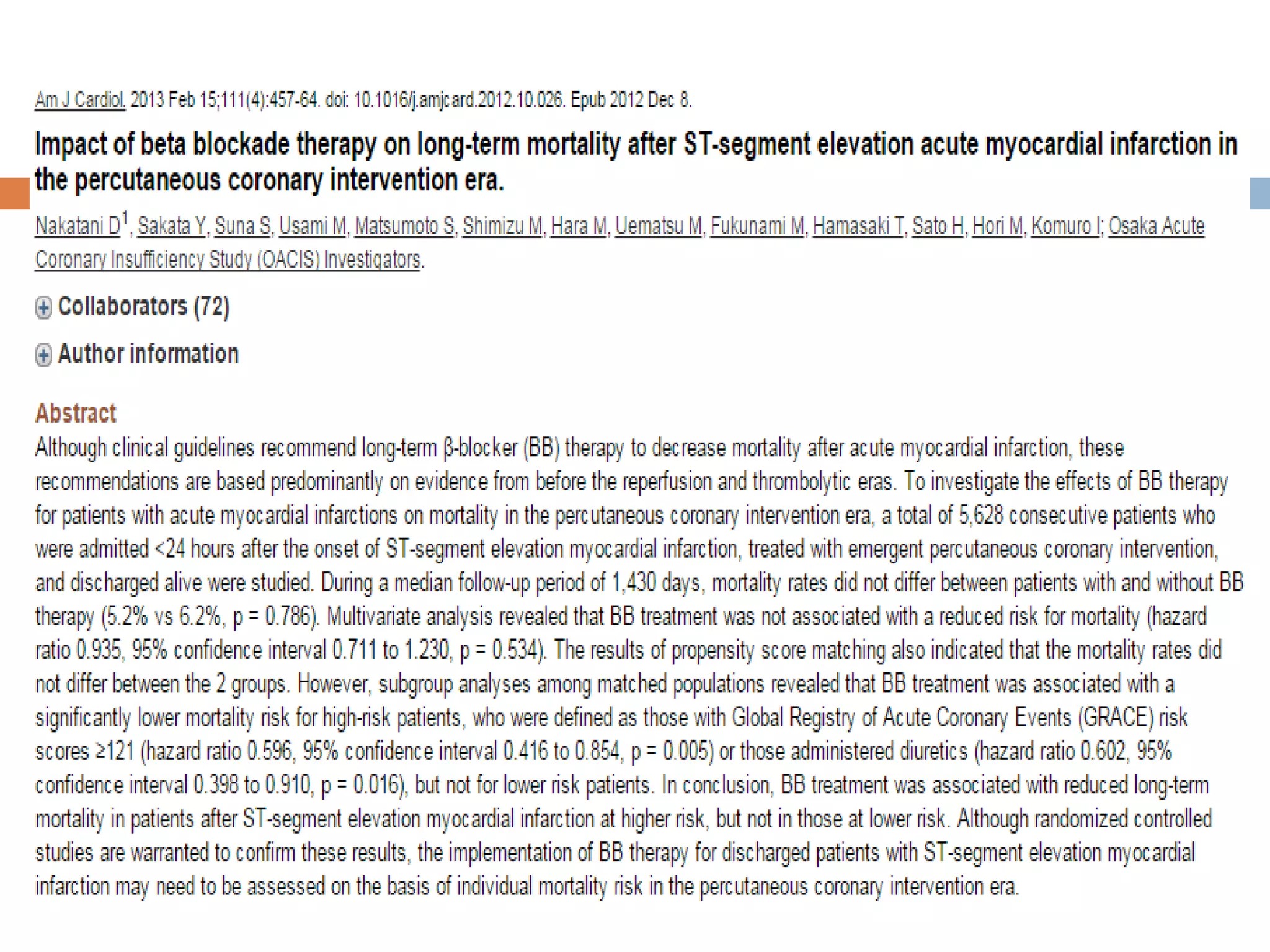
 A 2013 observational study evaluated
outcomes in 5628 patients with ST-elevation
MI (STEMI) treated with primary percutaneous
coronary intervention
 Median follow-up of nearly four years, mortality
rates did not differ between patients with and
without beta blocker therapy (5.2 versus 6.2
percent).
 Subgroup analyses revealed that beta blocker
treatment was associated with a significantly
lower mortality for only high-risk patients, such
as those with heart failure.
Is it Reasonable to discontinue Beta-
blockade?
 In patients with unacceptable side effects
 Financial burden is unacceptable
 use of multiple medications is problematic
(polypharmacy)
 In absence of compelling indications –
Systolic HF (LVEF < 40%);
Ventricular arrhythmias
May use a tapering protocol over a few weeks
Which Blocker in long term?
 Post MI with Systolic LV dysfunction
Preferred agents
Carvedilol
Metoprolol Extended-release preparation
Bisoprolol
 Post MI without Systolic LV dysfunction
Benefit from beta blockers likely a class effect
Agents without intrinsic sympathomimetic activity
(ISA), such as pindolol are preferred
A 1999 meta-analysis of RCTs
- no significant difference between cardio -
selective compared to nonselective drugs
- an almost significant trend toward less
benefit with drugs that have ISA
 Heart rate goal of below 70 bpm at rest while
maintaining a systolic pressure above 90
mmHg
 An inverse relationship between short-term
and long-term mortality and the degree of
heart rate reduction with beta blockade after
MI is evident
CONTRAINDICATIONS
Absolute Contraindications
Potential absolute contraindications to the
immediate use of beta blocker therapy include the
following groups:
 Hemodynamically compromised individuals,
including those with hypotension with or without
shock
 Patients with active bronchospasm, severe
bradycardia, or heart block greater than first
degree (unless the patient has a permanent
pacemaker).
 Patients with myocardial infarction (MI)
precipitated by cocaine use; there is a risk of
 Patients with overt heart failure, including
pulmonary edema.
However, there is a strong indication for
carefully initiated oral beta blocker therapy
(beginning at very low doses) in such patients
whose heart failure has been brought under
control prior to discharge
Relative or Potential
Contraindications
Comorbidities
Uncontrolled COPD/asthma,
Uncontrolled DM
Symptomatic Peripheral artery disease
Occasionally, the clinician may wish to proceed
with beta blocker therapy even in the presence
of relative contraindications - a history of mild
asthma, mild bradycardia, mild heart failure, or
first-degree heart block.
In this situation, a trial of Esmolol may help
determine whether the patient can tolerate
beta-blockade - half-life of 9 minutes,
hemodynamic effects disappear in less than
30 minutes
CONCLUSIONS
In the broad range of patients with ST elevation
and non-ST elevation myocardial infarction
(MI), including those who have or have not
received revascularization, judicious beta
blocker use reduce short-term complications
and improve long-term survival.
CONCLUSIONS
For all patients who have sustained an acute MI,
beta blockade is recommended
For all patients with acute MI, initiation of oral
beta blockers within the first 24 hours is
recommend, as long as no contraindications
are present
Patients who do not receive a beta blocker
during the first 24 hours because of early
contraindications should be reevaluated for
beta blocker candidacy
Beta blockers in Acute MI

Beta blockers in Acute MI

  • 1.
  • 2.
  • 3.
    Overview  Introduction  Mechanismof benefit in AMI  Indications and Recommendation  Evidence behind the Recommendations  With and without Reperfusion therapy  IV vs Oral initiation  Early vs Late  Contraindications  Choice of Drug
  • 4.
  • 5.
    Introduction Myocardial infarction (MI)- clinical (or pathologic) event caused by myocardial ischemia with evidence of myocardial injury or necrosis Criteria - rise and/or fall of cardiac biomarkers, along with supportive evidence in the form of typical symptoms, suggestive electrocardiographic (ECG) changes, or imaging evidence of new loss of viable myocardium or new regional wall motion abnormality
  • 6.
    Early management ofthe patient involves the simultaneous achievement of several goals:  Relief of ischemic pain  Assessment of the hemodynamic state and correction of abnormalities if present  Initiation of reperfusion therapy with primary percutaneous coronary intervention (PCI) or fibrinolysis  Antithrombotic therapy to prevent rethrombosis or acute stent thrombosis  Beta blocker therapy to prevent recurrent ischemia and life-threatening ventricular arrhythmias
  • 7.
    In-hospital initiation ofdrugs – improve long-term prognosis:  Antiplatelet therapy to reduce the risk of recurrent coronary artery thrombosis  Angiotensin converting enzyme inhibitor therapy to prevent remodeling of the left ventricle  Statin therapy  Anticoagulation in the presence of left ventricular thrombus or chronic atrial fibrillation to prevent embolization
  • 8.
     Beta blockertherapy reduces infarct size and early mortality when started early and lowers the risk of death when continued long term Evidence supporting the benefit of beta blockers has been obtained primarily from randomized trials that included predominantly patients with ST-elevation MI (STEMI). No randomized trials specifically addressing the efficacy of these drugs in non-ST elevation MI (NSTEMI); however, no observational evidence to suggest different outcomes in
  • 9.
  • 10.
    Beneficial Pharmacodynamics  Decreased oxygendemand - reductions in heart rate, blood pressure, and contractility, and the consequent relief of ischemic chest pain  Decreased risk of ventricular fibrillation experimental studies demonstrating an increase in the ventricular fibrillation threshold clinical trials showing a relative risk reduction in sudden cardiac death (30 to 47 percent)  Decreased automaticity, increased electrophysiologic threshold for activation, and slowing of conduction.
  • 11.
     Bradycardia prolongsdiastole and therefore improves coronary diastolic perfusion and reduces after-depolarizations and triggered activity.  Reduction in remodeling and improvement in left ventricular hemodynamic function (depending upon infarct size and the timing of treatment)  Improved left ventricular diastolic function with a less restrictive filling pattern  Slowing progression of coronary atherosclerosis  Inhibition of platelet aggregation and thromboxane synthesis  Reduction in reperfusion injury.
  • 12.
  • 13.
    INDICATIONS  Unless contraindicated,all patients with acute myocardial infarction (MI) should receive beta blocker therapy.
  • 14.
  • 15.
  • 16.
     While theevidence is robust for patients with ST-elevation MI (STEMI) treated without fibrinolysis or percutaneous coronary intervention (PCI), this recommendation also applies to STEMI patients who are treated with reperfusion as well as those with non-ST elevation MI (NSTEMI).
  • 17.
     Many ofthe relevant studies were performed before the routine use of long-term antiplatelet and statin therapy.  It is possible that the absolute magnitude of the mortality benefit from beta blocker described below may be smaller due to the beneficial impact of these preventative medications as well as the use of reperfusion therapies.
  • 18.
    Evidence with noreperfusion EVIDENCE
  • 19.
    Evidence with noreperfusion Randomized trials performed before the use of reperfusion therapy with either fibrinolysis or PCI consistently showed a reduction in cardiovascular mortality of 10 to 25 percent in patients treated with metoprolol, propranolol, or atenolol Meta-analysis of these studies found a 25 percent reduction in mortality at one year
  • 20.
  • 21.
  • 22.
  • 23.
  • 24.
  • 25.
  • 26.
  • 27.
    Evidence with Fibrinolytic therapy No high quality evidence demonstrating a beneficial impact of long-term beta blocker use in patients treated with fibrinolytic therapy.  Much of the evidence is indirect - from the benefit shown in patients not receiving reperfusion.  Individual studies that evaluated the long-term impact of beta blockade in patients treated with fibrinolysis were limited by small size, early termination, observational design, or relatively short duration follow-up.
  • 29.
  • 30.
    Evidence with PCI The same evidence supporting long-term beta blocker use in patients treated with or without fibrinolysis - basis for a similar recommendation in patients who undergo primary PCI.  Some experts suggest - the benefit of beta blockers in this subpopulation may be reduced by the improvement in outcome afforded by revascularization - no randomized trials and few observational studies of long-term beta blocker therapy patients treated with primary
  • 31.
    54% RRR inall-cause death!
  • 32.
    Evidence of ‘EarlyIntravenous’ initiation EVIDENCE
  • 33.
    “EARLY” Initiation  Forpatients without contraindications - treat ALL patients with an oral beta blocker within the first 24 hours after diagnosis
  • 34.
     Some earliertrials tested IV beta blockade  Intravenous beta blocker - potential for development of hemodynamic instability.  Some authors recommend - reserve the intravenous route principally for patients with refractory angina who have ongoing ischemia prior to percutaneous coronary intervention (PCI) in whom there is no hemodynamic instability including heart failure.
  • 35.
    Early vs Latein fibrinolytic t/t  Available evidence does not support routine, early initiation of intravenous beta blockade in patients treated with fibrinolytic therapy - oral therapy is recommended  This recommendation for these patients is based on the overall benefit of beta blockers
  • 36.
     Three randomizedtrials (1989, 1991, and 1993) of ST-elevation myocardial infarction (STEMI) patients treated with fibrinolytic therapy compared early and deferred beta blocker therapy and found no clear evidence of a mortality benefit with early beta blocker.  In these studies, deferred therapy occurred within 24 hours to up to six days.
  • 37.
     The optimaltiming of beta blocker therapy was evaluated in a study of patients enrolled in the TIMI II trial [30]. (See "Trials of conservative versus early invasive therapy in unstable angina and non-ST elevation myocardial infarction", section on 'TIMI IIIB trial'.) A subset of 1390 patients who were eligible for intravenous beta blockade were randomly assigned to 15 mg of IV metoprolol tartrate (followed by oral metoprolol) or oral metoprolol begun on day six. There was no significant difference between the two groups in the in-hospital left ventricular ejection fraction or in mortality at 6 and 42 days. However, by day six, the early therapy group had significant reductions in nonfatal reinfarction (16 versus 31 patients) and recurrent ischemic episodes (107 versus 147 patients).  In an observational study of 2537 patients enrolled in primary angioplasty trials, those who received beta blocker therapy before primary angioplasty, compared to those who did not, had lower adjusted in-hospital mortality (odds ratio [OR] 0.41, 95% CI 0.20-0.84) and nonsignificantly lower one- year mortality (OR 0.72, 95% CI 0.47-1.08). The dose and route of administration of beta blocker was not reported.  Patients who do not receive a beta blocker during the first 24 hours because of early contraindications should be re-evaluated for beta blocker candidacy for subsequent therapy.
  • 38.
     COMMIT/CCS2 trial -46,000 MI patients, 50% fibrinolytic therapy - Placebo or to three 5 mg intravenous boluses of metoprolol followed by oral metoprolol extended release (succinate) 200 mg/day for 30 days. No overall mortality benefit from early intravenous beta blocker therapy.
  • 40.
    Immediate beta blockertherapy may reduce the incidence of intracerebral hemorrhage.  This effect was suggested in a review of data from 60,329 patients treated with Alteplase in the National Registry of Myocardial Infarction.  Immediate beta blocker use was associated with a lower incidence of intracerebral hemorrhage (0.67 versus 1 percent for no immediate beta blocker; odds ratio 0.69, 95% CI 0.57-0.84). This apparent benefit was seen in all age groups and in both men and women.
  • 41.
    Hemodynamic stability appearedto be an important determinant of the response to beta blockers. There was a significant increase in mortality in patients who presented with hemodynamic compromise that was balanced by a trend toward reduced mortality in patients who were hemodynamically stable.
  • 42.
    Combining the resultsof the low-risk patients from COMMIT with the data from earlier trials 13% reduction in all-cause mortality (7 lives saved/1000 patients treated) 22% reduction in reinfarction (5 fewer events/1000 patients treated) 15% reduction in ventricular fibrillation or cardiac arrest (5 fewer events/1000 patients treated)
  • 44.
    To achieve thesebenefits safely, it is important to avoid the early administration of beta blockers to patients with relative contraindications
  • 45.
    Contraindications to EarlyIV Beta Blockade (High Risk Cohort)  Signs of heart failure  Evidence of a low-output state  Increased risk for cardiogenic shock* age older than 70 years, systolic blood pressure <120 mm Hg, HR >110 beats/min or <60 beats/min increased time since onset of symptom of STEMI * The more risk factors present, the higher the risk of developing cardiogenic shock
  • 46.
    Early beta blockadein PCI Evidence for early beta blockade initiation in patients treated with current recommended therapies - METOCARD-CNIC trial (2013) 270 patients with Killip class II or less anterior STEMI were randomly assigned to receive intravenous metoprolol (up to three 5 mg boluses of metoprolol tartrate given two minutes apart) or not before reperfusion and all patients received oral metoprolol within 24 hours.
  • 48.
    The primary endpoint of infarct size on magnetic resonance imaging performed five to seven days was significantly smaller in the group that was treated early (25.6 versus 32.0 grams; p = 0.012). In addition, left ventricular ejection fraction was higher in the treated group at five to seven days and at six months (adjusted treatment difference 2.67 percent; p = 0.045 and 3.49 percent; p = 0.025) There was no difference in the safety end point. Limitations of the study include lack of a placebo control and exclusion of patients with inferior
  • 49.
    Retrospective analysis fromthe CADILLAC trial of 2082 patients. At 30 days, patients who had received a preprocedural beta blocker had a significantly lower mortality than those who had not (1.5 versus 2.8 percent); The lower mortality was limited to patients who had not been receiving an oral beta blocker before admission
  • 51.
  • 52.
    Which Beta blocker? Cardioselective oral beta blocker, such as Metoprolol or Atenolol preferred  Use oral Metoprolol tartrate 25 to 50 mg every 6 to 12 hours or Atenolol 25 to 50 mg twice daily, initially, titrating upward as needed.  Short-acting beta blockers are preferred early to allow for more rapid adjustment of dose based on the patient’s blood pressure and heart rate response.  Near the time of discharge - switch to longer- acting beta blockers.
  • 53.
    Intravenous Beta blockade? Forthe uncommon patient in whom intravenous therapy may be chosen, such as those with ongoing ischemia prior to PCI in whom there is no hemodynamic instability including heart failure – following regimes:
  • 54.
     Intravenous Metoprololtartrate - 5 mg increments by slow intravenous administration (5 mg over one to two minutes), repeated every five minutes for a total initial dose of 15 mg (three doses). Patients who tolerate this regimen should then receive maintenance oral therapy with metoprolol succinate 50 mg daily beginning 15 min after the last intravenous dose.
  • 55.
     Intravenous Atenolol- 5 mg dose followed by another 5 mg five minutes later. Patients who tolerate this regimen should then receive maintenance oral therapy with atenolol 50 mg twice daily beginning one to two hours after the last intravenous dose.
  • 56.
     Intravenous Esmolol(50 mcg/kg per min increasing to a maximum of 200 to 300 mcg/kg per min), an ultra-short-acting beta blocker, can be given to assess tolerance to beta blockade in patients with borderline or questionable left ventricular function.
  • 57.
     Bradycardia andhypotension are the most common limitations to achieving the full dose. In this setting, the rate of administration should be slowed or oral therapy initiated.  A rigid "cookbook" regimen should not be used since there is a variable sympathetic response to acute MI.
  • 58.
     Patients withhypertension — Some experts recommend the use of intravenous beta blocker therapy for patients with acute MI and hypertension  At some centers – intravenous NTG, starting at a low dose, is preferred for such patients
  • 59.
  • 60.
  • 62.
     Optimal durationof beta blocker therapy after myocardial infarction (MI) is not known  Evidence supports the use of beta blockers in patients with MI for as long as 3 years  Evidence supporting a longer duration, or indefinite therapy, is limited - preferred in patients with high-risk features at presentation such as cardiogenic shock, heart failure, or chronic kidney disease  For patients without these high-risk features - the potential benefits and risks of continued
  • 63.
     Many patientshave been continued on this therapy indefinitely based on a 1999 meta- analysis of over 50,000 patients that showed a 23 percent reduction in death at a mean follow-up of 1.4 years.  Limitations - relatively short duration of follow- up, Reperfusion and Current GDMT were underutilized
  • 64.
     More recentevaluation of the potential benefit from long-term beta blocker use - 2012 observational study of over 14,000 patients with known prior MI enrolled in the international REACH registry.
  • 66.
     Patients wereenrolled in 2003 and 2004 and followed prospectively for up to four years.  The primary outcome was a composite of cardiovascular death, nonfatal MI, or nonfatal stroke - 3599 pairs of patients with and without beta blocker use.  After a median follow-up of 44 months, there was a trend toward a lower incidence of the primary outcome with beta blocker therapy (16.9 versus 18.6 percent, respectively; hazard ratio 0.90, 95% CI 0.79-1.03). However, little difference was seen in the event rates in the beta blocker and no beta blocker groups as early as two years.
  • 67.
     A 2013observational study evaluated outcomes in 5628 patients with ST-elevation MI (STEMI) treated with primary percutaneous coronary intervention
  • 69.
     Median follow-upof nearly four years, mortality rates did not differ between patients with and without beta blocker therapy (5.2 versus 6.2 percent).  Subgroup analyses revealed that beta blocker treatment was associated with a significantly lower mortality for only high-risk patients, such as those with heart failure.
  • 70.
    Is it Reasonableto discontinue Beta- blockade?  In patients with unacceptable side effects  Financial burden is unacceptable  use of multiple medications is problematic (polypharmacy)  In absence of compelling indications – Systolic HF (LVEF < 40%); Ventricular arrhythmias May use a tapering protocol over a few weeks
  • 71.
    Which Blocker inlong term?  Post MI with Systolic LV dysfunction Preferred agents Carvedilol Metoprolol Extended-release preparation Bisoprolol
  • 72.
     Post MIwithout Systolic LV dysfunction Benefit from beta blockers likely a class effect Agents without intrinsic sympathomimetic activity (ISA), such as pindolol are preferred A 1999 meta-analysis of RCTs - no significant difference between cardio - selective compared to nonselective drugs - an almost significant trend toward less benefit with drugs that have ISA
  • 73.
     Heart rategoal of below 70 bpm at rest while maintaining a systolic pressure above 90 mmHg  An inverse relationship between short-term and long-term mortality and the degree of heart rate reduction with beta blockade after MI is evident
  • 74.
  • 75.
    Absolute Contraindications Potential absolutecontraindications to the immediate use of beta blocker therapy include the following groups:  Hemodynamically compromised individuals, including those with hypotension with or without shock  Patients with active bronchospasm, severe bradycardia, or heart block greater than first degree (unless the patient has a permanent pacemaker).  Patients with myocardial infarction (MI) precipitated by cocaine use; there is a risk of
  • 76.
     Patients withovert heart failure, including pulmonary edema. However, there is a strong indication for carefully initiated oral beta blocker therapy (beginning at very low doses) in such patients whose heart failure has been brought under control prior to discharge
  • 77.
    Relative or Potential Contraindications Comorbidities UncontrolledCOPD/asthma, Uncontrolled DM Symptomatic Peripheral artery disease
  • 78.
    Occasionally, the clinicianmay wish to proceed with beta blocker therapy even in the presence of relative contraindications - a history of mild asthma, mild bradycardia, mild heart failure, or first-degree heart block. In this situation, a trial of Esmolol may help determine whether the patient can tolerate beta-blockade - half-life of 9 minutes, hemodynamic effects disappear in less than 30 minutes
  • 79.
    CONCLUSIONS In the broadrange of patients with ST elevation and non-ST elevation myocardial infarction (MI), including those who have or have not received revascularization, judicious beta blocker use reduce short-term complications and improve long-term survival.
  • 80.
    CONCLUSIONS For all patientswho have sustained an acute MI, beta blockade is recommended For all patients with acute MI, initiation of oral beta blockers within the first 24 hours is recommend, as long as no contraindications are present Patients who do not receive a beta blocker during the first 24 hours because of early contraindications should be reevaluated for beta blocker candidacy