
Practical Implementation of SGLT2-i in CKD
Learnings from EMPA-KIDNEY Study
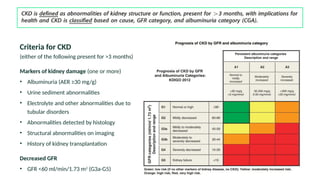
Criteria for CKD
(either of the following present for >3 months)
Markers of kidney damage (one or more)
• Albuminuria (AER ≥30 mg/g)
• Urine sediment abnormalities
• Electrolyte and other abnormalities due to
tubular disorders
• Abnormalities detected by histology
• Structural abnormalities on imaging
• History of kidney transplantation
Decreased GFR
• GFR ˂60 ml/min/1.73 m2
(G3a-G5)
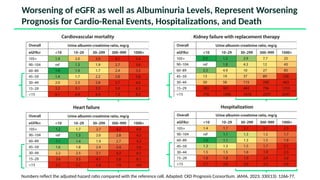
Worsening of eGFR as well as Albuminuria Levels, Represent Worsening
Prognosis for Cardio-Renal Events, Hospitalizations, and Death
Numbers reflect the adjusted hazard ratio compared with the reference cell. Adapted: CKD Prognosis Consortium. JAMA. 2023; 330(13): 1266-77.
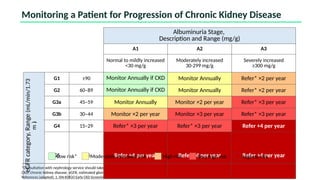
Monitoring a Patient for Progression of Chronic Kidney Disease
*Consultation with nephrology service should take place as needed, depending on local arrangements regarding frequency of monitoring and timing of referral.
CKD, chronic kidney disease; eGFR, estimated glomerular filtration rate; KDIGO, Kidney Disease: Improving Global Outcomes.
References (adapted): 1. ISN-KDIGO Early CKD Screening. 2022. Accessed Mar 2023. 2. National Kidney Foundation (NKF), New York, USA. Accessed Mar 2023.
Albuminuria Stage,
Description and Range (mg/g)
A1 A2 A3
Normal to mildly increased
<30 mg/g
Moderately increased
30-299 mg/g
Severely increased
≥300 mg/g
eGFR
category,
Range
(mL/min/1.73
m
2
)
G1 ≥90 Monitor Annually if CKD Monitor Annually Refer* ×2 per year
G2 60–89 Monitor Annually if CKD Monitor Annually Refer* ×2 per year
G3a 45–59 Monitor Annually Monitor ×2 per year Refer* ×3 per year
G3b 30–44 Monitor ×2 per year Monitor ×3 per year Refer* ×3 per year
G4 15–29 Refer* ×3 per year Refer* ×3 per year Refer +4 per year
G5 <15 Refer +4 per year Refer +4 per year Refer +4 per year
Low risk* Very high risk
High risk
Moderately increased risk Highest risk
BP, blood pressure; CKD, chronic kidney disease; PCP, primary care physician
Kidney Disease: Improving Global Outcomes (KDIGO) Diabetes Work Group. Kidney Int 2020;98:S1
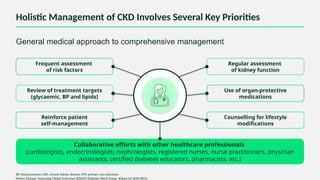
General medical approach to comprehensive management
Holistic Management of CKD Involves Several Key Priorities
Frequent assessment
of risk factors
Review of treatment targets
(glycaemic, BP and lipids)
Reinforce patient
self-management
Collaborative efforts with other healthcare professionals
(cardiologists, endocrinologists, nephrologists, registered nurses, nurse practitioners, physician
assistants, certified diabetes educators, pharmacists, etc.)
Regular assessment
of kidney function
Use of organ-protective
medications
Counselling for lifestyle
modifications
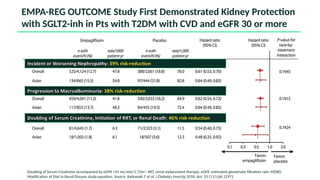
EMPA-REG OUTCOME Study First Demonstrated Kidney Protection
with SGLT2-inh in Pts with T2DM with CVD and eGFR 30 or more
Doubling of Serum Creatinine accompanied by eGFR <45 mL/min/1.73m2
; RRT, renal replacement therapy; eGFR, estimated glomerular filtration rate; MDRD,
Modification of Diet in Renal Disease study equation. Source: Kadowaki T et al. J Diabetes Investig 2018. doi: 10.1111/jdi.12971
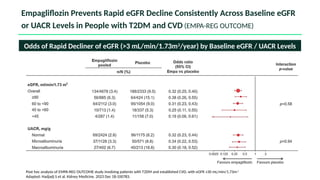
Empagliflozin Prevents Rapid eGFR Decline Consistently Across Baseline eGFR
or UACR Levels in People with T2DM and CVD (EMPA-REG OUTCOME)
Odds of Rapid Decliner of eGFR (>3 mL/min/1.73m2
/year) by Baseline eGFR / UACR Levels
Post hoc analysis of EMPA-REG OUTCOME study involving patients with T2DM and established CVD, with eGFR ≥30 mL/min/1.73m2
Adapted: Hadjadj S et al. Kidney Medicine. 2023 Dec 18:100783.
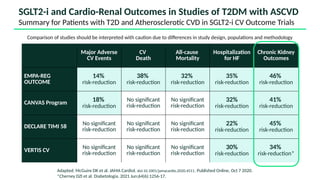
SGLT2-i and Cardio-Renal Outcomes in Studies of T2DM with ASCVD
Summary for Patients with T2D and Atherosclerotic CVD in SGLT2-i CV Outcome Trials
Adapted: McGuire DK et al. JAMA Cardiol. doi:10.1001/jamacardio.2020.4511. Published Online, Oct 7 2020.
*Cherney DZI et al. Diabetologia. 2021 Jun;64(6):1256-17.
Major Adverse
CV Events
CV
Death
All-cause
Mortality
Hospitalization
for HF
Chronic Kidney
Outcomes
EMPA-REG
OUTCOME
14%
risk-reduction
38%
risk-reduction
32%
risk-reduction
35%
risk-reduction
46%
risk-reduction
CANVAS Program 18%
risk-reduction
No significant
risk-reduction
No significant
risk-reduction
32%
risk-reduction
41%
risk-reduction
DECLARE TIMI 58
No significant
risk-reduction
No significant
risk-reduction
No significant
risk-reduction
22%
risk-reduction
45%
risk-reduction
VERTIS CV
No significant
risk-reduction
No significant
risk-reduction
No significant
risk-reduction
30%
risk-reduction
34%
risk-reduction*
Comparison of studies should be interpreted with caution due to differences in study design, populations and methodology
The information reflects actual or anticipated completion dates. Light blue colour indicates trials evaluating SGLT2 inhibiting agents; dark blue colour indicates agents with a different
mode of action. *Dedicated kidney outcome trials; †
Trial was terminated early following a recommendation from the data monitoring committee due to overwhelming efficacy;
‡
Cardiovascular outcomes trial; §
As of January 2020 the protocol was amended to allow currently enrolled patients with T1D to continue in the study and limit screening of new
patients with T1D due to lower than expected enrolment of these patients. DM, diabetes mellitus; T1D, type 1 diabetes; T2D, type 2 diabetes; SGLT2, sodium-glucose co-transporter-
2. 1. ClinicalTrials.gov. NCT02065791; 2. ClinicalTrials.gov. NCT03036150; 3. ClinicalTrials.gov. NCT02540993; 4. Bakris GL et al. Am J Nephrol 2019;50:333; 5. ClinicalTrials.gov.
NCT02545049; 6. ClinicalTrials.gov. NCT03594110; 7. Herrington WG et al. Clin Kidney J 2018;11:749; 8. ClinicalTrials.gov. NCT03819153 (all websites accessed Aug 2020)
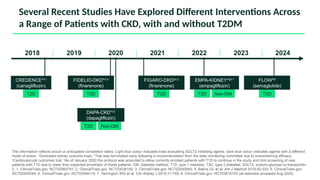
Several Recent Studies Have Explored Different Interventions Across
a Range of Patients with CKD, with and without T2DM
CREDENCE*†1
(canagliflozin)
FIDELIO-DKD*3,4
(finerenone)
FIGARO-DKD‡4,5
(finerenone)
DAPA-CKD*†2
(dapagliflozin)
EMPA-KIDNEY*§6,7
(empagliflozin)
T2D T2D T2D T2D Non-DM
T2D Non-DM
FLOW*8
(semaglutide)
T2D
2018 2019 2020 2021 2022 2023 2024
Outline
• Should SGLT2-i be used across different etiologies and stages of CKD?
• Is there a benefit in patients with slowly progressing CKD?
• Can SGLT2-i be used in frail patients with CKD?
• How should medication stewardship be followed for SGLT2-i in CKD?
Outline
• Should SGLT2-i be used across different etiologies and stages of CKD?
• Is there a benefit in patients with slowly progressing CKD?
• Can SGLT2-i be used in frail patients with CKD?
• How should medication stewardship be followed for SGLT2-i in CKD?
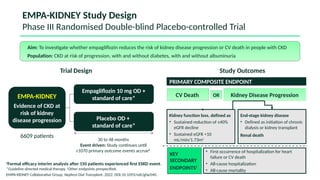
EMPA-KIDNEY Study Design
Phase III Randomised Double-blind Placebo-controlled Trial
Placebo OD +
standard of care*
6609 patients
EMPA-KIDNEY
Evidence of CKD at
risk of kidney
disease progression
Empagliflozin 10 mg OD +
standard of care*
30 to 48 months
Event driven: Study continues until
≥1070 primary outcome events accrue#
PRIMARY COMPOSITE ENDPOINT
End-stage kidney disease
• Defined as initiation of chronic
dialysis or kidney transplant
Renal death
Kidney function loss defined as
• Sustained reduction of ≥40% eGFR
decline
• Sustained eGFR <10
mL/min/1.73m2
• First occurrence of hospitalization for heart
failure or CV death
• All-cause hospitalization
• All-cause mortality
Aim: To investigate whether empagliflozin reduces the risk of kidney disease progression or CV death in people with CKD
Population: CKD at risk of progression, with and without diabetes, with and without albuminuria
Trial Design Study Outcomes
KEY
SECONDARY
ENDPOINTS†
Kidney Disease Progression
#
Formal efficacy interim analysis after 150 patients experienced first ESKD event.
*Guideline directed medical therapy. †
Other endpoints prespecified.
EMPA-KIDNEY Collaborative Group. Nephrol Dial Transplant. 2022. DOI:10.1093/ndt/gfac040.
CV Death OR
Placebo OD +
standard of care*
Empagliflozin 10 mg OD +
standard of care*
End-stage kidney disease
• Defined as initiation of chronic
dialysis or kidney transplant
Renal death
Kidney function loss, defined as
• Sustained reduction of ≥40%
eGFR decline
• Sustained eGFR <10
mL/min/1.73m2
End-stage kidney disease
• Defined as initiation of chronic
dialysis or kidney transplant
Renal death
Kidney function loss, defined as
• Sustained reduction of ≥40%
eGFR decline
• Sustained eGFR <10
mL/min/1.73m2
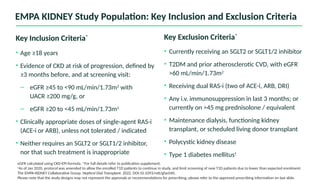
Key Exclusion Criteria*
• Currently receiving an SGLT2 or SGLT1/2 inhibitor
• T2DM and prior atherosclerotic CVD, with eGFR
>60 mL/min/1.73m2
• Receiving dual RAS-i (two of ACE-i, ARB, DRI)
• Any i.v. immunosuppression in last 3 months; or
currently on >45 mg prednisolone / equivalent
• Maintenance dialysis, functioning kidney
transplant, or scheduled living donor transplant
• Polycystic kidney disease
• Type 1 diabetes mellitus†
Key Inclusion Criteria*
• Age ≥18 years
• Evidence of CKD at risk of progression, defined by
≥3 months before, and at screening visit:
– eGFR ≥45 to <90 mL/min/1.73m2
with
UACR ≥200 mg/g, or
– eGFR ≥20 to <45 mL/min/1.73m2
• Clinically appropriate doses of single-agent RAS-i
(ACE-i or ARB), unless not tolerated / indicated
• Neither requires an SGLT2 or SGLT1/2 inhibitor,
nor that such treatment is inappropriate
eGFR calculated using CKD-EPI formula. *For full details refer to publication supplement.
†
As of Jan 2020, protocol was amended to allow the enrolled T1D patients to continue in study, and limit screening of new T1D patients due to lower than expected enrolment.
The EMPA-KIDNEY Collaborative Group. Nephrol Dial Transplant. 2022. DOI:10.1093/ndt/gfac040.
Please note that the study designs may not represent the approvals or recommendations for prescribing; please refer to the approved prescribing information on last slide.
EMPA KIDNEY Study Population: Key Inclusion and Exclusion Criteria
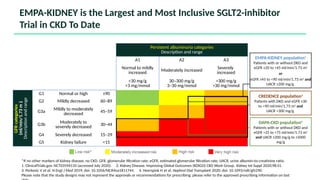
EMPA-KIDNEY is the Largest and Most Inclusive SGLT2-inhibitor
Trial in CKD To Date
*If no other markers of kidney disease, no CKD. GFR, glomerular filtration rate; eGFR, estimated glomerular filtration rate; UACR, urine albumin-to-creatinine ratio.
1. ClinicalTrials.gov. NCT03594110 (accessed July 2020). 2. Kidney Disease: Improving Global Outcomes (KDIGO) CKD Work Group. Kidney Int Suppl 2020;98:S1.
3. Perkovic V et al. N Engl J Med 2019; doi: 10.1056/NEJMoa1811744. 4. Heerspink H et al. Nephrol Dial Transplant 2020; doi: 10.1093/ndt/gfz290.
Please note that the study designs may not represent the approvals or recommendations for prescribing; please refer to the approved prescribing information on last
Persistent albuminuria categories
Description and range
A1 A2 A3
Normal to mildly
increased Moderately increased
Severely
increased
<30 mg/g
<3 mg/mmol
30–300 mg/g
3–30 mg/mmol
>300 mg/g
>30 mg/mmol
GFR
categories
(ml/min/1.73
m
2
)
Description
and
range
G1 Normal or high ≥90
G2 Mildly decreased 60–89
G3a
Mildly to moderately
decreased 45–59
G3b Moderately to
severely decreased
30–44
G4 Severely decreased 15–29
G5 Kidney failure <15
CREDENCE population3
Patients with DKD and eGFR ≥30
to <90 ml/min/1.73 m2
and
UACR >300 mg/g
DAPA-CKD population4
Patients with or without DKD and
eGFR >25 to <75 ml/min/1.73 m2
and UACR ≥200 mg/g to ≤5000
mg/g
EMPA-KIDNEY population1
Patients with or without DKD and
eGFR ≥20 to <45 ml/min/1.73 m2
or
eGFR ≥45 to <90 ml/min/1.73 m2
and
UACR ≥200 mg/g
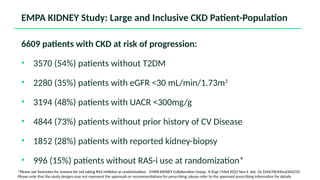
6609 patients with CKD at risk of progression:
• 3570 (54%) patients without T2DM
• 2280 (35%) patients with eGFR <30 mL/min/1.73m2
• 3194 (48%) patients with UACR <300mg/g
• 4844 (73%) patients without prior history of CV Disease
• 1852 (28%) patients with reported kidney-biopsy
• 996 (15%) patients without RAS-i use at randomization*
EMPA KIDNEY Study: Large and Inclusive CKD Patient-Population
*Please see footnotes for reasons for not taking RAS inhibitor at randomization. EMPA-KIDNEY Collaborative Group. N Engl J Med 2022 Nov 4. doi: 10.1056/NEJMoa2204233.
Please note that the study designs may not represent the approvals or recommendations for prescribing; please refer to the approved prescribing information for details.
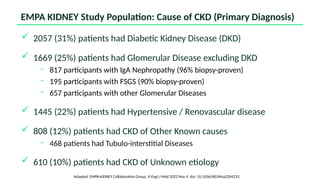
 2057 (31%) patients had Diabetic Kidney Disease (DKD)
 1669 (25%) patients had Glomerular Disease excluding DKD
– 817 participants with IgA Nephropathy (96% biopsy-proven)
– 195 participants with FSGS (90% biopsy-proven)
– 657 participants with other Glomerular Diseases
 1445 (22%) patients had Hypertensive / Renovascular disease
 808 (12%) patients had CKD of Other Known causes
– 468 patients had Tubulo-interstitial Diseases
 610 (10%) patients had CKD of Unknown etiology
EMPA KIDNEY Study Population: Cause of CKD (Primary Diagnosis)
Adapted: EMPA-KIDNEY Collaborative Group. N Engl J Med 2022 Nov 4. doi: 10.1056/NEJMoa2204233
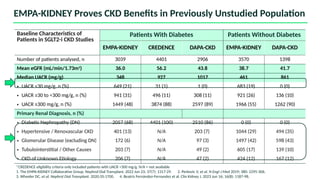
Baseline Characteristics of
Patients in SGLT2-i CKD Studies
Patients With Diabetes Patients Without Diabetes
EMPA-KIDNEY CREDENCE DAPA-CKD EMPA-KIDNEY DAPA-CKD
Number of patients analysed, n 3039 4401 2906 3570 1398
Mean eGFR (mL/min/1.73m2
) 36.0 56.2 43.8 38.7 41.7
Median UACR (mg/g) 348 927 1017 461 861
• UACR <30 mg/g, n (%) 649 (21) 31 (1) 1 (0) 683 (19) 0 (0)
• UACR ≥30 to <300 mg/g, n (%) 941 (31) 496 (11) 308 (11) 921 (26) 136 (10)
• UACR ≥300 mg/g, n (%) 1449 (48) 3874 (88) 2597 (89) 1966 (55) 1262 (90)
Primary Renal Diagnosis, n (%)
• Diabetic Nephropathy (DN) 2057 (68) 4401 (100) 2510 (86) 0 (0) 0 (0)
• Hypertensive / Renovascular CKD 401 (13) N/A 203 (7) 1044 (29) 494 (35)
• Glomerular Disease (excluding DN) 172 (6) N/A 97 (3) 1497 (42) 598 (43)
• Tubulointerstitial / Other Causes 203 (7) N/A 49 (2) 605 (17) 139 (10)
• CKD of Unknown Etiology 206 (7) N/A 47 (2) 424 (12) 167 (12)
*CREDENCE eligibility criteria only included patients with UACR >300 mg/g. N/A = not available
1. The EMPA-KIDNEY Collaborative Group. Nephrol Dial Transplant. 2022 Jun 23; 37(7): 1317-29. 2. Perkovic V, et al. N Engl J Med 2019; 380: 2295-306.
3. Wheeler DC, et al. Nephrol Dial Transplant. 2020;35:1700. 4. Beatriz Fernández-Fernandez et al. Clin Kidney J. 2023 Jun 16; 16(8): 1187-98.
EMPA-KIDNEY Proves CKD Benefits in Previously Unstudied Population
Placebo Empagliflozin
0%
2%
4%
6%
8%
10%
12%
9.0%
7.4%
End-Stage Kidney Disease
Or All-Cause Mortality
Patients
(%)
with
Events
Placebo Empagliflozin
0%
2%
4%
6%
8%
10%
6.6%
4.9%
End-Stage Kidney Disease
Or CV Death
Patients
(%)
with
Events
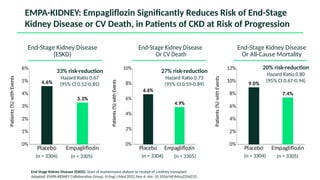
EMPA-KIDNEY: Empagliflozin Significantly Reduces Risk of End-Stage
Kidney Disease or CV Death, in Patients of CKD at Risk of Progression
Placebo Empagliflozin
0%
1%
2%
3%
4%
5%
6%
4.6%
3.3%
End-Stage Kidney Disease
(ESKD)
Patients
(%)
with
Events
33% risk-reduction
Hazard Ratio 0.67
(95% CI 0.52-0.85)
27% risk-reduction
Hazard Ratio 0.73
(95% CI 0.59-0.89)
20% risk-reduction
Hazard Ratio 0.80
(95% CI 0.67-0.94)
End Stage Kidney Disease (ESKD): Start of maintenance dialysis or receipt of a kidney transplant
Adapted: EMPA-KIDNEY Collaborative Group. N Engl J Med 2022 Nov 4. doi: 10.1056/NEJMoa2204233
(n = 3304) (n = 3305) (n = 3304) (n = 3305) (n = 3304) (n = 3305)
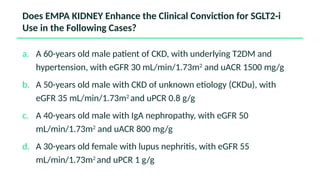
Does EMPA KIDNEY Enhance the Clinical Conviction for SGLT2-i
Use in the Following Cases?
a. A 60-years old male patient of CKD, with underlying T2DM and
hypertension, with eGFR 30 mL/min/1.73m2
and uACR 1500 mg/g
b. A 50-years old male with CKD of unknown etiology (CKDu), with
eGFR 35 mL/min/1.73m2
and uPCR 0.8 g/g
c. A 40-years old male with IgA nephropathy, with eGFR 50
mL/min/1.73m2
and uACR 800 mg/g
d. A 30-years old female with lupus nephritis, with eGFR 55
mL/min/1.73m2
and uPCR 1 g/g
Diabetic Kidney
Disease
Hypertensive or
Renovascular
Disease
Glomerular
Disease
Other or
Unknown
Etiology
Overall CKD
Patients
0
2
4
6
8
10
12 11.41
6.92
9.66
6.84
8.96
8.1
5.95
7.48
5.24
6.85
Kidney Disease Progression or Cardiovascular Death
Placebo Empagliflozin
Event-rate
(per
100
patient-years)
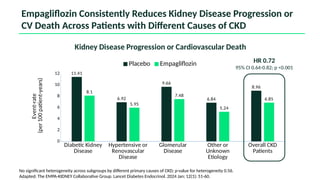
Empagliflozin Consistently Reduces Kidney Disease Progression or
CV Death Across Patients with Different Causes of CKD
HR 0.72
95% CI 0.64-0.82; p <0.001
No significant heterogeneity across subgroups by different primary causes of CKD; p-value for heterogeneity 0.56.
Adapted: The EMPA-KIDNEY Collaborative Group. Lancet Diabetes Endocrinol. 2024 Jan; 12(1): 51-60.
Diabetic Kidney
Disease
Hypertensive or
Renovascular
Disease
Glomerular
Disease
Other or
Unknown
Etiology
Overall CKD
Patients
0
1
2
3
4
5
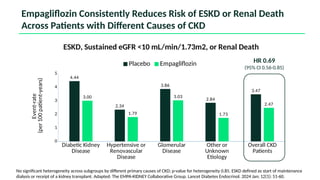
4.44
2.34
3.86
2.84
3.47
3.00
1.79
3.03
1.73
2.47
ESKD, Sustained eGFR <10 mL/min/1.73m2, or Renal Death
Placebo Empagliflozin
Event-rate
(per
100
patient-years)
Empagliflozin Consistently Reduces Risk of ESKD or Renal Death
Across Patients with Different Causes of CKD
HR 0.69
(95% CI 0.56-0.85)
No significant heterogeneity across subgroups by different primary causes of CKD; p-value for heterogeneity 0.85. ESKD defined as start of maintenance
dialysis or receipt of a kidney transplant. Adapted: The EMPA-KIDNEY Collaborative Group. Lancet Diabetes Endocrinol. 2024 Jan; 12(1): 51-60.
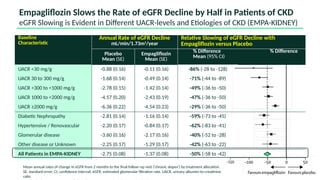
Baseline
Characteristic
Annual Rate of eGFR Decline
mL/min/1.73m2
/year
Relative Slowing of eGFR Decline with
Empagliflozin versus Placebo
Placebo
Mean (SE)
Empagliflozin
Mean (SE)
% Difference % Difference
Mean (95% CI)
UACR <30 mg/g -0.88 (0.16) -0.11 (0.16) -86% (-28 to -128)
UACR 30 to 300 mg/g -1.68 (0.14) -0.49 (0.14) -71% (-44 to -89)
UACR >300 to <1000 mg/g -2.78 (0.15) -1.42 (0.14) -49% (-36 to -50)
UACR 1000 to <2000 mg/g -4.57 (0.20) -2.43 (0.19) -47% (-36 to -50)
UACR ≥2000 mg/g -6.36 (0.22) -4.54 (0.23) -29% (-36 to -50)
Diabetic Nephropathy -2.81 (0.14) -1.16 (0.14) -59% (-73 to -45)
Hypertensive / Renovascular -2.20 (0.17) -0.84 (0.17) -62% (-83 to -41)
Glomerular disease -3.60 (0.16) -2.17 (0.16) -40% (-52 to -28)
Other disease or Unknown -2.25 (0.17) -1.29 (0.17) -42% (-63 to -22)
All Patients in EMPA-KIDNEY -2.75 (0.08) -1.37 (0.08) -50% (-58 to -42)
Empagliflozin Slows the Rate of eGFR Decline by Half in Patients of CKD
eGFR Slowing is Evident in Different UACR-levels and Etiologies of CKD (EMPA-KIDNEY)
Mean annual rates of change in eGFR from 2 months to the final follow−up visit (‘chronic slopes’) by treatment allocation.
SE, standard error; CI, confidence interval; eGFR, estimated glomerular filtration rate. UACR, urinary albumin-to-creatinine
ratio
Analysis of effects on UACR uses central laboratory measurements at follow-up time points 2, 18, 24 and 30 months. Analysis of effects on BP uses
measurements obtained at follow-up time points: 2, 6, 12, 18, 24, 30 and 36 months.
BP, blood pressure; DBP, diastolic blood pressure; DKD, diabetic kidney disease; SBP, systolic blood pressure; UACR, urine albumin-creatinine ratio.
Adapted: EMPA-KIDNEY Collaborative Group. Lancet Diabetes Endocrinol. 2024; 12: 51-60.
Diabetic
Kidney Disease
Hypertensive /
Renovascular
disease
Glomerular
Disease
Other /
Unknown
Etiology
-30%
-25%
-20%
-15%
-10%
-5%
0%
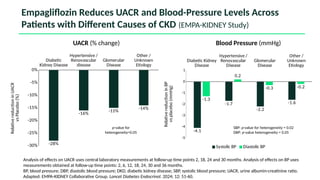
-28%
-16%
-15%
-14%
Relative
reduction
in
UACR
vs
Placebo
(%)
Diabetic Kidney
Disease
Hypertensive /
Renovascular
Disease
Glomerular
Disease
Other /
Unknown
Etiology
-5
-4
-3
-2
-1
0
1
-4.1
-1.7
-2.2
-1.6
-1.3
0.2
-0.3 -0.2
Systolic BP Diastolic BP
Relative
reduction
in
BP
vs
placebo
(mmHg)
p-value for
heterogeneity=0.05
SBP: p-value for heterogeneity = 0.02
DBP: p-value heterogeneity = 0.05
UACR (% change) Blood Pressure (mmHg)
Empagliflozin Reduces UACR and Blood-Pressure Levels Across
Patients with Different Causes of CKD (EMPA-KIDNEY Study)
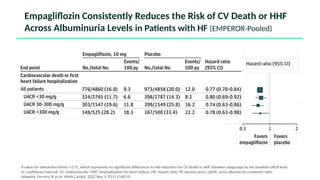
P-value for interaction-trend = 0.71, which represents no significant differences in risk-reduction for CV death or HHF between subgroups by the baseline UACR level
CI, confidence interval; CV, cardiovascular; HHF, hospitalization for heart failure; HR, hazard ratio; PY, person-years; UACR, urine albumin-to-creatinine ratio.
Adapted: Ferreira JP et al. JAMA Cardiol. 2022 Nov 1;7(11):1148-59.
Empagliflozin Consistently Reduces the Risk of CV Death or HHF
Across Albuminuria Levels in Patients with HF (EMPEROR-Pooled)
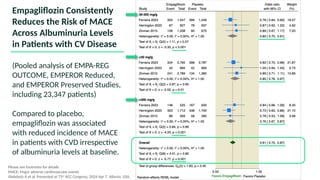
Empagliflozin Consistently
Reduces the Risk of MACE
Across Albuminuria Levels
in Patients with CV Disease
(Pooled analysis of EMPA-REG
OUTCOME, EMPEROR Reduced,
and EMPEROR Preserved Studies,
including 23,347 patients)
Compared to placebo,
empagliflozin was associated
with reduced incidence of MACE
in patients with CVD irrespective
of albuminuria levels at baseline.
Please see footnotes for details
MACE: Major adverse cardiovascular events
Abdelaziz A et al. Presented at 73rd
ACC Congress, 2024 Apr 7, Atlanta, USA.
Outline
• Should SGLT2-i be used across different etiologies and stages of CKD?
• Is there a benefit in patients with slowly progressing CKD?
• Can SGLT2-i be used in frail patients with CKD?
• How should medication stewardship be followed for SGLT2-i in CKD?
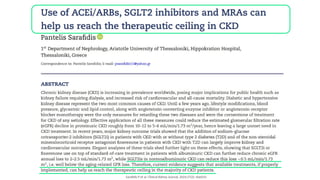
Sarafidis P et al. Clinical Kidney Journal, 2024;17(2): sfae014
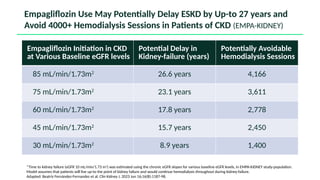
*Time to kidney failure (eGFR 10 mL/min/1.73 m2
) was estimated using the chronic eGFR slopes for various baseline eGFR levels, in EMPA-KIDNEY study-population.
Model assumes that patients will live up-to the point of kidney failure and would continue hemodialysis throughout during kidney-failure.
Adapted: Beatriz Fernández-Fernandez et al. Clin Kidney J. 2023 Jun 16;16(8):1187-98.
Empagliflozin Use May Potentially Delay ESKD by Up-to 27 years and
Avoid 4000+ Hemodialysis Sessions in Patients of CKD (EMPA-KIDNEY)
Empagliflozin Initiation in CKD
at Various Baseline eGFR levels
Potential Delay in
Kidney-failure (years)
Potentially Avoidable
Hemodialysis Sessions
85 mL/min/1.73m2
26.6 years 4,166
75 mL/min/1.73m2
23.1 years 3,611
60 mL/min/1.73m2
17.8 years 2,778
45 mL/min/1.73m2
15.7 years 2,450
30 mL/min/1.73m2
8.9 years 1,400
Outline
• Should SGLT2-i be used across different etiologies and stages of CKD?
• Is there a benefit in patients with slowly progressing CKD?
• Can SGLT2-i be used in frail patients with CKD?
• How should medication stewardship be followed for SGLT2-i in CKD?
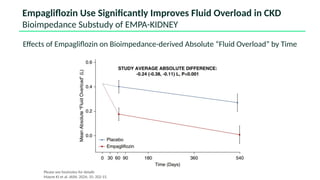
Empagliflozin Use Significantly Improves Fluid Overload in CKD
Bioimpedance Substudy of EMPA-KIDNEY
Please see footnotes for details
Mayne KJ et al. JASN. 2024; 35: 202-15.
Effects of Empagliflozin on Bioimpedance-derived Absolute “Fluid Overload” by Time
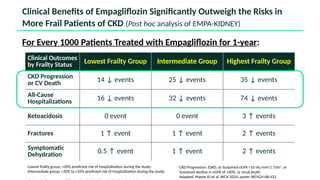
Clinical Benefits of Empagliflozin Significantly Outweigh the Risks in
More Frail Patients of CKD (Post hoc analysis of EMPA-KIDNEY)
For Every 1000 Patients Treated with Empagliflozin for 1-year:
Clinical Outcomes
by Frailty Status Lowest Frailty Group Intermediate Group Highest Frailty Group
CKD Progression
or CV Death 14 ↓ events 25 ↓ events 35 ↓ events
All-Cause
Hospitalizations 16 ↓ events 32 ↓ events 74 ↓ events
Ketoacidosis 0 event 0 event 3 ↑ events
Fractures 1 ↑ event 1 ↑ event 2 ↑ events
Symptomatic
Dehydration 0.5 ↑ event 1 ↑ event 2 ↑ events
Lowest frailty group: ≤20% predicted risk of hospitalization during the study;
Intermediate group: >20% to ≤35% predicted risk of hospitalization during the study;
CKD Progression: ESKD, or Sustained eGFR <10 mL/min/1.73m2
, or
Sustained decline in eGFR of ≥40%, or renal death.
Adapted: Mayne KJ et al. WCN 2024; poster WCN24-AB-431.
Outline
• Should SGLT2-i be used across different etiologies and stages of CKD?
• Is there a benefit in patients with slowly progressing CKD?
• Can SGLT2-i be used in frail patients with CKD?
• How should medication stewardship be followed for SGLT2-i in CKD?
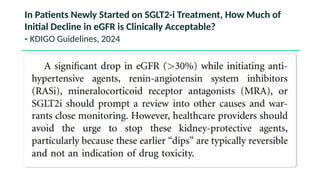
In Patients Newly Started on SGLT2-i Treatment, How Much of
Initial Decline in eGFR is Clinically Acceptable?
- KDIGO Guidelines, 2024
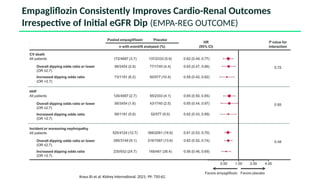
Empagliflozin Consistently Improves Cardio-Renal Outcomes
Irrespective of Initial eGFR Dip (EMPA-REG OUTCOME)
Kraus BJ et al. Kidney International. 2021; 99: 750-62.
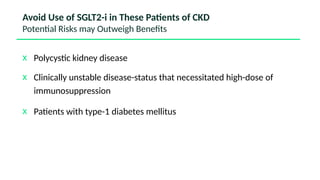
x Polycystic kidney disease
x Clinically unstable disease-status that necessitated high-dose of
immunosuppression
x Patients with type-1 diabetes mellitus
Avoid Use of SGLT2-i in These Patients of CKD
Potential Risks may Outweigh Benefits
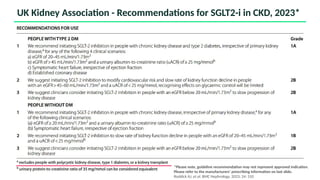
UK Kidney Association - Recommendations for SGLT2-i in CKD, 2023*
*Please note, guideline recommendation may not represent approved indication.
Please refer to the manufacturers’ prescribing information on last slide.
Roddick AJ, et al. BMC Nephrology. 2023; 24: 310
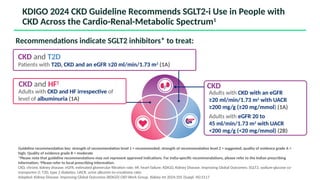
KDIGO 2024 CKD Guideline Recommends SGLT2-i Use in People with
CKD Across the Cardio-Renal-Metabolic Spectrum1
Guideline recommendation key: strength of recommendation level 1 = recommended; strength of recommendation level 2 = suggested; quality of evidence grade A =
high; Quality of evidence grade B = moderate
*Please note that guideline recommendations may not represent approved indications. For india-specific recommendations, please refer to the Indian prescribing
information; †
Please refer to local prescribing information.
CKD, chronic kidney disease; eGFR, estimated glomerular filtration rate; HF, heart failure; KDIGO, Kidney Disease: Improving Global Outcomes; SGLT2, sodium-glucose co-
transporter-2; T2D, type 2 diabetes; UACR, urine albumin-to-creatinine ratio
Adapted: Kidney Disease: Improving Global Outcomes (KDIGO) CKD Work Group. Kidney Int 2024;105 (Suppl. 4S):S117
Patients with T2D, CKD and an eGFR ≥20 ml/min/1.73 m2
(1A)
CKD and T2D
Adults with CKD with an eGFR
≥20 ml/min/1.73 m2
with UACR
≥200 mg/g (≥20 mg/mmol) (1A)
Adults with eGFR 20 to
45 ml/min/1.73 m2
with UACR
<200 mg/g (<20 mg/mmol) (2B)
CKD
Adults with CKD and HF irrespective of
level of albuminuria (1A)
CKD and HF†
Recommendations indicate SGLT2 inhibitors* to treat:
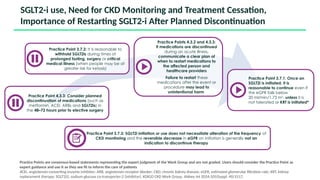
SGLT2-i use, Need for CKD Monitoring and Treatment Cessation,
Importance of Restarting SGLT2-i After Planned Discontinuation
Practice Points are consensus-based statements representing the expert judgment of the Work Group and are not graded. Users should consider the Practice Point as
expert guidance and use it as they see fit to inform the care of patients
ACEi, angiotensin-converting enzyme inhibitor; ARB, angiotensin receptor blocker; CKD, chronic kidney disease; eGFR, estimated glomerular filtration rate; KRT, kidney
replacement therapy; SGLT2(i), sodium-glucose co-transporter-2 (inhibitor). KDIGO CKD Work Group. Kidney Int 2024;105(Suppl. 4S):S117.
Practice Point 4.3.3: Consider planned
discontinuation of medications (such as
metformin, ACEi, ARBs and SGLT2is) in
the 48–72 hours prior to elective surgery
Practice Point 3.7.2: It is reasonable to
withhold SGLT2is during times of
prolonged fasting, surgery or critical
medical illness (when people may be at
greater risk for ketosis)
Practice Points 4.3.2 and 4.3.3:
If medications are discontinued
during an acute illness,
communicate a clear plan of
when to restart medications to
the affected person and
healthcare providers
Failure to restart these
medications after the event or
procedure may lead to
unintentional harm
Practice Point 3.7.3: SGLT2i initiation or use does not necessitate alteration of the frequency of
CKD monitoring and the reversible decrease in eGFR on initiation is generally not an
indication to discontinue therapy
Practice Point 3.7.1: Once an
SGLT2i is initiated, it is
reasonable to continue even if
the eGFR falls below
20 ml/min/1.73 m2
, unless it is
not tolerated or KRT is initiated*
Thank You
Abridged Prescribing Information
JARDIANCE® (empagliflozin) film-coated tablets 10 mg/25 mg
Composition: 1 film-coated tablet contains empagliflozin 10 mg or 25 mg.
Indication: JARDIANCE® is indicated: (i) To reduce the risk of cardiovascular death and hospitalization for heart failure in adults with heart failure. (ii) To reduce the risk of sustained decline in eGFR (only for patients with eGFR 30-90
mL/min/1.73m2
), end-stage kidney disease, cardiovascular death, and hospitalization in adults with chronic kidney disease at risk of progression. (iii) To reduce the risk of cardiovascular death in adults with type 2 diabetes mellitus and
established cardiovascular disease. (iv) As an adjunct to diet and exercise to improve glycemic control in adults with type 2 diabetes mellitus. Limitations: JARDIANCE® is not recommended for use in patients with type 1 diabetes mellitus. It
may increase the risk of diabetic ketoacidosis in these patients. JARDIANCE® is not recommended for use to improve glycemic control in adults with type 2 diabetes mellitus with an eGFR less than 30 mL/min/1.73m2
. JARDIANCE® is likely to
be ineffective in this setting based upon its mechanism of action. Jardiance should be prescribed only to the heart-failure patients with eGFR more than 30 mL/min/1.73m2
. JARDIANCE® is not recommended in patients with polycystic kidney
disease or patients requiring or with a recent history of intravenous immunosuppressive therapy or >45 mg of prednisone or equivalent for kidney disease.
Dosage and administration: Assess renal function before initiating JARDIANCE® and as clinically indicated. Before initiating JARDIANCE®, assess for volume contraction and correct volume status if indicated. The recommended dose of
JARDIANCE® is 10 mg once daily in the morning, taken with or without food. For additional glycemic control, the dose may be increased to 25 mg once daily in patients tolerating 10 mg once daily. Instruct patients to take JARDIANCE only as
prescribed. If a dose is missed, it should be taken as soon as the patient remembers; advise not to double the next dose.
Contraindications: Patients with a hypersensitivity to empagliflozin or any of the excipients in JARDIANCE®.
Pregnancy, Lactation, Childhood, Old-age, Hepatic impairment: JARDIANCE® is not recommended during the second and third trimesters of pregnancy. Because of the potential for serious adverse reactions in a breastfed infant, advise
women that use of JARDIANCE® is not recommended while breastfeeding. The safety and effectiveness of JARDIANCE® have not been established in pediatric patients. No dosage adjustment is recommended based on age. JARDIANCE® is
expected to have diminished glycemic efficacy in elderly patients with renal impairment. In glycemic control studies in patients with type 2 diabetes mellitus, the risk of volume depletion-related adverse reactions increased in patients who
were 75 years of age and older to 2.1%, 2.3%, and 4.4% for placebo, JARDIANCE® 10 mg, and JARDIANCE® 25 mg; the risk of urinary tract infections increased in patients who were 75 years of age and older to 10.5%, 15.7%, and 15.1% in
patients randomized to placebo, JARDIANCE® 10 mg, and JARDIANCE® 25 mg, respectively. In the studies for treatment of heart failure and chronic kidney disease, no overall differences in safety and effectiveness have been observed
between patients 65 years of age and older and younger adult patients. JARDIANCE® may be used in patients with hepatic impairment.
Special warnings and precautions: Reports of ketoacidosis are identified in patients with type 1 and type 2 diabetes mellitus; cases have also been reported in patients without diabetes mellitus. Before initiating JARDIANCE®, consider factors
that may predispose to ketoacidosis, including pancreatic insulin deficiency from any cause, caloric restriction, and alcohol abuse. Consider monitoring for ketoacidosis and temporarily discontinuing JARDIANCE® in predisposing clinical
situations. For patients who undergo scheduled surgery, consider temporarily discontinuing JARDIANCE® for at least 3 days prior to surgery. Ensure risk factors for ketoacidosis are resolved prior to restarting JARDIANCE®. Patients treated with
JARDIANCE® who present with signs and symptoms of severe metabolic acidosis, should be assessed for ketoacidosis regardless of presenting blood glucose levels. Educate all patients on the signs and symptoms of ketoacidosis and instruct
patients to discontinue JARDIANCE® and seek medical attention immediately if signs and symptoms occur. Patients with impaired renal function (eGFR less than 60 mL/min/1.73 m2
), elderly patients, or patients on loop diuretics may be at
increased risk for volume depletion or hypotension. Evaluate patients for signs and symptoms of urinary tract infections and treat promptly, if indicated. A lower dose of the insulin secretagogue or insulin may be required to reduce the risk of
hypoglycemia when used in combination with JARDIANCE®. If necrotizing fasciitis is suspected, start treatment immediately with broad-spectrum antibiotics and, if necessary, surgical debridement; discontinue JARDIANCE®. Monitor and treat
as appropriate for genital mycotic infections. In some clinical studies with SGLT2 inhibitors an imbalance in the incidence of lower limb amputation has been observed; counsel patients about the importance of routine preventative foot care,
and monitor and treat as appropriate. There have been postmarketing reports of serious hypersensitivity reactions, (e.g., angioedema) in patients treated with JARDIANCE®. If a hypersensitivity reaction occurs, discontinue JARDIANCE®; treat
promptly per standard of care, and monitor until signs and symptoms resolve. Concomitant use of an SGLT2 inhibitor with lithium may decrease serum lithium concentrations; monitor serum lithium concentration more frequently during
JARDIANCE® initiation and dosage changes.
Side effects: The important adverse reactions include Ketoacidosis, Volume Depletion, Urosepsis and Pyelonephritis, Hypoglycemia with Concomitant Use with Insulin and Insulin Secretagogues, Necrotizing Fasciitis of the Perineum
(Fournier’s Gangrene), Genital Mycotic Infections, Hypersensitivity Reactions. Some adverse events reported with the post-approval use without established causal relationship, include constipation, acute kidney injury, skin reactions.
Shelf Life: 36 months. Storage: Store in a safe place out of the reach of children. Do not store above 300
C.
This is abridged prescribing information for JARDIANCE®. It is recommended to refer to the full prescribing information before prescribing.
Disclaimer- For the use of Registered Medical Practitioner or a Hospital or a Laboratory only.. Please submit your grievances, if any, with respect to processing of Data that you have provided to Boehringer Ingelheim India Pvt. Ltd., to our
designated Grievance Officer at DataProtectionGrievanceOfficer.IN@boehringer-ingelheim.com. In case you come across any adverse event related to our products, please connect with the Patient Safety & Pharmacovigilance Team at
PV_local_India@boehringer-ingelheim.com or call us on +91 9819241697. For any therapeutic area or product related information, please contact: medical.query.mum@boehringer-ingelheim.com. Please note that the information provided
is not intended to recommend or promote any off label use. Boehringer-Ingelheim India does not encourage or promote the off-label usage of any of our products. Please be guided by our current locally approved prescribing information.
Please refer to approved prescribing information for details. Jardiance® is approved for reduction in risk of CV death in people with T2DM with established CVD, for reduction in risk of cardiovascular death or hospitalization of heart failure in
patients with heart failure, and for glycaemiccontrol in patients with T2DM.
For further medical information, please write to: Boehringer Ingelheim India Pvt.Ltd., Unit no. 202 and part of Unit no. 201, 2nd floor, Godrej 2, Pirojsha Nagar,EasternExpress Highway, Vikhroli (E), Mumbai 400079, India
PC-IN-104363 VALID TILL 10/10/2026 LAST DATE OF REVIEW 10/10/2024

Learnings from EMPA - KIDNEY study .pptx

  • 1.
    Practical Implementation ofSGLT2-i in CKD Learnings from EMPA-KIDNEY Study
  • 2.
    Criteria for CKD (eitherof the following present for >3 months) Markers of kidney damage (one or more) • Albuminuria (AER ≥30 mg/g) • Urine sediment abnormalities • Electrolyte and other abnormalities due to tubular disorders • Abnormalities detected by histology • Structural abnormalities on imaging • History of kidney transplantation Decreased GFR • GFR ˂60 ml/min/1.73 m2 (G3a-G5)
  • 3.
    Worsening of eGFRas well as Albuminuria Levels, Represent Worsening Prognosis for Cardio-Renal Events, Hospitalizations, and Death Numbers reflect the adjusted hazard ratio compared with the reference cell. Adapted: CKD Prognosis Consortium. JAMA. 2023; 330(13): 1266-77.
  • 4.
    Monitoring a Patientfor Progression of Chronic Kidney Disease *Consultation with nephrology service should take place as needed, depending on local arrangements regarding frequency of monitoring and timing of referral. CKD, chronic kidney disease; eGFR, estimated glomerular filtration rate; KDIGO, Kidney Disease: Improving Global Outcomes. References (adapted): 1. ISN-KDIGO Early CKD Screening. 2022. Accessed Mar 2023. 2. National Kidney Foundation (NKF), New York, USA. Accessed Mar 2023. Albuminuria Stage, Description and Range (mg/g) A1 A2 A3 Normal to mildly increased <30 mg/g Moderately increased 30-299 mg/g Severely increased ≥300 mg/g eGFR category, Range (mL/min/1.73 m 2 ) G1 ≥90 Monitor Annually if CKD Monitor Annually Refer* ×2 per year G2 60–89 Monitor Annually if CKD Monitor Annually Refer* ×2 per year G3a 45–59 Monitor Annually Monitor ×2 per year Refer* ×3 per year G3b 30–44 Monitor ×2 per year Monitor ×3 per year Refer* ×3 per year G4 15–29 Refer* ×3 per year Refer* ×3 per year Refer +4 per year G5 <15 Refer +4 per year Refer +4 per year Refer +4 per year Low risk* Very high risk High risk Moderately increased risk Highest risk
  • 5.
    BP, blood pressure;CKD, chronic kidney disease; PCP, primary care physician Kidney Disease: Improving Global Outcomes (KDIGO) Diabetes Work Group. Kidney Int 2020;98:S1 General medical approach to comprehensive management Holistic Management of CKD Involves Several Key Priorities Frequent assessment of risk factors Review of treatment targets (glycaemic, BP and lipids) Reinforce patient self-management Collaborative efforts with other healthcare professionals (cardiologists, endocrinologists, nephrologists, registered nurses, nurse practitioners, physician assistants, certified diabetes educators, pharmacists, etc.) Regular assessment of kidney function Use of organ-protective medications Counselling for lifestyle modifications
  • 6.
    EMPA-REG OUTCOME StudyFirst Demonstrated Kidney Protection with SGLT2-inh in Pts with T2DM with CVD and eGFR 30 or more Doubling of Serum Creatinine accompanied by eGFR <45 mL/min/1.73m2 ; RRT, renal replacement therapy; eGFR, estimated glomerular filtration rate; MDRD, Modification of Diet in Renal Disease study equation. Source: Kadowaki T et al. J Diabetes Investig 2018. doi: 10.1111/jdi.12971
  • 7.
    Empagliflozin Prevents RapideGFR Decline Consistently Across Baseline eGFR or UACR Levels in People with T2DM and CVD (EMPA-REG OUTCOME) Odds of Rapid Decliner of eGFR (>3 mL/min/1.73m2 /year) by Baseline eGFR / UACR Levels Post hoc analysis of EMPA-REG OUTCOME study involving patients with T2DM and established CVD, with eGFR ≥30 mL/min/1.73m2 Adapted: Hadjadj S et al. Kidney Medicine. 2023 Dec 18:100783.
  • 8.
    SGLT2-i and Cardio-RenalOutcomes in Studies of T2DM with ASCVD Summary for Patients with T2D and Atherosclerotic CVD in SGLT2-i CV Outcome Trials Adapted: McGuire DK et al. JAMA Cardiol. doi:10.1001/jamacardio.2020.4511. Published Online, Oct 7 2020. *Cherney DZI et al. Diabetologia. 2021 Jun;64(6):1256-17. Major Adverse CV Events CV Death All-cause Mortality Hospitalization for HF Chronic Kidney Outcomes EMPA-REG OUTCOME 14% risk-reduction 38% risk-reduction 32% risk-reduction 35% risk-reduction 46% risk-reduction CANVAS Program 18% risk-reduction No significant risk-reduction No significant risk-reduction 32% risk-reduction 41% risk-reduction DECLARE TIMI 58 No significant risk-reduction No significant risk-reduction No significant risk-reduction 22% risk-reduction 45% risk-reduction VERTIS CV No significant risk-reduction No significant risk-reduction No significant risk-reduction 30% risk-reduction 34% risk-reduction* Comparison of studies should be interpreted with caution due to differences in study design, populations and methodology
  • 9.
    The information reflectsactual or anticipated completion dates. Light blue colour indicates trials evaluating SGLT2 inhibiting agents; dark blue colour indicates agents with a different mode of action. *Dedicated kidney outcome trials; † Trial was terminated early following a recommendation from the data monitoring committee due to overwhelming efficacy; ‡ Cardiovascular outcomes trial; § As of January 2020 the protocol was amended to allow currently enrolled patients with T1D to continue in the study and limit screening of new patients with T1D due to lower than expected enrolment of these patients. DM, diabetes mellitus; T1D, type 1 diabetes; T2D, type 2 diabetes; SGLT2, sodium-glucose co-transporter- 2. 1. ClinicalTrials.gov. NCT02065791; 2. ClinicalTrials.gov. NCT03036150; 3. ClinicalTrials.gov. NCT02540993; 4. Bakris GL et al. Am J Nephrol 2019;50:333; 5. ClinicalTrials.gov. NCT02545049; 6. ClinicalTrials.gov. NCT03594110; 7. Herrington WG et al. Clin Kidney J 2018;11:749; 8. ClinicalTrials.gov. NCT03819153 (all websites accessed Aug 2020) Several Recent Studies Have Explored Different Interventions Across a Range of Patients with CKD, with and without T2DM CREDENCE*†1 (canagliflozin) FIDELIO-DKD*3,4 (finerenone) FIGARO-DKD‡4,5 (finerenone) DAPA-CKD*†2 (dapagliflozin) EMPA-KIDNEY*§6,7 (empagliflozin) T2D T2D T2D T2D Non-DM T2D Non-DM FLOW*8 (semaglutide) T2D 2018 2019 2020 2021 2022 2023 2024
  • 10.
    Outline • Should SGLT2-ibe used across different etiologies and stages of CKD? • Is there a benefit in patients with slowly progressing CKD? • Can SGLT2-i be used in frail patients with CKD? • How should medication stewardship be followed for SGLT2-i in CKD?
  • 11.
    Outline • Should SGLT2-ibe used across different etiologies and stages of CKD? • Is there a benefit in patients with slowly progressing CKD? • Can SGLT2-i be used in frail patients with CKD? • How should medication stewardship be followed for SGLT2-i in CKD?
  • 12.
    EMPA-KIDNEY Study Design PhaseIII Randomised Double-blind Placebo-controlled Trial Placebo OD + standard of care* 6609 patients EMPA-KIDNEY Evidence of CKD at risk of kidney disease progression Empagliflozin 10 mg OD + standard of care* 30 to 48 months Event driven: Study continues until ≥1070 primary outcome events accrue# PRIMARY COMPOSITE ENDPOINT End-stage kidney disease • Defined as initiation of chronic dialysis or kidney transplant Renal death Kidney function loss defined as • Sustained reduction of ≥40% eGFR decline • Sustained eGFR <10 mL/min/1.73m2 • First occurrence of hospitalization for heart failure or CV death • All-cause hospitalization • All-cause mortality Aim: To investigate whether empagliflozin reduces the risk of kidney disease progression or CV death in people with CKD Population: CKD at risk of progression, with and without diabetes, with and without albuminuria Trial Design Study Outcomes KEY SECONDARY ENDPOINTS† Kidney Disease Progression # Formal efficacy interim analysis after 150 patients experienced first ESKD event. *Guideline directed medical therapy. † Other endpoints prespecified. EMPA-KIDNEY Collaborative Group. Nephrol Dial Transplant. 2022. DOI:10.1093/ndt/gfac040. CV Death OR Placebo OD + standard of care* Empagliflozin 10 mg OD + standard of care* End-stage kidney disease • Defined as initiation of chronic dialysis or kidney transplant Renal death Kidney function loss, defined as • Sustained reduction of ≥40% eGFR decline • Sustained eGFR <10 mL/min/1.73m2 End-stage kidney disease • Defined as initiation of chronic dialysis or kidney transplant Renal death Kidney function loss, defined as • Sustained reduction of ≥40% eGFR decline • Sustained eGFR <10 mL/min/1.73m2
  • 13.
    Key Exclusion Criteria* •Currently receiving an SGLT2 or SGLT1/2 inhibitor • T2DM and prior atherosclerotic CVD, with eGFR >60 mL/min/1.73m2 • Receiving dual RAS-i (two of ACE-i, ARB, DRI) • Any i.v. immunosuppression in last 3 months; or currently on >45 mg prednisolone / equivalent • Maintenance dialysis, functioning kidney transplant, or scheduled living donor transplant • Polycystic kidney disease • Type 1 diabetes mellitus† Key Inclusion Criteria* • Age ≥18 years • Evidence of CKD at risk of progression, defined by ≥3 months before, and at screening visit: – eGFR ≥45 to <90 mL/min/1.73m2 with UACR ≥200 mg/g, or – eGFR ≥20 to <45 mL/min/1.73m2 • Clinically appropriate doses of single-agent RAS-i (ACE-i or ARB), unless not tolerated / indicated • Neither requires an SGLT2 or SGLT1/2 inhibitor, nor that such treatment is inappropriate eGFR calculated using CKD-EPI formula. *For full details refer to publication supplement. † As of Jan 2020, protocol was amended to allow the enrolled T1D patients to continue in study, and limit screening of new T1D patients due to lower than expected enrolment. The EMPA-KIDNEY Collaborative Group. Nephrol Dial Transplant. 2022. DOI:10.1093/ndt/gfac040. Please note that the study designs may not represent the approvals or recommendations for prescribing; please refer to the approved prescribing information on last slide. EMPA KIDNEY Study Population: Key Inclusion and Exclusion Criteria
  • 14.
    EMPA-KIDNEY is theLargest and Most Inclusive SGLT2-inhibitor Trial in CKD To Date *If no other markers of kidney disease, no CKD. GFR, glomerular filtration rate; eGFR, estimated glomerular filtration rate; UACR, urine albumin-to-creatinine ratio. 1. ClinicalTrials.gov. NCT03594110 (accessed July 2020). 2. Kidney Disease: Improving Global Outcomes (KDIGO) CKD Work Group. Kidney Int Suppl 2020;98:S1. 3. Perkovic V et al. N Engl J Med 2019; doi: 10.1056/NEJMoa1811744. 4. Heerspink H et al. Nephrol Dial Transplant 2020; doi: 10.1093/ndt/gfz290. Please note that the study designs may not represent the approvals or recommendations for prescribing; please refer to the approved prescribing information on last Persistent albuminuria categories Description and range A1 A2 A3 Normal to mildly increased Moderately increased Severely increased <30 mg/g <3 mg/mmol 30–300 mg/g 3–30 mg/mmol >300 mg/g >30 mg/mmol GFR categories (ml/min/1.73 m 2 ) Description and range G1 Normal or high ≥90 G2 Mildly decreased 60–89 G3a Mildly to moderately decreased 45–59 G3b Moderately to severely decreased 30–44 G4 Severely decreased 15–29 G5 Kidney failure <15 CREDENCE population3 Patients with DKD and eGFR ≥30 to <90 ml/min/1.73 m2 and UACR >300 mg/g DAPA-CKD population4 Patients with or without DKD and eGFR >25 to <75 ml/min/1.73 m2 and UACR ≥200 mg/g to ≤5000 mg/g EMPA-KIDNEY population1 Patients with or without DKD and eGFR ≥20 to <45 ml/min/1.73 m2 or eGFR ≥45 to <90 ml/min/1.73 m2 and UACR ≥200 mg/g
  • 15.
    6609 patients withCKD at risk of progression: • 3570 (54%) patients without T2DM • 2280 (35%) patients with eGFR <30 mL/min/1.73m2 • 3194 (48%) patients with UACR <300mg/g • 4844 (73%) patients without prior history of CV Disease • 1852 (28%) patients with reported kidney-biopsy • 996 (15%) patients without RAS-i use at randomization* EMPA KIDNEY Study: Large and Inclusive CKD Patient-Population *Please see footnotes for reasons for not taking RAS inhibitor at randomization. EMPA-KIDNEY Collaborative Group. N Engl J Med 2022 Nov 4. doi: 10.1056/NEJMoa2204233. Please note that the study designs may not represent the approvals or recommendations for prescribing; please refer to the approved prescribing information for details.
  • 16.
     2057 (31%)patients had Diabetic Kidney Disease (DKD)  1669 (25%) patients had Glomerular Disease excluding DKD – 817 participants with IgA Nephropathy (96% biopsy-proven) – 195 participants with FSGS (90% biopsy-proven) – 657 participants with other Glomerular Diseases  1445 (22%) patients had Hypertensive / Renovascular disease  808 (12%) patients had CKD of Other Known causes – 468 patients had Tubulo-interstitial Diseases  610 (10%) patients had CKD of Unknown etiology EMPA KIDNEY Study Population: Cause of CKD (Primary Diagnosis) Adapted: EMPA-KIDNEY Collaborative Group. N Engl J Med 2022 Nov 4. doi: 10.1056/NEJMoa2204233
  • 17.
    Baseline Characteristics of Patientsin SGLT2-i CKD Studies Patients With Diabetes Patients Without Diabetes EMPA-KIDNEY CREDENCE DAPA-CKD EMPA-KIDNEY DAPA-CKD Number of patients analysed, n 3039 4401 2906 3570 1398 Mean eGFR (mL/min/1.73m2 ) 36.0 56.2 43.8 38.7 41.7 Median UACR (mg/g) 348 927 1017 461 861 • UACR <30 mg/g, n (%) 649 (21) 31 (1) 1 (0) 683 (19) 0 (0) • UACR ≥30 to <300 mg/g, n (%) 941 (31) 496 (11) 308 (11) 921 (26) 136 (10) • UACR ≥300 mg/g, n (%) 1449 (48) 3874 (88) 2597 (89) 1966 (55) 1262 (90) Primary Renal Diagnosis, n (%) • Diabetic Nephropathy (DN) 2057 (68) 4401 (100) 2510 (86) 0 (0) 0 (0) • Hypertensive / Renovascular CKD 401 (13) N/A 203 (7) 1044 (29) 494 (35) • Glomerular Disease (excluding DN) 172 (6) N/A 97 (3) 1497 (42) 598 (43) • Tubulointerstitial / Other Causes 203 (7) N/A 49 (2) 605 (17) 139 (10) • CKD of Unknown Etiology 206 (7) N/A 47 (2) 424 (12) 167 (12) *CREDENCE eligibility criteria only included patients with UACR >300 mg/g. N/A = not available 1. The EMPA-KIDNEY Collaborative Group. Nephrol Dial Transplant. 2022 Jun 23; 37(7): 1317-29. 2. Perkovic V, et al. N Engl J Med 2019; 380: 2295-306. 3. Wheeler DC, et al. Nephrol Dial Transplant. 2020;35:1700. 4. Beatriz Fernández-Fernandez et al. Clin Kidney J. 2023 Jun 16; 16(8): 1187-98. EMPA-KIDNEY Proves CKD Benefits in Previously Unstudied Population
  • 18.
    Placebo Empagliflozin 0% 2% 4% 6% 8% 10% 12% 9.0% 7.4% End-Stage KidneyDisease Or All-Cause Mortality Patients (%) with Events Placebo Empagliflozin 0% 2% 4% 6% 8% 10% 6.6% 4.9% End-Stage Kidney Disease Or CV Death Patients (%) with Events EMPA-KIDNEY: Empagliflozin Significantly Reduces Risk of End-Stage Kidney Disease or CV Death, in Patients of CKD at Risk of Progression Placebo Empagliflozin 0% 1% 2% 3% 4% 5% 6% 4.6% 3.3% End-Stage Kidney Disease (ESKD) Patients (%) with Events 33% risk-reduction Hazard Ratio 0.67 (95% CI 0.52-0.85) 27% risk-reduction Hazard Ratio 0.73 (95% CI 0.59-0.89) 20% risk-reduction Hazard Ratio 0.80 (95% CI 0.67-0.94) End Stage Kidney Disease (ESKD): Start of maintenance dialysis or receipt of a kidney transplant Adapted: EMPA-KIDNEY Collaborative Group. N Engl J Med 2022 Nov 4. doi: 10.1056/NEJMoa2204233 (n = 3304) (n = 3305) (n = 3304) (n = 3305) (n = 3304) (n = 3305)
  • 19.
    Does EMPA KIDNEYEnhance the Clinical Conviction for SGLT2-i Use in the Following Cases? a. A 60-years old male patient of CKD, with underlying T2DM and hypertension, with eGFR 30 mL/min/1.73m2 and uACR 1500 mg/g b. A 50-years old male with CKD of unknown etiology (CKDu), with eGFR 35 mL/min/1.73m2 and uPCR 0.8 g/g c. A 40-years old male with IgA nephropathy, with eGFR 50 mL/min/1.73m2 and uACR 800 mg/g d. A 30-years old female with lupus nephritis, with eGFR 55 mL/min/1.73m2 and uPCR 1 g/g
  • 20.
    Diabetic Kidney Disease Hypertensive or Renovascular Disease Glomerular Disease Otheror Unknown Etiology Overall CKD Patients 0 2 4 6 8 10 12 11.41 6.92 9.66 6.84 8.96 8.1 5.95 7.48 5.24 6.85 Kidney Disease Progression or Cardiovascular Death Placebo Empagliflozin Event-rate (per 100 patient-years) Empagliflozin Consistently Reduces Kidney Disease Progression or CV Death Across Patients with Different Causes of CKD HR 0.72 95% CI 0.64-0.82; p <0.001 No significant heterogeneity across subgroups by different primary causes of CKD; p-value for heterogeneity 0.56. Adapted: The EMPA-KIDNEY Collaborative Group. Lancet Diabetes Endocrinol. 2024 Jan; 12(1): 51-60.
  • 21.
    Diabetic Kidney Disease Hypertensive or Renovascular Disease Glomerular Disease Otheror Unknown Etiology Overall CKD Patients 0 1 2 3 4 5 4.44 2.34 3.86 2.84 3.47 3.00 1.79 3.03 1.73 2.47 ESKD, Sustained eGFR <10 mL/min/1.73m2, or Renal Death Placebo Empagliflozin Event-rate (per 100 patient-years) Empagliflozin Consistently Reduces Risk of ESKD or Renal Death Across Patients with Different Causes of CKD HR 0.69 (95% CI 0.56-0.85) No significant heterogeneity across subgroups by different primary causes of CKD; p-value for heterogeneity 0.85. ESKD defined as start of maintenance dialysis or receipt of a kidney transplant. Adapted: The EMPA-KIDNEY Collaborative Group. Lancet Diabetes Endocrinol. 2024 Jan; 12(1): 51-60.
  • 22.
    Baseline Characteristic Annual Rate ofeGFR Decline mL/min/1.73m2 /year Relative Slowing of eGFR Decline with Empagliflozin versus Placebo Placebo Mean (SE) Empagliflozin Mean (SE) % Difference % Difference Mean (95% CI) UACR <30 mg/g -0.88 (0.16) -0.11 (0.16) -86% (-28 to -128) UACR 30 to 300 mg/g -1.68 (0.14) -0.49 (0.14) -71% (-44 to -89) UACR >300 to <1000 mg/g -2.78 (0.15) -1.42 (0.14) -49% (-36 to -50) UACR 1000 to <2000 mg/g -4.57 (0.20) -2.43 (0.19) -47% (-36 to -50) UACR ≥2000 mg/g -6.36 (0.22) -4.54 (0.23) -29% (-36 to -50) Diabetic Nephropathy -2.81 (0.14) -1.16 (0.14) -59% (-73 to -45) Hypertensive / Renovascular -2.20 (0.17) -0.84 (0.17) -62% (-83 to -41) Glomerular disease -3.60 (0.16) -2.17 (0.16) -40% (-52 to -28) Other disease or Unknown -2.25 (0.17) -1.29 (0.17) -42% (-63 to -22) All Patients in EMPA-KIDNEY -2.75 (0.08) -1.37 (0.08) -50% (-58 to -42) Empagliflozin Slows the Rate of eGFR Decline by Half in Patients of CKD eGFR Slowing is Evident in Different UACR-levels and Etiologies of CKD (EMPA-KIDNEY) Mean annual rates of change in eGFR from 2 months to the final follow−up visit (‘chronic slopes’) by treatment allocation. SE, standard error; CI, confidence interval; eGFR, estimated glomerular filtration rate. UACR, urinary albumin-to-creatinine ratio
  • 23.
    Analysis of effectson UACR uses central laboratory measurements at follow-up time points 2, 18, 24 and 30 months. Analysis of effects on BP uses measurements obtained at follow-up time points: 2, 6, 12, 18, 24, 30 and 36 months. BP, blood pressure; DBP, diastolic blood pressure; DKD, diabetic kidney disease; SBP, systolic blood pressure; UACR, urine albumin-creatinine ratio. Adapted: EMPA-KIDNEY Collaborative Group. Lancet Diabetes Endocrinol. 2024; 12: 51-60. Diabetic Kidney Disease Hypertensive / Renovascular disease Glomerular Disease Other / Unknown Etiology -30% -25% -20% -15% -10% -5% 0% -28% -16% -15% -14% Relative reduction in UACR vs Placebo (%) Diabetic Kidney Disease Hypertensive / Renovascular Disease Glomerular Disease Other / Unknown Etiology -5 -4 -3 -2 -1 0 1 -4.1 -1.7 -2.2 -1.6 -1.3 0.2 -0.3 -0.2 Systolic BP Diastolic BP Relative reduction in BP vs placebo (mmHg) p-value for heterogeneity=0.05 SBP: p-value for heterogeneity = 0.02 DBP: p-value heterogeneity = 0.05 UACR (% change) Blood Pressure (mmHg) Empagliflozin Reduces UACR and Blood-Pressure Levels Across Patients with Different Causes of CKD (EMPA-KIDNEY Study)
  • 24.
    P-value for interaction-trend= 0.71, which represents no significant differences in risk-reduction for CV death or HHF between subgroups by the baseline UACR level CI, confidence interval; CV, cardiovascular; HHF, hospitalization for heart failure; HR, hazard ratio; PY, person-years; UACR, urine albumin-to-creatinine ratio. Adapted: Ferreira JP et al. JAMA Cardiol. 2022 Nov 1;7(11):1148-59. Empagliflozin Consistently Reduces the Risk of CV Death or HHF Across Albuminuria Levels in Patients with HF (EMPEROR-Pooled)
  • 25.
    Empagliflozin Consistently Reduces theRisk of MACE Across Albuminuria Levels in Patients with CV Disease (Pooled analysis of EMPA-REG OUTCOME, EMPEROR Reduced, and EMPEROR Preserved Studies, including 23,347 patients) Compared to placebo, empagliflozin was associated with reduced incidence of MACE in patients with CVD irrespective of albuminuria levels at baseline. Please see footnotes for details MACE: Major adverse cardiovascular events Abdelaziz A et al. Presented at 73rd ACC Congress, 2024 Apr 7, Atlanta, USA.
  • 26.
    Outline • Should SGLT2-ibe used across different etiologies and stages of CKD? • Is there a benefit in patients with slowly progressing CKD? • Can SGLT2-i be used in frail patients with CKD? • How should medication stewardship be followed for SGLT2-i in CKD?
  • 27.
    Sarafidis P etal. Clinical Kidney Journal, 2024;17(2): sfae014
  • 28.
    *Time to kidneyfailure (eGFR 10 mL/min/1.73 m2 ) was estimated using the chronic eGFR slopes for various baseline eGFR levels, in EMPA-KIDNEY study-population. Model assumes that patients will live up-to the point of kidney failure and would continue hemodialysis throughout during kidney-failure. Adapted: Beatriz Fernández-Fernandez et al. Clin Kidney J. 2023 Jun 16;16(8):1187-98. Empagliflozin Use May Potentially Delay ESKD by Up-to 27 years and Avoid 4000+ Hemodialysis Sessions in Patients of CKD (EMPA-KIDNEY) Empagliflozin Initiation in CKD at Various Baseline eGFR levels Potential Delay in Kidney-failure (years) Potentially Avoidable Hemodialysis Sessions 85 mL/min/1.73m2 26.6 years 4,166 75 mL/min/1.73m2 23.1 years 3,611 60 mL/min/1.73m2 17.8 years 2,778 45 mL/min/1.73m2 15.7 years 2,450 30 mL/min/1.73m2 8.9 years 1,400
  • 29.
    Outline • Should SGLT2-ibe used across different etiologies and stages of CKD? • Is there a benefit in patients with slowly progressing CKD? • Can SGLT2-i be used in frail patients with CKD? • How should medication stewardship be followed for SGLT2-i in CKD?
  • 30.
    Empagliflozin Use SignificantlyImproves Fluid Overload in CKD Bioimpedance Substudy of EMPA-KIDNEY Please see footnotes for details Mayne KJ et al. JASN. 2024; 35: 202-15. Effects of Empagliflozin on Bioimpedance-derived Absolute “Fluid Overload” by Time
  • 31.
    Clinical Benefits ofEmpagliflozin Significantly Outweigh the Risks in More Frail Patients of CKD (Post hoc analysis of EMPA-KIDNEY) For Every 1000 Patients Treated with Empagliflozin for 1-year: Clinical Outcomes by Frailty Status Lowest Frailty Group Intermediate Group Highest Frailty Group CKD Progression or CV Death 14 ↓ events 25 ↓ events 35 ↓ events All-Cause Hospitalizations 16 ↓ events 32 ↓ events 74 ↓ events Ketoacidosis 0 event 0 event 3 ↑ events Fractures 1 ↑ event 1 ↑ event 2 ↑ events Symptomatic Dehydration 0.5 ↑ event 1 ↑ event 2 ↑ events Lowest frailty group: ≤20% predicted risk of hospitalization during the study; Intermediate group: >20% to ≤35% predicted risk of hospitalization during the study; CKD Progression: ESKD, or Sustained eGFR <10 mL/min/1.73m2 , or Sustained decline in eGFR of ≥40%, or renal death. Adapted: Mayne KJ et al. WCN 2024; poster WCN24-AB-431.
  • 32.
    Outline • Should SGLT2-ibe used across different etiologies and stages of CKD? • Is there a benefit in patients with slowly progressing CKD? • Can SGLT2-i be used in frail patients with CKD? • How should medication stewardship be followed for SGLT2-i in CKD?
  • 33.
    In Patients NewlyStarted on SGLT2-i Treatment, How Much of Initial Decline in eGFR is Clinically Acceptable? - KDIGO Guidelines, 2024
  • 34.
    Empagliflozin Consistently ImprovesCardio-Renal Outcomes Irrespective of Initial eGFR Dip (EMPA-REG OUTCOME) Kraus BJ et al. Kidney International. 2021; 99: 750-62.
  • 35.
    x Polycystic kidneydisease x Clinically unstable disease-status that necessitated high-dose of immunosuppression x Patients with type-1 diabetes mellitus Avoid Use of SGLT2-i in These Patients of CKD Potential Risks may Outweigh Benefits
  • 36.
    UK Kidney Association- Recommendations for SGLT2-i in CKD, 2023* *Please note, guideline recommendation may not represent approved indication. Please refer to the manufacturers’ prescribing information on last slide. Roddick AJ, et al. BMC Nephrology. 2023; 24: 310
  • 37.
    KDIGO 2024 CKDGuideline Recommends SGLT2-i Use in People with CKD Across the Cardio-Renal-Metabolic Spectrum1 Guideline recommendation key: strength of recommendation level 1 = recommended; strength of recommendation level 2 = suggested; quality of evidence grade A = high; Quality of evidence grade B = moderate *Please note that guideline recommendations may not represent approved indications. For india-specific recommendations, please refer to the Indian prescribing information; † Please refer to local prescribing information. CKD, chronic kidney disease; eGFR, estimated glomerular filtration rate; HF, heart failure; KDIGO, Kidney Disease: Improving Global Outcomes; SGLT2, sodium-glucose co- transporter-2; T2D, type 2 diabetes; UACR, urine albumin-to-creatinine ratio Adapted: Kidney Disease: Improving Global Outcomes (KDIGO) CKD Work Group. Kidney Int 2024;105 (Suppl. 4S):S117 Patients with T2D, CKD and an eGFR ≥20 ml/min/1.73 m2 (1A) CKD and T2D Adults with CKD with an eGFR ≥20 ml/min/1.73 m2 with UACR ≥200 mg/g (≥20 mg/mmol) (1A) Adults with eGFR 20 to 45 ml/min/1.73 m2 with UACR <200 mg/g (<20 mg/mmol) (2B) CKD Adults with CKD and HF irrespective of level of albuminuria (1A) CKD and HF† Recommendations indicate SGLT2 inhibitors* to treat:
  • 38.
    SGLT2-i use, Needfor CKD Monitoring and Treatment Cessation, Importance of Restarting SGLT2-i After Planned Discontinuation Practice Points are consensus-based statements representing the expert judgment of the Work Group and are not graded. Users should consider the Practice Point as expert guidance and use it as they see fit to inform the care of patients ACEi, angiotensin-converting enzyme inhibitor; ARB, angiotensin receptor blocker; CKD, chronic kidney disease; eGFR, estimated glomerular filtration rate; KRT, kidney replacement therapy; SGLT2(i), sodium-glucose co-transporter-2 (inhibitor). KDIGO CKD Work Group. Kidney Int 2024;105(Suppl. 4S):S117. Practice Point 4.3.3: Consider planned discontinuation of medications (such as metformin, ACEi, ARBs and SGLT2is) in the 48–72 hours prior to elective surgery Practice Point 3.7.2: It is reasonable to withhold SGLT2is during times of prolonged fasting, surgery or critical medical illness (when people may be at greater risk for ketosis) Practice Points 4.3.2 and 4.3.3: If medications are discontinued during an acute illness, communicate a clear plan of when to restart medications to the affected person and healthcare providers Failure to restart these medications after the event or procedure may lead to unintentional harm Practice Point 3.7.3: SGLT2i initiation or use does not necessitate alteration of the frequency of CKD monitoring and the reversible decrease in eGFR on initiation is generally not an indication to discontinue therapy Practice Point 3.7.1: Once an SGLT2i is initiated, it is reasonable to continue even if the eGFR falls below 20 ml/min/1.73 m2 , unless it is not tolerated or KRT is initiated*
  • 39.
  • 40.
    Abridged Prescribing Information JARDIANCE®(empagliflozin) film-coated tablets 10 mg/25 mg Composition: 1 film-coated tablet contains empagliflozin 10 mg or 25 mg. Indication: JARDIANCE® is indicated: (i) To reduce the risk of cardiovascular death and hospitalization for heart failure in adults with heart failure. (ii) To reduce the risk of sustained decline in eGFR (only for patients with eGFR 30-90 mL/min/1.73m2 ), end-stage kidney disease, cardiovascular death, and hospitalization in adults with chronic kidney disease at risk of progression. (iii) To reduce the risk of cardiovascular death in adults with type 2 diabetes mellitus and established cardiovascular disease. (iv) As an adjunct to diet and exercise to improve glycemic control in adults with type 2 diabetes mellitus. Limitations: JARDIANCE® is not recommended for use in patients with type 1 diabetes mellitus. It may increase the risk of diabetic ketoacidosis in these patients. JARDIANCE® is not recommended for use to improve glycemic control in adults with type 2 diabetes mellitus with an eGFR less than 30 mL/min/1.73m2 . JARDIANCE® is likely to be ineffective in this setting based upon its mechanism of action. Jardiance should be prescribed only to the heart-failure patients with eGFR more than 30 mL/min/1.73m2 . JARDIANCE® is not recommended in patients with polycystic kidney disease or patients requiring or with a recent history of intravenous immunosuppressive therapy or >45 mg of prednisone or equivalent for kidney disease. Dosage and administration: Assess renal function before initiating JARDIANCE® and as clinically indicated. Before initiating JARDIANCE®, assess for volume contraction and correct volume status if indicated. The recommended dose of JARDIANCE® is 10 mg once daily in the morning, taken with or without food. For additional glycemic control, the dose may be increased to 25 mg once daily in patients tolerating 10 mg once daily. Instruct patients to take JARDIANCE only as prescribed. If a dose is missed, it should be taken as soon as the patient remembers; advise not to double the next dose. Contraindications: Patients with a hypersensitivity to empagliflozin or any of the excipients in JARDIANCE®. Pregnancy, Lactation, Childhood, Old-age, Hepatic impairment: JARDIANCE® is not recommended during the second and third trimesters of pregnancy. Because of the potential for serious adverse reactions in a breastfed infant, advise women that use of JARDIANCE® is not recommended while breastfeeding. The safety and effectiveness of JARDIANCE® have not been established in pediatric patients. No dosage adjustment is recommended based on age. JARDIANCE® is expected to have diminished glycemic efficacy in elderly patients with renal impairment. In glycemic control studies in patients with type 2 diabetes mellitus, the risk of volume depletion-related adverse reactions increased in patients who were 75 years of age and older to 2.1%, 2.3%, and 4.4% for placebo, JARDIANCE® 10 mg, and JARDIANCE® 25 mg; the risk of urinary tract infections increased in patients who were 75 years of age and older to 10.5%, 15.7%, and 15.1% in patients randomized to placebo, JARDIANCE® 10 mg, and JARDIANCE® 25 mg, respectively. In the studies for treatment of heart failure and chronic kidney disease, no overall differences in safety and effectiveness have been observed between patients 65 years of age and older and younger adult patients. JARDIANCE® may be used in patients with hepatic impairment. Special warnings and precautions: Reports of ketoacidosis are identified in patients with type 1 and type 2 diabetes mellitus; cases have also been reported in patients without diabetes mellitus. Before initiating JARDIANCE®, consider factors that may predispose to ketoacidosis, including pancreatic insulin deficiency from any cause, caloric restriction, and alcohol abuse. Consider monitoring for ketoacidosis and temporarily discontinuing JARDIANCE® in predisposing clinical situations. For patients who undergo scheduled surgery, consider temporarily discontinuing JARDIANCE® for at least 3 days prior to surgery. Ensure risk factors for ketoacidosis are resolved prior to restarting JARDIANCE®. Patients treated with JARDIANCE® who present with signs and symptoms of severe metabolic acidosis, should be assessed for ketoacidosis regardless of presenting blood glucose levels. Educate all patients on the signs and symptoms of ketoacidosis and instruct patients to discontinue JARDIANCE® and seek medical attention immediately if signs and symptoms occur. Patients with impaired renal function (eGFR less than 60 mL/min/1.73 m2 ), elderly patients, or patients on loop diuretics may be at increased risk for volume depletion or hypotension. Evaluate patients for signs and symptoms of urinary tract infections and treat promptly, if indicated. A lower dose of the insulin secretagogue or insulin may be required to reduce the risk of hypoglycemia when used in combination with JARDIANCE®. If necrotizing fasciitis is suspected, start treatment immediately with broad-spectrum antibiotics and, if necessary, surgical debridement; discontinue JARDIANCE®. Monitor and treat as appropriate for genital mycotic infections. In some clinical studies with SGLT2 inhibitors an imbalance in the incidence of lower limb amputation has been observed; counsel patients about the importance of routine preventative foot care, and monitor and treat as appropriate. There have been postmarketing reports of serious hypersensitivity reactions, (e.g., angioedema) in patients treated with JARDIANCE®. If a hypersensitivity reaction occurs, discontinue JARDIANCE®; treat promptly per standard of care, and monitor until signs and symptoms resolve. Concomitant use of an SGLT2 inhibitor with lithium may decrease serum lithium concentrations; monitor serum lithium concentration more frequently during JARDIANCE® initiation and dosage changes. Side effects: The important adverse reactions include Ketoacidosis, Volume Depletion, Urosepsis and Pyelonephritis, Hypoglycemia with Concomitant Use with Insulin and Insulin Secretagogues, Necrotizing Fasciitis of the Perineum (Fournier’s Gangrene), Genital Mycotic Infections, Hypersensitivity Reactions. Some adverse events reported with the post-approval use without established causal relationship, include constipation, acute kidney injury, skin reactions. Shelf Life: 36 months. Storage: Store in a safe place out of the reach of children. Do not store above 300 C. This is abridged prescribing information for JARDIANCE®. It is recommended to refer to the full prescribing information before prescribing. Disclaimer- For the use of Registered Medical Practitioner or a Hospital or a Laboratory only.. Please submit your grievances, if any, with respect to processing of Data that you have provided to Boehringer Ingelheim India Pvt. Ltd., to our designated Grievance Officer at DataProtectionGrievanceOfficer.IN@boehringer-ingelheim.com. In case you come across any adverse event related to our products, please connect with the Patient Safety & Pharmacovigilance Team at PV_local_India@boehringer-ingelheim.com or call us on +91 9819241697. For any therapeutic area or product related information, please contact: medical.query.mum@boehringer-ingelheim.com. Please note that the information provided is not intended to recommend or promote any off label use. Boehringer-Ingelheim India does not encourage or promote the off-label usage of any of our products. Please be guided by our current locally approved prescribing information. Please refer to approved prescribing information for details. Jardiance® is approved for reduction in risk of CV death in people with T2DM with established CVD, for reduction in risk of cardiovascular death or hospitalization of heart failure in patients with heart failure, and for glycaemiccontrol in patients with T2DM. For further medical information, please write to: Boehringer Ingelheim India Pvt.Ltd., Unit no. 202 and part of Unit no. 201, 2nd floor, Godrej 2, Pirojsha Nagar,EasternExpress Highway, Vikhroli (E), Mumbai 400079, India PC-IN-104363 VALID TILL 10/10/2026 LAST DATE OF REVIEW 10/10/2024

Editor's Notes

  • #1 SGLT2 inhibitors are not considered as initial therapy for glycemic control in the majority of patients with type 2 diabetes specially in patients without cardiovascular or kidney disease, SGLT2 inhibitors in general may have a role as a second or third agent in those whom glucagon-like peptide 1 (GLP-1)-based therapies are contraindicated and increasing insulin dosing would lead to weight gain, in those who cannot or will not take insulin, in patients in whom risk of hypoglycemia is high (frail, older adults), or in whom avoidance of weight gain is a priority. The choice of SGLT2 inhibitor is also often dictated by cost and insurer formulary preference. In patients with cardiovascular or kidney comorbidities, many SGLT2 inhibitors have demonstrated benefit for cardiovascular and kidney outcomes, and therefore they are appropriate to use in combination with metformin (and/or another oral agent) in this setting.
  • #5 Notes Healthcare clinicians should define a comprehensive management approach and workflow, which should include information systems that facilitate decision-making A collaborative, team-based approach to managing CKD and diabetes requires key components Comprehensive risk assessments, including assessment for cardiometabolic risk factors and kidney functions, should be conducted At each visit, the team should reinforce the concept of self-management with their patient, and should work to identify any individual needs the patient may have Counselling and ongoing support of diet, exercise, and self-monitoring should be provided to the patient Abbreviation CKD, chronic kidney disease Reference Kidney Disease: Improving Global Outcomes (KDIGO) Diabetes Work Group. Kidney Int 2020;98:S1
  • #6 Ru0500 Table 23.1.3.1
  • #15 *Reasons for not taking a RAS inhibitor at randomization (n = 996) were a lack of indication (e.g. negligible proteinuria) in 239 (24%), intolerance in 277 (28%), other reason in 296 (30%) and unknown in 184 (18%)
  • #23 ===DO NOT REMOVE the next lines=== KeyMessage: EMP-CKD-CON-006 SlideTitle: Change in UACR and BP by primary kidney disease GlobalID: SC-CRP-12467 CriticalSuccessFactor: EMP-2023-CSF3 CommunicationTheme: Consistency L1Message: Empa improved kidney outcomes in a broad CKD population across eGFR and UACr spectrum  =============================================
  • #25 Background: Empagliflozin, an SGLT2 inhibitor, reduces the risk of cardiovascular events in patients with HF with or without DM. Moreover, recent studies showed that empagliflozin slowed the progressive decline in kidney function in these patients. We aimed to study the benefits of empagliflozin across the spectrum of kidney functions. Methods: We pooled data from EMPEROR-Pooled, EMPA-KIDNEY, and EMPA-REG OUTCOME trials. We categorized the incidence of major adverse cardiovascular events (MACE) as our primary endpoint according to albumin-to-creatinine ratio (UACR). Dichotomous data were pooled as OR and 95% CI and analyzed in a random effect model using STATA 17 MP. Results: A total of 23,347 patients were included (mean age 66.7 years and a mean follow-up of 3 years). Of these, 11,051 patients had normoalbuminuria (UACR <30 mg/g), 6973 had microalbuminuria (UACR= 30 - 300 mg/g), and 5211 had macroalbuminuria UACR >300 mg/g). Empagliflozin was associated with a lower risk of MACE across UACR categories (OR= 0.85, 95% CI: 0.76 to 0.97 for normoalbuminuria; OR=0.8, 95% CI: 0.7 to 0.91 for microalbuminuria; OR= 0.76, 95% CI: 0.67 to 0.87 for macroalbuminuria). Conclusion: Compared to placebo, empagliflozin was associated with reduced incidence of MACE in patients with cardiovascular disease irrespective of albuminuria levels at baseline.
  • #30 Background: CKD is associated with fluid excess that can be estimated by bioimpedance spectroscopy. We aimed to assess effects of sodium glucose co-transporter 2 inhibition on bioimpedance-derived “Fluid Overload” and adiposity in a CKD population. Methods: EMPA-KIDNEY was a double-blind placebo-controlled trial of empagliflozin 10 mg once daily in patients with CKD at risk of progression. In a substudy, bioimpedance measurements were added to the main trial procedures at randomization and at 2- and 18-month follow-up visits. The substudy’s primary outcome was the study-average difference in absolute “Fluid Overload” (an estimate of excess extracellular water) analyzed using a mixed model repeated measures approach. Results: The 660 substudy participants were broadly representative of the 6609-participant trial population. Substudy mean baseline absolute “Fluid Overload” was 0.461.7 L. Compared with placebo, the overall mean absolute “Fluid Overload” difference among those allocated empagliflozin was 20.24 L (95% confidence interval [CI], 20.38 to 20.11), with similar sized differences at 2 and 18 months, and in prespecified subgroups. Total body water differences comprised between-group differences in extracellular water of 20.49 L (95% CI, 20.69 to 20.30, including the 20.24 L “Fluid Overload” difference) and a 20.30 L (95% CI, 20.57 to 20.03) difference in intracellular water. There was no significant effect of empagliflozin on bioimpedance-derived adipose tissue mass (20.28 kg [95% CI, 21.41 to 0.85]). The between-group difference in weight was 20.7 kg (95% CI, 21.3 to 20.1). Conclusions: In a broad range of patients with CKD, empagliflozin resulted in a sustained reduction in a bioimpedance-derived estimate of fluid overload, with no statistically significant effect on fat mass.