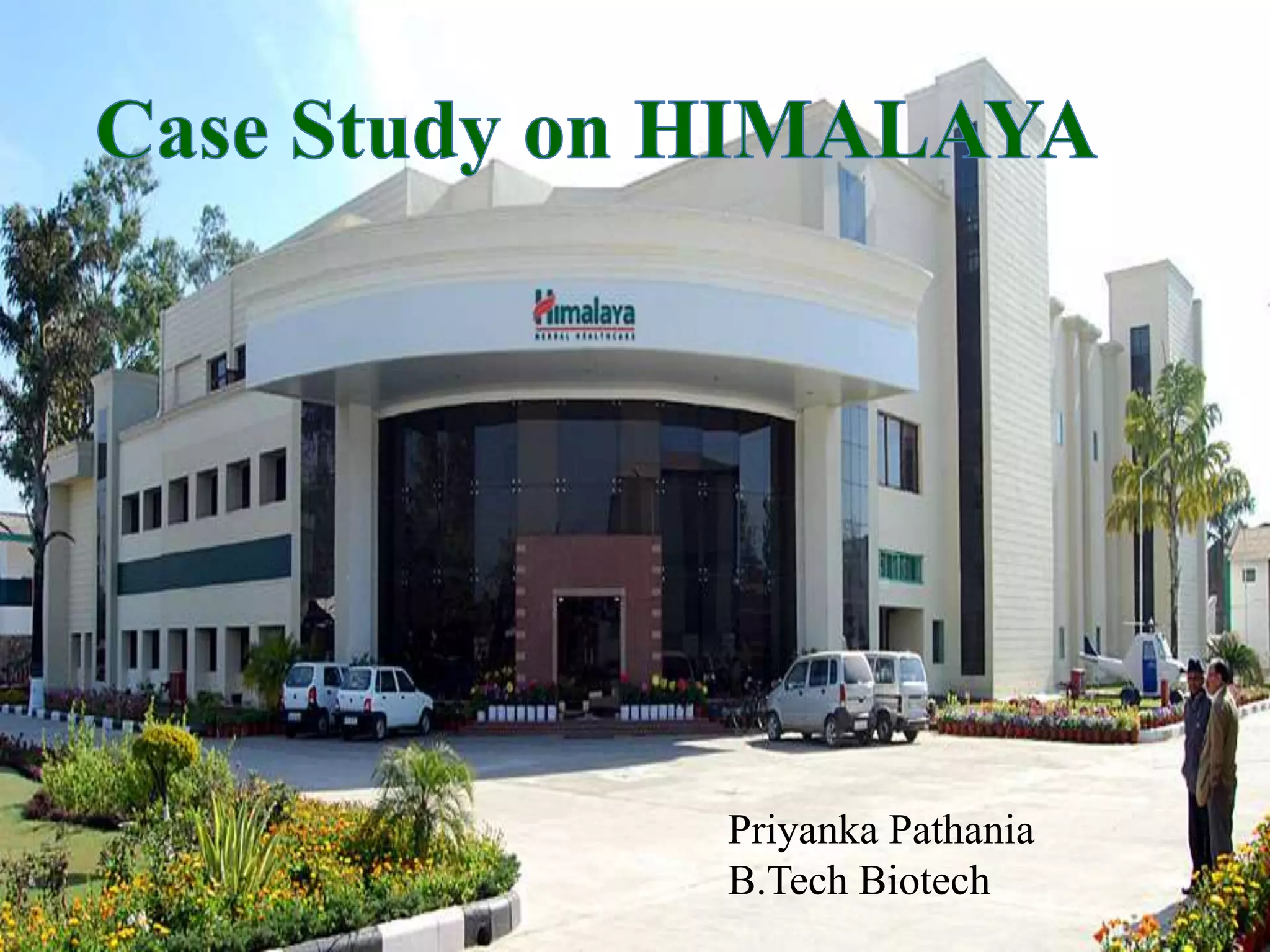
Priyanka Pathania
B.Tech Biotech
1. History
2. Board of Directors
3. Products
4. SWOT Analysis
5. Data Analysis
6. Conclusion
Table of contents
Brief History
• The Himalaya Drug Company is a company
established by Mr. M. Manal in 1930 and based
in Bangalore, India. It produces health care products
under the name Himalaya Herbal Healthcare, which
include Ayurvedic ingredients. It is spread across
locations in India, the United States, the Middle East,
and Europe, while its products are sold in 60 countries
across the world.
• The company has 70 researchers that study ayurvedic
herbs and minerals. An Hepatic drug, named Liv.52, is
its flagship product, first introduced in 1955.
Board of directors
• Mr. M. Manal ----- Founder
• Mr. Philipe Haydon ----- CEO
• Dr. S. Farooq ----- President
• Dr. Zafar Mehmood ------- Sr. Manager
Products
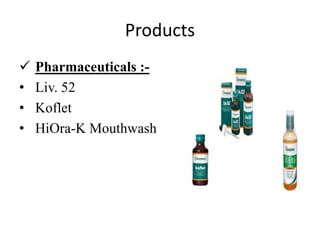
 Pharmaceuticals :-
• Liv. 52
• Koflet
• HiOra-K Mouthwash
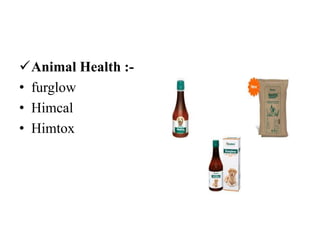
Animal Health :-
• furglow
• Himcal
• Himtox
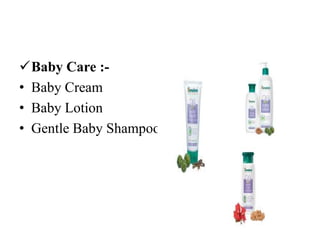
Baby Care :-
• Baby Cream
• Baby Lotion
• Gentle Baby Shampoo
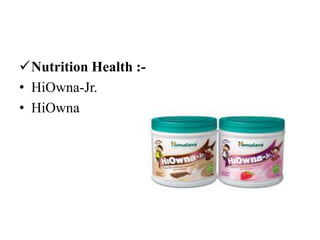
Nutrition Health :-
• HiOwna-Jr.
• HiOwna
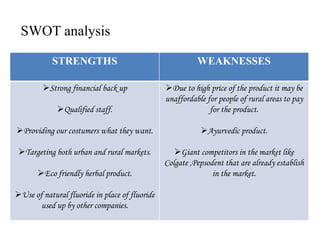
STRENGTHS WEAKNESSES
Strong financial back up
Qualified staff.
Providing our costumers what they want.
Targeting both urban and rural markets.
Eco friendly herbal product.
Use of natural fluoride in place of fluoride
used up by other companies.
Due to high price of the product it may be
unaffordable for people of rural areas to pay
for the product.
Ayurvedic product.
Giant competitors in the market like
Colgate ,Pepsodent that are already establish
in the market.
SWOT analysis
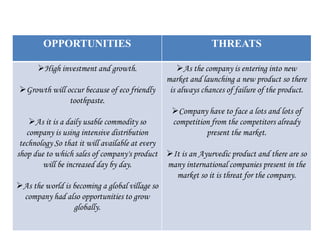
OPPORTUNITIES THREATS
High investment and growth.
Growth will occur because of eco friendly
toothpaste.
As it is a daily usable commodity so
company is using intensive distribution
technology So that it will available at every
shop due to which sales of company's product
will be increased day by day.
As the world is becoming a global village so
company had also opportunities to grow
globally.
As the company is entering into new
market and launching a new product so there
is always chances of failure of the product.
Company have to face a lots and lots of
competition from the competitors already
present the market.
It is an Ayurvedic product and there are so
many international companies present in the
market so it is threat for the company.
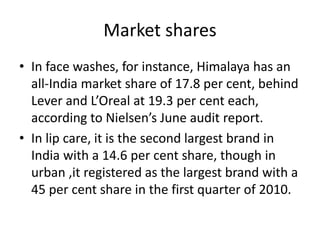
Market shares
• In face washes, for instance, Himalaya has an
all-India market share of 17.8 per cent, behind
Lever and L’Oreal at 19.3 per cent each,
according to Nielsen’s June audit report.
• In lip care, it is the second largest brand in
India with a 14.6 per cent share, though in
urban ,it registered as the largest brand with a
45 per cent share in the first quarter of 2010.
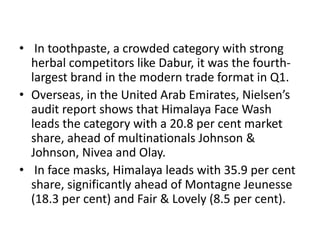
• In toothpaste, a crowded category with strong
herbal competitors like Dabur, it was the fourth-
largest brand in the modern trade format in Q1.
• Overseas, in the United Arab Emirates, Nielsen’s
audit report shows that Himalaya Face Wash
leads the category with a 20.8 per cent market
share, ahead of multinationals Johnson &
Johnson, Nivea and Olay.
• In face masks, Himalaya leads with 35.9 per cent
share, significantly ahead of Montagne Jeunesse
(18.3 per cent) and Fair & Lovely (8.5 per cent).
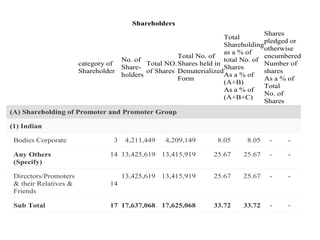
Shareholders
category of
Shareholder
No. of
Share-
holders
Total NO.
of Shares
Total No. of
Shares held in
Dematerialized
Form
Total
Shareholding
as a % of
total No. of
Shares
As a % of
(A+B)
As a % of
(A+B+C)
Shares
pledged or
otherwise
encumbered
Number of
shares
As a % of
Total
No. of
Shares
(A) Shareholding of Promoter and Promoter Group
(1) Indian
Bodies Corporate 3 4,211,449 4,209,149 8.05 8.05 - -
Any Others
(Specify)
14 13,425,619 13,415,919 25.67 25.67 - -
Directors/Promoters
& their Relatives &
Friends
14
13,425,619 13,415,919 25.67 25.67 - -
Sub Total 17 17,637,068 17,625,068 33.72 33.72 - -
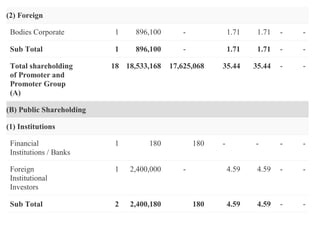
(2) Foreign
Bodies Corporate 1 896,100 - 1.71 1.71 - -
Sub Total 1 896,100 - 1.71 1.71 - -
Total shareholding
of Promoter and
Promoter Group
(A)
18 18,533,168 17,625,068 35.44 35.44 - -
(B) Public Shareholding
(1) Institutions
Financial
Institutions / Banks
1 180 180 - - - -
Foreign
Institutional
Investors
1 2,400,000 - 4.59 4.59 - -
Sub Total 2 2,400,180 180 4.59 4.59 - -
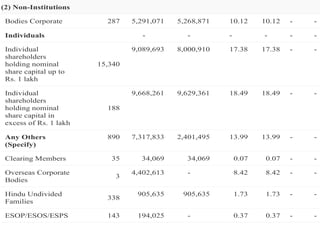
(2) Non-Institutions
Bodies Corporate 287 5,291,071 5,268,871 10.12 10.12 - -
Individuals - - - - - -
Individual
shareholders
holding nominal
share capital up to
Rs. 1 lakh
15,340
9,089,693 8,000,910 17.38 17.38 - -
Individual
shareholders
holding nominal
share capital in
excess of Rs. 1 lakh
188
9,668,261 9,629,361 18.49 18.49 - -
Any Others
(Specify)
890 7,317,833 2,401,495 13.99 13.99 - -
Clearing Members 35 34,069 34,069 0.07 0.07 - -
Overseas Corporate
Bodies
3
4,402,613 - 8.42 8.42 - -
Hindu Undivided
Families
338
905,635 905,635 1.73 1.73 - -
ESOP/ESOS/ESPS 143 194,025 - 0.37 0.37 - -
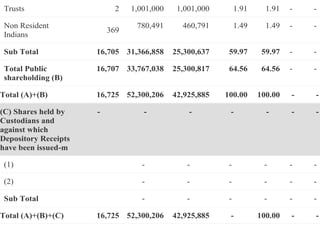
Trusts 2 1,001,000 1,001,000 1.91 1.91 - -
Non Resident
Indians
369
780,491 460,791 1.49 1.49 - -
Sub Total 16,705 31,366,858 25,300,637 59.97 59.97 - -
Total Public
shareholding (B)
16,707 33,767,038 25,300,817 64.56 64.56 - -
Total (A)+(B) 16,725 52,300,206 42,925,885 100.00 100.00 - -
(C) Shares held by
Custodians and
against which
Depository Receipts
have been issued-m
- - - - - - -
(1) - - - - - -
(2) - - - - - -
Sub Total - - - - - -
Total (A)+(B)+(C) 16,725 52,300,206 42,925,885 - 100.00 - -
PERSONALITY TRAITS OF FOUNDER
AND PROBLEMS FACED
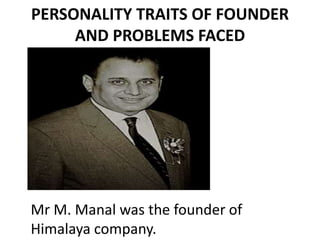
Mr M. Manal was the founder of
Himalaya company.
• He was a visionary and a real hero. He had a clear
vision to bring Ayurveda to society in a contemporary
form and to unravel the mystery behind the 5,000 year
old system of medicine.
• This included referring to ancient ayurvedic texts,
selecting indigenous herbs and subjecting the
formulations to modern pharmacological, toxicological
and safety tests to create new drugs and therapies.
• In 1930, on a visit to Burma, Mr. Manal saw restless
elephants being fed with a root to pacify them. The
plant from which this was taken is Rauwolfia
serpentina. Fascinated by the plant's effect on
elephants, he had it scientifically evaluated.
• After extensive research, Serpina the world's first anti-
hypertensive drug was launched in 1934.
Problem faced
• It is an ayurvedic product and there are so many
international companies present in the market so it is
threat for the company.
• Due to high price of the product it may be unaffordable
for people of rural areas to pay for the product.
• Ayurvedic product.
• There are no shortcuts to success.
• Work hard, go out and experience the world. Let the
working environment be your teacher.
• With no money and only a pocketful of dreams, he
pawned his mother's jewellery to buy a hand-operated
tableting machine

Himalaya ppt

  • 1.
  • 2.
    1. History 2. Boardof Directors 3. Products 4. SWOT Analysis 5. Data Analysis 6. Conclusion Table of contents
  • 3.
    Brief History • TheHimalaya Drug Company is a company established by Mr. M. Manal in 1930 and based in Bangalore, India. It produces health care products under the name Himalaya Herbal Healthcare, which include Ayurvedic ingredients. It is spread across locations in India, the United States, the Middle East, and Europe, while its products are sold in 60 countries across the world. • The company has 70 researchers that study ayurvedic herbs and minerals. An Hepatic drug, named Liv.52, is its flagship product, first introduced in 1955.
  • 5.
    Board of directors •Mr. M. Manal ----- Founder • Mr. Philipe Haydon ----- CEO • Dr. S. Farooq ----- President • Dr. Zafar Mehmood ------- Sr. Manager
  • 6.
    Products  Pharmaceuticals :- •Liv. 52 • Koflet • HiOra-K Mouthwash
  • 7.
    Animal Health :- •furglow • Himcal • Himtox
  • 8.
    Baby Care :- •Baby Cream • Baby Lotion • Gentle Baby Shampoo
  • 9.
    Nutrition Health :- •HiOwna-Jr. • HiOwna
  • 10.
    STRENGTHS WEAKNESSES Strong financialback up Qualified staff. Providing our costumers what they want. Targeting both urban and rural markets. Eco friendly herbal product. Use of natural fluoride in place of fluoride used up by other companies. Due to high price of the product it may be unaffordable for people of rural areas to pay for the product. Ayurvedic product. Giant competitors in the market like Colgate ,Pepsodent that are already establish in the market. SWOT analysis
  • 11.
    OPPORTUNITIES THREATS High investmentand growth. Growth will occur because of eco friendly toothpaste. As it is a daily usable commodity so company is using intensive distribution technology So that it will available at every shop due to which sales of company's product will be increased day by day. As the world is becoming a global village so company had also opportunities to grow globally. As the company is entering into new market and launching a new product so there is always chances of failure of the product. Company have to face a lots and lots of competition from the competitors already present the market. It is an Ayurvedic product and there are so many international companies present in the market so it is threat for the company.
  • 12.
    Market shares • Inface washes, for instance, Himalaya has an all-India market share of 17.8 per cent, behind Lever and L’Oreal at 19.3 per cent each, according to Nielsen’s June audit report. • In lip care, it is the second largest brand in India with a 14.6 per cent share, though in urban ,it registered as the largest brand with a 45 per cent share in the first quarter of 2010.
  • 13.
    • In toothpaste,a crowded category with strong herbal competitors like Dabur, it was the fourth- largest brand in the modern trade format in Q1. • Overseas, in the United Arab Emirates, Nielsen’s audit report shows that Himalaya Face Wash leads the category with a 20.8 per cent market share, ahead of multinationals Johnson & Johnson, Nivea and Olay. • In face masks, Himalaya leads with 35.9 per cent share, significantly ahead of Montagne Jeunesse (18.3 per cent) and Fair & Lovely (8.5 per cent).
  • 14.
    Shareholders category of Shareholder No. of Share- holders TotalNO. of Shares Total No. of Shares held in Dematerialized Form Total Shareholding as a % of total No. of Shares As a % of (A+B) As a % of (A+B+C) Shares pledged or otherwise encumbered Number of shares As a % of Total No. of Shares (A) Shareholding of Promoter and Promoter Group (1) Indian Bodies Corporate 3 4,211,449 4,209,149 8.05 8.05 - - Any Others (Specify) 14 13,425,619 13,415,919 25.67 25.67 - - Directors/Promoters & their Relatives & Friends 14 13,425,619 13,415,919 25.67 25.67 - - Sub Total 17 17,637,068 17,625,068 33.72 33.72 - -
  • 15.
    (2) Foreign Bodies Corporate1 896,100 - 1.71 1.71 - - Sub Total 1 896,100 - 1.71 1.71 - - Total shareholding of Promoter and Promoter Group (A) 18 18,533,168 17,625,068 35.44 35.44 - - (B) Public Shareholding (1) Institutions Financial Institutions / Banks 1 180 180 - - - - Foreign Institutional Investors 1 2,400,000 - 4.59 4.59 - - Sub Total 2 2,400,180 180 4.59 4.59 - -
  • 16.
    (2) Non-Institutions Bodies Corporate287 5,291,071 5,268,871 10.12 10.12 - - Individuals - - - - - - Individual shareholders holding nominal share capital up to Rs. 1 lakh 15,340 9,089,693 8,000,910 17.38 17.38 - - Individual shareholders holding nominal share capital in excess of Rs. 1 lakh 188 9,668,261 9,629,361 18.49 18.49 - - Any Others (Specify) 890 7,317,833 2,401,495 13.99 13.99 - - Clearing Members 35 34,069 34,069 0.07 0.07 - - Overseas Corporate Bodies 3 4,402,613 - 8.42 8.42 - - Hindu Undivided Families 338 905,635 905,635 1.73 1.73 - - ESOP/ESOS/ESPS 143 194,025 - 0.37 0.37 - -
  • 17.
    Trusts 2 1,001,0001,001,000 1.91 1.91 - - Non Resident Indians 369 780,491 460,791 1.49 1.49 - - Sub Total 16,705 31,366,858 25,300,637 59.97 59.97 - - Total Public shareholding (B) 16,707 33,767,038 25,300,817 64.56 64.56 - - Total (A)+(B) 16,725 52,300,206 42,925,885 100.00 100.00 - - (C) Shares held by Custodians and against which Depository Receipts have been issued-m - - - - - - - (1) - - - - - - (2) - - - - - - Sub Total - - - - - - Total (A)+(B)+(C) 16,725 52,300,206 42,925,885 - 100.00 - -
  • 18.
    PERSONALITY TRAITS OFFOUNDER AND PROBLEMS FACED Mr M. Manal was the founder of Himalaya company.
  • 19.
    • He wasa visionary and a real hero. He had a clear vision to bring Ayurveda to society in a contemporary form and to unravel the mystery behind the 5,000 year old system of medicine. • This included referring to ancient ayurvedic texts, selecting indigenous herbs and subjecting the formulations to modern pharmacological, toxicological and safety tests to create new drugs and therapies. • In 1930, on a visit to Burma, Mr. Manal saw restless elephants being fed with a root to pacify them. The plant from which this was taken is Rauwolfia serpentina. Fascinated by the plant's effect on elephants, he had it scientifically evaluated. • After extensive research, Serpina the world's first anti- hypertensive drug was launched in 1934.
  • 20.
    Problem faced • Itis an ayurvedic product and there are so many international companies present in the market so it is threat for the company. • Due to high price of the product it may be unaffordable for people of rural areas to pay for the product. • Ayurvedic product. • There are no shortcuts to success. • Work hard, go out and experience the world. Let the working environment be your teacher. • With no money and only a pocketful of dreams, he pawned his mother's jewellery to buy a hand-operated tableting machine