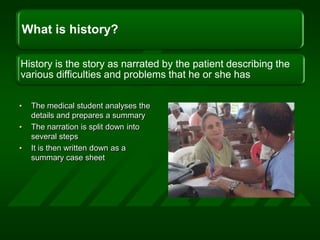

The medical student analyses the details and prepares a summaryThe narration is split down into several stepsIt is then written down as a summary case sheet
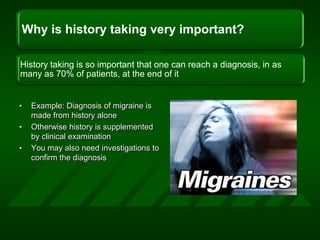
Example: Diagnosis of migraine is  made from history aloneOtherwise history is supplemented by clinical examinationYou may also need investigations to confirm the diagnosis
Arriving at a diagnosis helps us in under standing the diseaseIt helps in planning for necessary investigations Treating the disease for a possible cure or if not relief from symptoms
In taking a long cases as much as 10-20 minutes may be allotted Where as in a short case little or no history is takenIn cases of medical emergencies you may not have time for history
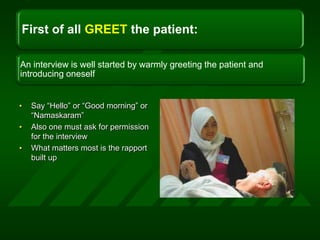
Say “Hello” or “Good morning” or “Namaskaram”Also one must ask for permission for the interviewWhat matters most is the rapport built up
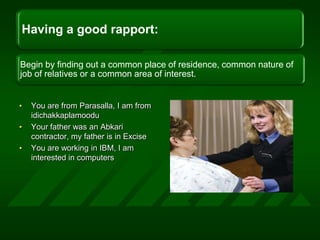
You are from Parasalla, I am from idichakkaplamooduYour father was an Abkari contractor, my father is in Excise You are working in IBM, I am interested in computers
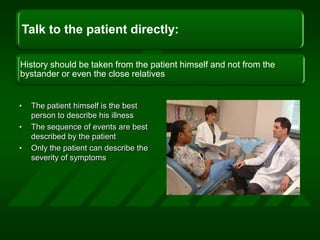
The patient himself is the best person to describe his illness The sequence of events are best described by the patientOnly the patient can describe the severity of symptoms
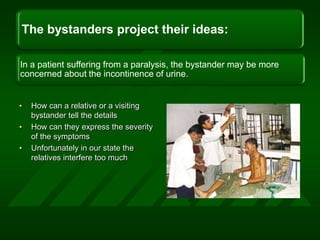
How can a relative or a visiting bystander tell the detailsHow can they express the severity of the symptomsUnfortunately in our state the relatives interfere too much
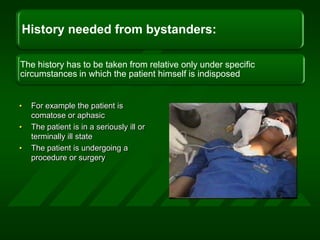
For example the patient is comatose or aphasicThe patient is in a seriously ill or terminally ill stateThe patient is undergoing a procedure or surgery
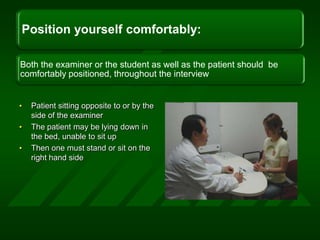
Patient sitting opposite to or by the side of the examinerThe patient may be lying down in the bed, unable to sit upThen one must stand or sit on the right hand side
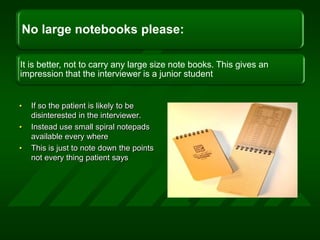
If so the patient is likely to be disinterested in the interviewer.Instead use small spiral notepads available every whereThis is just to note down the points not every thing patient says
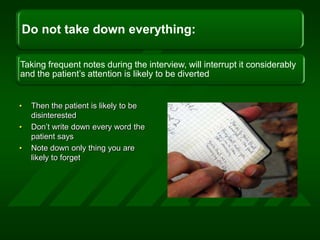
Then the patient is likely to be disinterestedDon’t write down every word the patient saysNote down only thing you are likely to forget
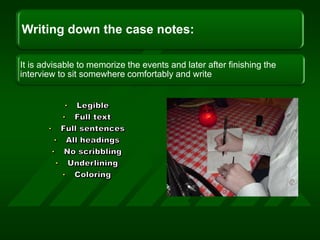
LegibleFull text Full sentencesAll headingsNo scribblingUnderliningColoring
Hence full name of the patient with initials is requiredInclude Mr or Dr or Professor as the case may beAlways address the patient by name if possible
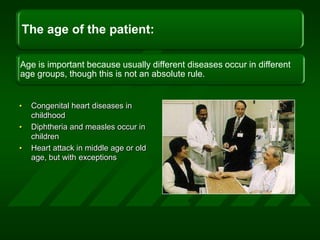
Congenital heart diseases in childhoodDiphtheria and measles occur in childrenHeart attack in middle age or old age, but with exceptions
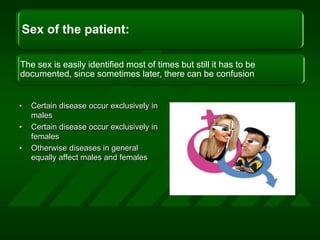
Certain disease occur exclusively in malesCertain disease occur exclusively in femalesOtherwise diseases in general equally affect males and females
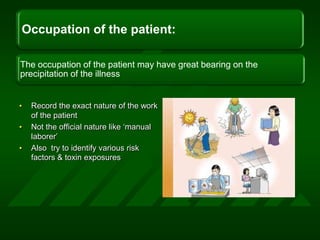
Record the exact nature of the work  of the patientNot the official nature like ‘manual laborer’ Also  try to identify various risk factors & toxin exposures
The complete postal address of the patient is written downThe address shall include the name of Post Office and PIN numberThe name of the next of kin is also needed, in case of death etc
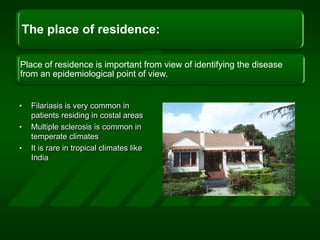
Filariasis is very common in patients residing in costal areas Multiple sclerosis is common in temperate climatesIt is rare in tropical climates like India
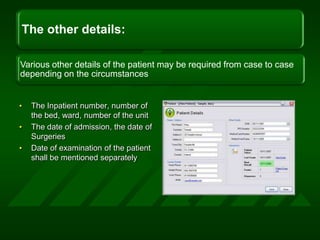
The Inpatient number, number of the bed, ward, number of the unitThe date of admission, the date of SurgeriesDate of examination of the patient shall be mentioned separately
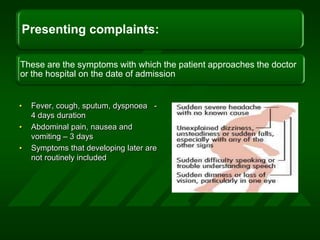
Fever, cough, sputum, dyspnoea   -4 days durationAbdominal pain, nausea and vomiting – 3 daysSymptoms that developing later are not routinely included
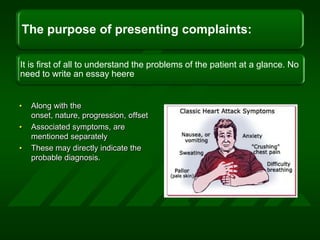
Along with the onset, nature, progression, offsetAssociated symptoms, are mentioned separatelyThese may directly indicate the probable diagnosis.
They should not include any details of the history But only the symptoms and duration of each symptom against itFever – 3 days, Cough – 2 days, Hemoptysis – 1 day
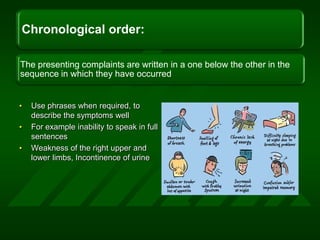
Use phrases when required, to describe the symptoms wellFor example inability to speak in full sentencesWeakness of the right upper and lower limbs, Incontinence of urine
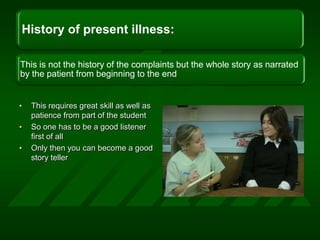
This requires great skill as well as patience from part of the studentSo one has to be a good listener first of allOnly then you can become a good story teller
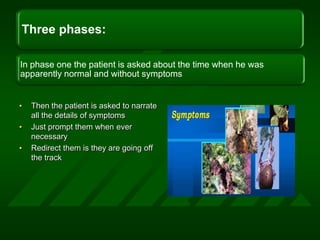
Then the patient is asked to narrate all the details of symptomsJust prompt them when ever necessaryRedirect them is they are going off the track
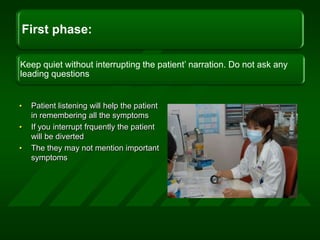
Patient listening will help the patient in remembering all the symptomsIf you interrupt frquently the patient will be divertedThe they may not mention important symptoms
If you ask for radiation of chest pain to the left forearm, answer will be yesAlways ask open ended questions like is there any radiation?This elicits a true answer more often than otherwise
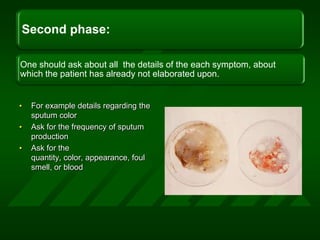
For example details regarding the sputum colorAsk for the frequency of sputum productionAsk for the quantity, color, appearance, foul smell, or blood
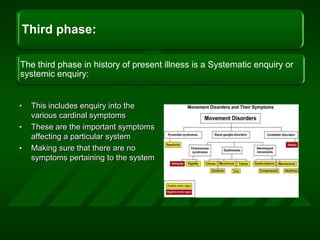
This includes enquiry into the various cardinal symptomsThese are the important symptoms  affecting a particular systemMaking sure that there are no symptoms pertaining to the system
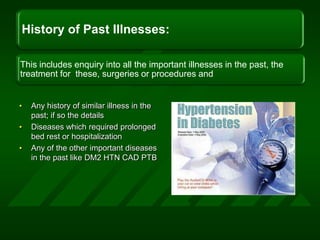
Any history of similar illness in the past; if so the detailsDiseases which required prolonged bed rest or hospitalizationAny of the other important diseases in the past like DM2 HTN CAD PTB
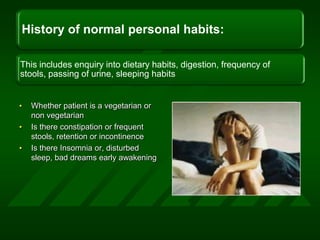
Whether patient is a vegetarian or non vegetarianIs there constipation or frequent stools, retention or incontinenceIs there Insomnia or, disturbed sleep, bad dreams early awakening
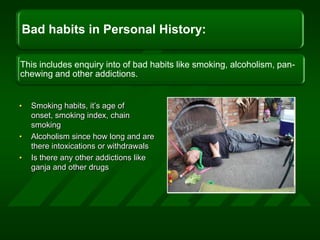
Smoking habits, it’s age of onset, smoking index, chain smokingAlcoholism since how long and are there intoxications or withdrawalsIs there any other addictions like ganja and other drugs
Any similar illnesses in the other members of the familyDiseases which required prolonged bed rest or hospitalizationAny of the other important diseases in other members DM2 HTN CAD
Thank You

History Taking

  • 2.
    The medical studentanalyses the details and prepares a summaryThe narration is split down into several stepsIt is then written down as a summary case sheet
  • 3.
    Example: Diagnosis ofmigraine is made from history aloneOtherwise history is supplemented by clinical examinationYou may also need investigations to confirm the diagnosis
  • 4.
    Arriving at adiagnosis helps us in under standing the diseaseIt helps in planning for necessary investigations Treating the disease for a possible cure or if not relief from symptoms
  • 5.
    In taking along cases as much as 10-20 minutes may be allotted Where as in a short case little or no history is takenIn cases of medical emergencies you may not have time for history
  • 6.
    Say “Hello” or“Good morning” or “Namaskaram”Also one must ask for permission for the interviewWhat matters most is the rapport built up
  • 7.
    You are fromParasalla, I am from idichakkaplamooduYour father was an Abkari contractor, my father is in Excise You are working in IBM, I am interested in computers
  • 8.
    The patient himselfis the best person to describe his illness The sequence of events are best described by the patientOnly the patient can describe the severity of symptoms
  • 9.
    How can arelative or a visiting bystander tell the detailsHow can they express the severity of the symptomsUnfortunately in our state the relatives interfere too much
  • 10.
    For example thepatient is comatose or aphasicThe patient is in a seriously ill or terminally ill stateThe patient is undergoing a procedure or surgery
  • 11.
    Patient sitting oppositeto or by the side of the examinerThe patient may be lying down in the bed, unable to sit upThen one must stand or sit on the right hand side
  • 12.
    If so thepatient is likely to be disinterested in the interviewer.Instead use small spiral notepads available every whereThis is just to note down the points not every thing patient says
  • 13.
    Then the patientis likely to be disinterestedDon’t write down every word the patient saysNote down only thing you are likely to forget
  • 14.
    LegibleFull text FullsentencesAll headingsNo scribblingUnderliningColoring
  • 15.
    Hence full nameof the patient with initials is requiredInclude Mr or Dr or Professor as the case may beAlways address the patient by name if possible
  • 16.
    Congenital heart diseasesin childhoodDiphtheria and measles occur in childrenHeart attack in middle age or old age, but with exceptions
  • 17.
    Certain disease occurexclusively in malesCertain disease occur exclusively in femalesOtherwise diseases in general equally affect males and females
  • 18.
    Record the exactnature of the work of the patientNot the official nature like ‘manual laborer’ Also try to identify various risk factors & toxin exposures
  • 19.
    The complete postaladdress of the patient is written downThe address shall include the name of Post Office and PIN numberThe name of the next of kin is also needed, in case of death etc
  • 20.
    Filariasis is verycommon in patients residing in costal areas Multiple sclerosis is common in temperate climatesIt is rare in tropical climates like India
  • 21.
    The Inpatient number,number of the bed, ward, number of the unitThe date of admission, the date of SurgeriesDate of examination of the patient shall be mentioned separately
  • 22.
    Fever, cough, sputum,dyspnoea -4 days durationAbdominal pain, nausea and vomiting – 3 daysSymptoms that developing later are not routinely included
  • 23.
    Along with theonset, nature, progression, offsetAssociated symptoms, are mentioned separatelyThese may directly indicate the probable diagnosis.
  • 24.
    They should notinclude any details of the history But only the symptoms and duration of each symptom against itFever – 3 days, Cough – 2 days, Hemoptysis – 1 day
  • 25.
    Use phrases whenrequired, to describe the symptoms wellFor example inability to speak in full sentencesWeakness of the right upper and lower limbs, Incontinence of urine
  • 26.
    This requires greatskill as well as patience from part of the studentSo one has to be a good listener first of allOnly then you can become a good story teller
  • 27.
    Then the patientis asked to narrate all the details of symptomsJust prompt them when ever necessaryRedirect them is they are going off the track
  • 28.
    Patient listening willhelp the patient in remembering all the symptomsIf you interrupt frquently the patient will be divertedThe they may not mention important symptoms
  • 29.
    If you askfor radiation of chest pain to the left forearm, answer will be yesAlways ask open ended questions like is there any radiation?This elicits a true answer more often than otherwise
  • 30.
    For example detailsregarding the sputum colorAsk for the frequency of sputum productionAsk for the quantity, color, appearance, foul smell, or blood
  • 31.
    This includes enquiryinto the various cardinal symptomsThese are the important symptoms affecting a particular systemMaking sure that there are no symptoms pertaining to the system
  • 32.
    Any history ofsimilar illness in the past; if so the detailsDiseases which required prolonged bed rest or hospitalizationAny of the other important diseases in the past like DM2 HTN CAD PTB
  • 33.
    Whether patient isa vegetarian or non vegetarianIs there constipation or frequent stools, retention or incontinenceIs there Insomnia or, disturbed sleep, bad dreams early awakening
  • 34.
    Smoking habits, it’sage of onset, smoking index, chain smokingAlcoholism since how long and are there intoxications or withdrawalsIs there any other addictions like ganja and other drugs
  • 35.
    Any similar illnessesin the other members of the familyDiseases which required prolonged bed rest or hospitalizationAny of the other important diseases in other members DM2 HTN CAD
  • 36.