



ANATOMY OF HEART Chapter 01
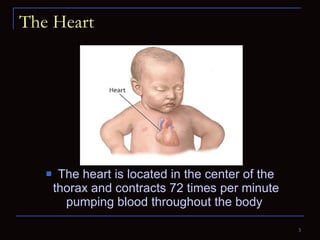
The Heart The heart is located in the center of the thorax and contracts 72 times per minute pumping blood throughout the body
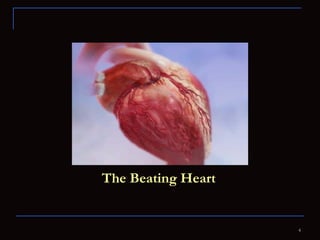
The Beating Heart
Heart - Front View The external structures of the heart include the ventricles, the atria, aorta, pulmonary arteries and the pulmonary veins
Heart - Section  The interior of the heart is composed of the myocardium, four heart valves, four cardiac chambers, and associated vessels
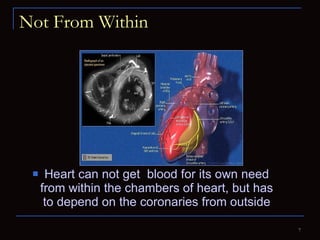
Not From Within Heart can not get  blood for its own need from within the chambers of heart, but has to depend on the coronaries from outside
Left Coronary Artery Left coronary artery is the largest of the blood vessels supplying the heart, especially the left ventricle and the left atrium
Right Coronary Artery Right coronary artery is the 2 nd   largest of the blood vessels supplying the heart especially the right ventricle and right atrium
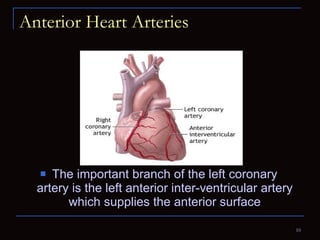
Anterior Heart Arteries The important branch of the left coronary artery is the left anterior inter-ventricular artery which supplies the anterior surface
Posterior Heart Arteries Another important branch of left coronary artery is the Deep Circumflex Artery which supplies the posterior surface
SYMPTOMS OF  HEART DISEASE Chapter 02
Chest Pain Pain in the center of the chest is very characteristic of diseases of the heart especially those due to coronary artery disease
Non Cardiac Chest Pain Even though chest pain as a presenting symptoms of heart attack is quite characteristic, it is not unique to heart disease
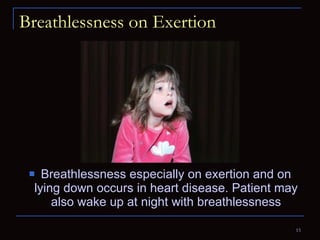
Breathlessness on Exertion Breathlessness especially on exertion and on lying down occurs in heart disease. Patient may also wake up at night with breathlessness
Palpitation Palpitation is another important symptom of heart disease. It may occur during exertion or while at rest
Hemoptysis Spitting blood or blood stained sputum, even though more likely to be due to a respiratory disease may also occur in heart disease
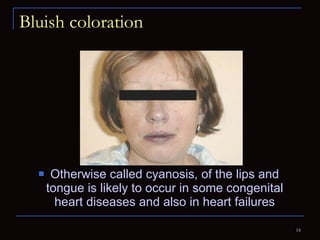
Bluish coloration Otherwise called cyanosis, of the lips and tongue is likely to occur in some congenital heart diseases and also in heart failures
Peripheral Cyanosis Bluish coloration may also occur in heart disease due to the reduced circulation of the peripheral tissues like fingers and toes
Leg Swelling Leg swelling due to accumulation of fluid in the subcutaneous tissues is likely to occur in heart failure
SIGNS OF HEART DISEASE Chapter  03
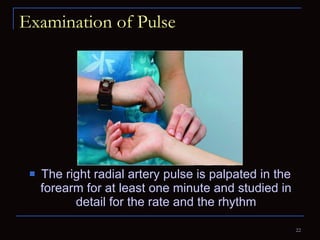
Examination of Pulse The right radial artery pulse is palpated in the forearm for at least one minute and studied in detail for the rate and the rhythm
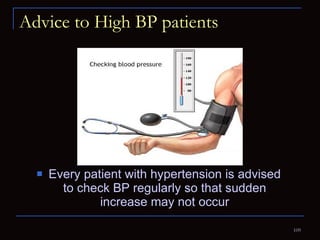
The Blood Pressure  The BP is recorded in the right arm using a sphygmomanometer applied to the upper arm and K sounds auscultated at elbow Coming up – an Animation of BP measurement
Measurement of BP
Jugular Venous Pressure The pressure inside the right atrium is reflected in the root of the neck as the jugular venous pressure which is measured and studied Coming up a Video of JVP measurement
Measurement of Jugular venous Pressure
Palpation of Heart Precordium of the chest is palpated for position of the apex beat, left parasternal heave and  presence of any thrills
Areas for Auscultation These are the aortic area, the pulmonary area, the second aortic area, the tricuspid Area and the mitral area
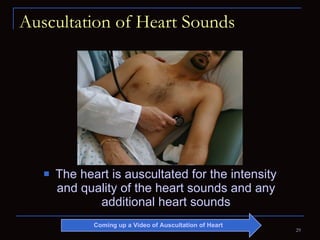
Auscultation of Heart Sounds The heart is auscultated for the intensity and quality of the heart sounds and any additional heart sounds Coming up a Video of Auscultation of Heart
Auscultation of The Heart - Video
Auscultation of Heart Murmurs The heart is then auscultated carefully for the presence of any heart murmurs either in the systole, diastole
INVESTIGATIONS IN  HEART DISEASE Chapter 04
Electrocardiogram (ECG) It is a test that measures the electrical activity of the heart, the rate, rhythm and presence of any ischemia
ECG ECG is used extensively in the diagnosis of heart disease, from congenital disease to myocardial infarction and myocarditis
Holter Monitoring The patient wears a monitor that records electrical activity of their heart (similarly to the recording of an ECG) for 24 hours
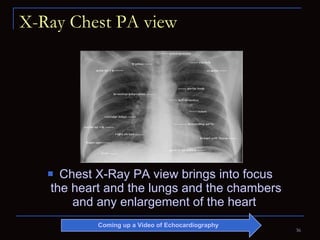
X-Ray Chest PA view Chest X-Ray PA view brings into focus the heart and the lungs and the chambers and any enlargement of the heart  Coming up a Video of Echocardiography
Echocardiography
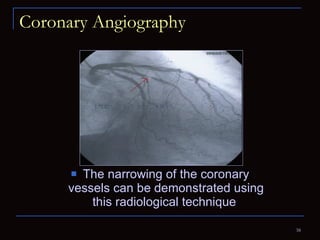
Coronary Angiography The narrowing of the coronary vessels can be demonstrated using this radiological technique
CORONARY ARTERY HEART DISEASES - ANGINA Chapter 05
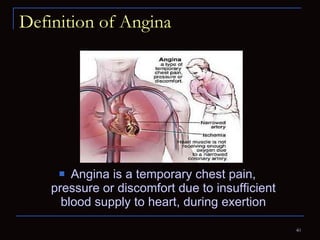
Definition of Angina Angina is a temporary chest pain, pressure or discomfort due to insufficient blood supply to heart, during exertion
Angina – The Cry of Heart When heart does not get enough blood through coronaries during exertion, it cries for more oxygen, causing the pain
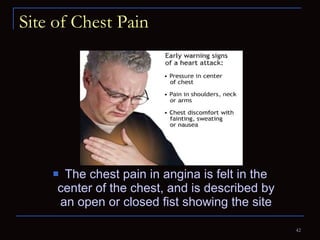
Site of Chest Pain The chest pain in angina is felt in the center of the chest, and is described by an open or closed fist showing the site
Chest Pain Radiation In angina, chest pain usually radiates to the left shoulder, left upper limb and along its inside border and up to the left hand
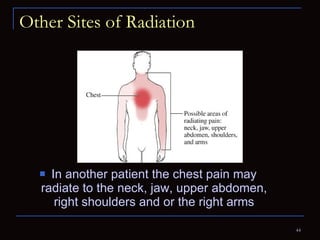
Other Sites of Radiation In another patient the chest pain may radiate to the neck, jaw, upper abdomen, right shoulders and or the right arms
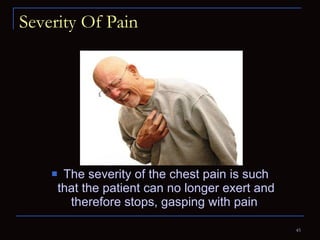
Severity Of Pain The severity of the chest pain is such that the patient can no longer exert and therefore stops, gasping with pain
Character Of The Pain It is described as either a firm pressure, chest discomfort, crushing or burning or tightness of chest
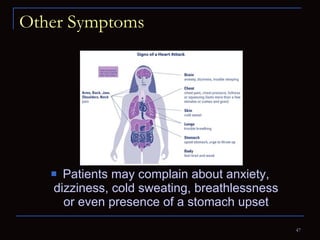
Other Symptoms Patients may complain about anxiety, dizziness, cold sweating, breathlessness or even presence of a stomach upset
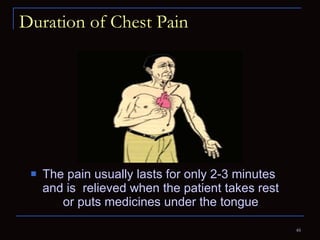
Duration of Chest Pain The pain usually lasts for only 2-3 minutes  and is  relieved when the patient takes rest or puts medicines under the tongue
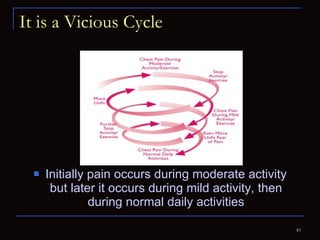
It is a Vicious Cycle Initially pain occurs during moderate activity but later it occurs during mild activity, then during normal daily activities
Coronary Atherosclerosis The basic abnormality in of angina is the narrowing of the coronary arteries by progressive atherosclerosis
Plaque Formation Accumulation of lipids in the walls of the artery leads to the formation of an inward elevation  called the plaque
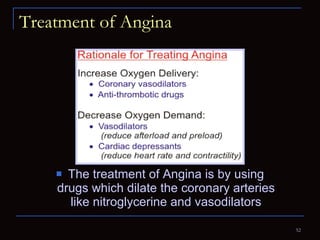
Treatment of Angina The treatment of Angina is by using drugs which dilate the coronary arteries like nitroglycerine and vasodilators
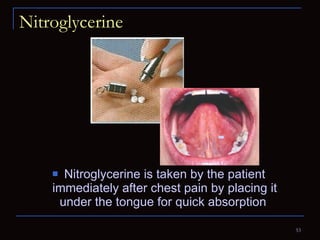
Nitroglycerine Nitroglycerine is taken by the patient immediately after chest pain by placing it under the tongue for quick absorption
CORONARY ARTERY DISEASE - UNSTABLE ANGINA Chapter 07
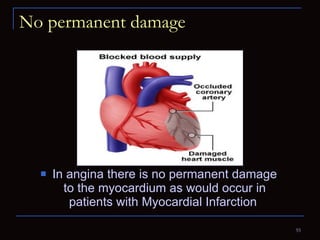
No permanent damage In angina there is no permanent damage to the myocardium as would occur in patients with Myocardial Infarction
Coronary Angioplasty Here the narrowed coronary artery causing the CAD is opened up using a catheter passed through the vessel
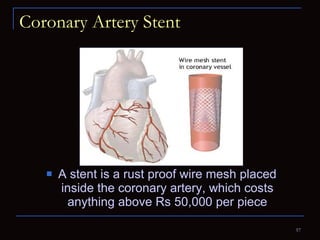
Coronary Artery Stent A stent is a rust proof wire mesh placed inside the coronary artery, which costs anything above Rs 50,000 per piece
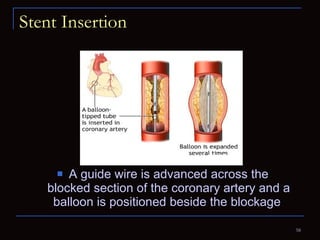
Stent Insertion A guide wire is advanced across the blocked section of the coronary artery and a balloon is positioned beside the blockage
The Result The outcome is relief from chest pain and  improved exercise capacity. In 2/3 rd   of patients, the procedure is successful  Coming up an Animation of Angioplasty
Angioplasty
Coronary Bypass Surgery Bypass surgery is  the alternative option indicated when one or more coronary arteries are seriously blocked
Bypass Surgery In Bypass surgery, the site of coronary obstruction is bypassed by means of a vein or artery from the patient himself
Saphenous Vein Graft Here the saphenous vein is harvested from the patient’s own legs and used as a conduit for bypass
Internal Mammary Graft Internal mammary artery graft is used alternatively in selected cases producing a longer term of benefit of up to 10 years
Beating Heart Surgery Here stabilization devices are used to reduces the motion of target vessels and the bypass under taken with out Heart-Lung machine Coming up a Video of Beating Heart Surgery
Beating Heart Surgery Coming up a Video of Robot Assisted Bypass Surgery
Robot Assisted Surgery
MYOCARDIAL INFARCTION Chapter 08
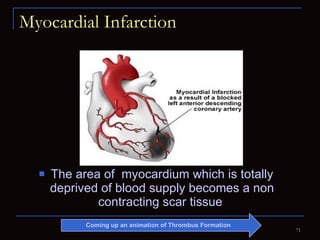
Heart Attack A heart attack or acute myocardial infarction (MI) occurs when one of the coronary arteries is blocked
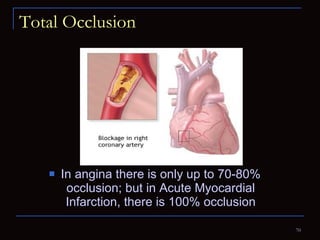
Total Occlusion  In angina there is only up to 70-80% occlusion; but in Acute Myocardial Infarction, there is 100% occlusion
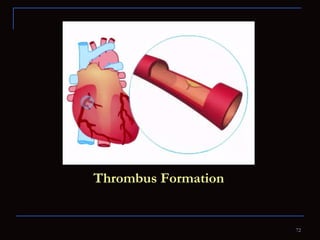
Myocardial Infarction The area of  myocardium which is totally deprived of blood supply becomes a non contracting scar tissue  Coming up an animation of Thrombus Formation
Thrombus Formation
Who Gets Heart Attack? Any body can get a heart attack above the age of 30 years, irrespective of the sex, race and country of origin
Females  and Heart Attack Females are generally protected from heart attack because of estrogen in their body during menstruating age Coming up an Animation about Risk Factors of MI
Risk Factors for MI
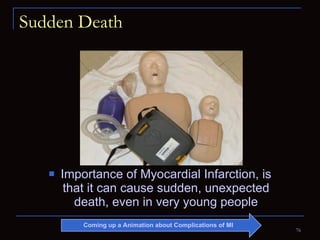
Sudden Death Importance of Myocardial Infarction, is that it can cause sudden, unexpected death, even in very young people Coming up a Animation about Complications of MI
Complications of MI Coming up a Video of Cardio Pulmonary Resuscitation
Cardiopulmonary Resuscitation Coming up an Animation of Automated Defibrillation
Automated Defibrillation
ECG wave tracings in MI Various phases of MI can be seen in ECG wave tracings during the acute phase, fully evolved phase, resolution phase and chronic phase
ST Elevation MI ST elevation Myocardial Infarction is the most important type of Myocardial infarction leading to sudden cardiac arrest and death
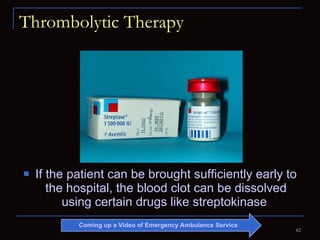
Thrombolytic Therapy If the patient can be brought sufficiently early to the hospital, the blood clot can be dissolved using certain drugs like streptokinase  Coming up a Video of Emergency Ambulance Service
Call the Ambulance
Non ST Elevation MI Here the patient has no ST elevation in the ECG. But at the same time there is death of the myocardial tissue which is not easily reversible Coming up an Animation about Final Outcome
Final Outcome
HYPERTENSIVE HEART DISEASE Chapter 09
Definition Hypertension is defined as sustained and abnormal elevation of arterial blood pressure of at least 140 mmHg systolic and 90 mmHg diastolic
Importance If left untreated hypertensive patients can end up with several complications in the due course of the illness
Complications of HTN Hypertension is a very important predisposing cause of heart disease, kidney disease, as well as stroke
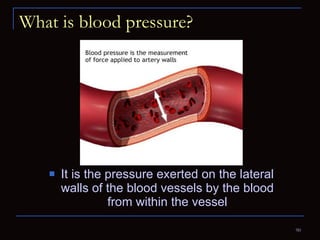
What is blood pressure? It is the pressure exerted on the lateral walls of the blood vessels by the blood from within the vessel
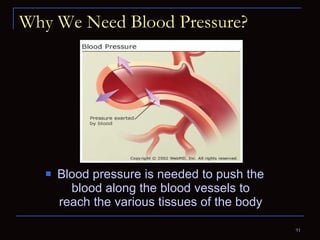
Why We Need Blood Pressure? Blood pressure is needed to push the blood along the blood vessels to reach the various tissues of the body
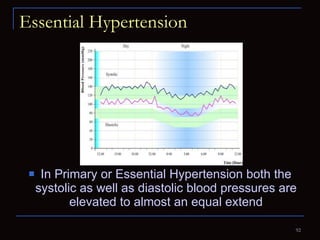
Essential Hypertension In Primary or Essential Hypertension both the systolic as well as diastolic blood pressures are elevated to almost an equal extend
Sodium in Food Sodium is an element that the human body needs to function properly and especially to regulate the blood pressure and blood volume
Sodium and Hypertension For individuals who are sodium-sensitive, an increased intake of sodium through food may contribute to high blood pressure
The values Persons with BP in the normal ranges are normal. Those having BP in the borderline are called pre-hypertensives
Normal Blood Pressure The normal blood pressure is 120/70 to 140/90. It is advisable to maintain a BP in or around 130/80 mmHg under any circumstances
Isolated Systolic Hypertension In some patients with hypertension especially old people, only the systolic Blood Pressure is found to be elevated
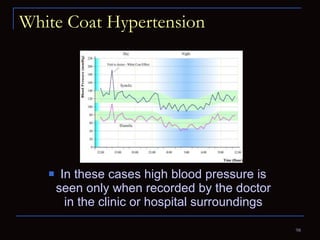
White Coat Hypertension In these cases high blood pressure is seen only when recorded by the doctor in the clinic or hospital surroundings
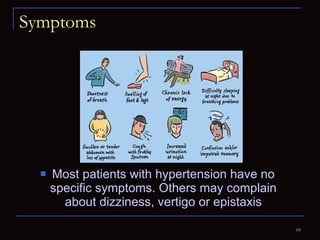
Symptoms Most patients with hypertension have no specific symptoms. Others may complain about dizziness, vertigo or epistaxis
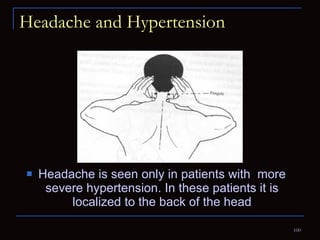
Headache and Hypertension Headache is seen only in patients with  more severe hypertension. In these patients it is localized to the back of the head
The Silent Killer Hypertension is considered as a silent killer because even in the absence of symptoms it can  cause heart attack or stroke  Coming up an Animation of  Effects of Hypertension
Effects of Hypertension
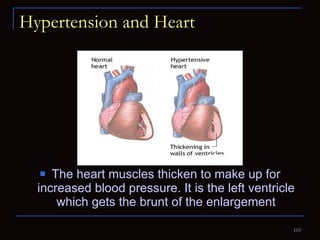
Hypertension and Heart The heart muscles thicken to make up for increased blood pressure. It is the left ventricle which gets the brunt of the enlargement
Left Ventricular Hypertrophy The left ventricle is markedly thickened in this patient with severe hypertension that was remaining untreated for many years Coming up an Animation of Effect of HTN on Heart
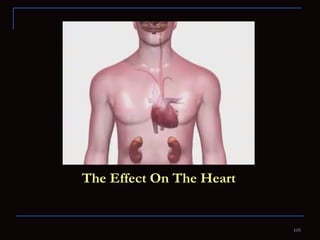
The Effect On The Heart
Hemiplegia Occlusion of the middle cerebral artery results in sudden paralysis of upper and lower limbs  called as  a stroke or hemiplegia
Intracerebral Hemorrhage Perhaps a more important and dangerous complication of hypertension is bleeding in to the brain, causing unconsciousness
Treatment of High BP Maintaining the blood pressure within the normal ranges for months and years is perhaps more difficult
Advice to High BP patients Every patient with hypertension is advised to check BP regularly so that sudden increase may not occur
Regular Exercise By doing regular exercise the tone of the muscles in the walls of the arteries remain reduced and thus BP is lowered
Low Salt Intake Low salt intake is an essential component of management of hypertension irrespective of the degree of BP rise
Pappads, Pickles, Fried, Dried Pappads, pickles, fried items and dried fish contain large quantities of salt. Hence all hypertensive's should avoid these
Beta Blockers Atenelol is one such drugs used in the treatment of hypertension especially in the early stages
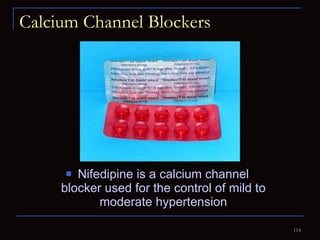
Calcium Channel Blockers Nifedipine is a calcium channel blocker used for the control of mild to moderate hypertension
ACEIs and ARBs Angiotensin Converting Enzyme inhibitors and Angiotension Receptor Blockers are the other drugs
VALVULAR HEART DISEASES Chapter 10
The Heart Valves The valves of the heart open and close to control the flow of blood entering or leaving the heart
The Four Valves There are four valves in the heart: namely the aortic, the mitral, tricuspid, and the pulmonary valve
The Heart Valves The valves are designed to control the direction of blood flow through the heart. Their opening and closing produce the heart sounds
Mitral stenosis It is a heart valve disorder that narrows the mitral valve opening reducing the amount of blood that flows through it
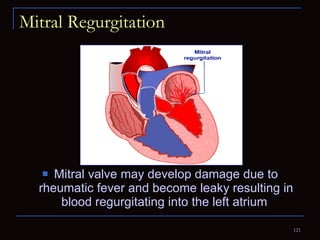
Mitral Regurgitation Mitral valve may develop damage due to rheumatic fever and become leaky resulting in blood regurgitating into the left atrium
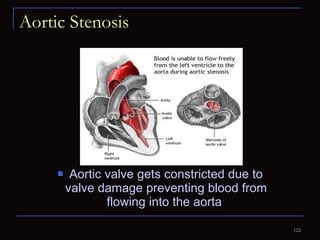
Aortic Stenosis Aortic valve gets constricted due to valve damage preventing blood from flowing into the aorta
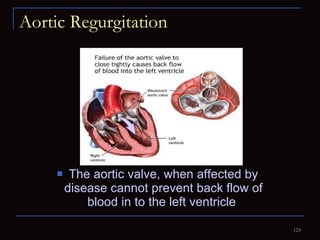
Aortic Regurgitation The aortic valve, when affected by disease cannot prevent back flow of blood in to the left ventricle
HEART FAILURE Chapter 11 Coming up an Animation about Heart Failure
Heart Failure
Pulmonary Edema As the heart fails, pressure in the vein going through the lungs starts to rise. fluid is pushed into the air spaces (alveoli)
Pulmonary Edema in X- Ray Pulmonary edema can be seen in the X-Ray chest as a fluffy non-homogenous opacities of both hila of lungs Coming up an Animation of Ventricular Assist Device
Left Ventricular Assist Device Coming up a Video of Heart Transplantation
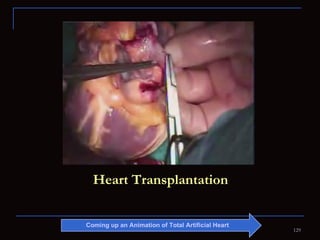
Heart Transplantation Coming up an Animation of Total Artificial Heart
Total Artificial Heart
CONGENITAL ACYANOTIC HEART DISEASES Chapter 12
Atrial Septal Defect It is a congenital heart defect where the wall between the right and left atrium has a hole and blood flows between the two atria
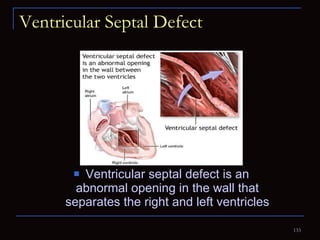
Ventricular Septal Defect Ventricular septal defect is an abnormal opening in the wall that separates the right and left ventricles
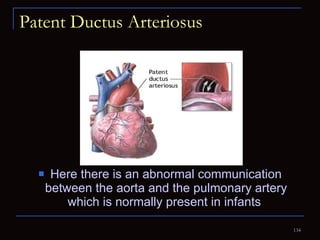
Patent Ductus Arteriosus Here there is an abnormal communication between the aorta and the pulmonary artery which is normally present in infants
CONGENITAL CYANOTIC HEART DISEASES Chapter 13
Tetralogy of Fallot It is a birth defect of the heart consisting of 4 abnormalities that results in insufficiently oxygenated blood pumped to the body
Transposition of the great vessels Here the position of the two major vessels that carry blood away from the heart - the aorta and the pulmonary artery - is switched (transposed)
DISORDERS OF HEART RHYTHM Chapter 14
Sinus Bradycardia It is a cardiac rhythm characterized by a slowness of the heartbeat, usually at a rate under 60 beats per minute
Ventricular tachycardia It is a rapid resting heart rate initiated within the ventricles, typically at 160 - 240 beats per minute
Sick Sinus Syndrome It is a collection of heart rhythm disorders that include alternating slow and fast heart rhythms
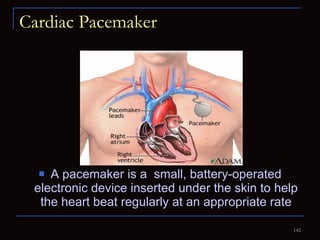
Cardiac Pacemaker A pacemaker is a  small, battery-operated electronic device inserted under the skin to help the heart beat regularly at an appropriate rate
DISEASES OF ENDOCARDIUM Chapter 15
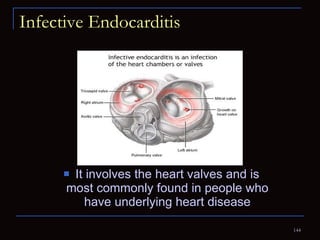
Infective Endocarditis It involves the heart valves and is most commonly found in people who have underlying heart disease
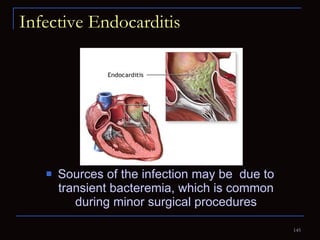
Infective Endocarditis Sources of the infection may be  due to transient bacteremia, which is common during minor surgical procedures
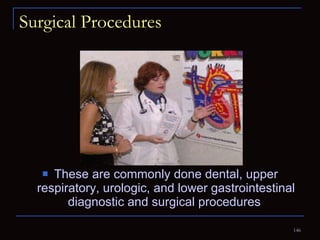
Surgical Procedures These are commonly done dental, upper respiratory, urologic, and lower gastrointestinal diagnostic and surgical procedures
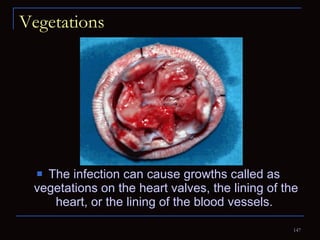
Vegetations The infection can cause growths called as  vegetations on the heart valves, the lining of the heart, or the lining of the blood vessels.
Embolism These growths may be dislodged and send clots to the brain, lungs, kidneys, or spleen resulting in what is called an embolism Coming up an Animation of Cerebral Embolism
Cerebral Embolism
DISEASES OF MYOCARDIUM Chapter 16
Myocarditis It is acute inflammation of the muscle of heart due to infections especially of viral etiology like Coxachie B
Cardiomyopathy  It is a disease affecting the muscle of the heart  resulting in thickness and loss of function. It is of three varieties
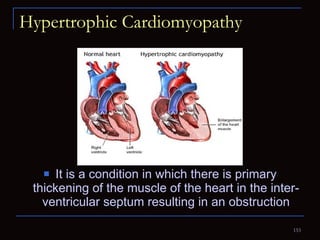
Hypertrophic Cardiomyopathy It is a condition in which there is primary thickening of the muscle of the heart in the inter-ventricular septum resulting in an obstruction
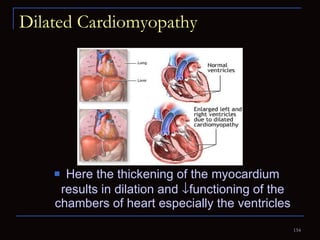
Dilated Cardiomyopathy Here the thickening of the myocardium results in dilation and   functioning of the chambers of heart especially the ventricles
DISEASES OF PERICARDIUM Chapter 17
Pericardium It is a thin double-layered sac which encloses the heart. Fluid contained within the layers lubricates constantly rubbing surfaces
Pericarditis It is caused by inflammation of the pericardium, the sac-like covering of the heart and resulting in pain
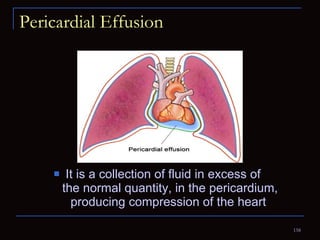
Pericardial Effusion It is a collection of fluid in excess of  the normal quantity, in the pericardium, producing compression of the heart
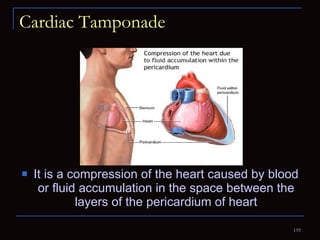
Cardiac Tamponade It is a compression of the heart caused by blood or fluid accumulation in the space between the layers of the pericardium of heart
Summary Heart Diseases are many Coronary Artery Disease is important Hypertensive Heart Disease too Valvular Heart Disease is still common Congenital Heart Disease is rare Investigations help us in diagnosis Early Treatment  is advisable Prevention is better than cure
MAY YOUR HEARTS WORK FOR EVER
Cardiovascular Diagnosis

Cardiovascular Diagnosis

  • 2.
    ANATOMY OF HEARTChapter 01
  • 3.
    The Heart Theheart is located in the center of the thorax and contracts 72 times per minute pumping blood throughout the body
  • 4.
  • 5.
    Heart - FrontView The external structures of the heart include the ventricles, the atria, aorta, pulmonary arteries and the pulmonary veins
  • 6.
    Heart - Section The interior of the heart is composed of the myocardium, four heart valves, four cardiac chambers, and associated vessels
  • 7.
    Not From WithinHeart can not get blood for its own need from within the chambers of heart, but has to depend on the coronaries from outside
  • 8.
    Left Coronary ArteryLeft coronary artery is the largest of the blood vessels supplying the heart, especially the left ventricle and the left atrium
  • 9.
    Right Coronary ArteryRight coronary artery is the 2 nd largest of the blood vessels supplying the heart especially the right ventricle and right atrium
  • 10.
    Anterior Heart ArteriesThe important branch of the left coronary artery is the left anterior inter-ventricular artery which supplies the anterior surface
  • 11.
    Posterior Heart ArteriesAnother important branch of left coronary artery is the Deep Circumflex Artery which supplies the posterior surface
  • 12.
    SYMPTOMS OF HEART DISEASE Chapter 02
  • 13.
    Chest Pain Painin the center of the chest is very characteristic of diseases of the heart especially those due to coronary artery disease
  • 14.
    Non Cardiac ChestPain Even though chest pain as a presenting symptoms of heart attack is quite characteristic, it is not unique to heart disease
  • 15.
    Breathlessness on ExertionBreathlessness especially on exertion and on lying down occurs in heart disease. Patient may also wake up at night with breathlessness
  • 16.
    Palpitation Palpitation isanother important symptom of heart disease. It may occur during exertion or while at rest
  • 17.
    Hemoptysis Spitting bloodor blood stained sputum, even though more likely to be due to a respiratory disease may also occur in heart disease
  • 18.
    Bluish coloration Otherwisecalled cyanosis, of the lips and tongue is likely to occur in some congenital heart diseases and also in heart failures
  • 19.
    Peripheral Cyanosis Bluishcoloration may also occur in heart disease due to the reduced circulation of the peripheral tissues like fingers and toes
  • 20.
    Leg Swelling Legswelling due to accumulation of fluid in the subcutaneous tissues is likely to occur in heart failure
  • 21.
    SIGNS OF HEARTDISEASE Chapter 03
  • 22.
    Examination of PulseThe right radial artery pulse is palpated in the forearm for at least one minute and studied in detail for the rate and the rhythm
  • 23.
    The Blood Pressure The BP is recorded in the right arm using a sphygmomanometer applied to the upper arm and K sounds auscultated at elbow Coming up – an Animation of BP measurement
  • 24.
  • 25.
    Jugular Venous PressureThe pressure inside the right atrium is reflected in the root of the neck as the jugular venous pressure which is measured and studied Coming up a Video of JVP measurement
  • 26.
    Measurement of Jugularvenous Pressure
  • 27.
    Palpation of HeartPrecordium of the chest is palpated for position of the apex beat, left parasternal heave and presence of any thrills
  • 28.
    Areas for AuscultationThese are the aortic area, the pulmonary area, the second aortic area, the tricuspid Area and the mitral area
  • 29.
    Auscultation of HeartSounds The heart is auscultated for the intensity and quality of the heart sounds and any additional heart sounds Coming up a Video of Auscultation of Heart
  • 30.
    Auscultation of TheHeart - Video
  • 31.
    Auscultation of HeartMurmurs The heart is then auscultated carefully for the presence of any heart murmurs either in the systole, diastole
  • 32.
    INVESTIGATIONS IN HEART DISEASE Chapter 04
  • 33.
    Electrocardiogram (ECG) Itis a test that measures the electrical activity of the heart, the rate, rhythm and presence of any ischemia
  • 34.
    ECG ECG isused extensively in the diagnosis of heart disease, from congenital disease to myocardial infarction and myocarditis
  • 35.
    Holter Monitoring Thepatient wears a monitor that records electrical activity of their heart (similarly to the recording of an ECG) for 24 hours
  • 36.
    X-Ray Chest PAview Chest X-Ray PA view brings into focus the heart and the lungs and the chambers and any enlargement of the heart Coming up a Video of Echocardiography
  • 37.
  • 38.
    Coronary Angiography Thenarrowing of the coronary vessels can be demonstrated using this radiological technique
  • 39.
    CORONARY ARTERY HEARTDISEASES - ANGINA Chapter 05
  • 40.
    Definition of AnginaAngina is a temporary chest pain, pressure or discomfort due to insufficient blood supply to heart, during exertion
  • 41.
    Angina – TheCry of Heart When heart does not get enough blood through coronaries during exertion, it cries for more oxygen, causing the pain
  • 42.
    Site of ChestPain The chest pain in angina is felt in the center of the chest, and is described by an open or closed fist showing the site
  • 43.
    Chest Pain RadiationIn angina, chest pain usually radiates to the left shoulder, left upper limb and along its inside border and up to the left hand
  • 44.
    Other Sites ofRadiation In another patient the chest pain may radiate to the neck, jaw, upper abdomen, right shoulders and or the right arms
  • 45.
    Severity Of PainThe severity of the chest pain is such that the patient can no longer exert and therefore stops, gasping with pain
  • 46.
    Character Of ThePain It is described as either a firm pressure, chest discomfort, crushing or burning or tightness of chest
  • 47.
    Other Symptoms Patientsmay complain about anxiety, dizziness, cold sweating, breathlessness or even presence of a stomach upset
  • 48.
    Duration of ChestPain The pain usually lasts for only 2-3 minutes and is relieved when the patient takes rest or puts medicines under the tongue
  • 49.
    It is aVicious Cycle Initially pain occurs during moderate activity but later it occurs during mild activity, then during normal daily activities
  • 50.
    Coronary Atherosclerosis Thebasic abnormality in of angina is the narrowing of the coronary arteries by progressive atherosclerosis
  • 51.
    Plaque Formation Accumulationof lipids in the walls of the artery leads to the formation of an inward elevation called the plaque
  • 52.
    Treatment of AnginaThe treatment of Angina is by using drugs which dilate the coronary arteries like nitroglycerine and vasodilators
  • 53.
    Nitroglycerine Nitroglycerine istaken by the patient immediately after chest pain by placing it under the tongue for quick absorption
  • 54.
    CORONARY ARTERY DISEASE- UNSTABLE ANGINA Chapter 07
  • 55.
    No permanent damageIn angina there is no permanent damage to the myocardium as would occur in patients with Myocardial Infarction
  • 56.
    Coronary Angioplasty Herethe narrowed coronary artery causing the CAD is opened up using a catheter passed through the vessel
  • 57.
    Coronary Artery StentA stent is a rust proof wire mesh placed inside the coronary artery, which costs anything above Rs 50,000 per piece
  • 58.
    Stent Insertion Aguide wire is advanced across the blocked section of the coronary artery and a balloon is positioned beside the blockage
  • 59.
    The Result Theoutcome is relief from chest pain and improved exercise capacity. In 2/3 rd of patients, the procedure is successful Coming up an Animation of Angioplasty
  • 60.
  • 61.
    Coronary Bypass SurgeryBypass surgery is the alternative option indicated when one or more coronary arteries are seriously blocked
  • 62.
    Bypass Surgery InBypass surgery, the site of coronary obstruction is bypassed by means of a vein or artery from the patient himself
  • 63.
    Saphenous Vein GraftHere the saphenous vein is harvested from the patient’s own legs and used as a conduit for bypass
  • 64.
    Internal Mammary GraftInternal mammary artery graft is used alternatively in selected cases producing a longer term of benefit of up to 10 years
  • 65.
    Beating Heart SurgeryHere stabilization devices are used to reduces the motion of target vessels and the bypass under taken with out Heart-Lung machine Coming up a Video of Beating Heart Surgery
  • 66.
    Beating Heart SurgeryComing up a Video of Robot Assisted Bypass Surgery
  • 67.
  • 68.
  • 69.
    Heart Attack Aheart attack or acute myocardial infarction (MI) occurs when one of the coronary arteries is blocked
  • 70.
    Total Occlusion In angina there is only up to 70-80% occlusion; but in Acute Myocardial Infarction, there is 100% occlusion
  • 71.
    Myocardial Infarction Thearea of myocardium which is totally deprived of blood supply becomes a non contracting scar tissue Coming up an animation of Thrombus Formation
  • 72.
  • 73.
    Who Gets HeartAttack? Any body can get a heart attack above the age of 30 years, irrespective of the sex, race and country of origin
  • 74.
    Females andHeart Attack Females are generally protected from heart attack because of estrogen in their body during menstruating age Coming up an Animation about Risk Factors of MI
  • 75.
  • 76.
    Sudden Death Importanceof Myocardial Infarction, is that it can cause sudden, unexpected death, even in very young people Coming up a Animation about Complications of MI
  • 77.
    Complications of MIComing up a Video of Cardio Pulmonary Resuscitation
  • 78.
    Cardiopulmonary Resuscitation Comingup an Animation of Automated Defibrillation
  • 79.
  • 80.
    ECG wave tracingsin MI Various phases of MI can be seen in ECG wave tracings during the acute phase, fully evolved phase, resolution phase and chronic phase
  • 81.
    ST Elevation MIST elevation Myocardial Infarction is the most important type of Myocardial infarction leading to sudden cardiac arrest and death
  • 82.
    Thrombolytic Therapy Ifthe patient can be brought sufficiently early to the hospital, the blood clot can be dissolved using certain drugs like streptokinase Coming up a Video of Emergency Ambulance Service
  • 83.
  • 84.
    Non ST ElevationMI Here the patient has no ST elevation in the ECG. But at the same time there is death of the myocardial tissue which is not easily reversible Coming up an Animation about Final Outcome
  • 85.
  • 86.
  • 87.
    Definition Hypertension isdefined as sustained and abnormal elevation of arterial blood pressure of at least 140 mmHg systolic and 90 mmHg diastolic
  • 88.
    Importance If leftuntreated hypertensive patients can end up with several complications in the due course of the illness
  • 89.
    Complications of HTNHypertension is a very important predisposing cause of heart disease, kidney disease, as well as stroke
  • 90.
    What is bloodpressure? It is the pressure exerted on the lateral walls of the blood vessels by the blood from within the vessel
  • 91.
    Why We NeedBlood Pressure? Blood pressure is needed to push the blood along the blood vessels to reach the various tissues of the body
  • 92.
    Essential Hypertension InPrimary or Essential Hypertension both the systolic as well as diastolic blood pressures are elevated to almost an equal extend
  • 93.
    Sodium in FoodSodium is an element that the human body needs to function properly and especially to regulate the blood pressure and blood volume
  • 94.
    Sodium and HypertensionFor individuals who are sodium-sensitive, an increased intake of sodium through food may contribute to high blood pressure
  • 95.
    The values Personswith BP in the normal ranges are normal. Those having BP in the borderline are called pre-hypertensives
  • 96.
    Normal Blood PressureThe normal blood pressure is 120/70 to 140/90. It is advisable to maintain a BP in or around 130/80 mmHg under any circumstances
  • 97.
    Isolated Systolic HypertensionIn some patients with hypertension especially old people, only the systolic Blood Pressure is found to be elevated
  • 98.
    White Coat HypertensionIn these cases high blood pressure is seen only when recorded by the doctor in the clinic or hospital surroundings
  • 99.
    Symptoms Most patientswith hypertension have no specific symptoms. Others may complain about dizziness, vertigo or epistaxis
  • 100.
    Headache and HypertensionHeadache is seen only in patients with more severe hypertension. In these patients it is localized to the back of the head
  • 101.
    The Silent KillerHypertension is considered as a silent killer because even in the absence of symptoms it can cause heart attack or stroke Coming up an Animation of Effects of Hypertension
  • 102.
  • 103.
    Hypertension and HeartThe heart muscles thicken to make up for increased blood pressure. It is the left ventricle which gets the brunt of the enlargement
  • 104.
    Left Ventricular HypertrophyThe left ventricle is markedly thickened in this patient with severe hypertension that was remaining untreated for many years Coming up an Animation of Effect of HTN on Heart
  • 105.
    The Effect OnThe Heart
  • 106.
    Hemiplegia Occlusion ofthe middle cerebral artery results in sudden paralysis of upper and lower limbs called as a stroke or hemiplegia
  • 107.
    Intracerebral Hemorrhage Perhapsa more important and dangerous complication of hypertension is bleeding in to the brain, causing unconsciousness
  • 108.
    Treatment of HighBP Maintaining the blood pressure within the normal ranges for months and years is perhaps more difficult
  • 109.
    Advice to HighBP patients Every patient with hypertension is advised to check BP regularly so that sudden increase may not occur
  • 110.
    Regular Exercise Bydoing regular exercise the tone of the muscles in the walls of the arteries remain reduced and thus BP is lowered
  • 111.
    Low Salt IntakeLow salt intake is an essential component of management of hypertension irrespective of the degree of BP rise
  • 112.
    Pappads, Pickles, Fried,Dried Pappads, pickles, fried items and dried fish contain large quantities of salt. Hence all hypertensive's should avoid these
  • 113.
    Beta Blockers Atenelolis one such drugs used in the treatment of hypertension especially in the early stages
  • 114.
    Calcium Channel BlockersNifedipine is a calcium channel blocker used for the control of mild to moderate hypertension
  • 115.
    ACEIs and ARBsAngiotensin Converting Enzyme inhibitors and Angiotension Receptor Blockers are the other drugs
  • 116.
  • 117.
    The Heart ValvesThe valves of the heart open and close to control the flow of blood entering or leaving the heart
  • 118.
    The Four ValvesThere are four valves in the heart: namely the aortic, the mitral, tricuspid, and the pulmonary valve
  • 119.
    The Heart ValvesThe valves are designed to control the direction of blood flow through the heart. Their opening and closing produce the heart sounds
  • 120.
    Mitral stenosis Itis a heart valve disorder that narrows the mitral valve opening reducing the amount of blood that flows through it
  • 121.
    Mitral Regurgitation Mitralvalve may develop damage due to rheumatic fever and become leaky resulting in blood regurgitating into the left atrium
  • 122.
    Aortic Stenosis Aorticvalve gets constricted due to valve damage preventing blood from flowing into the aorta
  • 123.
    Aortic Regurgitation Theaortic valve, when affected by disease cannot prevent back flow of blood in to the left ventricle
  • 124.
    HEART FAILURE Chapter11 Coming up an Animation about Heart Failure
  • 125.
  • 126.
    Pulmonary Edema Asthe heart fails, pressure in the vein going through the lungs starts to rise. fluid is pushed into the air spaces (alveoli)
  • 127.
    Pulmonary Edema inX- Ray Pulmonary edema can be seen in the X-Ray chest as a fluffy non-homogenous opacities of both hila of lungs Coming up an Animation of Ventricular Assist Device
  • 128.
    Left Ventricular AssistDevice Coming up a Video of Heart Transplantation
  • 129.
    Heart Transplantation Comingup an Animation of Total Artificial Heart
  • 130.
  • 131.
    CONGENITAL ACYANOTIC HEARTDISEASES Chapter 12
  • 132.
    Atrial Septal DefectIt is a congenital heart defect where the wall between the right and left atrium has a hole and blood flows between the two atria
  • 133.
    Ventricular Septal DefectVentricular septal defect is an abnormal opening in the wall that separates the right and left ventricles
  • 134.
    Patent Ductus ArteriosusHere there is an abnormal communication between the aorta and the pulmonary artery which is normally present in infants
  • 135.
    CONGENITAL CYANOTIC HEARTDISEASES Chapter 13
  • 136.
    Tetralogy of FallotIt is a birth defect of the heart consisting of 4 abnormalities that results in insufficiently oxygenated blood pumped to the body
  • 137.
    Transposition of thegreat vessels Here the position of the two major vessels that carry blood away from the heart - the aorta and the pulmonary artery - is switched (transposed)
  • 138.
    DISORDERS OF HEARTRHYTHM Chapter 14
  • 139.
    Sinus Bradycardia Itis a cardiac rhythm characterized by a slowness of the heartbeat, usually at a rate under 60 beats per minute
  • 140.
    Ventricular tachycardia Itis a rapid resting heart rate initiated within the ventricles, typically at 160 - 240 beats per minute
  • 141.
    Sick Sinus SyndromeIt is a collection of heart rhythm disorders that include alternating slow and fast heart rhythms
  • 142.
    Cardiac Pacemaker Apacemaker is a small, battery-operated electronic device inserted under the skin to help the heart beat regularly at an appropriate rate
  • 143.
  • 144.
    Infective Endocarditis Itinvolves the heart valves and is most commonly found in people who have underlying heart disease
  • 145.
    Infective Endocarditis Sourcesof the infection may be due to transient bacteremia, which is common during minor surgical procedures
  • 146.
    Surgical Procedures Theseare commonly done dental, upper respiratory, urologic, and lower gastrointestinal diagnostic and surgical procedures
  • 147.
    Vegetations The infectioncan cause growths called as vegetations on the heart valves, the lining of the heart, or the lining of the blood vessels.
  • 148.
    Embolism These growthsmay be dislodged and send clots to the brain, lungs, kidneys, or spleen resulting in what is called an embolism Coming up an Animation of Cerebral Embolism
  • 149.
  • 150.
  • 151.
    Myocarditis It isacute inflammation of the muscle of heart due to infections especially of viral etiology like Coxachie B
  • 152.
    Cardiomyopathy Itis a disease affecting the muscle of the heart resulting in thickness and loss of function. It is of three varieties
  • 153.
    Hypertrophic Cardiomyopathy Itis a condition in which there is primary thickening of the muscle of the heart in the inter-ventricular septum resulting in an obstruction
  • 154.
    Dilated Cardiomyopathy Herethe thickening of the myocardium results in dilation and  functioning of the chambers of heart especially the ventricles
  • 155.
  • 156.
    Pericardium It isa thin double-layered sac which encloses the heart. Fluid contained within the layers lubricates constantly rubbing surfaces
  • 157.
    Pericarditis It iscaused by inflammation of the pericardium, the sac-like covering of the heart and resulting in pain
  • 158.
    Pericardial Effusion Itis a collection of fluid in excess of the normal quantity, in the pericardium, producing compression of the heart
  • 159.
    Cardiac Tamponade Itis a compression of the heart caused by blood or fluid accumulation in the space between the layers of the pericardium of heart
  • 160.
    Summary Heart Diseasesare many Coronary Artery Disease is important Hypertensive Heart Disease too Valvular Heart Disease is still common Congenital Heart Disease is rare Investigations help us in diagnosis Early Treatment is advisable Prevention is better than cure
  • 161.
    MAY YOUR HEARTSWORK FOR EVER