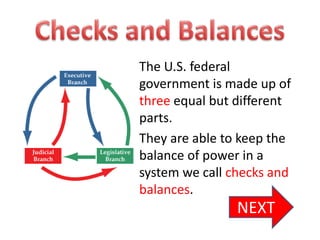
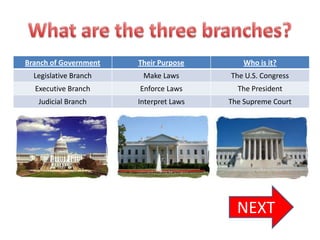
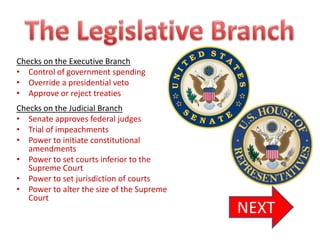
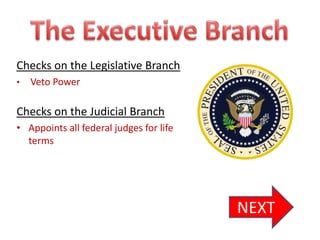
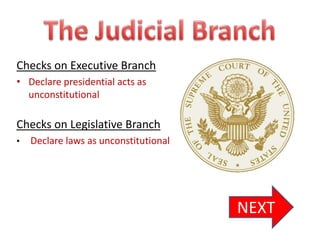
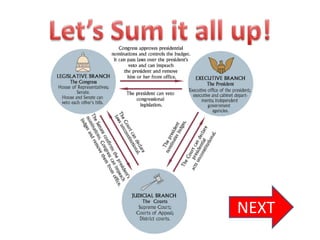
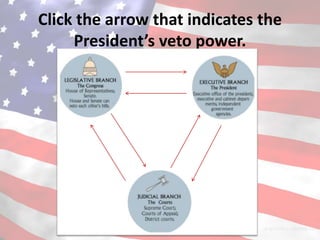
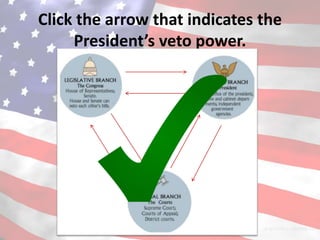
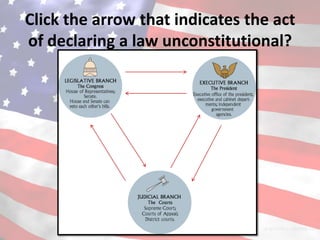
The U.S. federal government is divided into three equal branches: the legislative, executive, and judicial branches. Each branch has separate responsibilities and powers to prevent any one branch from becoming too powerful through a system of checks and balances. The legislative branch makes laws, the executive branch enforces laws, and the judicial branch interprets laws. The branches share powers over each other, such as Congress's control over spending and ability to override presidential vetoes.