Download as PDF, PPTX




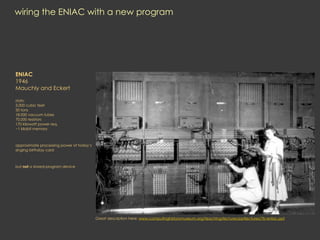
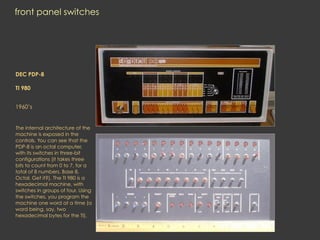
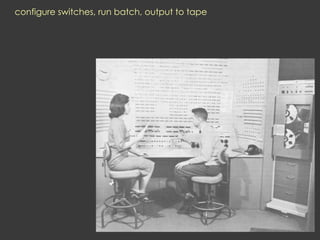
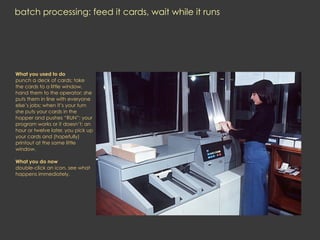
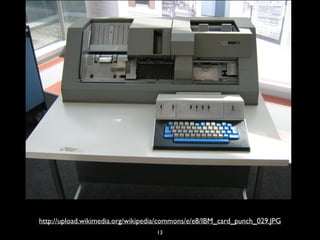
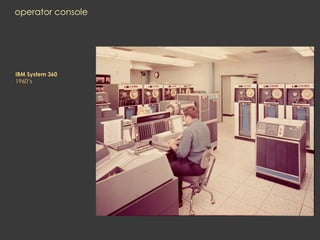
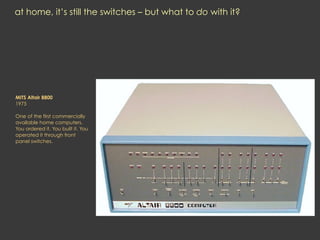

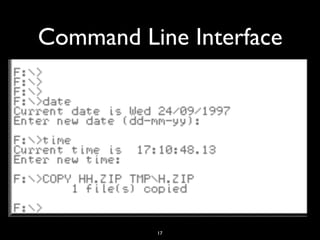
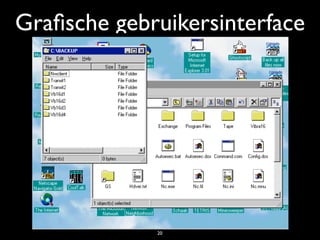
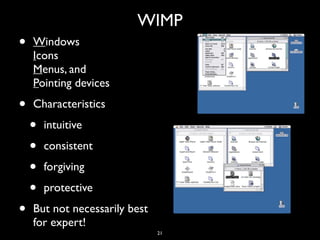
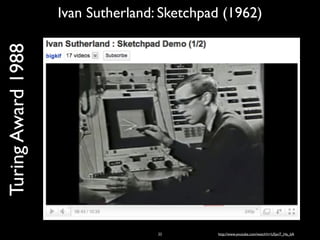
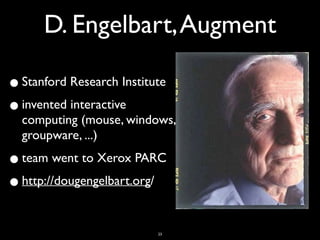
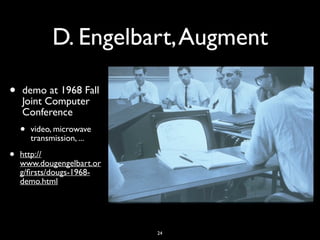
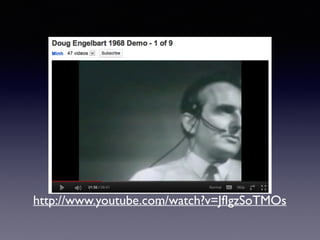
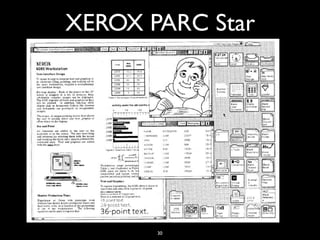
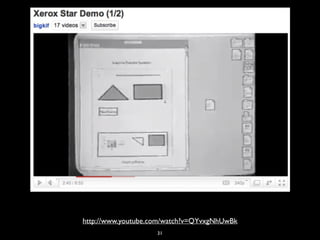
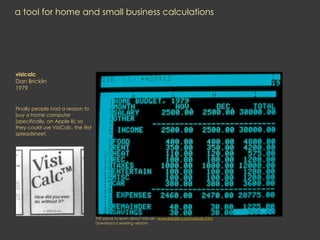
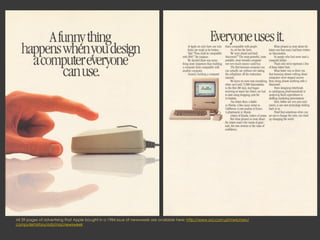
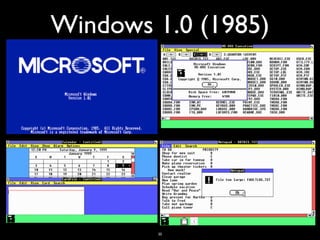
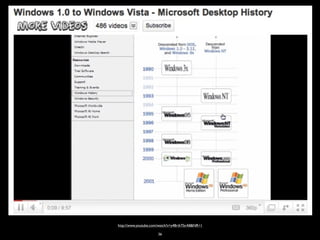

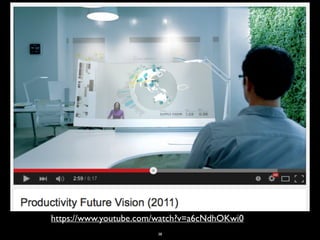
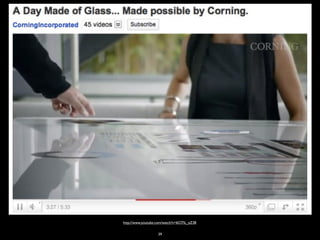
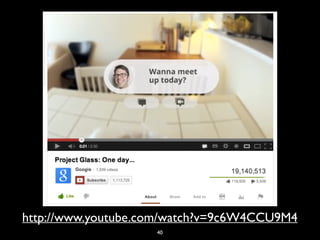
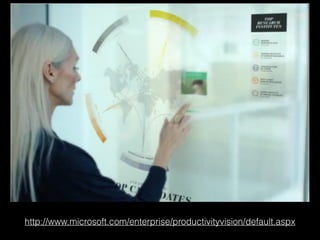
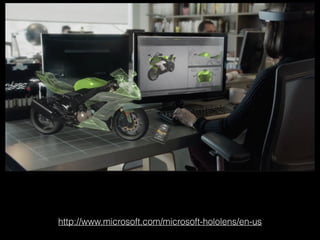
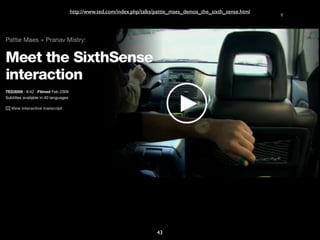
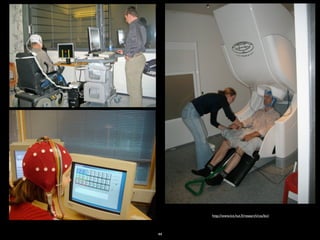

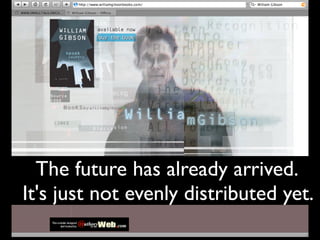


This document provides a brief history of human-computer interaction (HCI) from the 1940s to present day. It describes early computers like ENIAC that were programmed with switches and performed batch processing. The development of programming languages, command line interfaces, and the graphical user interface (GUI) increased usability. Pioneers like Ivan Sutherland, Douglas Engelbart, and PARC researchers developed foundational concepts like windows, the mouse, and hypertext. The commercial success of the Apple II and VisiCalc spreadsheet demonstrated the potential of personal computing. Modern interfaces in products from Microsoft and advances in augmented and virtual reality show the ongoing evolution of HCI.


