Unilateral and
bilateral Hilar
enlargement
BY DR BHARAT SHENBAGARAJ
POST GRADUATE, RESPIRATORY MEDICINE.
SRM MEDICAL COLLEGE, CHENNAI
 Hilum is the most difficult part to interpret in a chest X-ray (CXR).
 Anatomically hila are composed of pulmonary arteries and veins, major
bronchi, and lymph nodes.
 Normally bronchi and lymph nodes do not cast any radiological shadow
and pulmonary arteries make up most of the radiographic density of the
hila with superior pulmonary veins make a smaller contribution.
 Whereas, the inferior pulmonary veins enter the left atrium inferior to the
hilum and make no contribution to hilar density
 Though both hila should be equal in size and density, we do not get
identical hila in majority of CXRs.
 Unequal hilum may be falsely produced by patient rotation that may result
in distortion of thoracic anatomy in CXR.
 Normally the distances between the medial ends of clavicles from the
spinous process of the vertebral body are equal, and that become unequal
in rotational malpositioning of patient.
 When the pseudoinequality of hilum caused by malpositioning is excluded,
we should proceed for further investigation.
Radiological Signs
 Dense Hilum’ sign: Most common presentation of a hilar mass is increased
density over hilum. The dense hilum sign suggests a pathological process
at the hilum: Hilar malignancy or bronchogenic carcinoma should be
suspected.
 In absence of calcification or adenopathy, the hila should appear of equal
density and be symmetric. Identification of increased density is made by
comparing with the opposite side.
Hilum Overlay sign:
 A silhouette sign of the hila is called the “hilum overlay sign”.
 If hilar vessels can clearly be seen inside the lesion, the lesion is either
anterior or posterior to the hilum.
 If the hilar vessels cannot be discriminated from the lesion, the lesion is at
the hilum. This is useful for differentiating true hilar mass from
superimposed pulmonary opacities.
Hilar convergence sign:
 To distinguish between a prominent hilum and a enlarged pulmonary
artery.
 Pulmonary vessels can be seen to converge and join a dilated pulmonary
artery.
 If branches of pulmonary artery converge towards central mass it is an
enlarged pulmonary artery rather than mass or lymph node in the hilum
 Hilar angle: Hilar angle is the angle made between superior pulmonary
vein and intralobar pulmonary artery. It is normally greater than 90°
(concave).
 Loss of concavity will help in identifying hilar mass. Estimation of hilar
angle will also help in identification of hilar mass.
Unilateral hilar enlargement
 Tuberculosis
 Malignancy
 Silicosis
 Sarcoidosis
 Non hodgkin’s lymphoma
 Histoplasmosis ( lymphadenopathy with calcification )
 Non- tuberculous mycobacteria
 Pulmonary embolism ( Fleischner sign )
 Pulmonary stenosis ( left hila )
Bilateral hilar enlargement
 Expiratory film
 Sarcoidosis
 Infections:
Tuberculosis
Mycoplasma
Infectious mononucleosis
Histoplasmosis
Coccidiomycosis
 Malignancy:
Lymphoma
Bronchogenic & mediastinal tumours
 Inorganic dust disease:
Silicosis
Berylliosis
 Hypersensitivity pneumonitis ( Bird fancier’s lung )
 Rule out HIV
 Churg – Strauss syndrome ( EGPA )
 Secondary to heart disease:
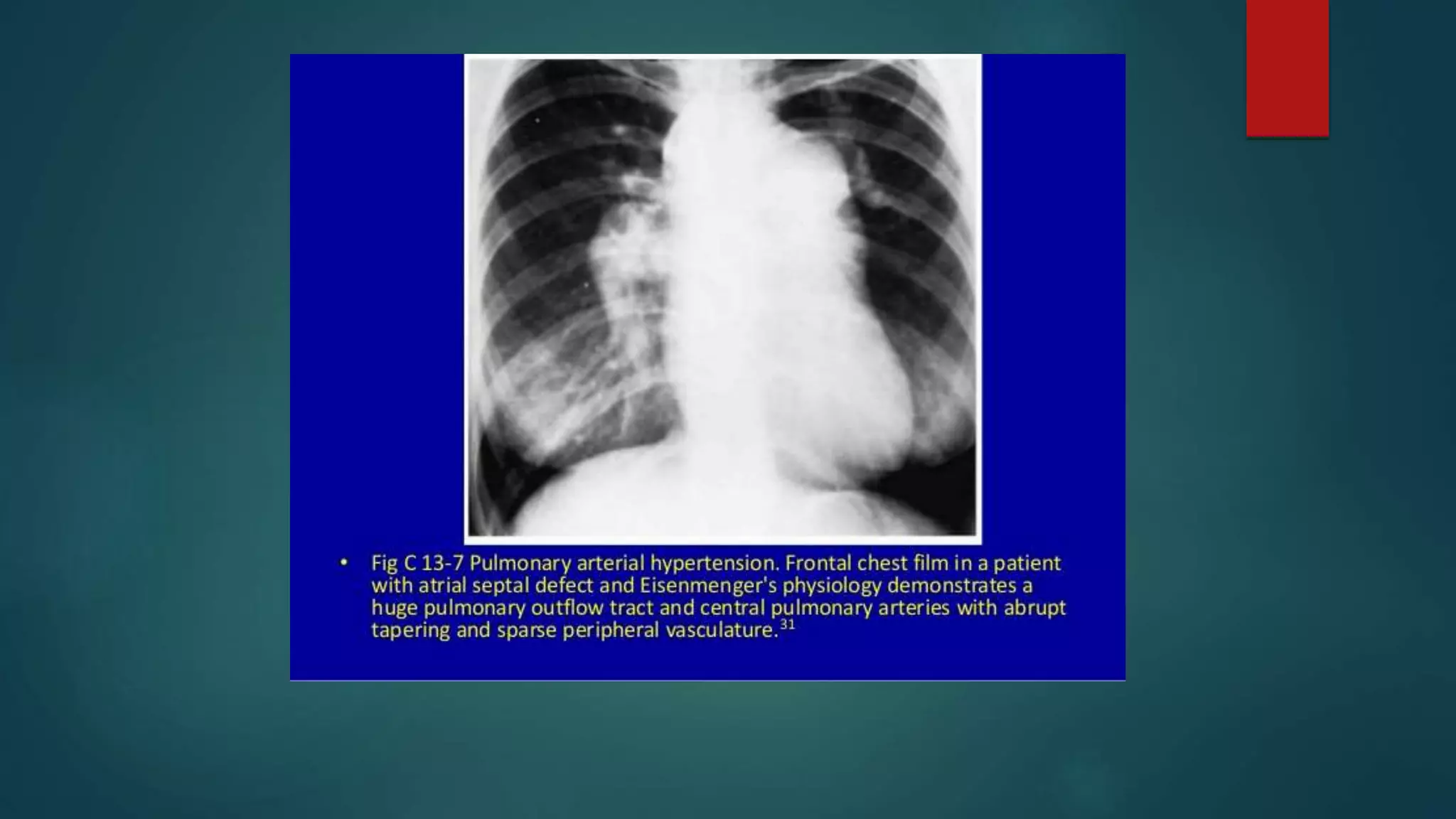
Congenital left to right shunts
Cor pulmonale
LVF or Mitral valve disease.
THANK
YOU

Hilar enlargement radiology

  • 1.
    Unilateral and bilateral Hilar enlargement BYDR BHARAT SHENBAGARAJ POST GRADUATE, RESPIRATORY MEDICINE. SRM MEDICAL COLLEGE, CHENNAI
  • 2.
     Hilum isthe most difficult part to interpret in a chest X-ray (CXR).  Anatomically hila are composed of pulmonary arteries and veins, major bronchi, and lymph nodes.  Normally bronchi and lymph nodes do not cast any radiological shadow and pulmonary arteries make up most of the radiographic density of the hila with superior pulmonary veins make a smaller contribution.  Whereas, the inferior pulmonary veins enter the left atrium inferior to the hilum and make no contribution to hilar density
  • 3.
     Though bothhila should be equal in size and density, we do not get identical hila in majority of CXRs.  Unequal hilum may be falsely produced by patient rotation that may result in distortion of thoracic anatomy in CXR.  Normally the distances between the medial ends of clavicles from the spinous process of the vertebral body are equal, and that become unequal in rotational malpositioning of patient.  When the pseudoinequality of hilum caused by malpositioning is excluded, we should proceed for further investigation.
  • 4.
    Radiological Signs  DenseHilum’ sign: Most common presentation of a hilar mass is increased density over hilum. The dense hilum sign suggests a pathological process at the hilum: Hilar malignancy or bronchogenic carcinoma should be suspected.  In absence of calcification or adenopathy, the hila should appear of equal density and be symmetric. Identification of increased density is made by comparing with the opposite side.
  • 5.
    Hilum Overlay sign: A silhouette sign of the hila is called the “hilum overlay sign”.  If hilar vessels can clearly be seen inside the lesion, the lesion is either anterior or posterior to the hilum.  If the hilar vessels cannot be discriminated from the lesion, the lesion is at the hilum. This is useful for differentiating true hilar mass from superimposed pulmonary opacities.
  • 6.
    Hilar convergence sign: To distinguish between a prominent hilum and a enlarged pulmonary artery.  Pulmonary vessels can be seen to converge and join a dilated pulmonary artery.  If branches of pulmonary artery converge towards central mass it is an enlarged pulmonary artery rather than mass or lymph node in the hilum
  • 7.
     Hilar angle:Hilar angle is the angle made between superior pulmonary vein and intralobar pulmonary artery. It is normally greater than 90° (concave).  Loss of concavity will help in identifying hilar mass. Estimation of hilar angle will also help in identification of hilar mass.
  • 8.
    Unilateral hilar enlargement Tuberculosis  Malignancy  Silicosis  Sarcoidosis  Non hodgkin’s lymphoma  Histoplasmosis ( lymphadenopathy with calcification )  Non- tuberculous mycobacteria  Pulmonary embolism ( Fleischner sign )  Pulmonary stenosis ( left hila )
  • 12.
    Bilateral hilar enlargement Expiratory film  Sarcoidosis  Infections: Tuberculosis Mycoplasma Infectious mononucleosis Histoplasmosis Coccidiomycosis  Malignancy: Lymphoma Bronchogenic & mediastinal tumours
  • 13.
     Inorganic dustdisease: Silicosis Berylliosis  Hypersensitivity pneumonitis ( Bird fancier’s lung )  Rule out HIV  Churg – Strauss syndrome ( EGPA )  Secondary to heart disease: Congenital left to right shunts Cor pulmonale LVF or Mitral valve disease.
  • 19.