HENRY FAYOL'S
ADMINISTRATIVE THEORY
OF
MANAGEMENT
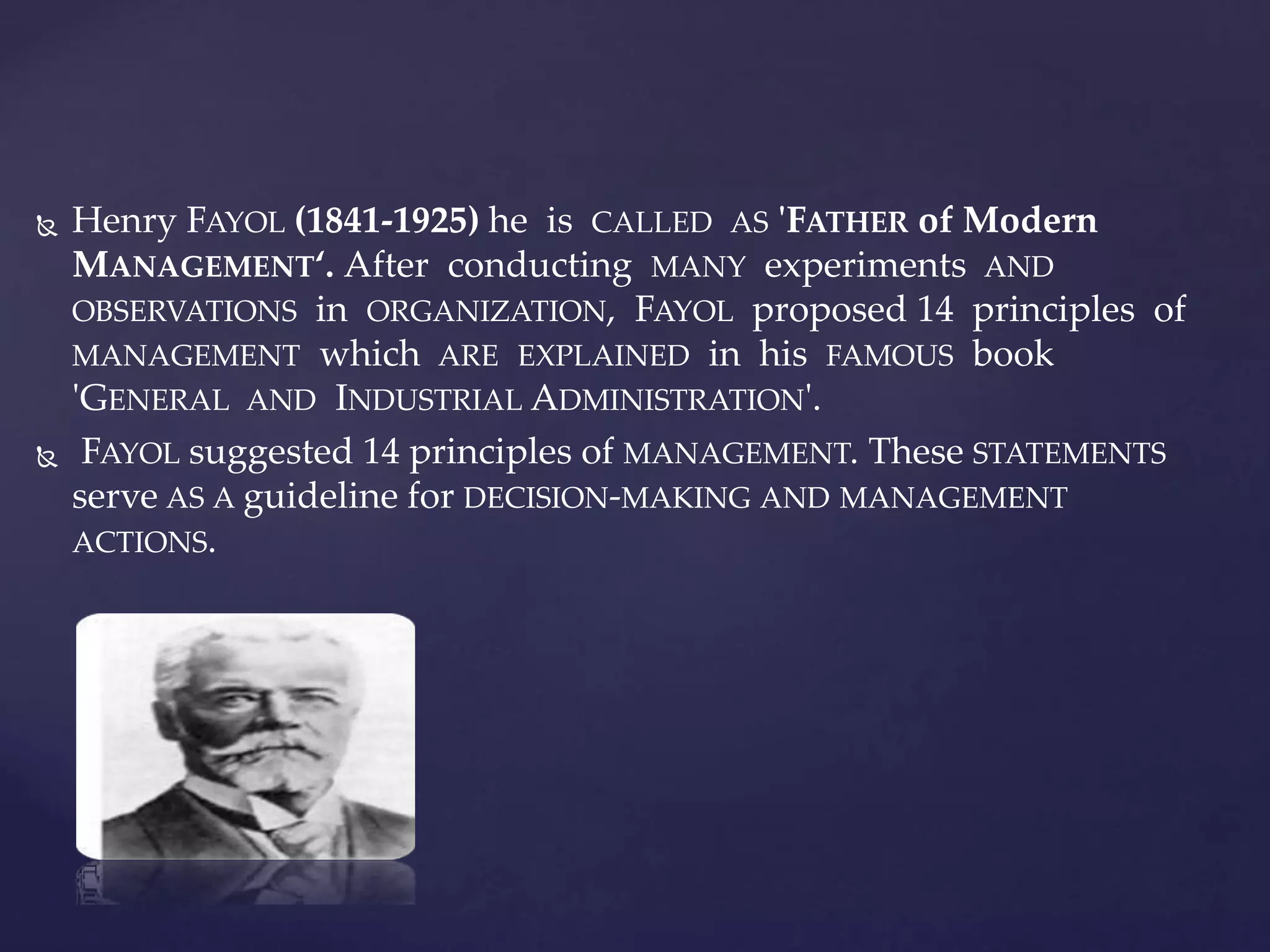
 Henry FAYOL (1841-1925) he is CALLED AS 'FATHER of Modern
MANAGEMENT‘. After conducting MANY experiments AND
OBSERVATIONS in ORGANIZATION, FAYOL proposed 14 principles of
MANAGEMENT which ARE EXPLAINED in his FAMOUS book
'GENERAL AND INDUSTRIAL ADMINISTRATION'.
 FAYOL suggested 14 principles of MANAGEMENT. These STATEMENTS
serve AS A guideline for DECISION-MAKING AND MANAGEMENT
ACTIONS.
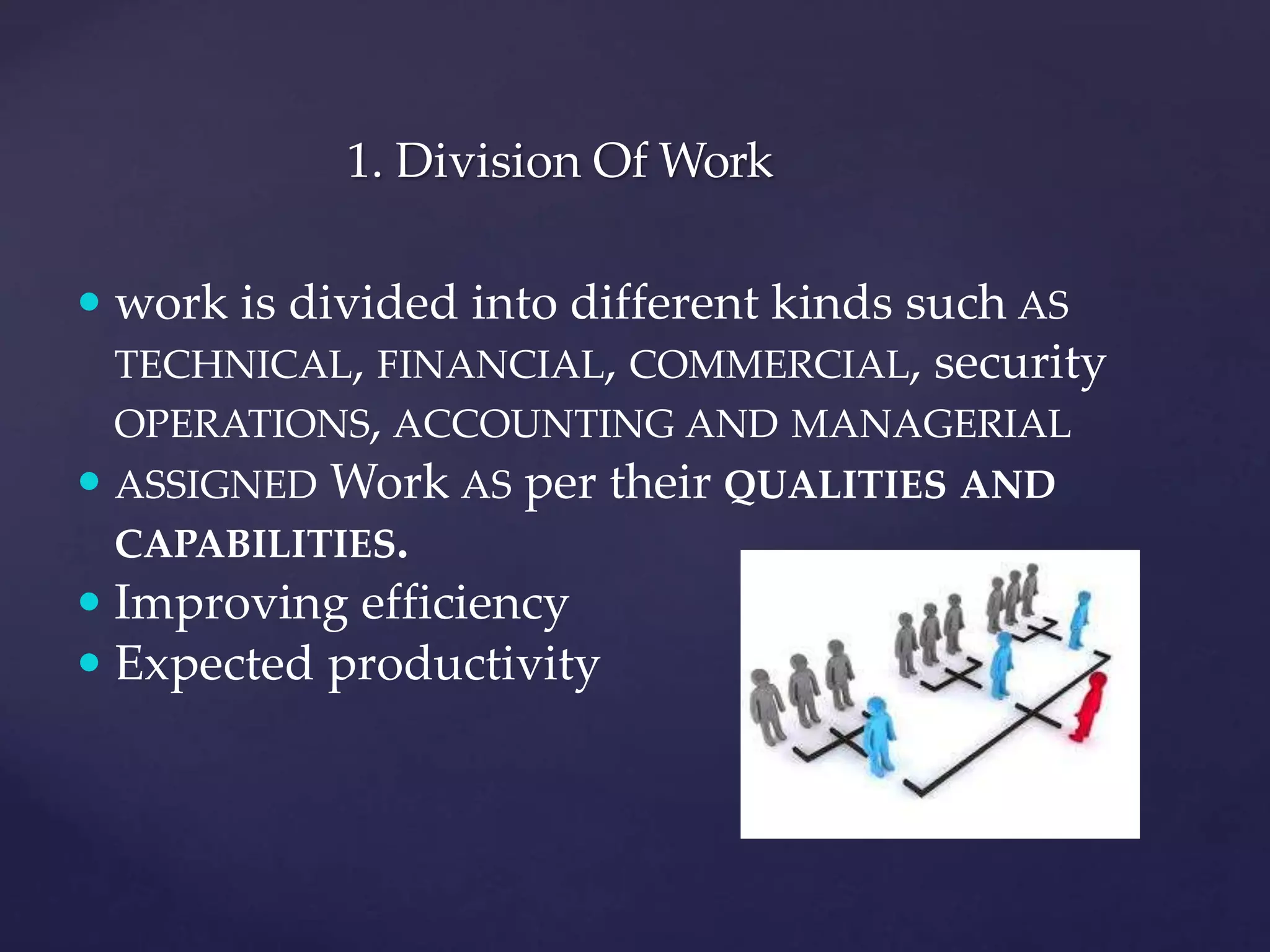
1. Division Of Work
 work is divided into different kinds such AS
TECHNICAL, FINANCIAL, COMMERCIAL, security
OPERATIONS, ACCOUNTING AND MANAGERIAL
 ASSIGNED Work AS per their QUALITIES AND
CAPABILITIES.
 Improving efficiency
 Expected productivity
2. Authority & Responsibility
 Authority means right to take decision.
 Responsibility means duty or obligation.
 There should be a balance between the two i.e. they
must go hand in hand.
 Authority always flow downward.
 Responsibility always moves in the upward
direction.
3. Discipline
 “Discipline means sincerity, obedience, respect of
authority & observance of rules and regulations of
the enterprise”.
 This principle applies that subordinate should respect
their superiors and obey their order.
 Discipline is not only required on path of subordinates
but also on the part of management.
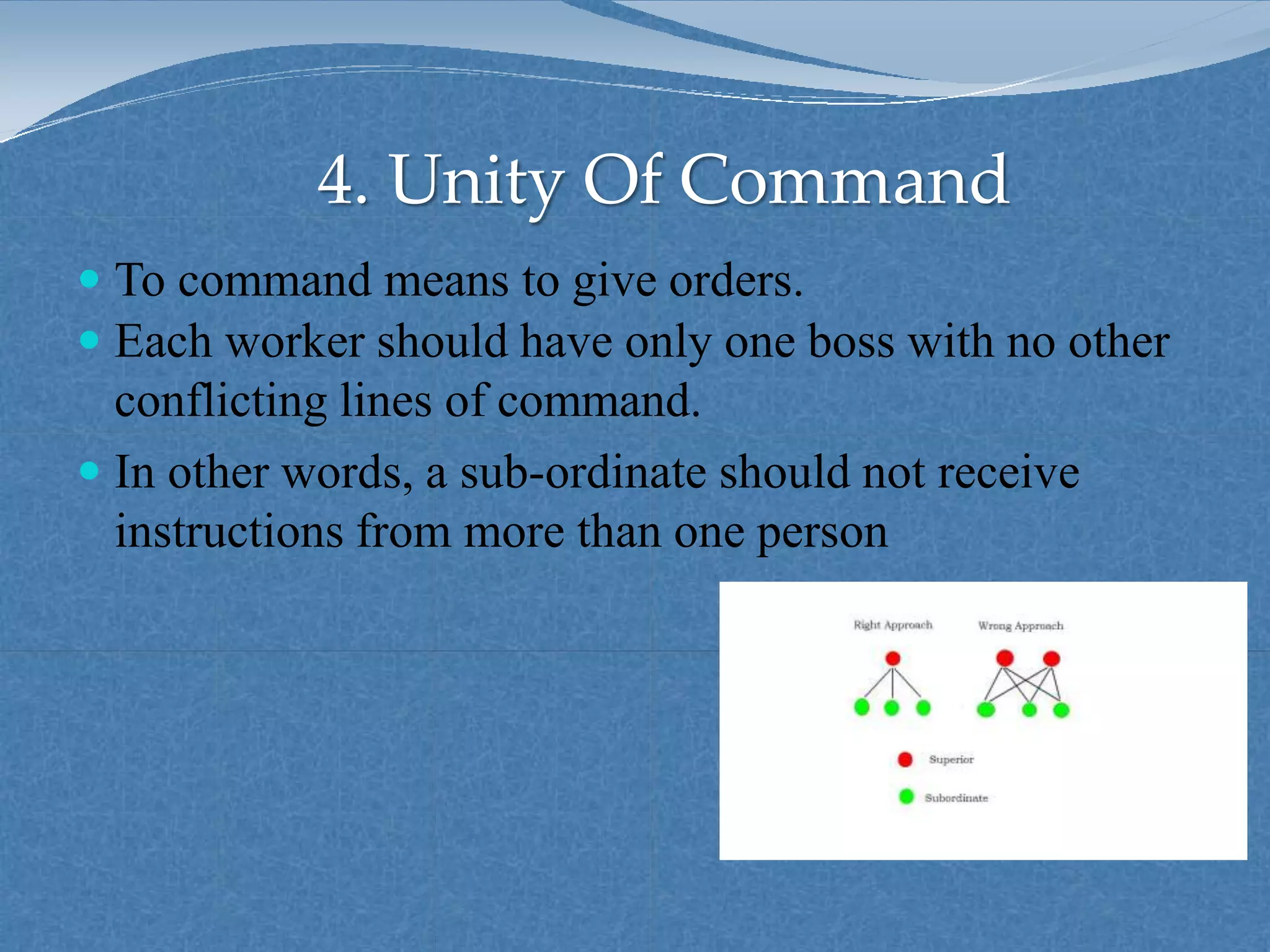
4. Unity Of Command
 To command means to give orders.
 Each worker should have only one boss with no other
conflicting lines of command.
 In other words, a sub-ordinate should not receive
instructions from more than one person
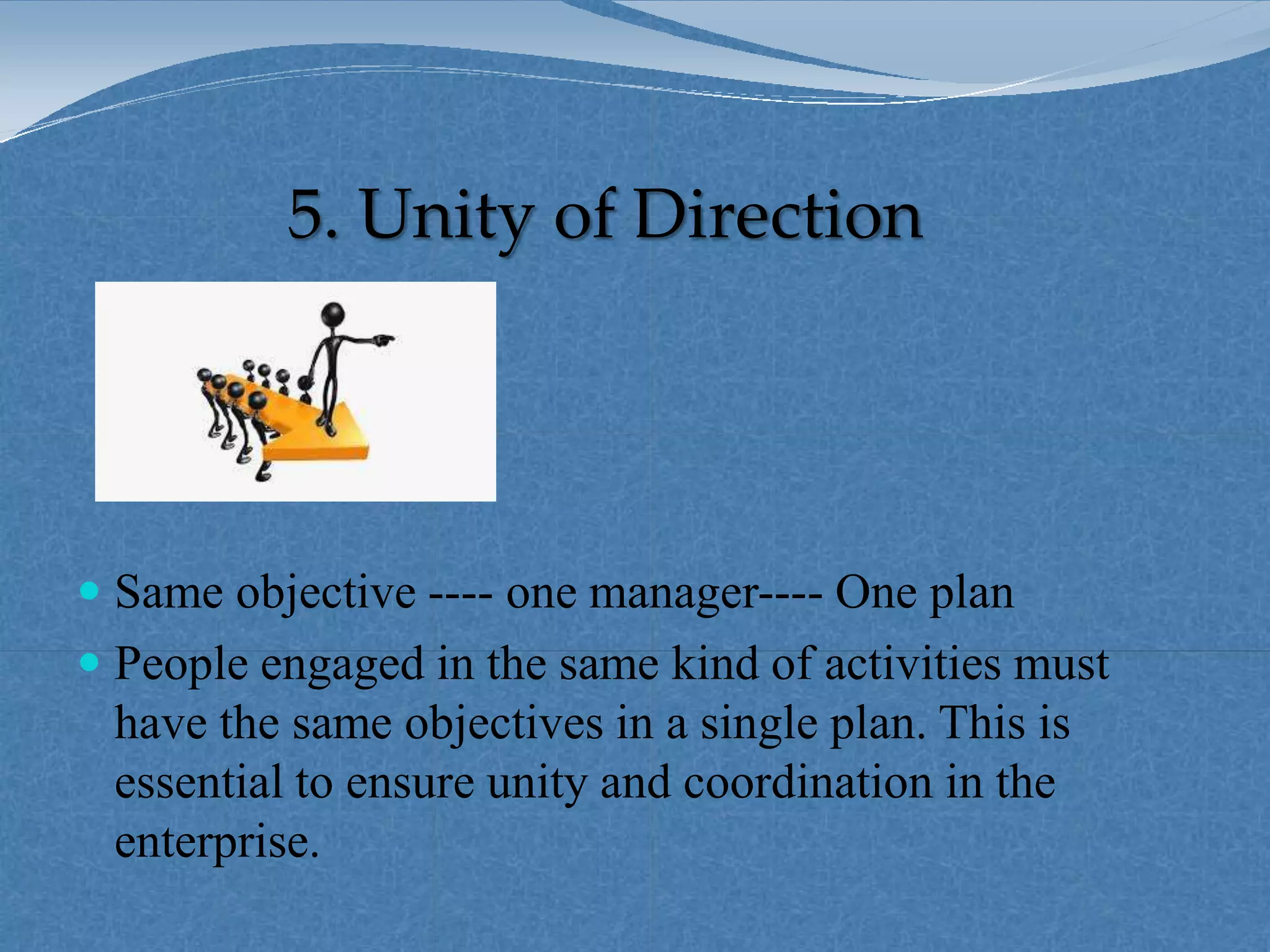
5. Unity of Direction
 Same objective ---- one manager---- One plan
 People engaged in the same kind of activities must
have the same objectives in a single plan. This is
essential to ensure unity and coordination in the
enterprise.
6. Subordination of individual interests to the
general interests
 The interests of one person should not take priority
over the interests of the organization as a whole.
 The individual interest should be given less
importance, while the general interest should be
given most importance. If not, the organization will
collapse.
 For example, for change of location of plant,for
change of profit sharing ratio,etc.
7. Remuneration
 Remuneration is the price for services received. If an
organization wants efficient employees and best
performance, then it should have a good remuneration
policy. This policy should give maximum satisfaction
to both employer and employees.
 It should include both financial and non-financial
incentives (free education, insurance, medical &
residential facilities).
8 Order
 There should be an Order for Things and People in the
organization.
 "A place for everything and everything in its
place."
 "Right man in the right place".
 There must be orderly placement of the resources
such as Men and Women, Money, Materials, etc.
Misplacement will lead to misuse and disorder.
9. Equity
 The employees should be treated with fairness, kindness & justice if devotion
is expected of them.
 Managers should be fair and impartial while dealing with the subordinates.
 They should give similar treatment to people of similar position.
 They should not discriminate with respect to age, caste, sex, religion, relation
etc.
 Equity is essential to create and maintain cordialrelations between the
managers and sub-ordinate.
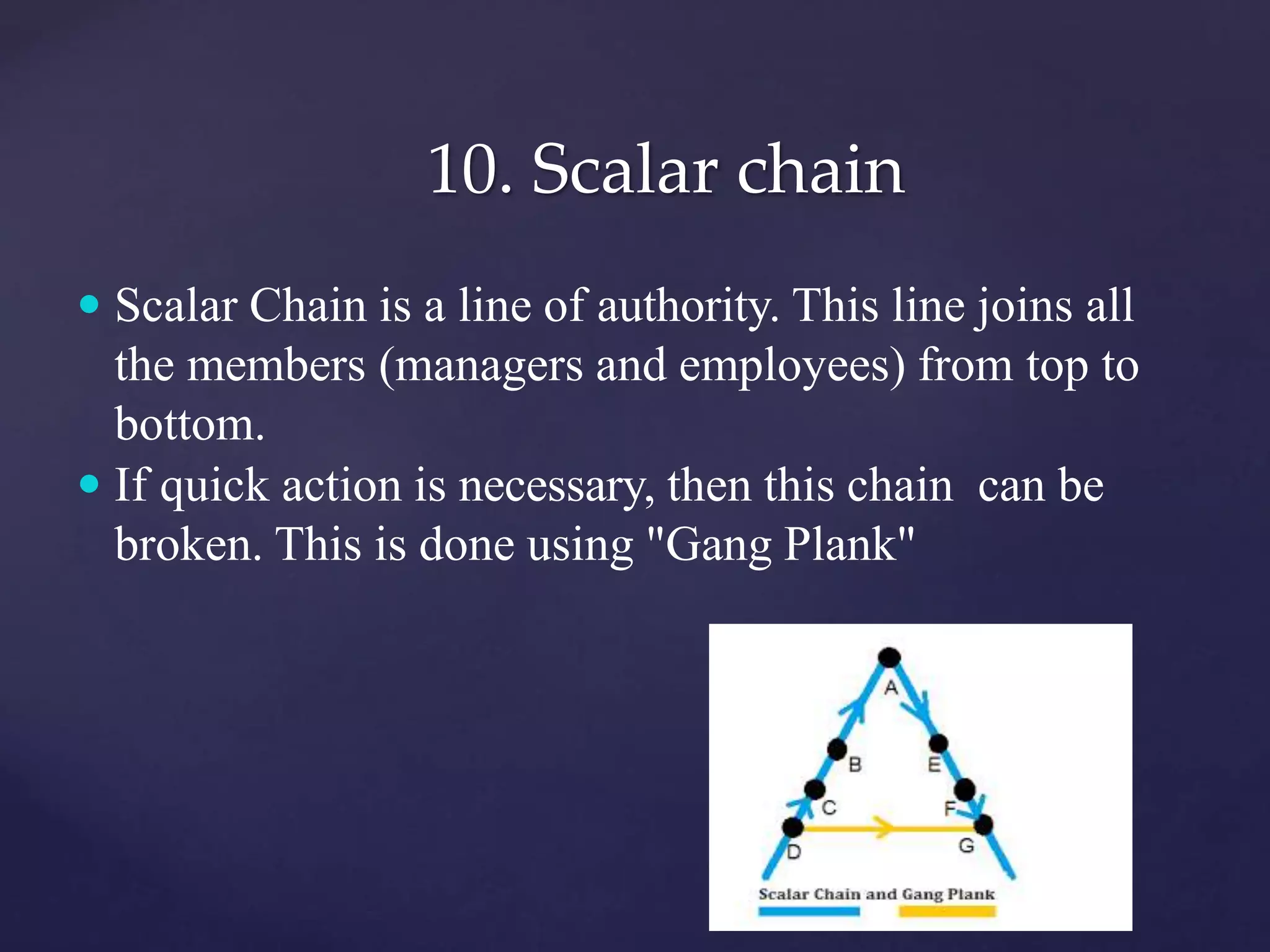
10. Scalar chain
 Scalar Chain is a line of authority. This line joins all
the members (managers and employees) from top to
bottom.
 If quick action is necessary, then this chain can be
broken. This is done using "Gang Plank"
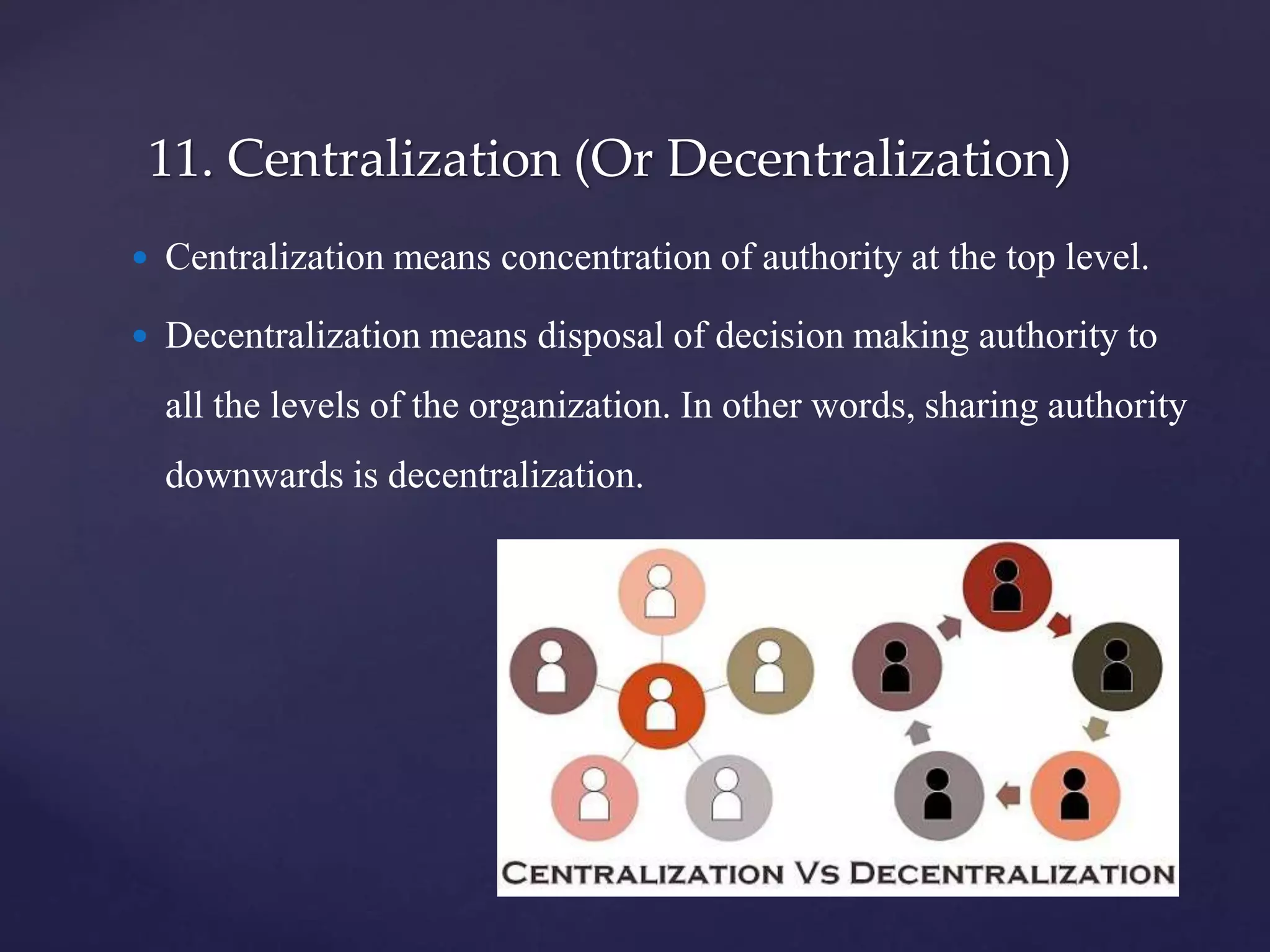
11. Centralization (Or Decentralization)
 Centralization means concentration of authority at the top level.
 Decentralization means disposal of decision making authority to
all the levels of the organization. In other words, sharing authority
downwards is decentralization.
12. Esprit de Corps
 French Phase = Team Spirit
 Team spirit is the feeling of oneness or togetherness.
 All the employee must feel that they are member of
the same family.
13. Stability of Tenure
 Employees work better if job security and career progress are
assured to them.
 Stability of job creates team spirit and a sense of belongingness
among workers which ultimately increase the quality as well as
quantity of work.
14. Initiative
 Management should encourage initiative. That is, they
should encourage the employees to suggest ideas,
experiences& new method of work.
 It helps in developing an atmosphere of trust and
understanding
 It creates eagerness to initiate actions without being
asked to do so.

Henri Fayols 14-principles-of-management

  • 1.
  • 2.
     Henry FAYOL(1841-1925) he is CALLED AS 'FATHER of Modern MANAGEMENT‘. After conducting MANY experiments AND OBSERVATIONS in ORGANIZATION, FAYOL proposed 14 principles of MANAGEMENT which ARE EXPLAINED in his FAMOUS book 'GENERAL AND INDUSTRIAL ADMINISTRATION'.  FAYOL suggested 14 principles of MANAGEMENT. These STATEMENTS serve AS A guideline for DECISION-MAKING AND MANAGEMENT ACTIONS.
  • 3.
    1. Division OfWork  work is divided into different kinds such AS TECHNICAL, FINANCIAL, COMMERCIAL, security OPERATIONS, ACCOUNTING AND MANAGERIAL  ASSIGNED Work AS per their QUALITIES AND CAPABILITIES.  Improving efficiency  Expected productivity
  • 4.
    2. Authority &Responsibility  Authority means right to take decision.  Responsibility means duty or obligation.  There should be a balance between the two i.e. they must go hand in hand.  Authority always flow downward.  Responsibility always moves in the upward direction.
  • 5.
    3. Discipline  “Disciplinemeans sincerity, obedience, respect of authority & observance of rules and regulations of the enterprise”.  This principle applies that subordinate should respect their superiors and obey their order.  Discipline is not only required on path of subordinates but also on the part of management.
  • 6.
    4. Unity OfCommand  To command means to give orders.  Each worker should have only one boss with no other conflicting lines of command.  In other words, a sub-ordinate should not receive instructions from more than one person
  • 7.
    5. Unity ofDirection  Same objective ---- one manager---- One plan  People engaged in the same kind of activities must have the same objectives in a single plan. This is essential to ensure unity and coordination in the enterprise.
  • 8.
    6. Subordination ofindividual interests to the general interests  The interests of one person should not take priority over the interests of the organization as a whole.  The individual interest should be given less importance, while the general interest should be given most importance. If not, the organization will collapse.  For example, for change of location of plant,for change of profit sharing ratio,etc.
  • 9.
    7. Remuneration  Remunerationis the price for services received. If an organization wants efficient employees and best performance, then it should have a good remuneration policy. This policy should give maximum satisfaction to both employer and employees.  It should include both financial and non-financial incentives (free education, insurance, medical & residential facilities).
  • 10.
    8 Order  Thereshould be an Order for Things and People in the organization.  "A place for everything and everything in its place."  "Right man in the right place".  There must be orderly placement of the resources such as Men and Women, Money, Materials, etc. Misplacement will lead to misuse and disorder.
  • 11.
    9. Equity  Theemployees should be treated with fairness, kindness & justice if devotion is expected of them.  Managers should be fair and impartial while dealing with the subordinates.  They should give similar treatment to people of similar position.  They should not discriminate with respect to age, caste, sex, religion, relation etc.  Equity is essential to create and maintain cordialrelations between the managers and sub-ordinate.
  • 12.
    10. Scalar chain Scalar Chain is a line of authority. This line joins all the members (managers and employees) from top to bottom.  If quick action is necessary, then this chain can be broken. This is done using "Gang Plank"
  • 13.
    11. Centralization (OrDecentralization)  Centralization means concentration of authority at the top level.  Decentralization means disposal of decision making authority to all the levels of the organization. In other words, sharing authority downwards is decentralization.
  • 14.
    12. Esprit deCorps  French Phase = Team Spirit  Team spirit is the feeling of oneness or togetherness.  All the employee must feel that they are member of the same family.
  • 15.
    13. Stability ofTenure  Employees work better if job security and career progress are assured to them.  Stability of job creates team spirit and a sense of belongingness among workers which ultimately increase the quality as well as quantity of work.
  • 16.
    14. Initiative  Managementshould encourage initiative. That is, they should encourage the employees to suggest ideas, experiences& new method of work.  It helps in developing an atmosphere of trust and understanding  It creates eagerness to initiate actions without being asked to do so.