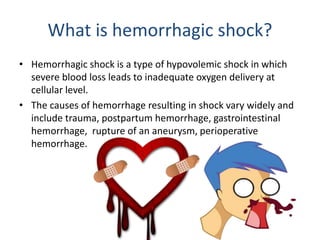
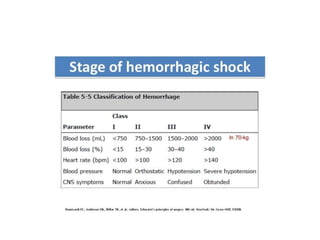
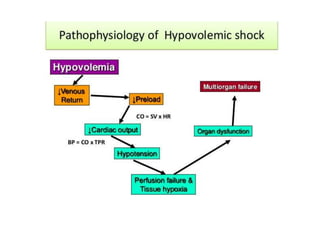
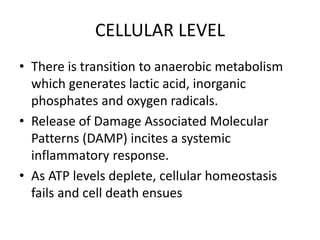
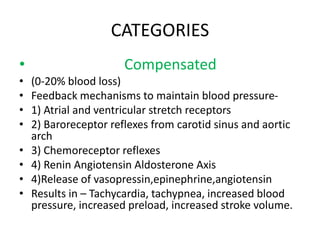
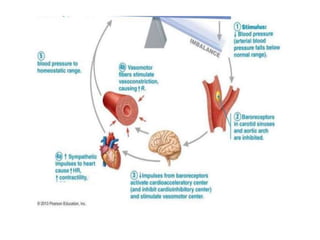
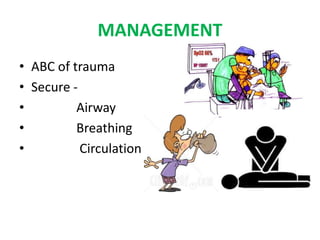
Hemorrhagic shock is a type of hypovolemic shock caused by severe blood loss that leads to inadequate oxygen delivery at the cellular level. Causes include trauma, postpartum hemorrhage, gastrointestinal bleeding, aneurysm rupture, and perioperative bleeding. As blood is lost, compensatory mechanisms maintain blood pressure initially but eventually fail as more than 20-30% of blood volume is lost, leading to lethal exsanguination with more than 30% blood loss. Management involves securing the airway, stopping bleeding, restoring volume with blood products rather than crystalloids, and monitoring endpoints like lactate and urine output to guide resuscitation.




![Basic_Shock_Presentation[1].ppt](https://cdn.slidesharecdn.com/ss_thumbnails/basicshockpresentation1-230813124447-67551acc-thumbnail.jpg?width=640&height=640&fit=bounds)


