Blood Transfusion and
Transfusion Reaction
SHAHID MURTUZA
MBBS,MD(Internal Medicine)
Department of Medicine
COMS ,Bharatpur, Nepal
BLOOD GROUP ANTIGENS AND
ANTIBODIES
The study of red blood cell (RBC) antigens and antibodies forms the
foundation of transfusion medicine.
Antigens ( carbohydrate or Protein) are assigned to a blood group
system based on the structure and similarity of the determinant
epitopes.
Antigens result in alloimmunization, the production of antibodies
directed against the blood group antigens of another individual. These
antibodies are called alloantibodies.
Antibodies directed against RBC antigens may result from “natural”
exposure, particularly to carbohydrates that mimic some blood group
antigens.
Antibodies that result from allogeneic exposure, such as transfusion or
pregnancy, are usually IgG.
Alloimmunization to leukocytes, platelets, and plasma proteins may also
ABO ANTIGENS AND ANTIBODIES
Universal
Recipients Universal Donor
•
•
In most people, A and B
antigens are secreted by
the cells and are present in
the circulation.
Nonsecretors are
susceptible to a variety of
infections (e.g., Candida
albicans, Neisseria
meningitidis,
Streptococcus
pneumoniae, Haemophilus
influenzae) because many
organisms may bind to
polysaccharides on cells.
Soluble blood group
antigens may block this
binding.
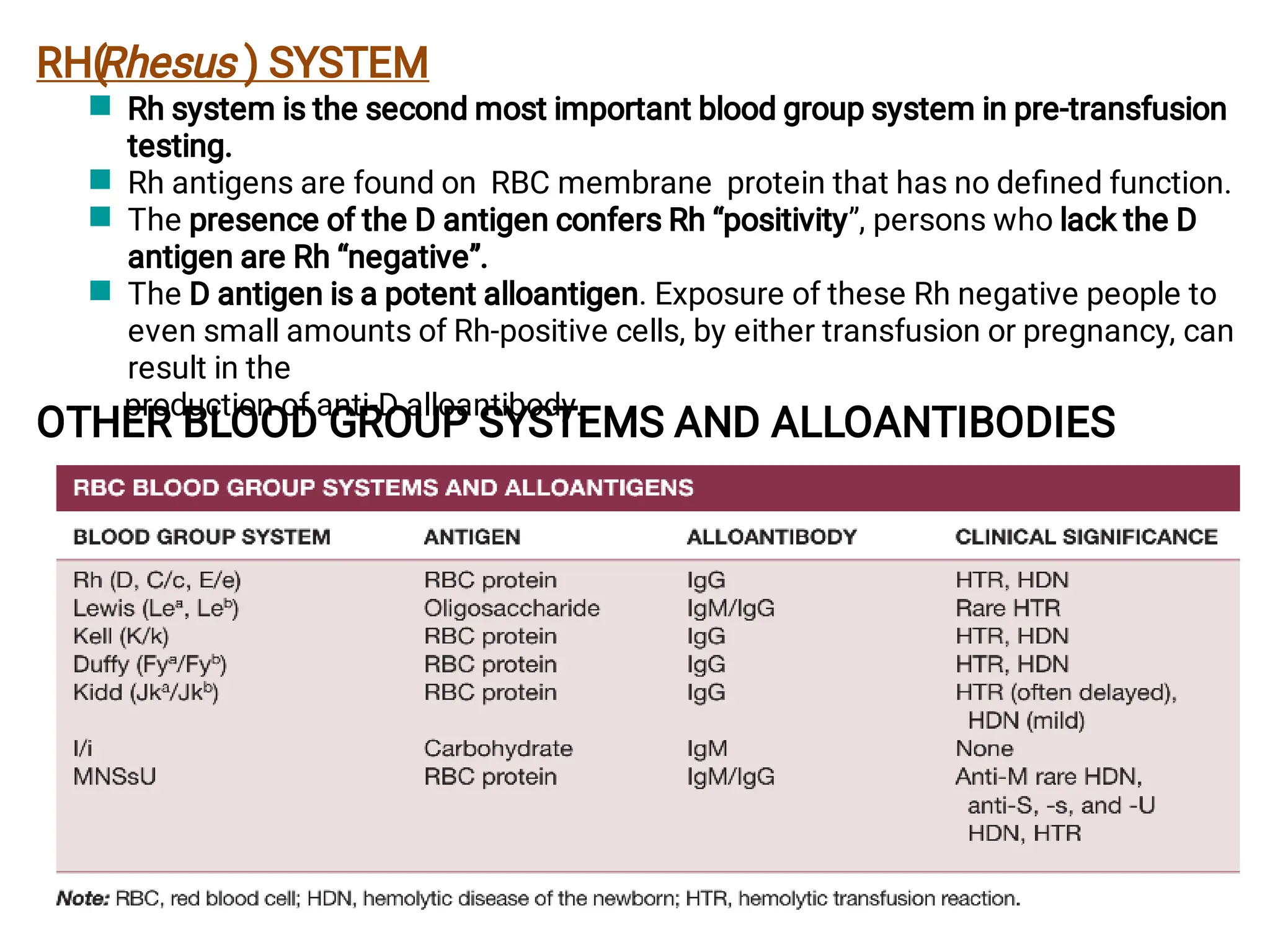
RH(
Rhesus ) SYSTEM
Rh system is the second most important blood group system in pre-transfusion
testing.
Rh antigens are found on RBC membrane protein that has no defined function.
The presence of the D antigen confers Rh “positivity”, persons who lack the D
antigen are Rh “negative”.
The D antigen is a potent alloantigen. Exposure of these Rh negative people to
even small amounts of Rh-positive cells, by either transfusion or pregnancy, can
result in the
production of anti-D alloantibody.
OTHER BLOOD GROUP SYSTEMS AND ALLOANTIBODIES
Blood components are prepared from collected whole blood (450mL) from
individual donors and processed into components: PRBCs, platelets, and
fresh-frozen plasma (FFP) or cryoprecipitate
BLOOD COMPONENTS
Whole blood is first
separated into
PRBCs and platelet-
rich plasma by slow
centrifugation.
The platelet-rich
plasma is then
centrifuged at high
speed to yield one
unit of random
donor (RD) platelets
and one unit of FFP.
Cryoprecipitate is produced by
thawing FFP to precipitate the
plasma proteins, then separated
by centrifugation.
BLOOD DONATION, PROCESSING AND STORAGE.
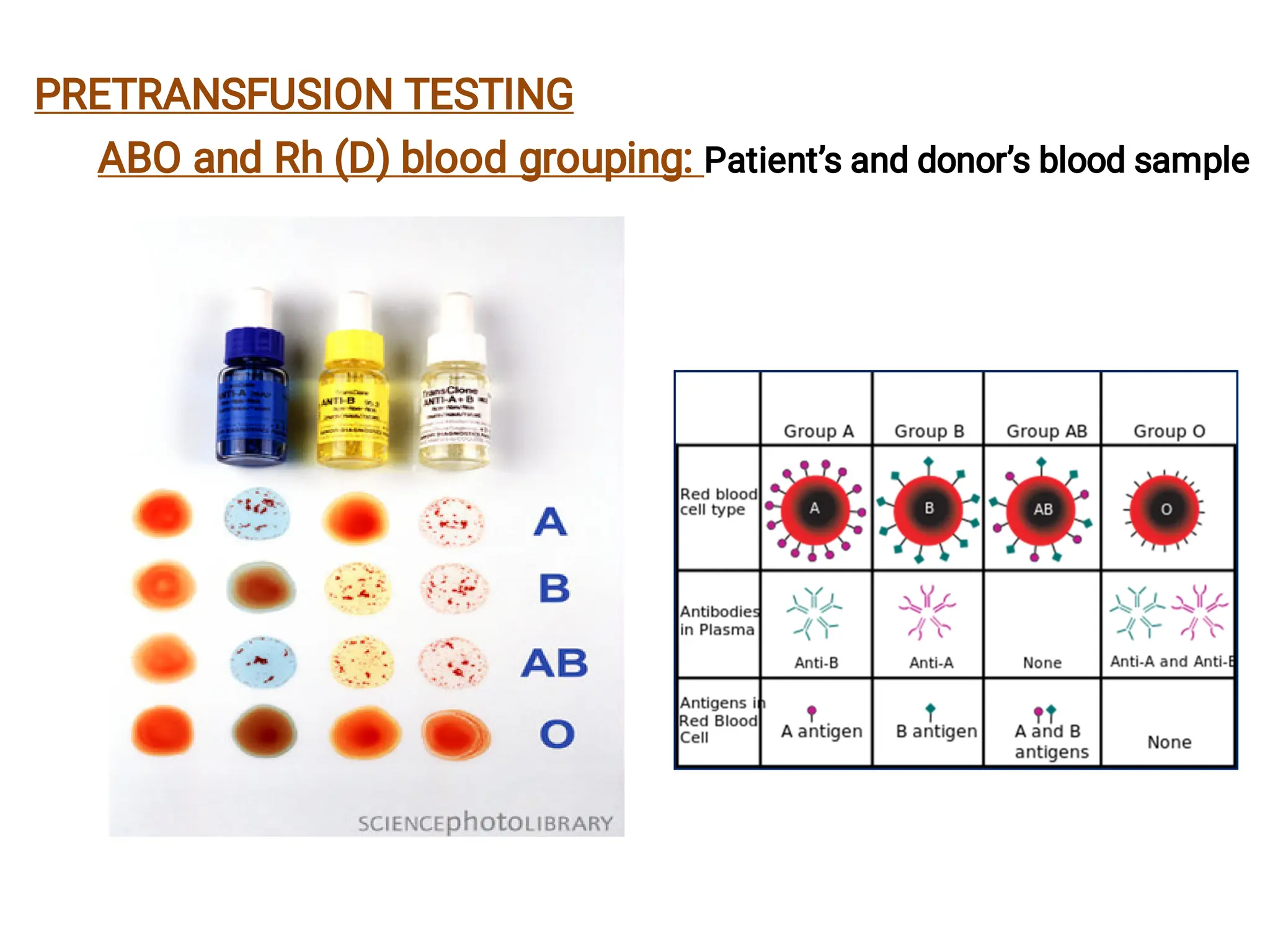
ABO and Rh (D) blood grouping: Patient’s and donor’s blood sample
PRETRANSFUSION TESTING
COMPATIBILITY TESTING OR CROSS MATCHING OF BLOOD
SAMPLE:
which is the test between the patient’s serum and the donor red cells to detect any
antibodies in the patient's serum that react with the donor red cells.
Check the compatibility label on the pack
Full cross matching takes about 45 minutes if no red cell antibodies are present, but
may
require hours if a patient has multiple antibodies.
TRANSFUSION
RED BLOOD CELL TRANSFUSION
WHOLE BLOOD



A unit of blood is collected as a donation of 450 mL ± 10% into a
citrate anticoagulant that also contains phosphate and dextrose.
Whole blood is stored at 4 ± 2° C to diminish red cells’ utilization of
adenosine triphosphate and to preserve their viability, which should
be at least 70% at the end of a shelf life of 35 days.
After 10 days of storage, all pre-donation 2,3-diphosphoglycerate
content in red cells is lost, but up to 50% is regenerated within 8
hours after transfusion.
PACKED RED BLOOD CELLS



Red cells should be refrigerated until the time of the transfusion
because
of the risk for bacterial proliferation within the pack at room
temperature.
Red cells that have been out of refrigeration for 30 minutes or longer
cannot be returned to stock.
A unit of red cells should be infused over a maximum period of 4
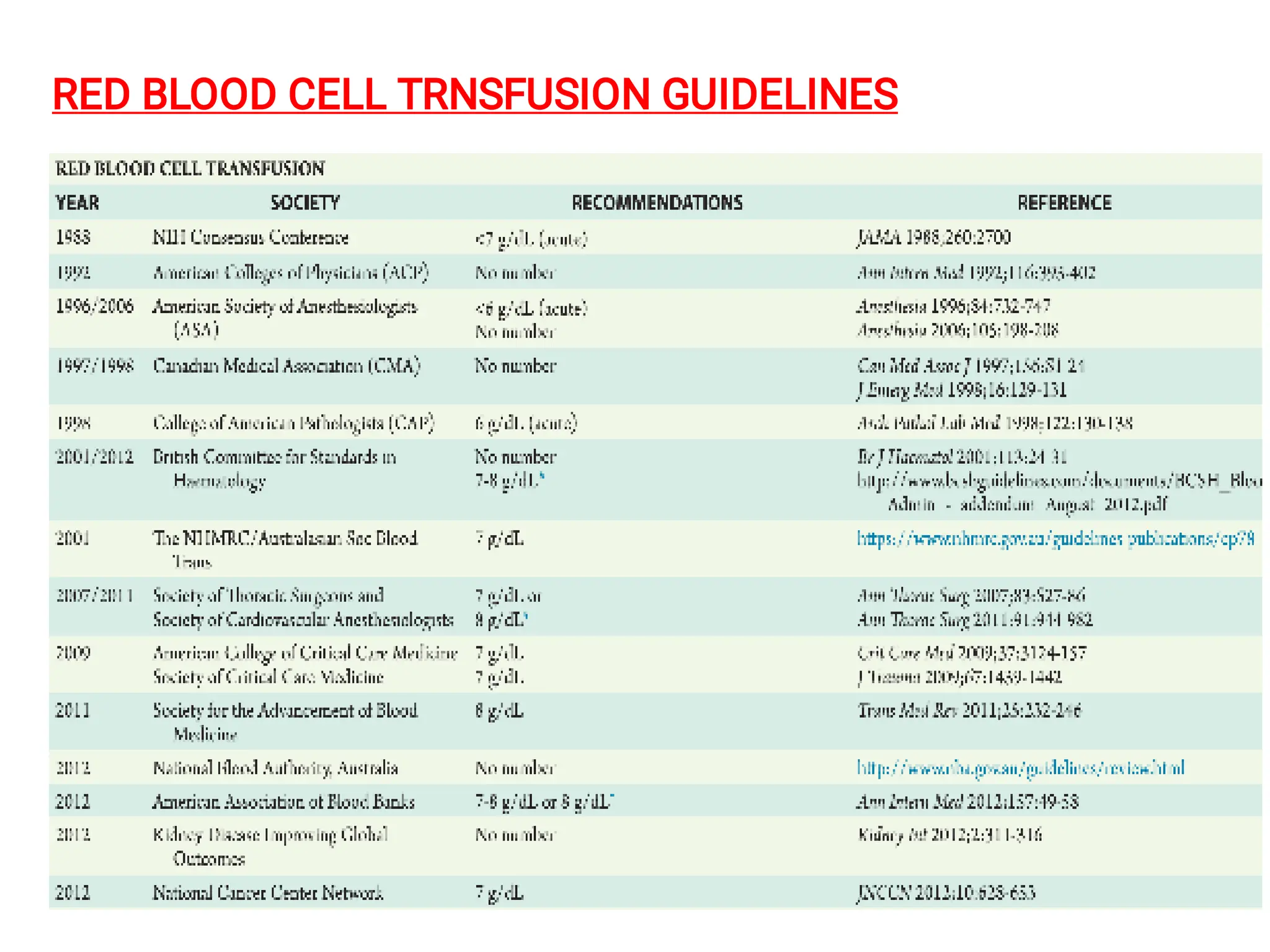
RED BLOOD CELL TRNSFUSION GUIDELINES
PLATELET TRANSFUSION
 Thrombocytopenia is a risk factor for hemorrhage, and platelet
transfusion
reduces the incidence of bleeding.
 Prospective, randomized studies indicate that a platelet transfusion
threshold of 10,000 cells/µL is as safe and effective.
Platelet transfusions are generally not indicated in patients withidiopathic
thrombocytopenic purpura or the
thrombotic microangiopathies, including
thrombotic thrombocytopenic purpura and hemolytic-uremic syndrome.
The appropriate threshold for platelet transfusion depends on the clinical situati
Threshold for providing platelet transfusions in thrombocytopenic patients.
FRESH-FROZEN PLASMA
Plasma therapy provides a source of clotting factors for patients with
inherited
or acquired coagulation disorders.
Indications for FFP include correction of coagulopathies, including
Recommended dosage is 15 to 30 mL/kg.




The rapid reversal of warfarin.
Supplying deficient plasma proteins.
Treatment of thrombotic thrombocytopenic purpura.
Patients undergoing massive hemorrhage (trauma, postpartum hemorrhage,
or
gastrointestinal bleeding) .
Principal indication for plasma transfusion
CRYOPRECIPITATE
Cryoprecipitate is a source of fibrinogen, factor VIII, and von Willebrand’s
factor (vWF).
Cryoprecipitate was originally developed for treatment of haemophilia due
to factor VIII deficiency, but is now prescribed to treat congenital or
acquired hypofibrinogenaemia, usually in the context of liver disease,
trauma, DIC, hyperfibrinolysis or massive transfusion
ADVERSE REACTIONS TO BLOOD TRANSFUSION
IMMUNE-MEDIATED REACTIONS









Acute hemolytic transfusion reactions
Delayed hemolytic and serologic transfusion reactions
Febrile nonhemolytic transfusion reaction
Allergic reactions
Anaphylactic reaction
Graft-versus-host disease
Transfusion-related acute lung injury
Posttransfusion purpura
Alloimmunization
NONIMMUNOLOGIC REACTIONS






Fluid Overload
Hypothermia
Electrolyte Toxicity
Iron Overload
Hypotensive Reactions
Immunomodulation
INFECTIOUS COMPLICATIONS
PSYCHOLOGICAL REACTION: This includes informed consent issues and patient
anxiety about compatibility and infectivity.










Hepatitis C Virus
Human Immunodeficiency Virus Type 1
Hepatitis B Virus
Other Hepatitis Viruses
West Nile Virus
Cytomegalovirus
Human T Lymphotropic Virus (HTLV)
Type I
Parvovirus B-19
Bacterial Contamination
Other Infectious Agents
ACUTE HEMOLYTIC TRANSFUSION REACTIONS
Hemolysis of donor red cells within 25 hours of transfusion by preformed
alloantibodies in the recipient’s circulation.
Mostly due to ABO-incompatible blood being transfused to a recipient with
naturally
occurring ABO alloantibodies (anti-A, anti-B, anti-A, B).
Signs and symptoms of an acute intravascular hemolytic transfusion reaction
may
develop when as little as 10 to 15 mL of ABO-incompatible blood has been
infused.
Fever, chills, sense of anxiety or uneasiness or pain at the infusion site or in
the
back or chest (or both).Most serious sequela is acute renal failure.
Treatment:
Immediate cessation of the transfusion
The risk for renal failure may be reduced by the administration of crystalloid
fluids,including sodium bicarbonate (250 to 500 mg intravenously over a 1- to
4-
hour period) , to maintain urine pH at 7.0 and by diuresis with 20% mannitol
(100mL/m2 in 30 to 60 minutes, followed by 30 mL/m2/hour for 12 hours) or
IMMUNE-MEDIATED REACTIONS
DELAYED HEMOLYTIC AND SEROLOGIC TRANSFUSION REACTIONS




Delayed hemolytic transfusion reactions (DHTRs) occur in patients previously
sensitized to RBC alloantigens who have a negative alloantibody screen due to
low antibody levels.
The alloantibody is detectable 1–2 weeks following the transfusion and
posttransfusion direct antiglobulin test (DAT) may become positive due to
circulating donor RBCs coated with antibody or complement.
Red cell destruction does occur between 3 days and 2 weeks after the
transfusion.
No specific therapy is usually required, Prednisone (1 to 2 mg/kg/day) is indicated
for more severe reactions.
FEBRILE NONHEMOLYTIC TRANSFUSION REACTION



A febrile transfusion reaction is defined as a rise in temperature greater than 1°C,
which may be accompanied by chills, rigor, or both.
May be due to a reaction of HLA or leukocytespecifc antigens on transfused
lymphocytes, granulocytes, or platelets in the donor unit with antibodies in
previously alloimmunized recipients.
Prestorage leukocyte reduction is recommended to prevent reactions resulting
from the accumulation of cytokines during storage
ALLERGIC REACTIONS


Urticarial reactions are related to plasma proteins found in transfused
components.
Treatment:
Discontinue the transfusion
Diphenhydramine (25 to 50 mg intravenously).
Severe allergic or urticarial reactions may require treatment with
corticosteroids.
ANAPHYLACTIC REACTION


Symptoms and signs include difficulty breathing, coughing, nausea and
vomiting, hypotension, bronchospasm, loss of consciousness, respiratory arrest,
and shock.
Treatment includes stopping the transfusion, maintaining vascular access, and
administering epinephrine (0.5–1.0 mL of 1:1000 dilution subcutaneously).
Glucocorticoids may be required in severe cases.
GRAFT-VERSUS-HOST DISEASE




Transfusion-associated graft-versus-host disease(TA-GVHD) results from the
transfusion of immunologically competent lymphocytes into an immunologically
incompetent host.
Clinical manifestations appear at 8–10 days, and death occurs at 3–4 weeks
posttransfusion.
Manifested clinically by the development of fever, a characteristic cutaneous
eruption, diarrhea, and liver function abnormalities.
TA-GVHD is highly resistant to treatment with immunosuppressive therapies,
TRANSFUSION-RELATED ACUTE LUNG INJURY




Transfusion-related acute lung injury (TRLI)is an acute respiratory distress
syndrome that occurs within 6 hours after transfusion .
Results from the transfusion of donor plasma that contains high-titer anti-HLA
antibodies that bind recipient leukocytes.
Characterized by dyspnea and hypoxia secondary to noncardiogenic pulmonary
edema.
Treatment is supportive, and patients usually recover without sequelae.
POSTTRANSFUSION PURPURA
ALLOIMMUNIZATION
This reaction presents as thrombocytopenia 7–10 days after platelet transfusion.
The delayed thrombocytopenia is due to the production of antibodies that react to
both donor and recipient platelets.
Treatment with intravenous immunoglobulin may neutralize the effector antibodies,
or plasmapheresis can be used to remove the antibodies
A recipient may become alloimmunized to a number of antigens on cellular blood
elements and plasma proteins.
Alloimmunization to antigens on leukocytes and platelets can result in
refractoriness to platelet transfusions.
NONIMMUNOLOGIC REACTIONS
FLUID OVERLOAD
Blood components are excellent volume expanders, and transfusion may quickly
lead to
volume overload.
Diuretic can minimize this problem.
HYPOTHERMIA
Refrigerated (4°C) or frozen (–18°C or below) blood components can result in
hypothermia when rapidly infused.
ELECTROLYTE TOXICITY
RBC leakage during storage increases the concentration of potassium in the unit.
Citrate, commonly used to anticoagulate blood components, chelates calcium
and thereby inhibits the coagulation cascade.
IRON OVERLOAD
Each unit of RBCs contains 200–250 mg of iron. Symptoms and signs of iron
overload affecting endocrine, hepatic, and cardiac function are common after 100
units
of RBCs have been transfused.
HYPOTENSIVE REACTIONS



Transient hypotension may be noted among transfused patients who take
angiotensin-converting enzyme (ACE) inhibitors.
Because blood products contain bradykinin that is normally degraded by ACE,
patients on ACE inhibitors may have increased bradykinin levels that cause
hypotension.
The blood pressure typically returns to normal without intervention.
INFECTIOUS COMPLICATIONS--Transmission of Blood
Pathogens
Thank you

Blood Transfusion . Nursing Education pdf

  • 1.
    Blood Transfusion and TransfusionReaction SHAHID MURTUZA MBBS,MD(Internal Medicine) Department of Medicine COMS ,Bharatpur, Nepal
  • 2.
    BLOOD GROUP ANTIGENSAND ANTIBODIES The study of red blood cell (RBC) antigens and antibodies forms the foundation of transfusion medicine. Antigens ( carbohydrate or Protein) are assigned to a blood group system based on the structure and similarity of the determinant epitopes. Antigens result in alloimmunization, the production of antibodies directed against the blood group antigens of another individual. These antibodies are called alloantibodies. Antibodies directed against RBC antigens may result from “natural” exposure, particularly to carbohydrates that mimic some blood group antigens. Antibodies that result from allogeneic exposure, such as transfusion or pregnancy, are usually IgG. Alloimmunization to leukocytes, platelets, and plasma proteins may also
  • 3.
    ABO ANTIGENS ANDANTIBODIES Universal Recipients Universal Donor • • In most people, A and B antigens are secreted by the cells and are present in the circulation. Nonsecretors are susceptible to a variety of infections (e.g., Candida albicans, Neisseria meningitidis, Streptococcus pneumoniae, Haemophilus influenzae) because many organisms may bind to polysaccharides on cells. Soluble blood group antigens may block this binding.
  • 4.
    RH( Rhesus ) SYSTEM Rhsystem is the second most important blood group system in pre-transfusion testing. Rh antigens are found on RBC membrane protein that has no defined function. The presence of the D antigen confers Rh “positivity”, persons who lack the D antigen are Rh “negative”. The D antigen is a potent alloantigen. Exposure of these Rh negative people to even small amounts of Rh-positive cells, by either transfusion or pregnancy, can result in the production of anti-D alloantibody. OTHER BLOOD GROUP SYSTEMS AND ALLOANTIBODIES
  • 5.
    Blood components areprepared from collected whole blood (450mL) from individual donors and processed into components: PRBCs, platelets, and fresh-frozen plasma (FFP) or cryoprecipitate BLOOD COMPONENTS
  • 6.
    Whole blood isfirst separated into PRBCs and platelet- rich plasma by slow centrifugation. The platelet-rich plasma is then centrifuged at high speed to yield one unit of random donor (RD) platelets and one unit of FFP. Cryoprecipitate is produced by thawing FFP to precipitate the plasma proteins, then separated by centrifugation. BLOOD DONATION, PROCESSING AND STORAGE.
  • 7.
    ABO and Rh(D) blood grouping: Patient’s and donor’s blood sample PRETRANSFUSION TESTING
  • 8.
    COMPATIBILITY TESTING ORCROSS MATCHING OF BLOOD SAMPLE: which is the test between the patient’s serum and the donor red cells to detect any antibodies in the patient's serum that react with the donor red cells. Check the compatibility label on the pack Full cross matching takes about 45 minutes if no red cell antibodies are present, but may require hours if a patient has multiple antibodies.
  • 9.
    TRANSFUSION RED BLOOD CELLTRANSFUSION WHOLE BLOOD    A unit of blood is collected as a donation of 450 mL ± 10% into a citrate anticoagulant that also contains phosphate and dextrose. Whole blood is stored at 4 ± 2° C to diminish red cells’ utilization of adenosine triphosphate and to preserve their viability, which should be at least 70% at the end of a shelf life of 35 days. After 10 days of storage, all pre-donation 2,3-diphosphoglycerate content in red cells is lost, but up to 50% is regenerated within 8 hours after transfusion. PACKED RED BLOOD CELLS    Red cells should be refrigerated until the time of the transfusion because of the risk for bacterial proliferation within the pack at room temperature. Red cells that have been out of refrigeration for 30 minutes or longer cannot be returned to stock. A unit of red cells should be infused over a maximum period of 4
  • 10.
    RED BLOOD CELLTRNSFUSION GUIDELINES
  • 11.
    PLATELET TRANSFUSION  Thrombocytopeniais a risk factor for hemorrhage, and platelet transfusion reduces the incidence of bleeding.  Prospective, randomized studies indicate that a platelet transfusion threshold of 10,000 cells/µL is as safe and effective. Platelet transfusions are generally not indicated in patients withidiopathic thrombocytopenic purpura or the thrombotic microangiopathies, including thrombotic thrombocytopenic purpura and hemolytic-uremic syndrome.
  • 12.
    The appropriate thresholdfor platelet transfusion depends on the clinical situati Threshold for providing platelet transfusions in thrombocytopenic patients.
  • 13.
    FRESH-FROZEN PLASMA Plasma therapyprovides a source of clotting factors for patients with inherited or acquired coagulation disorders. Indications for FFP include correction of coagulopathies, including Recommended dosage is 15 to 30 mL/kg.     The rapid reversal of warfarin. Supplying deficient plasma proteins. Treatment of thrombotic thrombocytopenic purpura. Patients undergoing massive hemorrhage (trauma, postpartum hemorrhage, or gastrointestinal bleeding) .
  • 14.
    Principal indication forplasma transfusion
  • 15.
    CRYOPRECIPITATE Cryoprecipitate is asource of fibrinogen, factor VIII, and von Willebrand’s factor (vWF). Cryoprecipitate was originally developed for treatment of haemophilia due to factor VIII deficiency, but is now prescribed to treat congenital or acquired hypofibrinogenaemia, usually in the context of liver disease, trauma, DIC, hyperfibrinolysis or massive transfusion
  • 16.
    ADVERSE REACTIONS TOBLOOD TRANSFUSION IMMUNE-MEDIATED REACTIONS          Acute hemolytic transfusion reactions Delayed hemolytic and serologic transfusion reactions Febrile nonhemolytic transfusion reaction Allergic reactions Anaphylactic reaction Graft-versus-host disease Transfusion-related acute lung injury Posttransfusion purpura Alloimmunization NONIMMUNOLOGIC REACTIONS       Fluid Overload Hypothermia Electrolyte Toxicity Iron Overload Hypotensive Reactions Immunomodulation INFECTIOUS COMPLICATIONS PSYCHOLOGICAL REACTION: This includes informed consent issues and patient anxiety about compatibility and infectivity.           Hepatitis C Virus Human Immunodeficiency Virus Type 1 Hepatitis B Virus Other Hepatitis Viruses West Nile Virus Cytomegalovirus Human T Lymphotropic Virus (HTLV) Type I Parvovirus B-19 Bacterial Contamination Other Infectious Agents
  • 17.
    ACUTE HEMOLYTIC TRANSFUSIONREACTIONS Hemolysis of donor red cells within 25 hours of transfusion by preformed alloantibodies in the recipient’s circulation. Mostly due to ABO-incompatible blood being transfused to a recipient with naturally occurring ABO alloantibodies (anti-A, anti-B, anti-A, B). Signs and symptoms of an acute intravascular hemolytic transfusion reaction may develop when as little as 10 to 15 mL of ABO-incompatible blood has been infused. Fever, chills, sense of anxiety or uneasiness or pain at the infusion site or in the back or chest (or both).Most serious sequela is acute renal failure. Treatment: Immediate cessation of the transfusion The risk for renal failure may be reduced by the administration of crystalloid fluids,including sodium bicarbonate (250 to 500 mg intravenously over a 1- to 4- hour period) , to maintain urine pH at 7.0 and by diuresis with 20% mannitol (100mL/m2 in 30 to 60 minutes, followed by 30 mL/m2/hour for 12 hours) or IMMUNE-MEDIATED REACTIONS
  • 18.
    DELAYED HEMOLYTIC ANDSEROLOGIC TRANSFUSION REACTIONS     Delayed hemolytic transfusion reactions (DHTRs) occur in patients previously sensitized to RBC alloantigens who have a negative alloantibody screen due to low antibody levels. The alloantibody is detectable 1–2 weeks following the transfusion and posttransfusion direct antiglobulin test (DAT) may become positive due to circulating donor RBCs coated with antibody or complement. Red cell destruction does occur between 3 days and 2 weeks after the transfusion. No specific therapy is usually required, Prednisone (1 to 2 mg/kg/day) is indicated for more severe reactions. FEBRILE NONHEMOLYTIC TRANSFUSION REACTION    A febrile transfusion reaction is defined as a rise in temperature greater than 1°C, which may be accompanied by chills, rigor, or both. May be due to a reaction of HLA or leukocytespecifc antigens on transfused lymphocytes, granulocytes, or platelets in the donor unit with antibodies in previously alloimmunized recipients. Prestorage leukocyte reduction is recommended to prevent reactions resulting from the accumulation of cytokines during storage
  • 19.
    ALLERGIC REACTIONS   Urticarial reactionsare related to plasma proteins found in transfused components. Treatment: Discontinue the transfusion Diphenhydramine (25 to 50 mg intravenously). Severe allergic or urticarial reactions may require treatment with corticosteroids. ANAPHYLACTIC REACTION   Symptoms and signs include difficulty breathing, coughing, nausea and vomiting, hypotension, bronchospasm, loss of consciousness, respiratory arrest, and shock. Treatment includes stopping the transfusion, maintaining vascular access, and administering epinephrine (0.5–1.0 mL of 1:1000 dilution subcutaneously). Glucocorticoids may be required in severe cases.
  • 20.
    GRAFT-VERSUS-HOST DISEASE     Transfusion-associated graft-versus-hostdisease(TA-GVHD) results from the transfusion of immunologically competent lymphocytes into an immunologically incompetent host. Clinical manifestations appear at 8–10 days, and death occurs at 3–4 weeks posttransfusion. Manifested clinically by the development of fever, a characteristic cutaneous eruption, diarrhea, and liver function abnormalities. TA-GVHD is highly resistant to treatment with immunosuppressive therapies, TRANSFUSION-RELATED ACUTE LUNG INJURY     Transfusion-related acute lung injury (TRLI)is an acute respiratory distress syndrome that occurs within 6 hours after transfusion . Results from the transfusion of donor plasma that contains high-titer anti-HLA antibodies that bind recipient leukocytes. Characterized by dyspnea and hypoxia secondary to noncardiogenic pulmonary edema. Treatment is supportive, and patients usually recover without sequelae.
  • 21.
    POSTTRANSFUSION PURPURA ALLOIMMUNIZATION This reactionpresents as thrombocytopenia 7–10 days after platelet transfusion. The delayed thrombocytopenia is due to the production of antibodies that react to both donor and recipient platelets. Treatment with intravenous immunoglobulin may neutralize the effector antibodies, or plasmapheresis can be used to remove the antibodies A recipient may become alloimmunized to a number of antigens on cellular blood elements and plasma proteins. Alloimmunization to antigens on leukocytes and platelets can result in refractoriness to platelet transfusions.
  • 22.
    NONIMMUNOLOGIC REACTIONS FLUID OVERLOAD Bloodcomponents are excellent volume expanders, and transfusion may quickly lead to volume overload. Diuretic can minimize this problem. HYPOTHERMIA Refrigerated (4°C) or frozen (–18°C or below) blood components can result in hypothermia when rapidly infused. ELECTROLYTE TOXICITY RBC leakage during storage increases the concentration of potassium in the unit. Citrate, commonly used to anticoagulate blood components, chelates calcium and thereby inhibits the coagulation cascade. IRON OVERLOAD Each unit of RBCs contains 200–250 mg of iron. Symptoms and signs of iron overload affecting endocrine, hepatic, and cardiac function are common after 100 units of RBCs have been transfused.
  • 23.
    HYPOTENSIVE REACTIONS    Transient hypotensionmay be noted among transfused patients who take angiotensin-converting enzyme (ACE) inhibitors. Because blood products contain bradykinin that is normally degraded by ACE, patients on ACE inhibitors may have increased bradykinin levels that cause hypotension. The blood pressure typically returns to normal without intervention.
  • 24.
  • 25.