Development of CVS-II
To MBBS first year
Dr. Laxman Khanal
Assistant professor
Department of anatomy, BPKIHS, Dharan
24-04-2017
Right ventricle (T)
left ventricle (T)
Left/right atrium (T)
Right atrium (S)
Rt/Lt ventricle (S)
Coronary sinus
Oblique V of left atrium
B-V sulcus
primary interventricular
foramen
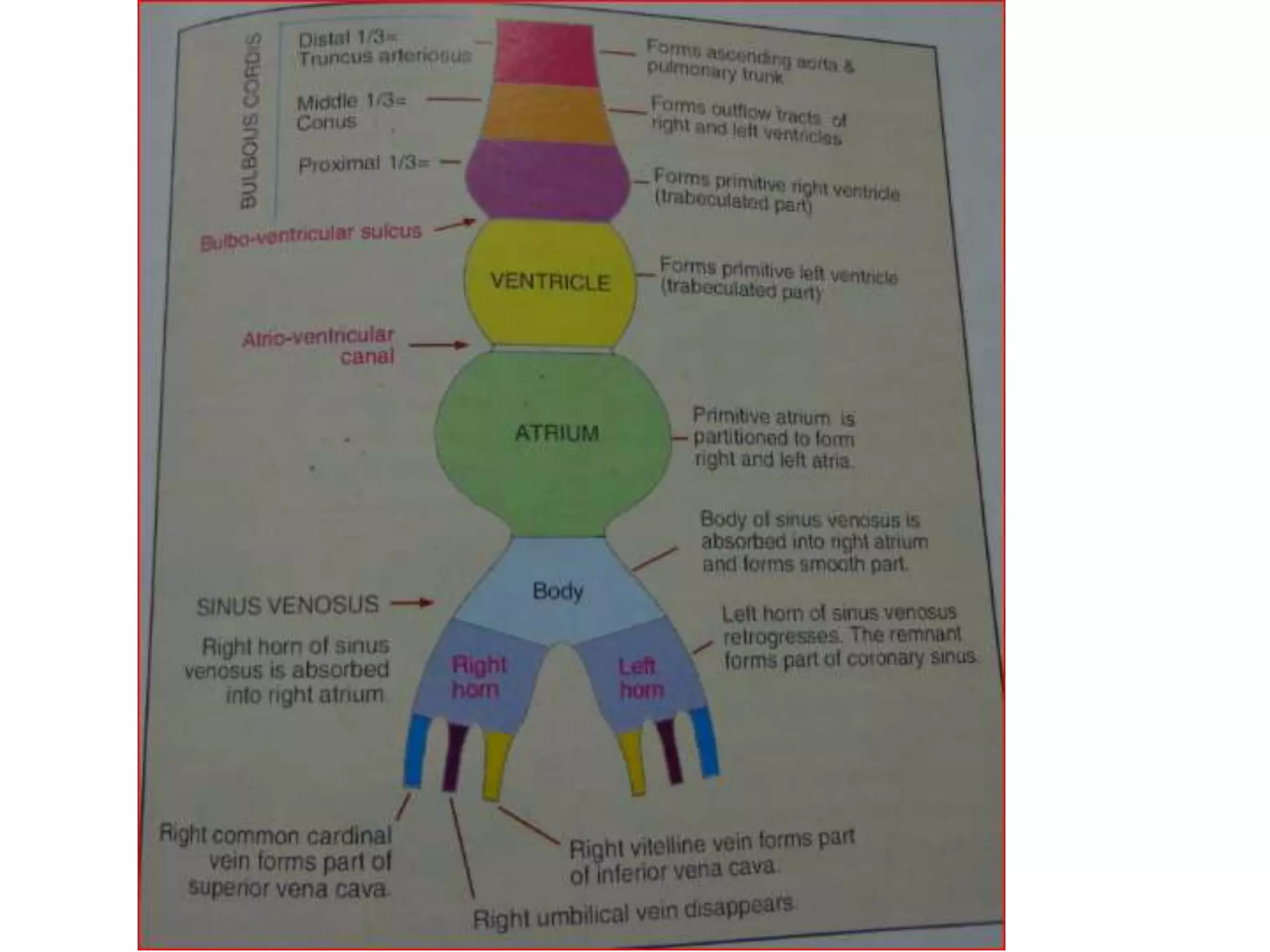
Fate of heart tube • Ascending aorta
• Pulmonary trunk
???
???
???
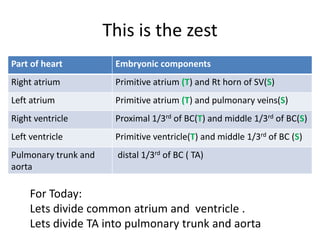
Part of heart Embryonic components
Right atrium Primitive atrium (T) and Rt horn of SV(S)
Left atrium Primitive atrium (T) and pulmonary veins(S)
Right ventricle Proximal 1/3rd of BC(T) and middle 1/3rd of BC(S)
Left ventricle Primitive ventricle(T) and middle 1/3rd of BC (S)
Pulmonary trunk and
aorta
distal 1/3rd of BC ( TA)
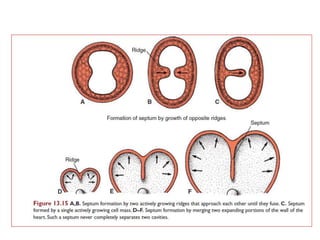
How Septation occurs ?
1. With Endocardial cushion
2. Without Endocardial cushion
Septation of common atrium
• Septation of common atrium is completed by
2 septa-
1. Septum primum
2. Septum secundum
• Normal path of blood flow in developing
heart should be kept in mind .
Rt atrium to Lt atrium due to pressure gradient.
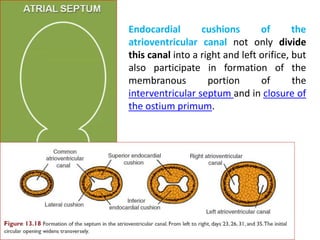
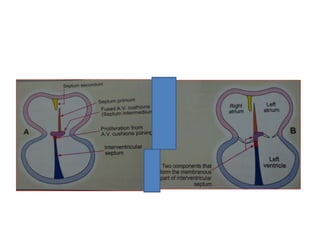
Endocardial cushions of the A-V canal not only divide this
canal into a right and left orifice, but also participate in
formation of the membranous portion of the
interventricular septum and in closure of the ostium
primum.
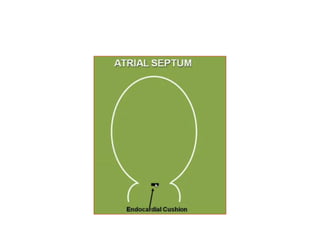
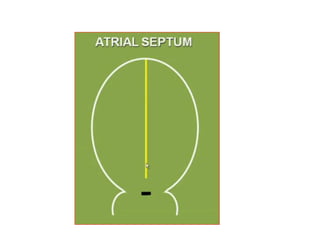
Division of primitive atrium
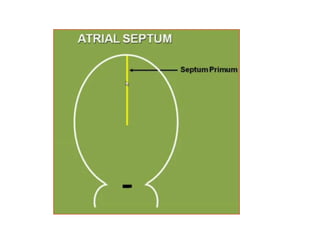
Septum primum
Sickle shaped crest
arising from roof of
common atrium into
the lumen.
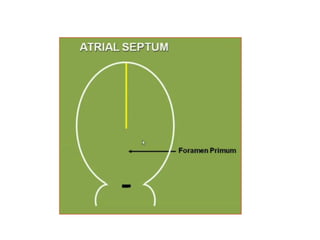
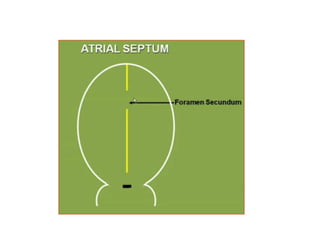
Ostium primum
Ostium secundum
Cell death in upper part of septum primum before its
closing produce ostium secundum.
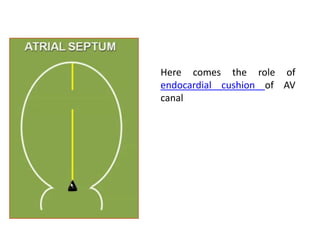
Here comes the role of endocardial cushion of AV canal
to close the ostium primum.
Incorporation of right horn of sinus venosus in lumen
of right atrium.
Rt Lt
Septum primum- flexible
Septum secundum- rigid
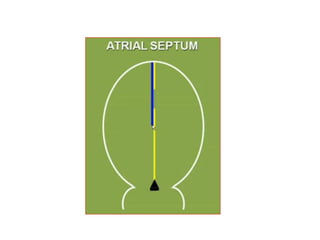
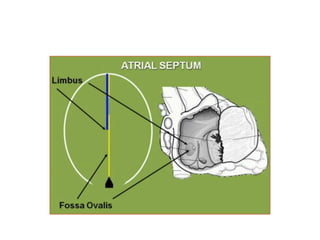
Septum secundum:
Crescent shaped fold just
right of septum primum.
Left valve of the sinus venosus and septum spurium
fuse with the right side of septum secundum.
What is the fate of right valve of SV????
Valve of IVC and coronary sinus
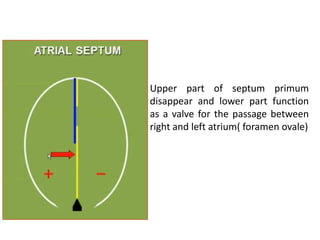
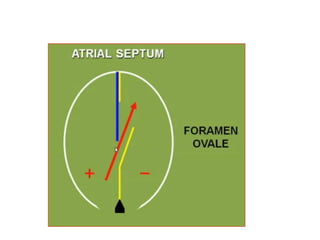
Upper part of SP disappears and lower part function as a
valve for the passage between Rt. and Lt. atrium (foramen
ovale)
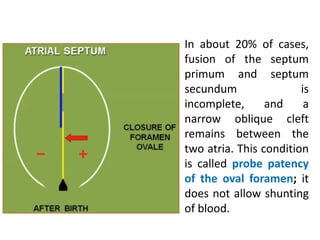
In about 20% of cases,
fusion of the SP and SC
is incomplete, and a
narrow oblique cleft
remains between the
two atria. This condition
is called probe patency
of the oval foramen.
It does not allow
shunting of blood.
After birth:
Due to reversal of pressure gradient foramen ovale closes.
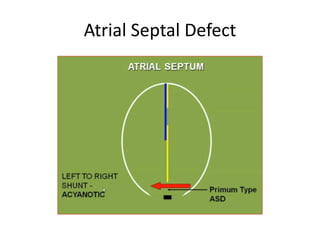
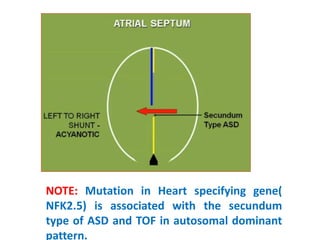
Atrial Septal Defect
Primum type ASD: Acyanotic
Secundum type ASD: Acyanotic
Mutation in Heart specifying gene (NKX2.5) is associated
with the secundum type of ASD.
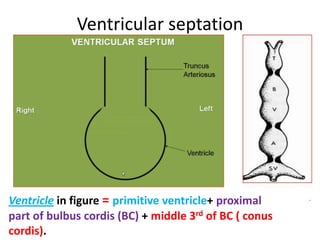
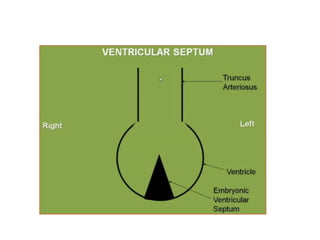
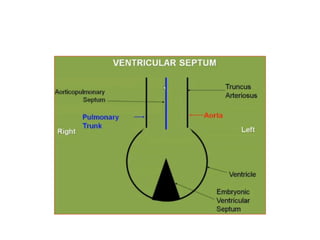
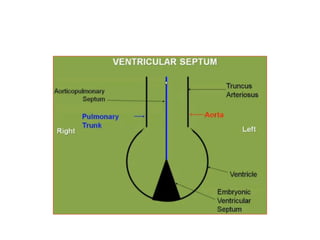
Ventricular Septation
Ventricle in figure = primitive ventricle+ proximal part of BC
+ conus cordis.
Conus
Muscular IV septum
IV foramen
Conus septum
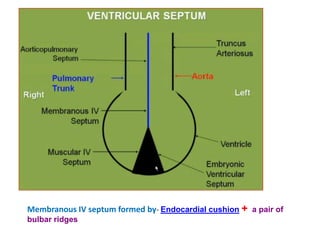
Membranous IV septum
Membranous IV septum formed by- Endocardial cushion
+ a pair of bulbar ridges
Conus septum
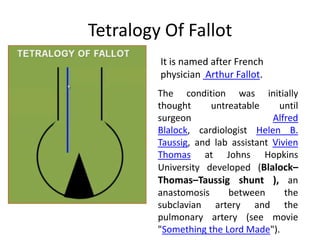
Tetralogy Of Fallot
The condition was thought untreatable until surgeon Alfred Blalock,
cardiologist Helen B. Taussig, and lab assistant Vivien Thomas at Johns
Hopkins University developed (Blalock–Thomas–Taussig shunt ),
an anastomosis between the subclavian artery and the pulmonary
artery (see movie "Something the Lord Made").
(source: Wikipedia)
It is named after French
physician Arthur Fallot.
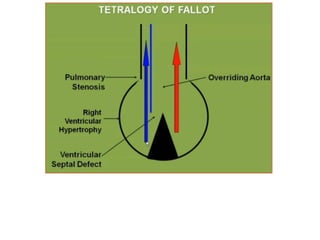
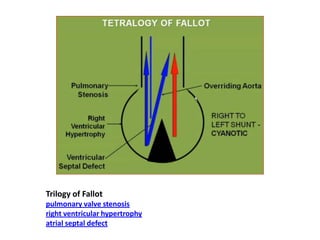
1. Pulomary stenosis
2. Overriding of aorta
3. VSD
4. Rt ventricular hypertrophy
TOF: Cyanotic heart disease
Blalock-Thomas-Taussig Shunt
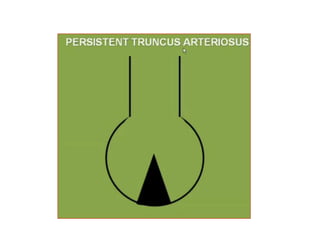
Persistent Truncus Arteriosus:
No division of TA
VSD
Cyanotic disorder
Septation of TA and conus cordis
• Two truncal swelling grow in opposite direction creating
spiral septum dividing TA into aortic and pulmonary
channel.
• Two conal swelling meet each other and form Conus
septum which divide Conus cordis into outflow tract for
Rt and Lt ventricle.
• Conus septum is also attached with spiral septum and
membranous part of IV septum.
• Neural crest cell also contribute to form these swellings.
Conal swelling ≈ bulbar swelling
P trunk Aorta
Spiral septum
What, if the septum is no more
spiral !!
Transposition of
great vessels
Conclusion
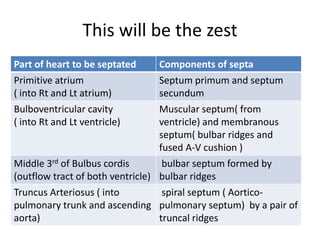
Part of heart to be separated Components of septa
Primitive atrium
(into Rt and Lt atrium)
Septum primum and septum
secundum
Bulboventricular cavity
(into Rt and Lt ventricle)
Muscular septum
Conal (Bulbar) septum
Membranous septum
Conus (outflow tract for both
ventricles)
conal septum (bulbar septum)
formed by conal ridges
Truncus Arteriosus (into
pulmonary trunk and ascending
aorta)
spiral septum (Aortico-
pulmonary septum) by a pair of
truncal ridges

Heart development 2

  • 1.
    Development of CVS-II ToMBBS first year Dr. Laxman Khanal Assistant professor Department of anatomy, BPKIHS, Dharan 24-04-2017
  • 2.
    Right ventricle (T) leftventricle (T) Left/right atrium (T) Right atrium (S) Rt/Lt ventricle (S) Coronary sinus Oblique V of left atrium B-V sulcus primary interventricular foramen Fate of heart tube • Ascending aorta • Pulmonary trunk ??? ??? ???
  • 3.
    Part of heartEmbryonic components Right atrium Primitive atrium (T) and Rt horn of SV(S) Left atrium Primitive atrium (T) and pulmonary veins(S) Right ventricle Proximal 1/3rd of BC(T) and middle 1/3rd of BC(S) Left ventricle Primitive ventricle(T) and middle 1/3rd of BC (S) Pulmonary trunk and aorta distal 1/3rd of BC ( TA)
  • 4.
    How Septation occurs? 1. With Endocardial cushion 2. Without Endocardial cushion
  • 5.
    Septation of commonatrium • Septation of common atrium is completed by 2 septa- 1. Septum primum 2. Septum secundum • Normal path of blood flow in developing heart should be kept in mind . Rt atrium to Lt atrium due to pressure gradient.
  • 6.
    Endocardial cushions ofthe A-V canal not only divide this canal into a right and left orifice, but also participate in formation of the membranous portion of the interventricular septum and in closure of the ostium primum.
  • 7.
  • 8.
    Septum primum Sickle shapedcrest arising from roof of common atrium into the lumen. Ostium primum
  • 9.
    Ostium secundum Cell deathin upper part of septum primum before its closing produce ostium secundum.
  • 10.
    Here comes therole of endocardial cushion of AV canal to close the ostium primum.
  • 11.
    Incorporation of righthorn of sinus venosus in lumen of right atrium.
  • 12.
    Rt Lt Septum primum-flexible Septum secundum- rigid Septum secundum: Crescent shaped fold just right of septum primum.
  • 13.
    Left valve ofthe sinus venosus and septum spurium fuse with the right side of septum secundum. What is the fate of right valve of SV???? Valve of IVC and coronary sinus
  • 14.
    Upper part ofSP disappears and lower part function as a valve for the passage between Rt. and Lt. atrium (foramen ovale)
  • 15.
    In about 20%of cases, fusion of the SP and SC is incomplete, and a narrow oblique cleft remains between the two atria. This condition is called probe patency of the oval foramen. It does not allow shunting of blood. After birth: Due to reversal of pressure gradient foramen ovale closes.
  • 17.
    Atrial Septal Defect Primumtype ASD: Acyanotic
  • 18.
    Secundum type ASD:Acyanotic Mutation in Heart specifying gene (NKX2.5) is associated with the secundum type of ASD.
  • 19.
    Ventricular Septation Ventricle infigure = primitive ventricle+ proximal part of BC + conus cordis.
  • 20.
    Conus Muscular IV septum IVforamen Conus septum Membranous IV septum
  • 22.
    Membranous IV septumformed by- Endocardial cushion + a pair of bulbar ridges Conus septum
  • 23.
    Tetralogy Of Fallot Thecondition was thought untreatable until surgeon Alfred Blalock, cardiologist Helen B. Taussig, and lab assistant Vivien Thomas at Johns Hopkins University developed (Blalock–Thomas–Taussig shunt ), an anastomosis between the subclavian artery and the pulmonary artery (see movie "Something the Lord Made"). (source: Wikipedia) It is named after French physician Arthur Fallot.
  • 24.
    1. Pulomary stenosis 2.Overriding of aorta 3. VSD 4. Rt ventricular hypertrophy
  • 25.
  • 26.
  • 27.
    Persistent Truncus Arteriosus: Nodivision of TA VSD Cyanotic disorder
  • 28.
    Septation of TAand conus cordis • Two truncal swelling grow in opposite direction creating spiral septum dividing TA into aortic and pulmonary channel. • Two conal swelling meet each other and form Conus septum which divide Conus cordis into outflow tract for Rt and Lt ventricle. • Conus septum is also attached with spiral septum and membranous part of IV septum. • Neural crest cell also contribute to form these swellings. Conal swelling ≈ bulbar swelling
  • 29.
  • 30.
    What, if theseptum is no more spiral !! Transposition of great vessels
  • 31.
    Conclusion Part of heartto be separated Components of septa Primitive atrium (into Rt and Lt atrium) Septum primum and septum secundum Bulboventricular cavity (into Rt and Lt ventricle) Muscular septum Conal (Bulbar) septum Membranous septum Conus (outflow tract for both ventricles) conal septum (bulbar septum) formed by conal ridges Truncus Arteriosus (into pulmonary trunk and ascending aorta) spiral septum (Aortico- pulmonary septum) by a pair of truncal ridges