Devised and Designed by sr.Terese; Presented by : srteresesic@gmail.com 
Healthy Habits
teresekochuvilayil@gmail.comPersonal hygiene 
•Bathe 
•Brushing 
•Dressing
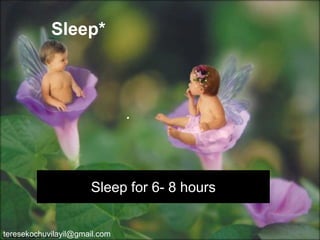
Sleep* 
. 
teresekochuvilayil@gmail.com 
Sleep for 6-8 hours
Usually people say on attitudes and feelings 
Use hand towel while sneezing, coughing and crying 
What are you going to do about it?
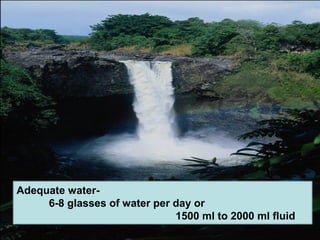
Adequate water- 
6-8 glasses of water per day or 
1500 ml to 2000 ml fluid
CONTROL YOUR EMOTIONS
Do not give stress 
and do not be stressed 
by the situations
Punctuality 
Daily routine 
Work 
Food 
Study 
Spiritual activities 
Exercise
EXERCISE Morning and Evening Exercise 
•walking 
•Warming up 
•Swimming 
•Jogging 
•Cycling 
•Save electric energy and avoid electric energy For exercise
Ignite 
your Talents … 
to use it as 
tomorrow’s 
Resource….
Military officers, Construction superintends, Corporate executives, University professors, Shop stewards, Industrial enterprises, Business houses, Managers of Shops and Stores, Restaurants, Hotels, Resorts, Hospitals, Cure and care centres and Banks- Men and Women Young and Old
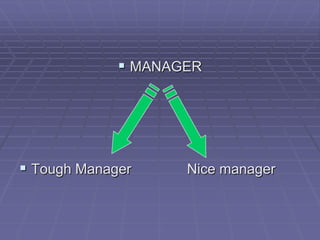
MANAGER 
Tough ManagerNice manager
“Tough” ManagersWhose organizations win while their people lost
Their superiors regard them as good managers and 
Subordinates thought other wise
What kind of manager is he? 
Autocratic manager –he keep on the top of the situation, hard nosed, Realistic, Profit minded 
You can hear pride in his voice and interest in results
“Nice” Managers 
Whosepeopleseemedtowin 
whiletheirorganizationslost
Peoplewhoreportedtothemsaytheyweregoodmanagers
He is Democratic manager, Participative, Supportive, Considerate, and Humanistic 
Can hear pride in their voice and their interest in people.
Most managers in the world were 
primarily interested 
either in results 
or 
in people. 
Managers who are interested in results are labeled autocratic 
& 
Managers who are interested in people are labeled democratic
But the tough autocrat & Nice democrat were only partially effective
Effective manager is one who manages themselves & 
the people they work with , 
so that 
both the organization and the people 
profit from their presence.
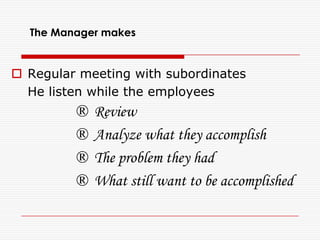
Regular meeting with subordinates 
He listen while the employees 
® Review 
® Analyze what they accomplish 
® The problem they had 
® What still want to be accomplished 
The Manager makes
–Then… 
–Develop plans and strategies for the next week
In the whole process 
He makes sure that 
people feel good about themselves 
People who feel good about themselves produce good results 
Because…
So 
Think about yourself 
When do you work best? 
Is it when you feel good about yourself? 
Or when you don’t? 
Naturally you get more done when 
you are feeling good about yourself. Helping people to feel good about themselves is a key to getting more done
Productivity is both quality and quantity. 
The best way to achieve 
both of these results 
is through people.
3 Steps Towards 
EFFECTIVE MANAGER 
Goal Setting 
Praising 
Rebuke
Inmostorganizationswhenyouaskpeoplewhattheydo 
andthenasktheirboss, 
alltoooftenyougettwodifferentlists.
In many organizations 
any relationship between 
what one thought his job responsibilities were 
& 
what his/her boss thought were purely coincidental
Most managers know what they want their people to do. 
But they just don’t bother to tell their people in a way they would understand 
They assume they should know
Once the boss and the subordinate 
agree on what need to be done; 
They have to fix the goalRecorded it on a sheet of paper. 
Any one should be able to read it 
in one or two minutes.
The Boss keeps a copy & the Employee keeps a copy. So everything is clear and both can periodically check the progress.
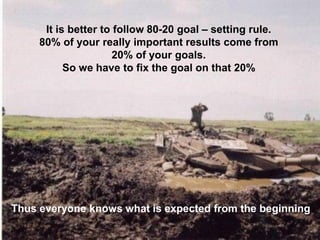
It is better to follow 80-20 goal –setting rule. 
80% of your really important results come from 
20% of your goals. 
So we have to fix the goal on that 20% 
Thuseveryoneknowswhatisexpectedfromthebeginning
Once we know what our job is, 
the manager always makes sure 
he knows what good performance is. 
Here performance standards are clearAnd the boss shows what he expects
If an employ identify a problem, he has to find out its solution.
Dry your cloth under sun light 
Not in Drier 
Rain water harvesting 
USE NATURAL 
RESOURCES 
but 
NEVER EXPLOIT
G O A L S E T T I N G 
Agree on your goals 
See what good behaviour looks like 
Write out each of your goals on a single sheet of paper 
Read and re-read each goal, which require only a short time. 
Take a minute every day to look at your performance 
See whether or not your behaviour matches your goal.
TAKE A MINUTE 
LOOK AT YOUR GOALS 
LOOK AT YOUR PERFORMANCE 
SEE IF YOUR BEHAVIOUR MATCHES YOUR GOALS
Healthy life
Healthy life

Healthy life

  • 1.
    Devised and Designedby sr.Terese; Presented by : srteresesic@gmail.com Healthy Habits
  • 3.
  • 4.
  • 5.
    Usually people sayon attitudes and feelings Use hand towel while sneezing, coughing and crying What are you going to do about it?
  • 7.
    Adequate water- 6-8glasses of water per day or 1500 ml to 2000 ml fluid
  • 8.
  • 9.
    Do not givestress and do not be stressed by the situations
  • 10.
    Punctuality Daily routine Work Food Study Spiritual activities Exercise
  • 11.
    EXERCISE Morning andEvening Exercise •walking •Warming up •Swimming •Jogging •Cycling •Save electric energy and avoid electric energy For exercise
  • 12.
    Ignite your Talents… to use it as tomorrow’s Resource….
  • 13.
    Military officers, Constructionsuperintends, Corporate executives, University professors, Shop stewards, Industrial enterprises, Business houses, Managers of Shops and Stores, Restaurants, Hotels, Resorts, Hospitals, Cure and care centres and Banks- Men and Women Young and Old
  • 14.
  • 15.
    “Tough” ManagersWhose organizationswin while their people lost
  • 16.
    Their superiors regardthem as good managers and Subordinates thought other wise
  • 17.
    What kind ofmanager is he? Autocratic manager –he keep on the top of the situation, hard nosed, Realistic, Profit minded You can hear pride in his voice and interest in results
  • 18.
    “Nice” Managers Whosepeopleseemedtowin whiletheirorganizationslost
  • 19.
  • 20.
    He is Democraticmanager, Participative, Supportive, Considerate, and Humanistic Can hear pride in their voice and their interest in people.
  • 21.
    Most managers inthe world were primarily interested either in results or in people. Managers who are interested in results are labeled autocratic & Managers who are interested in people are labeled democratic
  • 22.
    But the toughautocrat & Nice democrat were only partially effective
  • 23.
    Effective manager isone who manages themselves & the people they work with , so that both the organization and the people profit from their presence.
  • 24.
    Regular meeting withsubordinates He listen while the employees ® Review ® Analyze what they accomplish ® The problem they had ® What still want to be accomplished The Manager makes
  • 25.
    –Then… –Develop plansand strategies for the next week
  • 26.
    In the wholeprocess He makes sure that people feel good about themselves People who feel good about themselves produce good results Because…
  • 27.
    So Think aboutyourself When do you work best? Is it when you feel good about yourself? Or when you don’t? Naturally you get more done when you are feeling good about yourself. Helping people to feel good about themselves is a key to getting more done
  • 28.
    Productivity is bothquality and quantity. The best way to achieve both of these results is through people.
  • 29.
    3 Steps Towards EFFECTIVE MANAGER Goal Setting Praising Rebuke
  • 31.
  • 32.
    In many organizations any relationship between what one thought his job responsibilities were & what his/her boss thought were purely coincidental
  • 33.
    Most managers knowwhat they want their people to do. But they just don’t bother to tell their people in a way they would understand They assume they should know
  • 36.
    Once the bossand the subordinate agree on what need to be done; They have to fix the goalRecorded it on a sheet of paper. Any one should be able to read it in one or two minutes.
  • 37.
    The Boss keepsa copy & the Employee keeps a copy. So everything is clear and both can periodically check the progress.
  • 40.
    It is betterto follow 80-20 goal –setting rule. 80% of your really important results come from 20% of your goals. So we have to fix the goal on that 20% Thuseveryoneknowswhatisexpectedfromthebeginning
  • 41.
    Once we knowwhat our job is, the manager always makes sure he knows what good performance is. Here performance standards are clearAnd the boss shows what he expects
  • 42.
    If an employidentify a problem, he has to find out its solution.
  • 43.
    Dry your clothunder sun light Not in Drier Rain water harvesting USE NATURAL RESOURCES but NEVER EXPLOIT
  • 44.
    G O AL S E T T I N G Agree on your goals See what good behaviour looks like Write out each of your goals on a single sheet of paper Read and re-read each goal, which require only a short time. Take a minute every day to look at your performance See whether or not your behaviour matches your goal.
  • 45.
    TAKE A MINUTE LOOK AT YOUR GOALS LOOK AT YOUR PERFORMANCE SEE IF YOUR BEHAVIOUR MATCHES YOUR GOALS