1HEALTHCARE  SECTOR
INTRODUCTIONThe art of Health Care in India can be traced back nearly 3500 yearsEarly days of Indian history the Ayurvedic tradition of medicine has been practicedHealthcare is one of India’s largest sectors, in terms of the revenue and employment2
INTRODUCTIONDuring the 1990s, Indian healthcare grew annual rate of 16%.
Today the total value of the sector is more than $34 billion or roughly 6% of GDP
By 2012, India’s healthcare sector is projected to grow to nearly $40 billion3
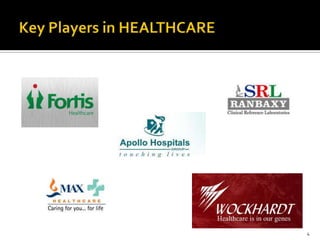
Key Players in HEALTHCARE4
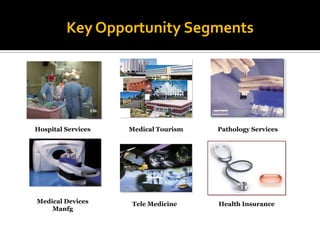
Key Opportunity SegmentsHospital ServicesMedical TourismPathology ServicesMedical Devices ManfgTele MedicineHealth Insurance
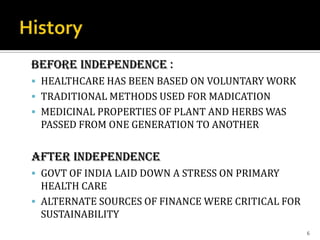
HistoryBEFORE INDEPENDENCE :HEALTHCARE HAS BEEN BASED ON VOLUNTARY WORKTRADITIONAL METHODS USED FOR MADICATIONMEDICINAL PROPERTIES OF PLANT AND HERBS WAS PASSED FROM ONE GENERATION TO ANOTHERAFTER INDEPENDENCEGOVT OF INDIA LAID DOWN A STRESS ON PRIMARY HEALTH CARE
ALTERNATE SOURCES OF FINANCE WERE CRITICAL FOR SUSTAINABILITY 6
ENTRY OF PRIVATE SECTOR EARLIER GOVERNMENT ON ITS OWN WOULD NOT BE ABLE TO PROVIDE MORE FACILITIES FOR HEALTH CAREENTRY OF PRIVATE SECTOR TO REDUCE THE GAP BETWEEN THE SUPPLY AND DEMAND7
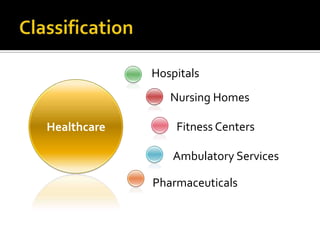
HospitalsHealthcareNursing HomesFitness CentersAmbulatory ServicesPharmaceuticalsClassification
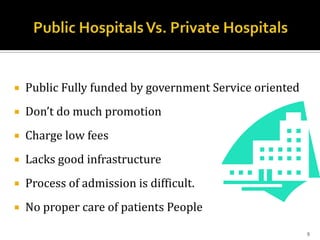
Public Hospitals Vs. Private HospitalsPublic Fully funded by government Service orientedDon’t do much promotion Charge low feesLacks good infrastructureProcess of admission is difficult.No proper care of patients People 9
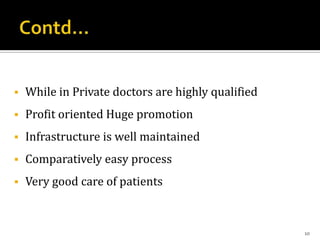
Contd…While in Private doctors are highly qualified
Profit oriented Huge promotion
Infrastructure is well maintained
Comparatively easy process
Very good care of patients10
Growing population and economy One driver of growth in the healthcare sector is India’s booming population
currently 1.2 billion and increasing at a 2% annual rate
By 2030, India is expected to surpass China as the world’s most populous nation11
Expanding middle class India traditionally has been a rural, agrarian economy. Nearly three quartersof the population still lives in rural areas, and as of 2004, anestimated 27.5% of Indians were living below the national poverty line.Some 300 million people in India live on less than a dollar a day, and morethan 50% of all children are malnourished.12
Rise of diseaseRise in both infectious and chronic degenerative     diseases. While ailments such as poliomyelitis, leprosy, and neonatal tetanus will soon be eliminated,some communicable diseases once thought to be under control such asdengue fever, viral hepatitis, tuberculosis, malaria, and pneumonia, have returned in force or have developed a stubborn resistance to drugs.13
PharmaceuticalsThe Indian pharmaceutical market is one of the fastest growing markets in the worldSales increased by 17.5% to $7.3 billion in 2009Many factors, including a strong economy and the country’s growing healthcare needs have contributed to the accelerated growth14

Healthcare sector India

  • 1.
  • 2.
    INTRODUCTIONThe art ofHealth Care in India can be traced back nearly 3500 yearsEarly days of Indian history the Ayurvedic tradition of medicine has been practicedHealthcare is one of India’s largest sectors, in terms of the revenue and employment2
  • 3.
    INTRODUCTIONDuring the 1990s,Indian healthcare grew annual rate of 16%.
  • 4.
    Today the totalvalue of the sector is more than $34 billion or roughly 6% of GDP
  • 5.
    By 2012, India’shealthcare sector is projected to grow to nearly $40 billion3
  • 6.
    Key Players inHEALTHCARE4
  • 7.
    Key Opportunity SegmentsHospitalServicesMedical TourismPathology ServicesMedical Devices ManfgTele MedicineHealth Insurance
  • 8.
    HistoryBEFORE INDEPENDENCE :HEALTHCAREHAS BEEN BASED ON VOLUNTARY WORKTRADITIONAL METHODS USED FOR MADICATIONMEDICINAL PROPERTIES OF PLANT AND HERBS WAS PASSED FROM ONE GENERATION TO ANOTHERAFTER INDEPENDENCEGOVT OF INDIA LAID DOWN A STRESS ON PRIMARY HEALTH CARE
  • 9.
    ALTERNATE SOURCES OFFINANCE WERE CRITICAL FOR SUSTAINABILITY 6
  • 10.
    ENTRY OF PRIVATESECTOR EARLIER GOVERNMENT ON ITS OWN WOULD NOT BE ABLE TO PROVIDE MORE FACILITIES FOR HEALTH CAREENTRY OF PRIVATE SECTOR TO REDUCE THE GAP BETWEEN THE SUPPLY AND DEMAND7
  • 11.
  • 12.
    Public Hospitals Vs.Private HospitalsPublic Fully funded by government Service orientedDon’t do much promotion Charge low feesLacks good infrastructureProcess of admission is difficult.No proper care of patients People 9
  • 13.
    Contd…While in Privatedoctors are highly qualified
  • 14.
  • 15.
  • 16.
  • 17.
    Very good careof patients10
  • 18.
    Growing population andeconomy One driver of growth in the healthcare sector is India’s booming population
  • 19.
    currently 1.2 billionand increasing at a 2% annual rate
  • 20.
    By 2030, Indiais expected to surpass China as the world’s most populous nation11
  • 21.
    Expanding middle classIndia traditionally has been a rural, agrarian economy. Nearly three quartersof the population still lives in rural areas, and as of 2004, anestimated 27.5% of Indians were living below the national poverty line.Some 300 million people in India live on less than a dollar a day, and morethan 50% of all children are malnourished.12
  • 22.
    Rise of diseaseRisein both infectious and chronic degenerative diseases. While ailments such as poliomyelitis, leprosy, and neonatal tetanus will soon be eliminated,some communicable diseases once thought to be under control such asdengue fever, viral hepatitis, tuberculosis, malaria, and pneumonia, have returned in force or have developed a stubborn resistance to drugs.13
  • 23.
    PharmaceuticalsThe Indian pharmaceuticalmarket is one of the fastest growing markets in the worldSales increased by 17.5% to $7.3 billion in 2009Many factors, including a strong economy and the country’s growing healthcare needs have contributed to the accelerated growth14