HEALTH CARE REFORMS
Health care reform is a general rubric used for discussing major health policy creation or changes—for the most part, governmental policy that affects health care delivery in a given place.
OBJECTIVESBroaden the population that receives health care coverage through either public sector insurance programs or private sector insurance companies
Expand the array of health care providers
Improve the access to health care specialists
Improve the quality of health care
Give more care to citizens
Decrease the cost of health careMAJOR GOALGetting better/ more health care protection for as many people as possible at the lowest possible cost.
EVOLUTION OF HEALTH CARE CHANGES
MEDICINE IN ANTIQUITY.DAWN OF SCIENTIFIC MEDICINEMODERN MEDICINE
MEDICINE IN ANTIQUITY.In ancient times, health and illness were interpreted in a cosmological and anthropological perspective. Medicine was dominated by magical and religious beliefs which were an integral part of ancient cultures and civilizations.
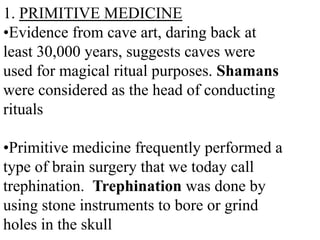
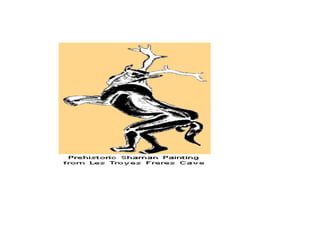
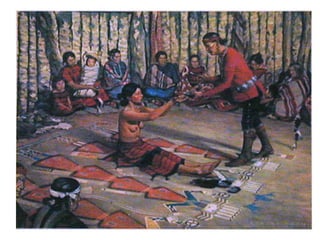
1. PRIMITIVE MEDICINEEvidence from cave art, daring back at least 30,000 years, suggests caves were used for magical ritual purposes. Shamans were considered as the head of conducting rituals
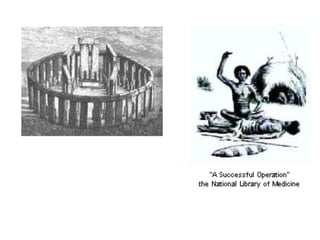
Primitive medicine frequently performed a type of brain surgery that we today call trephination.  Trephination was done by using stone instruments to bore or grind holes in the skull
2. TRIO INDIAN MEDICINE
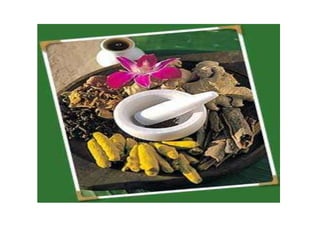
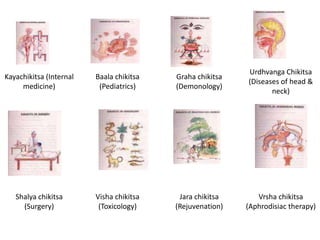
AYURVEDA: The practicals fields of Ayurveda are divided into eight sections or branches. These sections are: internal medicinal, surgery, cranial organo medicine, pediatrics, toxicology, rejuvenating remedy, aprodisiac remedy and spiritual healing. These eight sections are called "AstangaAyurveda.
                                                                                                                                                  
SIDDHA MEDICINE. The Siddha medicine is a form of south Indian Tamil traditional medicine and part of the trio Indian medicines - ayurveda, siddha and unani. This system of medicine was popular in ancient India. The system is believed to be developed by the 18 siddhas in the south called siddhar.
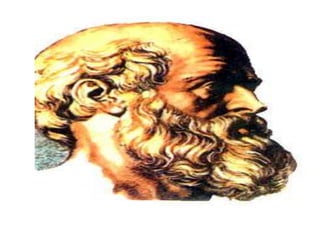
UNANI MEDICINE. Unani-tibb or Unani Medicine its origin to Greece. It was the Greek philosopher - Physician Hippocrates (460-377 BC) who freed Medicine from the realm of susperstition and magic, and gave it the status of Science. The theoretical framework of Unani Medicine is based on the teachings of Hippocrates
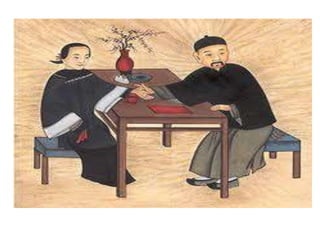
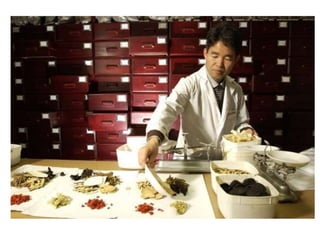
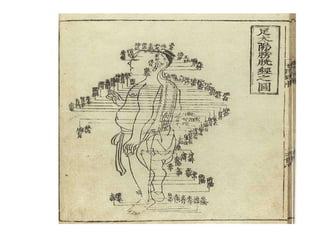
Chinese medicine
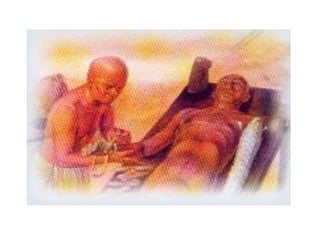
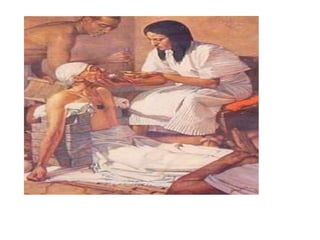
Egyptian medicine.
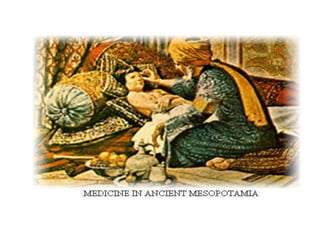
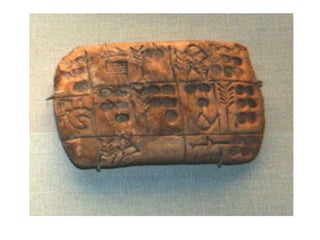
Mesopotamian medicine
Greek medicineThe Greeks taught men to think in terms of why and how. The medical historian, Douglas Guthrie has reminded us of the legend that Hygiea was worshipped as the goddess of health and Panacea as the goddess of medicine. Panacea and Hygiea gave rise to dynasties of healers (curative medicine) and hygienists (preventive medicine) with different philosophies. Greatest physician in Greek medicine was Hippocrates who is often called as the father of medicine.
Roman medicineII. DAWN OF SCIENTIFIC MEDICINE
Revival of medicine
Sanitary awakening
Rise of public health
Germ theory of disease
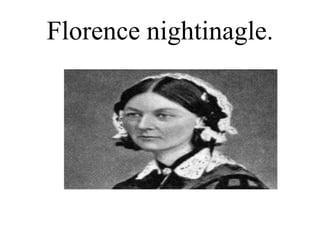
Birth of preventive medicineFlorence nightinagle.
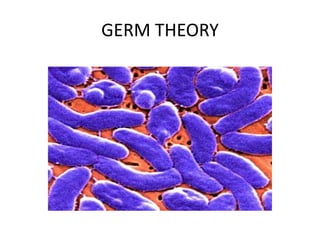
GERM THEORY
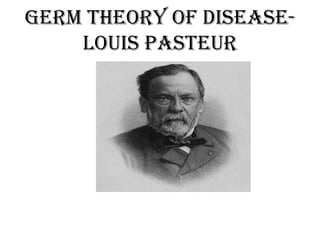
GERM THEORY OF DISEASE-LOUIS PASTEUR
III. MODERN MEDICINECurative medicine
Preventive medicine
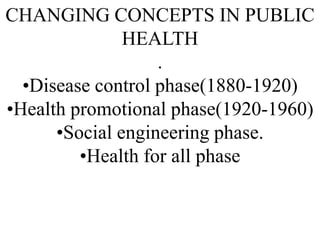
Social medicineCHANGING CONCEPTS IN PUBLIC HEALTH.Disease control phase(1880-1920)
Health promotional phase(1920-1960)
Social engineering phase.
Health for all phaseHEALTH CARE REFORMS IN INDIA
1. COMPREHENSIVE CARE
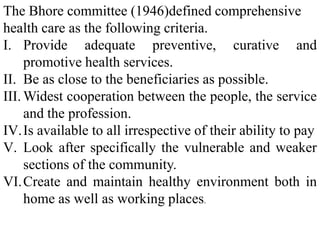
The Bhore committee (1946)defined comprehensive health care as the following criteria. Provide adequate preventive, curative and promotive health services.Be as close to the beneficiaries as possible.Widest cooperation between the people, the service and the profession. Is available to all irrespective of their ability to payLook after specifically the vulnerable and weaker sections of the community.Create and maintain healthy environment both in home as well as working places.
2. BASIC HEALTH SERVICES.
A basic health service is understood to be a network of coordinated, peripheral and intermediate health units capable of performing effectively a selected group of functions essential to the health of an area and assuring the availability of competent personnel and auxiliary personnel to perform these functions.
3. PRIMARY HEALTH CARE
Before Alma Ata primary health care was regarded as synonymous with basic health services, first contact care, easily accessible care , services provided by generalist…
The Alma-Ata international conference gave primary health care a wider meaning Primary health care is essential health care made universally accessible to individuals and acceptable to them , through their full participation and at a cost the community and country can afford. Principles of Primary health care.Equitable distribution.
Community participation.
Inter sectoral coordination
Appropriate technologyHEALTH FOR ALLIn 1977, it was decided in the World Health Assembly to launch a movement known as health for all by the year 2000. The fundamental principle of HFA strategy is equity that is an equal health status for people and countries ensured by an equitable distribution of health resources.                                                                                                              CONTI…
In 1978, Alma Ata international conference on Primary health care reaffirmed Health for all as the major social goals of the Governments and stated that the best approach to achieve the goal  of HFA is by providing primary health care, especially to the vast majority of underserved rural areas.
In 1981, a global strategy for HFA  was evolved by WHO. The global strategy provides a global framework that is broad enough to apply to all Member states MILLENIUM  DEVELOPMENT GOALS.September 2000, representatives from 189 countries met at the millennium summit in Newyork, to  adopt the United Nations Millenium Declaration.Goals :Area of development and eradication of poverty.
ISSUES IN HEALTH CARE REFORMS.
1. UNEQUAL DISTRIBUTION OF HEALTHCARE RESOURCES INDIA.
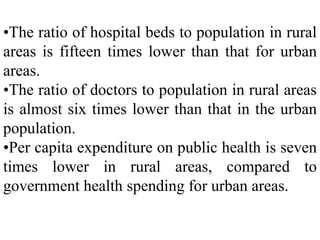
The ratio of hospital beds to population in rural areas is fifteen times lower than that for urban areas.
The ratio of doctors to population in rural areas is almost six times lower than that in the urban population.
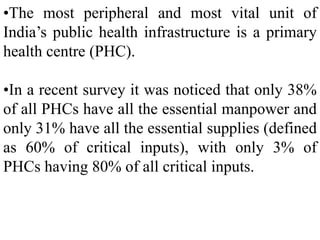
Per capita expenditure on public health is seven times lower in rural areas, compared to government health spending for urban areas. The most peripheral and most vital unit of India’s public health infrastructure is a primary health centre (PHC).
In a recent survey it was noticed that only 38% of all PHCs have all the essential manpower and only 31% have all the essential supplies (defined as 60% of critical inputs), with only 3% of PHCs having 80% of all critical inputs.Though the spending on healthcare is 6% of gross domestic product (GDP), the state expenditure is only 0.9% of the total spending. People using their own resources spend rest of it. This makes the Indian public health system grossly inadequate and under-funded.
Only five other countries in the world are worse off than India regarding public health spending (Burundi, Myanmar, Pakistan, Sudan, Cambodia).  As a result of this dismal and unequal spending on public health, the infrastructure of health system itself is becoming ineffective. 2. ACCESS DIFFICULTIES TO HEALTH CARE.
Geographical distance
Socio-economic distance
Gender distanceSocioeconomic distanceA different aspect of healthcare access problem is noticed in cases of ‘urban poor’.
Urban residents are extremely vulnerable to macroeconomic shocks that undermine their earning capacity and lead to substitution towards less nutritious, cheaper foods.

Health care reforms

  • 1.
  • 2.
    Health care reformis a general rubric used for discussing major health policy creation or changes—for the most part, governmental policy that affects health care delivery in a given place.
  • 3.
    OBJECTIVESBroaden the populationthat receives health care coverage through either public sector insurance programs or private sector insurance companies
  • 4.
    Expand the arrayof health care providers
  • 5.
    Improve the accessto health care specialists
  • 6.
    Improve the qualityof health care
  • 7.
    Give more careto citizens
  • 8.
    Decrease the costof health careMAJOR GOALGetting better/ more health care protection for as many people as possible at the lowest possible cost.
  • 9.
  • 10.
    MEDICINE IN ANTIQUITY.DAWNOF SCIENTIFIC MEDICINEMODERN MEDICINE
  • 11.
    MEDICINE IN ANTIQUITY.Inancient times, health and illness were interpreted in a cosmological and anthropological perspective. Medicine was dominated by magical and religious beliefs which were an integral part of ancient cultures and civilizations.
  • 12.
    1. PRIMITIVE MEDICINEEvidencefrom cave art, daring back at least 30,000 years, suggests caves were used for magical ritual purposes. Shamans were considered as the head of conducting rituals
  • 13.
    Primitive medicine frequentlyperformed a type of brain surgery that we today call trephination.  Trephination was done by using stone instruments to bore or grind holes in the skull
  • 16.
  • 17.
    AYURVEDA: The practicalsfields of Ayurveda are divided into eight sections or branches. These sections are: internal medicinal, surgery, cranial organo medicine, pediatrics, toxicology, rejuvenating remedy, aprodisiac remedy and spiritual healing. These eight sections are called "AstangaAyurveda.
  • 20.
                                                                                                                                                     
  • 21.
    SIDDHA MEDICINE. TheSiddha medicine is a form of south Indian Tamil traditional medicine and part of the trio Indian medicines - ayurveda, siddha and unani. This system of medicine was popular in ancient India. The system is believed to be developed by the 18 siddhas in the south called siddhar.
  • 24.
    UNANI MEDICINE. Unani-tibbor Unani Medicine its origin to Greece. It was the Greek philosopher - Physician Hippocrates (460-377 BC) who freed Medicine from the realm of susperstition and magic, and gave it the status of Science. The theoretical framework of Unani Medicine is based on the teachings of Hippocrates
  • 27.
  • 30.
  • 32.
  • 34.
    Greek medicineThe Greekstaught men to think in terms of why and how. The medical historian, Douglas Guthrie has reminded us of the legend that Hygiea was worshipped as the goddess of health and Panacea as the goddess of medicine. Panacea and Hygiea gave rise to dynasties of healers (curative medicine) and hygienists (preventive medicine) with different philosophies. Greatest physician in Greek medicine was Hippocrates who is often called as the father of medicine.
  • 35.
    Roman medicineII. DAWNOF SCIENTIFIC MEDICINE
  • 36.
  • 37.
  • 38.
  • 39.
  • 40.
    Birth of preventivemedicineFlorence nightinagle.
  • 41.
  • 42.
    GERM THEORY OFDISEASE-LOUIS PASTEUR
  • 43.
  • 44.
  • 45.
    Social medicineCHANGING CONCEPTSIN PUBLIC HEALTH.Disease control phase(1880-1920)
  • 46.
  • 47.
  • 48.
    Health for allphaseHEALTH CARE REFORMS IN INDIA
  • 49.
  • 50.
    The Bhore committee(1946)defined comprehensive health care as the following criteria. Provide adequate preventive, curative and promotive health services.Be as close to the beneficiaries as possible.Widest cooperation between the people, the service and the profession. Is available to all irrespective of their ability to payLook after specifically the vulnerable and weaker sections of the community.Create and maintain healthy environment both in home as well as working places.
  • 51.
  • 52.
    A basic healthservice is understood to be a network of coordinated, peripheral and intermediate health units capable of performing effectively a selected group of functions essential to the health of an area and assuring the availability of competent personnel and auxiliary personnel to perform these functions.
  • 53.
  • 54.
    Before Alma Ataprimary health care was regarded as synonymous with basic health services, first contact care, easily accessible care , services provided by generalist…
  • 55.
    The Alma-Ata internationalconference gave primary health care a wider meaning Primary health care is essential health care made universally accessible to individuals and acceptable to them , through their full participation and at a cost the community and country can afford. Principles of Primary health care.Equitable distribution.
  • 56.
  • 57.
  • 58.
    Appropriate technologyHEALTH FORALLIn 1977, it was decided in the World Health Assembly to launch a movement known as health for all by the year 2000. The fundamental principle of HFA strategy is equity that is an equal health status for people and countries ensured by an equitable distribution of health resources. CONTI…
  • 59.
    In 1978, AlmaAta international conference on Primary health care reaffirmed Health for all as the major social goals of the Governments and stated that the best approach to achieve the goal of HFA is by providing primary health care, especially to the vast majority of underserved rural areas.
  • 60.
    In 1981, aglobal strategy for HFA was evolved by WHO. The global strategy provides a global framework that is broad enough to apply to all Member states MILLENIUM DEVELOPMENT GOALS.September 2000, representatives from 189 countries met at the millennium summit in Newyork, to adopt the United Nations Millenium Declaration.Goals :Area of development and eradication of poverty.
  • 61.
    ISSUES IN HEALTHCARE REFORMS.
  • 62.
    1. UNEQUAL DISTRIBUTIONOF HEALTHCARE RESOURCES INDIA.
  • 63.
    The ratio ofhospital beds to population in rural areas is fifteen times lower than that for urban areas.
  • 64.
    The ratio ofdoctors to population in rural areas is almost six times lower than that in the urban population.
  • 65.
    Per capita expenditureon public health is seven times lower in rural areas, compared to government health spending for urban areas. The most peripheral and most vital unit of India’s public health infrastructure is a primary health centre (PHC).
  • 66.
    In a recentsurvey it was noticed that only 38% of all PHCs have all the essential manpower and only 31% have all the essential supplies (defined as 60% of critical inputs), with only 3% of PHCs having 80% of all critical inputs.Though the spending on healthcare is 6% of gross domestic product (GDP), the state expenditure is only 0.9% of the total spending. People using their own resources spend rest of it. This makes the Indian public health system grossly inadequate and under-funded.
  • 67.
    Only five othercountries in the world are worse off than India regarding public health spending (Burundi, Myanmar, Pakistan, Sudan, Cambodia). As a result of this dismal and unequal spending on public health, the infrastructure of health system itself is becoming ineffective. 2. ACCESS DIFFICULTIES TO HEALTH CARE.
  • 68.
  • 69.
  • 70.
    Gender distanceSocioeconomic distanceAdifferent aspect of healthcare access problem is noticed in cases of ‘urban poor’.
  • 71.
    Urban residents areextremely vulnerable to macroeconomic shocks that undermine their earning capacity and lead to substitution towards less nutritious, cheaper foods.