©M. S. Ramaiah University of Applied Sciences
1
Course Code: BDSDEN106
Course Title: Oral Medicine and Radiology
Antibiotics and Analgesics – Part II
Dr. N Rakesh
rakesh.or.ds@msruas.ac.in
Lecture No. 23
Antibiotics and Analgesics – Part II
At the end of this lecture, student will be able to
• Classify analgesics
• Describe the commonly used analgesics in dentistry
• Enlist the different modes of local drug delivery systems
©M. S. Ramaiah University of Applied Sciences
3
Content
• Commonly used analgesics
• Non-steroidal anti-inflammatory drugs (NSAIDs)
– Nonselective cox inhibitors
– Preferential cox-2 inhibitors
– Selective cox-2 inhibitors
– Analgesic-antipyretics with poor anti-inflammatory action
• Topical preparations
• Neuropeptides
• Local drug delivery systems
• Adjuvent drugs
• Drugs used in management of Chronic pain
• Summary
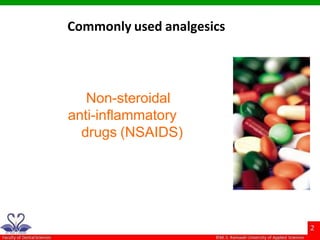
Non-steroidal
anti-inflammatory
drugs (NSAIDS)
Commonly used analgesics
- Analgesic, Antipyretic & Anti-inflammatory actions.
- Act primarily on Peripheral Pain Receptors
& CNS to raise the pain threshold.
- Compared to Morphine
- Weaker analgesics
- Do not depress CNS
-Do not produce physical dependence
& have no abuse liability.
Introduction
Classification
A) NONSELECTIVE COX INHIBITORS
(CONVENTIONAL NSAIDS)
1. Salicylates: Aspirin, Diflunisal.
2. Pyrazolone derivatives: Phenylbutazone,
Oxyphenbutazone
3. Indole derivatives: Indomethacin, Sulindac.
4. Propionic acid derivatives: Ibuprofen, Naproxen, Ketoprofen.
5.Anthranilic acid derivative: Mephenamic acid.
6.Aryl-acetic acid derivatives: Diclofenac, Tolmetin.
7.Oxicam derivatives: Piroxicam, Tenoxicam.
8. Pyrrolo-pyrrole derivative: Ketorolac.
B) PREFERENTIAL COX-2 INHIBITORS –
Nimesulide, Meloxicam, Nabumetone
C) SELECTIVE COX-2 INHIBITORS -
Celecoxib, Rofecoxib, Valdecoxib
D)ANALGESIC-ANTIPYRETICS WITH
POOR ANTI-INFLAMMATORY ACTION -
1. Paraaminophenol derivative: Paracetamol
(Acetaminophen).
2. Pyrazolone derivatives: Metamizol, Propiphenazone.
3. Benzoxazocine derivatives: Nefopam
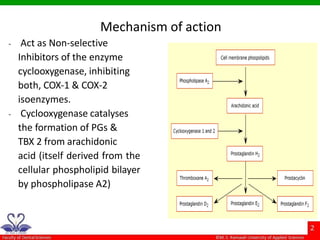
- Act as Non-selective
Inhibitors of the enzyme
cyclooxygenase, inhibiting
both, COX-1 & COX-2
isoenzymes.
- Cyclooxygenase catalyses
the formation of PGs &
TBX 2 from arachidonic
acid (itself derived from the
cellular phospholipid bilayer
by phospholipase A2)
Mechanism of action
COX-1
- Present as part of everyday physiological function.
- Protects the stomach by limiting acid secretion.
- Helps platelets limit bleeding by increasing their
adhesiveness.
COX-2
- Its expression is induced by various stimuli such as
the inflammation or at the site of the injury.
Aspirin
• Analgesic, Antipyretic & Anti-inflammatory Effects.
• Respiratory system
-Increases rate & depth.
• GIT
- Irritates the gastric mucosa  causes epigastric distress,
nausea & vomiting.
- Promotes the local back diffusion of the acid  acute
ulcers, erosive gastritis, microscopic haemorrhages.
Salicylates
• CVS
- No direct effect.
- Larger doses increase cardiac output to meet increased
peripheral O2 demand caused by direct vasodilation.
• Blood
- Inhibits TXA2 synthesis by platelets
- Interferes with Platelet aggregation (BT)
• Metabolic effects
-Increased utilization of Glucose, blood sugar may
decrease specially in diabetics.
Pharmacokinetics
- Poor Absorption- Stomach & Small Intestine.
- Metabolism- Gut wall, Liver, Plasma & other tissues
to release salicylic acid. Excretion- Urine.
Adverse effects
- Nausea,Vomiting, Epigastric distress & occult
blood in stools, rashes, urticaria, asthma, angioedema
- Anti-inflammatory doses – syndrome Salicylism –
dizziness, tinitus, reversible impairment
of hearing & vision, excitement.
Uses
- As analgesic – headache, backache, myalgia, joint pain,
toothache, neuralgias.
- As antipyretic
- Acute rheumatic fever, Rheumatoid arthritis, Osteoarthrtis
- Postmyocardial infarction & post-stroke patients.
DOSE: 300-900 mg every 4 hrs (Max 3.6 gm)
( ASA, ASCAD, ECOSPRIN 50mg,75mg Tab.)
Phenylbutazone
- Potent anti-inflammatory drug.
- Poor analgesic & antipyretic activity.
Adverse effects:
- More toxic than Aspirin
- Bone marrow depression, Agranulocytosis
- Banned in some countries.
Dose: 100-200 mg BD or TDS after meals
(ZOLANDIN 100,200 mg Tab.)
Pyrazolone derivatives
Indomethacin
- Potent anti-inflammatory, antipyretic & good
analgesic.
- Analgesic action better than PBZ.
Adverse effects:
- High incidence of GI & CNS side effects.
- C/I in drivers, epileptics, pregnancy & children.
Uses:
- Rheumatoid Arthritis not controlled by aspirin.
- Acts rapidly in Acute Gout.
Dose: 25-50 mg BD /TDS (INDOCAP, IDICIN)
Indole derivatives
Ibuprofen
- Analgesic, Antipyretic & Anti-inflammatory activity
is lower than aspirin.
- Inhibit platelet aggregation & prolong bleeding time.
Adverse effects:
- Better tolerated than aspirin (Incidence is lower).
- Gastric discomfort, nausea & vomiting are most
 common side effects.
Propionic acid derivatives
Pharmacokinetics:
 - Absorbed orally, highly bound to plasma proteins
 (90-99%)
 - Metabolized in liver & excreted in urine & bile.
- Enter brain, synovial fluid & cross placenta.
Interactions:
- As they inhibit platelet function, use with
 anticoagulants should be avoided.
 - Likely to decrease diuretic & antihypertensive action
 of thiazides, furosemide and -blockers.
- As Analgesic & Antipyretic.
- In Rheumatoid Arthritis, Osteoarthritis & other
Musculoskeletal Disorders, specially where pain is more
prominent than inflammation.
- Indicated in soft tissue injuries, fractures, tooth extraction,
supppress swelling & inflammation.
DOSE: 400-800 mg TDS
(BRUFEN, EMFLAM, IBUGESIC
200, 400, 600 mg Tab.)
Uses
Mephenamic acid
- An Analgesic, Antipyretic & Anti-inflammatory drug,
which inhibits COX as well as antagonises certain
actions of PGs.
- Exerts Peripheral as well as Central Analgesic Action.
ADVERSE EFFECTS :
- Diarrhoea is the important dose related side effect.
- Epigastric distress is complained, but gut bleeding is
 not significant.
Anthranilic acid derivative
Pharmacokinetics:
- Oral absorption is slow but almost complete.
- Partly metabolized & excreted in urine & as bile.
Uses:
 - Analgesic in muscle, joint & soft tissue pain where
 strong anti-inflammatory action is not needed (MPDS).
- Useful in rheumatoid & osteoarthritis.
Dose: 250-500 mg TDS
(MEFTAL, PONSTAN, MEDOL
250, 500 mg cap.)
Diclofenac sodium
- Analgesic, Antipyretic, Anti-inflammatory action.
- Inhibits PG synthesis & has short lasting antiplatelet
action.
Pharmacokinetics:
- Well absorbed orally, metabolized & excreted both
 in urine & bile.
- Has good tissue penetrability & conc. in synovial
 fluid is maintained longer period, exerting extended
 therapeutic action in joints.
Aryl-aceticacid derivative
Adverse effects
- Are generally mild: Epigastric pain, nausea,
headache, dizziness, rashes.
- Gastric ulceration & bleeding -less common.
Uses:
- Most extensively used NSAID.
- Rheumatoid & Osteoarthris, post-traumatic
inflammatory conditions - affords quick relief of
pain & wound edema (Dental Extractions).
Dose: 50 mg TDS, 75 mg i.m
(VOVERAN, DICLONAC, DICLOMAX
25, 50 mg Tab., 75 mg /3ml inj.)
Piroxicam
 - Long acting potent NSAID with good anti-
 inflammatory, analgesic & antiplatelet action.
 - Reversible inhibitor of COX; lowers PG conc. in
 synovial fluid & inhibits platelet aggregation-
 prolonging bleeding time.
 - In addition, it decreases the production of IgM
 rheumatoid factor.
Oxicam derivatives
Pharmacokinetics:
- Rapidly & completed absorbed.
- Metabolized in liver & excreted in urine.
- Plasma t1/2 is 2 days. So, single daily administration
 is sufficient.
Adverse effects:
- Heart burn, nausea & anorexia, but it is tolerated &
less ulcerogenic than PBZ; causes less faecal blood
loss than aspirin.
Uses:
- Suitable for use as short term analgesic as well as long term anti-
inflammatory action in –
Rheumatoid & Osteo-arthritis, Ankylosing spondylitis,
acute gout, musculoskeletal injuries, dental pain.
Dose: 20 mg BD for 2 days followed by 20 mg OD
(DOLONEX, PIROX
10, 20 mg cap.)
Ketorolac
- Potent analgesic & modest anti-inflammatory activity.
- In postoperative pain it has equalled the efficacy of
morphine.
- Inhibits PG synthesis & is believed to relieve pain by
a peripheral mechanism.
- Rapidly absorbed after oral & i.m. administration
& excreted unchanged in urine.
Pyrrolo-pyrrole derivative
Adverse effects:
- Nausea, abdominal pain, dyspepsia, ulceration,
loose stools, drowsiness, headache, dizziness,
nervousness, pruritus, pain at injection site.
- Rise in serum transaminases & fluid retention
have been noted.
Contra-indications:
- Should not be given to patients on the anti-coagulants
Uses:
 - In post-operative & acute musculoskeletal pain:
 15-30 mg every 4-6 hours (max. 90 mg/ day).
 - Also for renal colic, migraine & pain due to
 due to bony metastasis.
 - Used in a dose of 10-20 mg 6 hourly short term
management of moderate pain. AVAILABLE
: KETOROL, KETANOV (10 mg Tab.)
Nimesulide
- Sulfonamide derivative
- Selective inhibitor of PG synthesis & there
is some relative COX-2 selectivity.
Uses
 - Short lasting painful inflammatory conditions like
 sports injuries, sinusitis & other ENT disorders,
 dental surgery, bursitis, low backache, Postop pain,
 osteoarthritis & for fever.
Preferential cox-2 inhibitors
Pharmacokinetics:
 - Completely absorbed orally
 - Metabolism-Liver & Excretion- Urine
Dose- 100mg BD
( Nimulid, Nimegesic, Nimodol 100 mg Tab.)
Adverse effects
- Epigastralgia, heart burn, loose motions
- Dermatological rash, pruritus
- Hepatic failure & Renal failure in neonate.
(BANNED)
- Recently developed preferential COX-2 inhibitor.
- Has less analgesic, antipyretic activities, effective
in the treatment of rheumatoid & osteoarthritis as
well as soft tissue injury.
- Lower incidence of gastric erosions, ulcers &
bleeding.
Dose: 500 mg OD
(NABUFLAM, NILTIS 500 mg Tab.)
Nabumetone
Selective cox-2 inhibitors
Celecoxib, Rofecoxib, Valdecoxib
• NSAIDS that directly targets COX-2 which is produced at the
site of inflammation.
• Selectivity for COX-2 can half the risk of peptic ulceration.
• Cox-2-selectivity does not seem to affect other side-effects
of NSAIDs & there might be an increase in the risk for heart
attack, thrombosis & stroke by a relative increase in
thromboxane.
Uses-
 - Osteoarthritis.
 - Rheumatoid arthritis.
 - Ankylosing spondylitis.
 - For the management of acute pain in adults.
Pharmacokinetics:
 - Slow absorption
 - Metabolism-Liver & Excretion- Urine
Dose :
- Celecoxib- 100-200 mg BD (CELACT,ZYCEL)
- Rofecoxib- 12.5-50 mg OD
- Valdecoxib- 10 mg OD (VALOXIB, VALK)
Precautions:
- In patient who has clinical signs of liver toxicity or if systemic
manifestations arise, valdecoxib should be discontinued.
 - Should be used with caution in patients with CHF or
hypertension since fluid retention & edema can occur.
Paracetamol (Acetaminophen)
-- Central Analgesic action is like aspirin,
- i.e. it raises pain threshold, but has weak
- Anti-inflammatory action.
- Paracetamol is a good & promptly acting
Antipyretic Action.
Para-amino phenol derivatives
Uses:
 -Most commonly use analgesic for Headache,
 Musculoskeletal pain
 - Best drug to be used as Antipyretic.
 - Can be used in All Age groups(infants to elderly),
 pregnant/lactating women, & in patients in whom
 aspirin is contraindicated.
Adverse effects:
 Safe & Well tolerated, Nausea occur occasionally,
 High doses-Hepatic necrosis
Pharmacokinetics:
Well absorbed orally. Metabolism-Liver
 Excretion in Urine.
Dose- 0.5-1gm TDS 500mg Tab.
(Crocin, Paracin, Metacin, Pyrigesic)
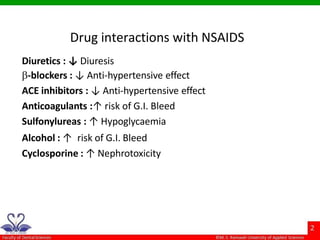
Diuretics : ↓ Diuresis
-blockers : ↓ Anti-hypertensive effect
ACE inhibitors : ↓ Anti-hypertensive effect
Anticoagulants :↑ risk of G.I. Bleed
Sulfonylureas : ↑ Hypoglycaemia
Alcohol : ↑ risk of G.I. Bleed
Cyclosporine : ↑ Nephrotoxicity
Drug interactions with NSAIDS
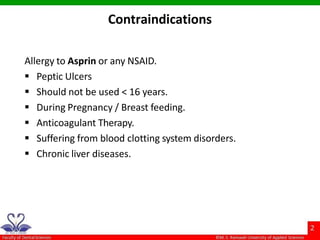
Allergy to Asprin or any NSAID.
 Peptic Ulcers
 Should not be used < 16 years.
 During Pregnancy / Breast feeding.
 Anticoagulant Therapy.
 Suffering from blood clotting system disorders.
 Chronic liver diseases.
Contraindications
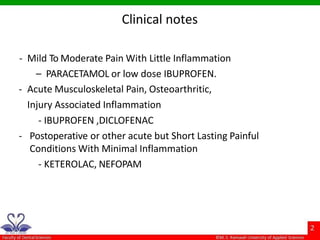
- Mild To Moderate Pain With Little Inflammation
– PARACETAMOL or low dose IBUPROFEN.
- Acute Musculoskeletal Pain, Osteoarthritic,
Injury Associated Inflammation
- IBUPROFEN ,DICLOFENAC
- Postoperative or other acute but Short Lasting Painful
Conditions With Minimal Inflammation
- KETEROLAC, NEFOPAM
Clinical notes
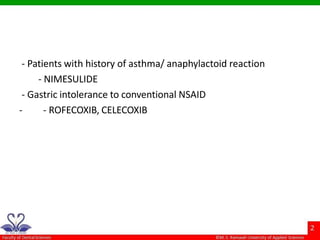
- Patients with history of asthma/ anaphylactoid reaction
- NIMESULIDE
- Gastric intolerance to conventional NSAID
- - ROFECOXIB, CELECOXIB
Advantages of topical medications
• Greater safety
• Rapid onset of action
• High concentrations can be attained at desired site without
exposing the rest of the body
• Fewer chances of drug interactions
• Non-invasive
• Better acceptability
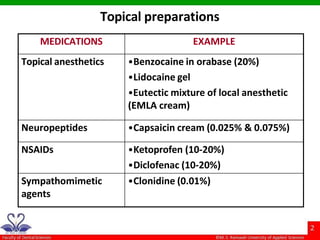
Topical preparations
MEDICATIONS EXAMPLE
Topical anesthetics •Benzocaine in orabase (20%)
•Lidocaine gel
•Eutectic mixture of local anesthetic
(EMLA cream)
Neuropeptides •Capsaicin cream (0.025% & 0.075%)
NSAIDs •Ketoprofen (10-20%)
•Diclofenac (10-20%)
Sympathomimetic
agents
•Clonidine (0.01%)
©M. S. Ramaiah University of Applied Sciences
45
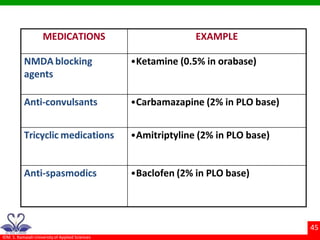
MEDICATIONS EXAMPLE
NMDA blocking
agents
•Ketamine (0.5% in orabase)
Anti-convulsants •Carbamazapine (2% in PLO base)
Tricyclic medications •Amitriptyline (2% in PLO base)
Anti-spasmodics •Baclofen (2% in PLO base)
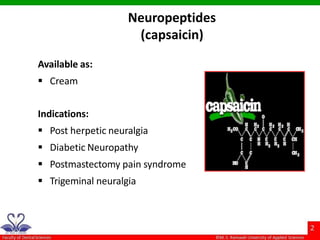
Neuropeptides
(capsaicin)
Available as:
 Cream
Indications:
 Post herpetic neuralgia
 Diabetic Neuropathy
 Postmastectomy pain syndrome
 Trigeminal neuralgia
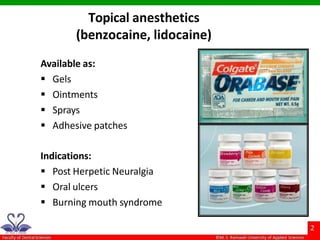
Topical anesthetics
(benzocaine, lidocaine)
Available as:
 Gels
 Ointments
 Sprays
 Adhesive patches
Indications:
 Post Herpetic Neuralgia
 Oral ulcers
 Burning mouth syndrome
NSAIDs
(Ketoprofen,diclofenac)
Available as:
 Cream
 Patch
Indications:
 Localized treatment of acute
pain associated with soft tissue
injury e.g. Musculoskeletal pain
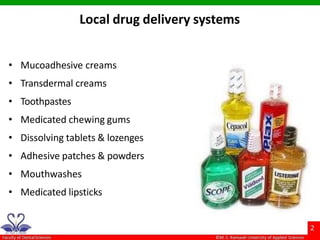
Local drug delivery systems
• Mucoadhesive creams
• Transdermal creams
• Toothpastes
• Medicated chewing gums
• Dissolving tablets & lozenges
• Adhesive patches & powders
• Mouthwashes
• Medicated lipsticks
©M. S. Ramaiah University of Applied Sciences
50
Adjuvent drugs
- Antidepressants
- Anticonvulsants
- Neuroleptics
- Corticosteroids
- Systemic L.A.
- Alpha adrenergic agonists
- Botulinum toxins
©M. S. Ramaiah University of Applied Sciences
51
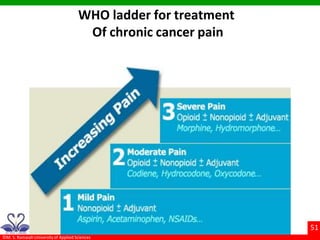
WHO ladder for treatment
Of chronic cancer pain
©M. S. Ramaiah University of Applied Sciences
52
- NSAIDs
- Acetaminophen
- Opioids
- Antidepressants
- Anticonvulsants
- Neuroleptics
- Corticosteroids
- Systemic L. A.’s
- Alpha adrenergic
agonists
- Botulinum toxin
Drugs used in management of
Chronic pain
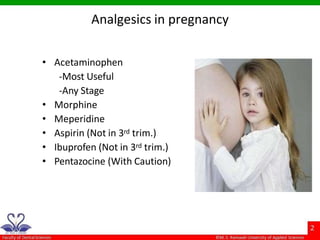
Analgesics in pregnancy
• Acetaminophen
-Most Useful
-Any Stage
• Morphine
• Meperidine
• Aspirin (Not in 3rd trim.)
• Ibuprofen (Not in 3rd trim.)
• Pentazocine (With Caution)
Conclusion
• Analgesics are definitely useful in reducing
pain & improving the quality of life but have
their own spectrum of adverse effects.
• No single drug is superior to all others for
every patient. Choice of drug is inescapably
empirical.
Summary
• Analgesics are commonly used to dentistry to control pain due
to dental infections, post extraction etc.
• A good understanding of the various class of analgesics their
indications and adverse effects helps us in selecting the
appropriate analgesic.
Reference
• K D Tripathi, (2013), Textbook of Pharmacology. 7th Edition,
Jaypee Brothers Medical Publishers.
• Richard G Topazian, Goldberg, Hupp, (2002), Oral and
maxillofacial Infections. 4th Edition, Elsevier.
• Malcolm A Lynch, Martin S Greenberg, (2008), Burket’s Oral
Medicine. 11th Edition, BC Decker.
Disclaimer
• All data and content provided in this presentation are
taken from the reference books, internet – websites
and links, for informational purposes only.

ANALGESICS IN DENTISTRY presentation.pptx

  • 1.
    ©M. S. RamaiahUniversity of Applied Sciences 1 Course Code: BDSDEN106 Course Title: Oral Medicine and Radiology Antibiotics and Analgesics – Part II Dr. N Rakesh rakesh.or.ds@msruas.ac.in
  • 2.
    Lecture No. 23 Antibioticsand Analgesics – Part II At the end of this lecture, student will be able to • Classify analgesics • Describe the commonly used analgesics in dentistry • Enlist the different modes of local drug delivery systems
  • 3.
    ©M. S. RamaiahUniversity of Applied Sciences 3 Content • Commonly used analgesics • Non-steroidal anti-inflammatory drugs (NSAIDs) – Nonselective cox inhibitors – Preferential cox-2 inhibitors – Selective cox-2 inhibitors – Analgesic-antipyretics with poor anti-inflammatory action • Topical preparations • Neuropeptides • Local drug delivery systems • Adjuvent drugs • Drugs used in management of Chronic pain • Summary
  • 4.
  • 5.
    - Analgesic, Antipyretic& Anti-inflammatory actions. - Act primarily on Peripheral Pain Receptors & CNS to raise the pain threshold. - Compared to Morphine - Weaker analgesics - Do not depress CNS -Do not produce physical dependence & have no abuse liability. Introduction
  • 6.
    Classification A) NONSELECTIVE COXINHIBITORS (CONVENTIONAL NSAIDS) 1. Salicylates: Aspirin, Diflunisal. 2. Pyrazolone derivatives: Phenylbutazone, Oxyphenbutazone 3. Indole derivatives: Indomethacin, Sulindac. 4. Propionic acid derivatives: Ibuprofen, Naproxen, Ketoprofen.
  • 7.
    5.Anthranilic acid derivative:Mephenamic acid. 6.Aryl-acetic acid derivatives: Diclofenac, Tolmetin. 7.Oxicam derivatives: Piroxicam, Tenoxicam. 8. Pyrrolo-pyrrole derivative: Ketorolac. B) PREFERENTIAL COX-2 INHIBITORS – Nimesulide, Meloxicam, Nabumetone C) SELECTIVE COX-2 INHIBITORS - Celecoxib, Rofecoxib, Valdecoxib
  • 8.
    D)ANALGESIC-ANTIPYRETICS WITH POOR ANTI-INFLAMMATORYACTION - 1. Paraaminophenol derivative: Paracetamol (Acetaminophen). 2. Pyrazolone derivatives: Metamizol, Propiphenazone. 3. Benzoxazocine derivatives: Nefopam
  • 9.
    - Act asNon-selective Inhibitors of the enzyme cyclooxygenase, inhibiting both, COX-1 & COX-2 isoenzymes. - Cyclooxygenase catalyses the formation of PGs & TBX 2 from arachidonic acid (itself derived from the cellular phospholipid bilayer by phospholipase A2) Mechanism of action
  • 10.
    COX-1 - Present aspart of everyday physiological function. - Protects the stomach by limiting acid secretion. - Helps platelets limit bleeding by increasing their adhesiveness. COX-2 - Its expression is induced by various stimuli such as the inflammation or at the site of the injury.
  • 11.
    Aspirin • Analgesic, Antipyretic& Anti-inflammatory Effects. • Respiratory system -Increases rate & depth. • GIT - Irritates the gastric mucosa  causes epigastric distress, nausea & vomiting. - Promotes the local back diffusion of the acid  acute ulcers, erosive gastritis, microscopic haemorrhages. Salicylates
  • 12.
    • CVS - Nodirect effect. - Larger doses increase cardiac output to meet increased peripheral O2 demand caused by direct vasodilation. • Blood - Inhibits TXA2 synthesis by platelets - Interferes with Platelet aggregation (BT) • Metabolic effects -Increased utilization of Glucose, blood sugar may decrease specially in diabetics.
  • 13.
    Pharmacokinetics - Poor Absorption-Stomach & Small Intestine. - Metabolism- Gut wall, Liver, Plasma & other tissues to release salicylic acid. Excretion- Urine. Adverse effects - Nausea,Vomiting, Epigastric distress & occult blood in stools, rashes, urticaria, asthma, angioedema - Anti-inflammatory doses – syndrome Salicylism – dizziness, tinitus, reversible impairment of hearing & vision, excitement.
  • 14.
    Uses - As analgesic– headache, backache, myalgia, joint pain, toothache, neuralgias. - As antipyretic - Acute rheumatic fever, Rheumatoid arthritis, Osteoarthrtis - Postmyocardial infarction & post-stroke patients. DOSE: 300-900 mg every 4 hrs (Max 3.6 gm) ( ASA, ASCAD, ECOSPRIN 50mg,75mg Tab.)
  • 15.
    Phenylbutazone - Potent anti-inflammatorydrug. - Poor analgesic & antipyretic activity. Adverse effects: - More toxic than Aspirin - Bone marrow depression, Agranulocytosis - Banned in some countries. Dose: 100-200 mg BD or TDS after meals (ZOLANDIN 100,200 mg Tab.) Pyrazolone derivatives
  • 16.
    Indomethacin - Potent anti-inflammatory,antipyretic & good analgesic. - Analgesic action better than PBZ. Adverse effects: - High incidence of GI & CNS side effects. - C/I in drivers, epileptics, pregnancy & children. Uses: - Rheumatoid Arthritis not controlled by aspirin. - Acts rapidly in Acute Gout. Dose: 25-50 mg BD /TDS (INDOCAP, IDICIN) Indole derivatives
  • 17.
    Ibuprofen - Analgesic, Antipyretic& Anti-inflammatory activity is lower than aspirin. - Inhibit platelet aggregation & prolong bleeding time. Adverse effects: - Better tolerated than aspirin (Incidence is lower). - Gastric discomfort, nausea & vomiting are most  common side effects. Propionic acid derivatives
  • 18.
    Pharmacokinetics:  - Absorbedorally, highly bound to plasma proteins  (90-99%)  - Metabolized in liver & excreted in urine & bile. - Enter brain, synovial fluid & cross placenta. Interactions: - As they inhibit platelet function, use with  anticoagulants should be avoided.  - Likely to decrease diuretic & antihypertensive action  of thiazides, furosemide and -blockers.
  • 19.
    - As Analgesic& Antipyretic. - In Rheumatoid Arthritis, Osteoarthritis & other Musculoskeletal Disorders, specially where pain is more prominent than inflammation. - Indicated in soft tissue injuries, fractures, tooth extraction, supppress swelling & inflammation. DOSE: 400-800 mg TDS (BRUFEN, EMFLAM, IBUGESIC 200, 400, 600 mg Tab.) Uses
  • 20.
    Mephenamic acid - AnAnalgesic, Antipyretic & Anti-inflammatory drug, which inhibits COX as well as antagonises certain actions of PGs. - Exerts Peripheral as well as Central Analgesic Action. ADVERSE EFFECTS : - Diarrhoea is the important dose related side effect. - Epigastric distress is complained, but gut bleeding is  not significant. Anthranilic acid derivative
  • 21.
    Pharmacokinetics: - Oral absorptionis slow but almost complete. - Partly metabolized & excreted in urine & as bile. Uses:  - Analgesic in muscle, joint & soft tissue pain where  strong anti-inflammatory action is not needed (MPDS). - Useful in rheumatoid & osteoarthritis. Dose: 250-500 mg TDS (MEFTAL, PONSTAN, MEDOL 250, 500 mg cap.)
  • 22.
    Diclofenac sodium - Analgesic,Antipyretic, Anti-inflammatory action. - Inhibits PG synthesis & has short lasting antiplatelet action. Pharmacokinetics: - Well absorbed orally, metabolized & excreted both  in urine & bile. - Has good tissue penetrability & conc. in synovial  fluid is maintained longer period, exerting extended  therapeutic action in joints. Aryl-aceticacid derivative
  • 23.
    Adverse effects - Aregenerally mild: Epigastric pain, nausea, headache, dizziness, rashes. - Gastric ulceration & bleeding -less common. Uses: - Most extensively used NSAID. - Rheumatoid & Osteoarthris, post-traumatic inflammatory conditions - affords quick relief of pain & wound edema (Dental Extractions). Dose: 50 mg TDS, 75 mg i.m (VOVERAN, DICLONAC, DICLOMAX 25, 50 mg Tab., 75 mg /3ml inj.)
  • 24.
    Piroxicam  - Longacting potent NSAID with good anti-  inflammatory, analgesic & antiplatelet action.  - Reversible inhibitor of COX; lowers PG conc. in  synovial fluid & inhibits platelet aggregation-  prolonging bleeding time.  - In addition, it decreases the production of IgM  rheumatoid factor. Oxicam derivatives
  • 25.
    Pharmacokinetics: - Rapidly &completed absorbed. - Metabolized in liver & excreted in urine. - Plasma t1/2 is 2 days. So, single daily administration  is sufficient. Adverse effects: - Heart burn, nausea & anorexia, but it is tolerated & less ulcerogenic than PBZ; causes less faecal blood loss than aspirin.
  • 26.
    Uses: - Suitable foruse as short term analgesic as well as long term anti- inflammatory action in – Rheumatoid & Osteo-arthritis, Ankylosing spondylitis, acute gout, musculoskeletal injuries, dental pain. Dose: 20 mg BD for 2 days followed by 20 mg OD (DOLONEX, PIROX 10, 20 mg cap.)
  • 27.
    Ketorolac - Potent analgesic& modest anti-inflammatory activity. - In postoperative pain it has equalled the efficacy of morphine. - Inhibits PG synthesis & is believed to relieve pain by a peripheral mechanism. - Rapidly absorbed after oral & i.m. administration & excreted unchanged in urine. Pyrrolo-pyrrole derivative
  • 28.
    Adverse effects: - Nausea,abdominal pain, dyspepsia, ulceration, loose stools, drowsiness, headache, dizziness, nervousness, pruritus, pain at injection site. - Rise in serum transaminases & fluid retention have been noted. Contra-indications: - Should not be given to patients on the anti-coagulants
  • 29.
    Uses:  - Inpost-operative & acute musculoskeletal pain:  15-30 mg every 4-6 hours (max. 90 mg/ day).  - Also for renal colic, migraine & pain due to  due to bony metastasis.  - Used in a dose of 10-20 mg 6 hourly short term management of moderate pain. AVAILABLE : KETOROL, KETANOV (10 mg Tab.)
  • 30.
    Nimesulide - Sulfonamide derivative -Selective inhibitor of PG synthesis & there is some relative COX-2 selectivity. Uses  - Short lasting painful inflammatory conditions like  sports injuries, sinusitis & other ENT disorders,  dental surgery, bursitis, low backache, Postop pain,  osteoarthritis & for fever. Preferential cox-2 inhibitors
  • 31.
    Pharmacokinetics:  - Completelyabsorbed orally  - Metabolism-Liver & Excretion- Urine Dose- 100mg BD ( Nimulid, Nimegesic, Nimodol 100 mg Tab.) Adverse effects - Epigastralgia, heart burn, loose motions - Dermatological rash, pruritus - Hepatic failure & Renal failure in neonate. (BANNED)
  • 32.
    - Recently developedpreferential COX-2 inhibitor. - Has less analgesic, antipyretic activities, effective in the treatment of rheumatoid & osteoarthritis as well as soft tissue injury. - Lower incidence of gastric erosions, ulcers & bleeding. Dose: 500 mg OD (NABUFLAM, NILTIS 500 mg Tab.) Nabumetone
  • 33.
    Selective cox-2 inhibitors Celecoxib,Rofecoxib, Valdecoxib • NSAIDS that directly targets COX-2 which is produced at the site of inflammation. • Selectivity for COX-2 can half the risk of peptic ulceration. • Cox-2-selectivity does not seem to affect other side-effects of NSAIDs & there might be an increase in the risk for heart attack, thrombosis & stroke by a relative increase in thromboxane.
  • 34.
    Uses-  - Osteoarthritis. - Rheumatoid arthritis.  - Ankylosing spondylitis.  - For the management of acute pain in adults. Pharmacokinetics:  - Slow absorption  - Metabolism-Liver & Excretion- Urine
  • 35.
    Dose : - Celecoxib-100-200 mg BD (CELACT,ZYCEL) - Rofecoxib- 12.5-50 mg OD - Valdecoxib- 10 mg OD (VALOXIB, VALK) Precautions: - In patient who has clinical signs of liver toxicity or if systemic manifestations arise, valdecoxib should be discontinued.  - Should be used with caution in patients with CHF or hypertension since fluid retention & edema can occur.
  • 36.
    Paracetamol (Acetaminophen) -- CentralAnalgesic action is like aspirin, - i.e. it raises pain threshold, but has weak - Anti-inflammatory action. - Paracetamol is a good & promptly acting Antipyretic Action. Para-amino phenol derivatives
  • 37.
    Uses:  -Most commonlyuse analgesic for Headache,  Musculoskeletal pain  - Best drug to be used as Antipyretic.  - Can be used in All Age groups(infants to elderly),  pregnant/lactating women, & in patients in whom  aspirin is contraindicated. Adverse effects:  Safe & Well tolerated, Nausea occur occasionally,  High doses-Hepatic necrosis
  • 38.
    Pharmacokinetics: Well absorbed orally.Metabolism-Liver  Excretion in Urine. Dose- 0.5-1gm TDS 500mg Tab. (Crocin, Paracin, Metacin, Pyrigesic)
  • 39.
    Diuretics : ↓Diuresis -blockers : ↓ Anti-hypertensive effect ACE inhibitors : ↓ Anti-hypertensive effect Anticoagulants :↑ risk of G.I. Bleed Sulfonylureas : ↑ Hypoglycaemia Alcohol : ↑ risk of G.I. Bleed Cyclosporine : ↑ Nephrotoxicity Drug interactions with NSAIDS
  • 40.
    Allergy to Asprinor any NSAID.  Peptic Ulcers  Should not be used < 16 years.  During Pregnancy / Breast feeding.  Anticoagulant Therapy.  Suffering from blood clotting system disorders.  Chronic liver diseases. Contraindications
  • 41.
    - Mild ToModerate Pain With Little Inflammation – PARACETAMOL or low dose IBUPROFEN. - Acute Musculoskeletal Pain, Osteoarthritic, Injury Associated Inflammation - IBUPROFEN ,DICLOFENAC - Postoperative or other acute but Short Lasting Painful Conditions With Minimal Inflammation - KETEROLAC, NEFOPAM Clinical notes
  • 42.
    - Patients withhistory of asthma/ anaphylactoid reaction - NIMESULIDE - Gastric intolerance to conventional NSAID - - ROFECOXIB, CELECOXIB
  • 43.
    Advantages of topicalmedications • Greater safety • Rapid onset of action • High concentrations can be attained at desired site without exposing the rest of the body • Fewer chances of drug interactions • Non-invasive • Better acceptability
  • 44.
    Topical preparations MEDICATIONS EXAMPLE Topicalanesthetics •Benzocaine in orabase (20%) •Lidocaine gel •Eutectic mixture of local anesthetic (EMLA cream) Neuropeptides •Capsaicin cream (0.025% & 0.075%) NSAIDs •Ketoprofen (10-20%) •Diclofenac (10-20%) Sympathomimetic agents •Clonidine (0.01%)
  • 45.
    ©M. S. RamaiahUniversity of Applied Sciences 45 MEDICATIONS EXAMPLE NMDA blocking agents •Ketamine (0.5% in orabase) Anti-convulsants •Carbamazapine (2% in PLO base) Tricyclic medications •Amitriptyline (2% in PLO base) Anti-spasmodics •Baclofen (2% in PLO base)
  • 46.
    Neuropeptides (capsaicin) Available as:  Cream Indications: Post herpetic neuralgia  Diabetic Neuropathy  Postmastectomy pain syndrome  Trigeminal neuralgia
  • 47.
    Topical anesthetics (benzocaine, lidocaine) Availableas:  Gels  Ointments  Sprays  Adhesive patches Indications:  Post Herpetic Neuralgia  Oral ulcers  Burning mouth syndrome
  • 48.
    NSAIDs (Ketoprofen,diclofenac) Available as:  Cream Patch Indications:  Localized treatment of acute pain associated with soft tissue injury e.g. Musculoskeletal pain
  • 49.
    Local drug deliverysystems • Mucoadhesive creams • Transdermal creams • Toothpastes • Medicated chewing gums • Dissolving tablets & lozenges • Adhesive patches & powders • Mouthwashes • Medicated lipsticks
  • 50.
    ©M. S. RamaiahUniversity of Applied Sciences 50 Adjuvent drugs - Antidepressants - Anticonvulsants - Neuroleptics - Corticosteroids - Systemic L.A. - Alpha adrenergic agonists - Botulinum toxins
  • 51.
    ©M. S. RamaiahUniversity of Applied Sciences 51 WHO ladder for treatment Of chronic cancer pain
  • 52.
    ©M. S. RamaiahUniversity of Applied Sciences 52 - NSAIDs - Acetaminophen - Opioids - Antidepressants - Anticonvulsants - Neuroleptics - Corticosteroids - Systemic L. A.’s - Alpha adrenergic agonists - Botulinum toxin Drugs used in management of Chronic pain
  • 53.
    Analgesics in pregnancy •Acetaminophen -Most Useful -Any Stage • Morphine • Meperidine • Aspirin (Not in 3rd trim.) • Ibuprofen (Not in 3rd trim.) • Pentazocine (With Caution)
  • 54.
    Conclusion • Analgesics aredefinitely useful in reducing pain & improving the quality of life but have their own spectrum of adverse effects. • No single drug is superior to all others for every patient. Choice of drug is inescapably empirical.
  • 56.
    Summary • Analgesics arecommonly used to dentistry to control pain due to dental infections, post extraction etc. • A good understanding of the various class of analgesics their indications and adverse effects helps us in selecting the appropriate analgesic.
  • 57.
    Reference • K DTripathi, (2013), Textbook of Pharmacology. 7th Edition, Jaypee Brothers Medical Publishers. • Richard G Topazian, Goldberg, Hupp, (2002), Oral and maxillofacial Infections. 4th Edition, Elsevier. • Malcolm A Lynch, Martin S Greenberg, (2008), Burket’s Oral Medicine. 11th Edition, BC Decker.
  • 58.
    Disclaimer • All dataand content provided in this presentation are taken from the reference books, internet – websites and links, for informational purposes only.