Dry Socket vs Normal
Socket
Symptoms, Causes, and Treatments
Table of
Contents
01 Introduction to Dry Socket
02 Causes of Dry Socket
03 Symptoms to Recognize
04 Normal Healing Process
05 Preventive Measures
06 Treatments Available
07 Role of the Dentist
08 Patient Experience
09 Future Developments
10 Conclusion and Recap
1
Introduction to Dry
Socket
Overview
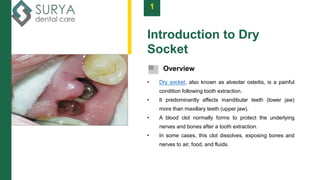
• Dry socket, also known as alveolar osteitis, is a painful
condition following tooth extraction.
• It predominantly affects mandibular teeth (lower jaw)
more than maxillary teeth (upper jaw).
• A blood clot normally forms to protect the underlying
nerves and bones after a tooth extraction.
• In some cases, this clot dissolves, exposing bones and
nerves to air, food, and fluids.
2
Causes of Dry Socket
Potential Causes
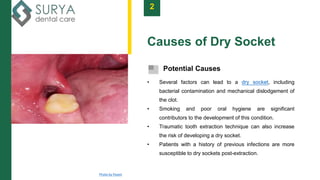
• Several factors can lead to a dry socket, including
bacterial contamination and mechanical dislodgement of
the clot.
• Smoking and poor oral hygiene are significant
contributors to the development of this condition.
• Traumatic tooth extraction technique can also increase
the risk of developing a dry socket.
• Patients with a history of previous infections are more
susceptible to dry sockets post-extraction.
Photo by Pexels
3
Symptoms to Recognize
Warning Signs
• The most common symptom of a dry socket is severe
pain within a few days after tooth extraction.
• Pain may radiate to other parts of the face, ear, and
neck, complicating diagnosis.
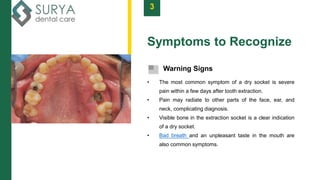
• Visible bone in the extraction socket is a clear indication
of a dry socket.
• Bad breath and an unpleasant taste in the mouth are
also common symptoms.
4
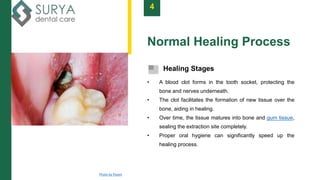
Normal Healing Process
Healing Stages
• A blood clot forms in the tooth socket, protecting the
bone and nerves underneath.
• The clot facilitates the formation of new tissue over the
bone, aiding in healing.
• Over time, the tissue matures into bone and gum tissue,
sealing the extraction site completely.
• Proper oral hygiene can significantly speed up the
healing process.
Photo by Pexels
5
Preventive Measures
How to Prevent
• Avoid smoking for at least 48 hours after the extraction to
reduce the risk of a dry socket.
• Practice good oral hygiene but avoid disturbing the
extraction site during cleaning.
• Follow your dentist's instructions carefully regarding
medication and aftercare.
• Hydrate adequately but avoid using straws, as suction
can dislodge the clot.
6
Treatments Available
Treatment Options
• Treatment often involves a thorough cleaning of the
socket to remove any debris causing irritation.
• Medicated dressings can be applied to the socket to
alleviate pain and promote healing.
• Pain management may include over-the-counter or
prescribed medications.
• Regular follow-up visits to the dentist are crucial for
monitoring healing progress.
7
Role of the Dentist
Dental Care
• Dentists play a vital role in diagnosing and managing dry
sockets effectively.
• They provide critical aftercare instructions to prevent the
occurrence of dry sockets.
• Regular dental visits ensure the timely identification and
treatment of any complications.
• They also educate patients about the importance of oral
hygiene in preventing dry sockets.
8
Patient Experience
Real Stories
• Many patients experience anxiety about dry sockets
before undergoing tooth extraction.
• Understanding the causes, symptoms, and treatments
can alleviate much of this anxiety.
• Patient education is crucial for ensuring compliance with
preventive measures and aftercare.
• Hearing real stories from other patients can provide
reassurance and practical tips.
9
Future Developments
Innovation
• Research is ongoing to develop new methods for
preventing and treating dry sockets.
• Advancements in dental technology promise more
effective and less painful extraction techniques.
• Future innovations may include better materials for clot
stabilization and healing promotion.
• Continued education and training for dentists are
essential for adopting these innovations.
10
Conclusion and Recap
Key Points
• Dry sockets are a common complication following tooth
extractions, particularly wisdom teeth.
• Recognizing symptoms early and seeking prompt
treatment can prevent severe pain and complications.
• Preventive measures and good oral hygiene are crucial
for reducing the risk of dry sockets.
• Ongoing research and technological advancements hold
promise for better management of this condition.
Thank You!
https://www.suryadentalcare.com/
https://twitter.com/CareSurya
https://www.facebook.com/suryadentaltrichy
https://www.instagram.com/suryadentalsenthil/

Dry Socket vs Normal Socket - Surya Dental Care

  • 1.
    Dry Socket vsNormal Socket Symptoms, Causes, and Treatments
  • 2.
    Table of Contents 01 Introductionto Dry Socket 02 Causes of Dry Socket 03 Symptoms to Recognize 04 Normal Healing Process 05 Preventive Measures 06 Treatments Available 07 Role of the Dentist 08 Patient Experience 09 Future Developments 10 Conclusion and Recap
  • 3.
    1 Introduction to Dry Socket Overview •Dry socket, also known as alveolar osteitis, is a painful condition following tooth extraction. • It predominantly affects mandibular teeth (lower jaw) more than maxillary teeth (upper jaw). • A blood clot normally forms to protect the underlying nerves and bones after a tooth extraction. • In some cases, this clot dissolves, exposing bones and nerves to air, food, and fluids.
  • 4.
    2 Causes of DrySocket Potential Causes • Several factors can lead to a dry socket, including bacterial contamination and mechanical dislodgement of the clot. • Smoking and poor oral hygiene are significant contributors to the development of this condition. • Traumatic tooth extraction technique can also increase the risk of developing a dry socket. • Patients with a history of previous infections are more susceptible to dry sockets post-extraction. Photo by Pexels
  • 5.
    3 Symptoms to Recognize WarningSigns • The most common symptom of a dry socket is severe pain within a few days after tooth extraction. • Pain may radiate to other parts of the face, ear, and neck, complicating diagnosis. • Visible bone in the extraction socket is a clear indication of a dry socket. • Bad breath and an unpleasant taste in the mouth are also common symptoms.
  • 6.
    4 Normal Healing Process HealingStages • A blood clot forms in the tooth socket, protecting the bone and nerves underneath. • The clot facilitates the formation of new tissue over the bone, aiding in healing. • Over time, the tissue matures into bone and gum tissue, sealing the extraction site completely. • Proper oral hygiene can significantly speed up the healing process. Photo by Pexels
  • 7.
    5 Preventive Measures How toPrevent • Avoid smoking for at least 48 hours after the extraction to reduce the risk of a dry socket. • Practice good oral hygiene but avoid disturbing the extraction site during cleaning. • Follow your dentist's instructions carefully regarding medication and aftercare. • Hydrate adequately but avoid using straws, as suction can dislodge the clot.
  • 8.
    6 Treatments Available Treatment Options •Treatment often involves a thorough cleaning of the socket to remove any debris causing irritation. • Medicated dressings can be applied to the socket to alleviate pain and promote healing. • Pain management may include over-the-counter or prescribed medications. • Regular follow-up visits to the dentist are crucial for monitoring healing progress.
  • 9.
    7 Role of theDentist Dental Care • Dentists play a vital role in diagnosing and managing dry sockets effectively. • They provide critical aftercare instructions to prevent the occurrence of dry sockets. • Regular dental visits ensure the timely identification and treatment of any complications. • They also educate patients about the importance of oral hygiene in preventing dry sockets.
  • 10.
    8 Patient Experience Real Stories •Many patients experience anxiety about dry sockets before undergoing tooth extraction. • Understanding the causes, symptoms, and treatments can alleviate much of this anxiety. • Patient education is crucial for ensuring compliance with preventive measures and aftercare. • Hearing real stories from other patients can provide reassurance and practical tips.
  • 11.
    9 Future Developments Innovation • Researchis ongoing to develop new methods for preventing and treating dry sockets. • Advancements in dental technology promise more effective and less painful extraction techniques. • Future innovations may include better materials for clot stabilization and healing promotion. • Continued education and training for dentists are essential for adopting these innovations.
  • 12.
    10 Conclusion and Recap KeyPoints • Dry sockets are a common complication following tooth extractions, particularly wisdom teeth. • Recognizing symptoms early and seeking prompt treatment can prevent severe pain and complications. • Preventive measures and good oral hygiene are crucial for reducing the risk of dry sockets. • Ongoing research and technological advancements hold promise for better management of this condition.
  • 13.