CASE STUDY:
HR AS A STRATEGIC PARTNER:
THE MEASUREMENT CHALLENGE
HRM
MBA
Imran Ghaznavi
Introduction
 Issues
 Much has been talked about HR’s role today and
it is a brutal reality that HR as function is under
extreme pressure to justify its position and sphere
of influence.
 Most organizations view the HR department as an
administrative function.
 The senior management is generally skeptical of
HR’s role in the firm.
What the case study is all
about
 Human Resource should be at the table not
on the table
 HR contribution towards the value creation
should be measured
 HR has to play a strategic role in the
organization
 HR must has the ability to align the
employee efforts with the organization's
overall vision.
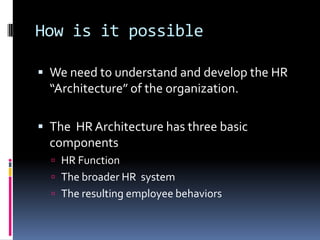
How is it possible
 We need to understand and develop the HR
“Architecture” of the organization.
 The HR Architecture has three basic
components
 HR Function
 The broader HR system
 The resulting employee behaviors
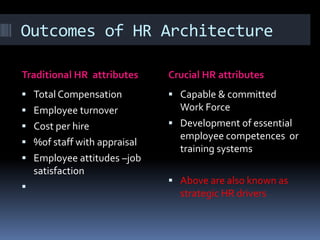
Outcomes of HR Architecture
Traditional HR attributes Crucial HR attributes
 Total Compensation
 Employee turnover
 Cost per hire
 %of staff with appraisal
 Employee attitudes –job
satisfaction

 Capable & committed
Work Force
 Development of essential
employee competences or
training systems
 Above are also known as
strategic HR drivers
HR creates value
 Aliening every employees effort with the
organization's overall vision
 HR to shift from traditional administrative
role strategic role
 Strategic assets keep organizations competitive
edge sharp for long haul, as they are difficult to
copy.
However the impact of organizations strategy is
difficult to see in short run.
Importance of intangible
assets
 New economic paradigm characterized by
speed, innovation, quality, customer
satisfaction has increased the importance of
intangible assets like
 Brand recognition,
 Knowledge
 Innovation and
 Human capital
HR measurement system
 Development of HR - measurement system
 That convincingly showcase HR’s impact on
business performance.
 This is possible with properly developed HR
architecture
Managers throughout the organization should
understand how people create value and how to
measure the value creation.
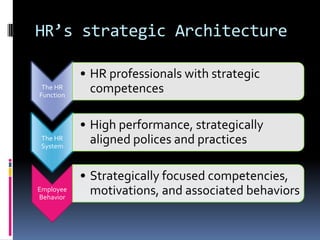
HR’s strategic Architecture
The HR
Function
• HR professionals with strategic
competences
The HR
System
• High performance, strategically
aligned polices and practices
Employee
Behavior
• Strategically focused competencies,
motivations, and associated behaviors
HR Architecture
 The continuum from the HR professionals
with in the HR function to the system of HR-
related polices and practices, through the
competencies, motivations and associated
behaviors of the firm’s employees
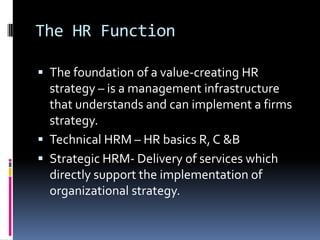
The HR Function
 The foundation of a value-creating HR
strategy – is a management infrastructure
that understands and can implement a firms
strategy.
 Technical HRM – HR basics R, C &B
 Strategic HRM- Delivery of services which
directly support the implementation of
organizational strategy.
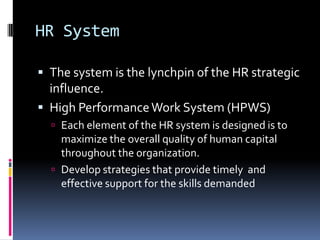
HR System
 The system is the lynchpin of the HR strategic
influence.
 High PerformanceWork System (HPWS)
 Each element of the HR system is designed is to
maximize the overall quality of human capital
throughout the organization.
 Develop strategies that provide timely and
effective support for the skills demanded
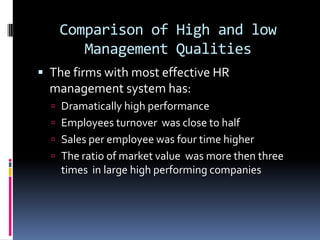
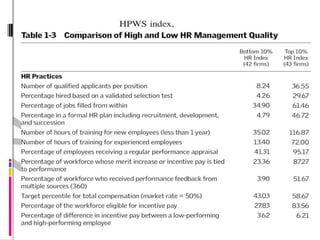
Comparison of High and low
Management Qualities
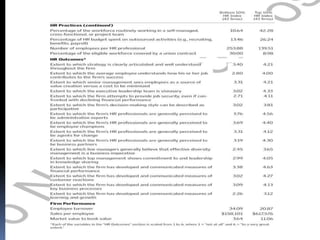
 The firms with most effective HR
management system has:
 Dramatically high performance
 Employees turnover was close to half
 Sales per employee was four time higher
 The ratio of market value was more then three
times in large high performing companies
Strategic employee behavior
 The productive behavior of the employees
plays vital role in the success and growth of
the organization.
 HR need to continuously monitor the internal
environment and create an environment
which jazz up every individual and display a
positive behavior in building good will for the
organization
Conclusion
 The CEO’s and the senior management has to
bring HR at strategic table.
 HR managers need to take lead in aligning
the HR strategies towards accomplishment of
organizations goals.
 Develop effective measurement system for
the HR contribution towards the
organizations profit maximization.
 All this has to be done through systematic
thinking.
Hbr’s case study

Hbr’s case study

  • 1.
    CASE STUDY: HR ASA STRATEGIC PARTNER: THE MEASUREMENT CHALLENGE HRM MBA Imran Ghaznavi
  • 2.
    Introduction  Issues  Muchhas been talked about HR’s role today and it is a brutal reality that HR as function is under extreme pressure to justify its position and sphere of influence.  Most organizations view the HR department as an administrative function.  The senior management is generally skeptical of HR’s role in the firm.
  • 3.
    What the casestudy is all about  Human Resource should be at the table not on the table  HR contribution towards the value creation should be measured  HR has to play a strategic role in the organization  HR must has the ability to align the employee efforts with the organization's overall vision.
  • 4.
    How is itpossible  We need to understand and develop the HR “Architecture” of the organization.  The HR Architecture has three basic components  HR Function  The broader HR system  The resulting employee behaviors
  • 5.
    Outcomes of HRArchitecture Traditional HR attributes Crucial HR attributes  Total Compensation  Employee turnover  Cost per hire  %of staff with appraisal  Employee attitudes –job satisfaction   Capable & committed Work Force  Development of essential employee competences or training systems  Above are also known as strategic HR drivers
  • 6.
    HR creates value Aliening every employees effort with the organization's overall vision  HR to shift from traditional administrative role strategic role  Strategic assets keep organizations competitive edge sharp for long haul, as they are difficult to copy. However the impact of organizations strategy is difficult to see in short run.
  • 7.
    Importance of intangible assets New economic paradigm characterized by speed, innovation, quality, customer satisfaction has increased the importance of intangible assets like  Brand recognition,  Knowledge  Innovation and  Human capital
  • 9.
    HR measurement system Development of HR - measurement system  That convincingly showcase HR’s impact on business performance.  This is possible with properly developed HR architecture Managers throughout the organization should understand how people create value and how to measure the value creation.
  • 10.
    HR’s strategic Architecture TheHR Function • HR professionals with strategic competences The HR System • High performance, strategically aligned polices and practices Employee Behavior • Strategically focused competencies, motivations, and associated behaviors
  • 11.
    HR Architecture  Thecontinuum from the HR professionals with in the HR function to the system of HR- related polices and practices, through the competencies, motivations and associated behaviors of the firm’s employees
  • 12.
    The HR Function The foundation of a value-creating HR strategy – is a management infrastructure that understands and can implement a firms strategy.  Technical HRM – HR basics R, C &B  Strategic HRM- Delivery of services which directly support the implementation of organizational strategy.
  • 13.
    HR System  Thesystem is the lynchpin of the HR strategic influence.  High PerformanceWork System (HPWS)  Each element of the HR system is designed is to maximize the overall quality of human capital throughout the organization.  Develop strategies that provide timely and effective support for the skills demanded
  • 14.
    Comparison of Highand low Management Qualities  The firms with most effective HR management system has:  Dramatically high performance  Employees turnover was close to half  Sales per employee was four time higher  The ratio of market value was more then three times in large high performing companies
  • 17.
    Strategic employee behavior The productive behavior of the employees plays vital role in the success and growth of the organization.  HR need to continuously monitor the internal environment and create an environment which jazz up every individual and display a positive behavior in building good will for the organization
  • 18.
    Conclusion  The CEO’sand the senior management has to bring HR at strategic table.  HR managers need to take lead in aligning the HR strategies towards accomplishment of organizations goals.  Develop effective measurement system for the HR contribution towards the organizations profit maximization.  All this has to be done through systematic thinking.