Positioning Strategic HR As Your Organizational
Competitive Advantage
The Real Value of HR in Your Business
George Taylor, MBA(ISM), SPHR
(Original Presentation in 2009 – No Significant
Updates)
Vision Achieved Strategies (VA Strat)
Agenda
– Introduction
– Why HR Matters: The Link to Business Growth, Innovation, and
Sustainability
– From Strategic Planning to Strategic Execution
– Initial Steps in Creating an HR Architecture/Framework
– How the absence of an HR architecture is costing you money,
customers, and growth
– Real-World Examples
– Summarize
Courtesies
– Engagement is encouraged and welcomed – please refrain from
soapboxes
– Please turn off cell phones, pagers, etc. Take calls outside of room
– If you have any questions not related to presentation, please save
them for break and/or after presentations
– No recording devices are allowed/permitted
– Respect differences of opinion
– Have fun
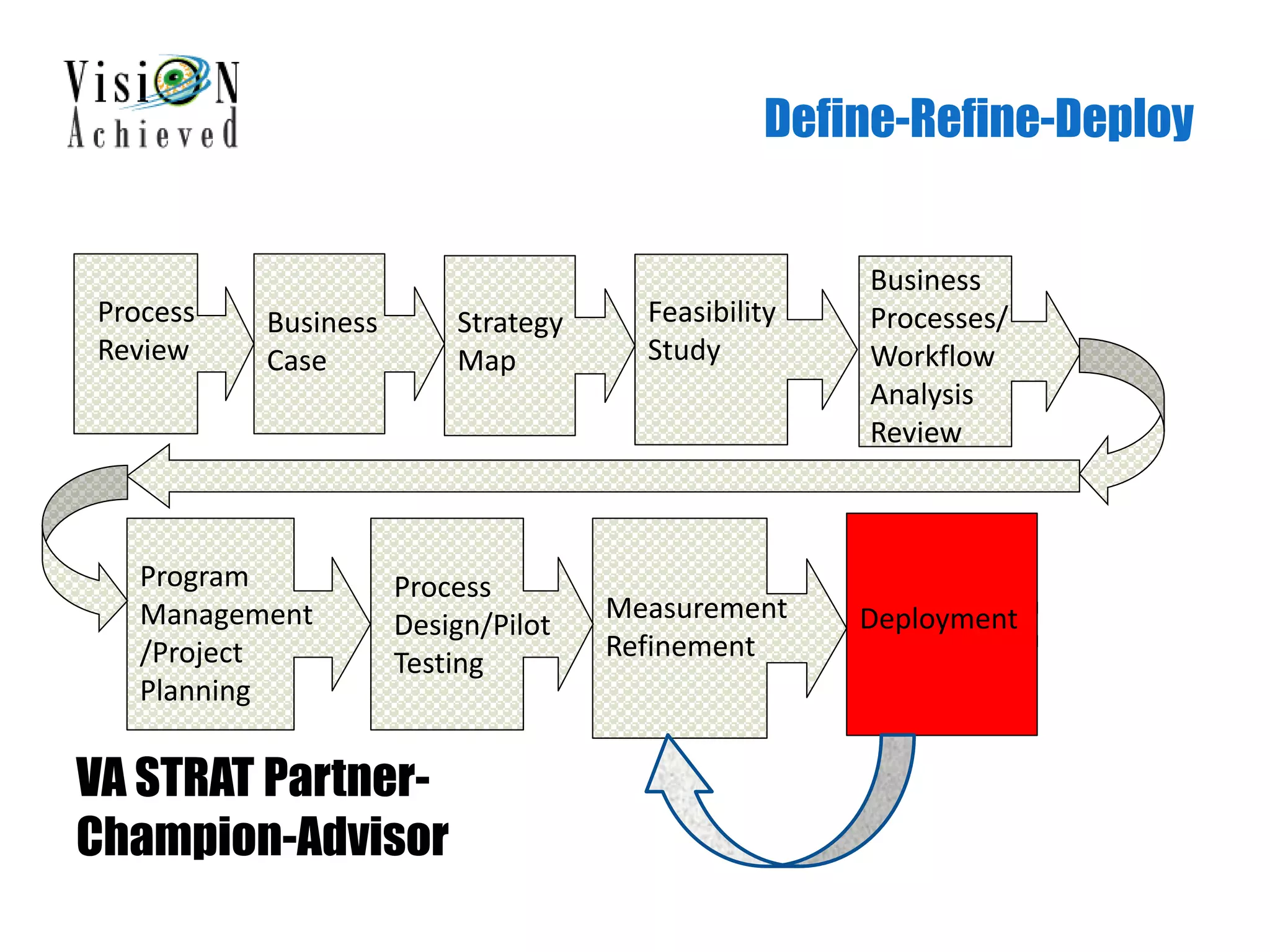
Define-Refine-Deploy
Process
Review
Strategy
Map
Business
Case
Feasibility
Study
Business
Processes/
Workflow
Analysis
Review
Program
Management
/Project
Planning
Process
Design/Pilot
Testing
Measurement
Refinement
Deployment
VA STRAT Partner-
Champion-Advisor
Why HR Matters
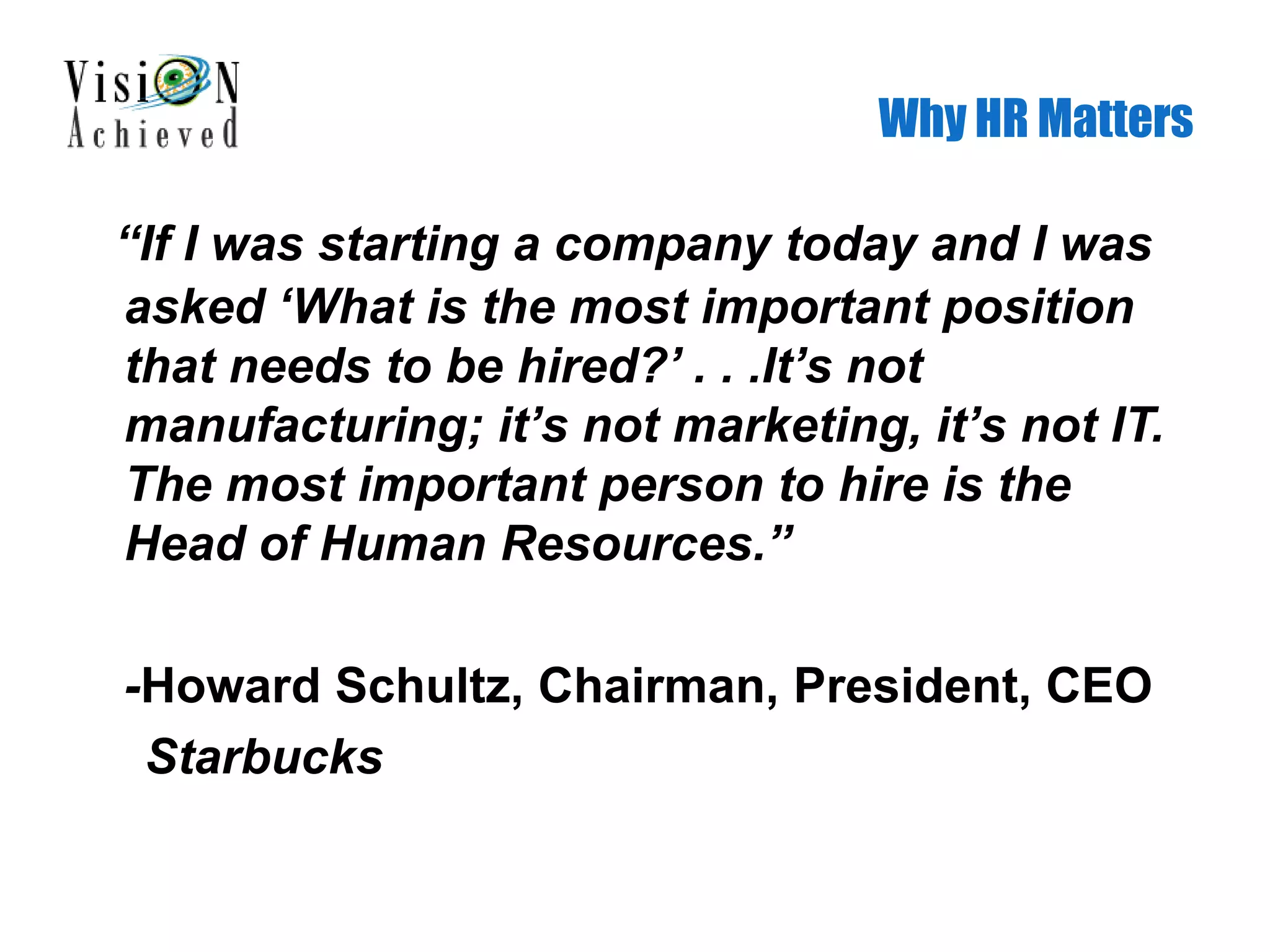
“If I was starting a company today and I was
asked ‘What is the most important position
that needs to be hired?’ . . .It’s not
manufacturing; it’s not marketing, it’s not IT.
The most important person to hire is the
Head of Human Resources.”
-Howard Schultz, Chairman, President, CEO
Starbucks
Why HR Matters
• The average financial analysts base 35% of his or her investment decision
on non-financial information – Harvard Business Review
• Companies with an effective and well executed strategic HR function have
half the turnover, four times the sales per employee, and a market to book
value of more than three times as large as those that do not – Academy of
Management Journal
• Companies that follow HR best [strategic] practices have more than 50%
higher market value than those who do not – Workforce Management
Strategic Human Resources is a Key Business Differentiator
What is Strategic HR
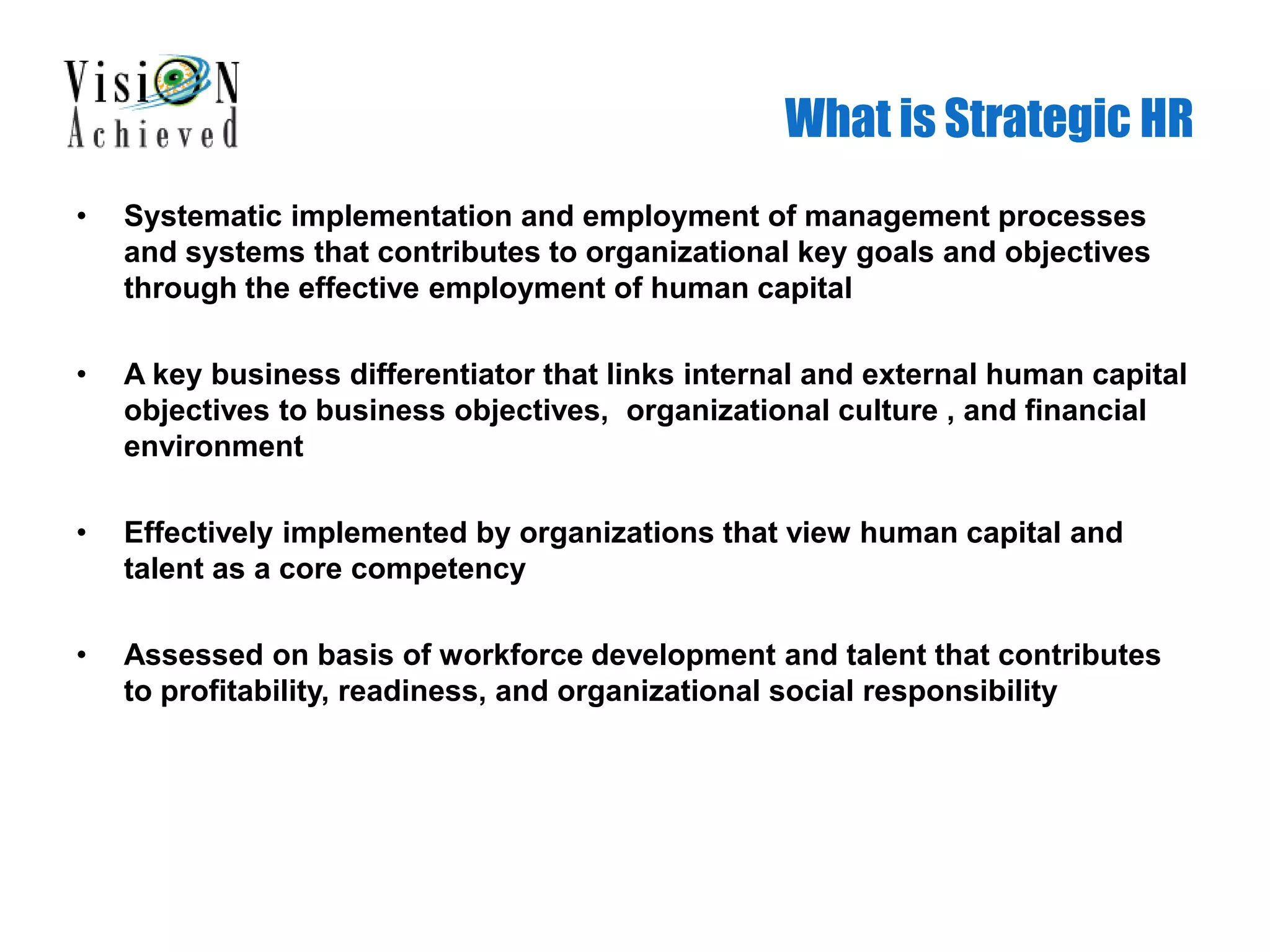
• Systematic implementation and employment of management processes
and systems that contributes to organizational key goals and objectives
through the effective employment of human capital
• A key business differentiator that links internal and external human capital
objectives to business objectives, organizational culture , and financial
environment
• Effectively implemented by organizations that view human capital and
talent as a core competency
• Assessed on basis of workforce development and talent that contributes
to profitability, readiness, and organizational social responsibility
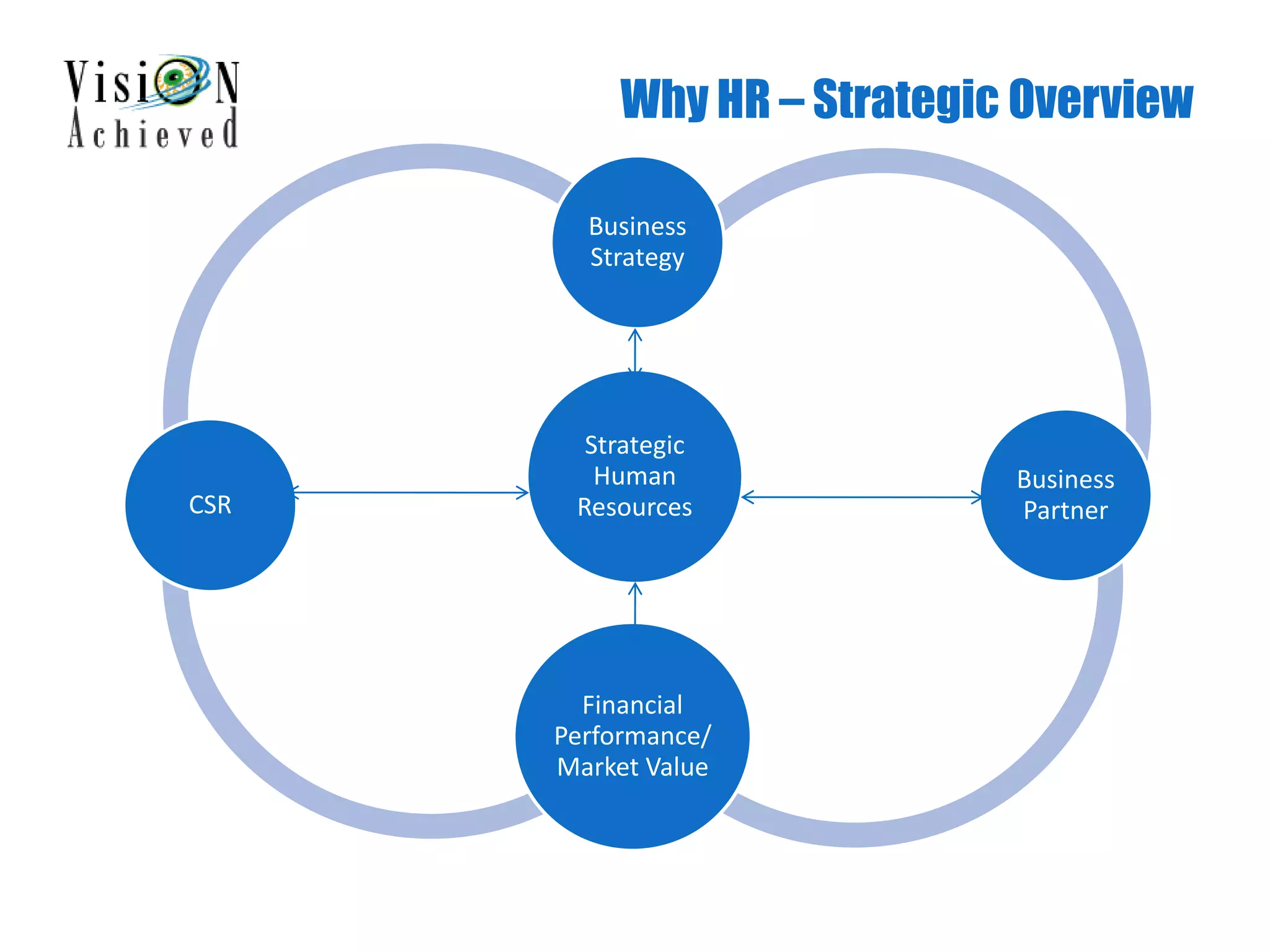
Why HR – Strategic Overview
Strategic
Human
Resources
Business
Strategy
Business
Partner
Financial
Performance/
Market Value
CSR
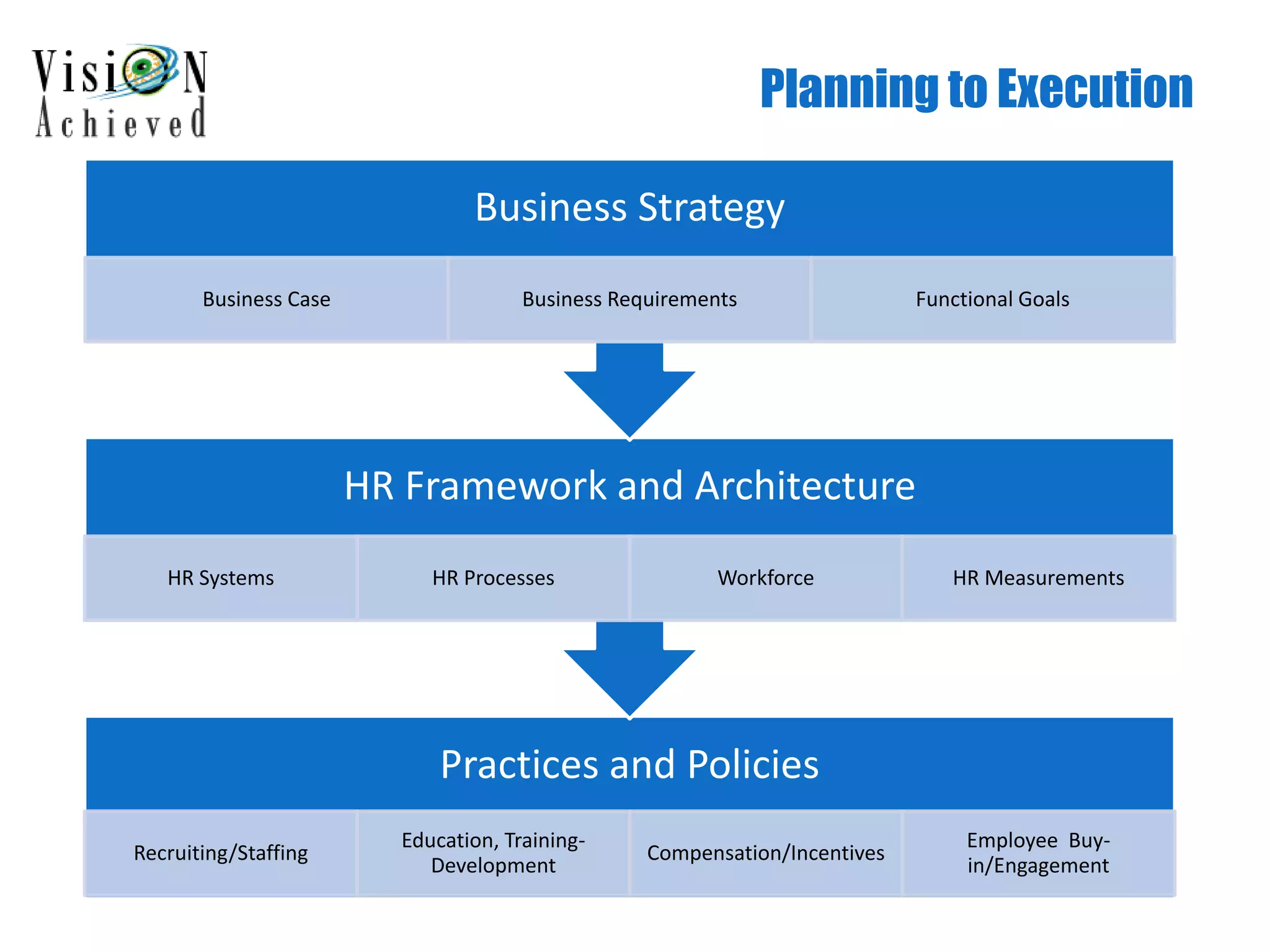
Planning to Execution
Practices and Policies
Recruiting/Staffing
Education, Training-
Development
Compensation/Incentives
Employee Buy-
in/Engagement
HR Framework and Architecture
HR Systems HR Processes Workforce HR Measurements
Business Strategy
Business Case Business Requirements Functional Goals
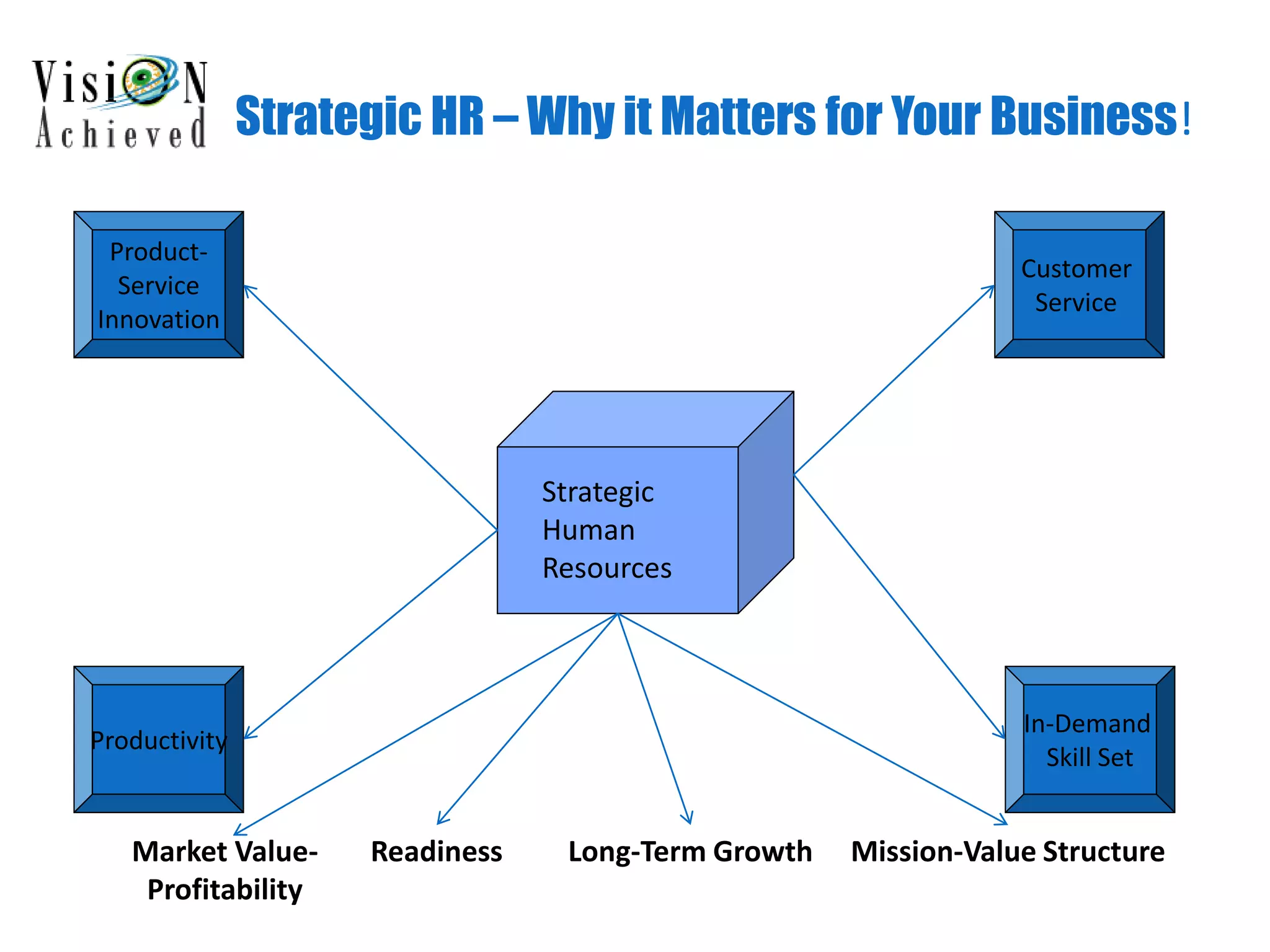
Strategic HR – Why it Matters for Your Business!
Strategic
Human
Resources
Product-
Service
Innovation
Productivity
Customer
Service
In-Demand
Skill Set
Market Value-
Profitability
Readiness Long-Term Growth Mission-Value Structure
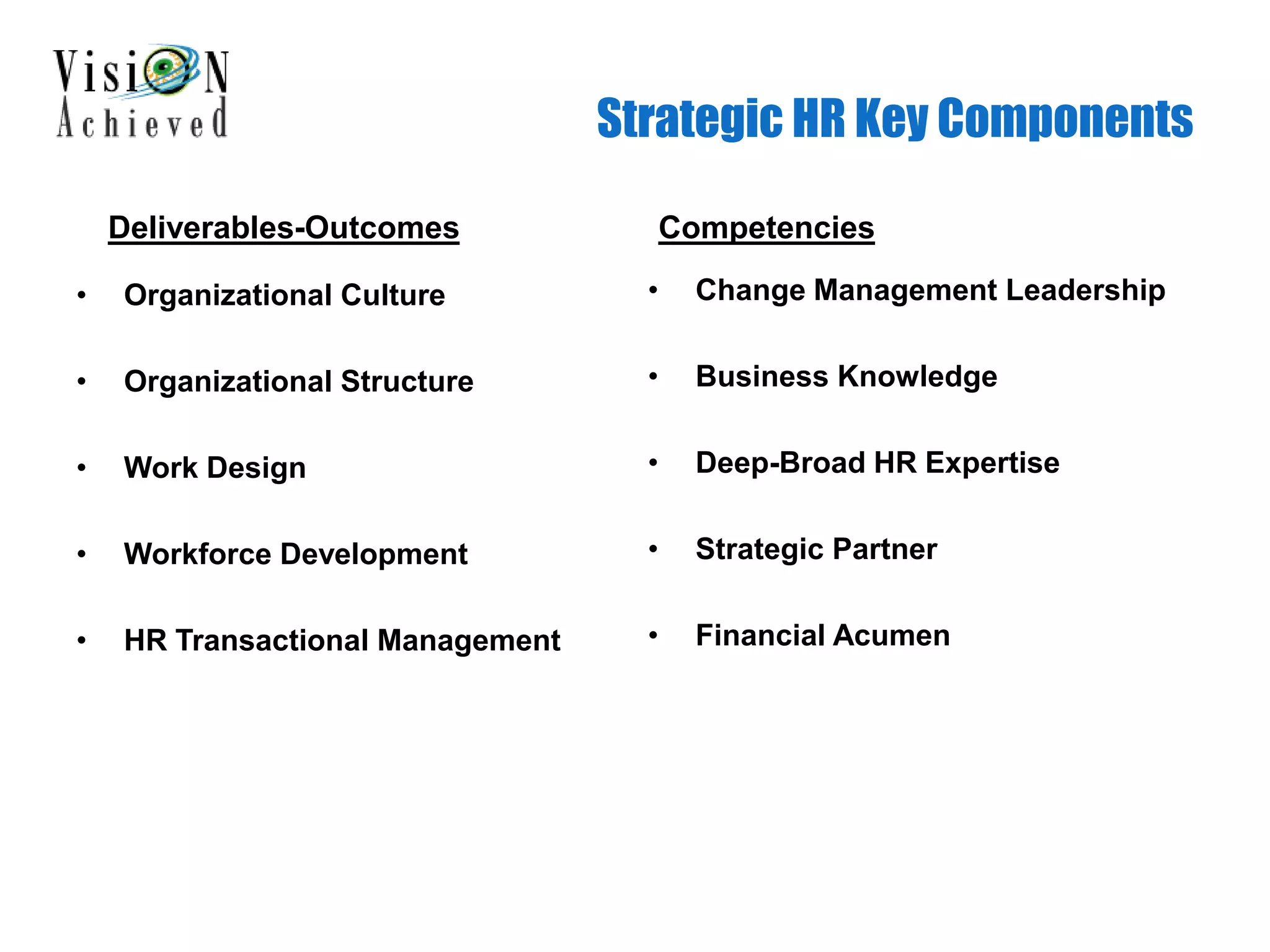
Strategic HR Key Components
• Organizational Culture
• Organizational Structure
• Work Design
• Workforce Development
• HR Transactional Management
• Change Management Leadership
• Business Knowledge
• Deep-Broad HR Expertise
• Strategic Partner
• Financial Acumen
CompetenciesDeliverables-Outcomes
Real Value of Strategic HR
Effective development and implementation
of key performance measures, drivers,
enablers, and or key performance
indicators that are continuously measured
within the context of the business strategy
goals and objectives
Misalignment-No HR Structure
• Lost connection with organizational strategy– wrong person in wrong
place at wrong time – Employees have no connection to end-game or
goals
• High-rate of turnover – Accession-Recruitment can run from .5 to 2.5 (on
average) of incumbent’s salary
• Lost customer engagement – Customers/Clients rarely forgive bad
experiences
• Competencies mismatched – Undesirable and Desirable turnover increase
in frequency and employees lose engagement
Missed Opportunities, Clients, and Growth
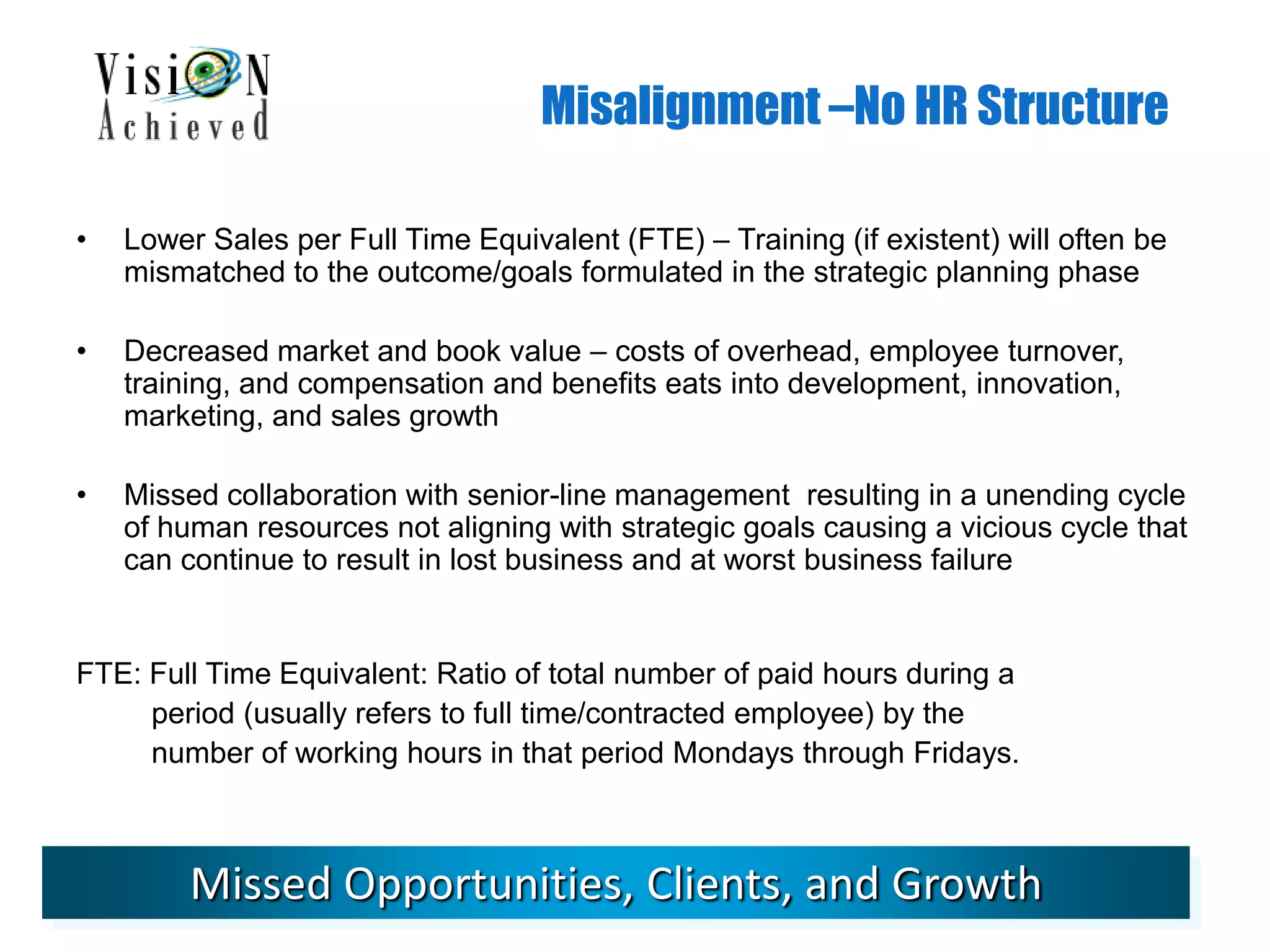
Misalignment –No HR Structure
• Lower Sales per Full Time Equivalent (FTE) – Training (if existent) will often be
mismatched to the outcome/goals formulated in the strategic planning phase
• Decreased market and book value – costs of overhead, employee turnover,
training, and compensation and benefits eats into development, innovation,
marketing, and sales growth
• Missed collaboration with senior-line management resulting in a unending cycle
of human resources not aligning with strategic goals causing a vicious cycle that
can continue to result in lost business and at worst business failure
FTE: Full Time Equivalent: Ratio of total number of paid hours during a
period (usually refers to full time/contracted employee) by the
number of working hours in that period Mondays through Fridays.
Missed Opportunities, Clients, and Growth
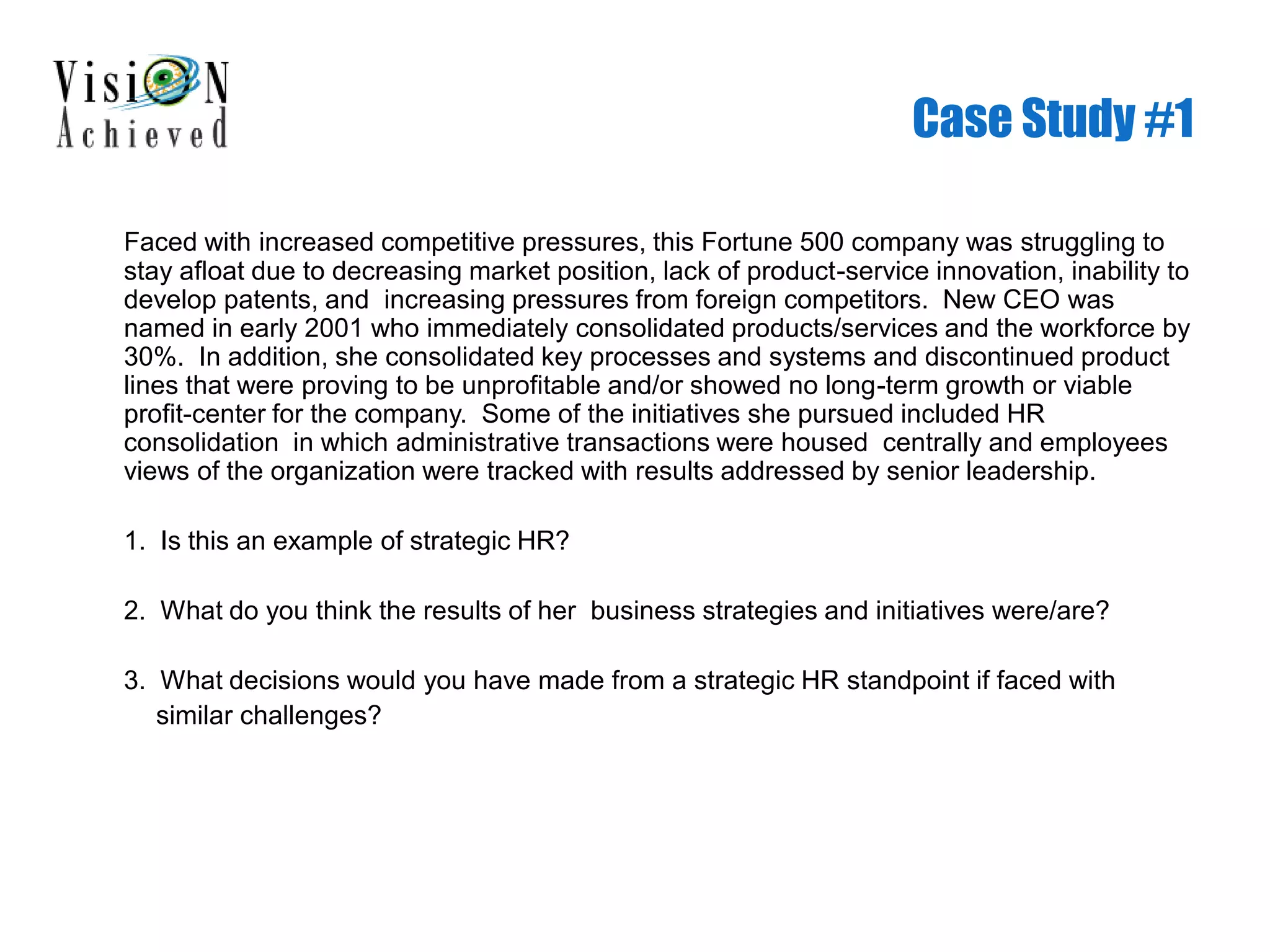
Case Study #1
Faced with increased competitive pressures, this Fortune 500 company was struggling to
stay afloat due to decreasing market position, lack of product-service innovation, inability to
develop patents, and increasing pressures from foreign competitors. New CEO was
named in early 2001 who immediately consolidated products/services and the workforce by
30%. In addition, she consolidated key processes and systems and discontinued product
lines that were proving to be unprofitable and/or showed no long-term growth or viable
profit-center for the company. Some of the initiatives she pursued included HR
consolidation in which administrative transactions were housed centrally and employees
views of the organization were tracked with results addressed by senior leadership.
1. Is this an example of strategic HR?
2. What do you think the results of her business strategies and initiatives were/are?
3. What decisions would you have made from a strategic HR standpoint if faced with
similar challenges?
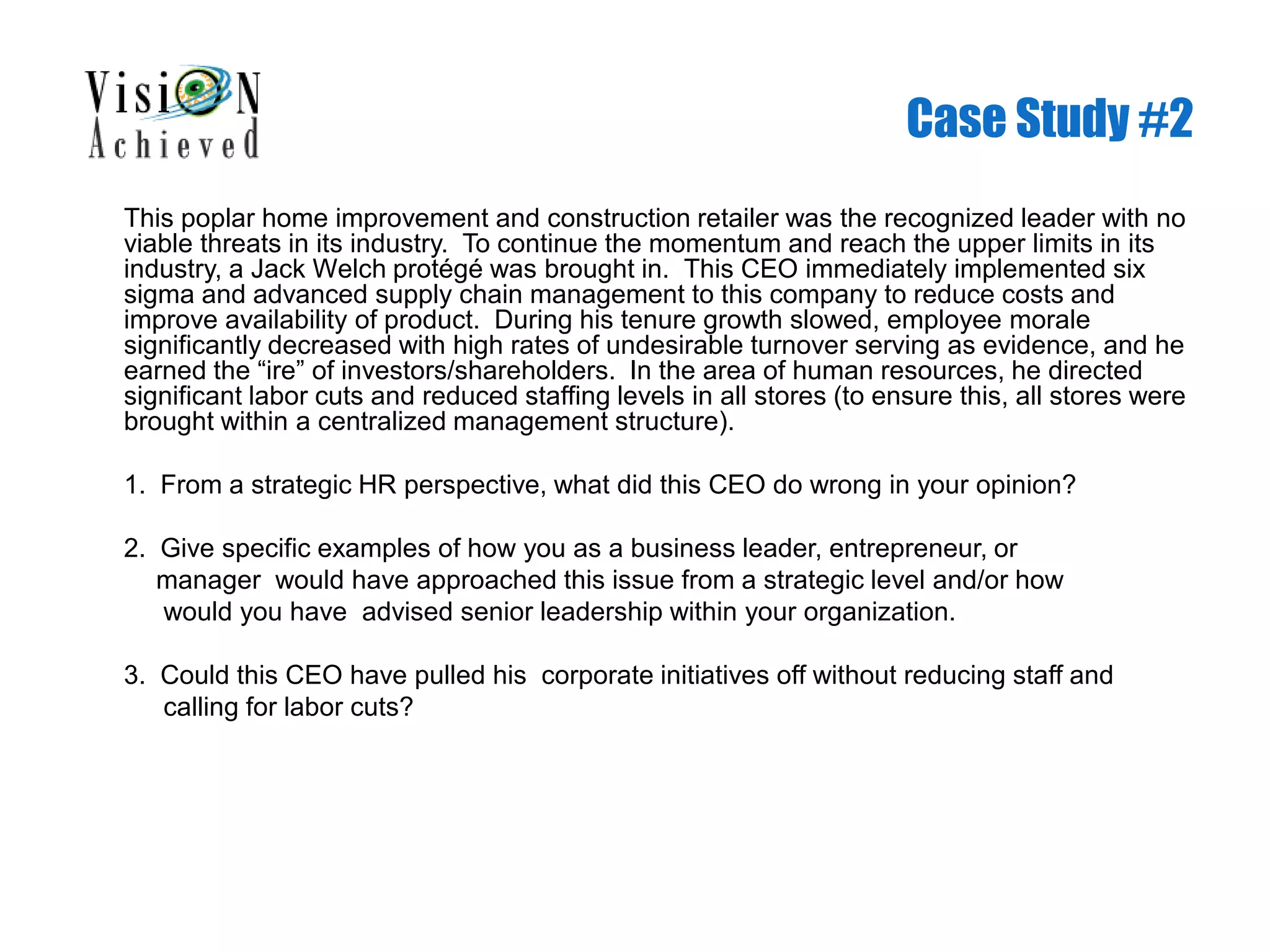
Case Study #2
This poplar home improvement and construction retailer was the recognized leader with no
viable threats in its industry. To continue the momentum and reach the upper limits in its
industry, a Jack Welch protégé was brought in. This CEO immediately implemented six
sigma and advanced supply chain management to this company to reduce costs and
improve availability of product. During his tenure growth slowed, employee morale
significantly decreased with high rates of undesirable turnover serving as evidence, and he
earned the “ire” of investors/shareholders. In the area of human resources, he directed
significant labor cuts and reduced staffing levels in all stores (to ensure this, all stores were
brought within a centralized management structure).
1. From a strategic HR perspective, what did this CEO do wrong in your opinion?
2. Give specific examples of how you as a business leader, entrepreneur, or
manager would have approached this issue from a strategic level and/or how
would you have advised senior leadership within your organization.
3. Could this CEO have pulled his corporate initiatives off without reducing staff and
calling for labor cuts?
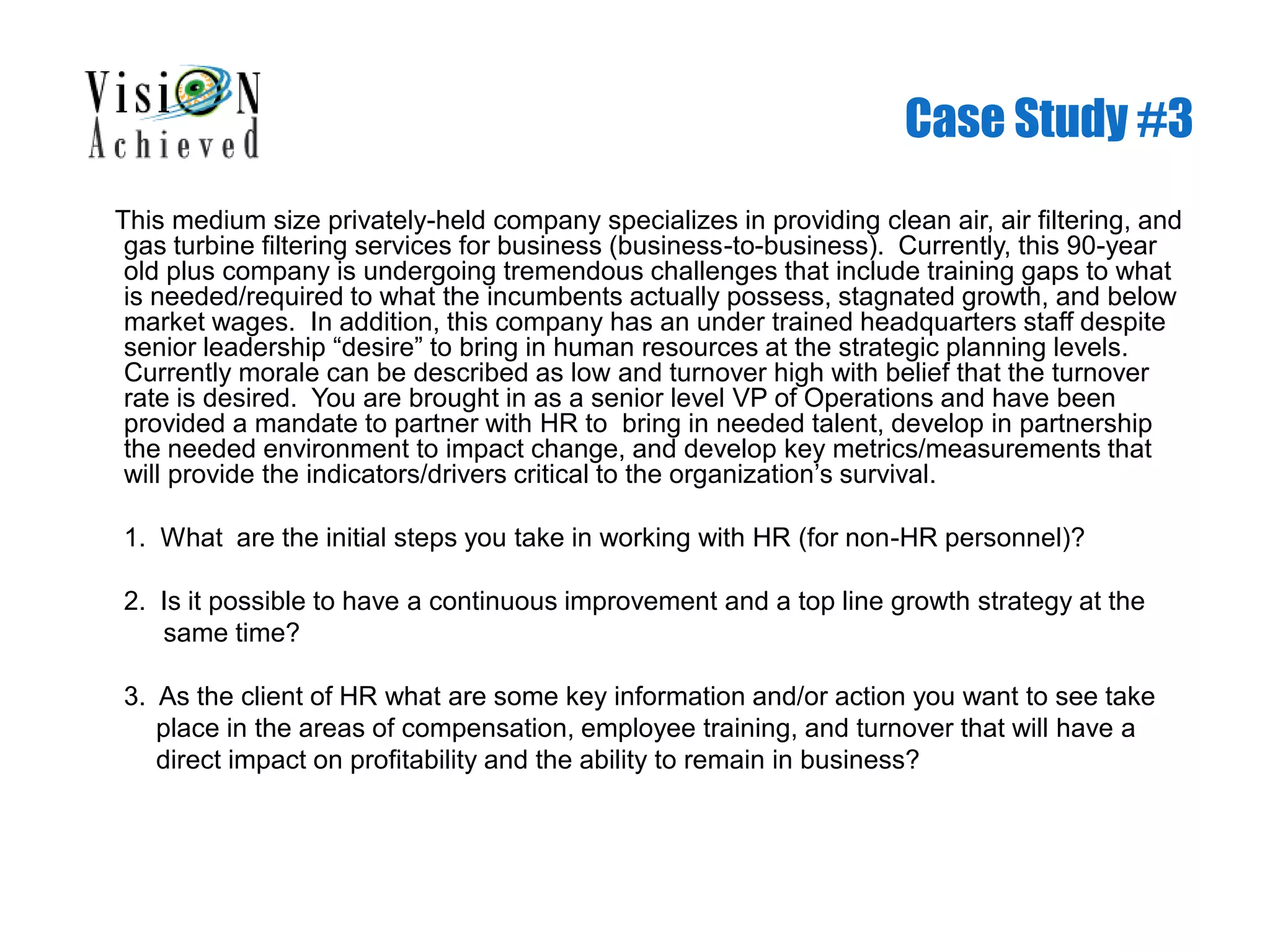
Case Study #3
This medium size privately-held company specializes in providing clean air, air filtering, and
gas turbine filtering services for business (business-to-business). Currently, this 90-year
old plus company is undergoing tremendous challenges that include training gaps to what
is needed/required to what the incumbents actually possess, stagnated growth, and below
market wages. In addition, this company has an under trained headquarters staff despite
senior leadership “desire” to bring in human resources at the strategic planning levels.
Currently morale can be described as low and turnover high with belief that the turnover
rate is desired. You are brought in as a senior level VP of Operations and have been
provided a mandate to partner with HR to bring in needed talent, develop in partnership
the needed environment to impact change, and develop key metrics/measurements that
will provide the indicators/drivers critical to the organization’s survival.
1. What are the initial steps you take in working with HR (for non-HR personnel)?
2. Is it possible to have a continuous improvement and a top line growth strategy at the
same time?
3. As the client of HR what are some key information and/or action you want to see take
place in the areas of compensation, employee training, and turnover that will have a
direct impact on profitability and the ability to remain in business?
Summary
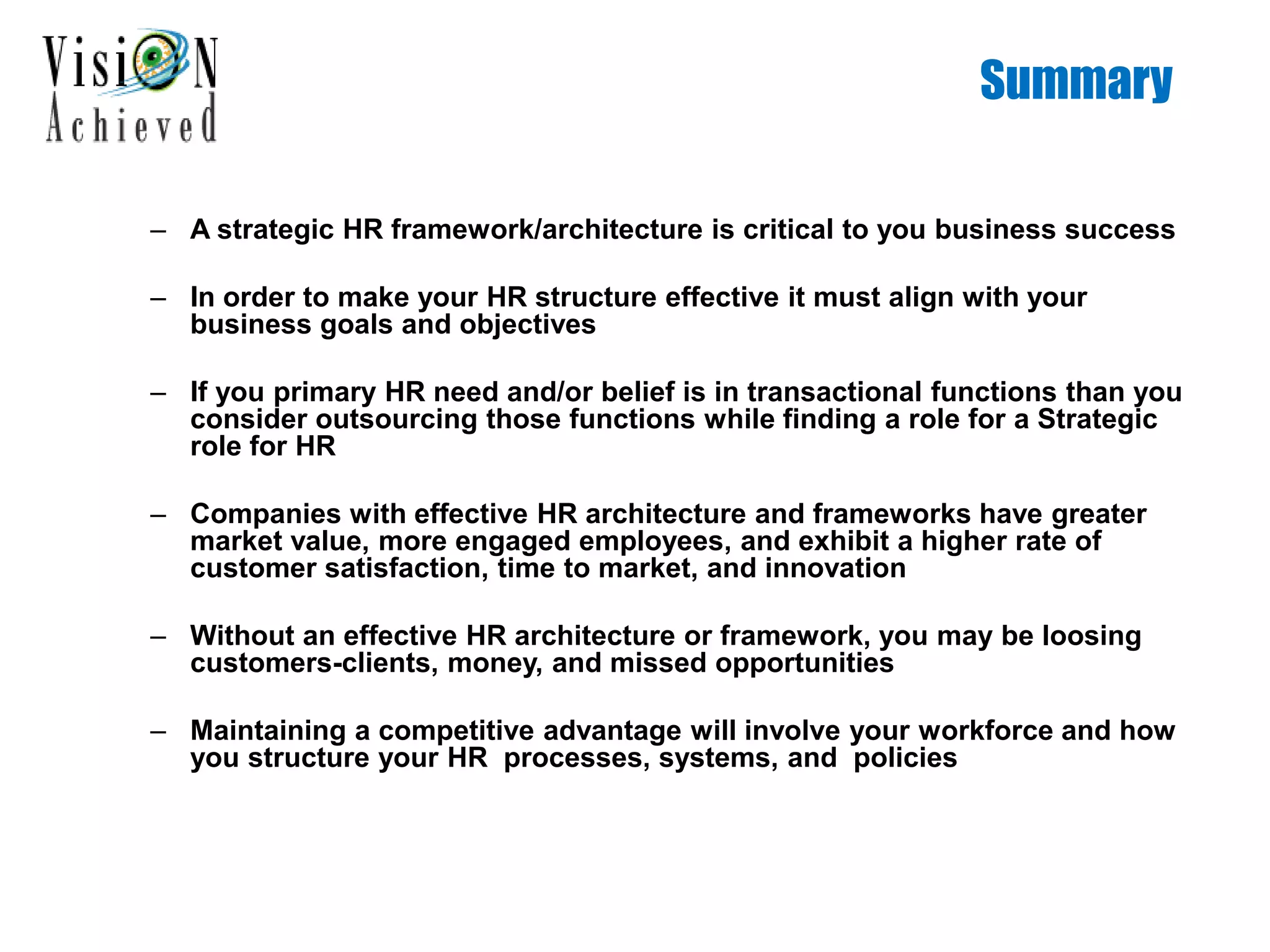
– A strategic HR framework/architecture is critical to you business success
– In order to make your HR structure effective it must align with your
business goals and objectives
– If you primary HR need and/or belief is in transactional functions than you
consider outsourcing those functions while finding a role for a Strategic
role for HR
– Companies with effective HR architecture and frameworks have greater
market value, more engaged employees, and exhibit a higher rate of
customer satisfaction, time to market, and innovation
– Without an effective HR architecture or framework, you may be loosing
customers-clients, money, and missed opportunities
– Maintaining a competitive advantage will involve your workforce and how
you structure your HR processes, systems, and policies
Contact
Vision Achieved Strategies
1779 Kirby Parkway
Suite 1-79
Germantown, TN 38138
http://www.vastrat.com
Vision Achieved Strategies
3058 Saint Dunstans Road
Lithonia, GA 30058
George Taylor
901-240-2058
http://www.oneminutehrconsultant.com
Thank You
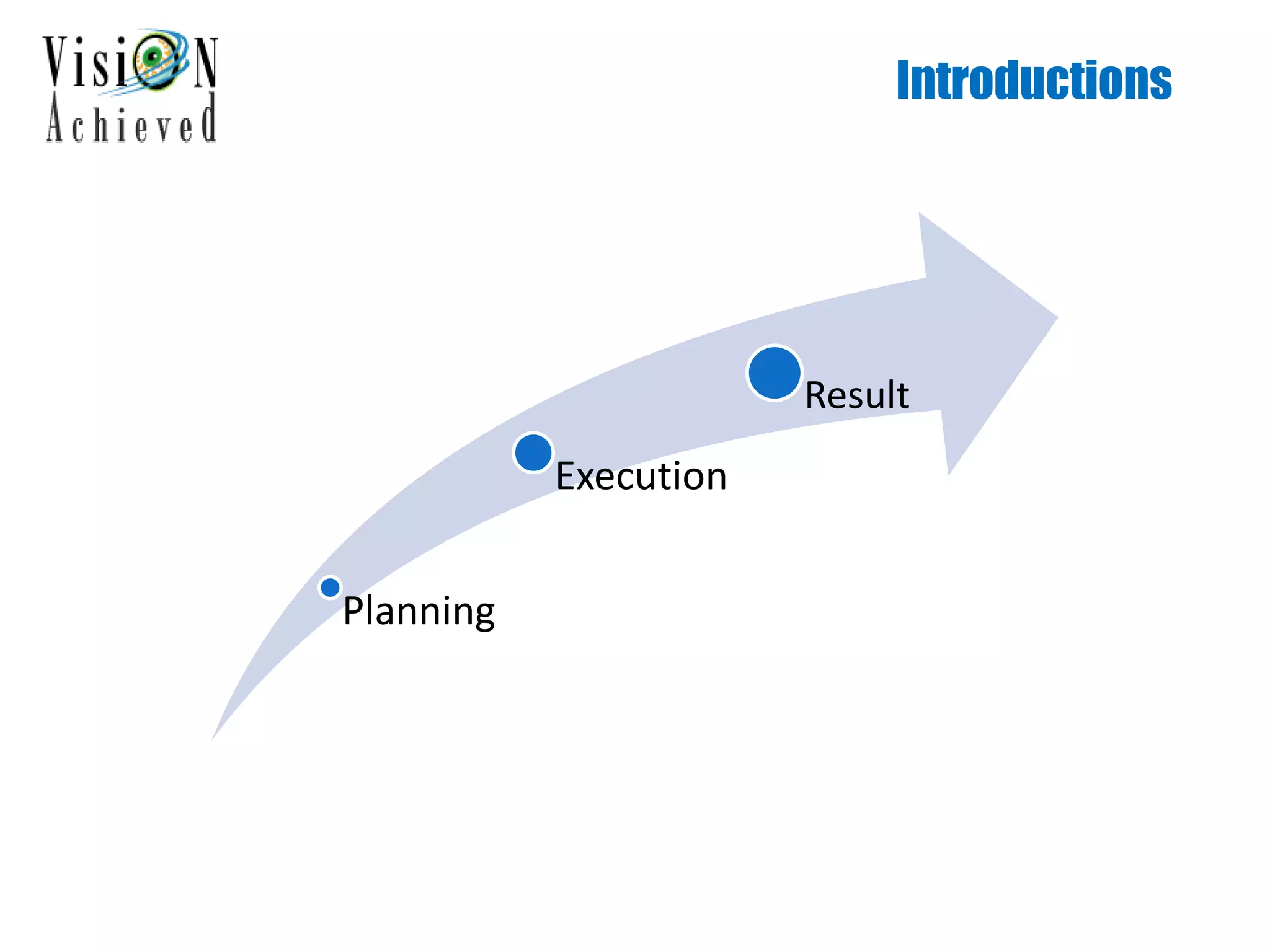
Introductions
Planning
Execution
Result

Why HR Matters Working Copy - Presented in 2009

  • 1.
    Positioning Strategic HRAs Your Organizational Competitive Advantage The Real Value of HR in Your Business George Taylor, MBA(ISM), SPHR (Original Presentation in 2009 – No Significant Updates) Vision Achieved Strategies (VA Strat)
  • 2.
    Agenda – Introduction – WhyHR Matters: The Link to Business Growth, Innovation, and Sustainability – From Strategic Planning to Strategic Execution – Initial Steps in Creating an HR Architecture/Framework – How the absence of an HR architecture is costing you money, customers, and growth – Real-World Examples – Summarize
  • 3.
    Courtesies – Engagement isencouraged and welcomed – please refrain from soapboxes – Please turn off cell phones, pagers, etc. Take calls outside of room – If you have any questions not related to presentation, please save them for break and/or after presentations – No recording devices are allowed/permitted – Respect differences of opinion – Have fun
  • 4.
  • 5.
    Why HR Matters “IfI was starting a company today and I was asked ‘What is the most important position that needs to be hired?’ . . .It’s not manufacturing; it’s not marketing, it’s not IT. The most important person to hire is the Head of Human Resources.” -Howard Schultz, Chairman, President, CEO Starbucks
  • 6.
    Why HR Matters •The average financial analysts base 35% of his or her investment decision on non-financial information – Harvard Business Review • Companies with an effective and well executed strategic HR function have half the turnover, four times the sales per employee, and a market to book value of more than three times as large as those that do not – Academy of Management Journal • Companies that follow HR best [strategic] practices have more than 50% higher market value than those who do not – Workforce Management Strategic Human Resources is a Key Business Differentiator
  • 7.
    What is StrategicHR • Systematic implementation and employment of management processes and systems that contributes to organizational key goals and objectives through the effective employment of human capital • A key business differentiator that links internal and external human capital objectives to business objectives, organizational culture , and financial environment • Effectively implemented by organizations that view human capital and talent as a core competency • Assessed on basis of workforce development and talent that contributes to profitability, readiness, and organizational social responsibility
  • 8.
    Why HR –Strategic Overview Strategic Human Resources Business Strategy Business Partner Financial Performance/ Market Value CSR
  • 9.
    Planning to Execution Practicesand Policies Recruiting/Staffing Education, Training- Development Compensation/Incentives Employee Buy- in/Engagement HR Framework and Architecture HR Systems HR Processes Workforce HR Measurements Business Strategy Business Case Business Requirements Functional Goals
  • 10.
    Strategic HR –Why it Matters for Your Business! Strategic Human Resources Product- Service Innovation Productivity Customer Service In-Demand Skill Set Market Value- Profitability Readiness Long-Term Growth Mission-Value Structure
  • 11.
    Strategic HR KeyComponents • Organizational Culture • Organizational Structure • Work Design • Workforce Development • HR Transactional Management • Change Management Leadership • Business Knowledge • Deep-Broad HR Expertise • Strategic Partner • Financial Acumen CompetenciesDeliverables-Outcomes
  • 12.
    Real Value ofStrategic HR Effective development and implementation of key performance measures, drivers, enablers, and or key performance indicators that are continuously measured within the context of the business strategy goals and objectives
  • 13.
    Misalignment-No HR Structure •Lost connection with organizational strategy– wrong person in wrong place at wrong time – Employees have no connection to end-game or goals • High-rate of turnover – Accession-Recruitment can run from .5 to 2.5 (on average) of incumbent’s salary • Lost customer engagement – Customers/Clients rarely forgive bad experiences • Competencies mismatched – Undesirable and Desirable turnover increase in frequency and employees lose engagement Missed Opportunities, Clients, and Growth
  • 14.
    Misalignment –No HRStructure • Lower Sales per Full Time Equivalent (FTE) – Training (if existent) will often be mismatched to the outcome/goals formulated in the strategic planning phase • Decreased market and book value – costs of overhead, employee turnover, training, and compensation and benefits eats into development, innovation, marketing, and sales growth • Missed collaboration with senior-line management resulting in a unending cycle of human resources not aligning with strategic goals causing a vicious cycle that can continue to result in lost business and at worst business failure FTE: Full Time Equivalent: Ratio of total number of paid hours during a period (usually refers to full time/contracted employee) by the number of working hours in that period Mondays through Fridays. Missed Opportunities, Clients, and Growth
  • 15.
    Case Study #1 Facedwith increased competitive pressures, this Fortune 500 company was struggling to stay afloat due to decreasing market position, lack of product-service innovation, inability to develop patents, and increasing pressures from foreign competitors. New CEO was named in early 2001 who immediately consolidated products/services and the workforce by 30%. In addition, she consolidated key processes and systems and discontinued product lines that were proving to be unprofitable and/or showed no long-term growth or viable profit-center for the company. Some of the initiatives she pursued included HR consolidation in which administrative transactions were housed centrally and employees views of the organization were tracked with results addressed by senior leadership. 1. Is this an example of strategic HR? 2. What do you think the results of her business strategies and initiatives were/are? 3. What decisions would you have made from a strategic HR standpoint if faced with similar challenges?
  • 16.
    Case Study #2 Thispoplar home improvement and construction retailer was the recognized leader with no viable threats in its industry. To continue the momentum and reach the upper limits in its industry, a Jack Welch protégé was brought in. This CEO immediately implemented six sigma and advanced supply chain management to this company to reduce costs and improve availability of product. During his tenure growth slowed, employee morale significantly decreased with high rates of undesirable turnover serving as evidence, and he earned the “ire” of investors/shareholders. In the area of human resources, he directed significant labor cuts and reduced staffing levels in all stores (to ensure this, all stores were brought within a centralized management structure). 1. From a strategic HR perspective, what did this CEO do wrong in your opinion? 2. Give specific examples of how you as a business leader, entrepreneur, or manager would have approached this issue from a strategic level and/or how would you have advised senior leadership within your organization. 3. Could this CEO have pulled his corporate initiatives off without reducing staff and calling for labor cuts?
  • 17.
    Case Study #3 Thismedium size privately-held company specializes in providing clean air, air filtering, and gas turbine filtering services for business (business-to-business). Currently, this 90-year old plus company is undergoing tremendous challenges that include training gaps to what is needed/required to what the incumbents actually possess, stagnated growth, and below market wages. In addition, this company has an under trained headquarters staff despite senior leadership “desire” to bring in human resources at the strategic planning levels. Currently morale can be described as low and turnover high with belief that the turnover rate is desired. You are brought in as a senior level VP of Operations and have been provided a mandate to partner with HR to bring in needed talent, develop in partnership the needed environment to impact change, and develop key metrics/measurements that will provide the indicators/drivers critical to the organization’s survival. 1. What are the initial steps you take in working with HR (for non-HR personnel)? 2. Is it possible to have a continuous improvement and a top line growth strategy at the same time? 3. As the client of HR what are some key information and/or action you want to see take place in the areas of compensation, employee training, and turnover that will have a direct impact on profitability and the ability to remain in business?
  • 18.
    Summary – A strategicHR framework/architecture is critical to you business success – In order to make your HR structure effective it must align with your business goals and objectives – If you primary HR need and/or belief is in transactional functions than you consider outsourcing those functions while finding a role for a Strategic role for HR – Companies with effective HR architecture and frameworks have greater market value, more engaged employees, and exhibit a higher rate of customer satisfaction, time to market, and innovation – Without an effective HR architecture or framework, you may be loosing customers-clients, money, and missed opportunities – Maintaining a competitive advantage will involve your workforce and how you structure your HR processes, systems, and policies
  • 19.
    Contact Vision Achieved Strategies 1779Kirby Parkway Suite 1-79 Germantown, TN 38138 http://www.vastrat.com Vision Achieved Strategies 3058 Saint Dunstans Road Lithonia, GA 30058 George Taylor 901-240-2058 http://www.oneminutehrconsultant.com
  • 20.
  • 21.