Hazardous Waste
Prepared By
Roksana Aftab Ruhi
Department of Agriculture
Noakhali Science and Technology University
Noakhali , Bangladesh.
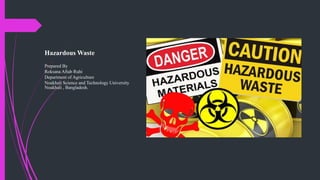
Hazardous Waste
Waste with properties that make it dangerous or potentially harmful to human health or the environment
called hazardous waste .These waste comprises with all toxic chemicals , radioactive chemicals or
infectious wastes.
Hazardous waste is a waste including solids, liquids and compressed gasses that poses substantial or
potential threats to public health or the environment.
Continued….
 Characteristic of Hazardous Wastes
 Ignitibility
Ignitable wastes create fires under certain conditions, are spontaneously combustible.
Ex- Waste oils.gasoline.alcohols.
 Corrosiveness
These are acids or bases that are capable of corroding metal containers.
Ex- Battery acid.
 Reactivity
They are unstable under normal conditions; it reacts violently with water. It forms potentially
explosive mixtures with water.
Ex – Lithium-Sulphur
 Toxicity
Toxic wastes are harmful or fatal when ingested or absorbed.
Continued….
 Industrial Applications of Hazardous Wastes
1. Printing shops
2. Automotive Repairs
3. Laboratories
4. Autobody Shops
5. Dry Cleaners
6. Chemical Distributers
7. Service Providers
8. Metal Finishing
9. Food Processing
10. Fibre Glass Mnaufacturing
11. Mining Operations
12. Wood Processing Industries
13. Hospitals
14. Oils and Gas Sectors
15. Commercial Coating Suppliers
Continued….
 Hazardous Waste Reduction and Treatments
 Recycling and reuse of wastes
Many hazardous wastes can be recycled into new products.
Ex- Lead –Acid batteries where the heavy metals can be recovered and used in new products.
 Neutralization and disposal of waste
Some hazardous wastes can be processed so that the hazardous component of the waste is eliminated and
making it non hazardous waste.
 Destruction/Waste to Energy
A hazardous waste maybe destroyed by incinerating it at a high a temperature. Flammable wastes can be
sometimes be burned as energy sources.
 Biodegradation
Biodegradation of hazardous waste describe the conversion of toxic wastes by enzymatic biological processes
to less toxic or non toxic molecules.
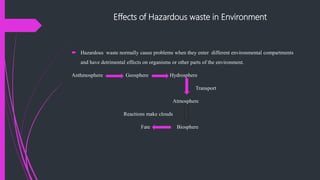
Effects of Hazardous waste in Environment
 Hazardous waste normally cause problems when they enter different environmental compartments
and have detrimental effects on organisms or other parts of the environment.
Anthmosphere Geosphere Hydrosphere
Transport
Atmosphere
Reactions make clouds
Fate Biosphere
Hazardous waste

Hazardous waste

  • 1.
    Hazardous Waste Prepared By RoksanaAftab Ruhi Department of Agriculture Noakhali Science and Technology University Noakhali , Bangladesh.
  • 2.
    Hazardous Waste Waste withproperties that make it dangerous or potentially harmful to human health or the environment called hazardous waste .These waste comprises with all toxic chemicals , radioactive chemicals or infectious wastes. Hazardous waste is a waste including solids, liquids and compressed gasses that poses substantial or potential threats to public health or the environment.
  • 3.
    Continued….  Characteristic ofHazardous Wastes  Ignitibility Ignitable wastes create fires under certain conditions, are spontaneously combustible. Ex- Waste oils.gasoline.alcohols.  Corrosiveness These are acids or bases that are capable of corroding metal containers. Ex- Battery acid.  Reactivity They are unstable under normal conditions; it reacts violently with water. It forms potentially explosive mixtures with water. Ex – Lithium-Sulphur  Toxicity Toxic wastes are harmful or fatal when ingested or absorbed.
  • 4.
    Continued….  Industrial Applicationsof Hazardous Wastes 1. Printing shops 2. Automotive Repairs 3. Laboratories 4. Autobody Shops 5. Dry Cleaners 6. Chemical Distributers 7. Service Providers 8. Metal Finishing 9. Food Processing 10. Fibre Glass Mnaufacturing 11. Mining Operations 12. Wood Processing Industries 13. Hospitals 14. Oils and Gas Sectors 15. Commercial Coating Suppliers
  • 5.
    Continued….  Hazardous WasteReduction and Treatments  Recycling and reuse of wastes Many hazardous wastes can be recycled into new products. Ex- Lead –Acid batteries where the heavy metals can be recovered and used in new products.  Neutralization and disposal of waste Some hazardous wastes can be processed so that the hazardous component of the waste is eliminated and making it non hazardous waste.  Destruction/Waste to Energy A hazardous waste maybe destroyed by incinerating it at a high a temperature. Flammable wastes can be sometimes be burned as energy sources.  Biodegradation Biodegradation of hazardous waste describe the conversion of toxic wastes by enzymatic biological processes to less toxic or non toxic molecules.
  • 6.
    Effects of Hazardouswaste in Environment  Hazardous waste normally cause problems when they enter different environmental compartments and have detrimental effects on organisms or other parts of the environment. Anthmosphere Geosphere Hydrosphere Transport Atmosphere Reactions make clouds Fate Biosphere