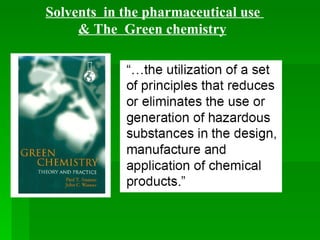
Solvents  in the pharmaceutical use  & The  Green chemistry
Solvents Solvent chemistry Terms used in the solvent discussion  Classification of  the solvents Practical difficulties in meeting the residual solvents level Green chemistry Principles Atom Economy Greener ways of the preparation of  some common chemicals Solvent free reactions Ionic liquids Microwave synthesis PMI ( Process  mass Intensity ) conclusion Contents
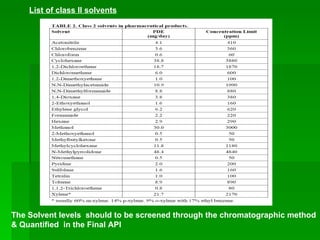
List of class II solvents The Solvent levels  should to be screened through the chromatographic method  & Quantified  in the Final API
Genotoxic carcinogens Carcinogens which are produces cancer by the affecting the genes are  or chromosomes Nurotoxicity  The ability  of  a substance to  cause adverse effect on the nervous system PDE: Abbreviation for permitted daily exposure
LIST OF CLASS III SOLVENTS Since the solvents are class-III  the accepted  limit  is  LOD NMT 0.5% in  Final API .No need of the chromatographic method  or  Quantification.
Class II solvent for which  no toxicological data available .  Due to the non availability of the toxicological data the manufacturer should give the  Justification for  the usage & the residual solvent levels of the above solvents in the  final API.
 
Preferably all the reactants & reagents used should be the RSMS


GREEN  ROUTES FOR THE SYNTHESIS OF THE COMMON CHEMICALS


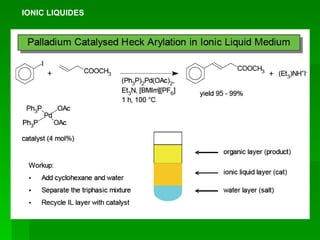
IONIC LIQUIDES
Enantioseletive robinson   annulation Solvent  free Reaction
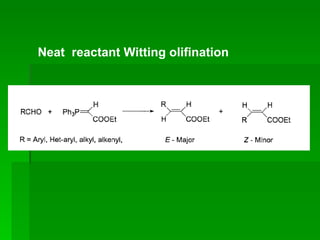
Neat  reactant Witting olifination
Pyridenes synthesis
Synthesis of the 3-coumarins
Chemoseletive aldol condensation


Conclusion Green chemistry   Not  a solution to all environmental problems  But  the most fundamental approach to preventing pollution.
Thank  you

Green Chemistry-An overview

  • 1.
    Solvents inthe pharmaceutical use & The Green chemistry
  • 2.
    Solvents Solvent chemistryTerms used in the solvent discussion Classification of the solvents Practical difficulties in meeting the residual solvents level Green chemistry Principles Atom Economy Greener ways of the preparation of some common chemicals Solvent free reactions Ionic liquids Microwave synthesis PMI ( Process mass Intensity ) conclusion Contents
  • 3.
    List of classII solvents The Solvent levels should to be screened through the chromatographic method & Quantified in the Final API
  • 4.
    Genotoxic carcinogens Carcinogenswhich are produces cancer by the affecting the genes are or chromosomes Nurotoxicity The ability of a substance to cause adverse effect on the nervous system PDE: Abbreviation for permitted daily exposure
  • 5.
    LIST OF CLASSIII SOLVENTS Since the solvents are class-III the accepted limit is LOD NMT 0.5% in Final API .No need of the chromatographic method or Quantification.
  • 6.
    Class II solventfor which no toxicological data available . Due to the non availability of the toxicological data the manufacturer should give the Justification for the usage & the residual solvent levels of the above solvents in the final API.
  • 7.
  • 8.
    Preferably all thereactants & reagents used should be the RSMS
  • 9.
  • 10.
  • 11.
  • 12.
  • 13.
  • 14.
  • 15.
  • 16.
  • 17.
  • 18.
  • 19.
  • 20.
  • 21.
  • 22.
    GREEN ROUTESFOR THE SYNTHESIS OF THE COMMON CHEMICALS
  • 23.
  • 24.
  • 25.
  • 26.
  • 27.
    Enantioseletive robinson annulation Solvent free Reaction
  • 28.
    Neat reactantWitting olifination
  • 29.
  • 30.
    Synthesis of the3-coumarins
  • 31.
  • 32.
  • 33.
  • 34.
  • 35.
  • 36.
  • 37.
  • 38.
  • 39.
  • 40.
  • 41.
  • 42.
  • 43.
  • 44.
  • 45.
  • 46.
  • 47.
  • 48.
  • 49.
  • 50.
  • 51.
    Conclusion Green chemistry Not a solution to all environmental problems But the most fundamental approach to preventing pollution.
  • 52.