Brandon Graviet, Christopher Lee, Dane Hockema, Greg Guillen, and Matt HankinsHASBRO, INC.
History-HasbroFounded in 1923 by Henry Hilal, and Herman Hassenfeld (Hassenfeld Brothers Incorporated).
1930’s Start of Toy Manufacturing, medical sets for juniors, 1950’s Mr. Potato Head.
1968 Company changes name to Hasbro Industries and goes public.
1984 Acquisition of Milton Bradley
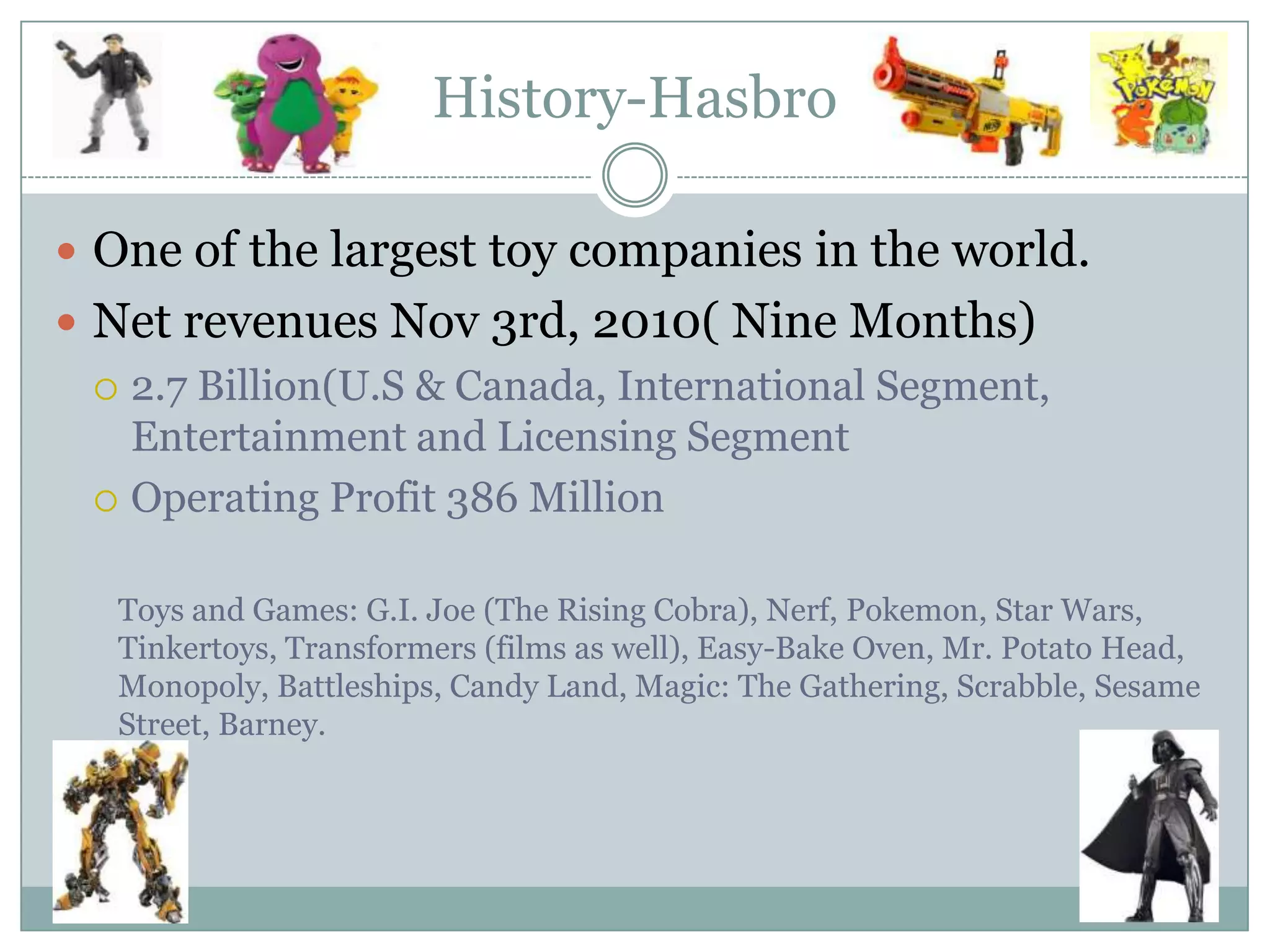
1995 Merger Fail with Mattel (5 billion offer)History-HasbroOne of the largest toy companies in the world.Net revenues Nov 3rd, 2010( Nine Months)2.7 Billion(U.S & Canada, International Segment, Entertainment and Licensing SegmentOperating Profit 386 MillionToys and Games: G.I. Joe (The Rising Cobra), Nerf, Pokemon, Star Wars, Tinkertoys, Transformers (films as well), Easy-Bake Oven, Mr. Potato Head, Monopoly, Battleships, Candy Land, Magic: The Gathering, Scrabble, Sesame Street, Barney.
External Environment factors key to HASBROEconomic ConditionsConsumption down, Per capita income DownSociocultural/Demographic trendsAge compressionTraditional Toys not acceptable in societyTechnologicalVideo games, PCs, rapid development of affordable high tech entertainment.Political/LegalHeavy regulatory environment- taxes expected to rise in futureGlobalCheap manufacturing abroad, low regulatory environment abroad,Growing markets in East Asia
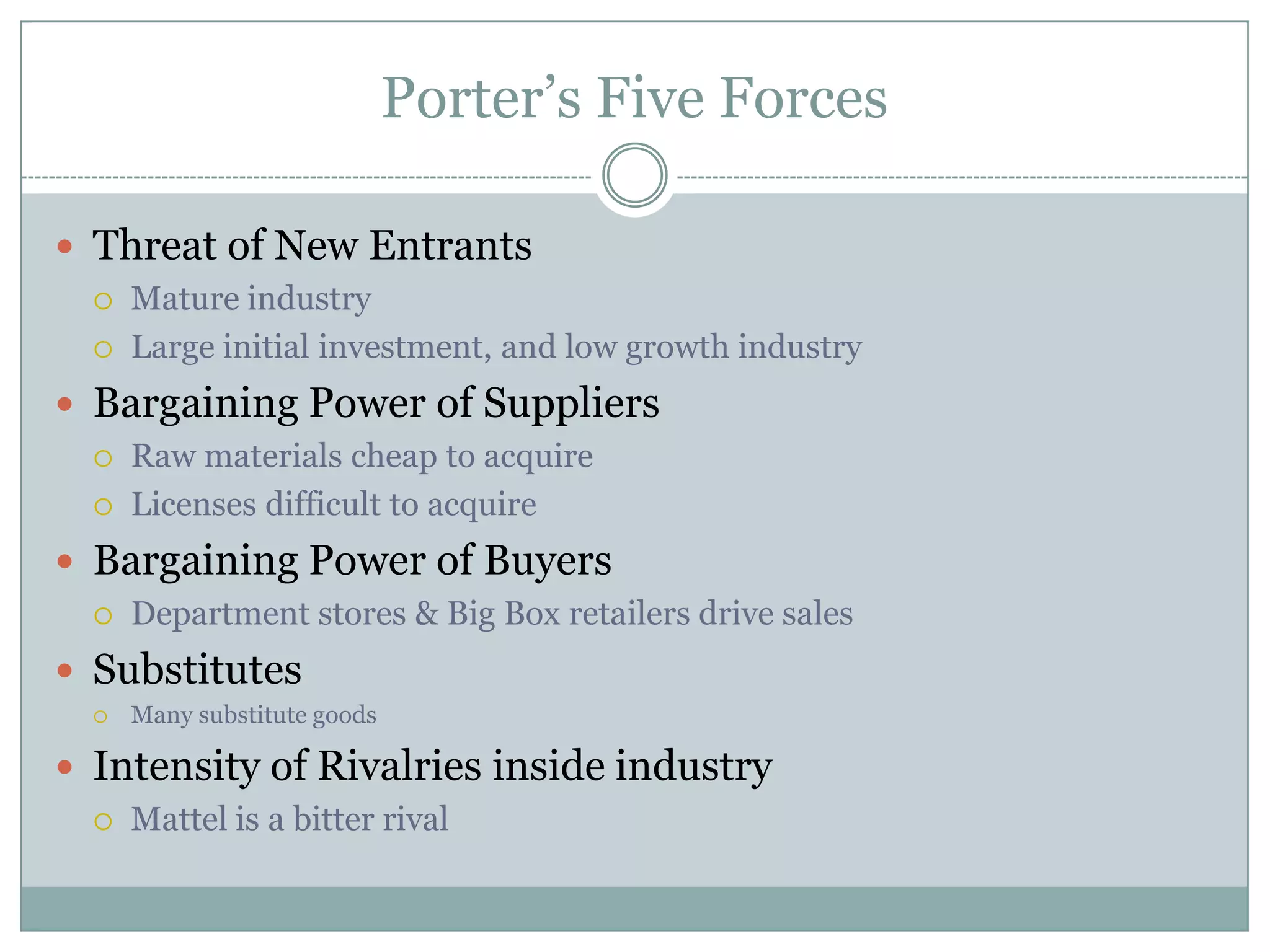
Porter’s Five ForcesThreat of New EntrantsMature industryLarge initial investment, and low growth industryBargaining Power of SuppliersRaw materials cheap to acquireLicenses difficult to acquireBargaining Power of BuyersDepartment stores & Big Box retailers drive salesSubstitutesMany substitute goodsIntensity of Rivalries inside industryMattel is a bitter rival
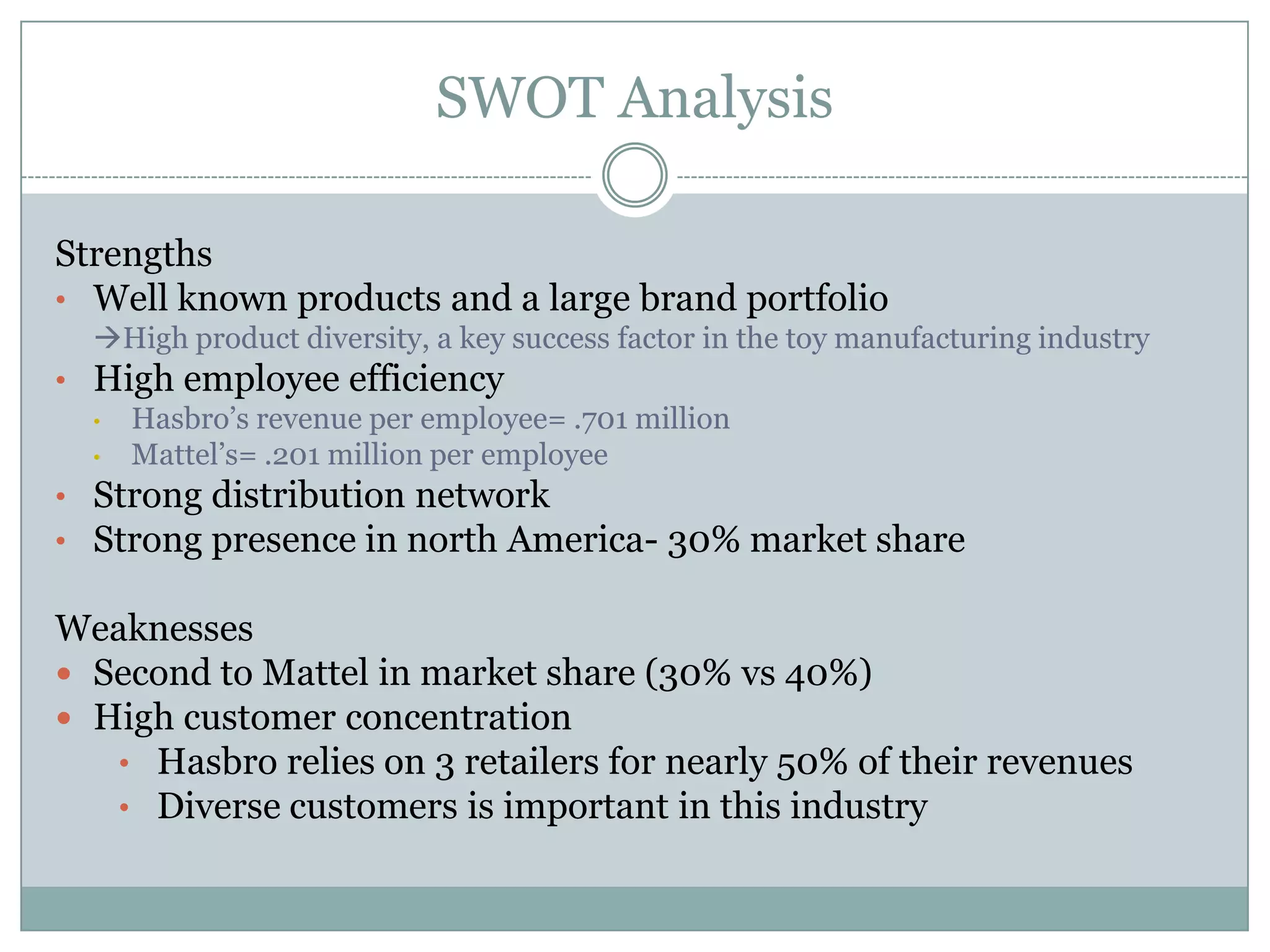
SWOT AnalysisStrengthsWell known products and a large brand portfolioHigh product diversity, a key success factor in the toy manufacturing industryHigh employee efficiency
Hasbro’s revenue per employee= .701 million

Hasbro

  • 1.
    Brandon Graviet, ChristopherLee, Dane Hockema, Greg Guillen, and Matt HankinsHASBRO, INC.
  • 2.
    History-HasbroFounded in 1923by Henry Hilal, and Herman Hassenfeld (Hassenfeld Brothers Incorporated).
  • 3.
    1930’s Start ofToy Manufacturing, medical sets for juniors, 1950’s Mr. Potato Head.
  • 4.
    1968 Company changesname to Hasbro Industries and goes public.
  • 5.
    1984 Acquisition ofMilton Bradley
  • 6.
    1995 Merger Failwith Mattel (5 billion offer)History-HasbroOne of the largest toy companies in the world.Net revenues Nov 3rd, 2010( Nine Months)2.7 Billion(U.S & Canada, International Segment, Entertainment and Licensing SegmentOperating Profit 386 MillionToys and Games: G.I. Joe (The Rising Cobra), Nerf, Pokemon, Star Wars, Tinkertoys, Transformers (films as well), Easy-Bake Oven, Mr. Potato Head, Monopoly, Battleships, Candy Land, Magic: The Gathering, Scrabble, Sesame Street, Barney.
  • 7.
    External Environment factorskey to HASBROEconomic ConditionsConsumption down, Per capita income DownSociocultural/Demographic trendsAge compressionTraditional Toys not acceptable in societyTechnologicalVideo games, PCs, rapid development of affordable high tech entertainment.Political/LegalHeavy regulatory environment- taxes expected to rise in futureGlobalCheap manufacturing abroad, low regulatory environment abroad,Growing markets in East Asia
  • 8.
    Porter’s Five ForcesThreatof New EntrantsMature industryLarge initial investment, and low growth industryBargaining Power of SuppliersRaw materials cheap to acquireLicenses difficult to acquireBargaining Power of BuyersDepartment stores & Big Box retailers drive salesSubstitutesMany substitute goodsIntensity of Rivalries inside industryMattel is a bitter rival
  • 9.
    SWOT AnalysisStrengthsWell knownproducts and a large brand portfolioHigh product diversity, a key success factor in the toy manufacturing industryHigh employee efficiency
  • 10.
    Hasbro’s revenue peremployee= .701 million
  • 11.
  • 12.
  • 13.
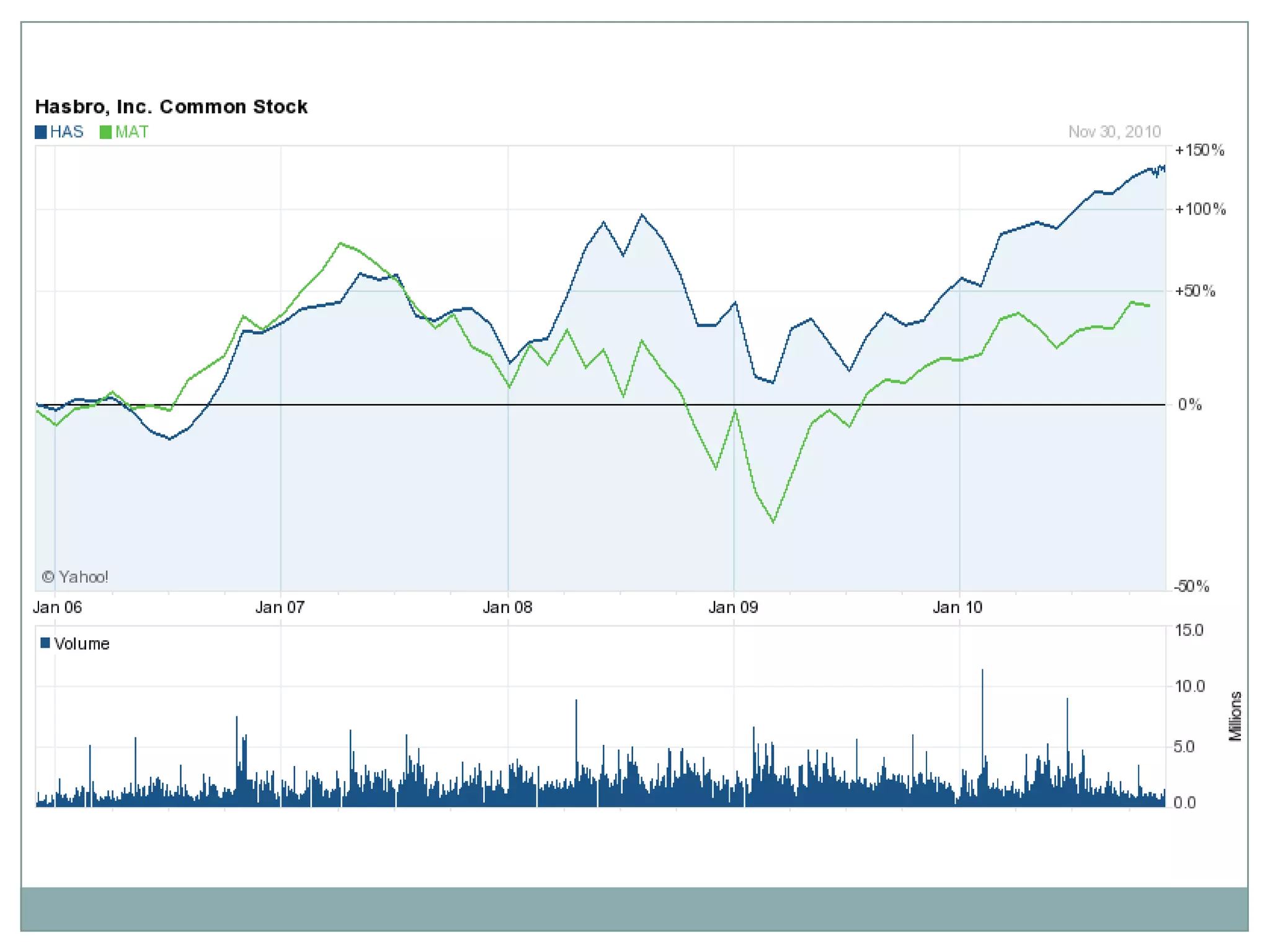
    Strong presence innorth America- 30% market shareWeaknessesSecond to Mattel in market share (30% vs 40%)High customer concentrationHasbro relies on 3 retailers for nearly 50% of their revenues
  • 14.
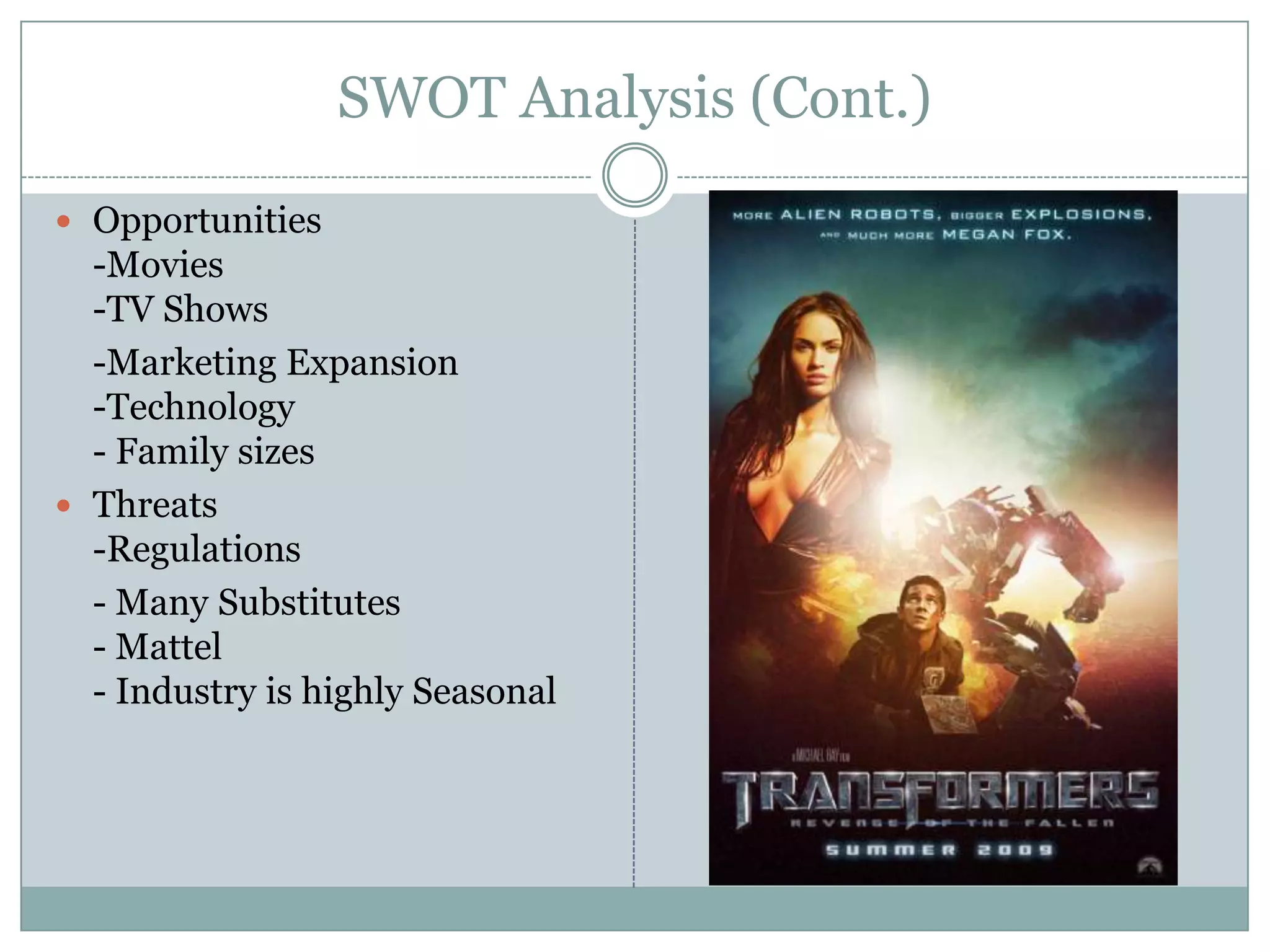
    Diverse customers isimportant in this industrySWOT Analysis (Cont.)Opportunities-Movies-TV Shows -Marketing Expansion-Technology- Family sizesThreats-Regulations - Many Substitutes - Mattel- Industry is highly Seasonal
  • 15.
  • 16.
  • 17.
  • 18.
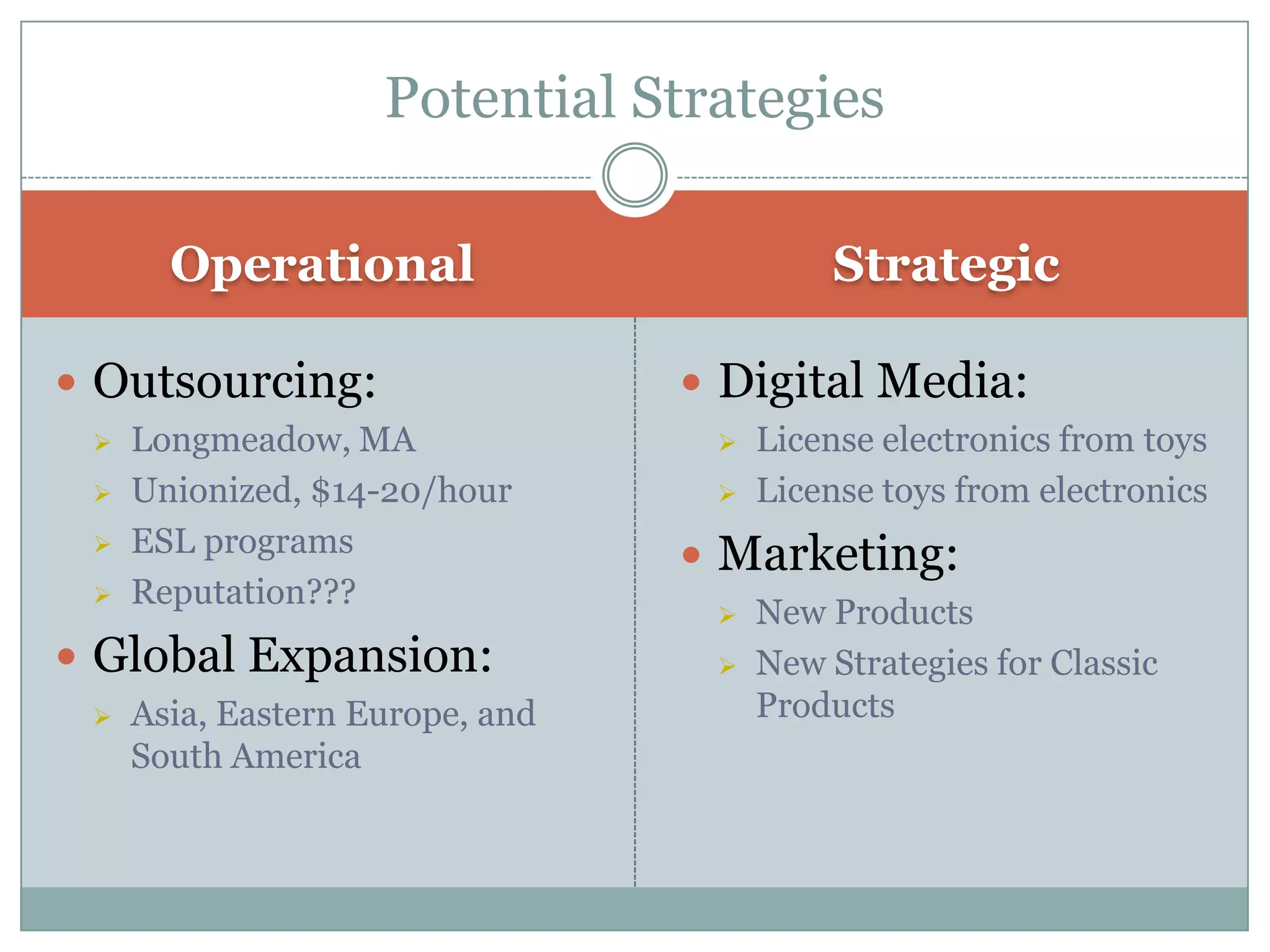
    Reputation???Global Expansion:Asia, EasternEurope, and South AmericaDigital Media:License electronics from toys
  • 19.
    License toys fromelectronicsMarketing:New Products
  • 20.
    New Strategies forClassic ProductsPotential Strategies
  • 22.
  • 23.
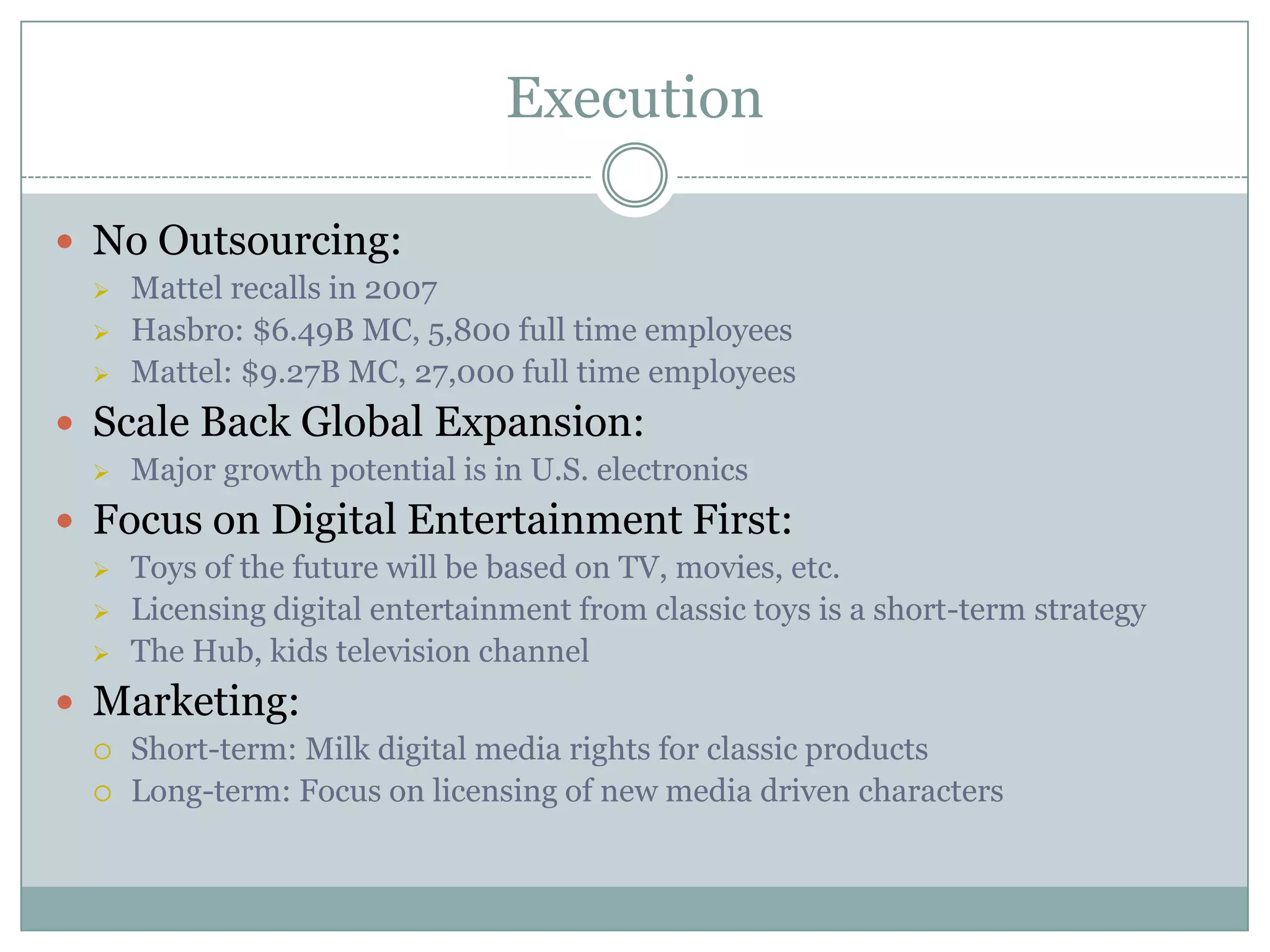
    Hasbro: $6.49B MC,5,800 full time employees
  • 24.
    Mattel: $9.27B MC,27,000 full time employeesScale Back Global Expansion:Major growth potential is in U.S. electronicsFocus on Digital Entertainment First:Toys of the future will be based on TV, movies, etc.
  • 25.
    Licensing digital entertainmentfrom classic toys is a short-term strategy
  • 26.
    The Hub, kidstelevision channelMarketing:Short-term: Milk digital media rights for classic productsLong-term: Focus on licensing of new media driven characters