Artificial Intelligence
Overview
Harry Surden
Assoc. Professor of Law – University of Colorado Law
School
Affiliated Faculty, Stanford CodeX Center
Artificial Intelligence Overview
1. What is Artificial Intelligence ?
2. Major Artificial Intelligence Techniques
• Rules and Logic Based Approach
• Machine Learning Based Approach
• Hybrid System
3. Limits of Artificial Intelligence Today
What is
Artificial
Intelligence?
Artificial Intelligence (AI)
• What is Artificial Intelligence (AI)?
• Using computers to solve problems
• Or make automated decisions
• For tasks that, when done by humans,
• Typically require intelligence
Limits of Artificial Intelligence
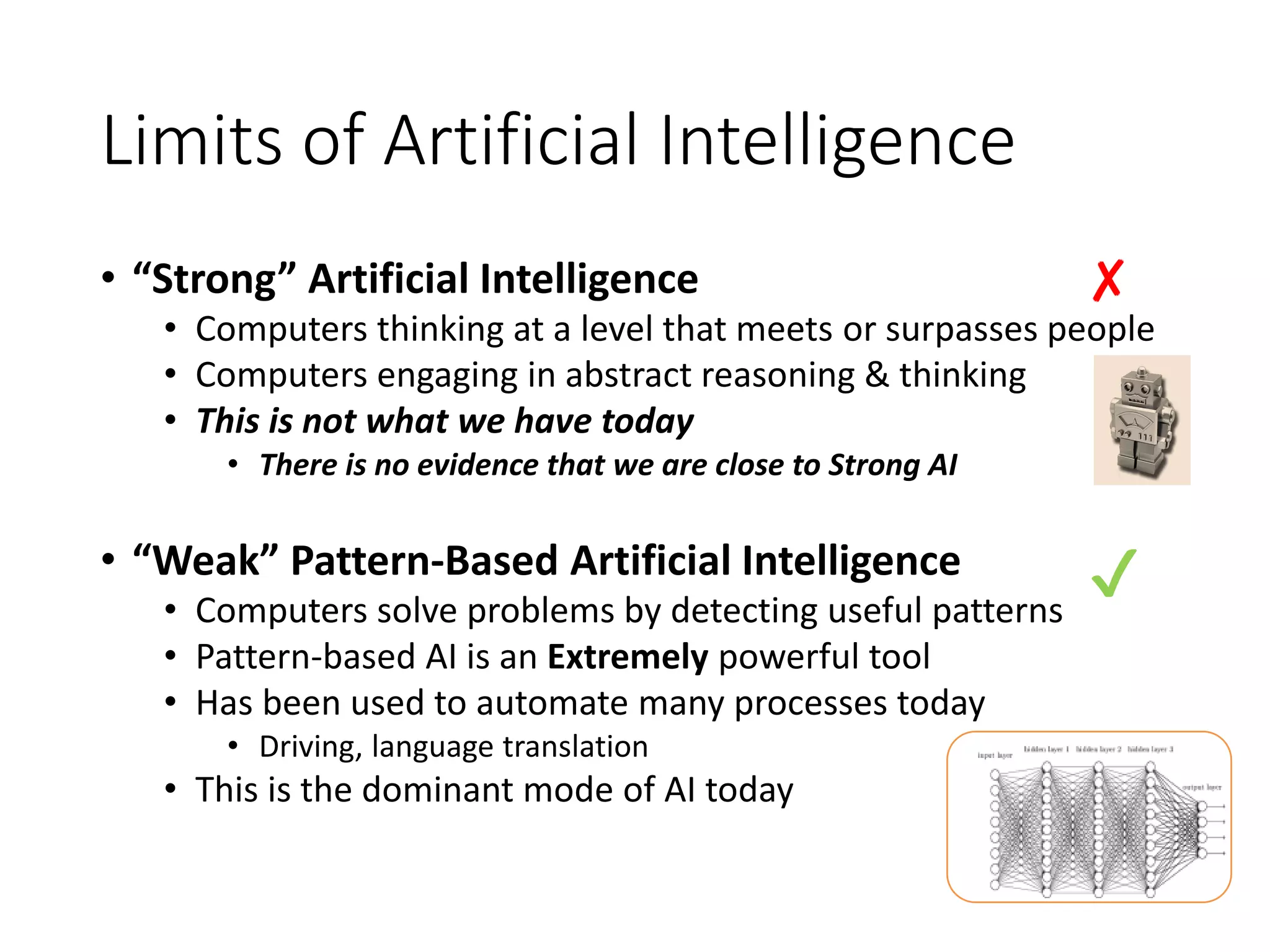
• “Strong” Artificial Intelligence
• Computers thinking at a level that meets or surpasses people
• Computers engaging in abstract reasoning & thinking
• This is not what we have today
• There is no evidence that we are close to Strong AI
• “Weak” Pattern-Based Artificial Intelligence
• Computers solve problems by detecting useful patterns
• Pattern-based AI is an Extremely powerful tool
• Has been used to automate many processes today
• Driving, language translation
• This is the dominant mode of AI today
✔
✘
Major AI Approaches
Two Major AI Techniques
• Logic and Rules-Based Approach
• Machine Learning (Pattern-Based Approach)
Logic and Rules-
Based AI
Logic and Rules-Based Approach
• Logic and Rules-Based Approach
• Representing processes or systems using logical rules
• Top-down rules are created for computer
• Computers reason about those rules
• Can be used to automate processes
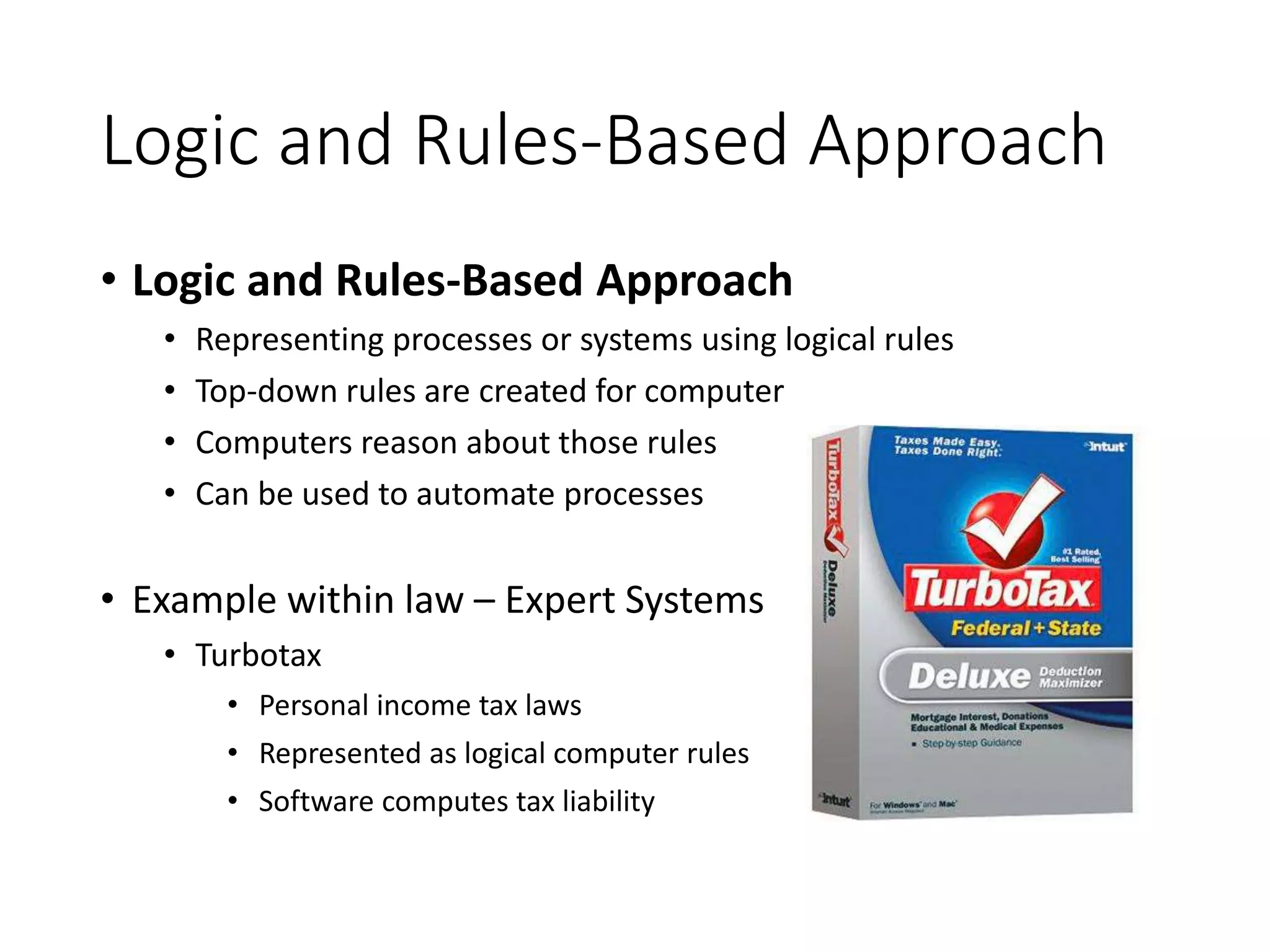
• Example within law – Expert Systems
• Turbotax
• Personal income tax laws
• Represented as logical computer rules
• Software computes tax liability
Machine
Learning
Machine Learning (Pattern based)
• Machine Learning (ML)
• Algorithms find patterns in data and infer rules on their own
• ”Learn” from data and improve over time
• These patterns can be used for automation or prediction
• ML is the dominant mode of AI today
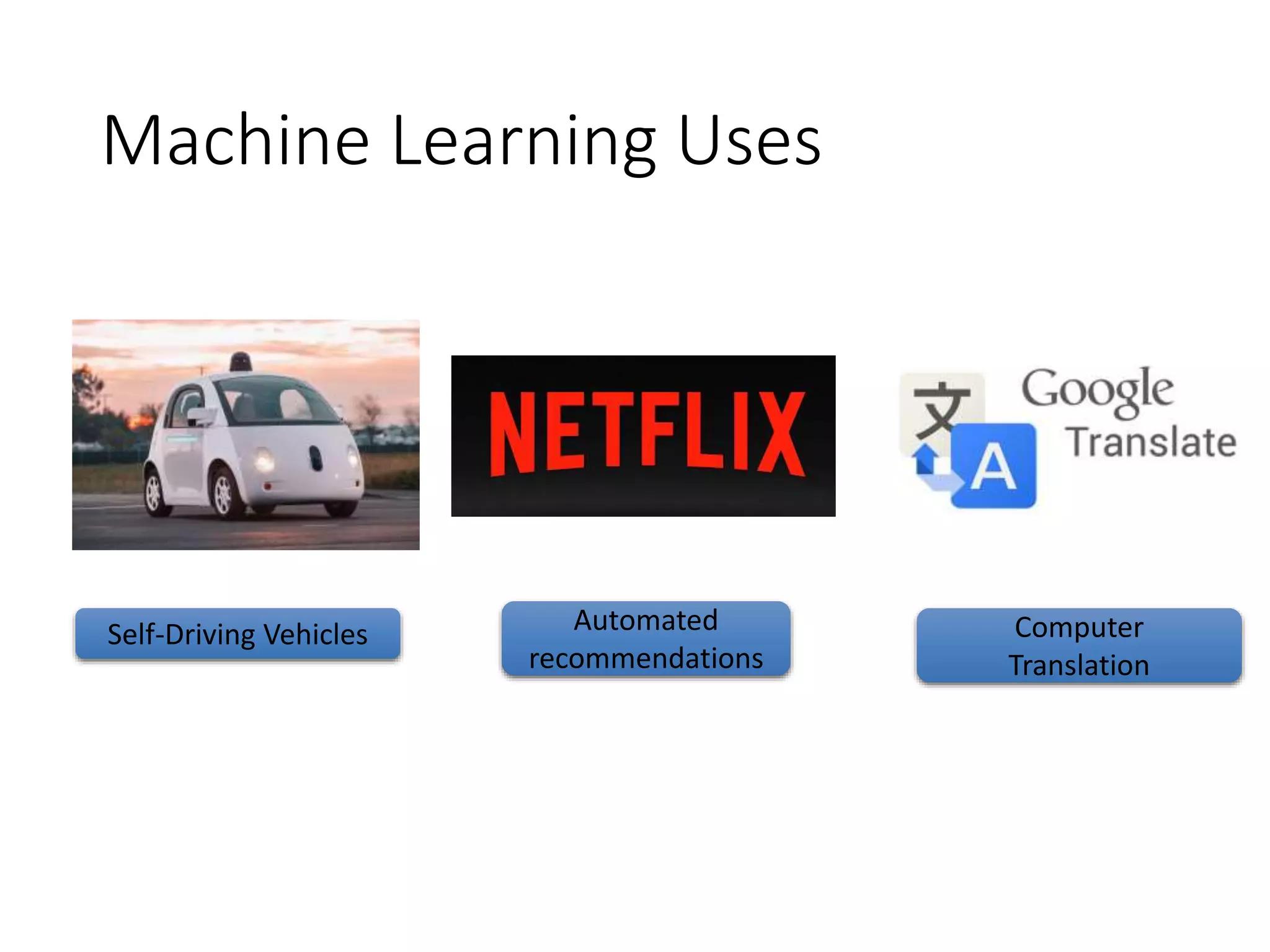
Machine Learning Uses
Self-Driving Vehicles Automated
recommendations
Computer
Translation
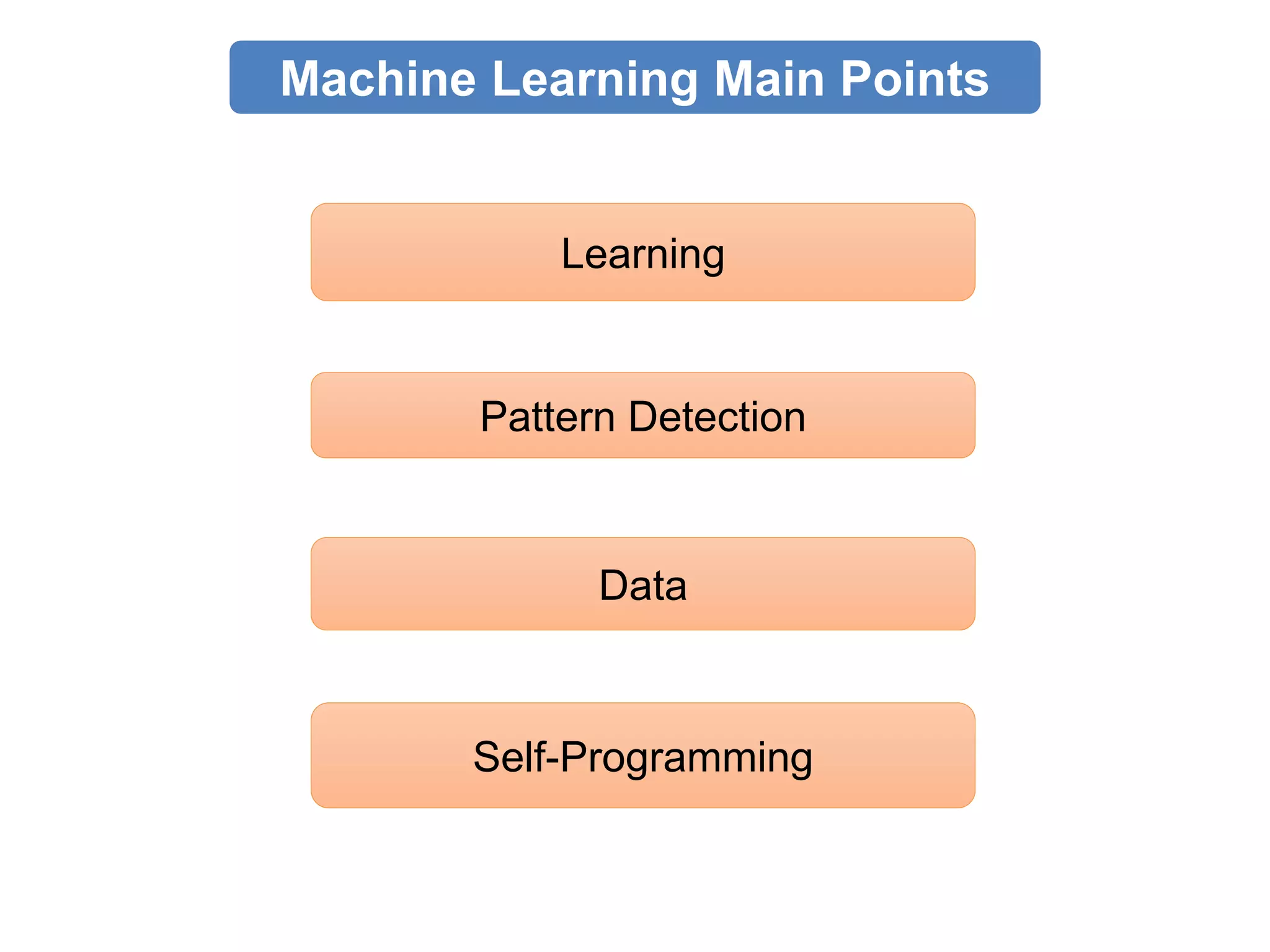
Learning
Machine Learning Main Points
Pattern Detection
Data
Self-Programming
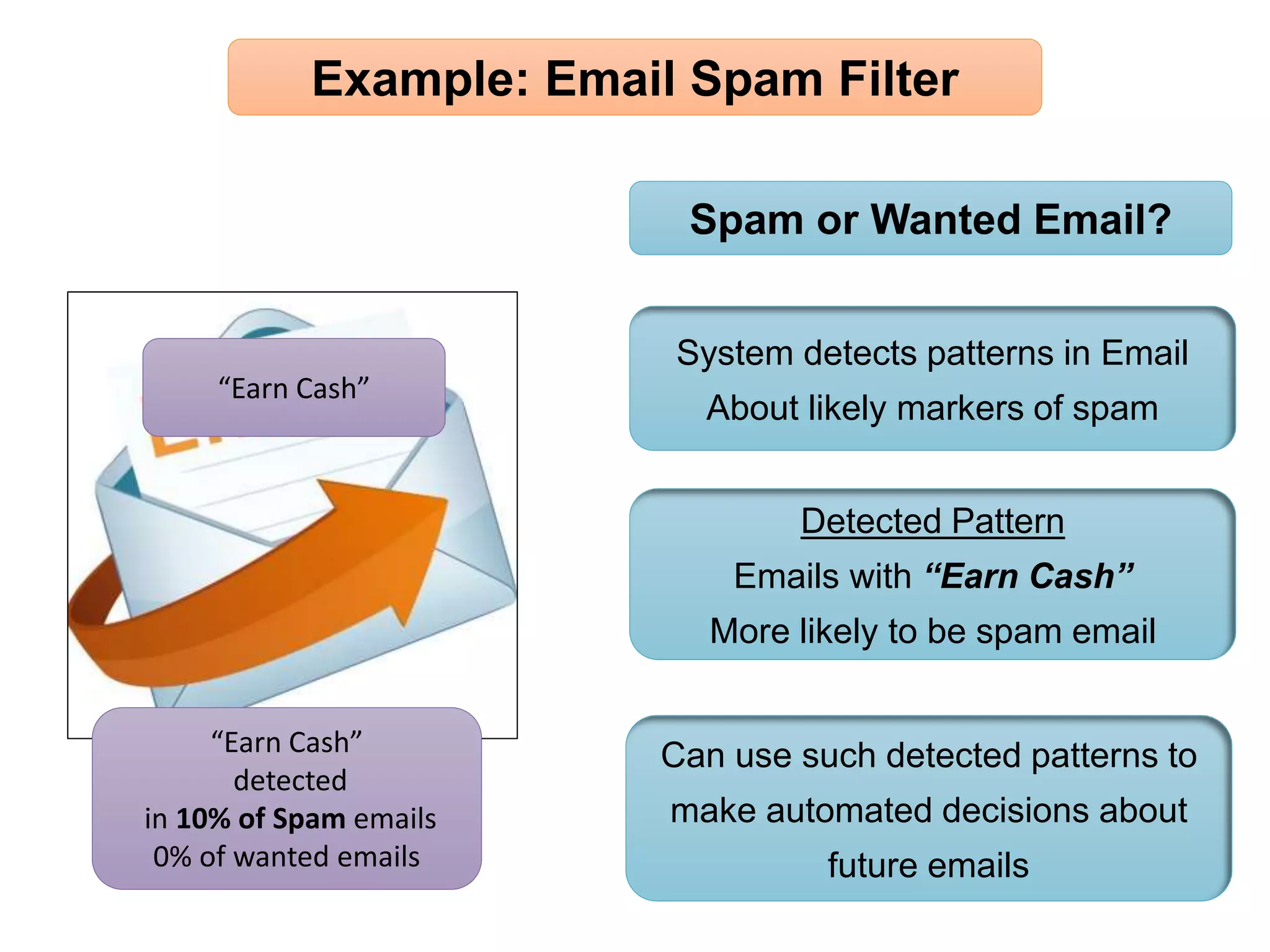
Spam or Wanted Email?
System detects patterns in Email
About likely markers of spam
Detected Pattern
Emails with “Earn Cash”
More likely to be spam email
Can use such detected patterns to
make automated decisions about
future emails
Example: Email Spam Filter
“Earn Cash”
“Earn Cash”
detected
in 10% of Spam emails
0% of wanted emails
Identification Improves
Algorithm improves in performance
In auto-identifying spam
As it is able to examine more data
And find additional indicia of spam
Algorithm is “learning” over time
from additional examples
Example: Email Spam Filter
“Free”
Probability of Spam
Contains
“Free”
70% Spam
Contains
“Earn Cash”
90% Spam
From
Belarus
85% Spam
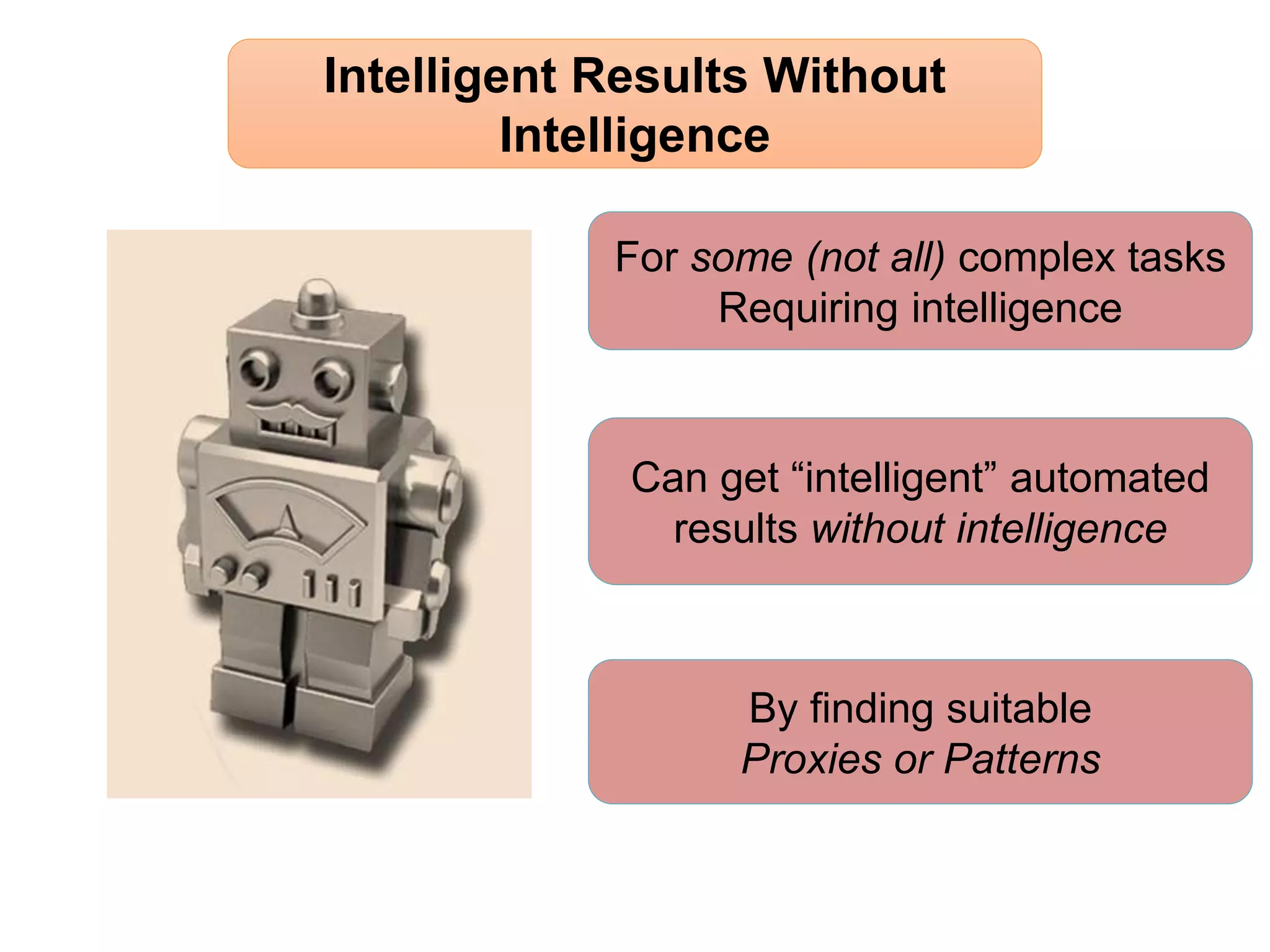
For some (not all) complex tasks
Requiring intelligence
Intelligent Results Without
Intelligence
Can get “intelligent” automated
results without intelligence
By finding suitable
Proxies or Patterns
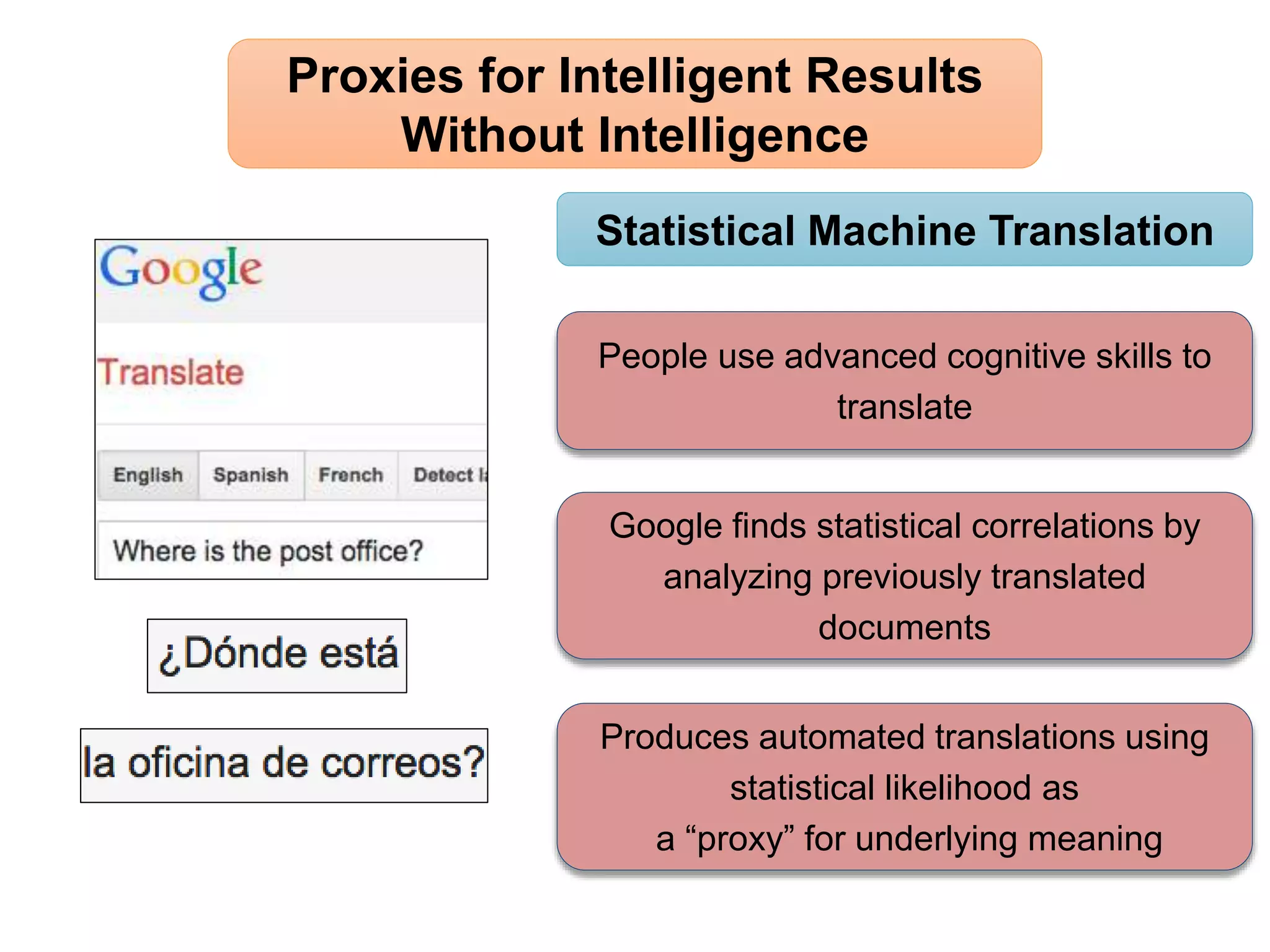
People use advanced cognitive skills to
translate
Proxies for Intelligent Results
Without Intelligence
Google finds statistical correlations by
analyzing previously translated
documents
Statistical Machine Translation
Produces automated translations using
statistical likelihood as
a “proxy” for underlying meaning
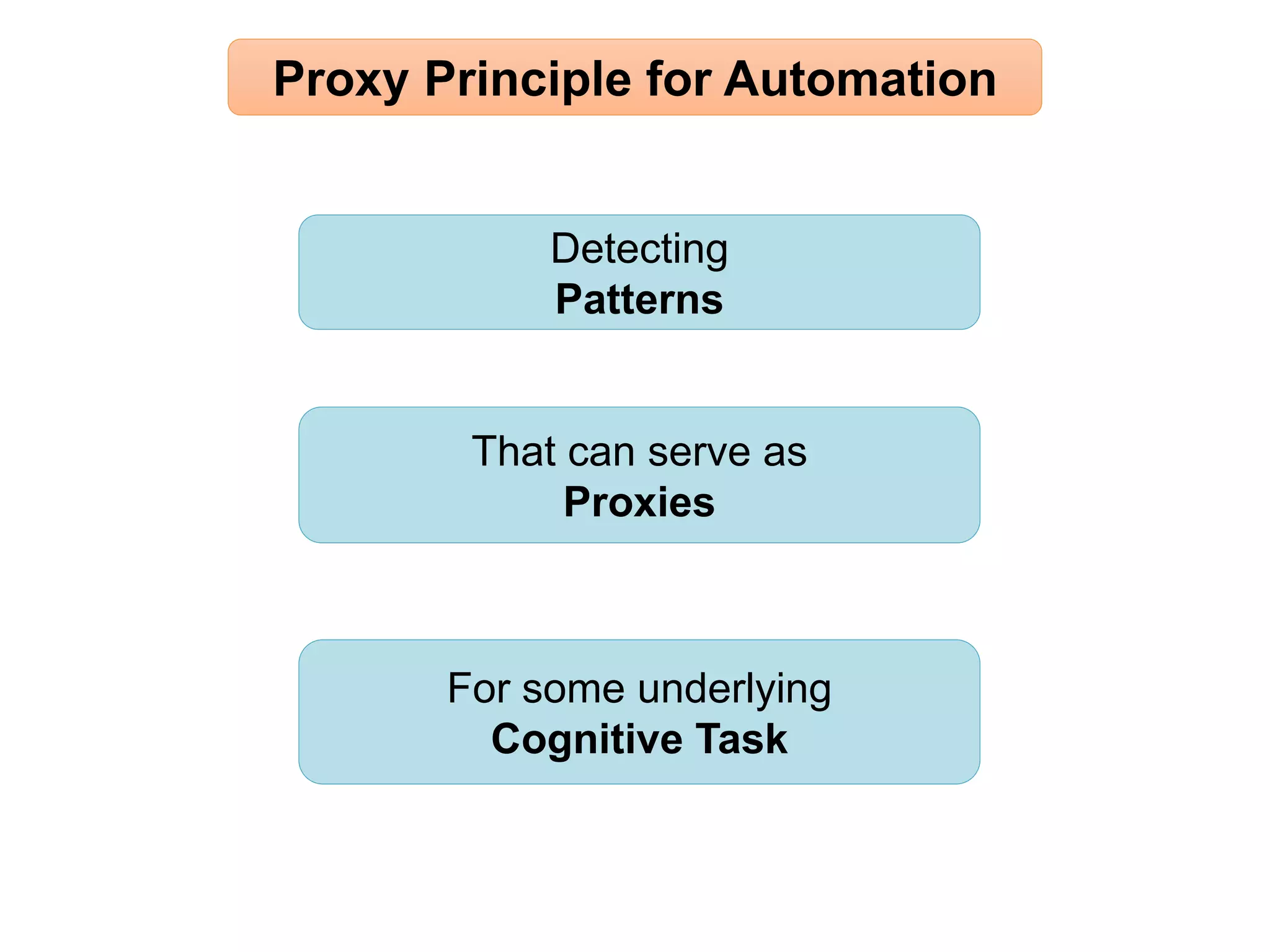
Detecting
Patterns
Proxy Principle for Automation
That can serve as
Proxies
For some underlying
Cognitive Task
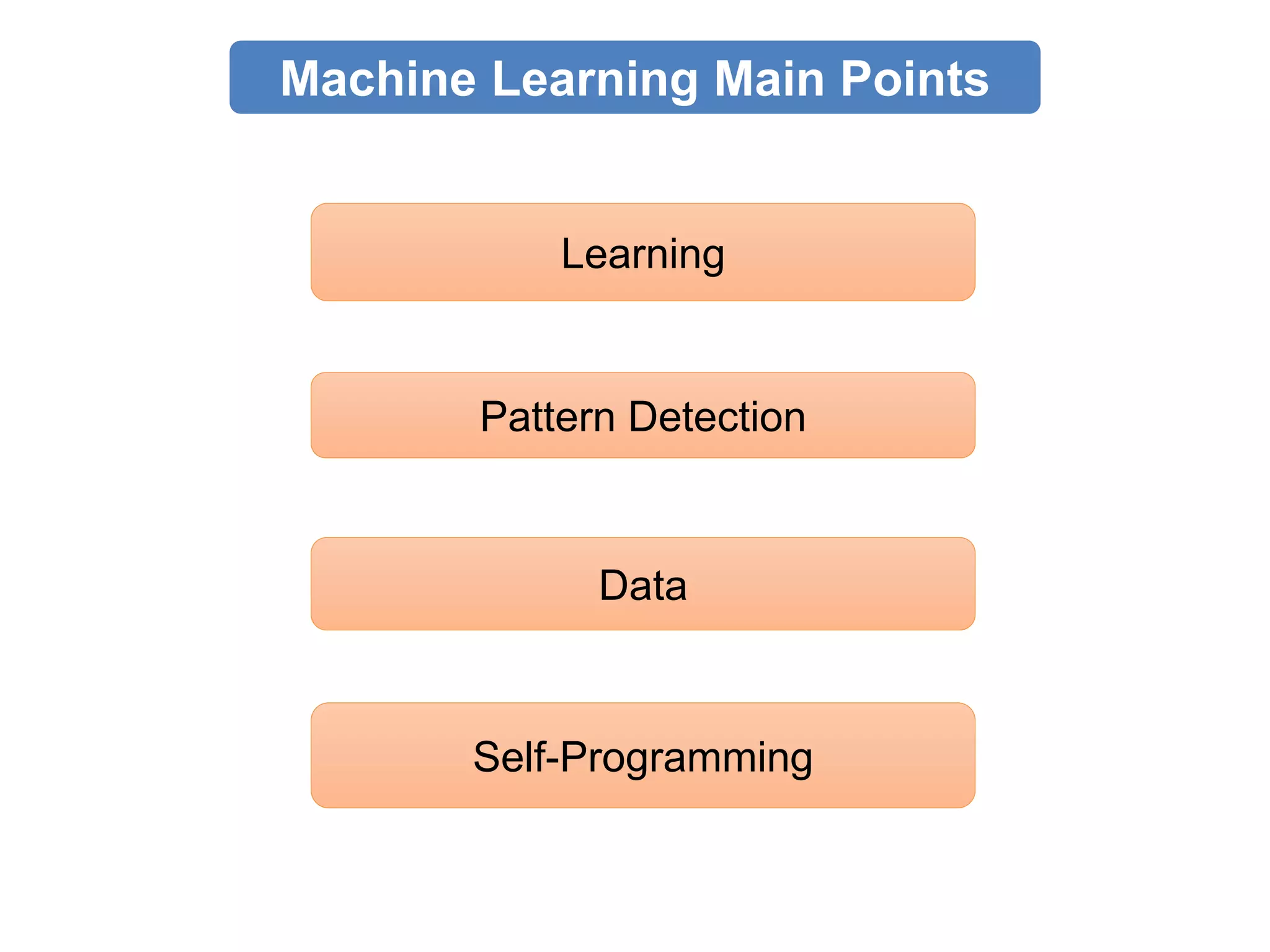
Learning
Machine Learning Main Points
Pattern Detection
Data
Self-Programming
Summary Major AI Approaches
Two Major AI Techniques
• Logic and Rules-Based Approach
• Machine Learning (Pattern-Based Approach)
Hybrid Systems
• Many successful AI systems are hybrids of
• Machine learning & Rules-Based Hybrids
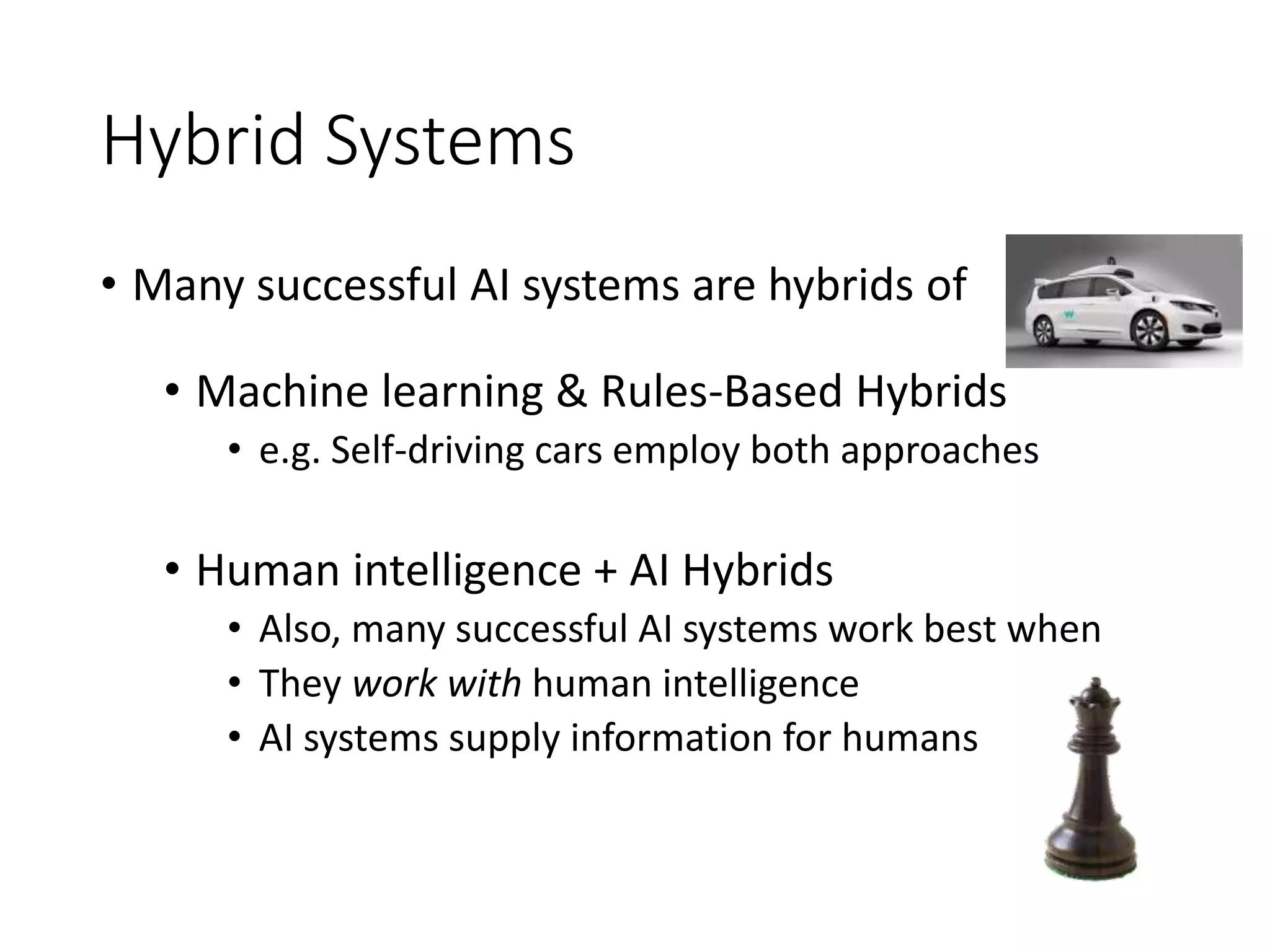
• e.g. Self-driving cars employ both approaches
• Human intelligence + AI Hybrids
• Also, many successful AI systems work best when
• They work with human intelligence
• AI systems supply information for humans
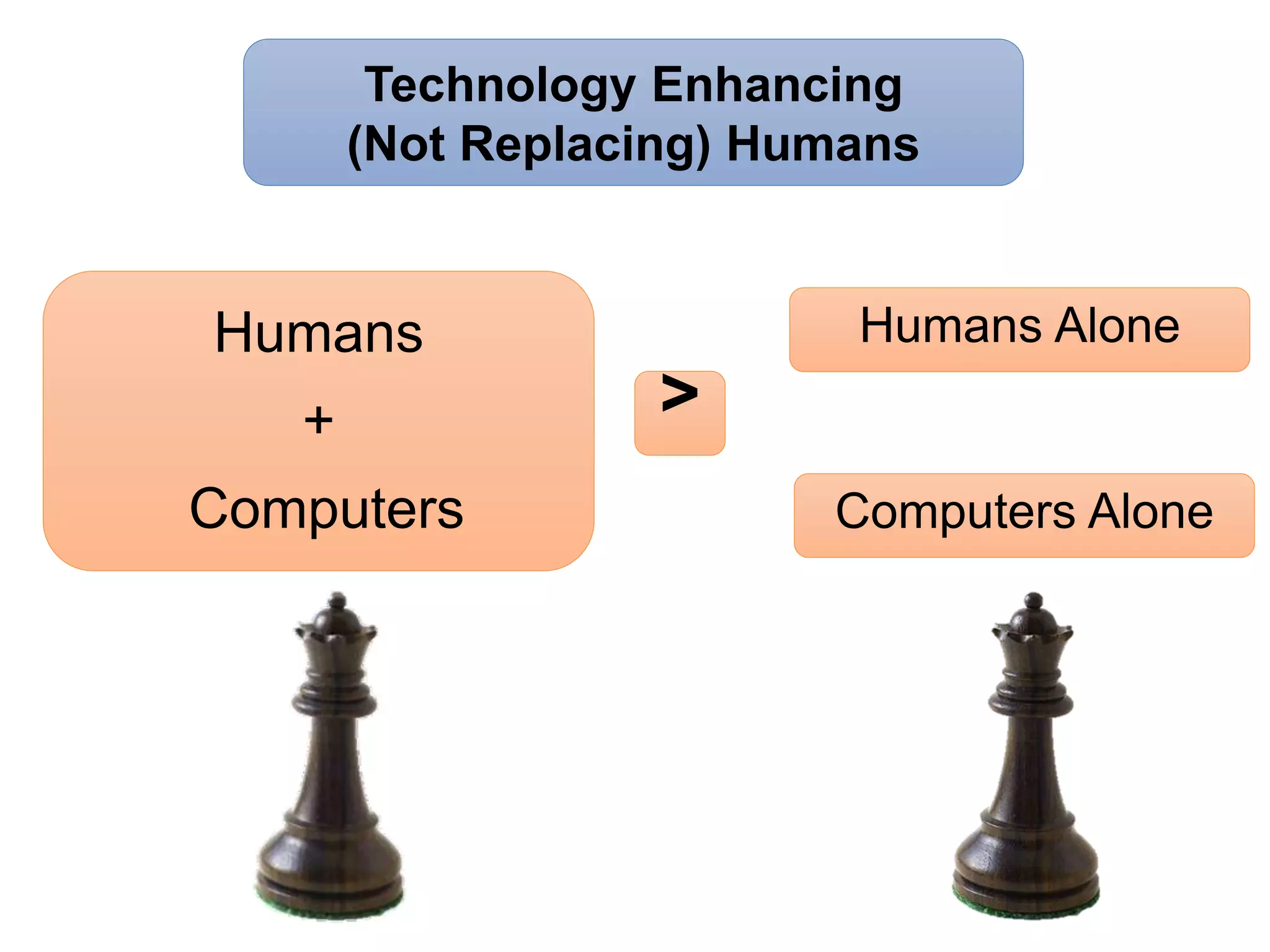
Humans
+
Computers
Technology Enhancing
(Not Replacing) Humans
>
Humans Alone
Computers Alone
Examples of AI in Law Today
• Machine Learning
• AI in Litigation - E-Discovery and ”Predictive Coding”
• Natural Language Processing (NLP) of Legal Documents
• Automated contract analysis
• Predictive Analytics for Litigation
• Machine Learning Assisted Legal Research
• Logic and Rules-Based Approaches
• Compliance Engines
• Expert Systems
• Attorney Workflow Rule Systems
• Automated Document Assembly
Limits on Artificial Intelligence
• Artificial Intelligence Accomplishments
• Automate many things that couldn’t do before
• Limits
• Many things still beyond the realm of AI
• No thinking computers
• No Abstract Reasoning
• Often AI systems Have Accuracy Limits
• Many things difficult to capture in data
• Sometimes Hard to interpret Systems
Questions
Harry Surden
Associate Professor of Law
University of Colorado Law School
Affiliated Faculty, Stanford CodeX Center
Twitter: @HarrySurden
Email: hsurden@colorado.edu

Harry Surden - Artificial Intelligence and Law Overview

  • 1.
    Artificial Intelligence Overview Harry Surden Assoc.Professor of Law – University of Colorado Law School Affiliated Faculty, Stanford CodeX Center
  • 2.
    Artificial Intelligence Overview 1.What is Artificial Intelligence ? 2. Major Artificial Intelligence Techniques • Rules and Logic Based Approach • Machine Learning Based Approach • Hybrid System 3. Limits of Artificial Intelligence Today
  • 3.
  • 4.
    Artificial Intelligence (AI) •What is Artificial Intelligence (AI)? • Using computers to solve problems • Or make automated decisions • For tasks that, when done by humans, • Typically require intelligence
  • 5.
    Limits of ArtificialIntelligence • “Strong” Artificial Intelligence • Computers thinking at a level that meets or surpasses people • Computers engaging in abstract reasoning & thinking • This is not what we have today • There is no evidence that we are close to Strong AI • “Weak” Pattern-Based Artificial Intelligence • Computers solve problems by detecting useful patterns • Pattern-based AI is an Extremely powerful tool • Has been used to automate many processes today • Driving, language translation • This is the dominant mode of AI today ✔ ✘
  • 6.
    Major AI Approaches TwoMajor AI Techniques • Logic and Rules-Based Approach • Machine Learning (Pattern-Based Approach)
  • 7.
  • 8.
    Logic and Rules-BasedApproach • Logic and Rules-Based Approach • Representing processes or systems using logical rules • Top-down rules are created for computer • Computers reason about those rules • Can be used to automate processes • Example within law – Expert Systems • Turbotax • Personal income tax laws • Represented as logical computer rules • Software computes tax liability
  • 9.
  • 10.
    Machine Learning (Patternbased) • Machine Learning (ML) • Algorithms find patterns in data and infer rules on their own • ”Learn” from data and improve over time • These patterns can be used for automation or prediction • ML is the dominant mode of AI today
  • 11.
    Machine Learning Uses Self-DrivingVehicles Automated recommendations Computer Translation
  • 12.
    Learning Machine Learning MainPoints Pattern Detection Data Self-Programming
  • 13.
    Spam or WantedEmail? System detects patterns in Email About likely markers of spam Detected Pattern Emails with “Earn Cash” More likely to be spam email Can use such detected patterns to make automated decisions about future emails Example: Email Spam Filter “Earn Cash” “Earn Cash” detected in 10% of Spam emails 0% of wanted emails
  • 14.
    Identification Improves Algorithm improvesin performance In auto-identifying spam As it is able to examine more data And find additional indicia of spam Algorithm is “learning” over time from additional examples Example: Email Spam Filter “Free” Probability of Spam Contains “Free” 70% Spam Contains “Earn Cash” 90% Spam From Belarus 85% Spam
  • 15.
    For some (notall) complex tasks Requiring intelligence Intelligent Results Without Intelligence Can get “intelligent” automated results without intelligence By finding suitable Proxies or Patterns
  • 16.
    People use advancedcognitive skills to translate Proxies for Intelligent Results Without Intelligence Google finds statistical correlations by analyzing previously translated documents Statistical Machine Translation Produces automated translations using statistical likelihood as a “proxy” for underlying meaning
  • 17.
    Detecting Patterns Proxy Principle forAutomation That can serve as Proxies For some underlying Cognitive Task
  • 18.
    Learning Machine Learning MainPoints Pattern Detection Data Self-Programming
  • 19.
    Summary Major AIApproaches Two Major AI Techniques • Logic and Rules-Based Approach • Machine Learning (Pattern-Based Approach)
  • 20.
    Hybrid Systems • Manysuccessful AI systems are hybrids of • Machine learning & Rules-Based Hybrids • e.g. Self-driving cars employ both approaches • Human intelligence + AI Hybrids • Also, many successful AI systems work best when • They work with human intelligence • AI systems supply information for humans
  • 21.
    Humans + Computers Technology Enhancing (Not Replacing)Humans > Humans Alone Computers Alone
  • 22.
    Examples of AIin Law Today • Machine Learning • AI in Litigation - E-Discovery and ”Predictive Coding” • Natural Language Processing (NLP) of Legal Documents • Automated contract analysis • Predictive Analytics for Litigation • Machine Learning Assisted Legal Research • Logic and Rules-Based Approaches • Compliance Engines • Expert Systems • Attorney Workflow Rule Systems • Automated Document Assembly
  • 23.
    Limits on ArtificialIntelligence • Artificial Intelligence Accomplishments • Automate many things that couldn’t do before • Limits • Many things still beyond the realm of AI • No thinking computers • No Abstract Reasoning • Often AI systems Have Accuracy Limits • Many things difficult to capture in data • Sometimes Hard to interpret Systems
  • 24.
    Questions Harry Surden Associate Professorof Law University of Colorado Law School Affiliated Faculty, Stanford CodeX Center Twitter: @HarrySurden Email: hsurden@colorado.edu