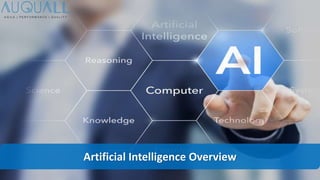
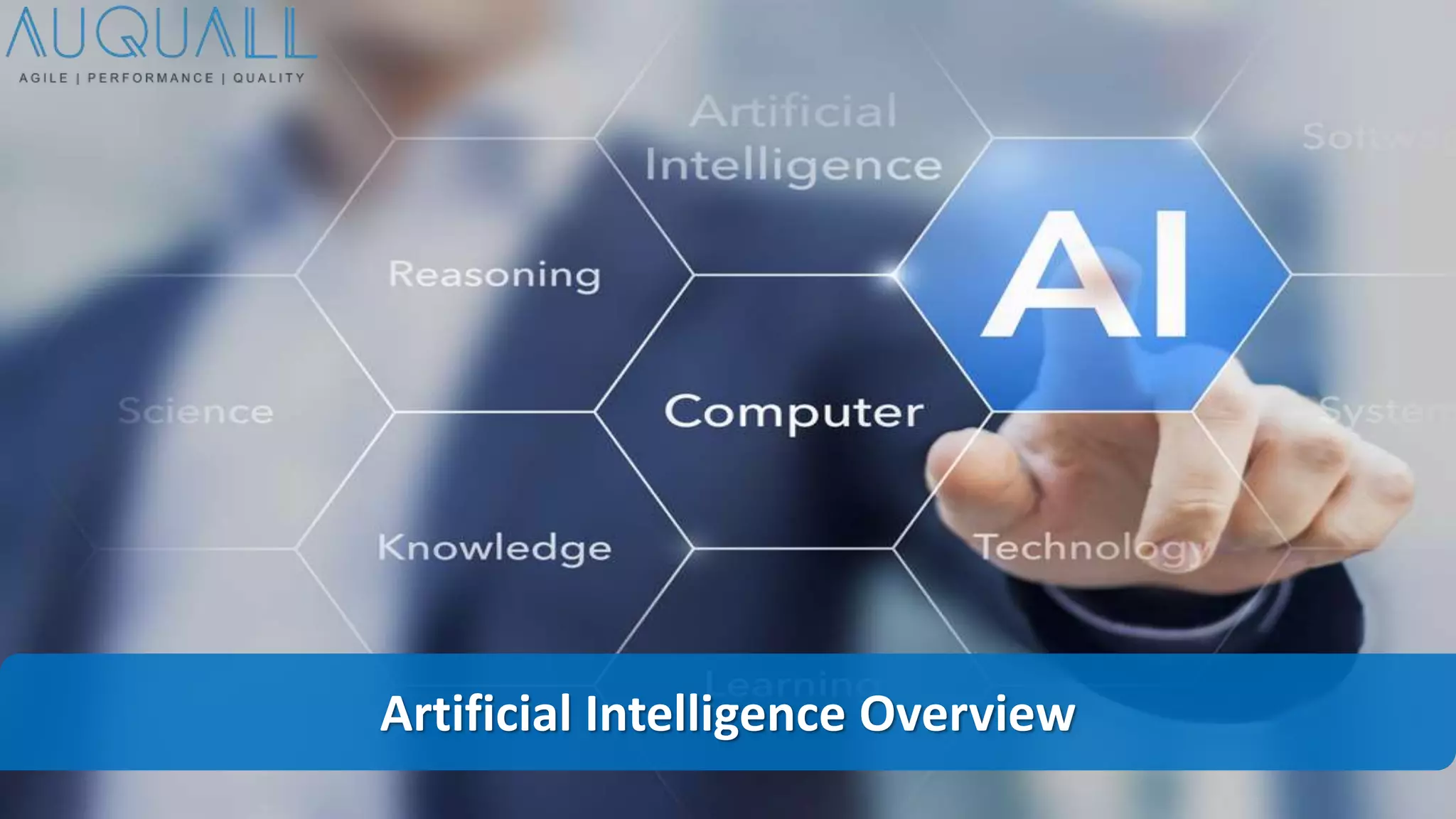








Artificial Intelligence Overview
• What is Artificial Intelligence (AI)?
• Using computers to solve problems
• Or make automated decisions
• For tasks that, when done by humans,
• Typically require intelligence
Artificial Intelligence (AI)
• Computers thinking at a level that meets or surpasses people
• Computers engaging in abstract reasoning & thinking
• This is not what we have today
• There is no evidence that we are close to Strong AI
“Strong” Artificial Intelligence
• Computers solve problems by detecting useful patterns
• Pattern-based AI is an Extremely powerful tool
• Has been used to automate many processes today
• Driving, language translation
• This is the dominant mode of AI today
“Weak” Pattern-Based Artificial Intelligence
• Logic and Rules-Based Approach
• Machine Learning (Pattern-Based Approach)
Two Major AI Techniques
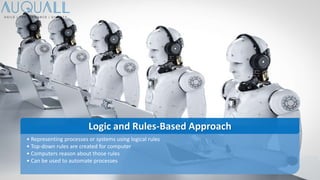
• Representing processes or systems using logical rules
• Top-down rules are created for computer
• Computers reason about those rules
• Can be used to automate processes
Logic and Rules-Based Approach
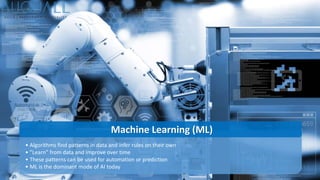
• Algorithms find patterns in data and infer rules on their own
• ”Learn” from data and improve over time
• These patterns can be used for automation or prediction
• ML is the dominant mode of AI today
Machine Learning (ML)
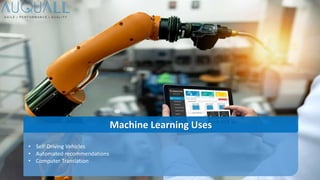
• Self-Driving Vehicles
• Automated recommendations
• Computer Translation
Machine Learning Uses
• Many successful AI systems are hybrids of
• Machine learning & Rules-Based Hybrids
• e.g. Self-driving cars employ both approaches
Hybrid Systems
• Also, many successful AI systems work best when
• They work with human intelligence
• AI systems supply information for humans
Human intelligence + AI Hybrids
• Artificial Intelligence Accomplishments
• Automate many things that couldn’t do before
Limits on Artificial Intelligence
• Many things still beyond the realm of AI
• No thinking computers
• No Abstract Reasoning
• Often AI systems Have Accuracy Limits
• Many things difficult to capture in data
• Sometimes Hard to interpret Systems
Limits
Kindly Visit us at www.auquall.com
FOR MORE INFORMATION

Artificial intelligence overview

  • 1.
  • 2.
    • What isArtificial Intelligence (AI)? • Using computers to solve problems • Or make automated decisions • For tasks that, when done by humans, • Typically require intelligence Artificial Intelligence (AI)
  • 3.
    • Computers thinkingat a level that meets or surpasses people • Computers engaging in abstract reasoning & thinking • This is not what we have today • There is no evidence that we are close to Strong AI “Strong” Artificial Intelligence
  • 4.
    • Computers solveproblems by detecting useful patterns • Pattern-based AI is an Extremely powerful tool • Has been used to automate many processes today • Driving, language translation • This is the dominant mode of AI today “Weak” Pattern-Based Artificial Intelligence
  • 5.
    • Logic andRules-Based Approach • Machine Learning (Pattern-Based Approach) Two Major AI Techniques
  • 6.
    • Representing processesor systems using logical rules • Top-down rules are created for computer • Computers reason about those rules • Can be used to automate processes Logic and Rules-Based Approach
  • 7.
    • Algorithms findpatterns in data and infer rules on their own • ”Learn” from data and improve over time • These patterns can be used for automation or prediction • ML is the dominant mode of AI today Machine Learning (ML)
  • 8.
    • Self-Driving Vehicles •Automated recommendations • Computer Translation Machine Learning Uses
  • 9.
    • Many successfulAI systems are hybrids of • Machine learning & Rules-Based Hybrids • e.g. Self-driving cars employ both approaches Hybrid Systems
  • 10.
    • Also, manysuccessful AI systems work best when • They work with human intelligence • AI systems supply information for humans Human intelligence + AI Hybrids
  • 11.
    • Artificial IntelligenceAccomplishments • Automate many things that couldn’t do before Limits on Artificial Intelligence
  • 12.
    • Many thingsstill beyond the realm of AI • No thinking computers • No Abstract Reasoning • Often AI systems Have Accuracy Limits • Many things difficult to capture in data • Sometimes Hard to interpret Systems Limits
  • 13.
    Kindly Visit usat www.auquall.com FOR MORE INFORMATION