Shifting
Consciousness
Andrea Provaglio
Agile Enterprise Coach

@andreaprovaglio
Nice Meeting You
I work with leaders, managers
and teams in intellect-based
organizations. I help them rethink
their organizational dynamics,
mindset, processes and practices,
so that they can do business
effectively in the 21st century.
Culture and Structure in Organizations
Values, principles and behaviors that contribute to the
unique social and psychological environment of an
organization.
How an organization is organized. Roles, authority, task
allocation, salary, processes, decision-making, policies,
responsibilities, etc.
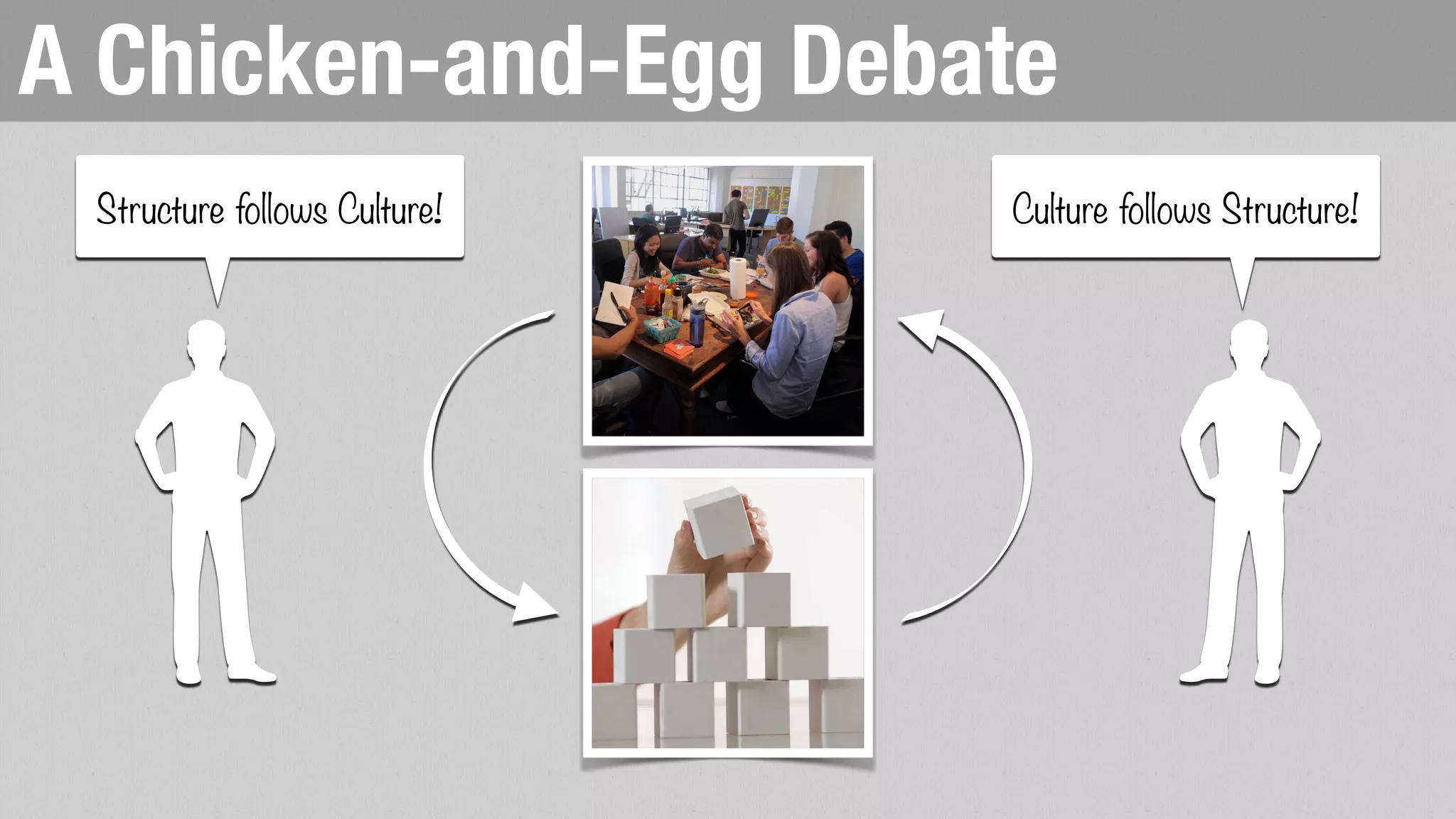
A Chicken-and-Egg Debate
Culture follows Structure!Structure follows Culture!
Consciousness Creates Reality
The “set of lenses” through which we
perceive (and therefore act in) the world
Evolutionary Organizational Development
Thanks! —>
Before We Continue, Remember…
Is Not
Red Organizations
Pack of wolves, impulsive, fear is the
glue.
Examples:
•Street Gangs
•Tribal Militia
Key Breakthroughs:
•Command and Authority
•Division of Labor
Amber Organizations
Army, highly formal roles, stability,
repetition of the past, stick.
Examples:
•Most churches
•Public school systems
•Most govt. agencies
Key Breakthroughs:
•Hierarchies
•Processes
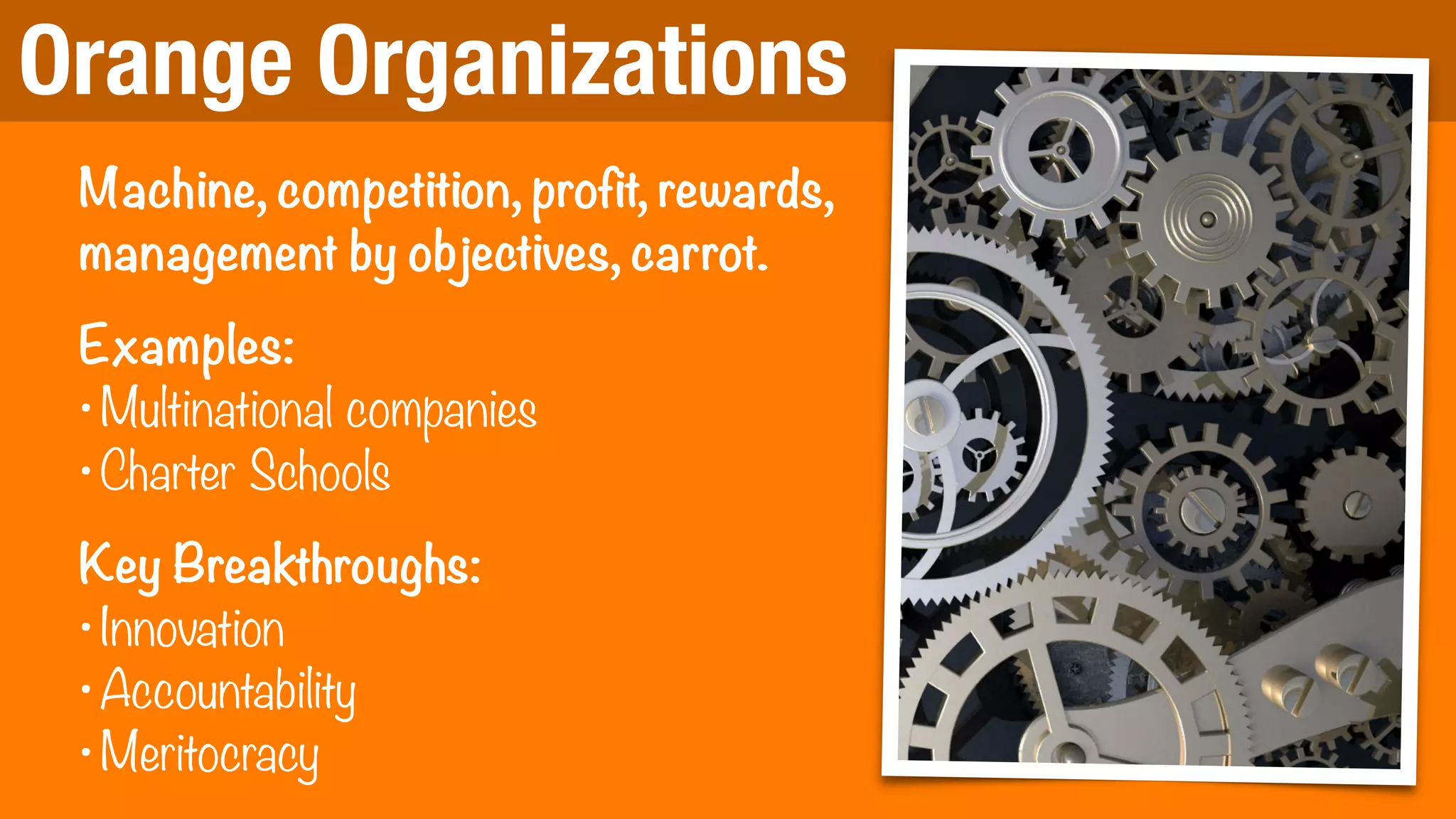
Orange Organizations
Machine, competition, profit, rewards,
management by objectives, carrot.
Examples:
•Multinational companies
•Charter Schools
Key Breakthroughs:
•Innovation
•Accountability
•Meritocracy
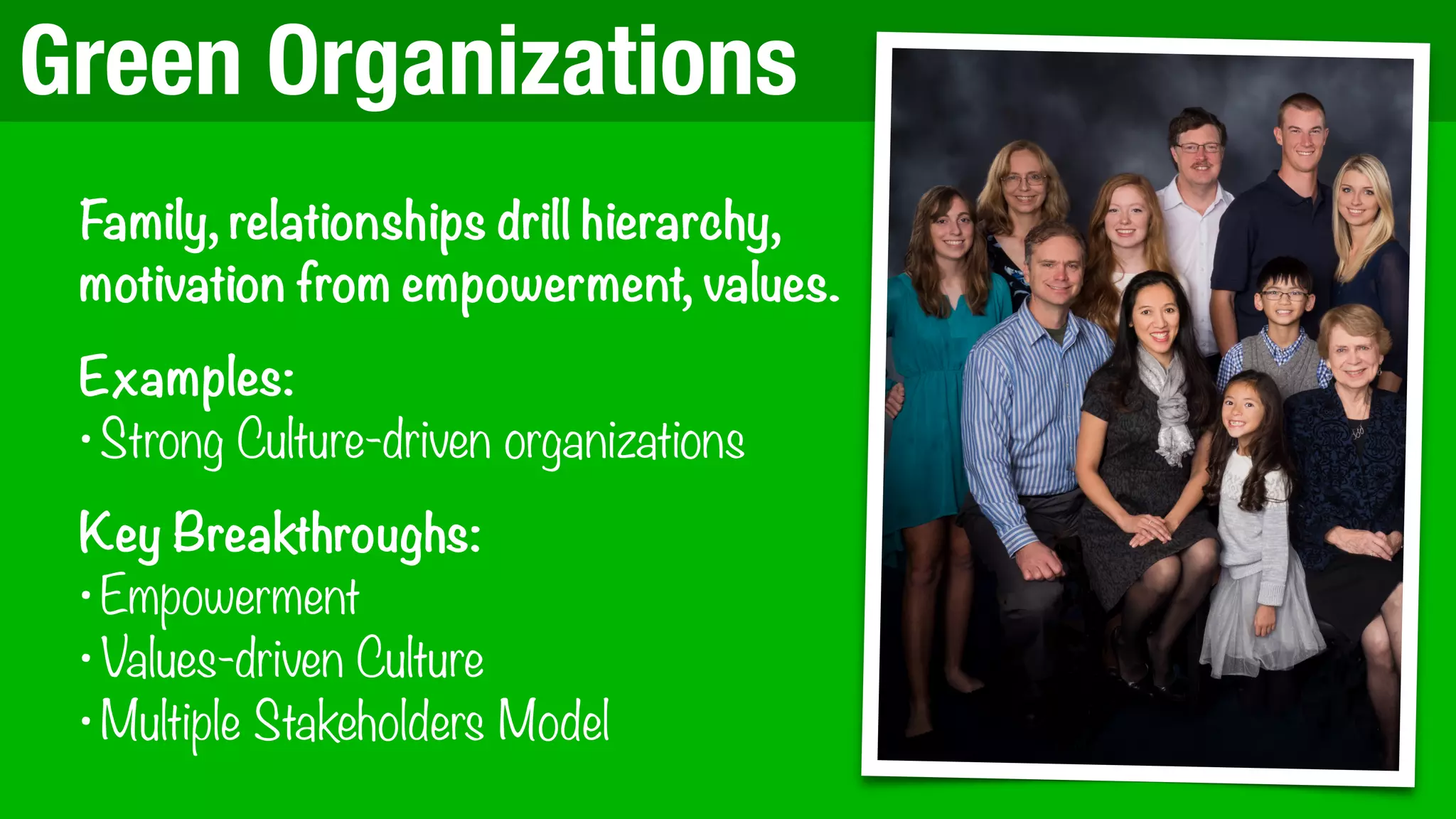
Green Organizations
Family, relationships drill hierarchy,
motivation from empowerment, values.
Examples:
•Strong Culture-driven organizations
Key Breakthroughs:
•Empowerment
•Values-driven Culture
•Multiple Stakeholders Model
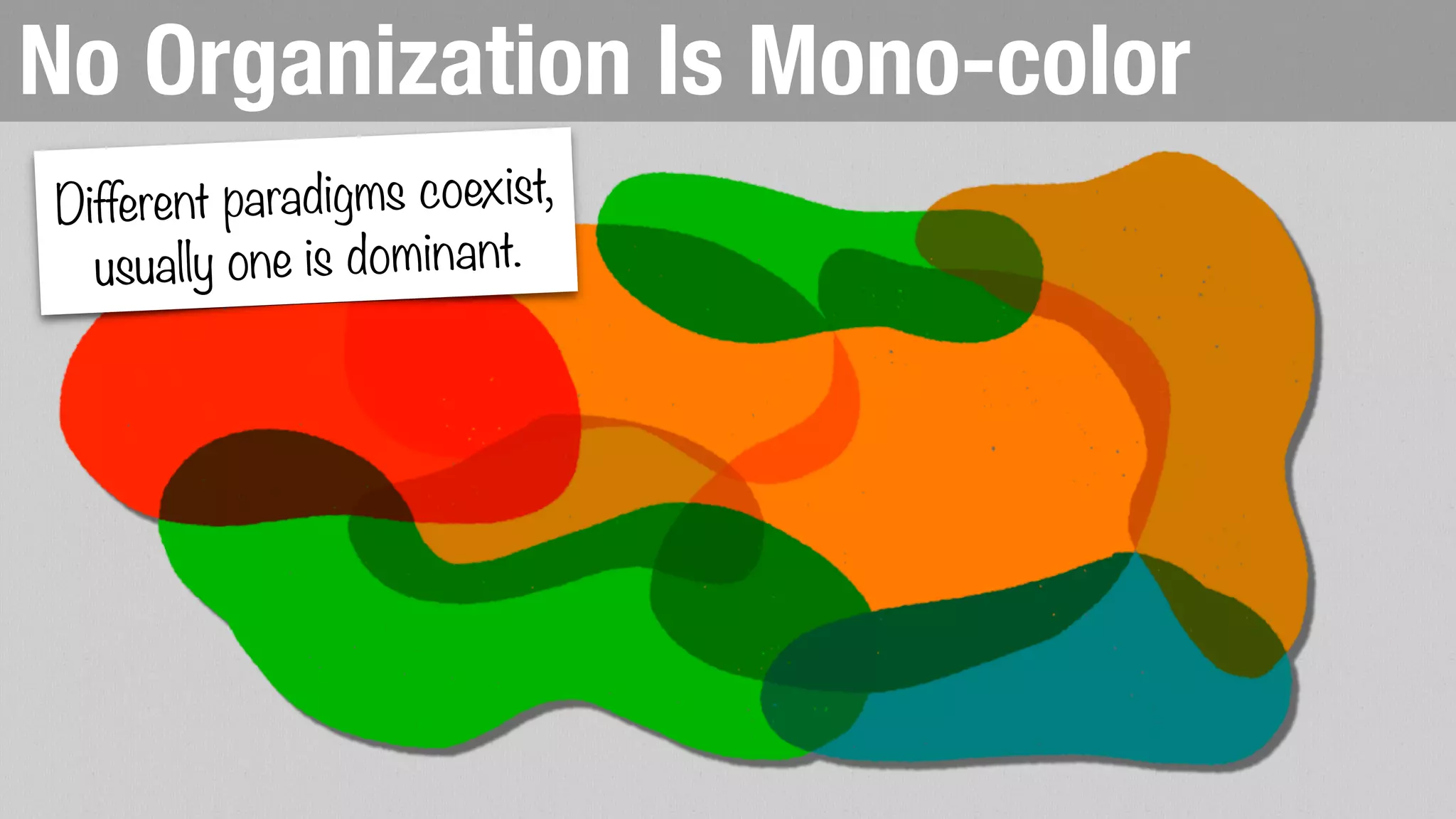
No Organization Is Mono-color
Different paradigms coexist,
usually one is dominant.
No Paradigm is Good or Bad
-Every paradigm includes and transcends
the previous
-Each stage is well adapted to certain
contexts, none is inherently good or bad
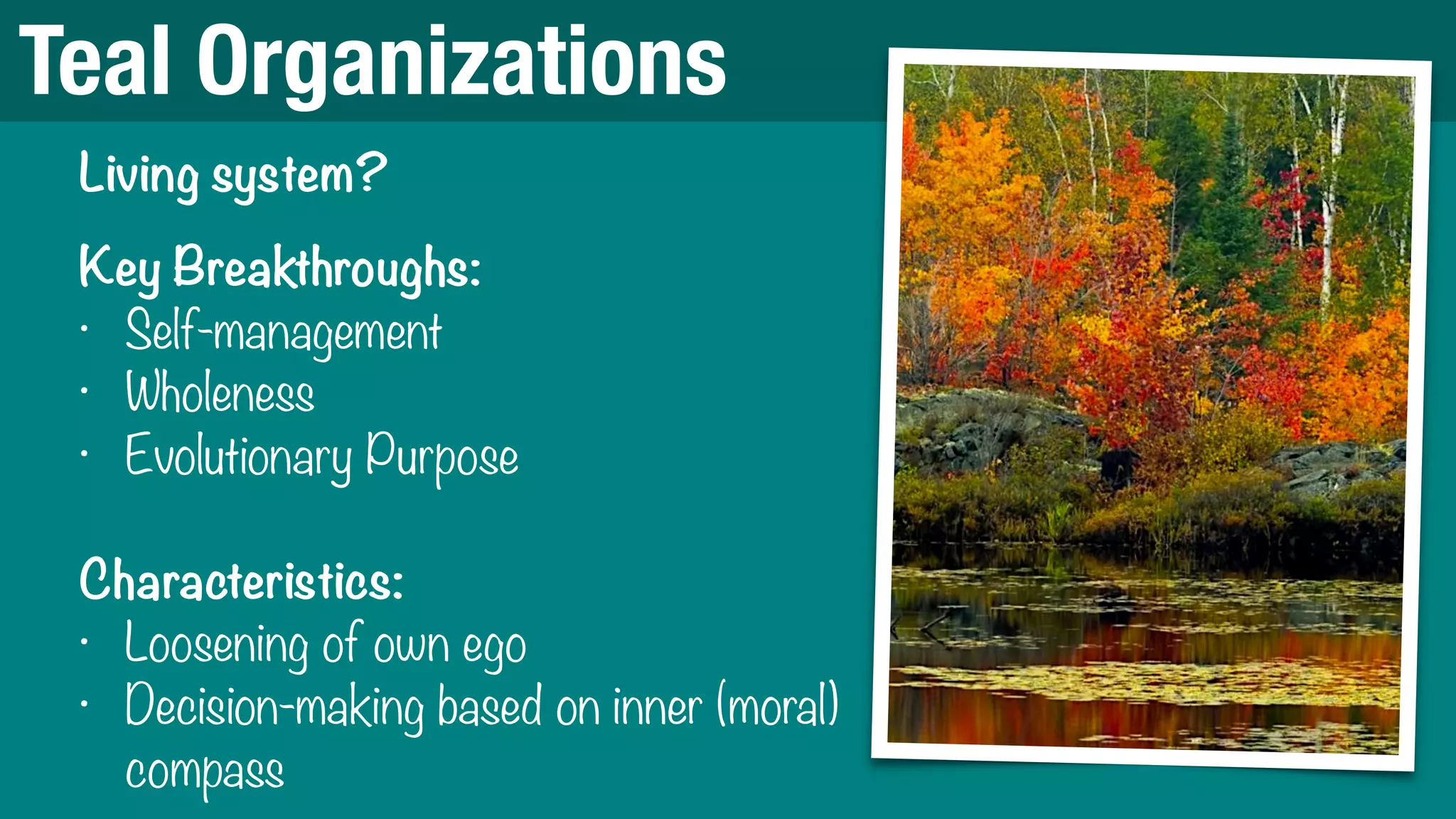
Teal Organizations
Living system?
Key Breakthroughs:
• Self-management
• Wholeness
• Evolutionary Purpose
Characteristics:
• Loosening of own ego
• Decision-making based on inner (moral)
compass
Google’s Project Aristotle
(Two-year study on 180 teams)
Factors of most
successful
teams
Clarity of goal
and structure
Dependability
Personal
Meaning
Larger
Impact
Psychological
Safety
Psychologically Safe If Not Afraid To…
Be Yourself Take Risks
Make Mistakes Raise Problems
Ask Questions Disagree
What Color is Agile, Mainly?
Individuals and
Interactions
Processes
and Tools
over
Responding
to Change
Following a
Plan
over
Working
Software
Comprehensive
Documentation
over
Customer
Collaboration
Contract
Negotiation
over
T G O A
A
R A
A
OT
T G
OT
PRODUCT
STAKEHOLDERS
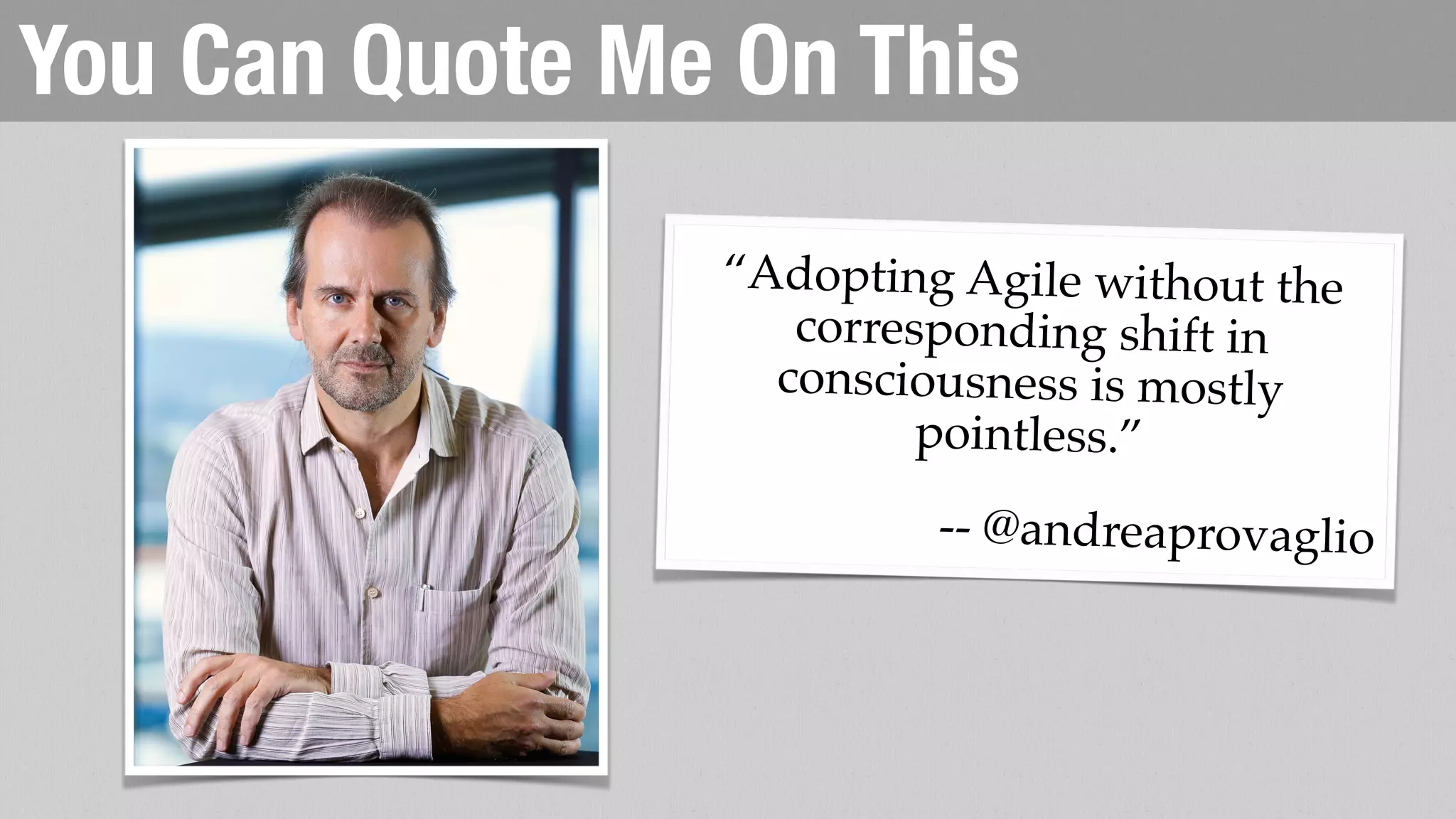
You Can Quote Me On This
“Adopting Agile without the
corresponding shift in
consciousness is mostly
pointless.”
-- @andreaprovaglio
Consciousness and Leadership
“What determines which stage an organization
operates from? It is the stage through which its
leadership tends to look at the world. […]
This means that an organization cannot evolve
beyond its leadership’s stage of development.”
-- from “Reinventing Organizations”
Management and Leadership
Management is about manipulating
resources to get a known job done
Leadership is about creating change
you believe in
Quotes from “Tribes” by Seth Godin
Influence
Managers have employees
Authority
Leaders have followers
Accountability
Forces for Organizational Change
Need to be aligned, though
Management
Leadership
Management and Leadership
forces don’t necessarily
coincide with the same person
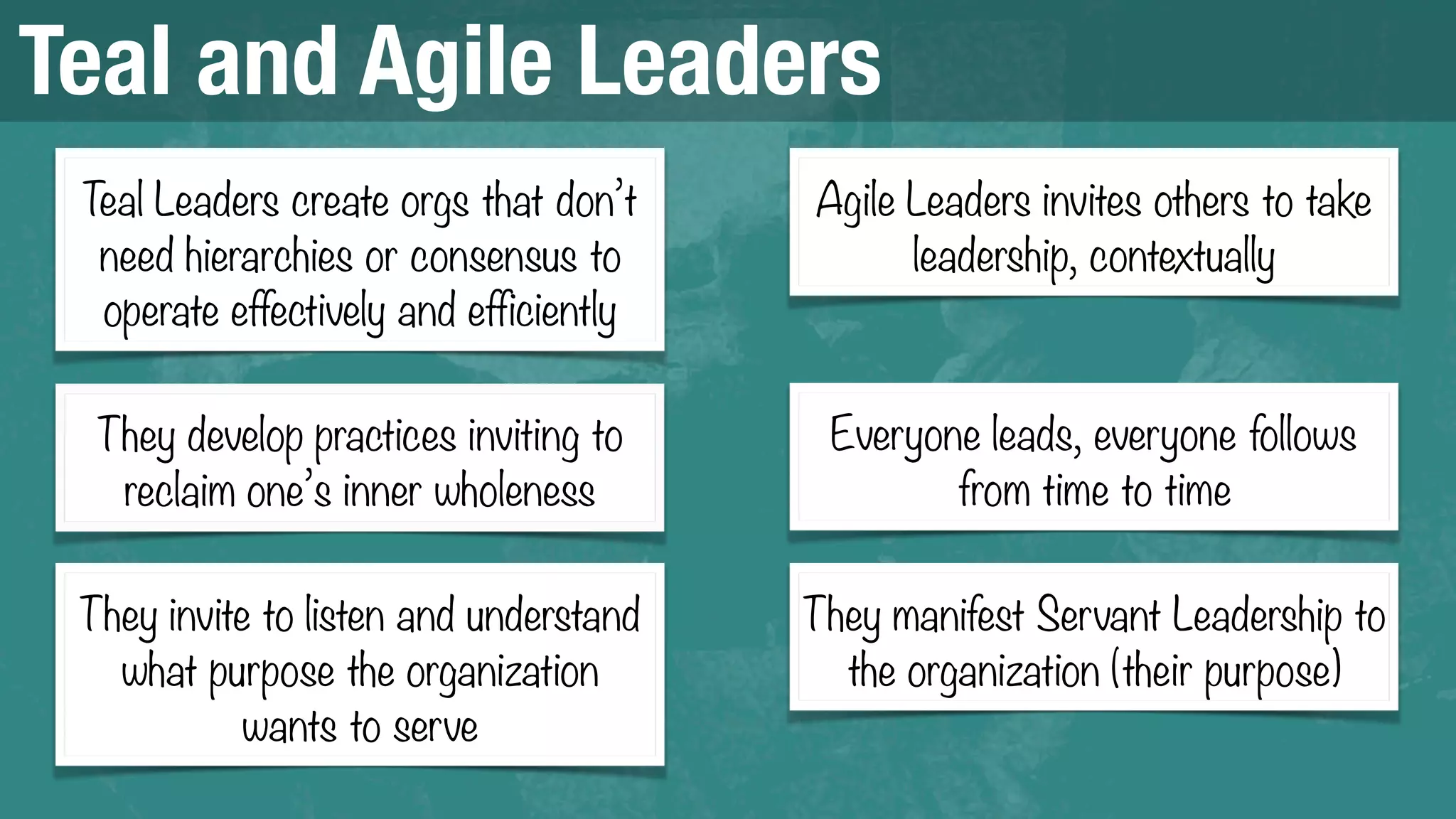
Teal and Agile Leaders
Everyone leads, everyone follows
from time to time
Agile Leaders invites others to take
leadership, contextually
Teal Leaders create orgs that don’t
need hierarchies or consensus to
operate effectively and efficiently
They develop practices inviting to
reclaim one’s inner wholeness
They invite to listen and understand
what purpose the organization
wants to serve
They manifest Servant Leadership to
the organization (their purpose)
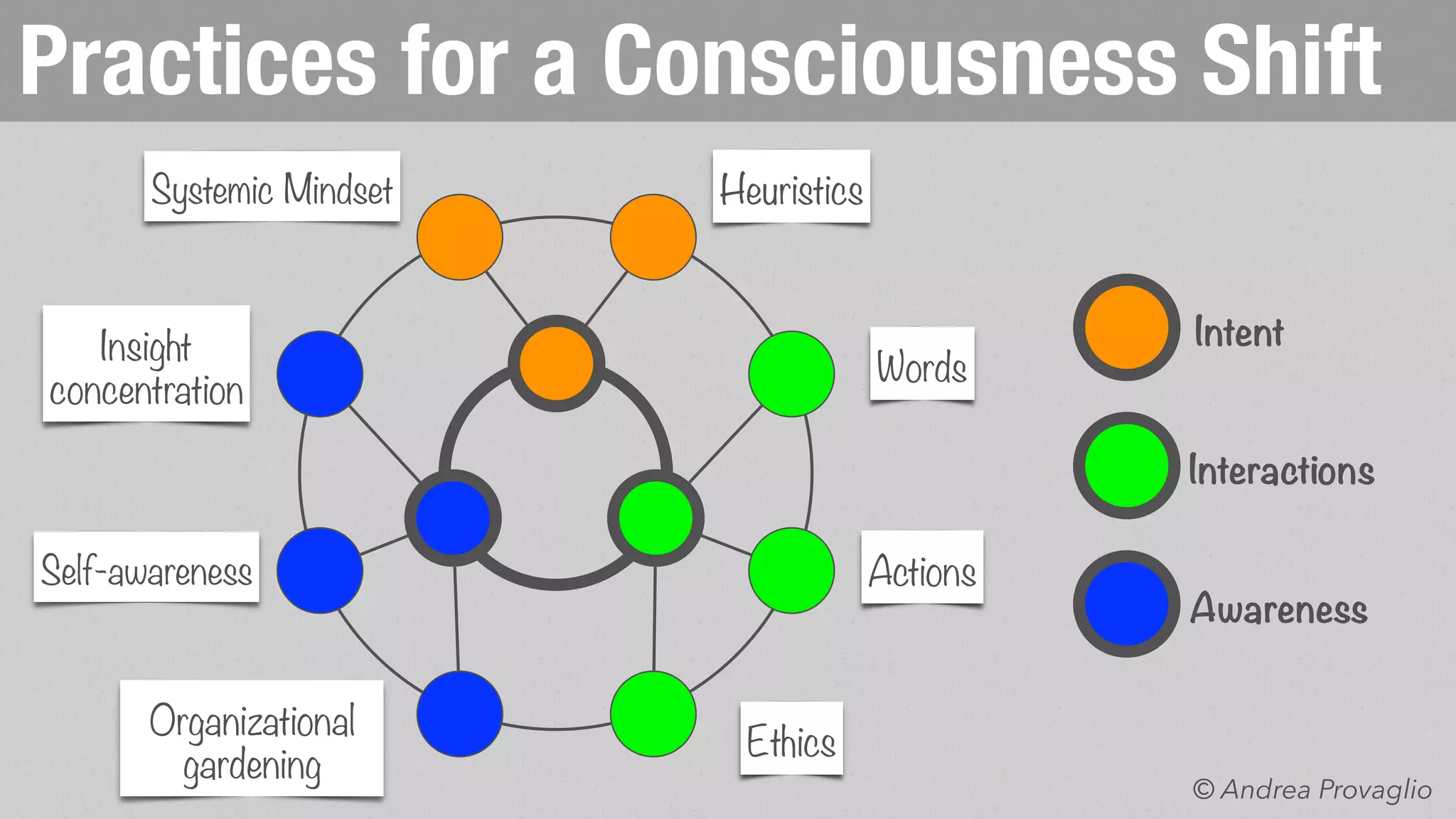
Practices for a Consciousness Shift
Organizational
gardening
Self-awareness
Insight

concentration
Ethics
Actions
Words
HeuristicsSystemic Mindset
Awareness
Interactions
Intent
© Andrea Provaglio
The Organizational Gardening Metaphor
Seeds
Don’t like Like
Organizational Gardening
Undesirable Desirable
ManifestedUnmanifested
time dimension
REDUCE SUPPORT
PREVENT PROMOTE
© Andrea Provaglio
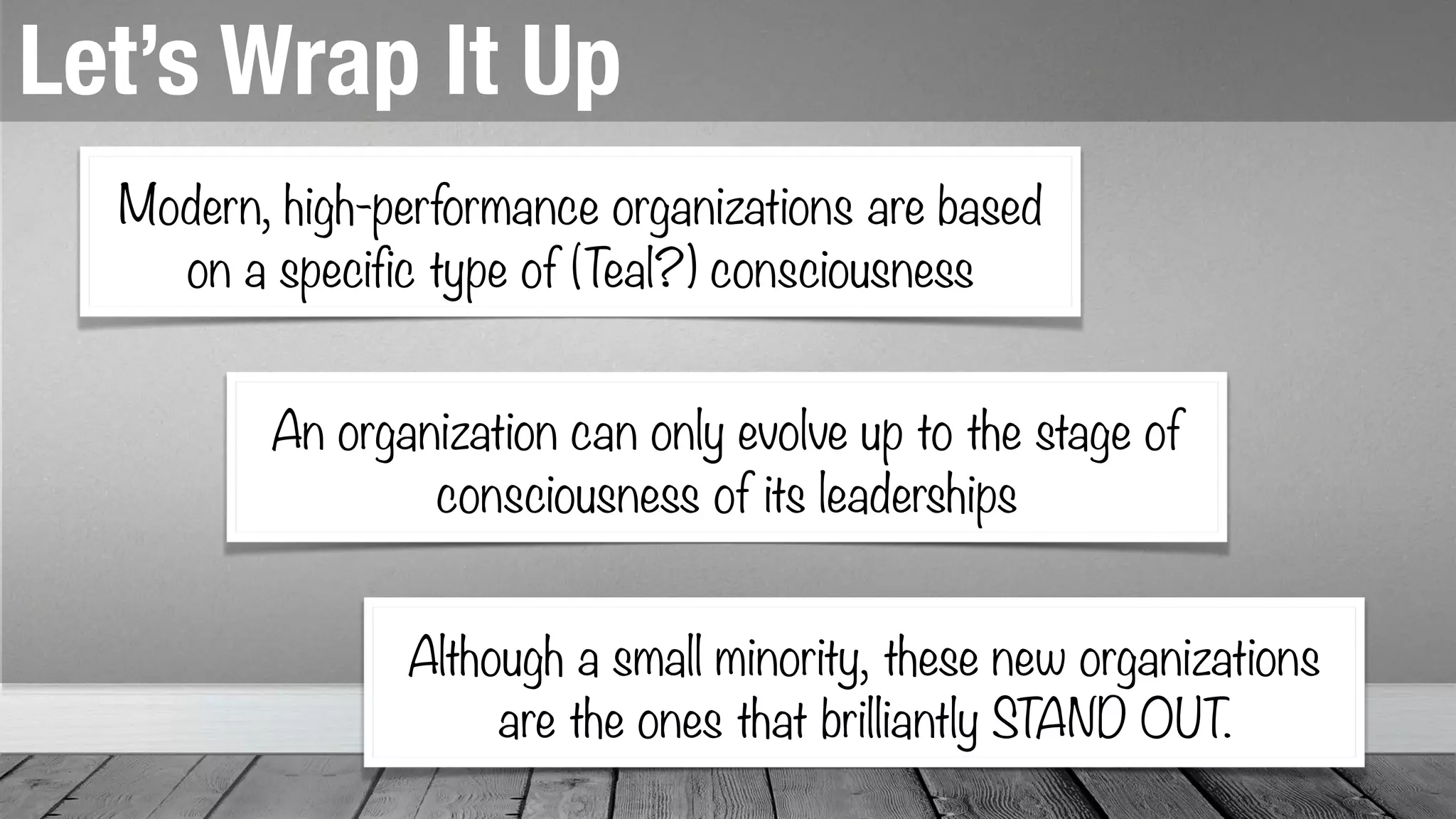
Let’s Wrap It Up
Although a small minority, these new organizations
are the ones that brilliantly STAND OUT.
Modern, high-performance organizations are based
on a specific type of (Teal?) consciousness
An organization can only evolve up to the stage of
consciousness of its leaderships
Want to Keep in Touch?
provagl.io/linkedin
provagl.io/twitter
provagl.io/news
Click on
these links!

Shifting Consciousness

  • 1.
  • 2.
    Nice Meeting You Iwork with leaders, managers and teams in intellect-based organizations. I help them rethink their organizational dynamics, mindset, processes and practices, so that they can do business effectively in the 21st century.
  • 3.
    Culture and Structurein Organizations Values, principles and behaviors that contribute to the unique social and psychological environment of an organization. How an organization is organized. Roles, authority, task allocation, salary, processes, decision-making, policies, responsibilities, etc.
  • 4.
    A Chicken-and-Egg Debate Culturefollows Structure!Structure follows Culture!
  • 5.
    Consciousness Creates Reality The“set of lenses” through which we perceive (and therefore act in) the world
  • 6.
  • 7.
    Before We Continue,Remember… Is Not
  • 8.
    Red Organizations Pack ofwolves, impulsive, fear is the glue. Examples: •Street Gangs •Tribal Militia Key Breakthroughs: •Command and Authority •Division of Labor
  • 9.
    Amber Organizations Army, highlyformal roles, stability, repetition of the past, stick. Examples: •Most churches •Public school systems •Most govt. agencies Key Breakthroughs: •Hierarchies •Processes
  • 10.
    Orange Organizations Machine, competition,profit, rewards, management by objectives, carrot. Examples: •Multinational companies •Charter Schools Key Breakthroughs: •Innovation •Accountability •Meritocracy
  • 11.
    Green Organizations Family, relationshipsdrill hierarchy, motivation from empowerment, values. Examples: •Strong Culture-driven organizations Key Breakthroughs: •Empowerment •Values-driven Culture •Multiple Stakeholders Model
  • 12.
    No Organization IsMono-color Different paradigms coexist, usually one is dominant.
  • 13.
    No Paradigm isGood or Bad -Every paradigm includes and transcends the previous -Each stage is well adapted to certain contexts, none is inherently good or bad
  • 14.
    Teal Organizations Living system? KeyBreakthroughs: • Self-management • Wholeness • Evolutionary Purpose Characteristics: • Loosening of own ego • Decision-making based on inner (moral) compass
  • 15.
    Google’s Project Aristotle (Two-yearstudy on 180 teams) Factors of most successful teams Clarity of goal and structure Dependability Personal Meaning Larger Impact Psychological Safety
  • 16.
    Psychologically Safe IfNot Afraid To… Be Yourself Take Risks Make Mistakes Raise Problems Ask Questions Disagree
  • 17.
    What Color isAgile, Mainly? Individuals and Interactions Processes and Tools over Responding to Change Following a Plan over Working Software Comprehensive Documentation over Customer Collaboration Contract Negotiation over T G O A A R A A OT T G OT PRODUCT STAKEHOLDERS
  • 18.
    You Can QuoteMe On This “Adopting Agile without the corresponding shift in consciousness is mostly pointless.” -- @andreaprovaglio
  • 19.
    Consciousness and Leadership “Whatdetermines which stage an organization operates from? It is the stage through which its leadership tends to look at the world. […] This means that an organization cannot evolve beyond its leadership’s stage of development.” -- from “Reinventing Organizations”
  • 20.
    Management and Leadership Managementis about manipulating resources to get a known job done Leadership is about creating change you believe in Quotes from “Tribes” by Seth Godin Influence Managers have employees Authority Leaders have followers Accountability
  • 21.
    Forces for OrganizationalChange Need to be aligned, though Management Leadership Management and Leadership forces don’t necessarily coincide with the same person
  • 22.
    Teal and AgileLeaders Everyone leads, everyone follows from time to time Agile Leaders invites others to take leadership, contextually Teal Leaders create orgs that don’t need hierarchies or consensus to operate effectively and efficiently They develop practices inviting to reclaim one’s inner wholeness They invite to listen and understand what purpose the organization wants to serve They manifest Servant Leadership to the organization (their purpose)
  • 23.
    Practices for aConsciousness Shift Organizational gardening Self-awareness Insight
 concentration Ethics Actions Words HeuristicsSystemic Mindset Awareness Interactions Intent © Andrea Provaglio
  • 24.
    The Organizational GardeningMetaphor Seeds Don’t like Like
  • 25.
    Organizational Gardening Undesirable Desirable ManifestedUnmanifested timedimension REDUCE SUPPORT PREVENT PROMOTE © Andrea Provaglio
  • 26.
    Let’s Wrap ItUp Although a small minority, these new organizations are the ones that brilliantly STAND OUT. Modern, high-performance organizations are based on a specific type of (Teal?) consciousness An organization can only evolve up to the stage of consciousness of its leaderships
  • 27.
    Want to Keepin Touch? provagl.io/linkedin provagl.io/twitter provagl.io/news Click on these links!