Hardness
Measurement
Peeyush Mishra
Material Science and Engineering
Materials Characterization
Introduction
• Those properties of a material that define its behaviour under applied forces
are known as mechanical properties
• Hardness is defined as the ability of a material to resist scratching abrasion
or wear on it
• It may also be defined as the ability of material to resist plastic deformation.
Introduction
• Example of such hard materials: ceramics, concrete, and superhard
materials.
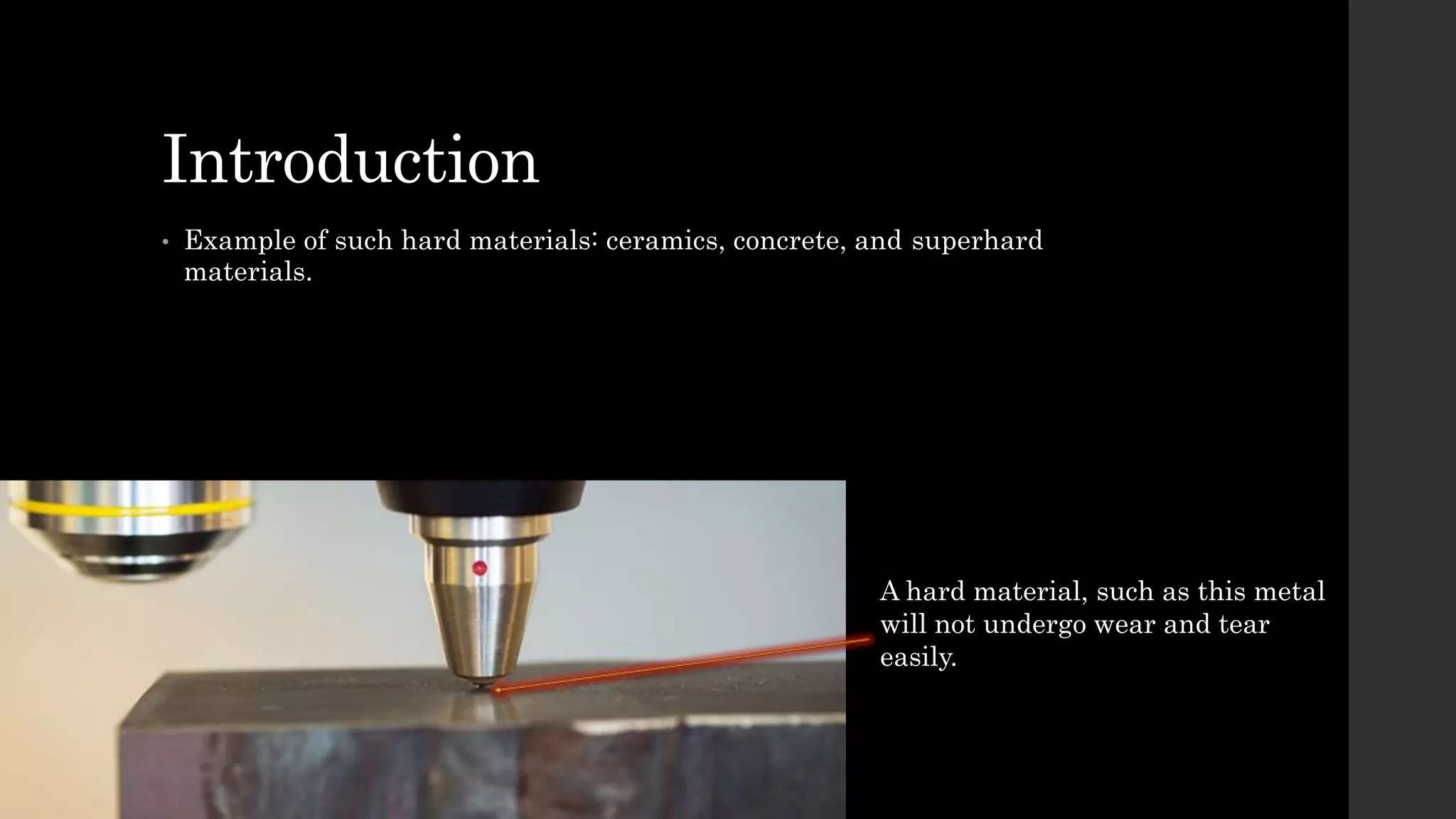
A hard material, such as this metal
will not undergo wear and tear
easily.
Testing hardness of a material
• There are three principal methods of testing the hardness of a material –
scratch testing, rebound hardness and indentation testing
• Scratch Testing:
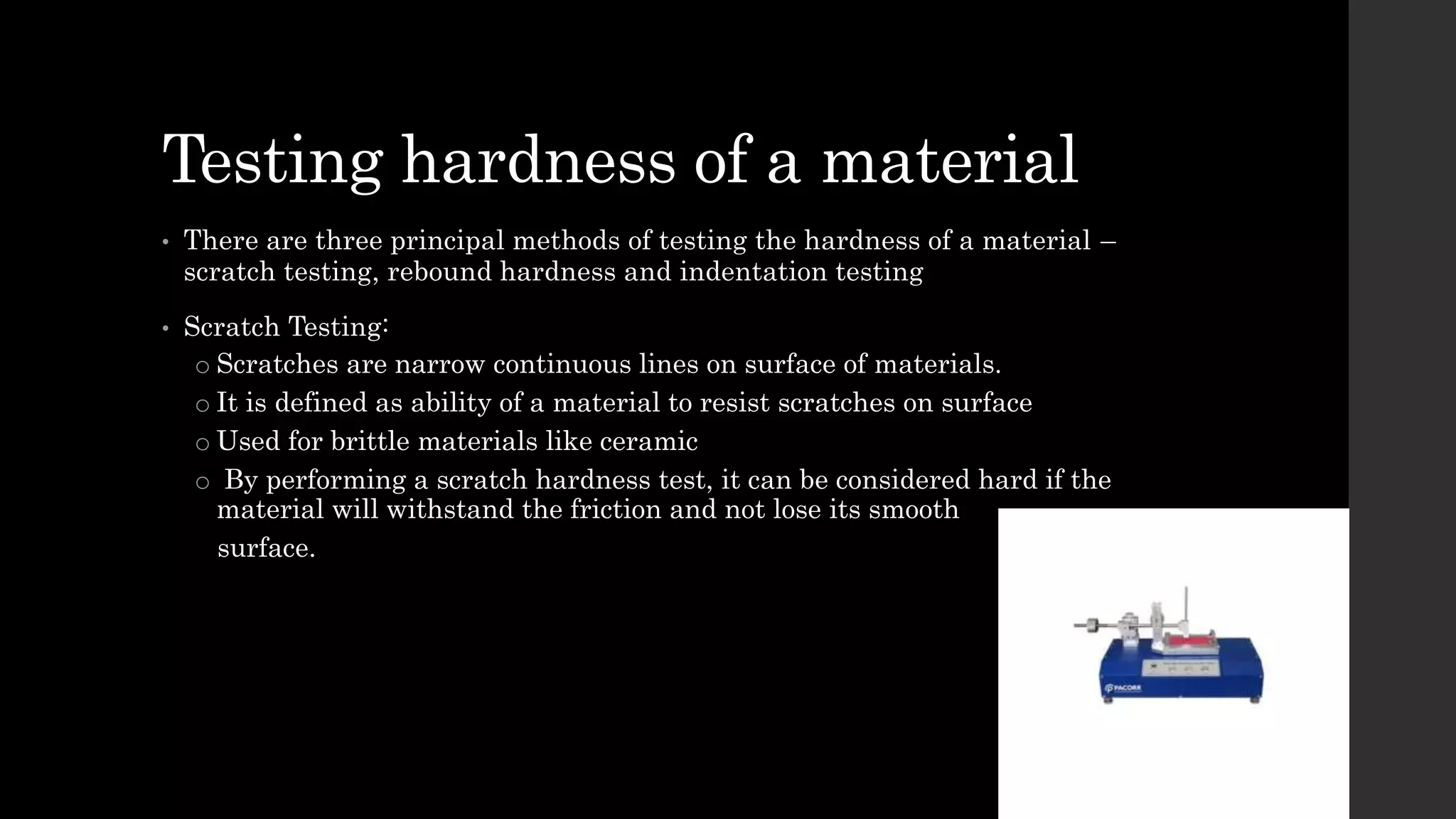
o Scratches are narrow continuous lines on surface of materials.
o It is defined as ability of a material to resist scratches on surface
o Used for brittle materials like ceramic
o By performing a scratch hardness test, it can be considered hard if the
material will withstand the friction and not lose its smooth
surface.
Testing hardness of a material
• There are three principal methods of testing the hardness of a material –
scratch testing, rebound hardness and indentation testing
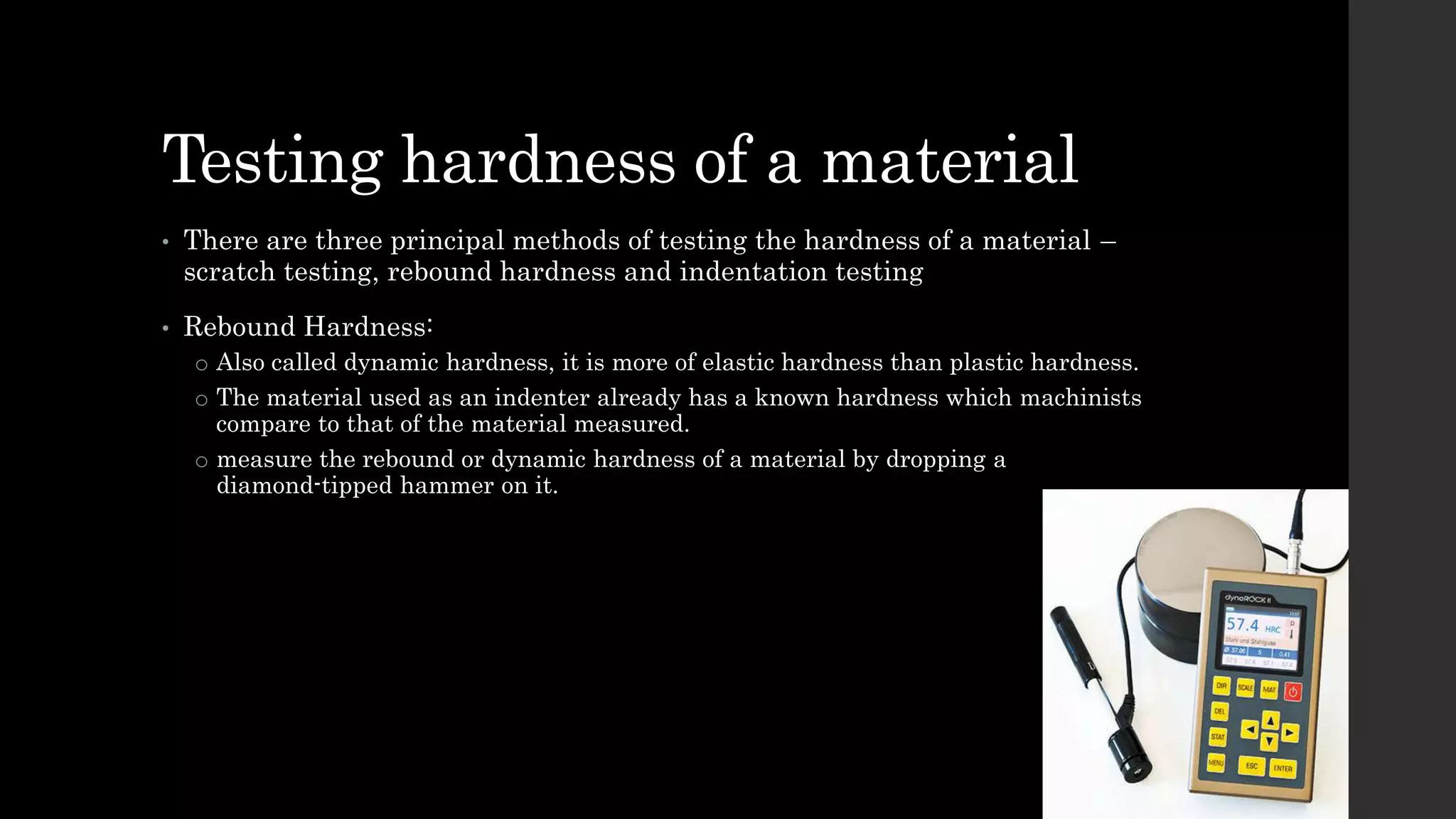
• Rebound Hardness:
o Also called dynamic hardness, it is more of elastic hardness than plastic hardness.
o The material used as an indenter already has a known hardness which machinists
compare to that of the material measured.
o measure the rebound or dynamic hardness of a material by dropping a
diamond-tipped hammer on it.
Testing hardness of a material
• There are three principal methods of testing the hardness of a material –
scratch testing, rebound hardness and indentation testing
• Indentation Testing:
o Use indentation hardness to determine the hardness of a material to deformation.
o Requires indenting the examined material with a continuous load until it forms an
impression
o Can be used on both microscopic and macroscopic scale.
o Measuring the indentation value of material helps to know how much load the
material can bear before it deforms.
Units for measuring hardness
• SI unit of N/mm², this is called Unit Pascal
• Each of the different types of hardness discussed has different scales of
measurement. The units are derived from each measurement method
• Common units of Hardness: Brinell Hardness Number (HB), Rockwell
hardness number (HRA, HRB, HRC, etc.), Leeb hardness value (HLD, HLS,
HLE, etc.), and Vickers hardness number (HV).
Units for measuring hardness
• We can use a conversion table that can be used to
compare between different units of hardness.
• They are not 100% accurate
Brinell Test
• One of the most common hardness test
• Principle involves a steel ball of 10 mm diameter to create an impression on
the test piece. The impression is then calculated.
• Machine lowers the ball on the material to form an indentation and left for
about 30 seconds. The machinist then applies a force to the ball.
• Metals may require load between 500-3000 kg
• The values noted are used to calculate Brinell hardness using formula
Brinell Test
Pressure Gage
Penetrator
Anvil
Elevating Screw
Rockwell Test
• The kind of material tested determines the sort of scale used. There are 30 kind
of scales.
• A minor load is applied before testing load.
• Indenter is lowered into the material to create an impression by applying the
major load. Then, the impression to determine the hardness is measured.
• Following that, increase in dent is measured.
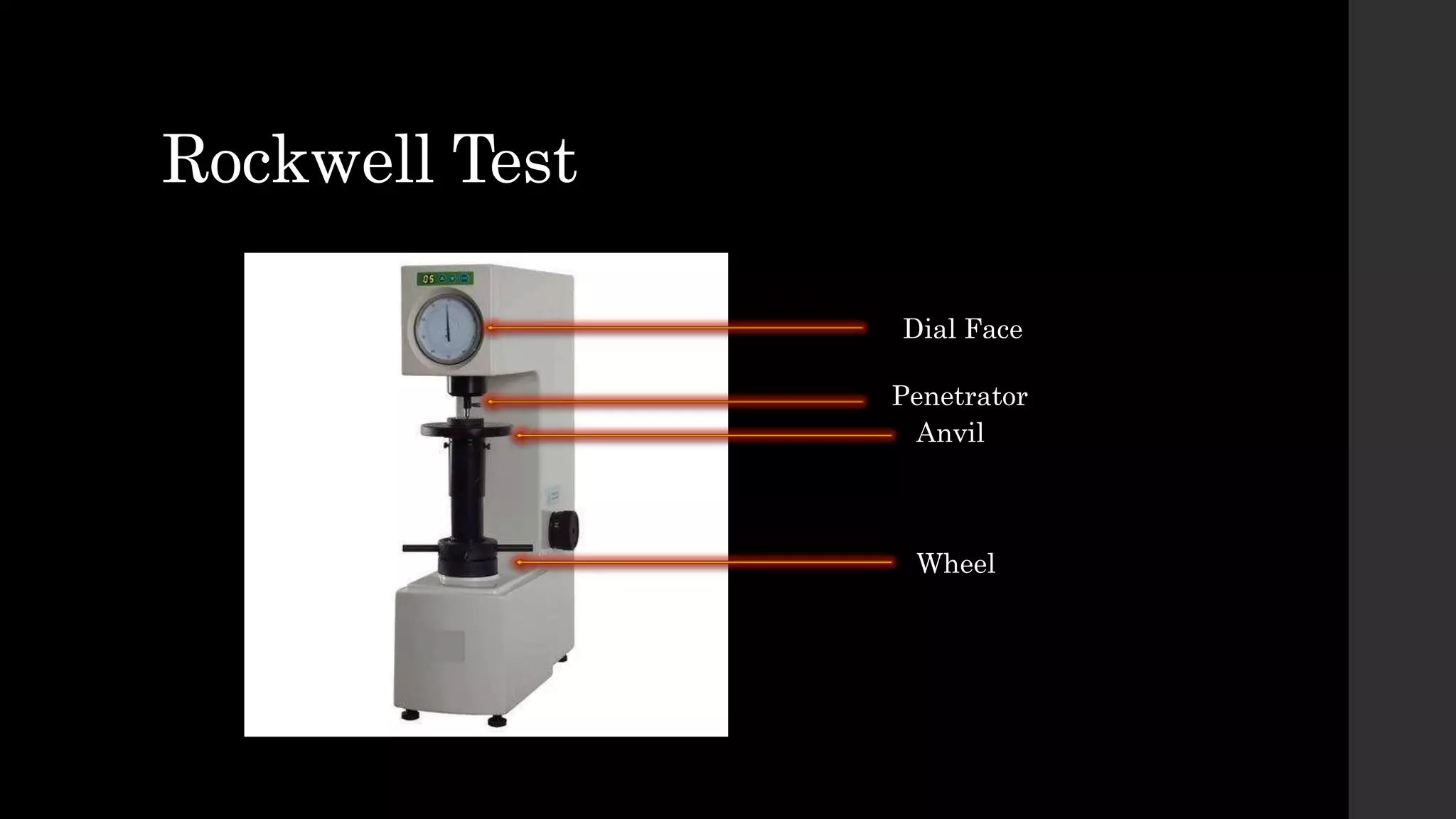
Rockwell Test
Dial Face
Penetrator
Wheel
Anvil
Vickers Diamond Test
• It is more suitable for soft materials that require lesser loads.
• Vickers uses a single diamond indenter for all materials, making its
calculations easier.
• Specimen is placed on the machine to find a suitable height using the
microscope. The correct place can be determined by checking the images on
the screen.
• Diamond indenter is lowered to the part and allowed to stay for a specified
period. Then it’s lifted and indentation value is measured
Vickers Diamond Test
Working Panel
Power Source
Working Table
Eyepiece Lens
Manual / Auto Turret
Mohs hardness test
• If scratch hardness is to be measured, this is the ideal method to proceed
with.
• This test is performed by scratching the material against a reference
material with a known hardness.
• The Mohs hardness test uses ten reference materials with different
hardness.
• A Rockwell diamond indenter is used for the modern Mohs hardness test.
The working principle of the machine is similar to this of the traditional
method.
Scleroscope Test
• Scleroscope test can be used to determine the rebound hardness of materials
• A hollow vertical glass tube is connected to a stand. Then, a diamond
hammer will be dropped through the tube onto the test piece
• The hammer will bounce, and the height of the bounce will be measured and
recorded
• Materials with higher hardness will have higher bounce while soft materials
will have low bound.

Hardness measurement | Material Science and Metallurgy

  • 1.
    Hardness Measurement Peeyush Mishra Material Scienceand Engineering Materials Characterization
  • 2.
    Introduction • Those propertiesof a material that define its behaviour under applied forces are known as mechanical properties • Hardness is defined as the ability of a material to resist scratching abrasion or wear on it • It may also be defined as the ability of material to resist plastic deformation.
  • 3.
    Introduction • Example ofsuch hard materials: ceramics, concrete, and superhard materials. A hard material, such as this metal will not undergo wear and tear easily.
  • 4.
    Testing hardness ofa material • There are three principal methods of testing the hardness of a material – scratch testing, rebound hardness and indentation testing • Scratch Testing: o Scratches are narrow continuous lines on surface of materials. o It is defined as ability of a material to resist scratches on surface o Used for brittle materials like ceramic o By performing a scratch hardness test, it can be considered hard if the material will withstand the friction and not lose its smooth surface.
  • 5.
    Testing hardness ofa material • There are three principal methods of testing the hardness of a material – scratch testing, rebound hardness and indentation testing • Rebound Hardness: o Also called dynamic hardness, it is more of elastic hardness than plastic hardness. o The material used as an indenter already has a known hardness which machinists compare to that of the material measured. o measure the rebound or dynamic hardness of a material by dropping a diamond-tipped hammer on it.
  • 6.
    Testing hardness ofa material • There are three principal methods of testing the hardness of a material – scratch testing, rebound hardness and indentation testing • Indentation Testing: o Use indentation hardness to determine the hardness of a material to deformation. o Requires indenting the examined material with a continuous load until it forms an impression o Can be used on both microscopic and macroscopic scale. o Measuring the indentation value of material helps to know how much load the material can bear before it deforms.
  • 7.
    Units for measuringhardness • SI unit of N/mm², this is called Unit Pascal • Each of the different types of hardness discussed has different scales of measurement. The units are derived from each measurement method • Common units of Hardness: Brinell Hardness Number (HB), Rockwell hardness number (HRA, HRB, HRC, etc.), Leeb hardness value (HLD, HLS, HLE, etc.), and Vickers hardness number (HV).
  • 8.
    Units for measuringhardness • We can use a conversion table that can be used to compare between different units of hardness. • They are not 100% accurate
  • 9.
    Brinell Test • Oneof the most common hardness test • Principle involves a steel ball of 10 mm diameter to create an impression on the test piece. The impression is then calculated. • Machine lowers the ball on the material to form an indentation and left for about 30 seconds. The machinist then applies a force to the ball. • Metals may require load between 500-3000 kg • The values noted are used to calculate Brinell hardness using formula
  • 10.
  • 11.
    Rockwell Test • Thekind of material tested determines the sort of scale used. There are 30 kind of scales. • A minor load is applied before testing load. • Indenter is lowered into the material to create an impression by applying the major load. Then, the impression to determine the hardness is measured. • Following that, increase in dent is measured.
  • 12.
  • 13.
    Vickers Diamond Test •It is more suitable for soft materials that require lesser loads. • Vickers uses a single diamond indenter for all materials, making its calculations easier. • Specimen is placed on the machine to find a suitable height using the microscope. The correct place can be determined by checking the images on the screen. • Diamond indenter is lowered to the part and allowed to stay for a specified period. Then it’s lifted and indentation value is measured
  • 14.
    Vickers Diamond Test WorkingPanel Power Source Working Table Eyepiece Lens Manual / Auto Turret
  • 15.
    Mohs hardness test •If scratch hardness is to be measured, this is the ideal method to proceed with. • This test is performed by scratching the material against a reference material with a known hardness. • The Mohs hardness test uses ten reference materials with different hardness. • A Rockwell diamond indenter is used for the modern Mohs hardness test. The working principle of the machine is similar to this of the traditional method.
  • 16.
    Scleroscope Test • Scleroscopetest can be used to determine the rebound hardness of materials • A hollow vertical glass tube is connected to a stand. Then, a diamond hammer will be dropped through the tube onto the test piece • The hammer will bounce, and the height of the bounce will be measured and recorded • Materials with higher hardness will have higher bounce while soft materials will have low bound.

Editor's Notes

  • #7  Indentation testing can only be used on materials that undergo plastic deformation such as metals and thermoplastic polymers. Moh’s scale of hardness, which ranks a material based on a list of standard materials with known hardness. Scratch testing is therefore used for brittle materials such as ceramics.