Unit – 9_Haploidy
Sourabh Kumar
CCS University, Meerut
Outline
• Introduction to Doubled Haploid (DH) technology
• Production of Doubled Haploid (All methods)
• Detection of Haploids
• Uses of Doubled Haploid in Plant Breeding
• Challenges
• On-going activities
Chromosomal Aberrations
A. Structural Aberrations
oDeletion
oDuplication
oInversion
oTranslocation
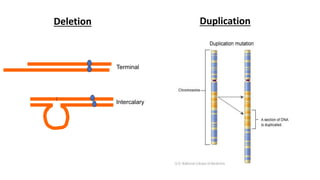
Deletion
Intercalary
Terminal
Duplication
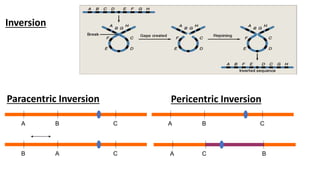
Inversion
Paracentric Inversion
A B C
B
A C
B A
A B C
A B
C
Pericentric Inversion
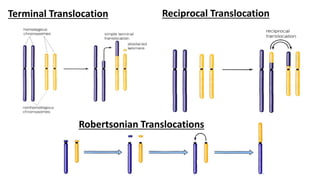
Terminal Translocation Reciprocal Translocation
Robertsonian Translocations
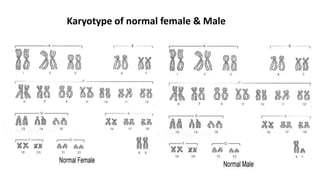
Karyotype of normal female & Male
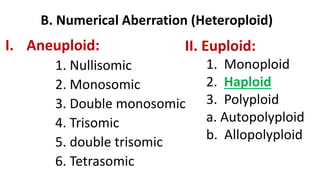
B. Numerical Aberration (Heteroploid)
I. Aneuploid:
1. Nullisomic
2. Monosomic
3. Double monosomic
4. Trisomic
5. double trisomic
6. Tetrasomic
II. Euploid:
1. Monoploid
2. Haploid
3. Polyploid
a. Autopolyploid
b. Allopolyploid
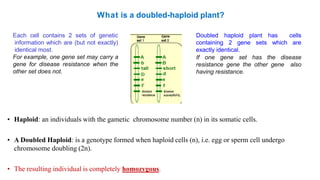
What is a doubled-haploid plant?
Each cell contains 2 sets of genetic
information which are (but not exactly)
identical most.
For example, one gene set may carry a
gene for disease resistance when the
other set does not.

Doubled haploid plant has cells
containing 2 gene sets which are
exactly identical.
If one gene set has the disease
resistance gene the other gene also
having resistance.
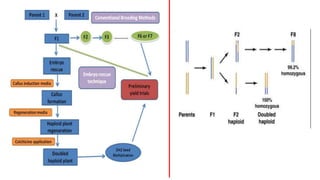
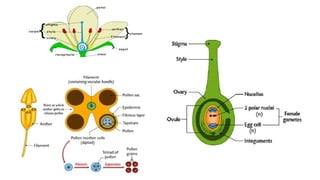
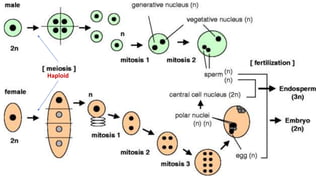
• Haploid: an individuals with the gametic chromosome number (n) in its somatic cells.
• A Doubled Haploid: is a genotype formed when haploid cells (n), i.e. egg or sperm cell undergo
chromosome doubling (2n).
• The resulting individual is completely homozygous.
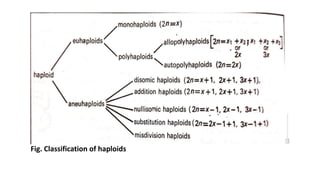
Fig. Classification of haploids
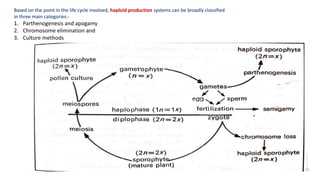
Based on the point in the life cycle involved, haploid production systems can be broadly classified
in three main categories:-
1. Parthenogenesis and apogamy
2. Chromosome elimination and
3. Culture methods
Haploid
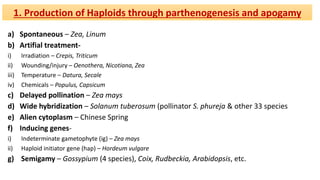
1. Production of Haploids through parthenogenesis and apogamy
a) Spontaneous – Zea, Linum
b) Artifial treatment-
i) Irradiation – Crepis, Triticum
ii) Wounding/injury – Oenothera, Nicotiana, Zea
iii) Temperature – Datura, Secale
iv) Chemicals – Populus, Capsicum
c) Delayed pollination – Zea mays
d) Wide hybridization – Solanum tuberosum (pollinator S. phureja & other 33 species
e) Alien cytoplasm – Chinese Spring
f) Inducing genes-
i) Indeterminate gametophyte (ig) – Zea mays
ii) Haploid initiator gene (hap) – Hordeum vulgare
g) Semigamy – Gossypium (4 species), Coix, Rudbeckia, Arabidopsis, etc.
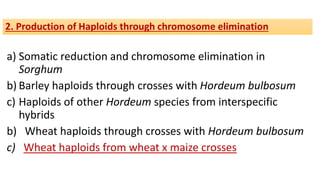
a) Somatic reduction and chromosome elimination in
Sorghum
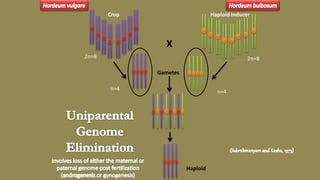
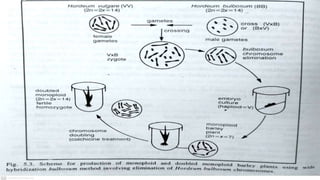
b) Barley haploids through crosses with Hordeum bulbosum
c) Haploids of other Hordeum species from interspecific
hybrids
b) Wheat haploids through crosses with Hordeum bulbosum
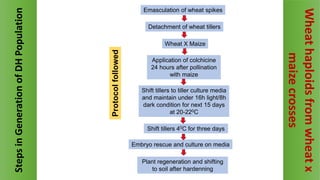
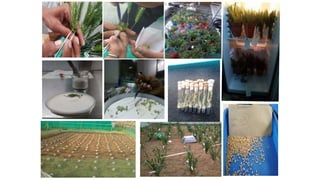
c) Wheat haploids from wheat x maize crosses
2. Production of Haploids through chromosome elimination
Haploid Inducer
Crop
X
Gametes
2n=8 2n=8
n=4
n=4
Haploid
Wheat X Maize
Detachment of wheat tillers
Application of colchicine
24 hours after pollination
with maize
Shift tillers to tiller culture media
and maintain under 16h light/8h
dark condition for next 15 days
at 20-220C
Shift tillers 40C for three days
Embryo rescue and culture on media
Plant regeneration and shifting
to soil after hardenning
Protocol
followed
Emasculation of wheat spikes
Steps
in
Generation
of
DH
Population
Wheat
haploids
from
wheat
x
maize
crosses
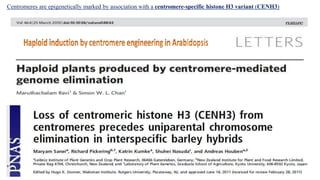
Centromeres are epigenetically marked by association with a centromere-specific histone H3 variant (CENH3)
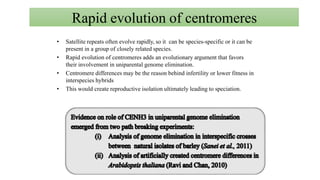
• Satellite repeats often evolve rapidly, so it can be species-specific or it can be
present in a group of closely related species.
• Rapid evolution of centromeres adds an evolutionary argument that favors
their involvement in uniparental genome elimination.
• Centromere differences may be the reason behind infertility or lower fitness in
interspecies hybrids
• This would create reproductive isolation ultimately leading to speciation.
Rapid evolution of centromeres
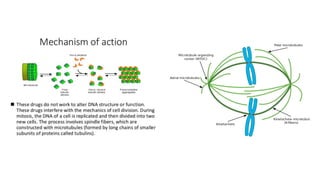
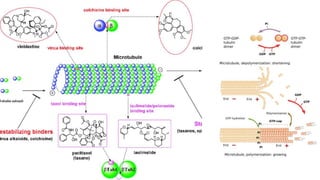
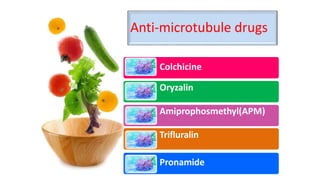
Anti-microtubule drugs
Colchicine
Oryzalin
Amiprophosmethyl(APM)
Trifluralin
Pronamide
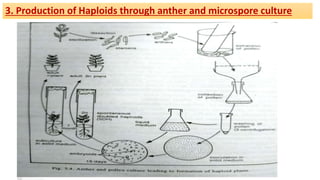
3. Production of Haploids through anther and microspore culture
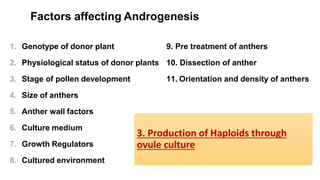
Factors affecting Androgenesis
1. Genotype of donor plant
2. Physiological status of donor plants
3. Stage of pollen development
4. Size of anthers
5. Anther wall factors
6. Culture medium
7. Growth Regulators
8. Cultured environment
9. Pre treatment of anthers
10. Dissection of anther
11. Orientation and density of anthers
3. Production of Haploids through
ovule culture
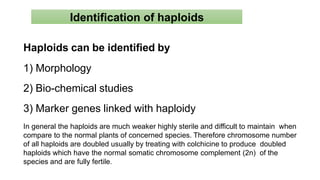
Haploids can be identified by
1) Morphology
2) Bio-chemical studies
3) Marker genes linked with haploidy
In general the haploids are much weaker highly sterile and difficult to maintain when
compare to the normal plants of concerned species. Therefore chromosome number
of all haploids are doubled usually by treating with colchicine to produce doubled
haploids which have the normal somatic chromosome complement (2n) of the
species and are fully fertile.
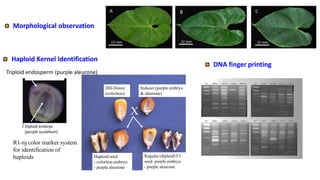
Identification of haploids
DH-Donor
(colorless)
Inducer (purple embryo
& aleurone)
Haploid seed
- colorless embryo
- purple aleurone
Regular (diploid) F1
seed purple embryo
- purple aleurone
X
Haploid Kernel Identification
Diploid embryo
(purple scutellum)
R1-nj color marker system
for identification of
haploids
Morphological observation
Triploid endosperm (purple aleurone)
DNA finger printing
Uses of Double
haploids in Crop
Improvement
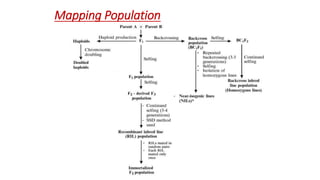
Mapping Population
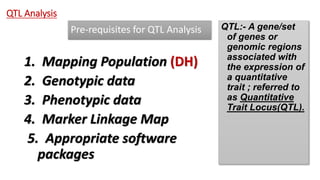
Pre-requisites for QTL Analysis
1. Mapping Population (DH)
2. Genotypic data
3. Phenotypic data
4. Marker Linkage Map
5. Appropriate software
packages
QTL Analysis
QTL:- A gene/set
of genes or
genomic regions
associated with
the expression of
a quantitative
trait ; referred to
as Quantitative
Trait Locus(QTL).
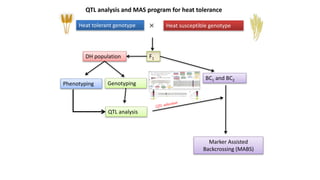
Heat tolerant genotype Heat susceptible genotype
×
F1
DH population
BC1 and BC2
Phenotyping Genotyping
QTL analysis
Marker Assisted
Backcrossing (MABS)
QTL analysis and MAS program for heat tolerance
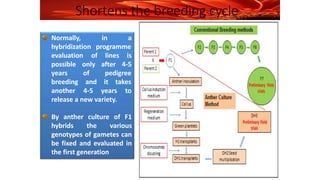
Shortens the breeding cycle
in a
Normally,
hybridization programme
evaluation of lines is
pedigree
it takes
possible
years
breeding
another
only after 4-5
of
and
4-5 years to
release a new variety.
By anther culture of F1
hybrids the various
genotypes of gametes can
be fixed and evaluated in
the first generation
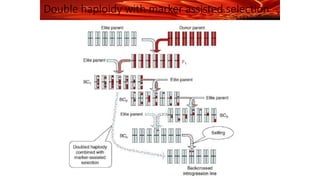
Double haploidy with marker assisted selection
THANKS FOR CAREFUL LISTENING

Haploid

  • 1.
    Unit – 9_Haploidy SourabhKumar CCS University, Meerut
  • 2.
    Outline • Introduction toDoubled Haploid (DH) technology • Production of Doubled Haploid (All methods) • Detection of Haploids • Uses of Doubled Haploid in Plant Breeding • Challenges • On-going activities
  • 3.
    Chromosomal Aberrations A. StructuralAberrations oDeletion oDuplication oInversion oTranslocation
  • 4.
  • 5.
    Inversion Paracentric Inversion A BC B A C B A A B C A B C Pericentric Inversion
  • 6.
    Terminal Translocation ReciprocalTranslocation Robertsonian Translocations
  • 7.
    Karyotype of normalfemale & Male
  • 8.
    B. Numerical Aberration(Heteroploid) I. Aneuploid: 1. Nullisomic 2. Monosomic 3. Double monosomic 4. Trisomic 5. double trisomic 6. Tetrasomic II. Euploid: 1. Monoploid 2. Haploid 3. Polyploid a. Autopolyploid b. Allopolyploid
  • 9.
    What is adoubled-haploid plant? Each cell contains 2 sets of genetic information which are (but not exactly) identical most. For example, one gene set may carry a gene for disease resistance when the other set does not. Doubled haploid plant has cells containing 2 gene sets which are exactly identical. If one gene set has the disease resistance gene the other gene also having resistance. • Haploid: an individuals with the gametic chromosome number (n) in its somatic cells. • A Doubled Haploid: is a genotype formed when haploid cells (n), i.e. egg or sperm cell undergo chromosome doubling (2n). • The resulting individual is completely homozygous.
  • 11.
  • 12.
    Based on thepoint in the life cycle involved, haploid production systems can be broadly classified in three main categories:- 1. Parthenogenesis and apogamy 2. Chromosome elimination and 3. Culture methods
  • 14.
  • 15.
    1. Production ofHaploids through parthenogenesis and apogamy a) Spontaneous – Zea, Linum b) Artifial treatment- i) Irradiation – Crepis, Triticum ii) Wounding/injury – Oenothera, Nicotiana, Zea iii) Temperature – Datura, Secale iv) Chemicals – Populus, Capsicum c) Delayed pollination – Zea mays d) Wide hybridization – Solanum tuberosum (pollinator S. phureja & other 33 species e) Alien cytoplasm – Chinese Spring f) Inducing genes- i) Indeterminate gametophyte (ig) – Zea mays ii) Haploid initiator gene (hap) – Hordeum vulgare g) Semigamy – Gossypium (4 species), Coix, Rudbeckia, Arabidopsis, etc.
  • 16.
    a) Somatic reductionand chromosome elimination in Sorghum b) Barley haploids through crosses with Hordeum bulbosum c) Haploids of other Hordeum species from interspecific hybrids b) Wheat haploids through crosses with Hordeum bulbosum c) Wheat haploids from wheat x maize crosses 2. Production of Haploids through chromosome elimination
  • 17.
  • 19.
    Wheat X Maize Detachmentof wheat tillers Application of colchicine 24 hours after pollination with maize Shift tillers to tiller culture media and maintain under 16h light/8h dark condition for next 15 days at 20-220C Shift tillers 40C for three days Embryo rescue and culture on media Plant regeneration and shifting to soil after hardenning Protocol followed Emasculation of wheat spikes Steps in Generation of DH Population Wheat haploids from wheat x maize crosses
  • 21.
    Centromeres are epigeneticallymarked by association with a centromere-specific histone H3 variant (CENH3)
  • 22.
    • Satellite repeatsoften evolve rapidly, so it can be species-specific or it can be present in a group of closely related species. • Rapid evolution of centromeres adds an evolutionary argument that favors their involvement in uniparental genome elimination. • Centromere differences may be the reason behind infertility or lower fitness in interspecies hybrids • This would create reproductive isolation ultimately leading to speciation. Rapid evolution of centromeres
  • 25.
  • 26.
    3. Production ofHaploids through anther and microspore culture
  • 27.
    Factors affecting Androgenesis 1.Genotype of donor plant 2. Physiological status of donor plants 3. Stage of pollen development 4. Size of anthers 5. Anther wall factors 6. Culture medium 7. Growth Regulators 8. Cultured environment 9. Pre treatment of anthers 10. Dissection of anther 11. Orientation and density of anthers 3. Production of Haploids through ovule culture
  • 28.
    Haploids can beidentified by 1) Morphology 2) Bio-chemical studies 3) Marker genes linked with haploidy In general the haploids are much weaker highly sterile and difficult to maintain when compare to the normal plants of concerned species. Therefore chromosome number of all haploids are doubled usually by treating with colchicine to produce doubled haploids which have the normal somatic chromosome complement (2n) of the species and are fully fertile. Identification of haploids
  • 29.
    DH-Donor (colorless) Inducer (purple embryo &aleurone) Haploid seed - colorless embryo - purple aleurone Regular (diploid) F1 seed purple embryo - purple aleurone X Haploid Kernel Identification Diploid embryo (purple scutellum) R1-nj color marker system for identification of haploids Morphological observation Triploid endosperm (purple aleurone) DNA finger printing
  • 30.
    Uses of Double haploidsin Crop Improvement
  • 31.
  • 32.
    Pre-requisites for QTLAnalysis 1. Mapping Population (DH) 2. Genotypic data 3. Phenotypic data 4. Marker Linkage Map 5. Appropriate software packages QTL Analysis QTL:- A gene/set of genes or genomic regions associated with the expression of a quantitative trait ; referred to as Quantitative Trait Locus(QTL).
  • 33.
    Heat tolerant genotypeHeat susceptible genotype × F1 DH population BC1 and BC2 Phenotyping Genotyping QTL analysis Marker Assisted Backcrossing (MABS) QTL analysis and MAS program for heat tolerance
  • 34.
    Shortens the breedingcycle in a Normally, hybridization programme evaluation of lines is pedigree it takes possible years breeding another only after 4-5 of and 4-5 years to release a new variety. By anther culture of F1 hybrids the various genotypes of gametes can be fixed and evaluated in the first generation
  • 35.
    Double haploidy withmarker assisted selection
  • 37.