Handling data: grouped dataBTEOTSSSBAT:Find the mean from grouped data
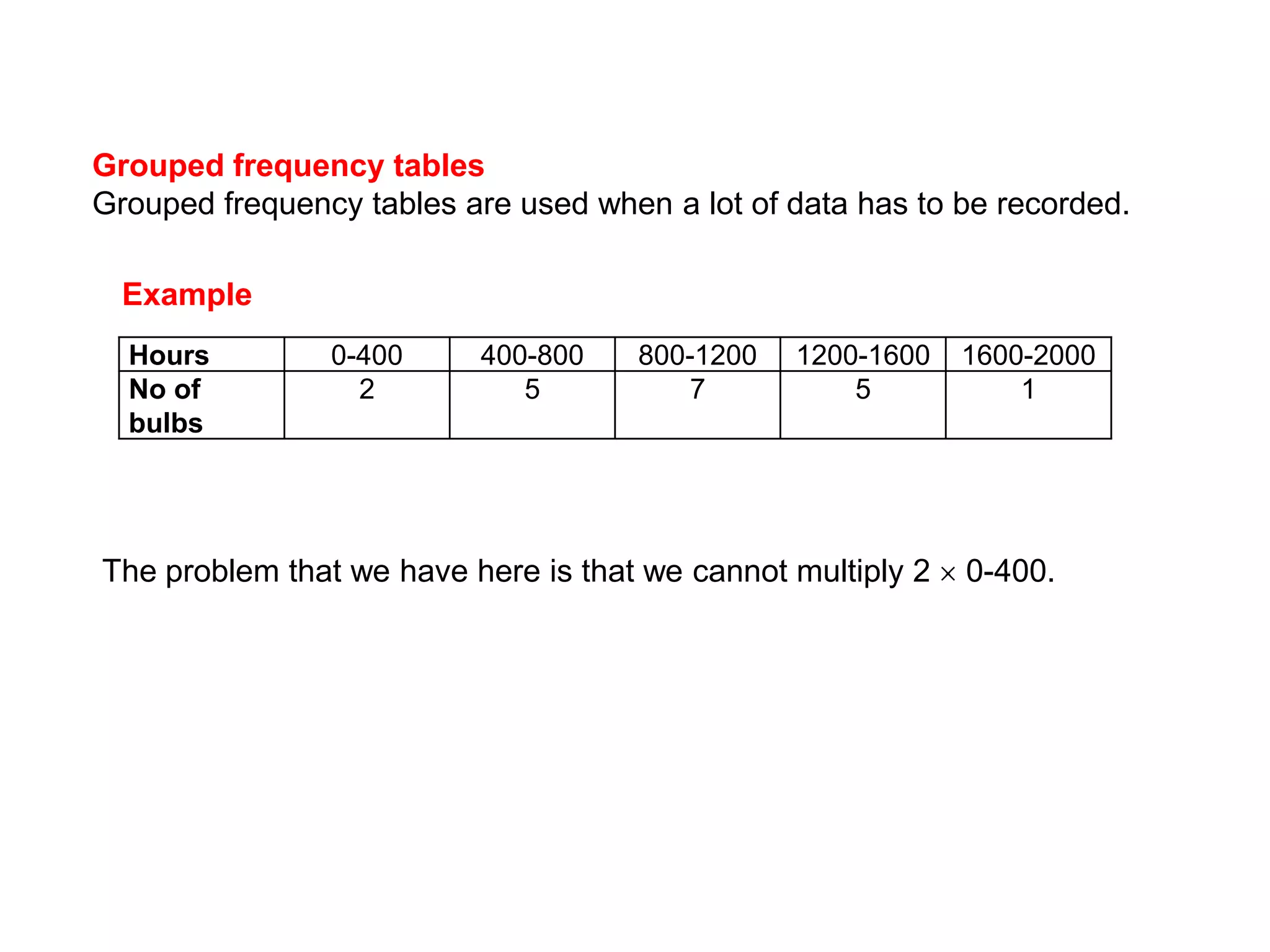
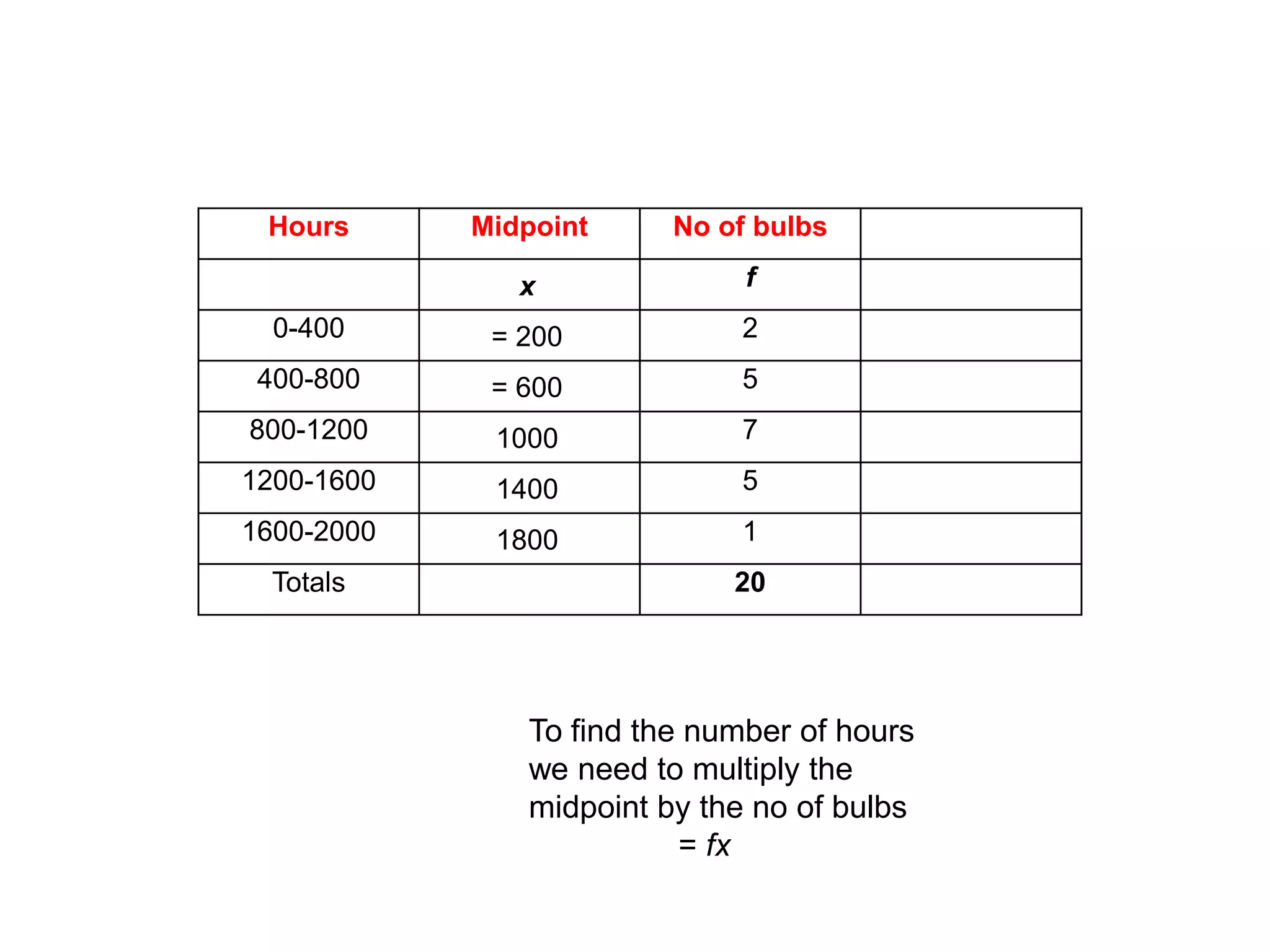
Grouped frequency tablesGrouped frequency tables are used when a lot of data has to be recorded.ExampleThe problem that we have here is that we cannot multiply 2  0-400.
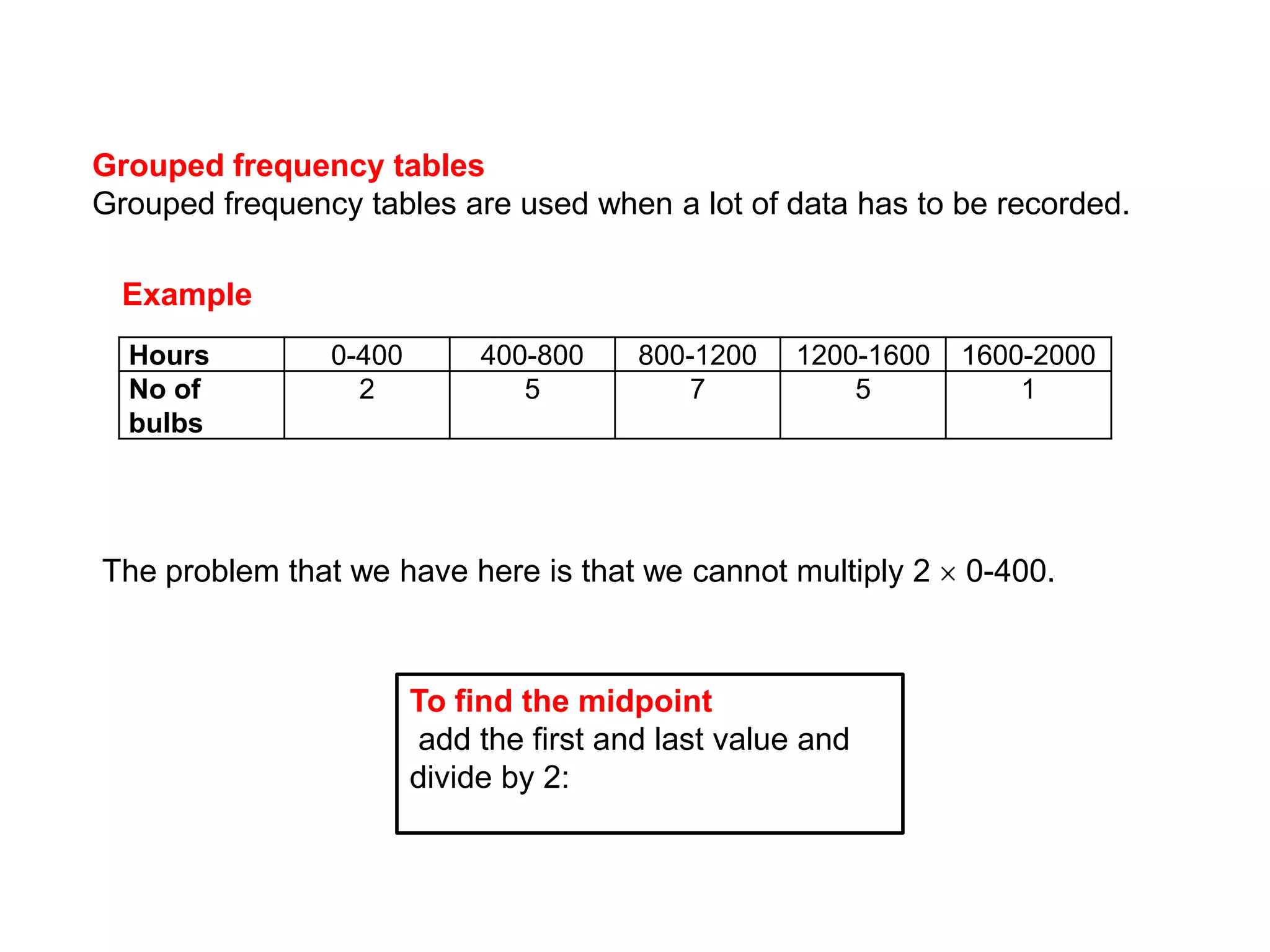
Grouped frequency tablesGrouped frequency tables are used when a lot of data has to be recorded.ExampleThe problem that we have here is that we cannot multiply 2  0-400.To find the midpoint add the first and last value and divide by 2:
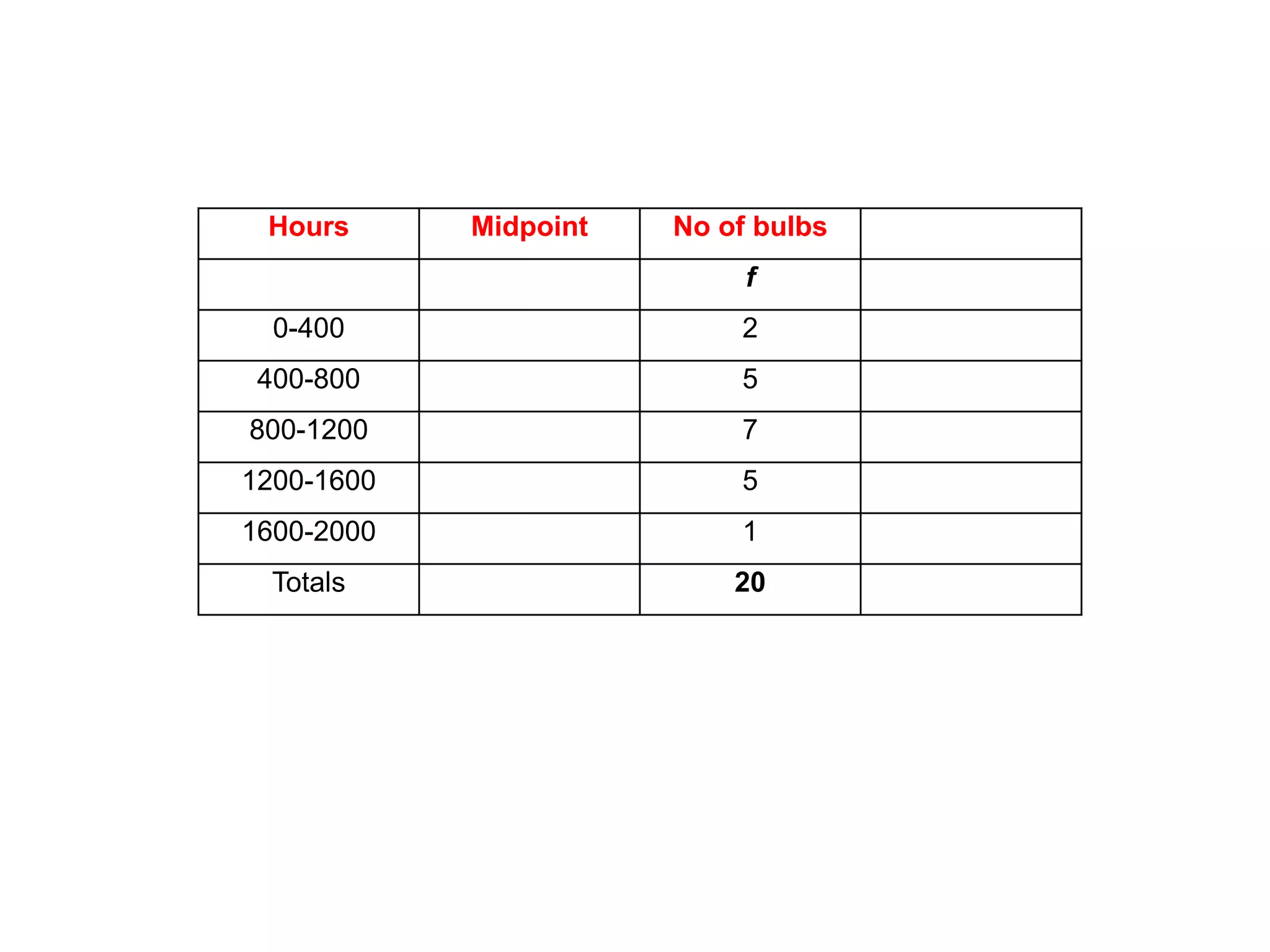
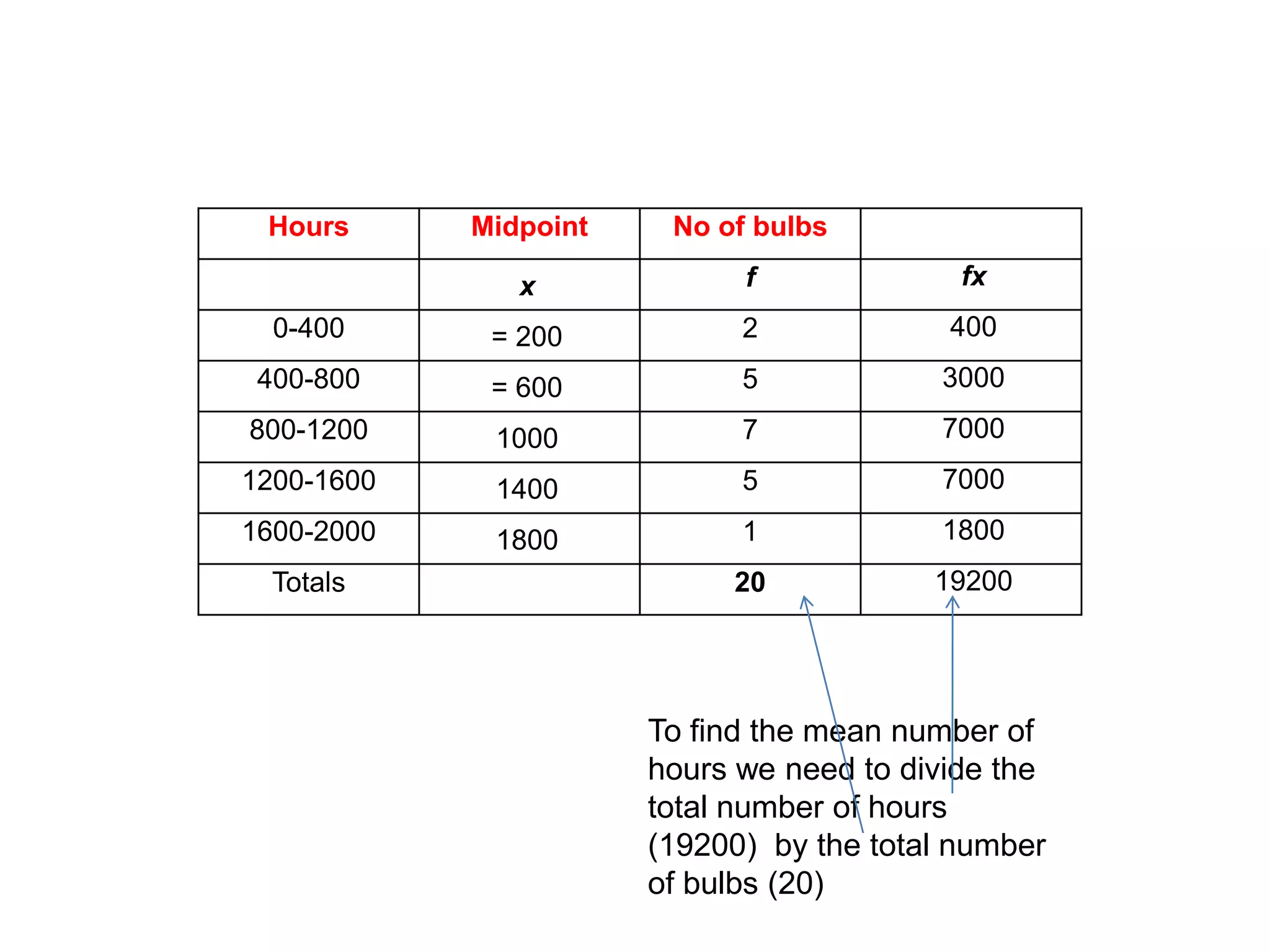
To find the number of hours we need to multiply the midpoint by the no of bulbs                  = fx
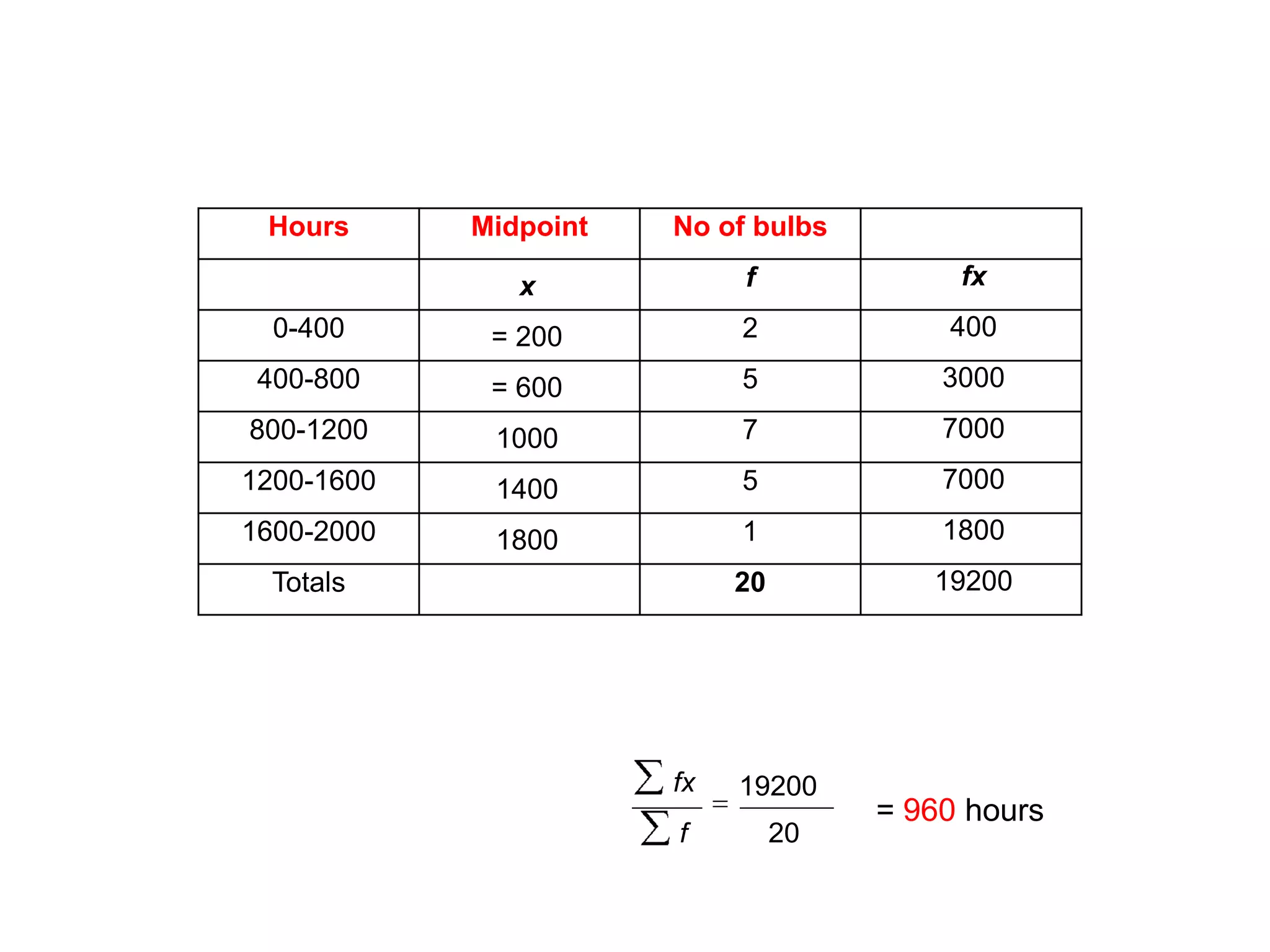
To find the mean number of hours we need to divide the total number of hours (19200)  by the total number of bulbs (20)
= 960 hours
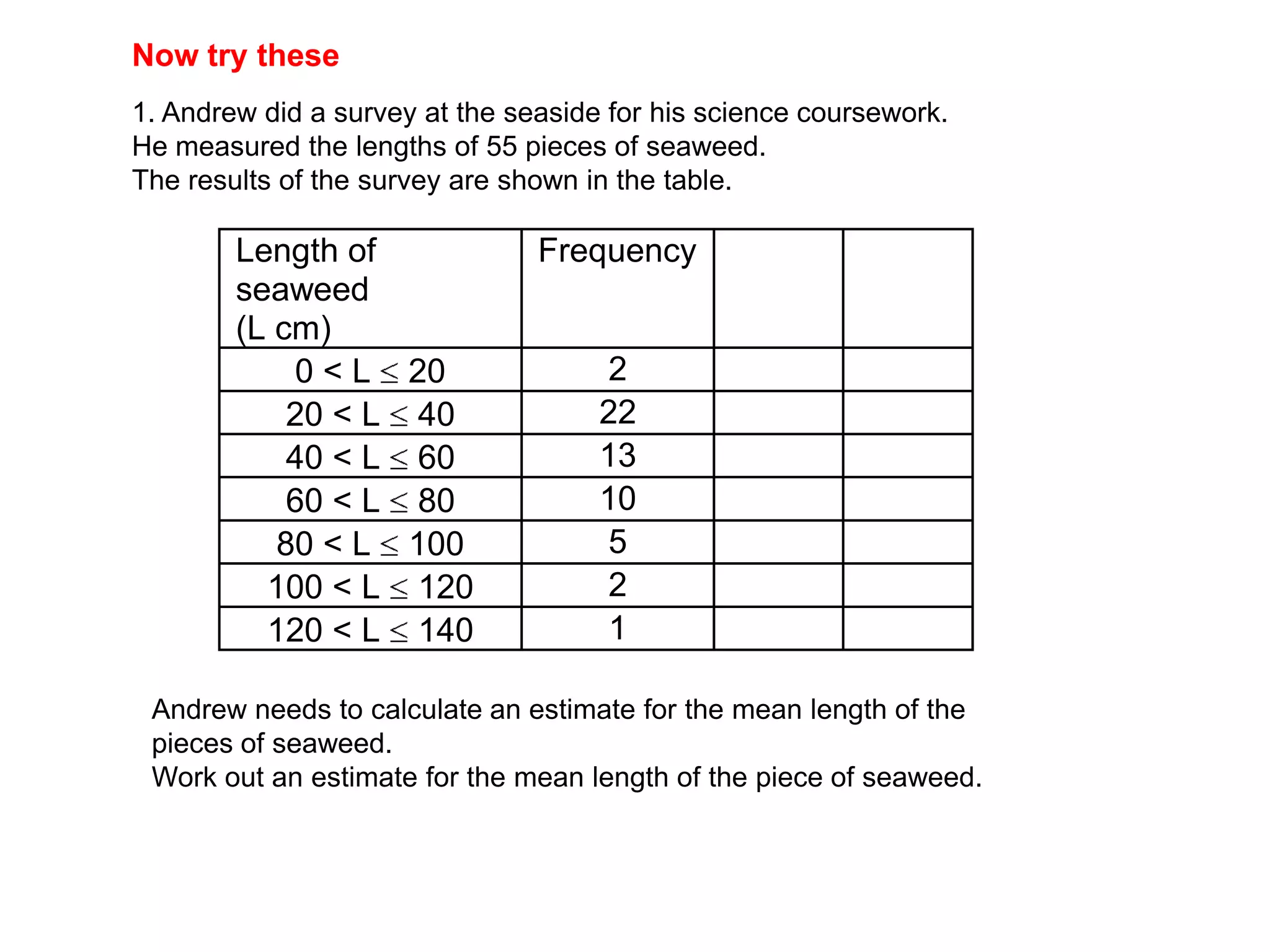
Now try these1. Andrew did a survey at the seaside for his science coursework.He measured the lengths of 55 pieces of seaweed.The results of the survey are shown in the table.Andrew needs to calculate an estimate for the mean length of the pieces of seaweed.Work out an estimate for the mean length of the piece of seaweed.
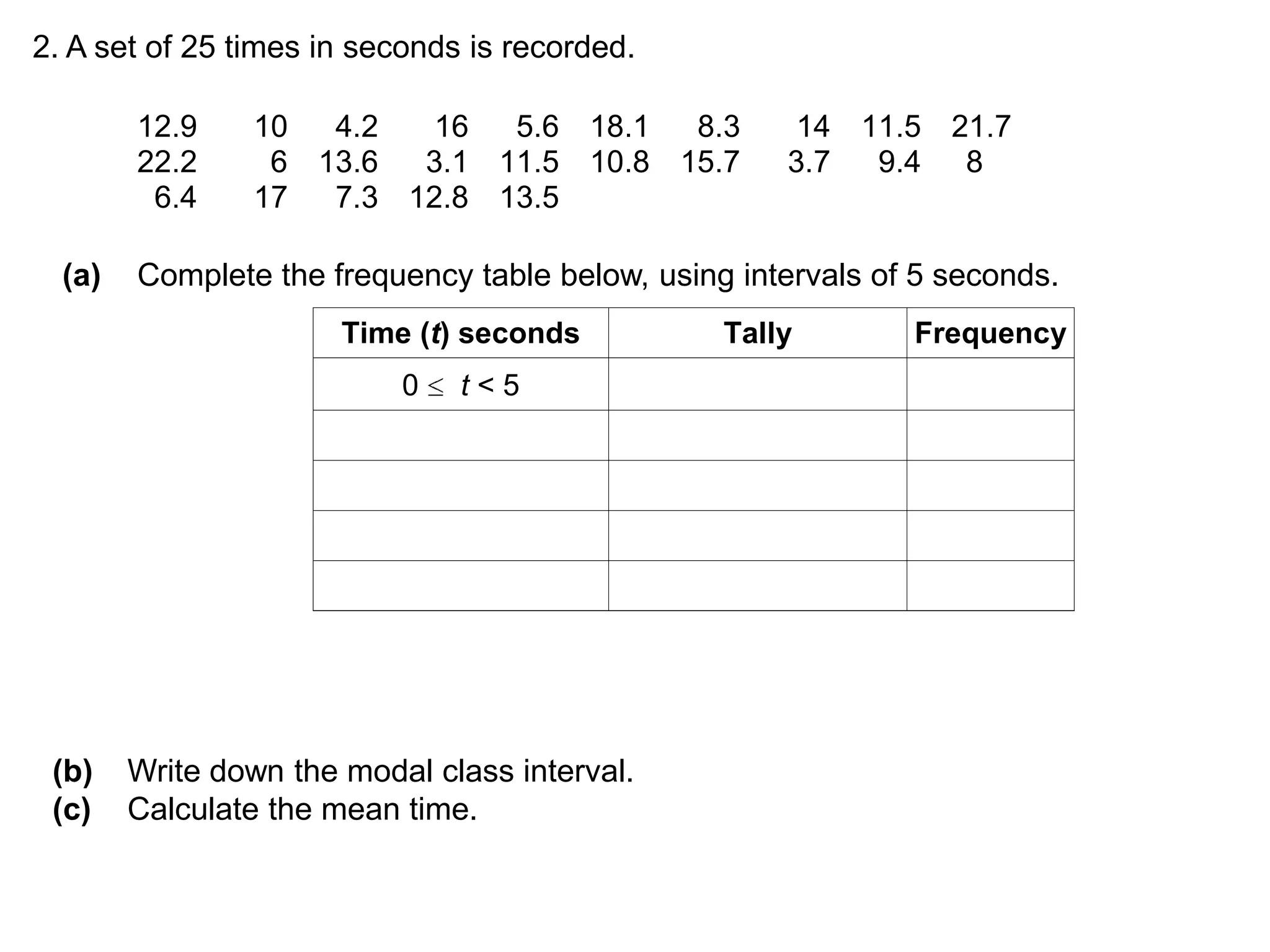
2. A set of 25 times in seconds is recorded.(a)	Complete the frequency table below, using intervals of 5 seconds.(b)	Write down the modal class interval.(c)	Calculate the mean time.
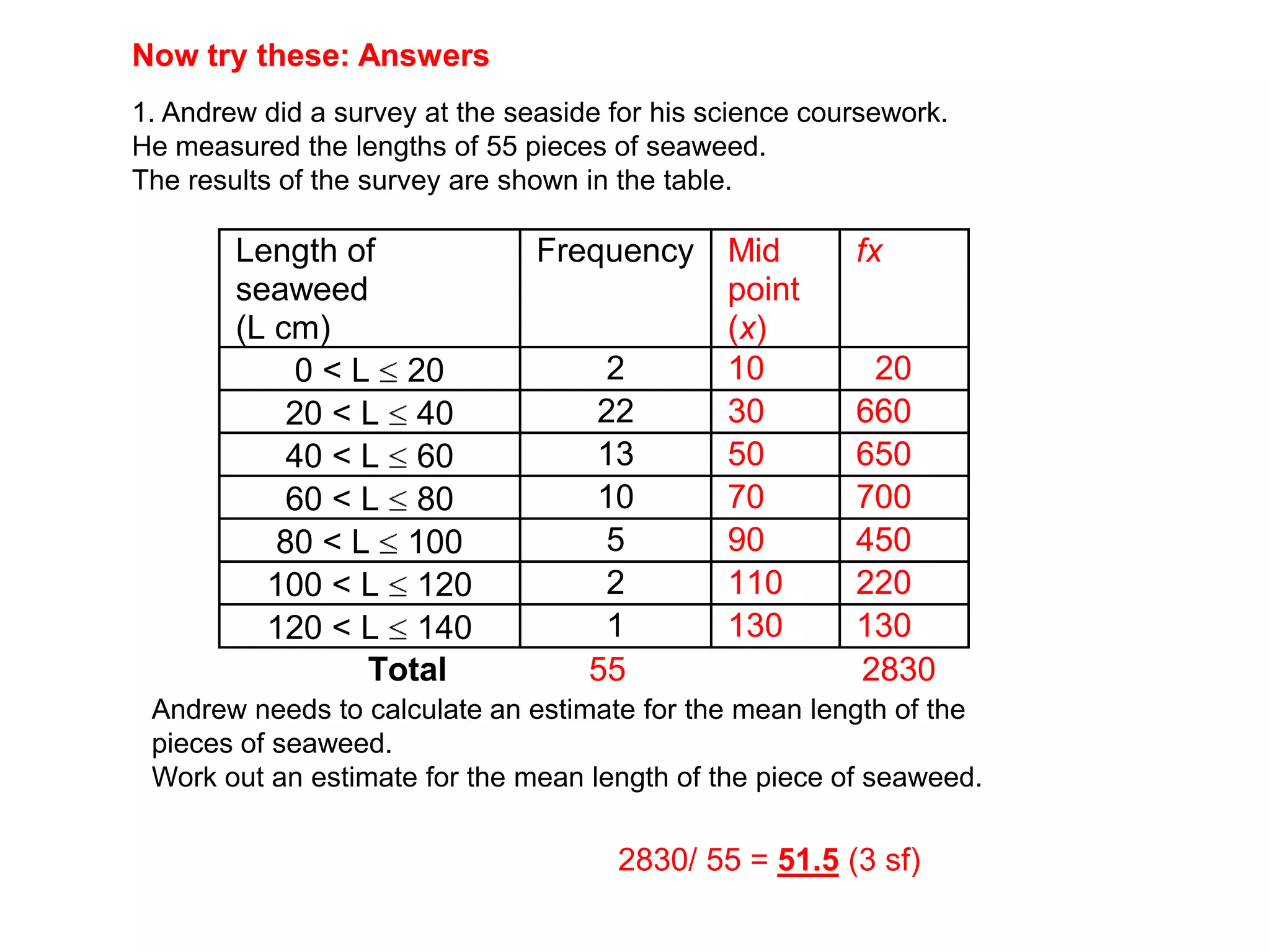
Now try these: Answers1. Andrew did a survey at the seaside for his science coursework.He measured the lengths of 55 pieces of seaweed.The results of the survey are shown in the table.Andrew needs to calculate an estimate for the mean length of the pieces of seaweed.Work out an estimate for the mean length of the piece of seaweed.2830/ 55 = 51.5 (3 sf)
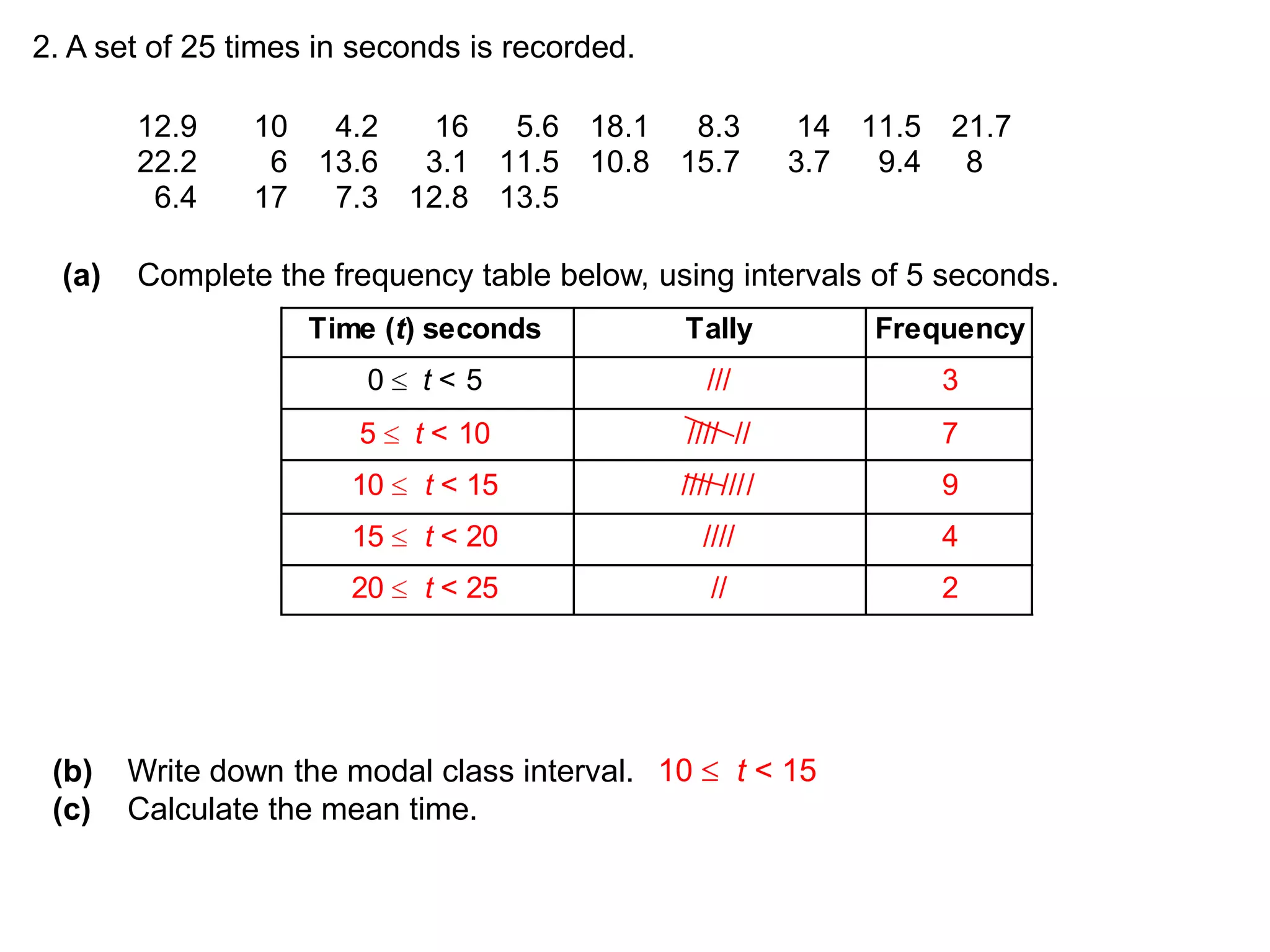
2. A set of 25 times in seconds is recorded.(a)	Complete the frequency table below, using intervals of 5 seconds.(b)	Write down the modal class interval.  (c)	Calculate the mean time.  10 t < 15

Handling Data Grouped Data

  • 1.
    Handling data: groupeddataBTEOTSSSBAT:Find the mean from grouped data
  • 2.
    Grouped frequency tablesGroupedfrequency tables are used when a lot of data has to be recorded.ExampleThe problem that we have here is that we cannot multiply 2  0-400.
  • 3.
    Grouped frequency tablesGroupedfrequency tables are used when a lot of data has to be recorded.ExampleThe problem that we have here is that we cannot multiply 2  0-400.To find the midpoint add the first and last value and divide by 2:
  • 5.
    To find thenumber of hours we need to multiply the midpoint by the no of bulbs = fx
  • 6.
    To find themean number of hours we need to divide the total number of hours (19200) by the total number of bulbs (20)
  • 7.
  • 8.
    Now try these1.Andrew did a survey at the seaside for his science coursework.He measured the lengths of 55 pieces of seaweed.The results of the survey are shown in the table.Andrew needs to calculate an estimate for the mean length of the pieces of seaweed.Work out an estimate for the mean length of the piece of seaweed.
  • 9.
    2. A setof 25 times in seconds is recorded.(a) Complete the frequency table below, using intervals of 5 seconds.(b) Write down the modal class interval.(c) Calculate the mean time.
  • 10.
    Now try these:Answers1. Andrew did a survey at the seaside for his science coursework.He measured the lengths of 55 pieces of seaweed.The results of the survey are shown in the table.Andrew needs to calculate an estimate for the mean length of the pieces of seaweed.Work out an estimate for the mean length of the piece of seaweed.2830/ 55 = 51.5 (3 sf)
  • 11.
    2. A setof 25 times in seconds is recorded.(a) Complete the frequency table below, using intervals of 5 seconds.(b) Write down the modal class interval. (c) Calculate the mean time. 10 t < 15