
CHILDREN’S HEALTH UNIVERSITY OF MIAMI WELLBEINGWELL CONFERENCE April 26th, 2011 Susan Luck, RN, MA, HNC, CCN Director, Earthrose Institute www.earthrose.org
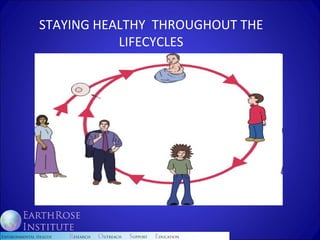
STAYING HEALTHY  THROUGHOUT THE LIFECYCLES
A Healthy Beginning: Good Nutrition
LIVING in the MODERN WORLD ARE OUR CHILDREN TODAY   NUTRITIONALLY DEPLETED   + ENVIRONMENTALLY OVER EXPOSED ? What Can We Modify in our   Daily Lives
CHILDREN’S   HEALTH “ Children are particularly vulnerable to many environmental threats, including a contaminated and unsafe physical environment. This heightened susceptibility derives primarily from the unique biological features that characterize the various stages of development from conception to adolescence.”   World Health Organization, 2002
EPIGENETICS  Health comes from our environment, our food and lifestyle choices, and from our parents.
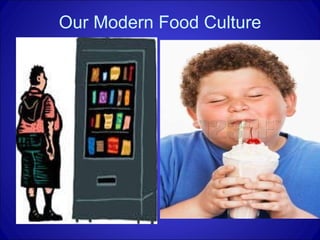
Our Modern Food Culture
MODERN NUTRITIONAL CRISIS 20% of Calories are from refined sugar 30 billion dollars spent on diet soda and artificial sweeteners 85% of Americans adults are overweight 50 million are obese 1 in 3 children are overweight Diabetes-6 fold increase in the 1990’s Highest incidence of Asthma ever recorded Heart Disease has doubled in the past 10 years
Surgeon General’s Fact Sheet, 2010 Two-thirds of adults and nearly one in three children are overweight or obese.  70% of American Indian/Alaskan Native adults are overweight or obese.  The prevalence of obesity in the U.S. more than doubled (from 15% to 34%) among adults and more than tripled (from 5% to 17%) among children and adolescents from 1980 to 2008.  An obese teenager has over a 70% greater risk of becoming an obese adult.  Obesity is more common among non-Hispanic black teenagers (29%) than Hispanic teenagers (17.5%) or non-Hispanic white teenagers (14.5%).   www.surgeongeneral.gov/library/obesityvision/obesityvision_factsheet.html
Born to be Big Early exposure to common chemicals may be programming kids to be fat.  In 2006 scientists at the Harvard School of Public Health reported that the prevalence of obesity in infants under 6 months had risen 73 percent since 1980. "This epidemic of obese 6-month-olds," as endocrinologist Robert Lustig of the University of California, San Francisco, calls it, poses a problem for conventional explanations of the fattening of America.
CDC Report 2010 American society has become 'obesogenic,' characterized by environments that promote increased food intake, non-healthful foods, and physical inactivity.  Policy and environmental change initiatives that make healthy choices in nutrition and physical activity available, affordable, and easy will likely prove most effective in combating obesity  http://www.cdc.gov/obesity/index.html
Impact of maternal diet during pregnancy and breastfeeding on infant metabolic programming .   Eur J Clin Nutr. 2010 Oct 13.  Modification of maternal diet during pregnancy and breastfeeding may benefit infant metabolic health. High split proinsulin reflects adverse metabolic status in infancy, which can be improved by early dietary counseling
British Medical Journal, Nov, 2010 Children who have a high body mass index (BMI) between 9 and 12 years of age are more likely to have high blood pressure, cholesterol and blood insulin levels (all risk factors for developing heart disease) by the time they reach adolescence "Our findings highlight the need to shift the whole childhood population distribution of adiposity downwards and to develop interventions that safely and effectively reduce weight and improve cardiovascular risk factors in overweight/obese children."  A high BMI in childhood linked   to greater heart disease risk in adolescence
OBESOGENS The White House Task Force on Childhood Obesity released a report called " Solving the Problem of Childhood Obesity Within a Generation ." In the report they list endocrine-disrupting chemicals as a possible reason for increased obesity in the country and describe how scientists have coined a new term for these chemicals — "obesogens" — because they "may promote weight gain and obesity."
OBESOGENS DEFINED Synthetic compounds, and many of these chemicals work by mimicking estrogen  Plastics Pesticides Personal Care Products
ENVIRONMENTAL OBESOGENS The emerging idea of an association of EDCs and obesity expands the focus on obesity from intervention and treatment to include prevention and avoidance of these chemical modifiers. These data suggest new targets (i.e. adipocyte differentiation and mechanisms involved in weight homeostasis) of abnormal programming by EDCs, and provide evidence that support the scientific term 'the developmental origins of adult disease'.
Environmental Obesogens: Organotins and Endocrine Disruption via Nuclear Receptor Signaling Over the last two decades, the incidence of obesity and associated  metabolic syndrome diseases has risen dramatically, becoming a  global health crisis. Increased caloric intake and decreased physical  activity are believed to represent the root causes of this dramatic  rise. However, recent findings highlight the possible involvement of  environmental obesogens, xenobiotic chemicals that can disrupt the  normal developmental and homeostatic controls over adipogenesis  and energy balance.  Environmental estrogens,  i.e.  chemicals with  estrogenic potential, have been reported to perturb adipogenic  mechanisms using  in vitro  model systems, but other classes of  endocrine-disrupting chemicals are now coming under scrutiny as  well. Endocrinology,  Vol. 147, No. 6 s50-s55,  27 July 2007   Felix Grün and Bruce Blumberg   Department of Developmental and Cell Biology, University of California, Irvine, California 92697,:
OBESITY  DEFINED Overweight - >than 10% over Ideal Body Weight for the person’s build OBESITY - >130% of the Ideal Body Weight for the person’s build Obesity now outranks cigarette smoking and alcohol in health related injuries Obesity is responsible for half of the top leading causes of death
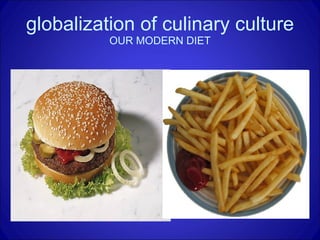
globalization of culinary culture  OUR MODERN DIET
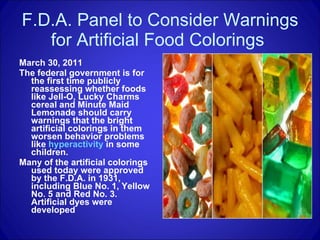
F.D.A. Panel to Consider Warnings for Artificial Food Colorings  March 30, 2011 The federal government is for the first time publicly reassessing whether foods like Jell-O, Lucky Charms cereal and Minute Maid Lemonade should carry warnings that the bright artificial colorings in them worsen behavior problems like  hyperactivity  in some children.  Many of the artificial colorings used today were approved by the F.D.A. in 1931, including Blue No. 1, Yellow No. 5 and Red No. 3. Artificial dyes were developed
U.S. Centers for Disease Control and Prevention (CDC) surveyed 73,000 children, they found one in 10 has ADHD -2003.   The Lancet  concluded that a variety of common food dyes, and the preservative sodium benzoate -- found in many soft drinks, fruit juices and salad dressings - cause some children to become measurably more  hyperactive and distractible .   Blue #1 and #2 food coloring  Green #3  Orange B  Red #3 and #40  Yellow #5 and #6  Sodium benzoate, a preservative
INHERITING THE FUTURE According to the World Health Organization (WHO), worldwide cancer rates are set to increase by as much as 50% by the year 2020 unless further preventative measures are put into place
EPIGENETICS Environmental factors can cause an organism's genes to express themselves differently, even though the genes themselves don't change.
DIET and CANCER Dr Walter Willet at the Harvard School of Public Health and the American Institute for Cancer Research: A recent study reviewing 4500 scientific studies concluded in a 650-page report  that 40% of cancers are avoidable . “ The bottom line: eat a plant-based diet, maintain moderate weight throughout life, and get some exercise.”
NUTRIGENOMICS How Bioactive food components including phytonutrients,  communicate with genetic information and effect changes within a cell.
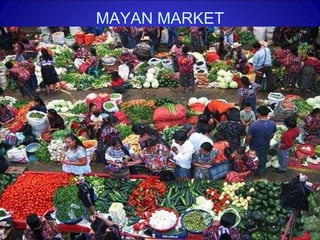
MAYAN MARKET
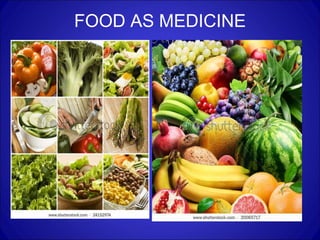
FOOD AS MEDICINE
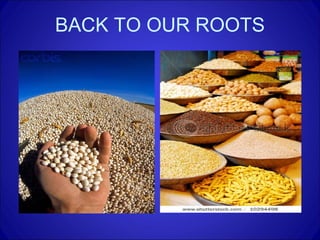
BACK TO OUR ROOTS
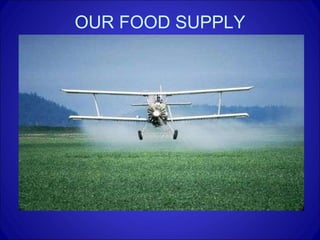
OUR FOOD SUPPLY
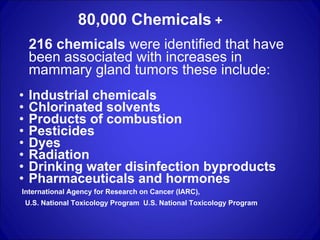
80,000 Chemicals  + 216 chemicals  were identified that have been associated with increases in mammary gland tumors these include: Industrial chemicals  Chlorinated solvents  Products of combustion Pesticides Dyes Radiation  Drinking water disinfection byproducts  Pharmaceuticals and hormones International Agency for Research on Cancer (IARC),  U.S. National Toxicology Program  U.S. National Toxicology Program
ENVIRONMENTAL EXPOSURES in the FOOD CHAIN  Pesticides Research Neurotoxicity  Disruption of endocrine function Carcinogenicity  Immune system suppression  Infertility and Reproductive Problems Cognitive/Neurological Dysfunction including  Autism and Alzheimers, Parkinson’s Miscarriage
Children and Cancer Center for Disease Control and Prevention (CDC) cancer remains the leading cause of death among U.S. children ages 1 to 19 years  Due to the rapid cell growth in children, they appear to be more susceptible to some carcinogens than adults are, especially pesticides
Children’s Health The incidence of childhood cancers increased 27.1% between 1975 and 2002 There has been an exponential increase in childhood learning disabilities in the past several years. Autism Spectrum Disorder is believed to affect one in five children today
PRESIDENT’S CANCER PANEL REPORT People are exposed to a massive number of chemicals in the environment, and scientists know very little about their potential role in causing cancer, according to a new report from the President's  Cancer Panel released Thursday, May 6 th , 2010
CDC Report 2010 American society has become 'obesogenic,' characterized by environments that promote increased food intake, nonhealthful foods, and physical inactivity.  Policy and environmental change initiatives that make healthy choices in nutrition and physical activity available, affordable, and easy will likely prove most effective in combating obesity  http://www.cdc.gov/obesity/index.html
Combating Environmental Causes of Cancer Harvard School of Public Health David C. Christiani, M.D., M.P.H. N Engl J Med March 3, 2011; 364:791-793 The knowledge that environmental factors play a role in carcinogenesis dates back centuries. Dr. Percival Pott described scrotal tumors in young chimney sweeps of 18th-century London, demonstrating that cancer could be caused by environmental factors. This discovery led to the passage of public health legislation regarding disease prevention. “ We need. . . a new national cancer-prevention strategy emphasizing primary prevention that redirects both research and policy agendas and sets tangible goals for reducing or eliminating environmental exposures implicated in cancer causation.”
Fourth National Report on Human Exposure to Environmental Chemicals   CDC Report released January, 2010 The most comprehensive assessment to date of the exposure of the U.S. population to chemicals in our environment. CDC has measured 212 chemicals in people's blood or urine—75 of which have never before been measured in the U.S. population. The new chemicals include acrylamide, arsenic, environmental phenols, including bisphenol A and triclosan, and perchlorate.  http:// www.cdc.gov/exposurereport/index.html
The first WHO international conference on the primary prevention of cancer through environmental and occupational interventions: A Call to Action  17-18 March 2011 Spain Worldwide, cancer is the second leading cause of death. In 2008, there were 7.6 million deaths from cancer, alongside 12.7 million new cases. Roughly 19 per cent of all cancers are estimated to be attributable to the environment, including work settings.  Environmental and occupational interventions are therefore vital to reduce cancer incidence; and decreasing exposure to carcinogens can be cost-effective and contribute to the overall well-being of communities.
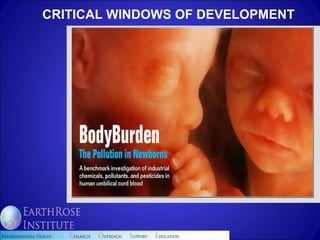
CRITICAL WINDOWS OF DEVELOPMENT
TOXIC EXPOSURES OVER TIME Toxins Act Synergistically Many are fat soluble and accumulate in body tissue Burden may be greater than ability to detoxify and excrete toxins
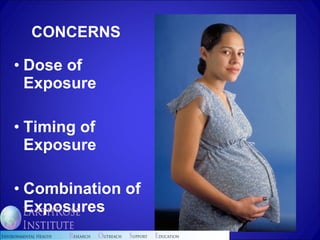
CONCERNS Dose of Exposure Timing of Exposure Combination of Exposures
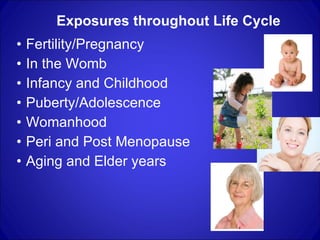
Exposures throughout Life Cycle Fertility/Pregnancy In the Womb Infancy and Childhood  Puberty/Adolescence Womanhood Peri and Post Menopause Aging and Elder years
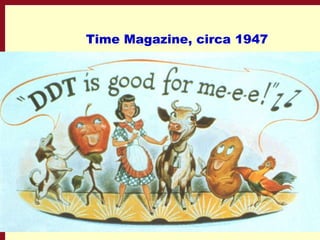
Time Magazine, circa 1947
PRE NATAL PESTICIDE EXPOSURES low birth weight congenital malformations reduced fertility Impaired growth and development increased rates of spontaneous abortion reduced sperm count abnormal sperm Increase in risk of cancer later in life (breast, testicular)
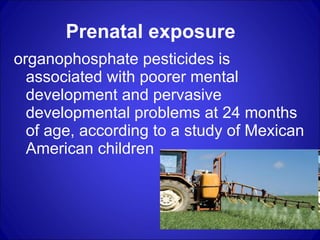
Prenatal exposure  organophosphate pesticides is associated with poorer mental development and pervasive developmental problems at 24 months of age, according to a study of Mexican American children
Household exposure to pesticides and risk of childhood acute leukaemia Insecticide use inside the home during both pregnancy and childhood increased the risk of childhood leukemia including exposure to garden insecticides during childhood. Menegaux, F et al. 2006..  Occupational and Environmental Medicine 63:131-134. doi: 10.1136/oem.  2005.
Exposure to professional pest control treatments and the risk of childhood acute lymphoblastic leukemia Int J Cancer. 2010 Nov 15. Bailey HD ,  Armstrong BK ,  de  Klerk  NH ,  Fritschi  L ,  Attia  J ,  Scott RJ ,  Smibert E ,  Milne E ;  for the Aus‐ALL Consortium. .  University of Western Australia, Telethon Institute for Child Health Research, Centre for Child Health Research, Perth, Western Australia, Australia. Int J Cancer. 2010 Jul 23 Exposure to house painting and the use of floor treatments and the risk of childhood acute lymphoblastic leukemia. Bailey HD ,  Milne E ,  de  Klerk  NH ,  Fritschi  L ,  Attia  J ,  Cole C ,  Armstrong BK ;  for the Aus‐ALL Consortium .  Telethon Institute for Child Health Research, Centre for Child Health Research, The University of Western Australia Painting in the home has been identified as a potential risk factor for childhood acute lymphoblastic leukemia (ALL)
Impact of low-level exposure to organophosphates on human reproduction and survival This review raises concerns that exposure to OP pesticides at levels currently regarded as safe adversely affect human reproductive function and survival.” Trop Med Hyg. 2008 Mar;102(3):239-45.  Peiris-John RJ, Wickremasinghe R .
Gene expression profiles following exposure to a developmental neurotoxicant, Aroclor 1254: Pathway analysis for possible mode(s) of action Epidemiological studies indicate that low levels of polychlorinated bisphenyl (PCB) exposure can adversely affect neurocognitive development Toxicology and Applied Pharmacology, Volume231,  Issue 2, 1 September 2008,Pages 179-196 Joyce E. Royland and Prasada Rao S. Kodavanti  
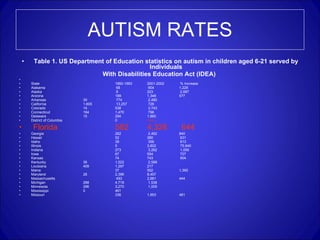
AUTISM RATES Table 1. US Department of Education statistics on autism in children aged 6-21 served by Individuals With Disabilities Education Act (IDEA)  State  1992-1993  2001-2002  % Increase Alabama  68  904  1,229 Alaska  8  223  2,687 Arizona  199  1,348  577 Arkansas  30  774  2,480 California  1,605  13,257  726 Colorado  14  538  3,743 Connecticut  164  1,470  796 Delaware  15  294  1,860 District of Columbia  0  144 – Florida  582  4,328  644 Georgia  262  2,462 840 Hawaii  52  380  631 Idaho  39  356  813 Illinois  5  3,802  75,940 Indiana  273  3,262  1,095 Iowa  67  554  727 Kansas  74  743  904 Kentucky  38  1,022  2,589 Louisiana  409 1,297  217 Maine  37 552 1,392 Maryland  28  2,396  8,457 Massachusetts  493 2,681  444 Michigan  288  4,719  1,538 Minnesota  296 3,270  1,005 Mississippi 0 461 Missouri 336 1,953 481
Cancer Clusters Reported in U S March 28 th , 2011 There are 42 so-called disease clusters in 13 U.S. states, showing incidence of numerous types of cancer, birth defects and other chronic illnesses, the Natural Resources Defense Council reported on Monday.  *4 Cancer Clusters in Florida
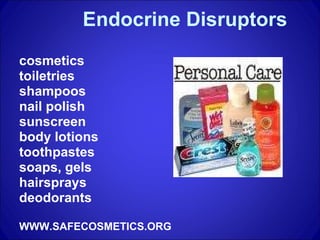
Endocrine Disruptors cosmetics  toiletries shampoos  nail polish sunscreen body lotions toothpastes soaps, gels  hairsprays deodorants WWW.SAFECOSMETICS.ORG
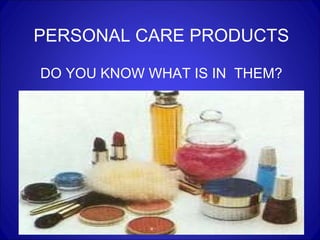
PERSONAL CARE PRODUCTS DO YOU KNOW WHAT IS IN  THEM?
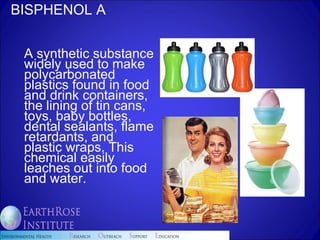
BISPHENOL A A synthetic substance widely used to make polycarbonated plastics found in food and drink containers, the lining of tin cans, toys, baby bottles, dental sealants, flame retardants, and plastic wraps. This chemical easily leaches out into food and water.
BISPHENOL A (BPA) 90% of government studies found harmful health effects [1] especially to children and expecting moms, [2] but also for male sexuality and reproduction
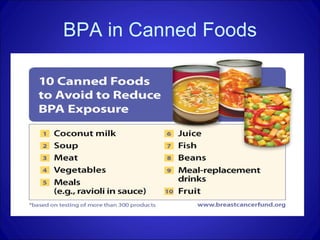
BPA in Canned Foods
Low levels of BPA raise breast cancer risk in rat offspring. levels of bisphenol A, even below levels considered safe by the EPA, increase breast cancer risk in rats exposed through their mother's breast milk.  A first of its kind study shows that low dose exposure to bisphenol A (BPA) during lactation increases the chance of breast cancer in rats. Early developmental exposures can have long lasting and adverse health effects. This is the first study to show that a mother rat's exposure to BPA during lactation increases her daughter's chances of breast  cancer Environmental Health Perspectives  Feb, 2009
BPA in Food Packaging Study   What happens when you try to get BPA out of your diet?   Environmental Health Perspectives  (March 2011) The Breast Cancer Fund and  Silent Spring Institute  enlisted five families to participate in a study of  BPA  and  phthalate  exposure from food packaging to find out.  For three days, families were provided fresh food—not canned or packaged in plastic. They avoided canned foods and drinks and meals prepared outside the home. The effect was significant.  While the families were eating our food, their BPA levels dropped an average of 60 percent . Takeaway:  Reduce your BPA exposure by cooking fresh foods at home, avoiding canned foods, choosing glass and stainless steel food and beverage containers, and not microwaving in plastic.
Phthalates PLASTICIZER Synthetic substances added to plastics to make them softer, more flexible and resilient. They also extend staying power. They are found in IV tubing, vinyl flooring, glues, inks, pesticides, detergents, plastic bags, food packaging, building materials, children’s toys, shower curtains, soaps, shampoos, perfumes, hair spray and nail polish.
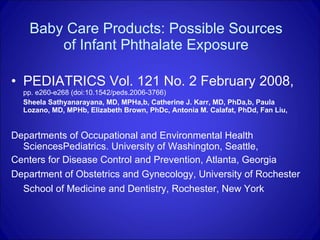
Baby Care Products: Possible Sources of Infant Phthalate Exposure PEDIATRICS Vol. 121 No. 2 February 2008,  pp. e260-e268 (doi:10.1542/peds.2006-3766)  Sheela Sathyanarayana, MD, MPHa,b, Catherine J. Karr, MD, PhDa,b, Paula Lozano, MD, MPHb, Elizabeth Brown, PhDc, Antonia M. Calafat, PhDd, Fan Liu,  Departments of Occupational and Environmental Health SciencesPediatrics. University of Washington, Seattle, Centers for Disease Control and Prevention, Atlanta, Georgia Department of Obstetrics and Gynecology, University of Rochester School of Medicine and Dentistry, Rochester, New York
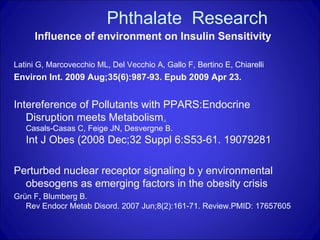
Phthalate  Research Influence of environment on Insulin Sensitivity Latini G, Marcovecchio ML, Del Vecchio A, Gallo F, Bertino E, Chiarelli Environ Int. 2009 Aug;35(6):987-93. Epub 2009 Apr 23. Intereference of Pollutants with PPARS:Endocrine Disruption meets Metabolism . Casals-Casas C, Feige JN, Desvergne B. Int J Obes (2008 Dec;32 Suppl 6:S53-61. 19079281  Perturbed nuclear receptor signaling b y environmental obesogens as emerging factors in the obesity crisis Grün F, Blumberg B. Rev Endocr Metab Disord. 2007 Jun;8(2):161-71. Review.PMID: 17657605 
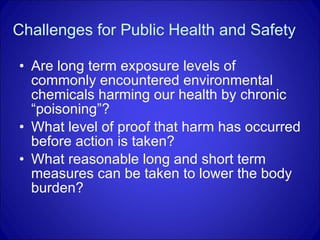
Challenges for Public Health and Safety Are long term exposure levels of commonly encountered environmental chemicals harming our health by chronic “poisoning”? What level of proof that harm has occurred before action is taken? What reasonable long and short term measures can be taken to lower the body burden?
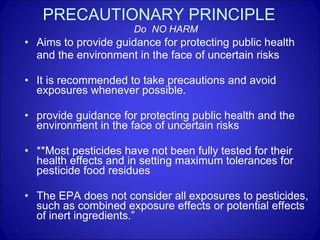
PRECAUTIONARY PRINCIPLE   Do  NO HARM Aims to provide guidance for protecting public health  and the environment in the face of uncertain risks It is recommended to take precautions and avoid exposures whenever possible. provide guidance for protecting public health and the environment in the face of uncertain risks **Most pesticides have not been fully tested for their health effects and in setting maximum tolerances for pesticide food residues The EPA does not consider all exposures to pesticides, such as combined exposure effects or potential effects of inert ingredients.”
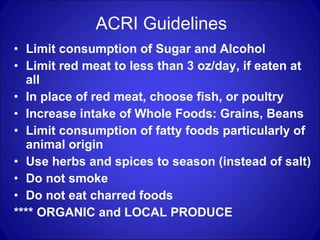
ACRI Guidelines Limit consumption of Sugar and Alcohol Limit red meat to less than 3 oz/day, if eaten at all In place of red meat, choose fish, or poultry Increase intake of Whole Foods: Grains, Beans Limit consumption of fatty foods particularly of animal origin Use herbs and spices to season (instead of salt) Do not smoke Do not eat charred foods **** ORGANIC and LOCAL PRODUCE
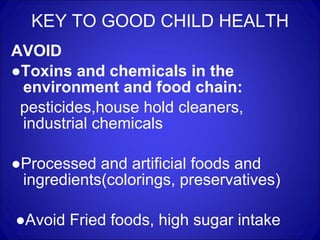
KEY TO GOOD CHILD HEALTH AVOID  ● Toxins and chemicals in the environment and food chain: pesticides,house hold cleaners, industrial chemicals ● Processed and artificial foods and ingredients(colorings, preservatives) ● Avoid Fried foods, high sugar intake
“ WE DO NOT INHERIT THE EARTH FROM OUR ANCESTORS   WE BORROW IT FROM OUR CHILDREN”   Native American Proverb

Children's Health

  • 1.
    CHILDREN’S HEALTH UNIVERSITYOF MIAMI WELLBEINGWELL CONFERENCE April 26th, 2011 Susan Luck, RN, MA, HNC, CCN Director, Earthrose Institute www.earthrose.org
  • 2.
    STAYING HEALTHY THROUGHOUT THE LIFECYCLES
  • 3.
    A Healthy Beginning:Good Nutrition
  • 4.
    LIVING in theMODERN WORLD ARE OUR CHILDREN TODAY NUTRITIONALLY DEPLETED + ENVIRONMENTALLY OVER EXPOSED ? What Can We Modify in our Daily Lives
  • 5.
    CHILDREN’S HEALTH “ Children are particularly vulnerable to many environmental threats, including a contaminated and unsafe physical environment. This heightened susceptibility derives primarily from the unique biological features that characterize the various stages of development from conception to adolescence.” World Health Organization, 2002
  • 6.
    EPIGENETICS Healthcomes from our environment, our food and lifestyle choices, and from our parents.
  • 7.
  • 8.
    MODERN NUTRITIONAL CRISIS20% of Calories are from refined sugar 30 billion dollars spent on diet soda and artificial sweeteners 85% of Americans adults are overweight 50 million are obese 1 in 3 children are overweight Diabetes-6 fold increase in the 1990’s Highest incidence of Asthma ever recorded Heart Disease has doubled in the past 10 years
  • 9.
    Surgeon General’s FactSheet, 2010 Two-thirds of adults and nearly one in three children are overweight or obese. 70% of American Indian/Alaskan Native adults are overweight or obese. The prevalence of obesity in the U.S. more than doubled (from 15% to 34%) among adults and more than tripled (from 5% to 17%) among children and adolescents from 1980 to 2008. An obese teenager has over a 70% greater risk of becoming an obese adult. Obesity is more common among non-Hispanic black teenagers (29%) than Hispanic teenagers (17.5%) or non-Hispanic white teenagers (14.5%). www.surgeongeneral.gov/library/obesityvision/obesityvision_factsheet.html
  • 10.
    Born to beBig Early exposure to common chemicals may be programming kids to be fat. In 2006 scientists at the Harvard School of Public Health reported that the prevalence of obesity in infants under 6 months had risen 73 percent since 1980. "This epidemic of obese 6-month-olds," as endocrinologist Robert Lustig of the University of California, San Francisco, calls it, poses a problem for conventional explanations of the fattening of America.
  • 11.
    CDC Report 2010American society has become 'obesogenic,' characterized by environments that promote increased food intake, non-healthful foods, and physical inactivity. Policy and environmental change initiatives that make healthy choices in nutrition and physical activity available, affordable, and easy will likely prove most effective in combating obesity http://www.cdc.gov/obesity/index.html
  • 12.
    Impact of maternaldiet during pregnancy and breastfeeding on infant metabolic programming . Eur J Clin Nutr. 2010 Oct 13. Modification of maternal diet during pregnancy and breastfeeding may benefit infant metabolic health. High split proinsulin reflects adverse metabolic status in infancy, which can be improved by early dietary counseling
  • 13.
    British Medical Journal,Nov, 2010 Children who have a high body mass index (BMI) between 9 and 12 years of age are more likely to have high blood pressure, cholesterol and blood insulin levels (all risk factors for developing heart disease) by the time they reach adolescence "Our findings highlight the need to shift the whole childhood population distribution of adiposity downwards and to develop interventions that safely and effectively reduce weight and improve cardiovascular risk factors in overweight/obese children." A high BMI in childhood linked to greater heart disease risk in adolescence
  • 14.
    OBESOGENS The WhiteHouse Task Force on Childhood Obesity released a report called " Solving the Problem of Childhood Obesity Within a Generation ." In the report they list endocrine-disrupting chemicals as a possible reason for increased obesity in the country and describe how scientists have coined a new term for these chemicals — "obesogens" — because they "may promote weight gain and obesity."
  • 15.
    OBESOGENS DEFINED Syntheticcompounds, and many of these chemicals work by mimicking estrogen Plastics Pesticides Personal Care Products
  • 16.
    ENVIRONMENTAL OBESOGENS Theemerging idea of an association of EDCs and obesity expands the focus on obesity from intervention and treatment to include prevention and avoidance of these chemical modifiers. These data suggest new targets (i.e. adipocyte differentiation and mechanisms involved in weight homeostasis) of abnormal programming by EDCs, and provide evidence that support the scientific term 'the developmental origins of adult disease'.
  • 17.
    Environmental Obesogens: Organotinsand Endocrine Disruption via Nuclear Receptor Signaling Over the last two decades, the incidence of obesity and associated metabolic syndrome diseases has risen dramatically, becoming a global health crisis. Increased caloric intake and decreased physical activity are believed to represent the root causes of this dramatic rise. However, recent findings highlight the possible involvement of environmental obesogens, xenobiotic chemicals that can disrupt the normal developmental and homeostatic controls over adipogenesis and energy balance. Environmental estrogens, i.e. chemicals with estrogenic potential, have been reported to perturb adipogenic mechanisms using in vitro model systems, but other classes of endocrine-disrupting chemicals are now coming under scrutiny as well. Endocrinology, Vol. 147, No. 6 s50-s55, 27 July 2007 Felix Grün and Bruce Blumberg Department of Developmental and Cell Biology, University of California, Irvine, California 92697,:
  • 18.
    OBESITY DEFINEDOverweight - >than 10% over Ideal Body Weight for the person’s build OBESITY - >130% of the Ideal Body Weight for the person’s build Obesity now outranks cigarette smoking and alcohol in health related injuries Obesity is responsible for half of the top leading causes of death
  • 19.
    globalization of culinaryculture OUR MODERN DIET
  • 20.
    F.D.A. Panel toConsider Warnings for Artificial Food Colorings March 30, 2011 The federal government is for the first time publicly reassessing whether foods like Jell-O, Lucky Charms cereal and Minute Maid Lemonade should carry warnings that the bright artificial colorings in them worsen behavior problems like hyperactivity in some children. Many of the artificial colorings used today were approved by the F.D.A. in 1931, including Blue No. 1, Yellow No. 5 and Red No. 3. Artificial dyes were developed
  • 21.
    U.S. Centers forDisease Control and Prevention (CDC) surveyed 73,000 children, they found one in 10 has ADHD -2003. The Lancet concluded that a variety of common food dyes, and the preservative sodium benzoate -- found in many soft drinks, fruit juices and salad dressings - cause some children to become measurably more hyperactive and distractible . Blue #1 and #2 food coloring Green #3 Orange B Red #3 and #40 Yellow #5 and #6 Sodium benzoate, a preservative
  • 22.
    INHERITING THE FUTUREAccording to the World Health Organization (WHO), worldwide cancer rates are set to increase by as much as 50% by the year 2020 unless further preventative measures are put into place
  • 23.
    EPIGENETICS Environmental factorscan cause an organism's genes to express themselves differently, even though the genes themselves don't change.
  • 24.
    DIET and CANCERDr Walter Willet at the Harvard School of Public Health and the American Institute for Cancer Research: A recent study reviewing 4500 scientific studies concluded in a 650-page report that 40% of cancers are avoidable . “ The bottom line: eat a plant-based diet, maintain moderate weight throughout life, and get some exercise.”
  • 25.
    NUTRIGENOMICS How Bioactivefood components including phytonutrients, communicate with genetic information and effect changes within a cell.
  • 26.
  • 27.
  • 28.
  • 29.
  • 30.
    80,000 Chemicals + 216 chemicals were identified that have been associated with increases in mammary gland tumors these include: Industrial chemicals Chlorinated solvents Products of combustion Pesticides Dyes Radiation Drinking water disinfection byproducts Pharmaceuticals and hormones International Agency for Research on Cancer (IARC), U.S. National Toxicology Program U.S. National Toxicology Program
  • 31.
    ENVIRONMENTAL EXPOSURES inthe FOOD CHAIN Pesticides Research Neurotoxicity Disruption of endocrine function Carcinogenicity Immune system suppression Infertility and Reproductive Problems Cognitive/Neurological Dysfunction including Autism and Alzheimers, Parkinson’s Miscarriage
  • 32.
    Children and CancerCenter for Disease Control and Prevention (CDC) cancer remains the leading cause of death among U.S. children ages 1 to 19 years Due to the rapid cell growth in children, they appear to be more susceptible to some carcinogens than adults are, especially pesticides
  • 33.
    Children’s Health Theincidence of childhood cancers increased 27.1% between 1975 and 2002 There has been an exponential increase in childhood learning disabilities in the past several years. Autism Spectrum Disorder is believed to affect one in five children today
  • 34.
    PRESIDENT’S CANCER PANELREPORT People are exposed to a massive number of chemicals in the environment, and scientists know very little about their potential role in causing cancer, according to a new report from the President's Cancer Panel released Thursday, May 6 th , 2010
  • 35.
    CDC Report 2010American society has become 'obesogenic,' characterized by environments that promote increased food intake, nonhealthful foods, and physical inactivity. Policy and environmental change initiatives that make healthy choices in nutrition and physical activity available, affordable, and easy will likely prove most effective in combating obesity http://www.cdc.gov/obesity/index.html
  • 36.
    Combating Environmental Causesof Cancer Harvard School of Public Health David C. Christiani, M.D., M.P.H. N Engl J Med March 3, 2011; 364:791-793 The knowledge that environmental factors play a role in carcinogenesis dates back centuries. Dr. Percival Pott described scrotal tumors in young chimney sweeps of 18th-century London, demonstrating that cancer could be caused by environmental factors. This discovery led to the passage of public health legislation regarding disease prevention. “ We need. . . a new national cancer-prevention strategy emphasizing primary prevention that redirects both research and policy agendas and sets tangible goals for reducing or eliminating environmental exposures implicated in cancer causation.”
  • 37.
    Fourth National Reporton Human Exposure to Environmental Chemicals CDC Report released January, 2010 The most comprehensive assessment to date of the exposure of the U.S. population to chemicals in our environment. CDC has measured 212 chemicals in people's blood or urine—75 of which have never before been measured in the U.S. population. The new chemicals include acrylamide, arsenic, environmental phenols, including bisphenol A and triclosan, and perchlorate. http:// www.cdc.gov/exposurereport/index.html
  • 38.
    The first WHOinternational conference on the primary prevention of cancer through environmental and occupational interventions: A Call to Action 17-18 March 2011 Spain Worldwide, cancer is the second leading cause of death. In 2008, there were 7.6 million deaths from cancer, alongside 12.7 million new cases. Roughly 19 per cent of all cancers are estimated to be attributable to the environment, including work settings. Environmental and occupational interventions are therefore vital to reduce cancer incidence; and decreasing exposure to carcinogens can be cost-effective and contribute to the overall well-being of communities.
  • 39.
  • 40.
    TOXIC EXPOSURES OVERTIME Toxins Act Synergistically Many are fat soluble and accumulate in body tissue Burden may be greater than ability to detoxify and excrete toxins
  • 41.
    CONCERNS Dose ofExposure Timing of Exposure Combination of Exposures
  • 42.
    Exposures throughout LifeCycle Fertility/Pregnancy In the Womb Infancy and Childhood Puberty/Adolescence Womanhood Peri and Post Menopause Aging and Elder years
  • 43.
  • 44.
    PRE NATAL PESTICIDEEXPOSURES low birth weight congenital malformations reduced fertility Impaired growth and development increased rates of spontaneous abortion reduced sperm count abnormal sperm Increase in risk of cancer later in life (breast, testicular)
  • 45.
    Prenatal exposure organophosphate pesticides is associated with poorer mental development and pervasive developmental problems at 24 months of age, according to a study of Mexican American children
  • 46.
    Household exposure topesticides and risk of childhood acute leukaemia Insecticide use inside the home during both pregnancy and childhood increased the risk of childhood leukemia including exposure to garden insecticides during childhood. Menegaux, F et al. 2006.. Occupational and Environmental Medicine 63:131-134. doi: 10.1136/oem. 2005.
  • 47.
    Exposure to professionalpest control treatments and the risk of childhood acute lymphoblastic leukemia Int J Cancer. 2010 Nov 15. Bailey HD , Armstrong BK , de Klerk NH , Fritschi L , Attia J , Scott RJ , Smibert E , Milne E ; for the Aus‐ALL Consortium. . University of Western Australia, Telethon Institute for Child Health Research, Centre for Child Health Research, Perth, Western Australia, Australia. Int J Cancer. 2010 Jul 23 Exposure to house painting and the use of floor treatments and the risk of childhood acute lymphoblastic leukemia. Bailey HD ,  Milne E ,  de Klerk NH ,  Fritschi L ,  Attia J ,  Cole C ,  Armstrong BK ;  for the Aus‐ALL Consortium . Telethon Institute for Child Health Research, Centre for Child Health Research, The University of Western Australia Painting in the home has been identified as a potential risk factor for childhood acute lymphoblastic leukemia (ALL)
  • 48.
    Impact of low-levelexposure to organophosphates on human reproduction and survival This review raises concerns that exposure to OP pesticides at levels currently regarded as safe adversely affect human reproductive function and survival.” Trop Med Hyg. 2008 Mar;102(3):239-45. Peiris-John RJ, Wickremasinghe R .
  • 49.
    Gene expression profilesfollowing exposure to a developmental neurotoxicant, Aroclor 1254: Pathway analysis for possible mode(s) of action Epidemiological studies indicate that low levels of polychlorinated bisphenyl (PCB) exposure can adversely affect neurocognitive development Toxicology and Applied Pharmacology, Volume231, Issue 2, 1 September 2008,Pages 179-196 Joyce E. Royland and Prasada Rao S. Kodavanti  
  • 50.
    AUTISM RATES Table1. US Department of Education statistics on autism in children aged 6-21 served by Individuals With Disabilities Education Act (IDEA) State 1992-1993 2001-2002 % Increase Alabama 68 904 1,229 Alaska 8 223 2,687 Arizona 199 1,348 577 Arkansas 30 774 2,480 California 1,605 13,257 726 Colorado 14 538 3,743 Connecticut 164 1,470 796 Delaware 15 294 1,860 District of Columbia 0 144 – Florida 582 4,328 644 Georgia 262 2,462 840 Hawaii 52 380 631 Idaho 39 356 813 Illinois 5 3,802 75,940 Indiana 273 3,262 1,095 Iowa 67 554 727 Kansas 74 743 904 Kentucky 38 1,022 2,589 Louisiana 409 1,297 217 Maine 37 552 1,392 Maryland 28 2,396 8,457 Massachusetts 493 2,681 444 Michigan 288 4,719 1,538 Minnesota 296 3,270 1,005 Mississippi 0 461 Missouri 336 1,953 481
  • 51.
    Cancer Clusters Reportedin U S March 28 th , 2011 There are 42 so-called disease clusters in 13 U.S. states, showing incidence of numerous types of cancer, birth defects and other chronic illnesses, the Natural Resources Defense Council reported on Monday. *4 Cancer Clusters in Florida
  • 52.
    Endocrine Disruptors cosmetics toiletries shampoos nail polish sunscreen body lotions toothpastes soaps, gels hairsprays deodorants WWW.SAFECOSMETICS.ORG
  • 53.
    PERSONAL CARE PRODUCTSDO YOU KNOW WHAT IS IN THEM?
  • 54.
    BISPHENOL A Asynthetic substance widely used to make polycarbonated plastics found in food and drink containers, the lining of tin cans, toys, baby bottles, dental sealants, flame retardants, and plastic wraps. This chemical easily leaches out into food and water.
  • 55.
    BISPHENOL A (BPA)90% of government studies found harmful health effects [1] especially to children and expecting moms, [2] but also for male sexuality and reproduction
  • 56.
  • 57.
    Low levels ofBPA raise breast cancer risk in rat offspring. levels of bisphenol A, even below levels considered safe by the EPA, increase breast cancer risk in rats exposed through their mother's breast milk. A first of its kind study shows that low dose exposure to bisphenol A (BPA) during lactation increases the chance of breast cancer in rats. Early developmental exposures can have long lasting and adverse health effects. This is the first study to show that a mother rat's exposure to BPA during lactation increases her daughter's chances of breast cancer Environmental Health Perspectives Feb, 2009
  • 58.
    BPA in FoodPackaging Study What happens when you try to get BPA out of your diet? Environmental Health Perspectives (March 2011) The Breast Cancer Fund and Silent Spring Institute enlisted five families to participate in a study of BPA and phthalate exposure from food packaging to find out. For three days, families were provided fresh food—not canned or packaged in plastic. They avoided canned foods and drinks and meals prepared outside the home. The effect was significant. While the families were eating our food, their BPA levels dropped an average of 60 percent . Takeaway: Reduce your BPA exposure by cooking fresh foods at home, avoiding canned foods, choosing glass and stainless steel food and beverage containers, and not microwaving in plastic.
  • 59.
    Phthalates PLASTICIZER Syntheticsubstances added to plastics to make them softer, more flexible and resilient. They also extend staying power. They are found in IV tubing, vinyl flooring, glues, inks, pesticides, detergents, plastic bags, food packaging, building materials, children’s toys, shower curtains, soaps, shampoos, perfumes, hair spray and nail polish.
  • 60.
    Baby Care Products:Possible Sources of Infant Phthalate Exposure PEDIATRICS Vol. 121 No. 2 February 2008, pp. e260-e268 (doi:10.1542/peds.2006-3766) Sheela Sathyanarayana, MD, MPHa,b, Catherine J. Karr, MD, PhDa,b, Paula Lozano, MD, MPHb, Elizabeth Brown, PhDc, Antonia M. Calafat, PhDd, Fan Liu, Departments of Occupational and Environmental Health SciencesPediatrics. University of Washington, Seattle, Centers for Disease Control and Prevention, Atlanta, Georgia Department of Obstetrics and Gynecology, University of Rochester School of Medicine and Dentistry, Rochester, New York
  • 61.
    Phthalate ResearchInfluence of environment on Insulin Sensitivity Latini G, Marcovecchio ML, Del Vecchio A, Gallo F, Bertino E, Chiarelli Environ Int. 2009 Aug;35(6):987-93. Epub 2009 Apr 23. Intereference of Pollutants with PPARS:Endocrine Disruption meets Metabolism . Casals-Casas C, Feige JN, Desvergne B. Int J Obes (2008 Dec;32 Suppl 6:S53-61. 19079281  Perturbed nuclear receptor signaling b y environmental obesogens as emerging factors in the obesity crisis Grün F, Blumberg B. Rev Endocr Metab Disord. 2007 Jun;8(2):161-71. Review.PMID: 17657605 
  • 62.
    Challenges for PublicHealth and Safety Are long term exposure levels of commonly encountered environmental chemicals harming our health by chronic “poisoning”? What level of proof that harm has occurred before action is taken? What reasonable long and short term measures can be taken to lower the body burden?
  • 63.
    PRECAUTIONARY PRINCIPLE Do NO HARM Aims to provide guidance for protecting public health and the environment in the face of uncertain risks It is recommended to take precautions and avoid exposures whenever possible. provide guidance for protecting public health and the environment in the face of uncertain risks **Most pesticides have not been fully tested for their health effects and in setting maximum tolerances for pesticide food residues The EPA does not consider all exposures to pesticides, such as combined exposure effects or potential effects of inert ingredients.”
  • 64.
    ACRI Guidelines Limitconsumption of Sugar and Alcohol Limit red meat to less than 3 oz/day, if eaten at all In place of red meat, choose fish, or poultry Increase intake of Whole Foods: Grains, Beans Limit consumption of fatty foods particularly of animal origin Use herbs and spices to season (instead of salt) Do not smoke Do not eat charred foods **** ORGANIC and LOCAL PRODUCE
  • 65.
    KEY TO GOODCHILD HEALTH AVOID ● Toxins and chemicals in the environment and food chain: pesticides,house hold cleaners, industrial chemicals ● Processed and artificial foods and ingredients(colorings, preservatives) ● Avoid Fried foods, high sugar intake
  • 66.
    “ WE DONOT INHERIT THE EARTH FROM OUR ANCESTORS WE BORROW IT FROM OUR CHILDREN” Native American Proverb