Microbiota Modulate Behavioral and
Physiological Abnormalities Associated
with Neurodevelopmental Disorders
Elaine Y. Hsiao, Sara W. McBride, Sophia Hsien et. al.
Presentation by: Juan Barrera
http://i.huffpost.com/gen/889487/thumbs/h-BRAIN-960x540.jpg
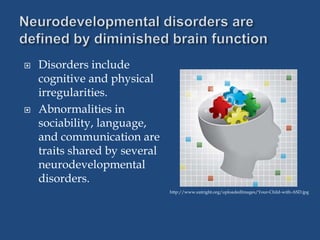
 Disorders include
cognitive and physical
irregularities.
 Abnormalities in
sociability, language,
and communication are
traits shared by several
neurodevelopmental
disorders.
http://www.eatright.org/uploadedImages/Your-Child-with-ASD.jpg
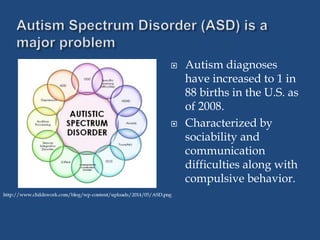
 Autism diagnoses
have increased to 1 in
88 births in the U.S. as
of 2008.
 Characterized by
sociability and
communication
difficulties along with
compulsive behavior.
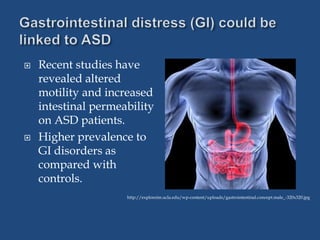
 Recent studies have
revealed altered
motility and increased
intestinal permeability
on ASD patients.
 Higher prevalence to
GI disorders as
compared with
controls.
http://exploreim.ucla.edu/wp-content/uploads/gastrointestinal.concept.male_-320x320.jpg
 Involved in human disorders such as cardiovascular
disease, obesity and inflammatory bowel disease.
 Abnormalities in emotional, social, and anxiety
behaviors.
 Reported probiotic treatment could lead to therapies
to treat symptoms.
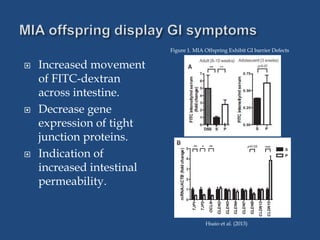
 Increased movement
of FITC-dextran
across intestine.
 Decrease gene
expression of tight
junction proteins.
 Indication of
increased intestinal
permeability.
Hsaio et al. (2013)
Figure 1. MIA Offspring Exhibit GI barrier Defects
 Treatment with Bacteroides fragilis.
 B.fragilis improves intestinal integrity.
Hsaio et al. (2013)
Figure 2. B. Fragilis Treatment Corrects GI Deficits
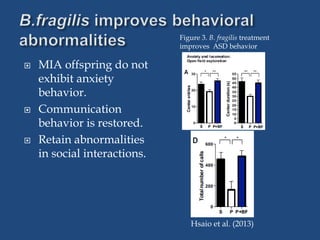
 MIA offspring do not
exhibit anxiety
behavior.
 Communication
behavior is restored.
 Retain abnormalities
in social interactions.
Hsaio et al. (2013)
Figure 3. B. fragilis treatment
improves ASD behavior
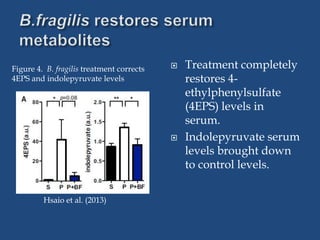
 Treatment completely
restores 4-
ethylphenylsulfate
(4EPS) levels in
serum.
 Indolepyruvate serum
levels brought down
to control levels.
Hsaio et al. (2013)
Figure 4. B. fragilis treatment corrects
4EPS and indolepyruvate levels
 MIA mouse model displays ASD symptoms.
 Gastrointestinal irregularities observed.
 Probiotic treatment with B.fragilis alleviated GI
symptoms, neurological abnormalities, and restored
metabolites.
 Gut-microbiome-brain connection and probiotic
treatment findings may be used in a wide range of
neurodevelopmental disorders.
 More studies need to be conducted to examine
the role of serum metabolites.
 Reported occurrence of GI abnormalities within
ASD ranges from 9%-91%.
Bacteroides fragilis
http://www.lookfordiagnosis.com/mesh_info.php?term=Bacteroides%20Fragilis&lang=1
 This study provides a mechanism for probiotic
use to improve ASD and GI disorders.
http://www.lookfordiagnosis.com/mesh_info.php?term=Bacteroides%20Fragilis&lang=1
http://exploreim.ucla.edu/wp-content/uploads/gastrointestinal.concept.male_-320x320.jpg
http://www.eatright.org/uploadedImages/Your-Child-with-ASD.jpg
http://i.huffpost.com/gen/889487/thumbs/h-BRAIN-960x540.jpg
Adams, J.B., Johansen, L.J., Powell, L.D., Quig, D., and Rubin, R.A. (2011).
Gastrointestinal flora and gastrointestinal status in children with autism—
comparisons to typical children and correlation with autism severity. BMC
Gastroenterol. 11, 22.
Blumberg, R., and Powrie, F. (2012). Microbiota, disease, and back to health: a
metastable journey. Sci. Transl. Med. 4, 137rv137.
Boukthir, S., Matoussi, N., Belhadj, A., Mammou, S., Dlala, S.B., Helayem, M.,
Rocchiccioli, F., Bouzaidi, S., and Abdennebi, M. (2010). [Abnormal intestinal
permeability in children with autism]. Tunis. Med. 88, 685–686.
Buie, T., Campbell, D.B., Fuchs, G.J., 3rd, Furuta, G.T., Levy, J., Vandewater,
J., Whitaker, A.H., Atkins, D., Bauman, M.L., Beaudet, A.L., et al. (2010). Evaluation,
diagnosis, and treatment of gastrointestinal disorders in individuals
with ASDs: a consensus report. Pediatrics 125 (Suppl 1), S1–S18.

Seminar_JB_Presesntation

  • 1.
    Microbiota Modulate Behavioraland Physiological Abnormalities Associated with Neurodevelopmental Disorders Elaine Y. Hsiao, Sara W. McBride, Sophia Hsien et. al. Presentation by: Juan Barrera http://i.huffpost.com/gen/889487/thumbs/h-BRAIN-960x540.jpg
  • 2.
     Disorders include cognitiveand physical irregularities.  Abnormalities in sociability, language, and communication are traits shared by several neurodevelopmental disorders. http://www.eatright.org/uploadedImages/Your-Child-with-ASD.jpg
  • 3.
     Autism diagnoses haveincreased to 1 in 88 births in the U.S. as of 2008.  Characterized by sociability and communication difficulties along with compulsive behavior.
  • 4.
     Recent studieshave revealed altered motility and increased intestinal permeability on ASD patients.  Higher prevalence to GI disorders as compared with controls. http://exploreim.ucla.edu/wp-content/uploads/gastrointestinal.concept.male_-320x320.jpg
  • 5.
     Involved inhuman disorders such as cardiovascular disease, obesity and inflammatory bowel disease.  Abnormalities in emotional, social, and anxiety behaviors.  Reported probiotic treatment could lead to therapies to treat symptoms.
  • 6.
     Increased movement ofFITC-dextran across intestine.  Decrease gene expression of tight junction proteins.  Indication of increased intestinal permeability. Hsaio et al. (2013) Figure 1. MIA Offspring Exhibit GI barrier Defects
  • 7.
     Treatment withBacteroides fragilis.  B.fragilis improves intestinal integrity. Hsaio et al. (2013) Figure 2. B. Fragilis Treatment Corrects GI Deficits
  • 8.
     MIA offspringdo not exhibit anxiety behavior.  Communication behavior is restored.  Retain abnormalities in social interactions. Hsaio et al. (2013) Figure 3. B. fragilis treatment improves ASD behavior
  • 9.
     Treatment completely restores4- ethylphenylsulfate (4EPS) levels in serum.  Indolepyruvate serum levels brought down to control levels. Hsaio et al. (2013) Figure 4. B. fragilis treatment corrects 4EPS and indolepyruvate levels
  • 10.
     MIA mousemodel displays ASD symptoms.  Gastrointestinal irregularities observed.  Probiotic treatment with B.fragilis alleviated GI symptoms, neurological abnormalities, and restored metabolites.  Gut-microbiome-brain connection and probiotic treatment findings may be used in a wide range of neurodevelopmental disorders.
  • 11.
     More studiesneed to be conducted to examine the role of serum metabolites.  Reported occurrence of GI abnormalities within ASD ranges from 9%-91%. Bacteroides fragilis http://www.lookfordiagnosis.com/mesh_info.php?term=Bacteroides%20Fragilis&lang=1
  • 12.
     This studyprovides a mechanism for probiotic use to improve ASD and GI disorders.
  • 13.
    http://www.lookfordiagnosis.com/mesh_info.php?term=Bacteroides%20Fragilis&lang=1 http://exploreim.ucla.edu/wp-content/uploads/gastrointestinal.concept.male_-320x320.jpg http://www.eatright.org/uploadedImages/Your-Child-with-ASD.jpg http://i.huffpost.com/gen/889487/thumbs/h-BRAIN-960x540.jpg Adams, J.B., Johansen,L.J., Powell, L.D., Quig, D., and Rubin, R.A. (2011). Gastrointestinal flora and gastrointestinal status in children with autism— comparisons to typical children and correlation with autism severity. BMC Gastroenterol. 11, 22. Blumberg, R., and Powrie, F. (2012). Microbiota, disease, and back to health: a metastable journey. Sci. Transl. Med. 4, 137rv137. Boukthir, S., Matoussi, N., Belhadj, A., Mammou, S., Dlala, S.B., Helayem, M., Rocchiccioli, F., Bouzaidi, S., and Abdennebi, M. (2010). [Abnormal intestinal permeability in children with autism]. Tunis. Med. 88, 685–686. Buie, T., Campbell, D.B., Fuchs, G.J., 3rd, Furuta, G.T., Levy, J., Vandewater, J., Whitaker, A.H., Atkins, D., Bauman, M.L., Beaudet, A.L., et al. (2010). Evaluation, diagnosis, and treatment of gastrointestinal disorders in individuals with ASDs: a consensus report. Pediatrics 125 (Suppl 1), S1–S18.