In the present era, medical scientists have been con-
founded by the increasing incidence of multiple diseases
across the world, beginning first in developed countries,
and gradually spreading to other areas as they develop.
These include the rises in cases of obesity, asthma, hay
fever, food allergies, inflammatory bowel disease, juve-
nile (type 1) diabetes and autism, among many others.
Are these diseases, which affect different body systems,
unrelated or can a unified theory explain the increased
incidence of all of these?
I believe that the latter possibility is true, and that
the central theory to explain why these diseases have
arisen and by what mechanism is based on modern
changes in early life events that are related to the human
microbiome. According to this theory, the microbiome
of humans and of other animals is not accidental, but
has been selected over long time periods to optimize
host reproductive success through interactions between
the microbiota and host physiology1
. Early life is the
crucial period during which the adult microbiome
becomes established2
, and development of the host and
of the microbiota occur together in a conjoined manner
through a dynamic equilibrium that follows a well-cho-
reographed path. In early life, the context is set for the
important developmental decisions that are required for
the immune system to distinguish between what is self
and what is not self, for metabolic organs to partition
how much energy to expend or to save, and for the brain
to determine how to respond socially to a person who
might be either a friend or a foe.
Causes of the disappearing microbiota
I have proposed that this developmental equilibrium has
been disrupted by elements of modern life that have led
to the loss of crucial microbial taxa, and to the loss of
their roles in shaping human physiology1,3
. This theory
of disappearing microbiota can help us to understand
the increased incidence of a wide variety of diseases.
Several factors should be considered to help under-
stand the loss of microbial richness in the populations
in industrialized countries.
First, strong evidence is emerging for the importance
of vertical transmission of the key microbiota taxa from
mother to child4
. Such a pattern of transmission sug-
gests that if there are extinctions of microbial taxa in one
generation, this loss would be passed down to the next
generation, unless there are opportunities for the miss-
ing taxa to be regained by horizontal transmission3
. One
example of a cause of decreased vertical transmission of
the microbiota is the caesarean section. In the United
States, one-third of babies are born by caesarean sec-
tion; in many countries and populations, the proportion
exceeds one-half. For such births, the intergenerational
transfer of microorganisms, which is a conserved feature
of essentially all animals, is diminished. Another example
affecting the intergenerational transfer of the microbiota
is the widespread use of antibiotics during pregnancy.
Second, humans have been sharing their commensal
microorganisms with one another since time immemo-
rial; we have bathed in and drank water that contains
the microorganisms that are present in our faeces. Good
sanitation — in particular, clean water — has been cru-
cial for avoiding infections with high-grade and lethal
pathogens, which has contributed considerably to
reduced childhood mortality and to improved longev-
ity. However, an unexpected consequence has been the
decreased horizontal transmission of commensal micro-
biota. Clean water is so important to overall health that
the idea that it might have some biological costs by
reducing horizontal transmission of the microbiota has
received scant attention.
Third, in addition to the decreased acquisition of
commensal microorganisms from other humans, in
each recent generation, there have been multiple insults
Departments of Medicine
and Microbiology,
New York University Langone
Medical Center, New York,
NY 10003, USA.
martin.blaser@nyumc.org
doi:10.1038/nri.2017.77
Published online 27 Jul 2017
The theory of disappearing microbiota
and the epidemics of chronic diseases
Martin J. Blaser
In recent decades, the incidence of many apparently unrelated chronic diseases has markedly
increased. Here, I theorize that losses of particular bacterial species of our ancestral microbiota
have altered the context in which immunological, metabolic and cognitive development occur in
early life, which results in increased disease. This ominous trend suggests that we must refocus
efforts to understand and reverse the underlying circumstances that are responsible for our
disappearing microbiota.
NATURE REVIEWS | IMMUNOLOGY	 VOLUME 17 | AUGUST 2017 | 461
COMMENT
EARLY LIFE IMMUNOLOGY
© 2 0 1 7 M a c m i l l a n P u b l i s h e r s L i m i t e d , p a r t o f S p r i n g e r N a t u r e . A l l r i g h t s r e s e r v e d .
Increased incidence
of autoimmune
and inflammatory
diseases
Altered maturation of
adaptive immunity:
• Decreased tolerance
• Increased reactivity
Nature Reviews | Immunology
EarlylifeAdultlife
Innate
immunity
Adaptive
immunity
Innate
immunity
Adaptive
immunity
Mature
adaptive
immune
response
Generation0
(then)
Generationn
(now, future)
Replete ancestral
microbiota
• Decreased
vertical
transmission
• Decreased
horizontal
transmission
• Decreased
maintenance
Vertical
transmission
of microbiota
Horizontal
transmission
of microbiota
Depleted
microbiota
Time
to the maintenance of key microbiota taxa in early life.
Major factors include antibiotic exposures of infants,
and the feeding of formula milk as a replacement for
breast milk. Formula milk includes the macronutrients
that are necessary for healthy infant growth, but it almost
completely lacks many of the micronutrients, such as
particular oligosaccharides, that foster the survival of
inherited and beneficial microbiota. The composition
of breast milk seems to have evolved to favour (select
for) those microorganisms that have a well-established
commensal relationship, having been passed down over
the millennia.
Exposure to antibiotics may have the greatest impact
on the early life microbiota — due to both the extent and
timing of their use. The importance of intergenerational
transmission of the microbiota amplifies the effects of
prenatal events, such as the antibiotics given to a mother
during pregnancy and just at birth (and even later, as
they are excreted in milk). Evidence is accumulating
that antibiotic use by young women before pregnancy
could also be contributing to health problems in their
children. An extension of this might be that any anti-
biotic dose in a female has some impact on her future
children. This is a frightening notion, but we need to
understand whether or not it is true, and if so, what is
the magnitude of the effect, so that clinicians can make
more informed decisions about when antibiotic use is
appropriate. Without much supporting evidence, we all
originally believed that any disturbance to the micro­
biota after a course of antibiotics would be temporary,
and that everything would soon return to normal. But
we now know that the microbiota is not uniformly resil-
ient5
. In young children in particular, (antibiotic) insults
may change the development of the ‘adult’ microbiota,
and not allow its normal maturation6
.
Thus, despite the immense benefits that antibiotics
have brought, it may be that they not only temporarily
perturb the microbiota, but can also lead to the extinc-
tion of some microbial taxa, with additive effects on host
physiology. Studies in mice have shown that short-term,
low-dose antibiotic exposures early in life that lead to
only transient effects on microbiota composition may
have long-term effects on host phenotypes, such as adi-
posity and the levels of immunological mediators7
. One
explanation for why this occurs is that antibiotics alter
(select) the microbiota at a crucial time window during
development, when equilibria are being established, and
that even with full resolution of the microbiota composi-
tion, the damage to other physiological processes, such as
the immune system, has already occurred. We know that
severe infections during early childhood stunt the height
trajectory of children, from which recovery is limited.
Similarly, exposure to therapeutic antibiotic doses early
in life may cause profound and sustained microbiota
perturbations, which can lead to altered immunity8
.
Immune effects of the disappearing microbiota
This combination, of a loss of commensals in one gen-
eration (for example, owing to antibiotic use or formula
milk feeding) and the diminution of both vertical and
horizontal transmission, suggests that microbial extinc-
tions become fixed and cumulative across generations3
.
Therefore, the microbial disappearances are increasing
and the loss of diversity is steadily worsening. There is
already evidence to support the worrying notions of
microbial extinctions9
and of cumulative effects over
generations10
.
These ideas are particularly relevant to immunol-
ogy, because early life is the period when the adaptive
immune responsiveness of a host develops, and when
important decisions regarding responsiveness versus
tolerance are made11
. In immunology, as in all of devel-
opmental biology, context is crucial. Although innate
immunity has evolved, in part, to defend against high-
grade pathogens, more subtle interactions (for example
with commensal microorganisms) and those innate
responses requiring amplification benefit from an
engaged adaptive immune response. The frontier regu-
lating the development of adaptive immunity may be the
most context specific, and carries the greatest long-term
consequences.
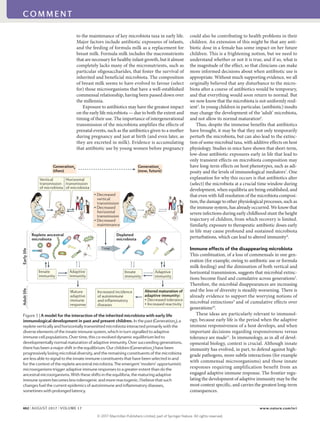
Figure 1 | A model for the interaction of the inherited microbiota with early life
immunological development in past and present children. Inthepast(Generation0),a
repleteverticallyandhorizontallytransmittedmicrobiotainteractedprimarilywiththe
diverseelementsoftheinnateimmunesystem,whichinturnsignalledtoadaptive
immunecellpopulations.Overtime,thisco-evolveddynamicequilibriumledto
developmentallynormalmaturationofadaptiveimmunity.Oversucceedinggenerations,
therehasbeenamajorshiftintheequilibrium.Ourchildren(Generationn)havebeen
progressivelylosingmicrobialdiversity,andtheremainingconstituentsofthemicrobiota
arelessabletosignaltotheinnateimmuneconstituentsthathavebeenselectedinand
forthecontextoftherepleteancestralmicrobiota.Theemergent‘modern’opportunistic
microorganismstriggeradaptiveimmuneresponsestoagreaterextentthandothe
ancestralmicroorganisms.Withtheseshiftsintheequilibria,thematuringadaptive
immunesystembecomeslesstolerogenicandmorereactogenic.Ibelievethatsuch
changesfuelthecurrentepidemicsofautoimmuneandinflammatorydiseases,
sometimeswithprolongedlatency.
COMMENT
462 | AUGUST 2017 | VOLUME 17	 www.nature.com/nri
COMMENT
© 2 0 1 7 M a c m i l l a n P u b l i s h e r s L i m i t e d , p a r t o f S p r i n g e r N a t u r e . A l l r i g h t s r e s e r v e d .
A growing body of evidence indicates that both
the prenatal (maternal) microbiota12
and the early life
(infant) microbiota have crucial roles in the later devel-
opment of adaptive immunity13
. Important interactions
between innate and adaptive immunity may also be
relevant here (FIG. 1). With the decline of the ancestral
microbiota, the net early life interactions with innate
immune elements may have shifted away from the com-
mensal taxa. Thus, the signals that the major adaptive
immune cells receive from their two principal inputs
— the microbiota and innate immune cells — will have
shifted, creating an altered context for their next devel-
opmental steps. Over many millenia, the composition
of the early life microbiota has been a ‘key’ that has
(selected for) shaped the structure of its ‘lock’, innate
immunity. Now with the key changing, the lock no
longer closes optimally. Thus, effects cascade. Ongoing
selection will lead to a restoration of (a new) equilib-
rium but predictably that will require many generations,
and in the interim, much cost in human health.
I speculate that a net reduction of the tolerizing
context associated with the ancestral microbiota results
in heightened responses to opportunistic organisms
and adventitious stimuli. This would lead to a tone
of heightened immunological reactivity that could
manifest as disease immediately and also later in life,
sometimes with considerable latency. The remarkable
aspect of vertebrate life is not that we respond to path-
ogens, but that we so easily tolerate the overwhelm-
ing numbers of commensal microorganisms that we
host. With the work highlighted in this issue of Nature
Reviews Immunology, it becomes more clear that the
interactions of the early life microbiome with the host
are setting the immunological tone for the remainder
of the host’s lifespan.
Perhaps the most profound effects focus on the devel-
opment of immunity in the gut, although microbial
dynamics in the skin, mouth and vagina all might con-
tribute to overall immunological tone and to site-specific
effects. An important concept for all of these sites con-
cerns the timing of developmental windows11
. At which
point in life are the major immunological decisions
made and when does the developmental window close?
Although there is unlikely to be an absolute answer, as
this window is probably to some degree specific to each
individual, there probably will be a time-gradient of
opportunity to permit interventions.
Future directions
One crucial issue lies in understanding the actual role
of the microbiota in the causation of immunological
diseases. Once disease is manifest, any microbial
abnormalities that are detected could be a conse-
quence of the disease and/or of the pharmacological
agents that are used to treat the disease, rather than
its cause. Because of the difficulties in obtaining rele-
vant specimens from at-risk individuals (and low-risk
controls), using relevant animal models to examine
the microbiota and pathological mechanisms before
disease onset is crucial. Recent studies in this respect
point to roles for both an abnormal microbiota and
specific mechanisms in the host that can deepen our
understanding of autoimmune diseases, such as type 1
diabetes14,15
.
Understanding the threats and stopping the damage
to the next generation are the first orders of business.
With deeper knowledge of immunological development,
for example, we might be able to define the best location,
timing and mechanism to intervene. Interventions could
be drugs, prebiotics or validated probiotics, or combina-
tions of these compounds, and even some vaccines. With
a disordered microbiome, opportunistic organisms may
have disproportionate roles, by suppressing developmen-
tally beneficial microbiota taxa. In such cases, specific
vaccines, and even specific (truly narrow-spectrum)
antibiotics, could be useful.
I believe that ultimately we will have to restore our
lost microbiota to optimize human health and to reverse
the disease epidemics that are increasing around the
world. This long-term scientific challenge will require
immunologists and medical scientists to work in the
interstices of microbiology. For immunologists, armed
with the discoveries of modern science, it will mean a
return to their historical nineteenth century roots in
microbiology. In the interim, with the emergence of
the microbiome as an unanticipated force of nature,
these new ideas must be accommodated into the
immunological canon.
1.	 Blaser, M. J. Who are we? Indigenous microbes and the ecology of
human diseases. EMBO Rep. 7, 956–960 (2006).
2.	 Yatsunenko, T. et al. Human gut microbiome viewed across age
and geography. Nature 486, 222–227 (2012).
3.	 Blaser, M. J. & Falkow, S. What are the consequences of the
disappearing human microbiota? Nat. Rev. Microbiol. 7, 887–894
(2009).
4.	 Moeller, A. H. et al. Cospeciation of gut microbiota with hominids.
Science 353, 380–382 (2016).
5.	 Dethlefsen, L. & Relman, D. A. Incomplete recovery and
individualized responses of the human distal gut microbiota to
repeated antibiotic perturbation. Proc. Natl Acad. Sci. USA 108,
4554–4561 (2011).
6.	 Bokulich, N. A. et al. Antibiotics, birth mode, and diet shape
microbiome maturation during early life. Sci. Transl. Med.
8, 343ra382 (2016).
7.	 Cox, L. M. et al. Altering the intestinal microbiota during a critical
developmental window has lasting metabolic consequences.
Cell 158, 705–721 (2014).
8.	 Ruiz, V. E. et al. A single early-in-life macrolide course has lasting
effects on murine microbial network topology and immunity.
Nat. Comm. (in the press).
9.	 Clemente, J. C. et al. The microbiome of uncontacted Amerindians.
Sci. Adv. http://dx.doi.org/10.1126/sciadv.1500183 (2015).
10.	 Sonnenburg, E. D. et al. Diet-induced extinctions in the gut microbiota
compound over generations. Nature 529, 212–215 (2016).
11.	 Simon, A. K., Hollander, G. A., McMichael, A. Evolution of the
immune system in humans from infancy to old age. Proc. R. Soc. B
282, 20143085 (2015).
12.	 Gomez de Agüero, M. et al. The maternal microbiota drives early
postnatal innate immune development. Science 351, 1296–1302
(2016).
13.	 Gensollen, T., Iyer, S. S., Kasper, D. L. & Blumberg, R. S. How
colonization by microbiota in early life shapes the immune system.
Science 352, 539–544 (2016).
14.	 Markle, J. G. et al. Sex differences in the gut microbiome drive
hormone dependent regulation of autoimmunity. Science 339,
1084–1088 (2013).
15.	 Livanos, A. E. et al. Antibiotic-mediated gut microbiome
perturbation accelerates development of type 1 diabetes in mice.
Nat. Microbiol. 1, 16140 (2016).
Acknowledgements
M.J.B. is supported, in part, by NIH grants U01AI22285 and
R01DK090989, and by the Juvenile Diabetes Research Foundation and
the C & D Fund.
Competing interests statement
The author declares no competing interests.
COMMENT
NATURE REVIEWS | IMMUNOLOGY	 VOLUME 17 | AUGUST 2017 | 463
EARLY LIFE IMMUNOLOGY
© 2 0 1 7 M a c m i l l a n P u b l i s h e r s L i m i t e d , p a r t o f S p r i n g e r N a t u r e . A l l r i g h t s r e s e r v e d .

Blaser 2017-nature reviews-immunology

  • 1.
    In the presentera, medical scientists have been con- founded by the increasing incidence of multiple diseases across the world, beginning first in developed countries, and gradually spreading to other areas as they develop. These include the rises in cases of obesity, asthma, hay fever, food allergies, inflammatory bowel disease, juve- nile (type 1) diabetes and autism, among many others. Are these diseases, which affect different body systems, unrelated or can a unified theory explain the increased incidence of all of these? I believe that the latter possibility is true, and that the central theory to explain why these diseases have arisen and by what mechanism is based on modern changes in early life events that are related to the human microbiome. According to this theory, the microbiome of humans and of other animals is not accidental, but has been selected over long time periods to optimize host reproductive success through interactions between the microbiota and host physiology1 . Early life is the crucial period during which the adult microbiome becomes established2 , and development of the host and of the microbiota occur together in a conjoined manner through a dynamic equilibrium that follows a well-cho- reographed path. In early life, the context is set for the important developmental decisions that are required for the immune system to distinguish between what is self and what is not self, for metabolic organs to partition how much energy to expend or to save, and for the brain to determine how to respond socially to a person who might be either a friend or a foe. Causes of the disappearing microbiota I have proposed that this developmental equilibrium has been disrupted by elements of modern life that have led to the loss of crucial microbial taxa, and to the loss of their roles in shaping human physiology1,3 . This theory of disappearing microbiota can help us to understand the increased incidence of a wide variety of diseases. Several factors should be considered to help under- stand the loss of microbial richness in the populations in industrialized countries. First, strong evidence is emerging for the importance of vertical transmission of the key microbiota taxa from mother to child4 . Such a pattern of transmission sug- gests that if there are extinctions of microbial taxa in one generation, this loss would be passed down to the next generation, unless there are opportunities for the miss- ing taxa to be regained by horizontal transmission3 . One example of a cause of decreased vertical transmission of the microbiota is the caesarean section. In the United States, one-third of babies are born by caesarean sec- tion; in many countries and populations, the proportion exceeds one-half. For such births, the intergenerational transfer of microorganisms, which is a conserved feature of essentially all animals, is diminished. Another example affecting the intergenerational transfer of the microbiota is the widespread use of antibiotics during pregnancy. Second, humans have been sharing their commensal microorganisms with one another since time immemo- rial; we have bathed in and drank water that contains the microorganisms that are present in our faeces. Good sanitation — in particular, clean water — has been cru- cial for avoiding infections with high-grade and lethal pathogens, which has contributed considerably to reduced childhood mortality and to improved longev- ity. However, an unexpected consequence has been the decreased horizontal transmission of commensal micro- biota. Clean water is so important to overall health that the idea that it might have some biological costs by reducing horizontal transmission of the microbiota has received scant attention. Third, in addition to the decreased acquisition of commensal microorganisms from other humans, in each recent generation, there have been multiple insults Departments of Medicine and Microbiology, New York University Langone Medical Center, New York, NY 10003, USA. martin.blaser@nyumc.org doi:10.1038/nri.2017.77 Published online 27 Jul 2017 The theory of disappearing microbiota and the epidemics of chronic diseases Martin J. Blaser In recent decades, the incidence of many apparently unrelated chronic diseases has markedly increased. Here, I theorize that losses of particular bacterial species of our ancestral microbiota have altered the context in which immunological, metabolic and cognitive development occur in early life, which results in increased disease. This ominous trend suggests that we must refocus efforts to understand and reverse the underlying circumstances that are responsible for our disappearing microbiota. NATURE REVIEWS | IMMUNOLOGY VOLUME 17 | AUGUST 2017 | 461 COMMENT EARLY LIFE IMMUNOLOGY © 2 0 1 7 M a c m i l l a n P u b l i s h e r s L i m i t e d , p a r t o f S p r i n g e r N a t u r e . A l l r i g h t s r e s e r v e d .
  • 2.
    Increased incidence of autoimmune andinflammatory diseases Altered maturation of adaptive immunity: • Decreased tolerance • Increased reactivity Nature Reviews | Immunology EarlylifeAdultlife Innate immunity Adaptive immunity Innate immunity Adaptive immunity Mature adaptive immune response Generation0 (then) Generationn (now, future) Replete ancestral microbiota • Decreased vertical transmission • Decreased horizontal transmission • Decreased maintenance Vertical transmission of microbiota Horizontal transmission of microbiota Depleted microbiota Time to the maintenance of key microbiota taxa in early life. Major factors include antibiotic exposures of infants, and the feeding of formula milk as a replacement for breast milk. Formula milk includes the macronutrients that are necessary for healthy infant growth, but it almost completely lacks many of the micronutrients, such as particular oligosaccharides, that foster the survival of inherited and beneficial microbiota. The composition of breast milk seems to have evolved to favour (select for) those microorganisms that have a well-established commensal relationship, having been passed down over the millennia. Exposure to antibiotics may have the greatest impact on the early life microbiota — due to both the extent and timing of their use. The importance of intergenerational transmission of the microbiota amplifies the effects of prenatal events, such as the antibiotics given to a mother during pregnancy and just at birth (and even later, as they are excreted in milk). Evidence is accumulating that antibiotic use by young women before pregnancy could also be contributing to health problems in their children. An extension of this might be that any anti- biotic dose in a female has some impact on her future children. This is a frightening notion, but we need to understand whether or not it is true, and if so, what is the magnitude of the effect, so that clinicians can make more informed decisions about when antibiotic use is appropriate. Without much supporting evidence, we all originally believed that any disturbance to the micro­ biota after a course of antibiotics would be temporary, and that everything would soon return to normal. But we now know that the microbiota is not uniformly resil- ient5 . In young children in particular, (antibiotic) insults may change the development of the ‘adult’ microbiota, and not allow its normal maturation6 . Thus, despite the immense benefits that antibiotics have brought, it may be that they not only temporarily perturb the microbiota, but can also lead to the extinc- tion of some microbial taxa, with additive effects on host physiology. Studies in mice have shown that short-term, low-dose antibiotic exposures early in life that lead to only transient effects on microbiota composition may have long-term effects on host phenotypes, such as adi- posity and the levels of immunological mediators7 . One explanation for why this occurs is that antibiotics alter (select) the microbiota at a crucial time window during development, when equilibria are being established, and that even with full resolution of the microbiota composi- tion, the damage to other physiological processes, such as the immune system, has already occurred. We know that severe infections during early childhood stunt the height trajectory of children, from which recovery is limited. Similarly, exposure to therapeutic antibiotic doses early in life may cause profound and sustained microbiota perturbations, which can lead to altered immunity8 . Immune effects of the disappearing microbiota This combination, of a loss of commensals in one gen- eration (for example, owing to antibiotic use or formula milk feeding) and the diminution of both vertical and horizontal transmission, suggests that microbial extinc- tions become fixed and cumulative across generations3 . Therefore, the microbial disappearances are increasing and the loss of diversity is steadily worsening. There is already evidence to support the worrying notions of microbial extinctions9 and of cumulative effects over generations10 . These ideas are particularly relevant to immunol- ogy, because early life is the period when the adaptive immune responsiveness of a host develops, and when important decisions regarding responsiveness versus tolerance are made11 . In immunology, as in all of devel- opmental biology, context is crucial. Although innate immunity has evolved, in part, to defend against high- grade pathogens, more subtle interactions (for example with commensal microorganisms) and those innate responses requiring amplification benefit from an engaged adaptive immune response. The frontier regu- lating the development of adaptive immunity may be the most context specific, and carries the greatest long-term consequences. Figure 1 | A model for the interaction of the inherited microbiota with early life immunological development in past and present children. Inthepast(Generation0),a repleteverticallyandhorizontallytransmittedmicrobiotainteractedprimarilywiththe diverseelementsoftheinnateimmunesystem,whichinturnsignalledtoadaptive immunecellpopulations.Overtime,thisco-evolveddynamicequilibriumledto developmentallynormalmaturationofadaptiveimmunity.Oversucceedinggenerations, therehasbeenamajorshiftintheequilibrium.Ourchildren(Generationn)havebeen progressivelylosingmicrobialdiversity,andtheremainingconstituentsofthemicrobiota arelessabletosignaltotheinnateimmuneconstituentsthathavebeenselectedinand forthecontextoftherepleteancestralmicrobiota.Theemergent‘modern’opportunistic microorganismstriggeradaptiveimmuneresponsestoagreaterextentthandothe ancestralmicroorganisms.Withtheseshiftsintheequilibria,thematuringadaptive immunesystembecomeslesstolerogenicandmorereactogenic.Ibelievethatsuch changesfuelthecurrentepidemicsofautoimmuneandinflammatorydiseases, sometimeswithprolongedlatency. COMMENT 462 | AUGUST 2017 | VOLUME 17 www.nature.com/nri COMMENT © 2 0 1 7 M a c m i l l a n P u b l i s h e r s L i m i t e d , p a r t o f S p r i n g e r N a t u r e . A l l r i g h t s r e s e r v e d .
  • 3.
    A growing bodyof evidence indicates that both the prenatal (maternal) microbiota12 and the early life (infant) microbiota have crucial roles in the later devel- opment of adaptive immunity13 . Important interactions between innate and adaptive immunity may also be relevant here (FIG. 1). With the decline of the ancestral microbiota, the net early life interactions with innate immune elements may have shifted away from the com- mensal taxa. Thus, the signals that the major adaptive immune cells receive from their two principal inputs — the microbiota and innate immune cells — will have shifted, creating an altered context for their next devel- opmental steps. Over many millenia, the composition of the early life microbiota has been a ‘key’ that has (selected for) shaped the structure of its ‘lock’, innate immunity. Now with the key changing, the lock no longer closes optimally. Thus, effects cascade. Ongoing selection will lead to a restoration of (a new) equilib- rium but predictably that will require many generations, and in the interim, much cost in human health. I speculate that a net reduction of the tolerizing context associated with the ancestral microbiota results in heightened responses to opportunistic organisms and adventitious stimuli. This would lead to a tone of heightened immunological reactivity that could manifest as disease immediately and also later in life, sometimes with considerable latency. The remarkable aspect of vertebrate life is not that we respond to path- ogens, but that we so easily tolerate the overwhelm- ing numbers of commensal microorganisms that we host. With the work highlighted in this issue of Nature Reviews Immunology, it becomes more clear that the interactions of the early life microbiome with the host are setting the immunological tone for the remainder of the host’s lifespan. Perhaps the most profound effects focus on the devel- opment of immunity in the gut, although microbial dynamics in the skin, mouth and vagina all might con- tribute to overall immunological tone and to site-specific effects. An important concept for all of these sites con- cerns the timing of developmental windows11 . At which point in life are the major immunological decisions made and when does the developmental window close? Although there is unlikely to be an absolute answer, as this window is probably to some degree specific to each individual, there probably will be a time-gradient of opportunity to permit interventions. Future directions One crucial issue lies in understanding the actual role of the microbiota in the causation of immunological diseases. Once disease is manifest, any microbial abnormalities that are detected could be a conse- quence of the disease and/or of the pharmacological agents that are used to treat the disease, rather than its cause. Because of the difficulties in obtaining rele- vant specimens from at-risk individuals (and low-risk controls), using relevant animal models to examine the microbiota and pathological mechanisms before disease onset is crucial. Recent studies in this respect point to roles for both an abnormal microbiota and specific mechanisms in the host that can deepen our understanding of autoimmune diseases, such as type 1 diabetes14,15 . Understanding the threats and stopping the damage to the next generation are the first orders of business. With deeper knowledge of immunological development, for example, we might be able to define the best location, timing and mechanism to intervene. Interventions could be drugs, prebiotics or validated probiotics, or combina- tions of these compounds, and even some vaccines. With a disordered microbiome, opportunistic organisms may have disproportionate roles, by suppressing developmen- tally beneficial microbiota taxa. In such cases, specific vaccines, and even specific (truly narrow-spectrum) antibiotics, could be useful. I believe that ultimately we will have to restore our lost microbiota to optimize human health and to reverse the disease epidemics that are increasing around the world. This long-term scientific challenge will require immunologists and medical scientists to work in the interstices of microbiology. For immunologists, armed with the discoveries of modern science, it will mean a return to their historical nineteenth century roots in microbiology. In the interim, with the emergence of the microbiome as an unanticipated force of nature, these new ideas must be accommodated into the immunological canon. 1. Blaser, M. J. Who are we? Indigenous microbes and the ecology of human diseases. EMBO Rep. 7, 956–960 (2006). 2. Yatsunenko, T. et al. Human gut microbiome viewed across age and geography. Nature 486, 222–227 (2012). 3. Blaser, M. J. & Falkow, S. What are the consequences of the disappearing human microbiota? Nat. Rev. Microbiol. 7, 887–894 (2009). 4. Moeller, A. H. et al. Cospeciation of gut microbiota with hominids. Science 353, 380–382 (2016). 5. Dethlefsen, L. & Relman, D. A. Incomplete recovery and individualized responses of the human distal gut microbiota to repeated antibiotic perturbation. Proc. Natl Acad. Sci. USA 108, 4554–4561 (2011). 6. Bokulich, N. A. et al. Antibiotics, birth mode, and diet shape microbiome maturation during early life. Sci. Transl. Med. 8, 343ra382 (2016). 7. Cox, L. M. et al. Altering the intestinal microbiota during a critical developmental window has lasting metabolic consequences. Cell 158, 705–721 (2014). 8. Ruiz, V. E. et al. A single early-in-life macrolide course has lasting effects on murine microbial network topology and immunity. Nat. Comm. (in the press). 9. Clemente, J. C. et al. The microbiome of uncontacted Amerindians. Sci. Adv. http://dx.doi.org/10.1126/sciadv.1500183 (2015). 10. Sonnenburg, E. D. et al. Diet-induced extinctions in the gut microbiota compound over generations. Nature 529, 212–215 (2016). 11. Simon, A. K., Hollander, G. A., McMichael, A. Evolution of the immune system in humans from infancy to old age. Proc. R. Soc. B 282, 20143085 (2015). 12. Gomez de Agüero, M. et al. The maternal microbiota drives early postnatal innate immune development. Science 351, 1296–1302 (2016). 13. Gensollen, T., Iyer, S. S., Kasper, D. L. & Blumberg, R. S. How colonization by microbiota in early life shapes the immune system. Science 352, 539–544 (2016). 14. Markle, J. G. et al. Sex differences in the gut microbiome drive hormone dependent regulation of autoimmunity. Science 339, 1084–1088 (2013). 15. Livanos, A. E. et al. Antibiotic-mediated gut microbiome perturbation accelerates development of type 1 diabetes in mice. Nat. Microbiol. 1, 16140 (2016). Acknowledgements M.J.B. is supported, in part, by NIH grants U01AI22285 and R01DK090989, and by the Juvenile Diabetes Research Foundation and the C & D Fund. Competing interests statement The author declares no competing interests. COMMENT NATURE REVIEWS | IMMUNOLOGY VOLUME 17 | AUGUST 2017 | 463 EARLY LIFE IMMUNOLOGY © 2 0 1 7 M a c m i l l a n P u b l i s h e r s L i m i t e d , p a r t o f S p r i n g e r N a t u r e . A l l r i g h t s r e s e r v e d .