HANBOK
By :
Asmaa Ezz
WHAT IS “HANBOK”?
 Hanbok is the
traditional korean dress.
 It is characterized by
vibrant colors and simple
lines without pockets.
 “Hanbok day “ was
made to encourage
korean citizens to
wear hanbok.
HANBOK’S HISTORY
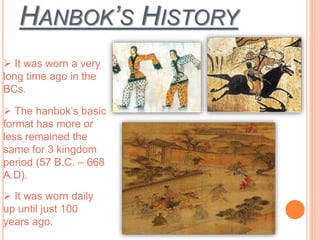
 It was worn a very
long time ago in the
BCs.
 The hanbok’s basic
format has more or
less remained the
same for 3 kingdom
period (57 B.C. – 668
A.D).
 It was worn daily
up until just 100
years ago.
HANBOK’S DESIGN
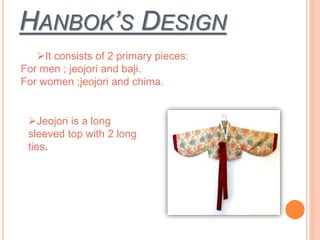
It consists of 2 primary pieces:
For men ; jeojori and baji.
For women ;jeojori and chima.
Jeojori is a long
sleeved top with 2 long
ties.
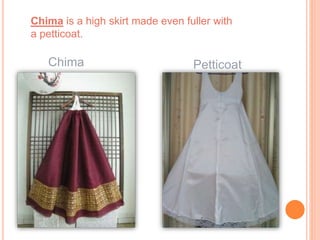
Chima is a high skirt made even fuller with
a petticoat.
Chima Petticoat
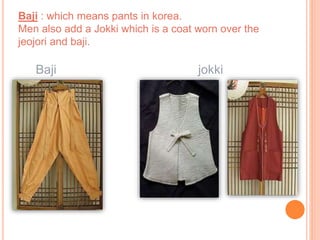
Baji : which means pants in korea.
Men also add a Jokki which is a coat worn over the
jeojori and baji.
Baji jokki
HANBOK CAN BE
CLASSIFIED INTO:
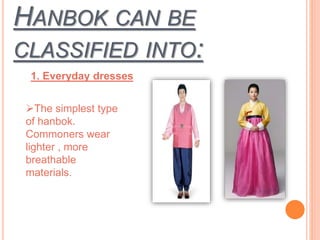
1. Everyday dresses
The simplest type
of hanbok.
Commoners wear
lighter , more
breathable
materials.
2. Ceremonial dresses
Which are worn
on formal occasions
and special
anniversaries.
3. Special dresses
Are made for
shamans and
officials.
BEAUTY OF HANBOK
The beauty of hanbok is
found in the elegant flow of
lines and its pleasing naturally
occurring colors.
Beauty of creativity and harmony.
It brings out the texture of
the natural, hand-woven
fabrics.
It allows unrestrained
movement of the body.
WEARING WITH
HANBOK
Various accessories such as
footgear , jewelry and
headdresses or hairpins
completed the outfit.
There is Gat which is
a type of hat worn by
officials outside their
homes.
Also there are:
Binyeo: a rod like
hairpin used to
fasten a crown or
hold braided hair up.
Daenggi: a ribbon
used to tie and
decorate long hair.
Norigae: they are
pendants that are
tied to the waist of
the skirt.
Norigae
Daenggi
Binyeo
MODERNIZING THE
HANBOK
Some designers started
alternating the traditional
patterns.
Traditional designs
simplified to make
appealing outfits for
modern women.
Incorporating pieces of
modern style hanbok has
kicked off as a trend in
Seoul.
Hanbok

Hanbok

  • 1.
  • 2.
    WHAT IS “HANBOK”? Hanbok is the traditional korean dress.  It is characterized by vibrant colors and simple lines without pockets.  “Hanbok day “ was made to encourage korean citizens to wear hanbok.
  • 3.
    HANBOK’S HISTORY  Itwas worn a very long time ago in the BCs.  The hanbok’s basic format has more or less remained the same for 3 kingdom period (57 B.C. – 668 A.D).  It was worn daily up until just 100 years ago.
  • 4.
    HANBOK’S DESIGN It consistsof 2 primary pieces: For men ; jeojori and baji. For women ;jeojori and chima. Jeojori is a long sleeved top with 2 long ties.
  • 5.
    Chima is ahigh skirt made even fuller with a petticoat. Chima Petticoat
  • 6.
    Baji : whichmeans pants in korea. Men also add a Jokki which is a coat worn over the jeojori and baji. Baji jokki
  • 7.
    HANBOK CAN BE CLASSIFIEDINTO: 1. Everyday dresses The simplest type of hanbok. Commoners wear lighter , more breathable materials.
  • 8.
    2. Ceremonial dresses Whichare worn on formal occasions and special anniversaries. 3. Special dresses Are made for shamans and officials.
  • 9.
    BEAUTY OF HANBOK Thebeauty of hanbok is found in the elegant flow of lines and its pleasing naturally occurring colors. Beauty of creativity and harmony. It brings out the texture of the natural, hand-woven fabrics. It allows unrestrained movement of the body.
  • 10.
    WEARING WITH HANBOK Various accessoriessuch as footgear , jewelry and headdresses or hairpins completed the outfit. There is Gat which is a type of hat worn by officials outside their homes.
  • 11.
    Also there are: Binyeo:a rod like hairpin used to fasten a crown or hold braided hair up. Daenggi: a ribbon used to tie and decorate long hair. Norigae: they are pendants that are tied to the waist of the skirt. Norigae Daenggi Binyeo
  • 12.
    MODERNIZING THE HANBOK Some designersstarted alternating the traditional patterns. Traditional designs simplified to make appealing outfits for modern women. Incorporating pieces of modern style hanbok has kicked off as a trend in Seoul.