
hacking/cracking
the other side of the story


jim geovedi

guide to ict megatrend
31 January 2008 — Hotel Shangri-La, Jakarta
‣   information security

‣   0-day vulnerabilities
infosec ≠ satpam


‣   current trends: identity thefts, botnet,
    mobile communication hacking, 0-day
    vulnerabilities, corporate espionage,
    wiretapping
industry status


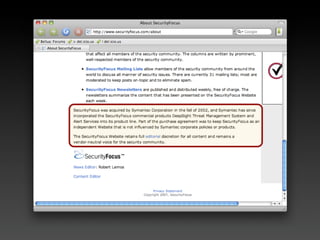
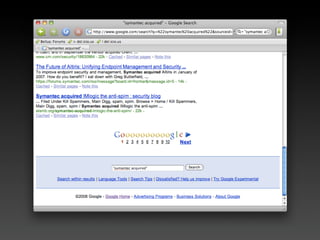
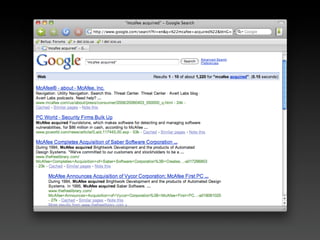
‣       big security companies acquire small
        start-up or spin-off companies to offer
        more solutions
    ‣    "palugada" propaganda
software
development


‣   cheap software development?
    outsource to india or china!
security investment

‣       companies bought a lot of security
        devices or applications
    ‣    firewall, anti virus, spam and content
         filtering, ids, ips, patch management,
         etc.
common issues

‣       companies do not have enough
        resources.
‣       vendors re-introducing:
    ‣    weak and easy guessed passwords
    ‣    clear-text protocols
    ‣    misconfigurations
‣   information security

‣   0-day vulnerabilities
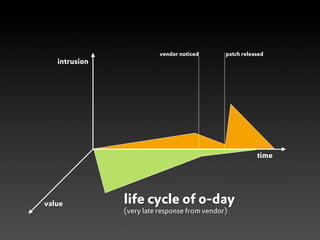
‣   0-day, pronounce zero-day, sometimes
    oh day, means new.

‣   the term has it's origin in the warez scene,
    but has become firmly entrenched in the
    exploit trading scene.
‣   0-day is used to refer to exploits,
    software, media or vulnerability
    information released today and those
    that have not yet released.
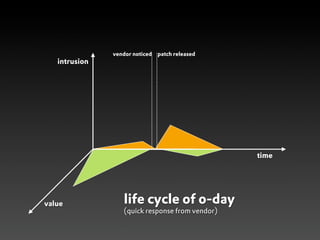
vendor noticed   patch released
   intrusion


                                                 time


value             life cycle of 0-day
                  (quick response from vendor)
vendor noticed      patch released
   intrusion


                                                         time


value          life cycle of 0-day
               (very late response from vendor)
‣   0-day users: intelligence agents,
    professional penetration testers, product
    vendors, random hackers/crackers
obtaining 0-day

‣   conducting research (source code/
    binary audit)
‣   share/trade between friends
‣   install honeypot
‣   buy from 0-day brokers
market


‣       current 0-day business model is
        considered weak
    ‣    the auction model
the players

‣   corporate: ISS, eEye, iDEFENSE,
    TippingPoint (3Com/ZDI), Immunity,
    Gleg, Argeniss, wabisabilabi, etc
‣   group or personal: cirt.dk, piotr bania,
    inge henriksen, mario ballano, neil kettle,
    etc.
programs

‣   https://labs.idefense.com/vcp/
‣   http://www.wslabi.com/wabisabilabi/
    rrp.do?
‣   http://www.zerodayinitiative.com/
    details.html
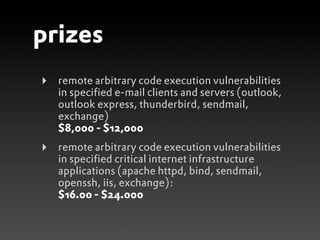
prizes
‣   remote arbitrary code execution vulnerabilities
    in specified e-mail clients and servers (outlook,
    outlook express, thunderbird, sendmail,
    exchange)
    $8,000 - $12,000
‣   remote arbitrary code execution vulnerabilities
    in specified critical internet infrastructure
    applications (apache httpd, bind, sendmail,
    openssh, iis, exchange):
    $16.00 - $24.000
how many?

‣       every complex software have bugs
    ‣    we should assume every popular
         application exist has at least one 0-day
         exploit in wild
‣       professionals keep their own 0-day!
fin.
jim@geovedi.com

Hacking Cracking 2008

  • 1.
    hacking/cracking the other sideof the story jim geovedi guide to ict megatrend 31 January 2008 — Hotel Shangri-La, Jakarta
  • 2.
    information security ‣ 0-day vulnerabilities
  • 3.
    infosec ≠ satpam ‣ current trends: identity thefts, botnet, mobile communication hacking, 0-day vulnerabilities, corporate espionage, wiretapping
  • 4.
    industry status ‣ big security companies acquire small start-up or spin-off companies to offer more solutions ‣ "palugada" propaganda
  • 9.
    software development ‣ cheap software development? outsource to india or china!
  • 10.
    security investment ‣ companies bought a lot of security devices or applications ‣ firewall, anti virus, spam and content filtering, ids, ips, patch management, etc.
  • 11.
    common issues ‣ companies do not have enough resources. ‣ vendors re-introducing: ‣ weak and easy guessed passwords ‣ clear-text protocols ‣ misconfigurations
  • 12.
    information security ‣ 0-day vulnerabilities
  • 13.
    0-day, pronounce zero-day, sometimes oh day, means new. ‣ the term has it's origin in the warez scene, but has become firmly entrenched in the exploit trading scene.
  • 14.
    0-day is used to refer to exploits, software, media or vulnerability information released today and those that have not yet released.
  • 15.
    vendor noticed patch released intrusion time value life cycle of 0-day (quick response from vendor)
  • 16.
    vendor noticed patch released intrusion time value life cycle of 0-day (very late response from vendor)
  • 19.
    0-day users: intelligence agents, professional penetration testers, product vendors, random hackers/crackers
  • 20.
    obtaining 0-day ‣ conducting research (source code/ binary audit) ‣ share/trade between friends ‣ install honeypot ‣ buy from 0-day brokers
  • 21.
    market ‣ current 0-day business model is considered weak ‣ the auction model
  • 22.
    the players ‣ corporate: ISS, eEye, iDEFENSE, TippingPoint (3Com/ZDI), Immunity, Gleg, Argeniss, wabisabilabi, etc ‣ group or personal: cirt.dk, piotr bania, inge henriksen, mario ballano, neil kettle, etc.
  • 23.
    programs ‣ https://labs.idefense.com/vcp/ ‣ http://www.wslabi.com/wabisabilabi/ rrp.do? ‣ http://www.zerodayinitiative.com/ details.html
  • 24.
    prizes ‣ remote arbitrary code execution vulnerabilities in specified e-mail clients and servers (outlook, outlook express, thunderbird, sendmail, exchange) $8,000 - $12,000 ‣ remote arbitrary code execution vulnerabilities in specified critical internet infrastructure applications (apache httpd, bind, sendmail, openssh, iis, exchange): $16.00 - $24.000
  • 25.
    how many? ‣ every complex software have bugs ‣ we should assume every popular application exist has at least one 0-day exploit in wild ‣ professionals keep their own 0-day!
  • 26.