Essential Guide to Navigating
the ITIL Framework
Table of Contents
ITIL Defined...........................................................................3
History.....................................................................................4
Publications...........................................................................5
	• Service Strategy...........................................................6
	 • Service Design.............................................................. 7
	 • Service Transition.........................................................8
	 • Service Operation........................................................9
	 • Continual Service Improvement........................... 10
Advantages...........................................................................11
More Information................................................................12
ITIL Defined
ITIL, or Information Technology Infrastructure Library,
is a well-known set of IT best practices designed
to assist businesses in aligning their IT services with
customer and business needs.
Services include IT related assets, accessibility, and
resources that deliver value and benefits to customers.
ITIL History
ITIL was started by the British
government during the 1980s as
a set of standards for improving
IT performance. The standards
were adopted during subsequent
years by both government and
non-government entities.
As the standards grew in popularity,
they went through several versions
(ITIL V2, ITIL V3) with the most recent
version released in 2011 – ITIL 2011.
Publications
The current version, ITIL 2011, encompasses
5 separate publications:
•	 	 Service strategy
•	 	 Service design
•	 	 Service transition
•	 	 Service operation
•	 	 Continual service improvement
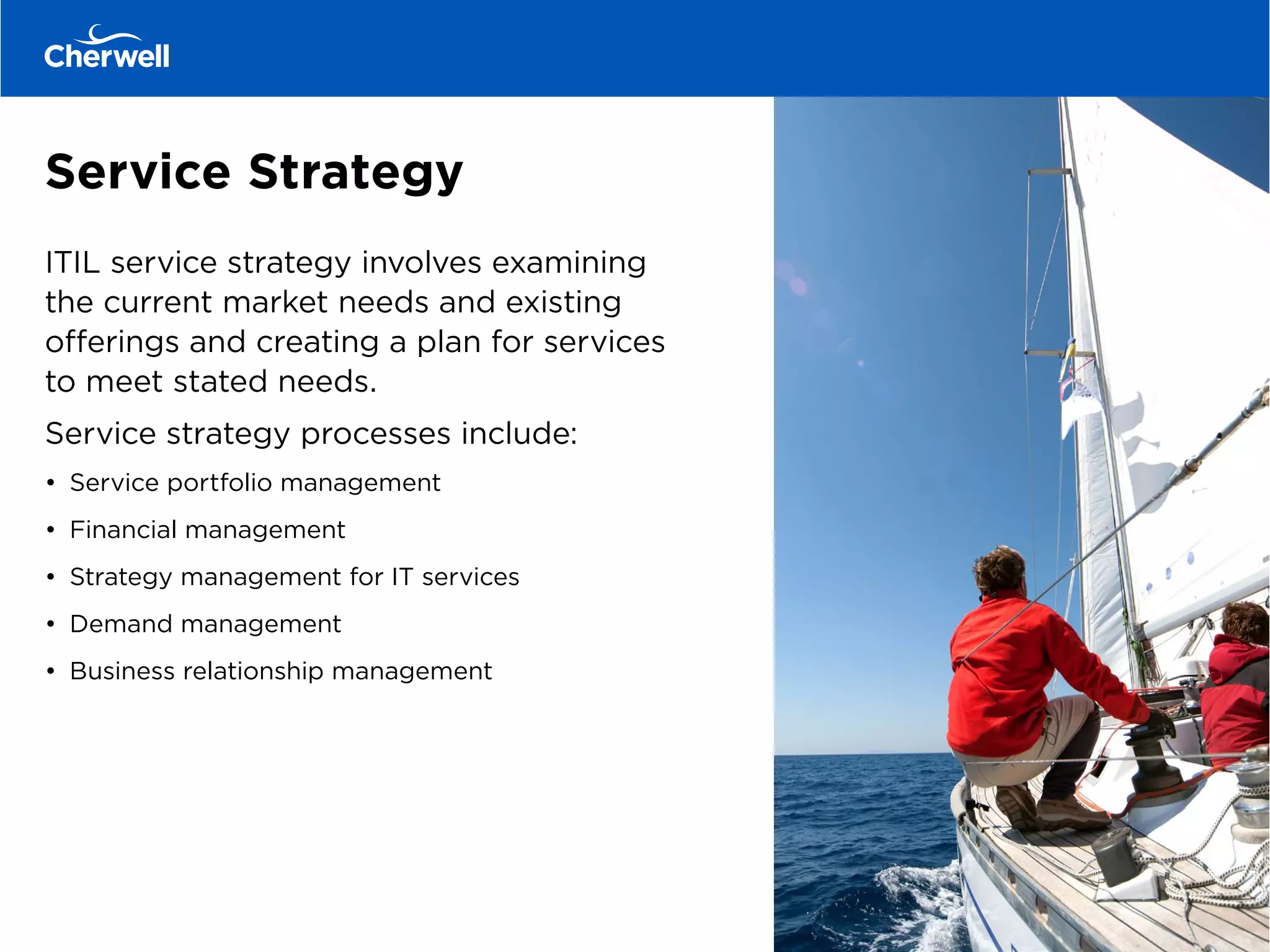
Service Strategy
ITIL service strategy involves examining
the current market needs and existing
offerings and creating a plan for services
to meet stated needs.
Service strategy processes include:
•	 Service portfolio management
•	 Financial management
•	 Strategy management for IT services
•	 Demand management
•	 Business relationship management
Service Design
Service design focuses on designing
service offerings to meet both business
and customer needs.
Service design processes include:
•	 Service level management
•	 Service catalog management
•	 Capacity management
•	 IT service continuity management
•	 Information security management
•	 Supplier management
•	 Design coordination
Service Transition
Service transition involves service implementation,
as well as managing services through transitions
or discontinuation.
Service transition processes include:
•	 Change management
•	 Change evaluation
•	 Release and deployment management
•	 Service validation and testing
•	 Service asset and configuration management
•	 Knowledge management
•	 Transition planning and support
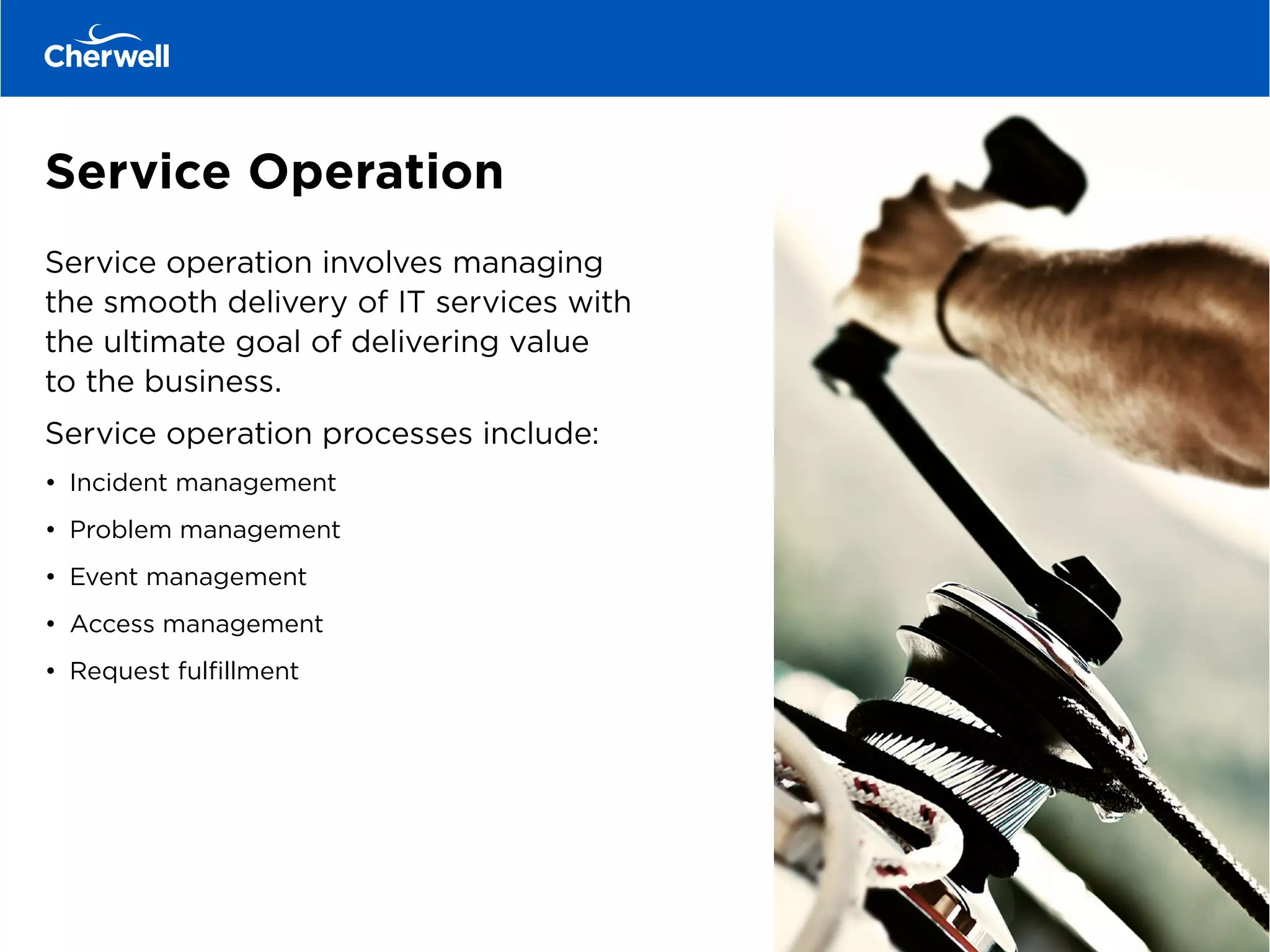
Service Operation
Service operation involves managing
the smooth delivery of IT services with
the ultimate goal of delivering value
to the business.
Service operation processes include:
•	 Incident management
•	 Problem management
•	 Event management
•	 Access management
•	 Request fulfillment
Continual Service Improvement
Continual service improvement focuses
on finding opportunities for service growth
and enhancement.
Continual service improvement (CSI)
processes include:
•	 Process evaluation
•	 Definition of CSI initiatives
•	 Monitoring CSI initiatives
Advantages of ITIL
Implementing ITIL processes
offers significant business
benefits by enabling IT teams to:
•	 Minimize service interruptions
•	 Improve customer relationships
•	 Enhance service efficiency
•	 Improve employee productivity
•	 Reduce service costs
Essential Guide
to Navigating the
ITIL Framework
Read the Full Guide >
+1 719.386.7000
Corporate Headquarters
+44 (0) 1793 544888
EMEA Headquarters
cherwell.com
Official Website
Copyright 2017 Cherwell Software Ltd., All Rights Reserved. All other product
or company names references are used for identification purposes only and
are/or may be registered trademarks of their respective owners.

Guide to the ITIL v3 Framework

  • 1.
    Essential Guide toNavigating the ITIL Framework
  • 2.
    Table of Contents ITILDefined...........................................................................3 History.....................................................................................4 Publications...........................................................................5 • Service Strategy...........................................................6 • Service Design.............................................................. 7 • Service Transition.........................................................8 • Service Operation........................................................9 • Continual Service Improvement........................... 10 Advantages...........................................................................11 More Information................................................................12
  • 3.
    ITIL Defined ITIL, orInformation Technology Infrastructure Library, is a well-known set of IT best practices designed to assist businesses in aligning their IT services with customer and business needs. Services include IT related assets, accessibility, and resources that deliver value and benefits to customers.
  • 4.
    ITIL History ITIL wasstarted by the British government during the 1980s as a set of standards for improving IT performance. The standards were adopted during subsequent years by both government and non-government entities. As the standards grew in popularity, they went through several versions (ITIL V2, ITIL V3) with the most recent version released in 2011 – ITIL 2011.
  • 5.
    Publications The current version,ITIL 2011, encompasses 5 separate publications: • Service strategy • Service design • Service transition • Service operation • Continual service improvement
  • 6.
    Service Strategy ITIL servicestrategy involves examining the current market needs and existing offerings and creating a plan for services to meet stated needs. Service strategy processes include: • Service portfolio management • Financial management • Strategy management for IT services • Demand management • Business relationship management
  • 7.
    Service Design Service designfocuses on designing service offerings to meet both business and customer needs. Service design processes include: • Service level management • Service catalog management • Capacity management • IT service continuity management • Information security management • Supplier management • Design coordination
  • 8.
    Service Transition Service transitioninvolves service implementation, as well as managing services through transitions or discontinuation. Service transition processes include: • Change management • Change evaluation • Release and deployment management • Service validation and testing • Service asset and configuration management • Knowledge management • Transition planning and support
  • 9.
    Service Operation Service operationinvolves managing the smooth delivery of IT services with the ultimate goal of delivering value to the business. Service operation processes include: • Incident management • Problem management • Event management • Access management • Request fulfillment
  • 10.
    Continual Service Improvement Continualservice improvement focuses on finding opportunities for service growth and enhancement. Continual service improvement (CSI) processes include: • Process evaluation • Definition of CSI initiatives • Monitoring CSI initiatives
  • 11.
    Advantages of ITIL ImplementingITIL processes offers significant business benefits by enabling IT teams to: • Minimize service interruptions • Improve customer relationships • Enhance service efficiency • Improve employee productivity • Reduce service costs
  • 12.
    Essential Guide to Navigatingthe ITIL Framework Read the Full Guide > +1 719.386.7000 Corporate Headquarters +44 (0) 1793 544888 EMEA Headquarters cherwell.com Official Website Copyright 2017 Cherwell Software Ltd., All Rights Reserved. All other product or company names references are used for identification purposes only and are/or may be registered trademarks of their respective owners.