
Uploaded bySophia Guevara
The Use of Social Media in an Organizational Context
The document details a social media fellowship experience within the emerging practitioners in philanthropy, highlighting effective strategies for social media engagement and community management. Key lessons include the importance of thanking followers, inviting members to join groups, and utilizing innovative tactics such as Twitter chats to foster interaction. Ultimately, the fellowship enabled personal growth in understanding social media's role in enhancing community relationships and engagement.
More Related Content


Similar to The Use of Social Media in an Organizational Context


The Use of Social Media in an Organizational Context
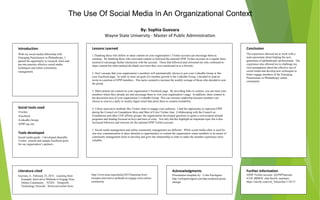
- 1. Introduction With my socialmedia fellowship with Emerging Practitioners in Philanthropy, I gained the opportunity to research, learn and put into practice effective social media techniques and online community management. Social tools used •Twitter •Facebook •LinkedIn Groups •EPIP.org site Tools developed Social media guide - I developed shareable Twitter content and sample Facebook posts for our organization’s partners. Acknowledgments Presentation template by: Colin Purrington http://colinpurrington.com/tips/academic/poste rdesign. Lessons Learned 1.Thanking those who follow or share content on your organization’s Twitter account can encourage them to continue. By thanking those who retweeted content or followed the national EPIP Twitter account on a regular basis seemed to encourage further interaction with the account. Those that followed and retweeted not only continued to share content but often marked the thank you tweet they were mentioned in as a favorite. 2. Don’t assume that your organization’s members will automatically choose to join your LinkedIn Group or like your Facebook page. In order to meet set goals for member growth in the LinkedIn Group, I decided to send an invite to a portion of EPIP members. This tactic seemed to increase the weekly average of those who decided to join the group. 3. Share posted site content on your organization’s Facebook page. By providing links to content, you can meet your members where they already are and encourage them to visit your organization’s page. In addition, share content in the discussion area of your organization’s LinkedIn Group. This can increase readership because members can choose to receive a daily or weekly digest email that alerts them to content availability. 4. Utilize innovative methods like Twitter chats to engage your audience. I had the opportunity to represent EPIP during the Council on Foundations Boys and Men of Color Twitter chat. Collaborating with the Council on Foundations and other COF affinity groups, the organizations developed questions to ignite a conversation around programs and funding focused on boys and men of color. Not only did this highlight an important topic but it also increased followers and retweets for the national EPIP Twitter account. 5. Social media management and online community management are different. While social media often is used for one-way communication to draw attention to opportunities or content the organization wants members to be aware of community management looks to develop and grow the relationship in order to make the member experience more valuable. Conclusion The experience allowed me to work with a team passionate about helping the next generation of philanthropic professionals. The experience also allowed me to challenge my own assumptions about the effective use of social media and develop new techniques to better engage members of the Emerging Practitioners in Philanthropy online community. By: Sophia Guevara Wayne State University - Master of Public Administration Further information •EPIP Twitter account: @EPIPNational •COF #BMOC chat Storify summary: https://storify.com/cof_/bmocchat-1-29-15
Editor's Notes
- #2 Copyright Colin Purrington (http://colinpurrington.com/tips/academic/posterdesign).