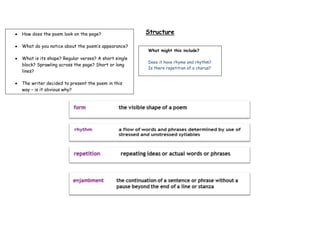
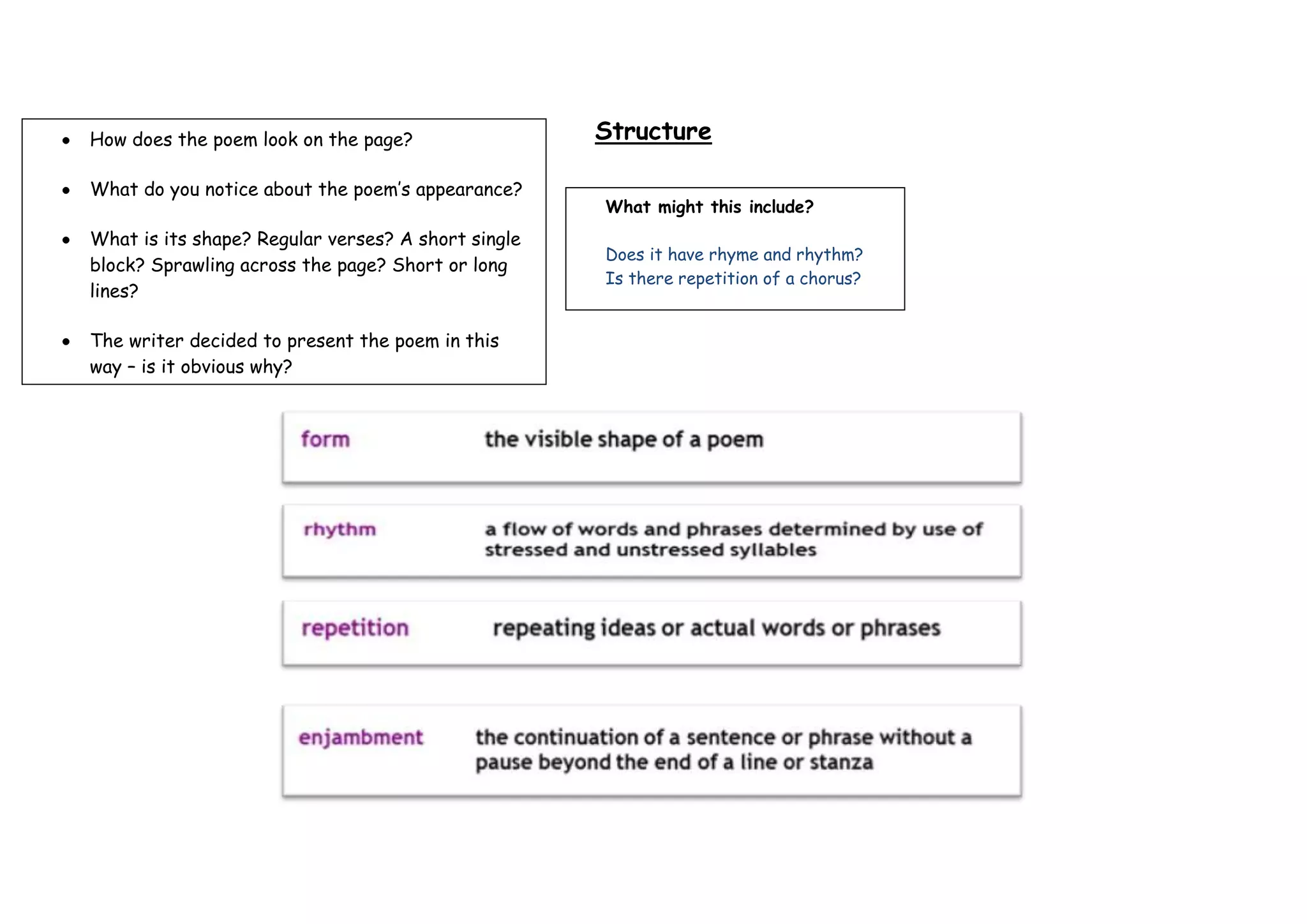
How does the poem look on the page?
What do you notice about the poem’s appearance?
What is its shape? Regular verses? A short single
block? Sprawling across the page? Short or long
lines?
The writer decided to present the poem in this
way – is it obvious why?

Structure
What might this include?
Does it have rhyme and rhythm?
Is there repetition of a chorus?
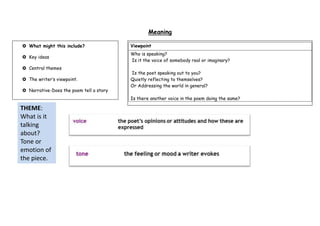
Meaning
 What might this include?

Viewpoint

 Key ideas

Who is speaking?
Is it the voice of somebody real or imaginary?

 Central themes
 The writer’s viewpoint.
 Narrative-Does the poem tell a story

Is the poet speaking out to you?
Quietly reflecting to themselves?
Or Addressing the world in general?
Is there another voice in the poem doing the same?

THEME:
What is it
talking
about?
Tone or
emotion of
the piece.
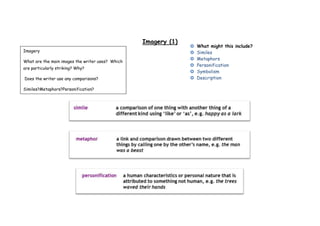
Imagery (1)
Imagery
What are the main images the writer uses? Which
are particularly striking? Why?
Does the writer use any comparisons?
Similes?Metaphors?Personification?








What might this include?
Similes
Metaphors
Personification
Symbolism
Description
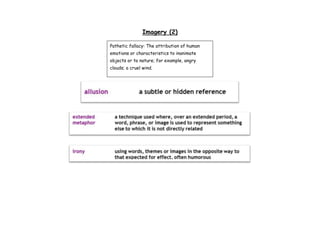
Imagery (2)
Pathetic fallacy: The attribution of human
emotions or characteristics to inanimate
objects or to nature; for example, angry
clouds; a cruel wind.
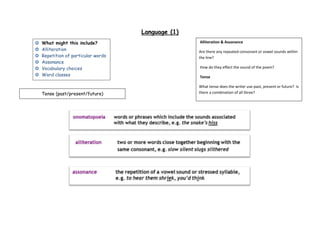
Language (1)







What might this include?
Alliteration
Repetition of particular words
Assonance
Vocabulary choices
Word classes

Tense (past/present/future)

Alliteration & Assonance
Are there any repeated consonant or vowel sounds within
the line?
How do they effect the sound of the poem?
Tense
What tense does the writer use-past, present or future? Is
there a combination of all three?
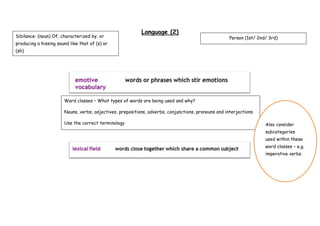
Sibilance: (noun) Of, characterized by, or

Language (2)

producing a hissing sound like that of (s) or

Person (1st/ 2nd/ 3rd)

(sh)

Word classes – What types of words are being used and why?
Nouns, verbs, adjectives, prepositions, adverbs, conjunctions, pronouns and interjections.
Use the correct terminology

Also consider
subcategories
used within these
word classes – e.g.
imperative verbs.
What might this include?
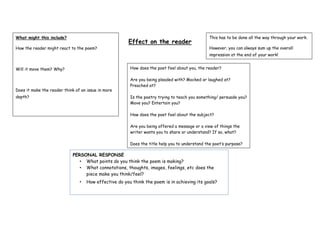
How the reader might react to the poem?

Effect on the reader

This has to be done all the way through your work.
However, you can always sum up the overall
impression at the end of your work!

How does the poet feel about you, the reader?

Will it move them? Why?

Does it make the reader think of an issue in more
depth?

Are you being pleaded with? Mocked or laughed at?
Preached at?
Is the poetry trying to teach you something/ persuade you?
Move you? Entertain you?
How does the poet feel about the subject?
Are you being offered a message or a view of things the
writer wants you to share or understand? If so, what?
Does the title help you to understand the poet’s purpose?

PERSONAL RESPONSE
• What points do you think the poem is making?
• What connotations, thoughts, images, feelings, etc does the
piece make you think/feel?
•

How effective do you think the poem is in achieving its goals?

Information sheets for introduction to poetry

  • 1.
    How does thepoem look on the page? What do you notice about the poem’s appearance? What is its shape? Regular verses? A short single block? Sprawling across the page? Short or long lines? The writer decided to present the poem in this way – is it obvious why? Structure What might this include? Does it have rhyme and rhythm? Is there repetition of a chorus?
  • 2.
    Meaning  What mightthis include? Viewpoint  Key ideas Who is speaking? Is it the voice of somebody real or imaginary?  Central themes  The writer’s viewpoint.  Narrative-Does the poem tell a story Is the poet speaking out to you? Quietly reflecting to themselves? Or Addressing the world in general? Is there another voice in the poem doing the same? THEME: What is it talking about? Tone or emotion of the piece.
  • 3.
    Imagery (1) Imagery What arethe main images the writer uses? Which are particularly striking? Why? Does the writer use any comparisons? Similes?Metaphors?Personification?       What might this include? Similes Metaphors Personification Symbolism Description
  • 4.
    Imagery (2) Pathetic fallacy:The attribution of human emotions or characteristics to inanimate objects or to nature; for example, angry clouds; a cruel wind.
  • 5.
    Language (1)       What mightthis include? Alliteration Repetition of particular words Assonance Vocabulary choices Word classes Tense (past/present/future) Alliteration & Assonance Are there any repeated consonant or vowel sounds within the line? How do they effect the sound of the poem? Tense What tense does the writer use-past, present or future? Is there a combination of all three?
  • 6.
    Sibilance: (noun) Of,characterized by, or Language (2) producing a hissing sound like that of (s) or Person (1st/ 2nd/ 3rd) (sh) Word classes – What types of words are being used and why? Nouns, verbs, adjectives, prepositions, adverbs, conjunctions, pronouns and interjections. Use the correct terminology Also consider subcategories used within these word classes – e.g. imperative verbs.
  • 7.
    What might thisinclude? How the reader might react to the poem? Effect on the reader This has to be done all the way through your work. However, you can always sum up the overall impression at the end of your work! How does the poet feel about you, the reader? Will it move them? Why? Does it make the reader think of an issue in more depth? Are you being pleaded with? Mocked or laughed at? Preached at? Is the poetry trying to teach you something/ persuade you? Move you? Entertain you? How does the poet feel about the subject? Are you being offered a message or a view of things the writer wants you to share or understand? If so, what? Does the title help you to understand the poet’s purpose? PERSONAL RESPONSE • What points do you think the poem is making? • What connotations, thoughts, images, feelings, etc does the piece make you think/feel? • How effective do you think the poem is in achieving its goals?