CREATIVE WRITING/ MALIKHAING PAGSULAT
QUARTER 1 – MODULE 2: READING AND
WRITING POETRY
PRESENTED BY: CHARELLE HONEY T. DUMYA-AS
Lesson 1: Elements of the genre
a. Essential elements
b. Elements for specific forms
c. Other experimental texts
d.Tone
Lesson 2: Techniques and literary devices
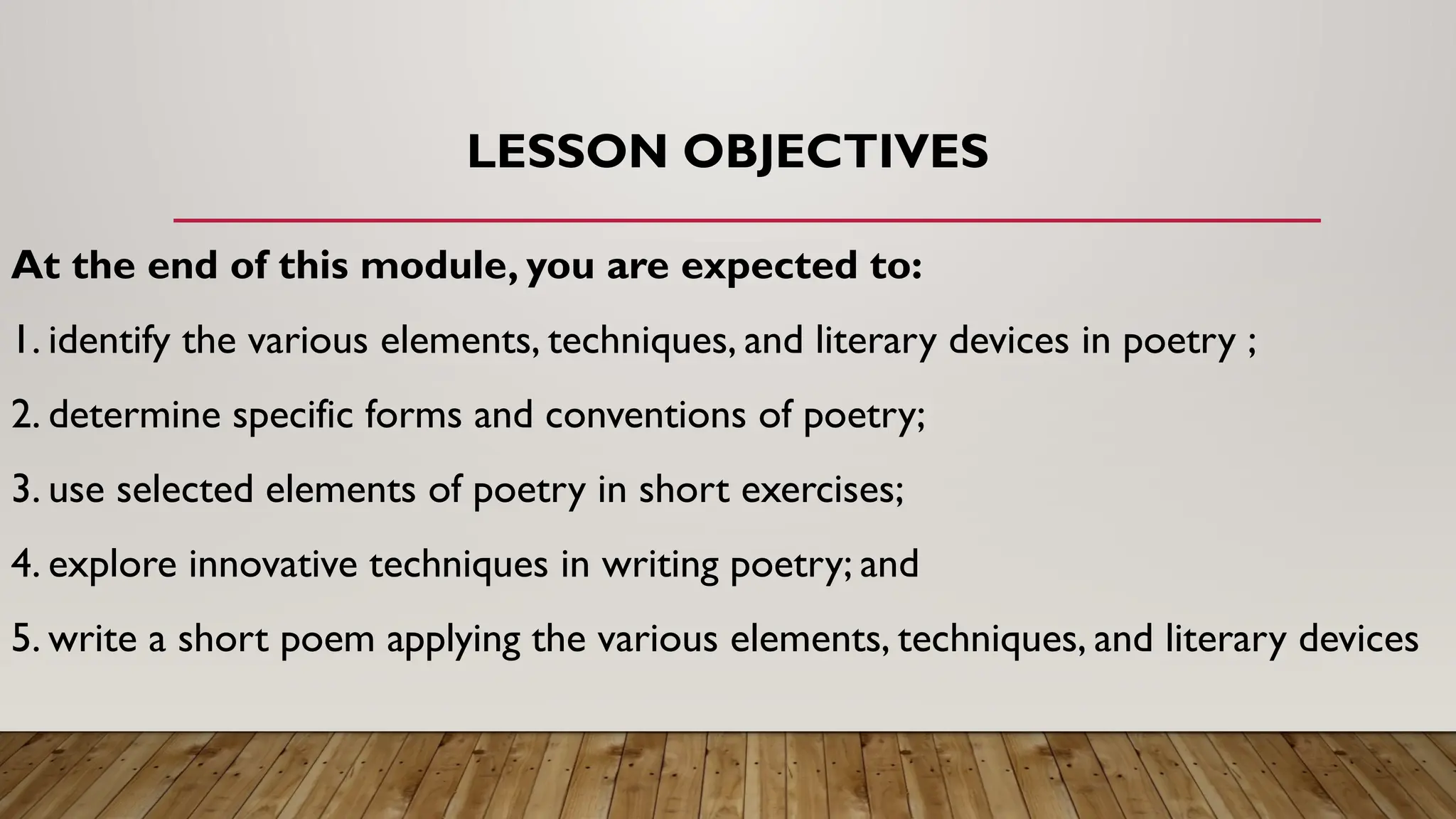
LESSON OBJECTIVES
At the end of this module, you are expected to:
1. identify the various elements, techniques, and literary devices in poetry ;
2. determine specific forms and conventions of poetry;
3. use selected elements of poetry in short exercises;
4. explore innovative techniques in writing poetry; and
5. write a short poem applying the various elements, techniques, and literary devices
LESSON 1. ELEMENTS OFTHE GENRE
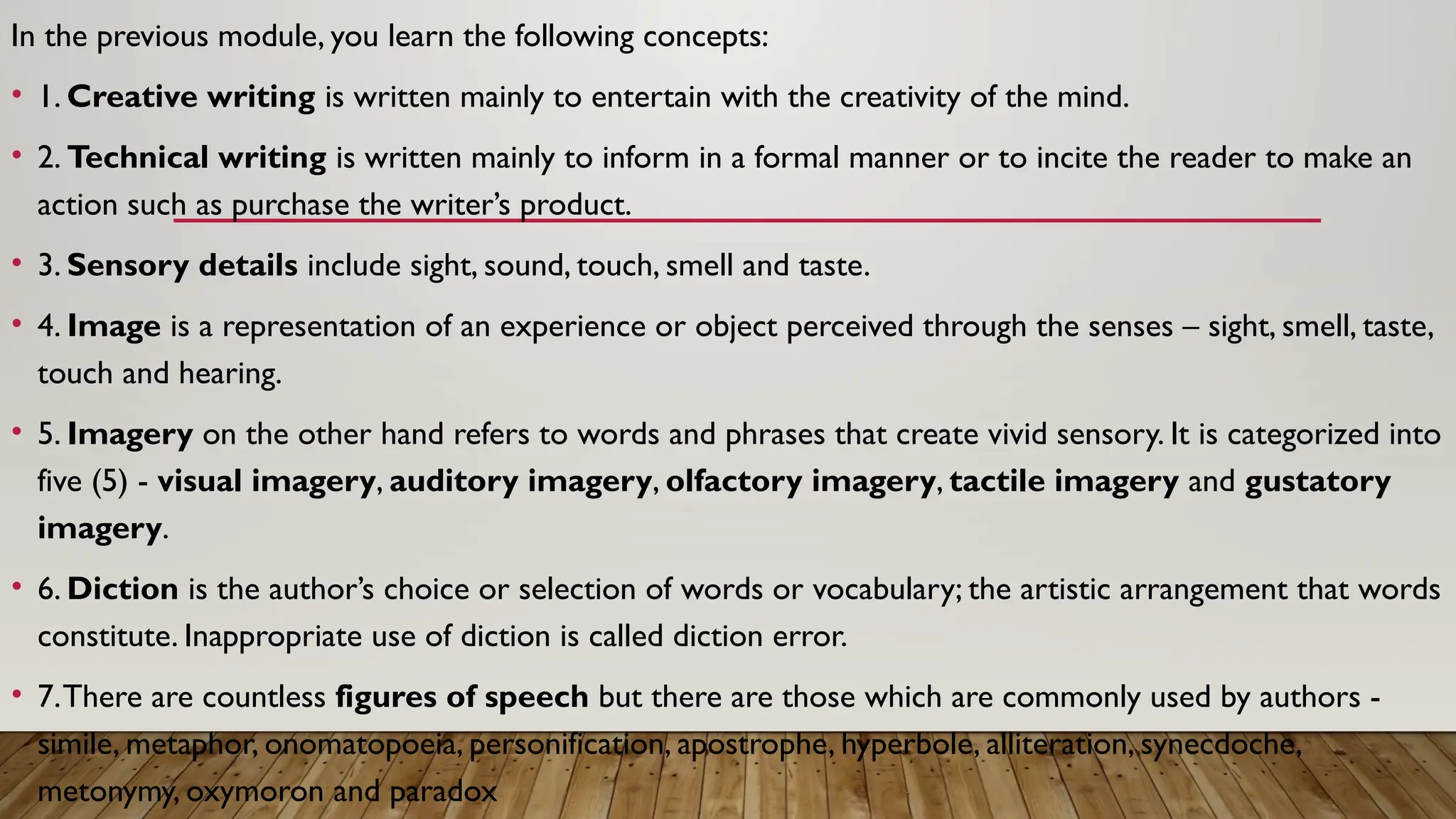
In the previous module, you learn the following concepts:
• 1. Creative writing is written mainly to entertain with the creativity of the mind.
• 2. Technical writing is written mainly to inform in a formal manner or to incite the reader to make an
action such as purchase the writer’s product.
• 3. Sensory details include sight, sound, touch, smell and taste.
• 4. Image is a representation of an experience or object perceived through the senses – sight, smell, taste,
touch and hearing.
• 5. Imagery on the other hand refers to words and phrases that create vivid sensory. It is categorized into
five (5) - visual imagery, auditory imagery, olfactory imagery, tactile imagery and gustatory
imagery.
• 6. Diction is the author’s choice or selection of words or vocabulary; the artistic arrangement that words
constitute. Inappropriate use of diction is called diction error.
• 7.There are countless figures of speech but there are those which are commonly used by authors -
simile, metaphor, onomatopoeia, personification, apostrophe, hyperbole, alliteration, synecdoche,
metonymy, oxymoron and paradox
READING AND WRITING POETRY
• For most of us, we love poetry because it is a unique kind of language that
expresses our ideas, feelings and emotions in a meaningful way; not only using
words but also sounds, gestures, signs and symbols.
• Through poetry, we can relate our human experiences and observations about
life and the universe around us. While a 4 song has lyrics and is musically
composed to move us emotionally, a poem is written in verses that attempt to
enhance our understanding of the world we live.
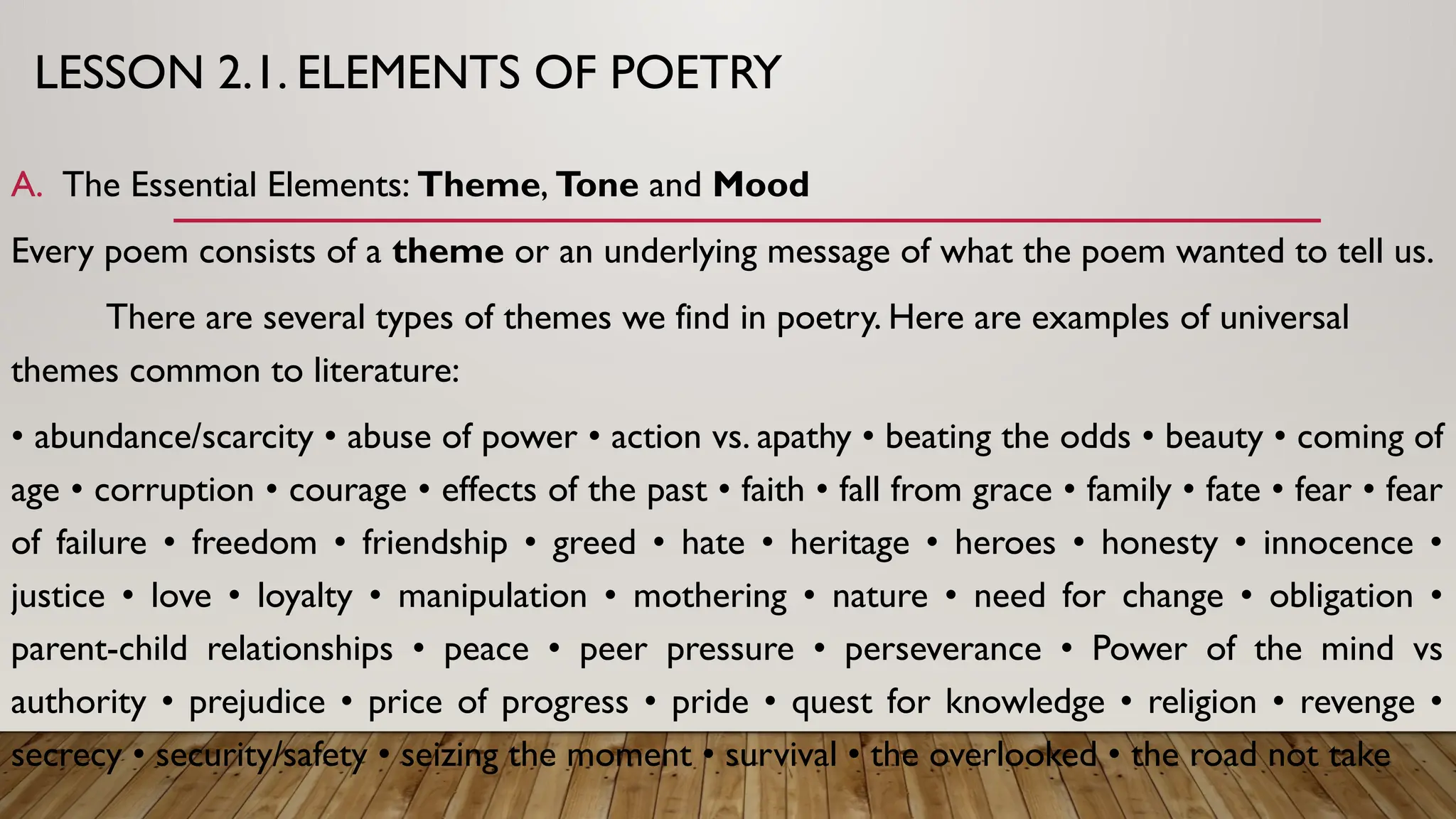
LESSON 2.1. ELEMENTS OF POETRY
A. The Essential Elements: Theme, Tone and Mood
Every poem consists of a theme or an underlying message of what the poem wanted to tell us.
There are several types of themes we find in poetry. Here are examples of universal
themes common to literature:
• abundance/scarcity • abuse of power • action vs. apathy • beating the odds • beauty • coming of
age • corruption • courage • effects of the past • faith • fall from grace • family • fate • fear • fear
of failure • freedom • friendship • greed • hate • heritage • heroes • honesty • innocence •
justice • love • loyalty • manipulation • mothering • nature • need for change • obligation •
parent-child relationships • peace • peer pressure • perseverance • Power of the mind vs
authority • prejudice • price of progress • pride • quest for knowledge • religion • revenge •
secrecy • security/safety • seizing the moment • survival • the overlooked • the road not take
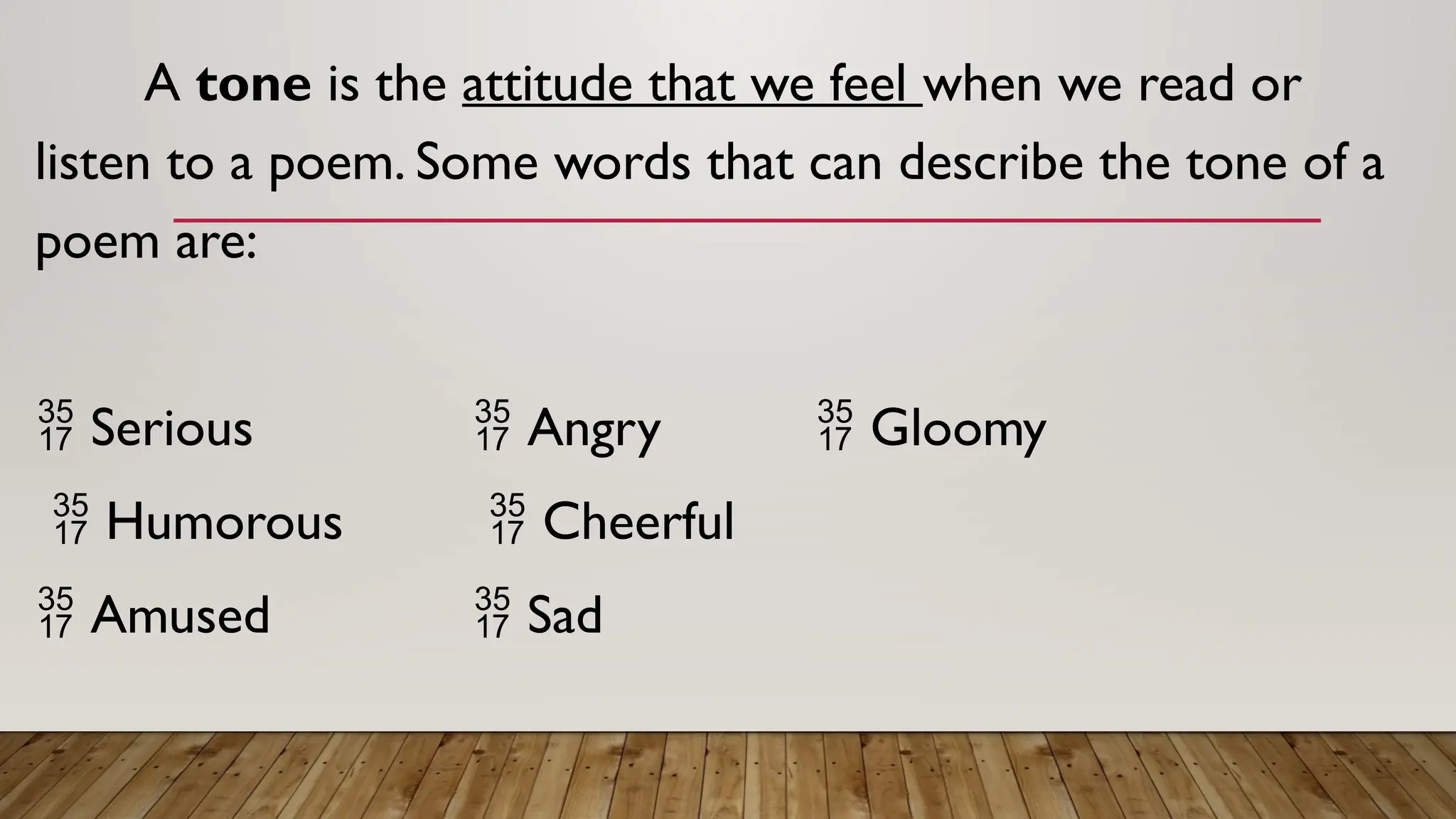
A tone is the attitude that we feel when we read or
listen to a poem. Some words that can describe the tone of a
poem are:
 Serious Angry
 Gloomy

 Humorous Cheerful

 Amused Sad

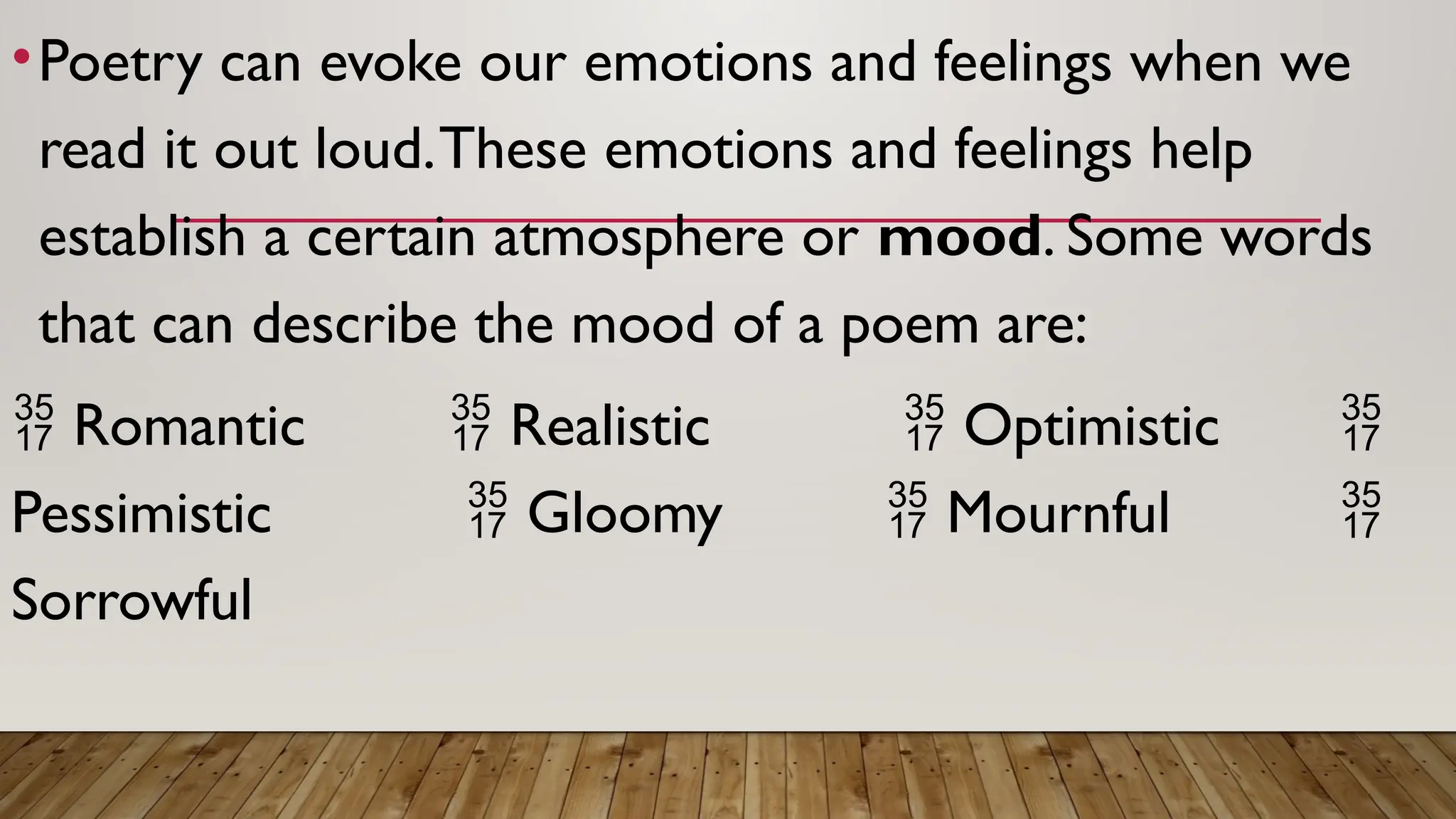
•Poetry can evoke our emotions and feelings when we
read it out loud.These emotions and feelings help
establish a certain atmosphere or mood. Some words
that can describe the mood of a poem are:
 Romantic Realistic
 Optimistic
 
Pessimistic Gloomy
 Mournful
 
Sorrowful

CREATIVE WRITNG- Elements of Poetry.pptx

  • 1.
    CREATIVE WRITING/ MALIKHAINGPAGSULAT QUARTER 1 – MODULE 2: READING AND WRITING POETRY PRESENTED BY: CHARELLE HONEY T. DUMYA-AS
  • 2.
    Lesson 1: Elementsof the genre a. Essential elements b. Elements for specific forms c. Other experimental texts d.Tone Lesson 2: Techniques and literary devices
  • 3.
    LESSON OBJECTIVES At theend of this module, you are expected to: 1. identify the various elements, techniques, and literary devices in poetry ; 2. determine specific forms and conventions of poetry; 3. use selected elements of poetry in short exercises; 4. explore innovative techniques in writing poetry; and 5. write a short poem applying the various elements, techniques, and literary devices
  • 4.
    LESSON 1. ELEMENTSOFTHE GENRE
  • 5.
    In the previousmodule, you learn the following concepts: • 1. Creative writing is written mainly to entertain with the creativity of the mind. • 2. Technical writing is written mainly to inform in a formal manner or to incite the reader to make an action such as purchase the writer’s product. • 3. Sensory details include sight, sound, touch, smell and taste. • 4. Image is a representation of an experience or object perceived through the senses – sight, smell, taste, touch and hearing. • 5. Imagery on the other hand refers to words and phrases that create vivid sensory. It is categorized into five (5) - visual imagery, auditory imagery, olfactory imagery, tactile imagery and gustatory imagery. • 6. Diction is the author’s choice or selection of words or vocabulary; the artistic arrangement that words constitute. Inappropriate use of diction is called diction error. • 7.There are countless figures of speech but there are those which are commonly used by authors - simile, metaphor, onomatopoeia, personification, apostrophe, hyperbole, alliteration, synecdoche, metonymy, oxymoron and paradox
  • 6.
    READING AND WRITINGPOETRY • For most of us, we love poetry because it is a unique kind of language that expresses our ideas, feelings and emotions in a meaningful way; not only using words but also sounds, gestures, signs and symbols. • Through poetry, we can relate our human experiences and observations about life and the universe around us. While a 4 song has lyrics and is musically composed to move us emotionally, a poem is written in verses that attempt to enhance our understanding of the world we live.
  • 7.
    LESSON 2.1. ELEMENTSOF POETRY A. The Essential Elements: Theme, Tone and Mood Every poem consists of a theme or an underlying message of what the poem wanted to tell us. There are several types of themes we find in poetry. Here are examples of universal themes common to literature: • abundance/scarcity • abuse of power • action vs. apathy • beating the odds • beauty • coming of age • corruption • courage • effects of the past • faith • fall from grace • family • fate • fear • fear of failure • freedom • friendship • greed • hate • heritage • heroes • honesty • innocence • justice • love • loyalty • manipulation • mothering • nature • need for change • obligation • parent-child relationships • peace • peer pressure • perseverance • Power of the mind vs authority • prejudice • price of progress • pride • quest for knowledge • religion • revenge • secrecy • security/safety • seizing the moment • survival • the overlooked • the road not take
  • 8.
    A tone isthe attitude that we feel when we read or listen to a poem. Some words that can describe the tone of a poem are:  Serious Angry  Gloomy   Humorous Cheerful   Amused Sad 
  • 9.
    •Poetry can evokeour emotions and feelings when we read it out loud.These emotions and feelings help establish a certain atmosphere or mood. Some words that can describe the mood of a poem are:  Romantic Realistic  Optimistic   Pessimistic Gloomy  Mournful   Sorrowful