GROUP DEVELOPMENTGROUP DEVELOPMENT
IT IS A STAGE OF DEVELOPMENT HOW
MEMBERS INFLUENCE AND LEARN TO
WORK TOGETHER. IT IS OFTEN CALLED AS A
TEAM BUILDING OR TEAM DEVELOPMENT.
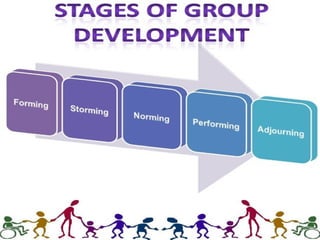
Stage 1: FORMING
• AT THIS STAGE FORMATION OF NEW
GROUP BEGINS.
• MEMBERS COME TOGETHER AND GET
TO KNOW EACH OTHER THROUGH
INTERACTION.
• GROUP MEMBERS LOOK TO THE
LEADER FOR DIRECTION.
•HERE THE INDIVIDUAL ARE EXCITED
AND ANXIOUS TO KNOW ABOUT THE
SCOPE OF TASK.
Stage 2: Storming
• ONCE THE FORMING STAGE IS OVER ,THE
INDIVIDUAL WILL START INTERACTING WITH
EACH OTHER IN THE CONTEXT OF THE TASK
TO BE ACHIVED.
• THE CONFLICT AND COMPETITION AMONG
THE GROUP MEMBERS WILL BE HIGHEST AT
THIS STAGE.
• QUESTIONS ARISE ABOUT WHO IS
RESPONSIBLE FOR WHAT AND WHAT THE
RULES ARE.
• SOME MEMBERS MAY REMAIN SILENT WHILE
OTHERS ATTEMPT TO DOMINATE.
• SOME MEMBERS QUESTION AUTHORITY AND
COMPETENCY OF THE GROUP LEADER
• THE GROUP LEADER HAS TO RAISE THE
CONFLICT ISSUE AND DEAL WITH IT.
Stage 3: Norming
• CONFLICTS ARE RESOLVED AND THERE IS A
STRONGER SENSE OF BELONGING TO THE
GROUP.
• CREATIVITY IS HIGH.
• PEOPLE KNOW WHERE THEY FIT IN AND
WHAT IS EXPECTED OF THEM.
STAGE 4 PERFORMING
• At this stage, synergy gets created between
the team members, where everyone works
towards the accomplishment of a goal. This
stage is characterized by flexibility and
interdependence. The team members know
each other so well that they can handle any
complex problem that comes before the
team.Also, the roles and responsibilities of
member changes according to the situation
frequently, because at this stage everyone is
equally a task-oriented and people-oriented
and thus can perform efficiently..
Stage 5:Adjourning
• It is the last stage of group development. The
leader can facilitate positive closure at this
stage by recognising and rewarding group
performance

Group development

  • 1.
    GROUP DEVELOPMENTGROUP DEVELOPMENT ITIS A STAGE OF DEVELOPMENT HOW MEMBERS INFLUENCE AND LEARN TO WORK TOGETHER. IT IS OFTEN CALLED AS A TEAM BUILDING OR TEAM DEVELOPMENT.
  • 3.
    Stage 1: FORMING •AT THIS STAGE FORMATION OF NEW GROUP BEGINS. • MEMBERS COME TOGETHER AND GET TO KNOW EACH OTHER THROUGH INTERACTION. • GROUP MEMBERS LOOK TO THE LEADER FOR DIRECTION. •HERE THE INDIVIDUAL ARE EXCITED AND ANXIOUS TO KNOW ABOUT THE SCOPE OF TASK.
  • 4.
    Stage 2: Storming •ONCE THE FORMING STAGE IS OVER ,THE INDIVIDUAL WILL START INTERACTING WITH EACH OTHER IN THE CONTEXT OF THE TASK TO BE ACHIVED. • THE CONFLICT AND COMPETITION AMONG THE GROUP MEMBERS WILL BE HIGHEST AT THIS STAGE. • QUESTIONS ARISE ABOUT WHO IS RESPONSIBLE FOR WHAT AND WHAT THE RULES ARE.
  • 5.
    • SOME MEMBERSMAY REMAIN SILENT WHILE OTHERS ATTEMPT TO DOMINATE. • SOME MEMBERS QUESTION AUTHORITY AND COMPETENCY OF THE GROUP LEADER • THE GROUP LEADER HAS TO RAISE THE CONFLICT ISSUE AND DEAL WITH IT.
  • 6.
    Stage 3: Norming •CONFLICTS ARE RESOLVED AND THERE IS A STRONGER SENSE OF BELONGING TO THE GROUP. • CREATIVITY IS HIGH. • PEOPLE KNOW WHERE THEY FIT IN AND WHAT IS EXPECTED OF THEM.
  • 7.
    STAGE 4 PERFORMING •At this stage, synergy gets created between the team members, where everyone works towards the accomplishment of a goal. This stage is characterized by flexibility and interdependence. The team members know each other so well that they can handle any complex problem that comes before the team.Also, the roles and responsibilities of member changes according to the situation frequently, because at this stage everyone is equally a task-oriented and people-oriented and thus can perform efficiently..
  • 8.
    Stage 5:Adjourning • Itis the last stage of group development. The leader can facilitate positive closure at this stage by recognising and rewarding group performance