PERFORMANCE APPRAISAL
TOOLS/METHODS OF PERFORMANCE APPRAISAL
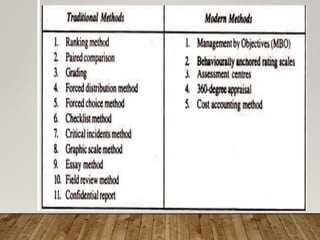
RANKING METHOD
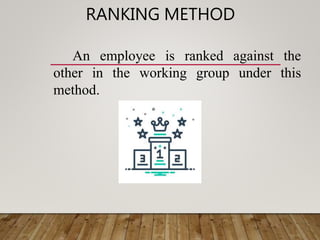
An employee is ranked against the
other in the working group under this
method.
• Each employee be compared
with the other person.
• Useful in small
organization.
• Can not be used for big
organization.
• Does not evaluate the
individuality of an
employee.
• It lags objectivity
PAIRED COMPARISON METHOD
Paired comparison method has been
developed to be used in a big organization.
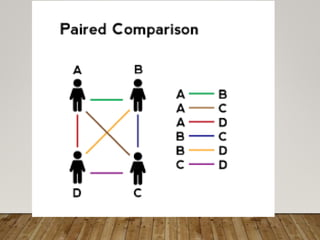
Each employee is compared with other
employees taking only one at a time. The
evaluator compares two employees and
puts a tick mark against an employee
whom he considers a better employee.
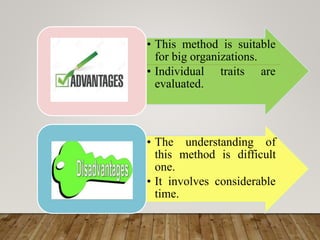
• This method is suitable
for big organizations.
• Individual traits are
evaluated.
• The understanding of
this method is difficult
one.
• It involves considerable
time.
FORCED DISTRIBUTION
METHOD
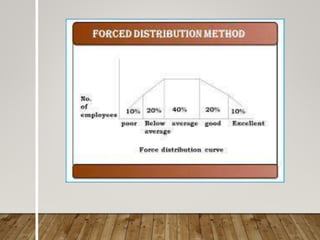
A method which forces the rater to distribute
the ratings of the overall performance of an
employee is known as forced distribution
method.
Group wise rating is done under this method.
This method is suitable to large organizations,
but the individual traits could not be appraised
under this method.
Example: a group of workers doing the same
job would fall into the same group as superior, at
and above average, below average and poor.
GRADING
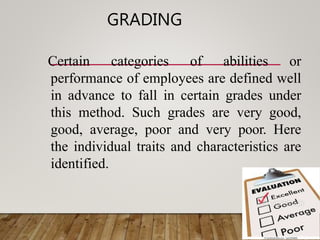
Certain categories of abilities or
performance of employees are defined well
in advance to fall in certain grades under
this method. Such grades are very good,
good, average, poor and very poor. Here
the individual traits and characteristics are
identified.
CHECKLIST
The appraisal of the ability of an employee
through getting answers for a number of
questions is called the method of check list.
These questions are related to the behavior
of an employee.
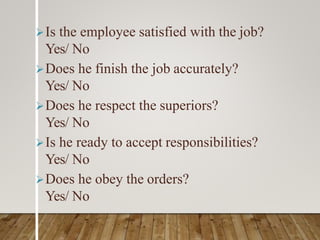
Is the employee satisfied with the job?
Yes/ No
Does he finish the job accurately?
Yes/ No
Does he respect the superiors?
Yes/ No
Is he ready to accept responsibilities?
Yes/ No
Does he obey the orders?
Yes/ No
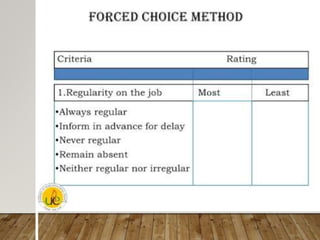
FORCED CHOICE METHOD
A series of groups of statements are
prepared positively or negatively under
this method, both these statements describe
the characteristics of an employee, but the
rater is forced to tick any one of the
statements either out of positive statements
or out of negative statements.
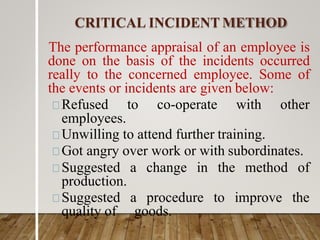
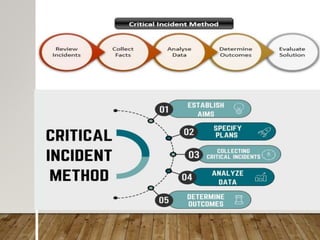
CRITICAL INCIDENT METHOD
The performance appraisal of an employee is
done on the basis of the incidents occurred
really to the concerned employee. Some of
the events or incidents are given below:
Refused to co-operate with other
employees.
Unwilling to attend further training.
Got angry over work or with subordinates.
Suggested a change in the method of
production.
Suggested a procedure to improve the
quality of goods.
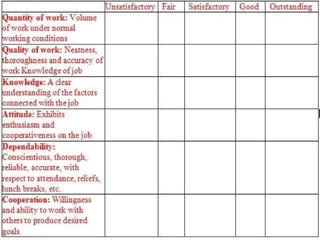
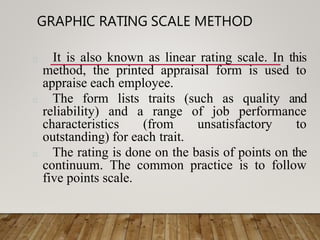
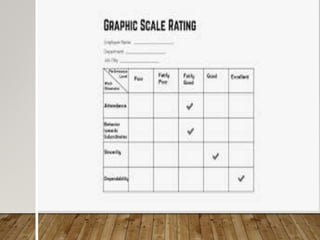
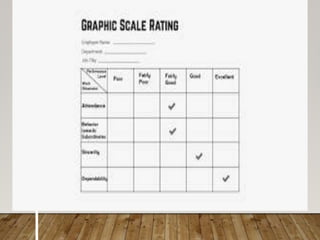
GRAPHIC RATING SCALE METHOD
It is also known as linear rating scale. In this
method, the printed appraisal form is used to
appraise each employee.
The form lists traits (such as quality and
reliability) and a range of job performance
characteristics (from unsatisfactory to
outstanding) for each trait.
The rating is done on the basis of points on the
continuum. The common practice is to follow
five points scale.
FIELD REVIEW METHOD
An employee’s performance is appraised
through an interview between the rater and the
immediate superior or superior of a concerned
employee.
The rater asks the superiors questions about
the performance of an employee; the personnel
department prepares a detail report on the basis
of this collected information.
A copy of this report is placed in the
personnel file of the concerned employee after
getting approval from the superior.
ESSAY EVALUATION
• The appraiser prepares a written statement about the
employee being appraised. The statement usually
concentrates on describing specific strengths and
weaknesses in job performance. It also suggests courses
of action to remedy the identified problem areas..
PEER REVIEW
The employee selects peers to conduct
the evaluation. Usually two to four
peers are identified through a pre
determined process.
The employee submits self evaluation
port folio. The port folio might
describe how he or she met objectives
and/or pre-determined standards during
the past evaluation cycle. Supporting
materials are included.
THE PEER EVALUATES THE
EMPLOYEE. THIS MAY BE DONE
INDIVIDUALLY OR IN A GROUP.
MANAGER AND EMPLOYEE MEET
TO DISCUSS THE EVALUATION.

Performance appraisal tools & methods

  • 1.
  • 2.
  • 4.
    RANKING METHOD An employeeis ranked against the other in the working group under this method.
  • 5.
    • Each employeebe compared with the other person. • Useful in small organization. • Can not be used for big organization. • Does not evaluate the individuality of an employee. • It lags objectivity
  • 6.
    PAIRED COMPARISON METHOD Pairedcomparison method has been developed to be used in a big organization. Each employee is compared with other employees taking only one at a time. The evaluator compares two employees and puts a tick mark against an employee whom he considers a better employee.
  • 8.
    • This methodis suitable for big organizations. • Individual traits are evaluated. • The understanding of this method is difficult one. • It involves considerable time.
  • 9.
    FORCED DISTRIBUTION METHOD A methodwhich forces the rater to distribute the ratings of the overall performance of an employee is known as forced distribution method. Group wise rating is done under this method. This method is suitable to large organizations, but the individual traits could not be appraised under this method. Example: a group of workers doing the same job would fall into the same group as superior, at and above average, below average and poor.
  • 11.
    GRADING Certain categories ofabilities or performance of employees are defined well in advance to fall in certain grades under this method. Such grades are very good, good, average, poor and very poor. Here the individual traits and characteristics are identified.
  • 13.
    CHECKLIST The appraisal ofthe ability of an employee through getting answers for a number of questions is called the method of check list. These questions are related to the behavior of an employee.
  • 14.
    Is the employeesatisfied with the job? Yes/ No Does he finish the job accurately? Yes/ No Does he respect the superiors? Yes/ No Is he ready to accept responsibilities? Yes/ No Does he obey the orders? Yes/ No
  • 15.
    FORCED CHOICE METHOD Aseries of groups of statements are prepared positively or negatively under this method, both these statements describe the characteristics of an employee, but the rater is forced to tick any one of the statements either out of positive statements or out of negative statements.
  • 17.
    CRITICAL INCIDENT METHOD Theperformance appraisal of an employee is done on the basis of the incidents occurred really to the concerned employee. Some of the events or incidents are given below: Refused to co-operate with other employees. Unwilling to attend further training. Got angry over work or with subordinates. Suggested a change in the method of production. Suggested a procedure to improve the quality of goods.
  • 19.
    GRAPHIC RATING SCALEMETHOD It is also known as linear rating scale. In this method, the printed appraisal form is used to appraise each employee. The form lists traits (such as quality and reliability) and a range of job performance characteristics (from unsatisfactory to outstanding) for each trait. The rating is done on the basis of points on the continuum. The common practice is to follow five points scale.
  • 22.
    FIELD REVIEW METHOD Anemployee’s performance is appraised through an interview between the rater and the immediate superior or superior of a concerned employee. The rater asks the superiors questions about the performance of an employee; the personnel department prepares a detail report on the basis of this collected information. A copy of this report is placed in the personnel file of the concerned employee after getting approval from the superior.
  • 23.
    ESSAY EVALUATION • Theappraiser prepares a written statement about the employee being appraised. The statement usually concentrates on describing specific strengths and weaknesses in job performance. It also suggests courses of action to remedy the identified problem areas..
  • 24.
    PEER REVIEW The employeeselects peers to conduct the evaluation. Usually two to four peers are identified through a pre determined process. The employee submits self evaluation port folio. The port folio might describe how he or she met objectives and/or pre-determined standards during the past evaluation cycle. Supporting materials are included.
  • 25.
    THE PEER EVALUATESTHE EMPLOYEE. THIS MAY BE DONE INDIVIDUALLY OR IN A GROUP. MANAGER AND EMPLOYEE MEET TO DISCUSS THE EVALUATION.