WHAT’S A MULTIPLE?
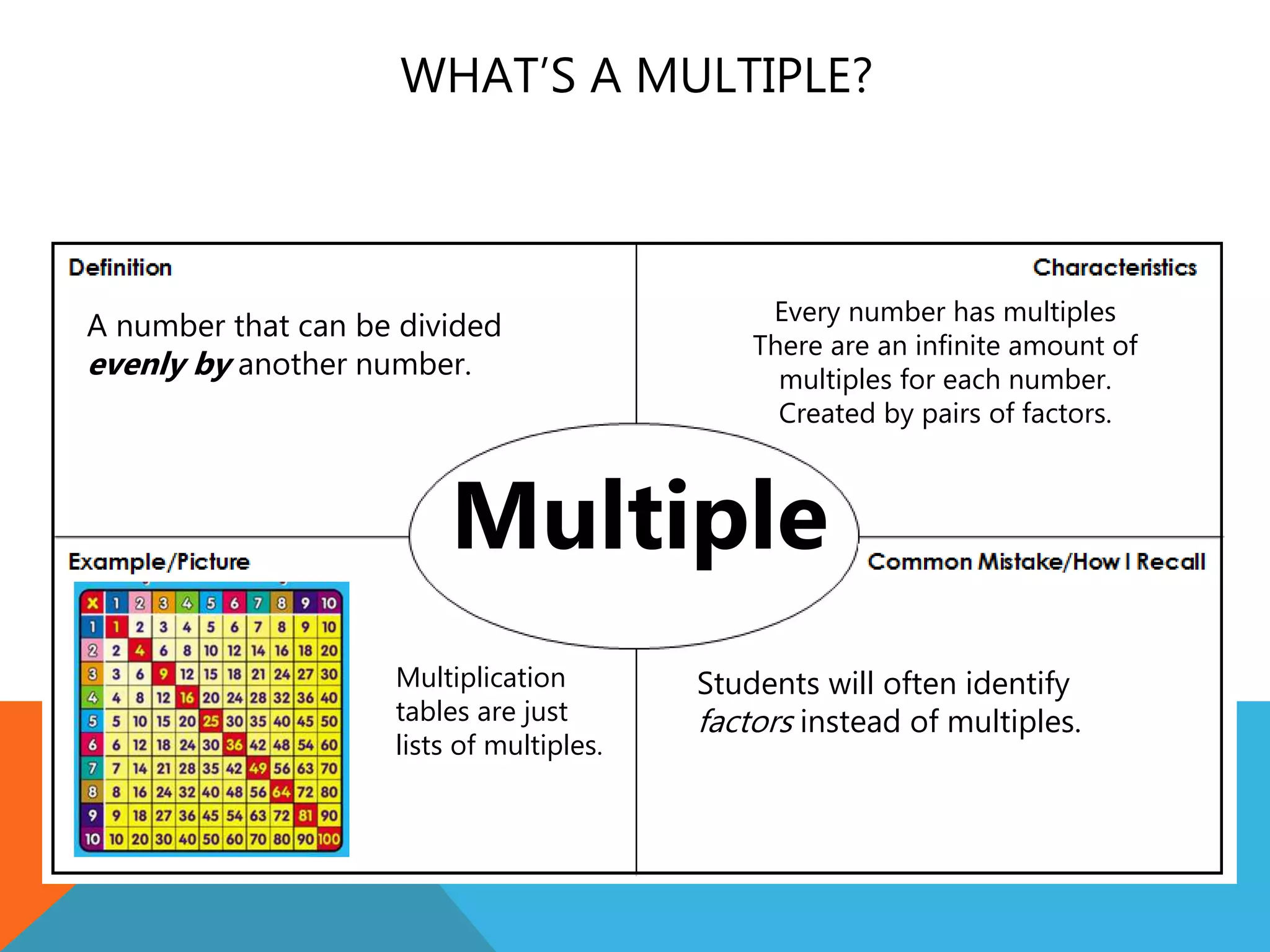
A number that can be divided
evenly by another number.
Students will often identify
factors instead of multiples.
Every number has multiples
There are an infinite amount of
multiples for each number.
Created by pairs of factors.
Multiple
Multiplication
tables are just
lists of multiples.
EXAMPLES
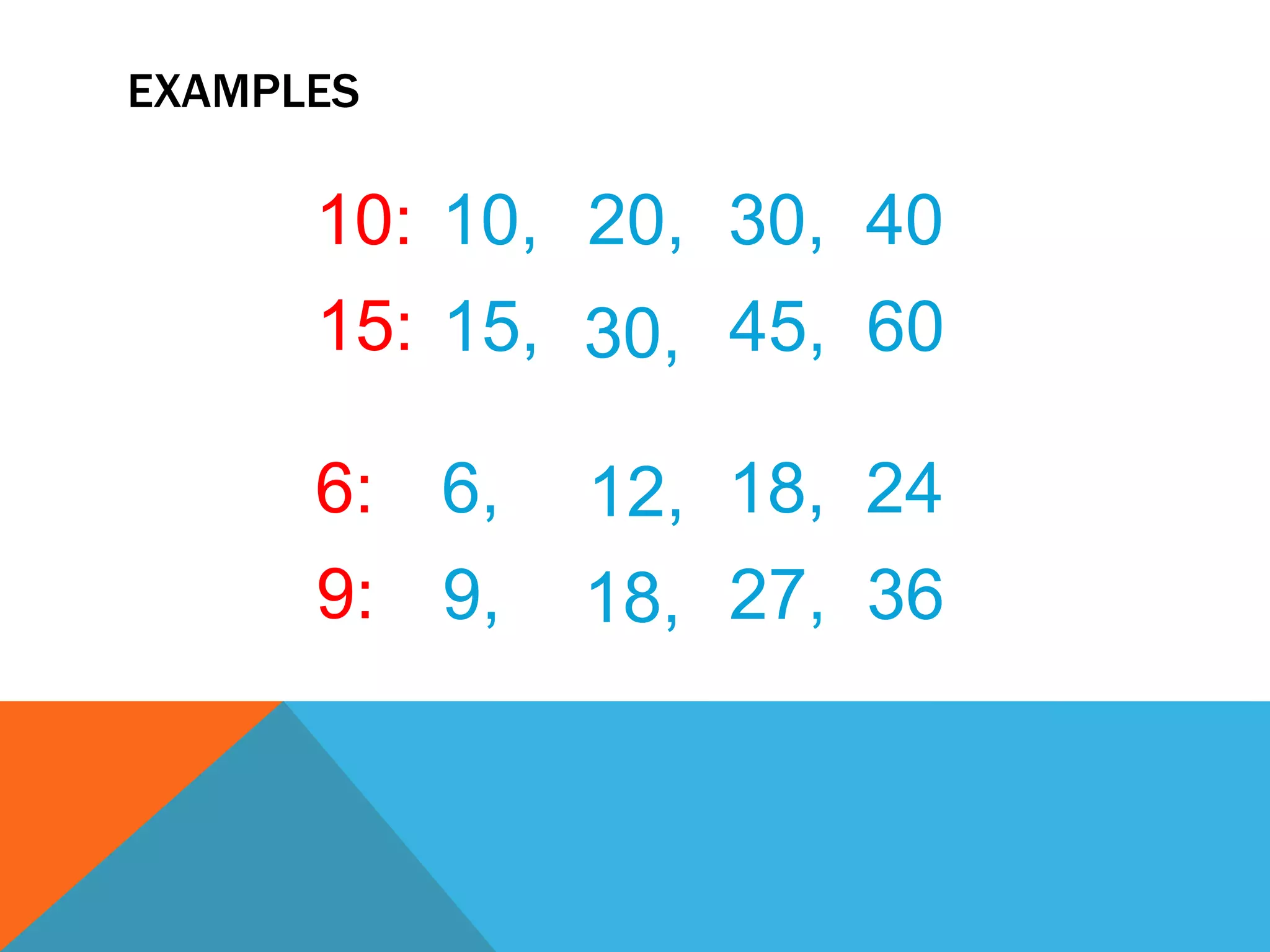
10: 10, 20, 30, 40
15, 30, 45, 60
15:
6: 6, 12, 18, 24
9, 18, 27, 36
9:
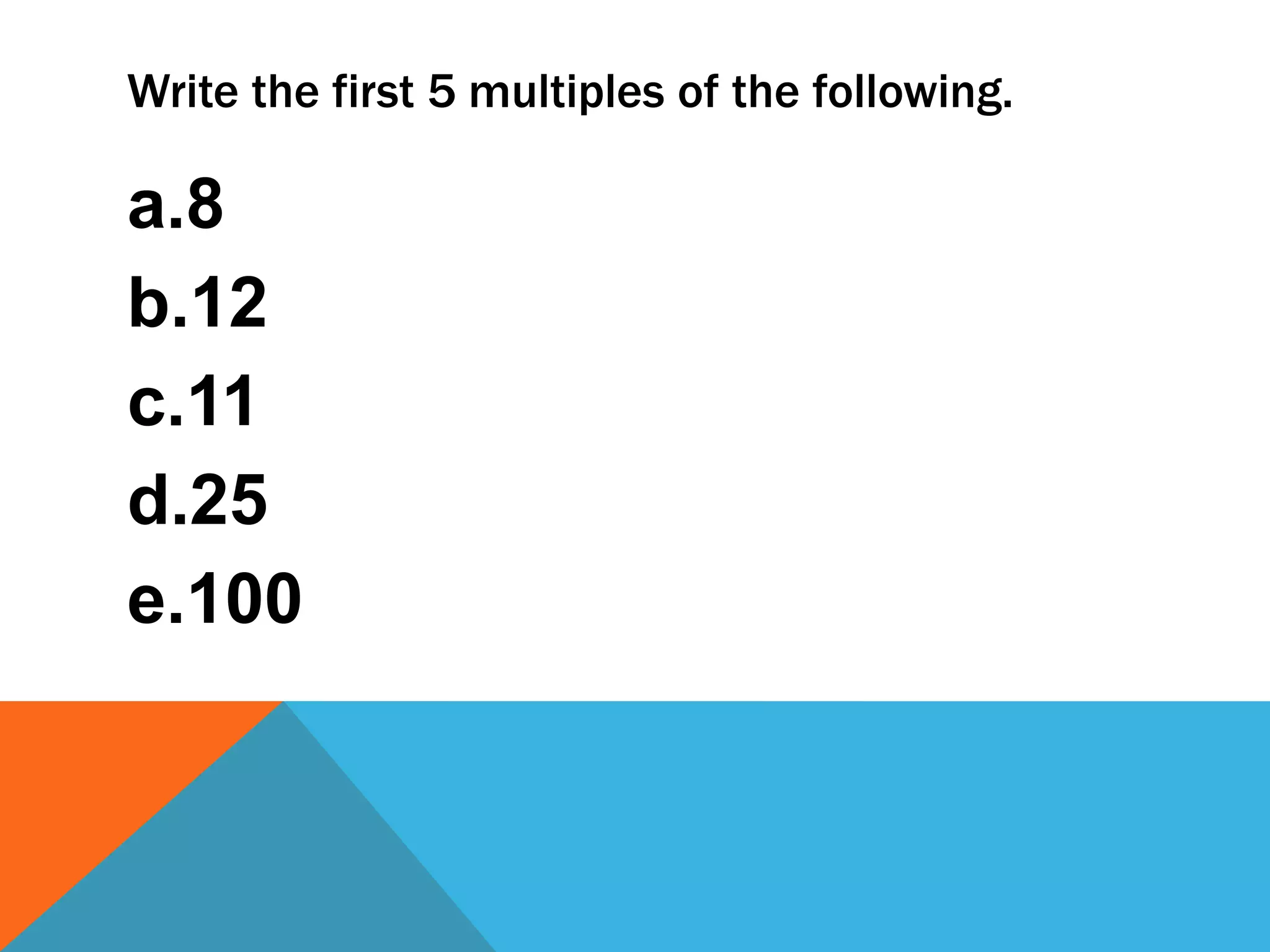
Write the first 5 multiples of the following.
a.8
b.12
c.11
d.25
e.100
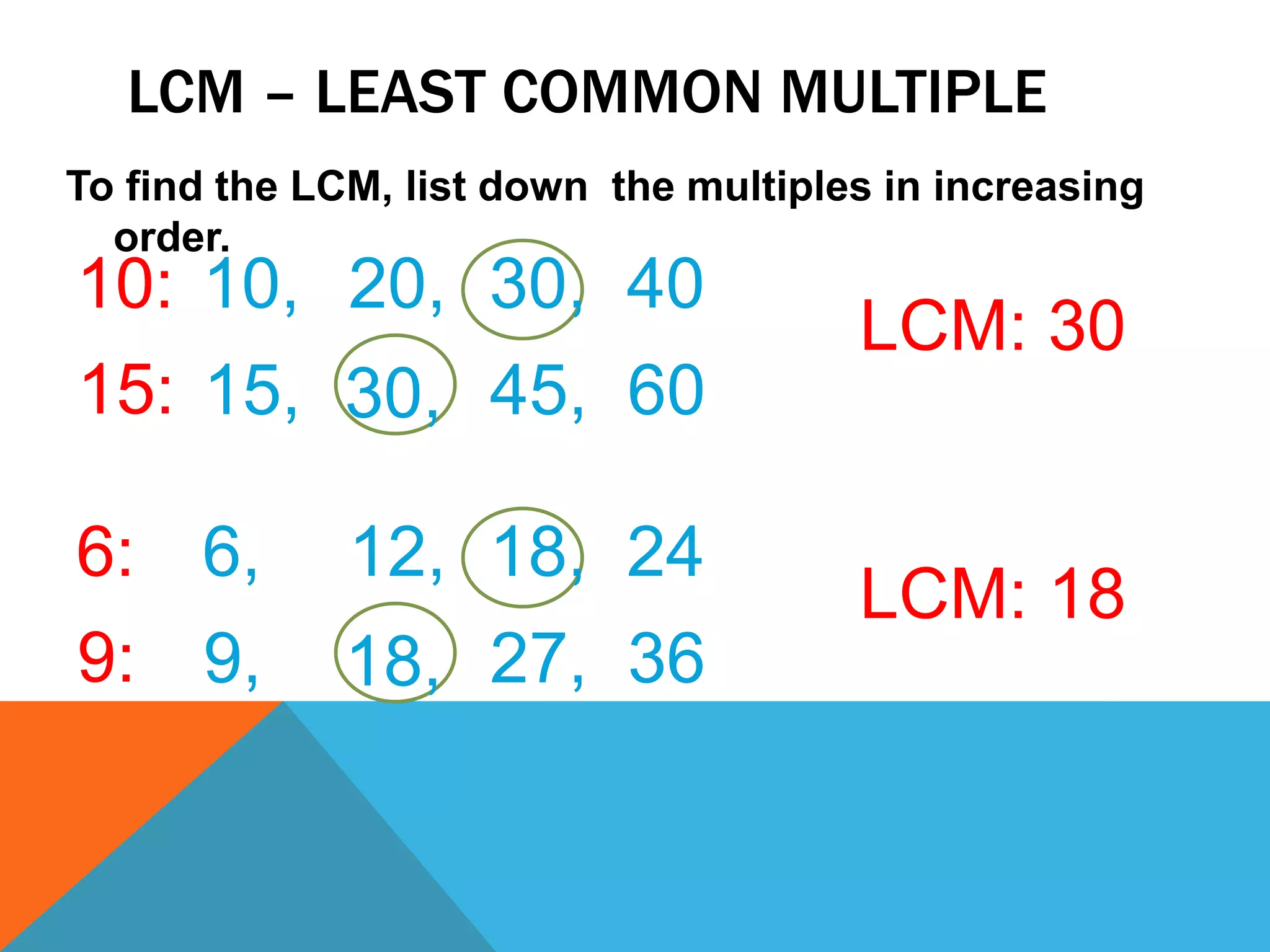
LCM – LEAST COMMON MULTIPLE
To find the LCM, list down the multiples in increasing
order.
10:
LCM: 30
10, 20, 30, 40
15, 30, 45, 60
15:
6:
LCM: 18
6, 12, 18, 24
9, 18, 27, 36
9:
FIND THE LCM OF EACH NUMBER PAIR.
a. 5, 7
b. 10, 6
c. 4, 9
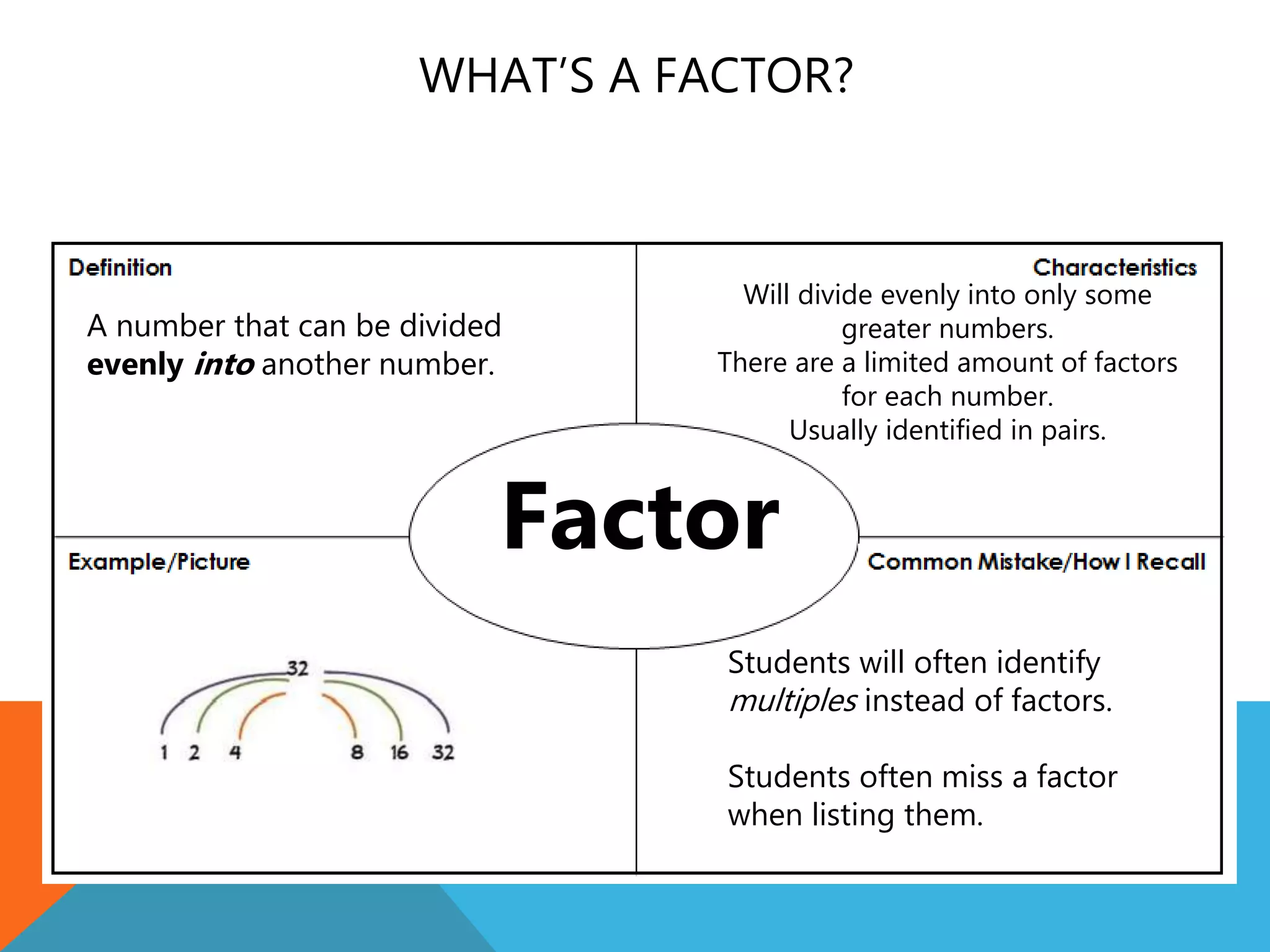
WHAT’S A FACTOR?
A number that can be divided
evenly into another number.
Students will often identify
multiples instead of factors.
Students often miss a factor
when listing them.
Will divide evenly into only some
greater numbers.
There are a limited amount of factors
for each number.
Usually identified in pairs.
Factor
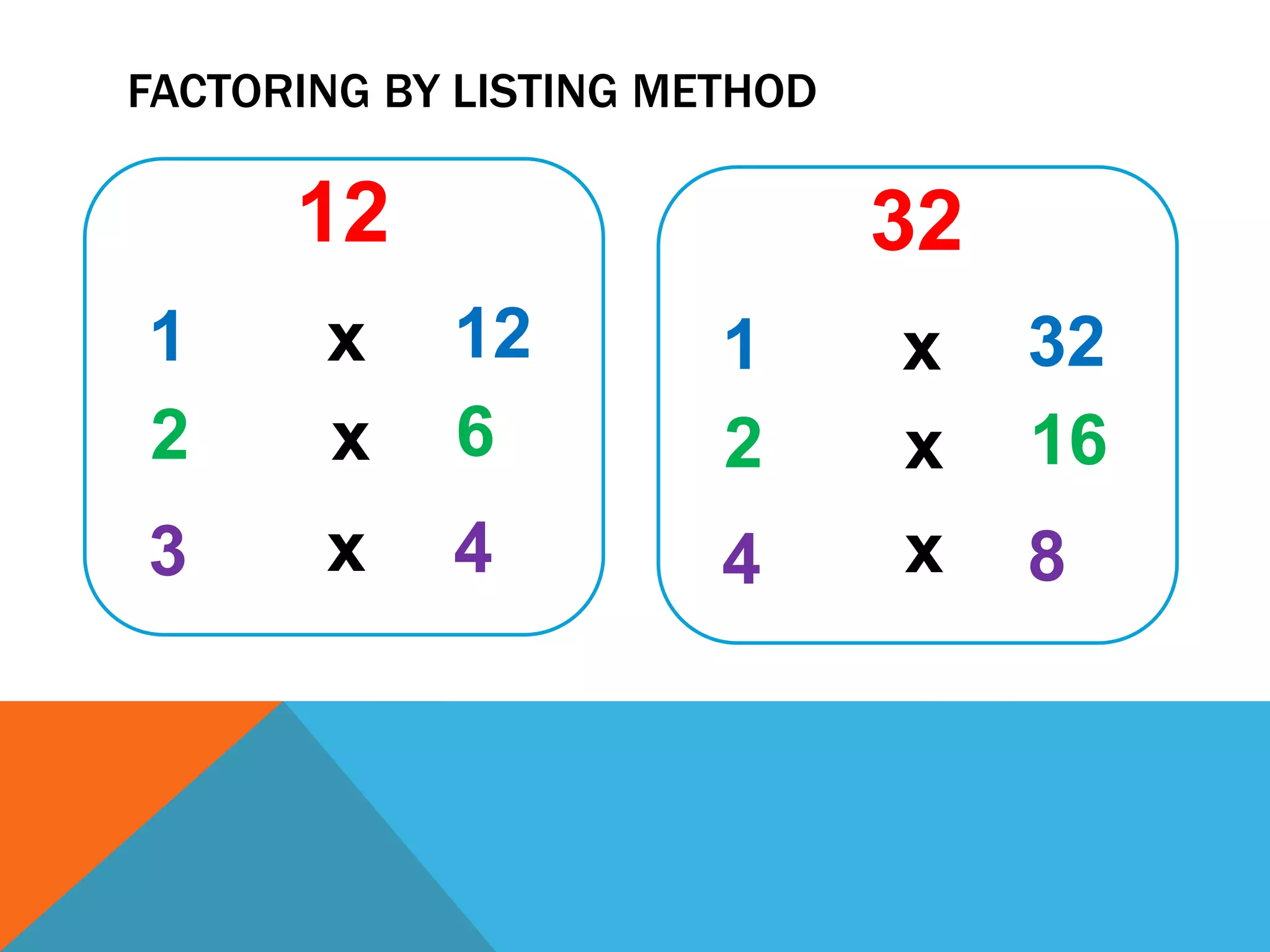
FACTORING BY LISTING METHOD
12
1 12
2 6
3 4
32
1 32
2 16
4 8
x
x
x
x
x
x
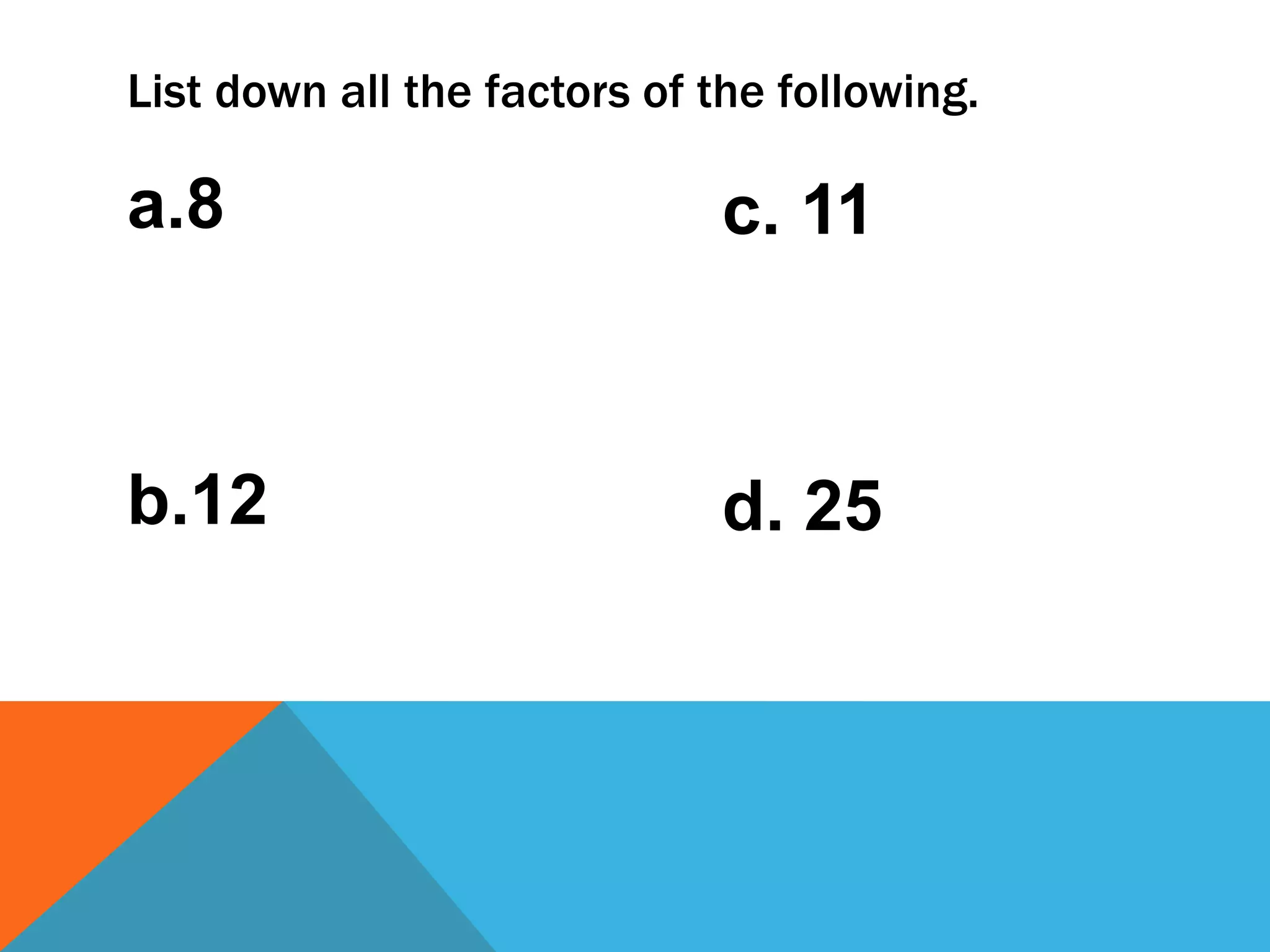
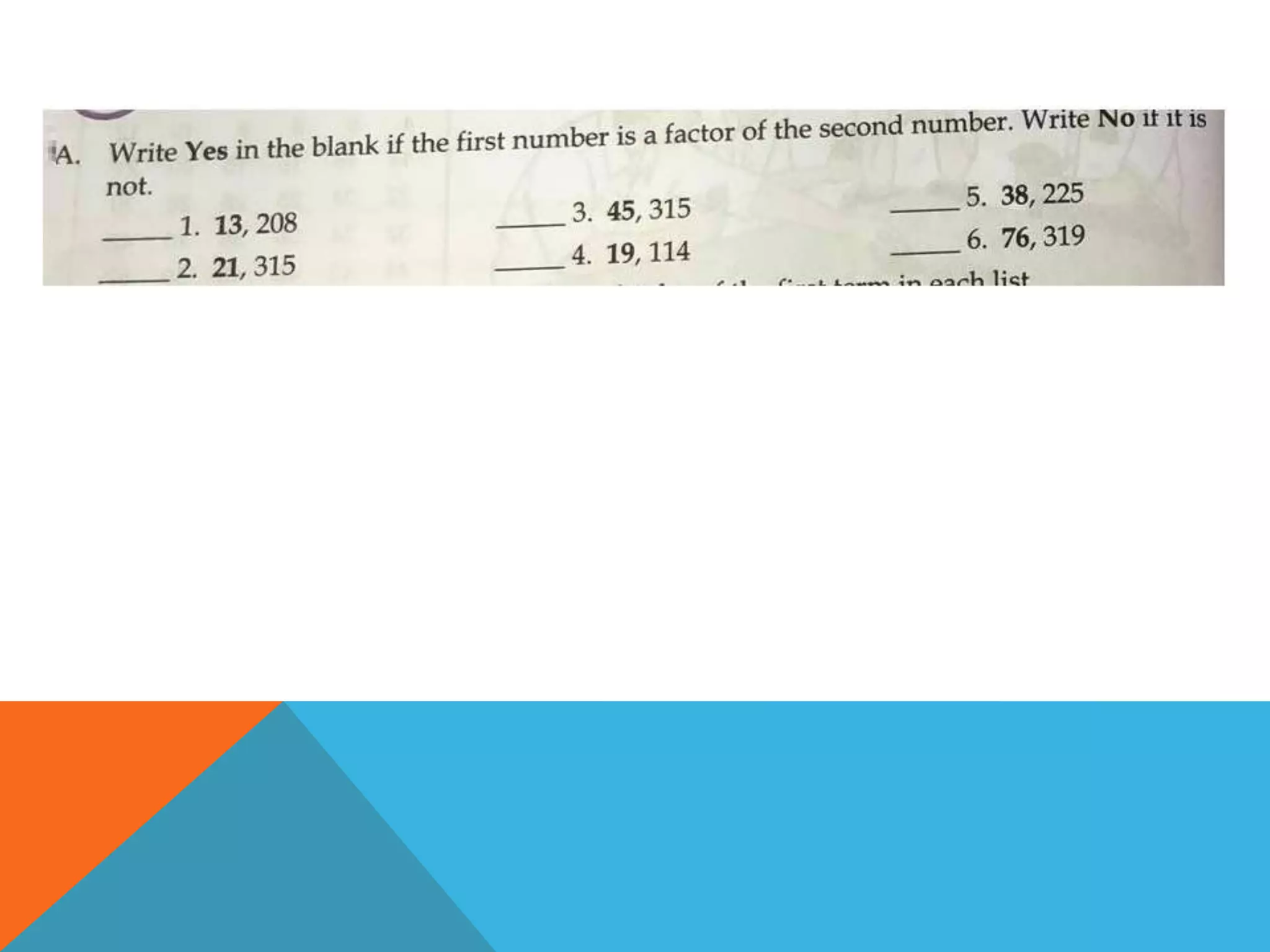
List down all the factors of the following.
a.8
b.12
c. 11
d. 25
WHAT’S A PRIME NUMBER?
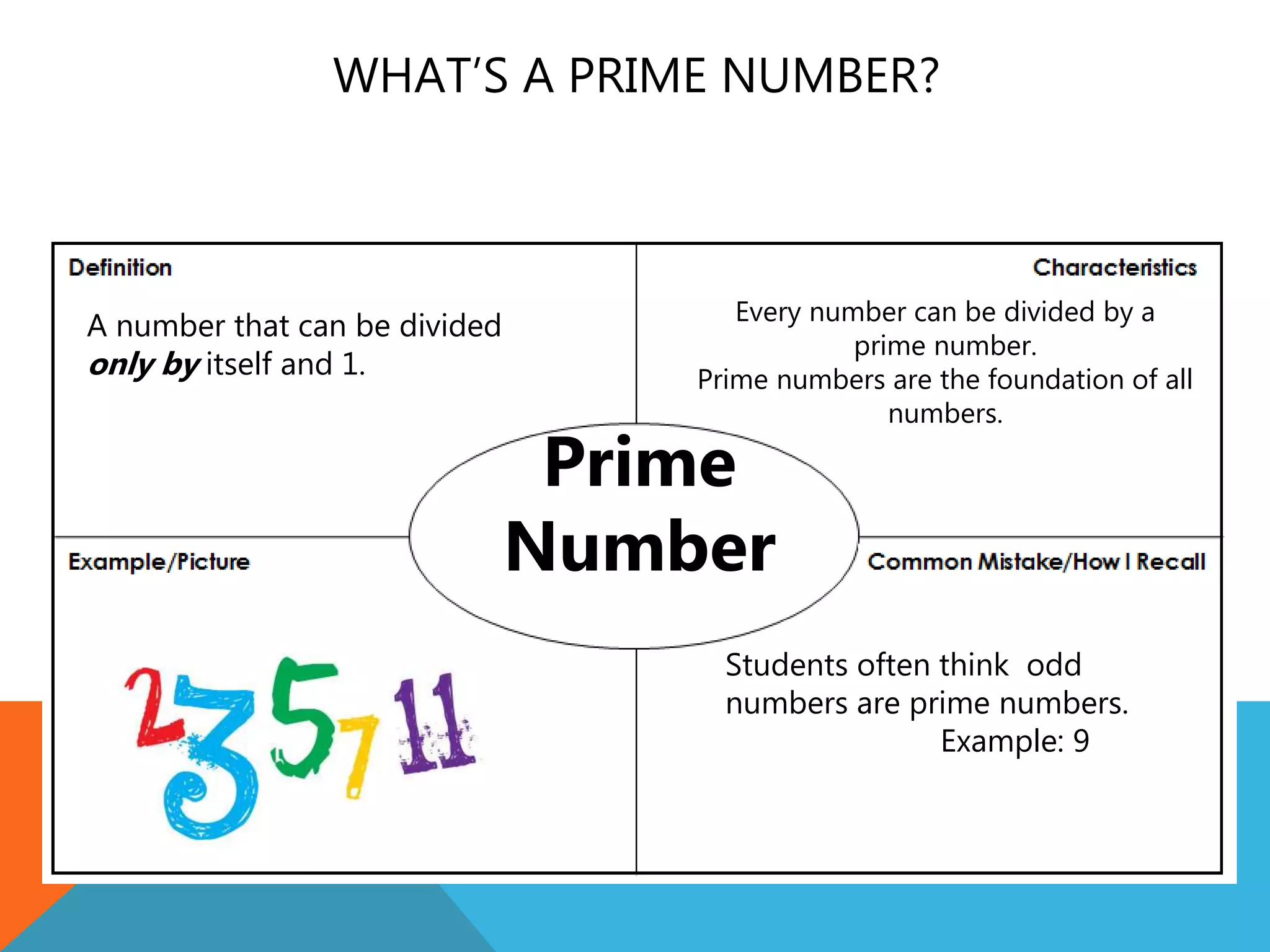
A number that can be divided
only by itself and 1.
Students often think odd
numbers are prime numbers.
Example: 9
Every number can be divided by a
prime number.
Prime numbers are the foundation of all
numbers.
Prime
Number
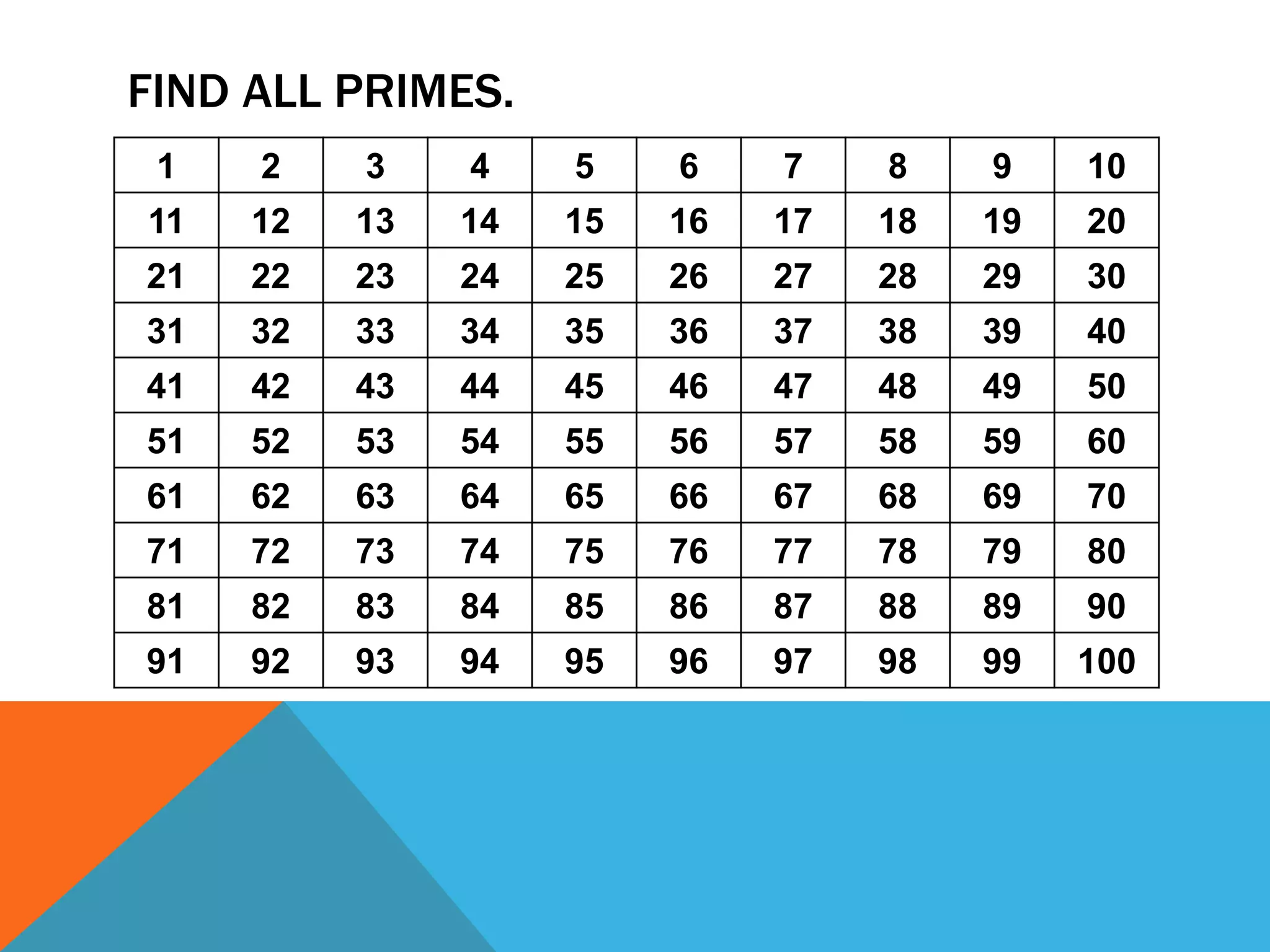
FIND ALL PRIMES.
1 2 3 4 5 6 7 8 9 10
11 12 13 14 15 16 17 18 19 20
21 22 23 24 25 26 27 28 29 30
31 32 33 34 35 36 37 38 39 40
41 42 43 44 45 46 47 48 49 50
51 52 53 54 55 56 57 58 59 60
61 62 63 64 65 66 67 68 69 70
71 72 73 74 75 76 77 78 79 80
81 82 83 84 85 86 87 88 89 90
91 92 93 94 95 96 97 98 99 100
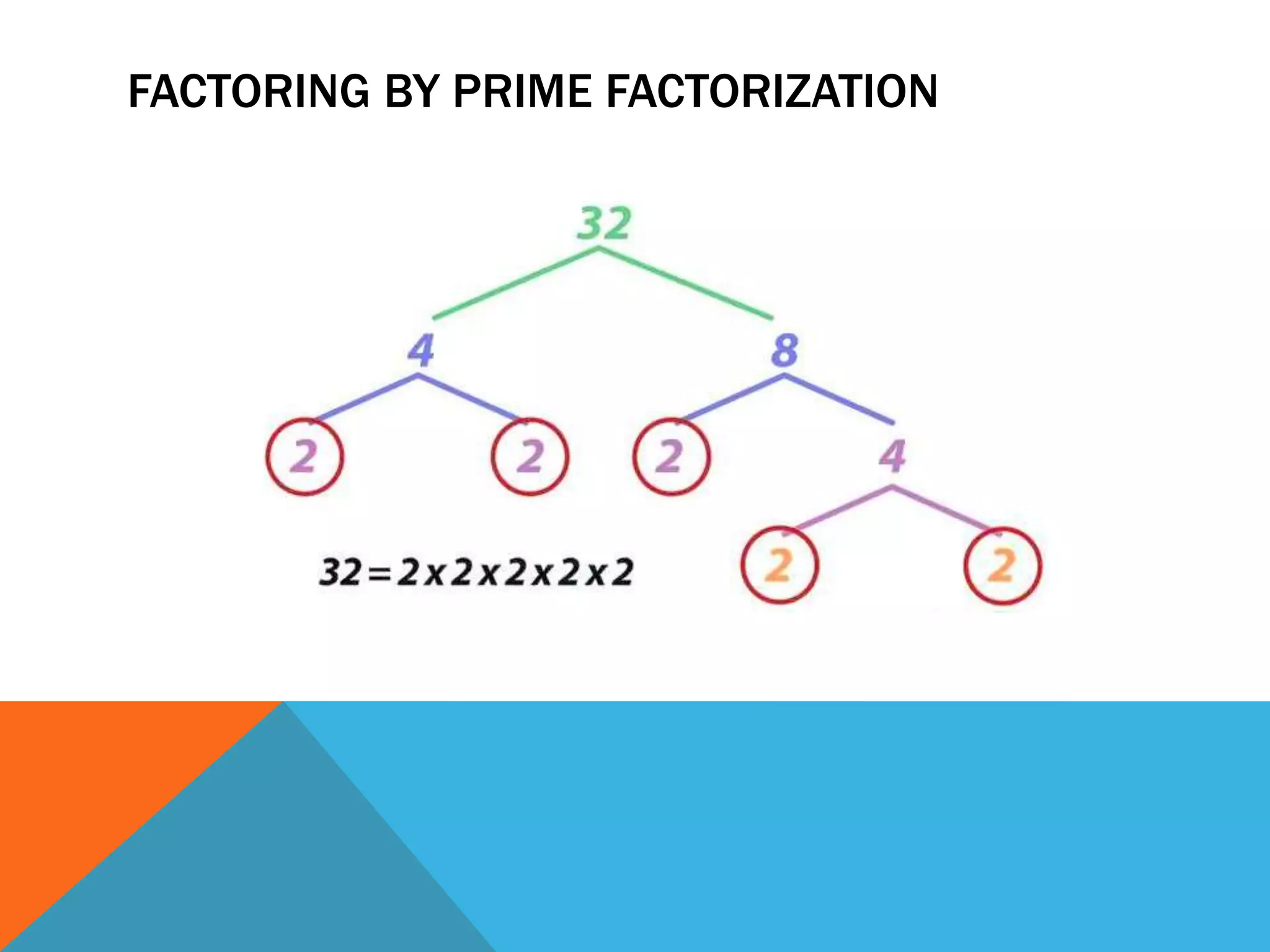
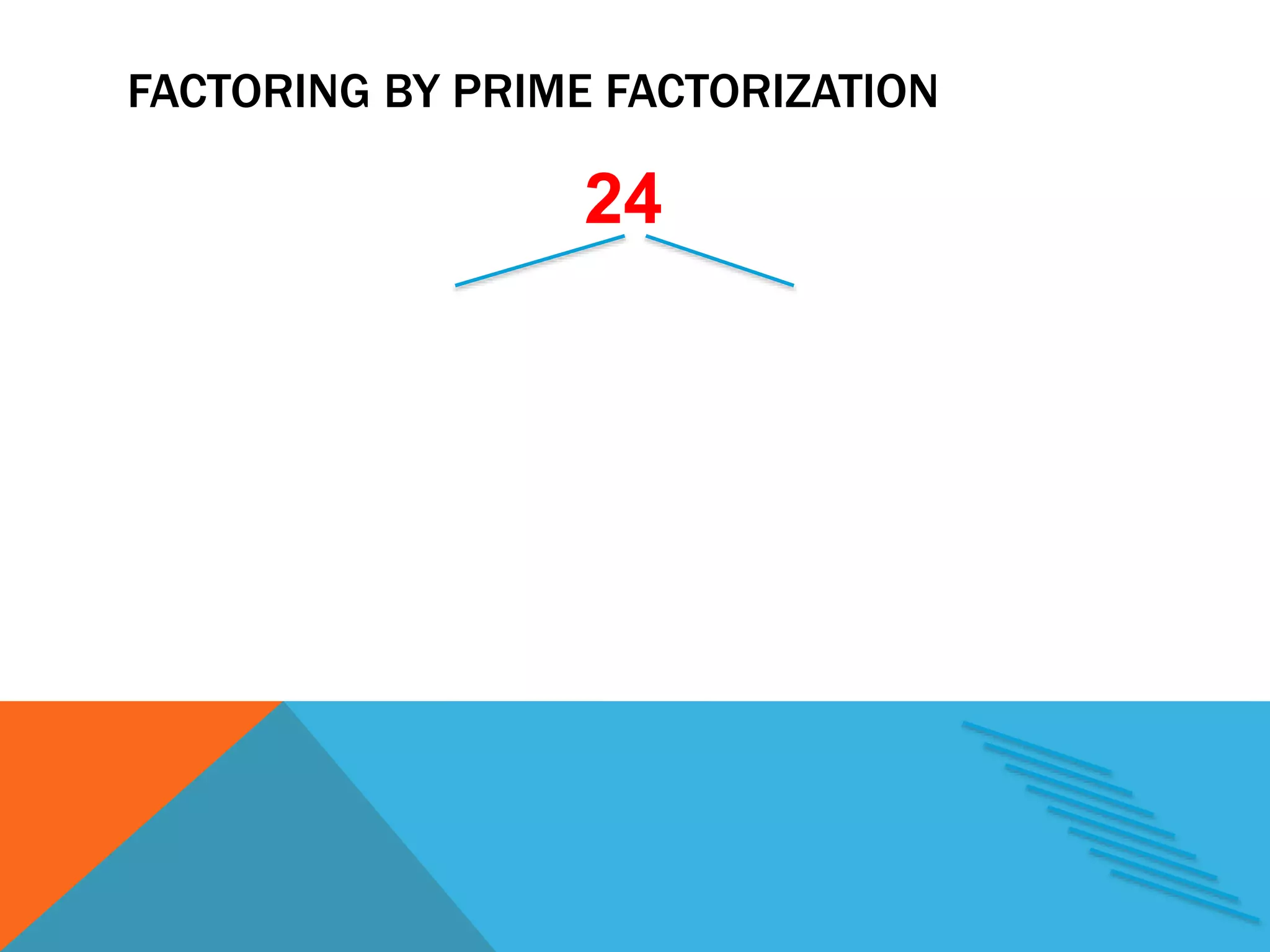
FACTORING BY PRIME FACTORIZATION
24
FACTORING BY PRIME FACTORIZATION
36
FIND THE FACTORS OF THE FOLLOWING.
18 48
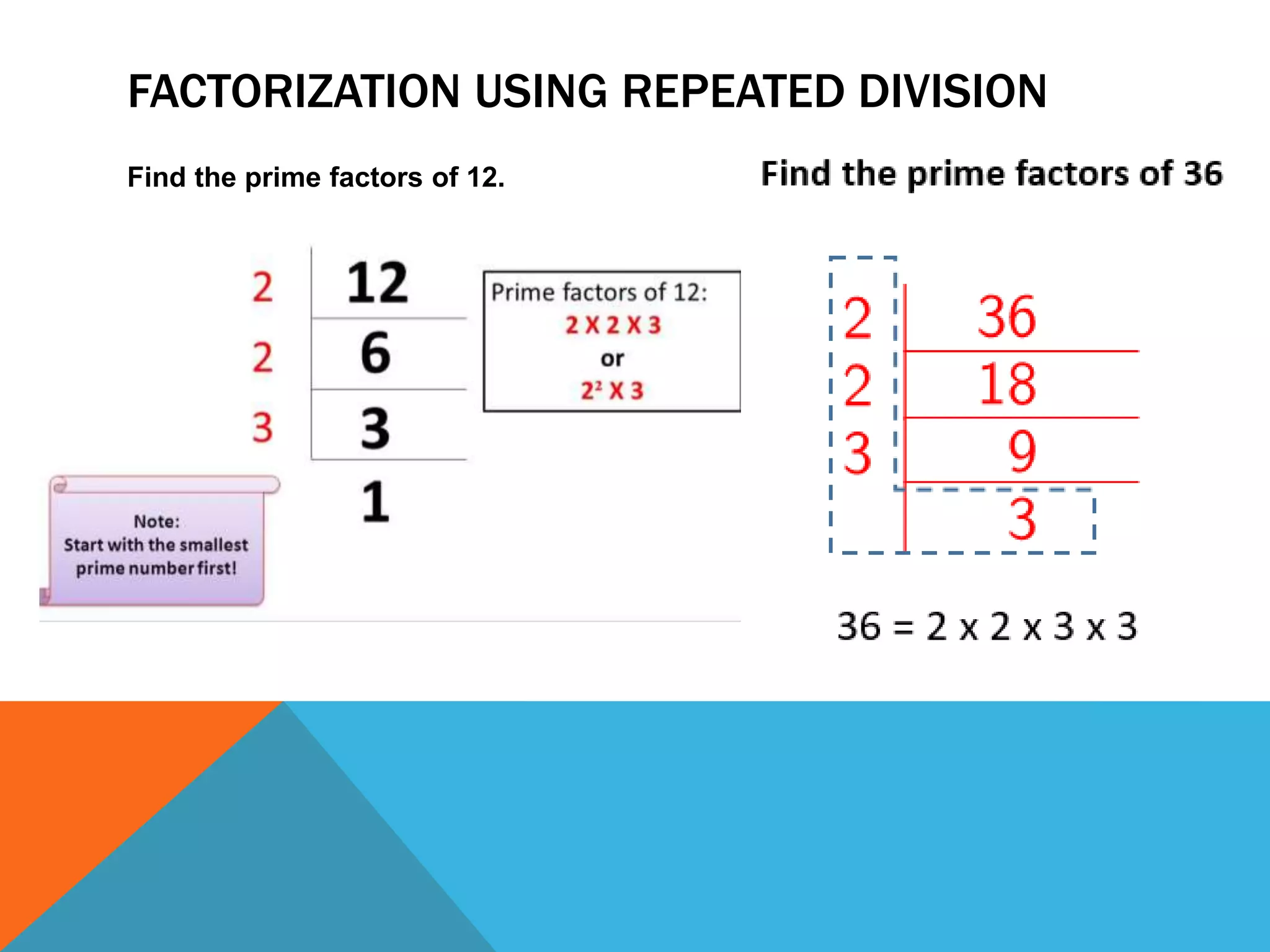
FACTORIZATION USING REPEATED DIVISION
Find the prime factors of 12.
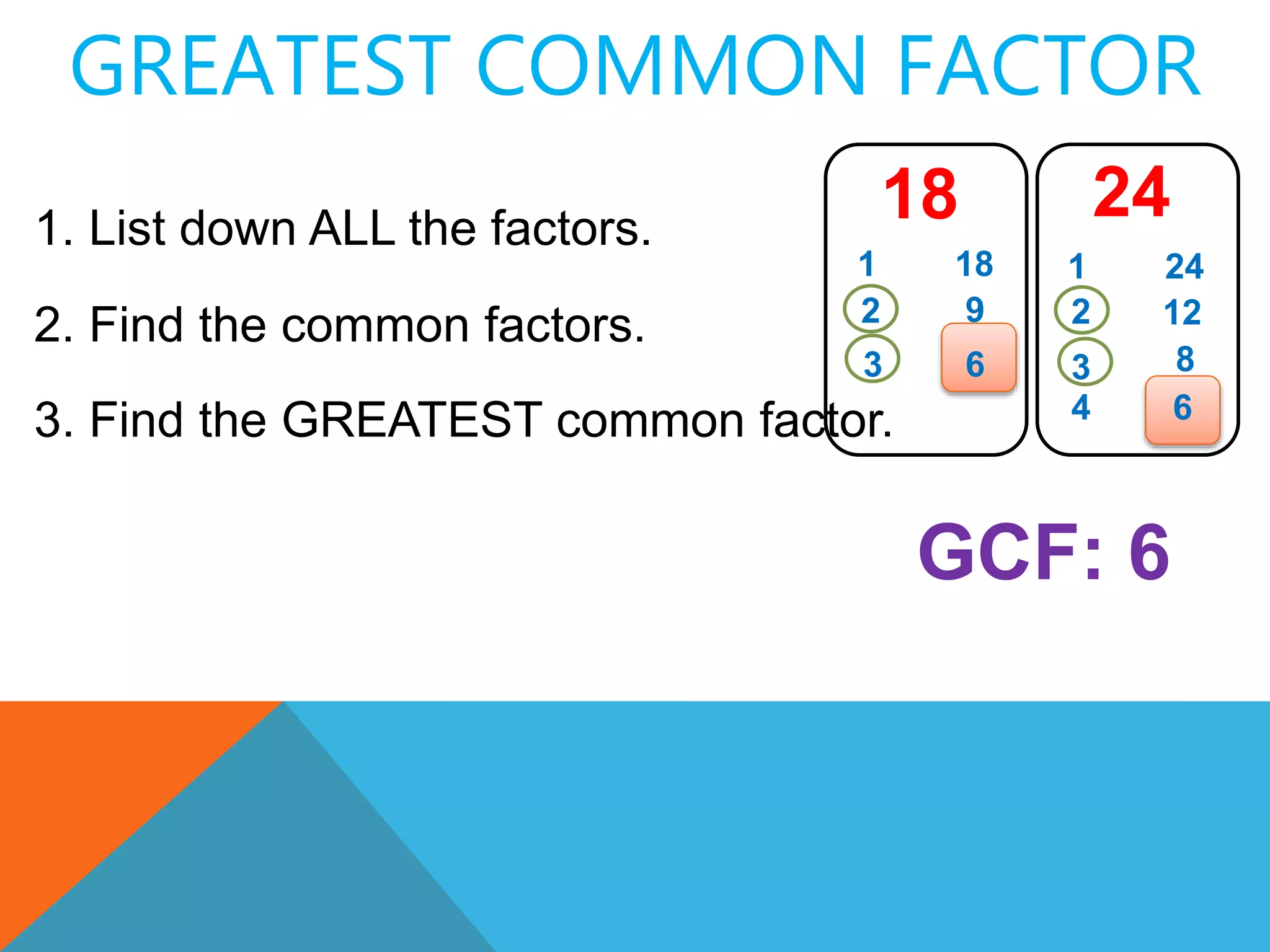
GREATEST COMMON FACTOR
1. List down ALL the factors.
24
18
2. Find the common factors.
3. Find the GREATEST common factor.
18
2
1
9
6
3
6
4
GCF: 6
24
2
1
12
8
3
GREATEST COMMON FACTOR
1. List down ALL the factors.
32
20
2. Find the common factors.
3. Find the GREATEST common factor.
20
2
1
10
5
4
GCF: 4
32
2
1
16
8
4
Greatest Common Factor

Greatest Common Factor

  • 2.
    WHAT’S A MULTIPLE? Anumber that can be divided evenly by another number. Students will often identify factors instead of multiples. Every number has multiples There are an infinite amount of multiples for each number. Created by pairs of factors. Multiple Multiplication tables are just lists of multiples.
  • 3.
    EXAMPLES 10: 10, 20,30, 40 15, 30, 45, 60 15: 6: 6, 12, 18, 24 9, 18, 27, 36 9:
  • 4.
    Write the first5 multiples of the following. a.8 b.12 c.11 d.25 e.100
  • 5.
    LCM – LEASTCOMMON MULTIPLE To find the LCM, list down the multiples in increasing order. 10: LCM: 30 10, 20, 30, 40 15, 30, 45, 60 15: 6: LCM: 18 6, 12, 18, 24 9, 18, 27, 36 9:
  • 6.
    FIND THE LCMOF EACH NUMBER PAIR. a. 5, 7 b. 10, 6 c. 4, 9
  • 7.
    WHAT’S A FACTOR? Anumber that can be divided evenly into another number. Students will often identify multiples instead of factors. Students often miss a factor when listing them. Will divide evenly into only some greater numbers. There are a limited amount of factors for each number. Usually identified in pairs. Factor
  • 8.
    FACTORING BY LISTINGMETHOD 12 1 12 2 6 3 4 32 1 32 2 16 4 8 x x x x x x
  • 9.
    List down allthe factors of the following. a.8 b.12 c. 11 d. 25
  • 11.
    WHAT’S A PRIMENUMBER? A number that can be divided only by itself and 1. Students often think odd numbers are prime numbers. Example: 9 Every number can be divided by a prime number. Prime numbers are the foundation of all numbers. Prime Number
  • 12.
    FIND ALL PRIMES. 12 3 4 5 6 7 8 9 10 11 12 13 14 15 16 17 18 19 20 21 22 23 24 25 26 27 28 29 30 31 32 33 34 35 36 37 38 39 40 41 42 43 44 45 46 47 48 49 50 51 52 53 54 55 56 57 58 59 60 61 62 63 64 65 66 67 68 69 70 71 72 73 74 75 76 77 78 79 80 81 82 83 84 85 86 87 88 89 90 91 92 93 94 95 96 97 98 99 100
  • 13.
    FACTORING BY PRIMEFACTORIZATION
  • 14.
    FACTORING BY PRIMEFACTORIZATION 24
  • 15.
    FACTORING BY PRIMEFACTORIZATION 36
  • 16.
    FIND THE FACTORSOF THE FOLLOWING. 18 48
  • 17.
    FACTORIZATION USING REPEATEDDIVISION Find the prime factors of 12.
  • 18.
    GREATEST COMMON FACTOR 1.List down ALL the factors. 24 18 2. Find the common factors. 3. Find the GREATEST common factor. 18 2 1 9 6 3 6 4 GCF: 6 24 2 1 12 8 3
  • 19.
    GREATEST COMMON FACTOR 1.List down ALL the factors. 32 20 2. Find the common factors. 3. Find the GREATEST common factor. 20 2 1 10 5 4 GCF: 4 32 2 1 16 8 4

Editor's Notes

  • #3 Ask students to choose the definition for Factor in their MathBerries.
  • #8 Ask students to choose the definition for Factor in their MathBerries.
  • #12 Ask students to choose the definition for Factor in their MathBerries.
  • #19 Call students to the board to list factors. Some will be missed.
  • #20 Call students to the board to list factors. Some will be missed.