Waste Management
W1Q4
✅
✅
✅
Wonderful Waste!
•The story is set in the Kingdom of Travancore in
India. The king of the place is organizing a feast in
his palace. Thus, the cook is busy in the kitchen
with the preparations for it. In order to make sure
everything is being prepared in full swing, the king
decides to go in for inspection. When he pays a
visit to the kitchen, there is something odd that
catches his attention
Wonderful Waste!
•He finds a lot of vegetable scraps in a basket
which was of no use and treated as waste.
Upon seeing this, the king orders the cook to
not waste those scraps. Instead, he commands
him to make use of them in a wise manner.
Thus, it leaves the cook confused and baffled.
Wonderful Waste!
•However, upon thinking hard, he does not reach a
conclusion easily. All of a sudden, a rather
interesting idea comes to his mind. He takes up all
the vegetable scraps and washes them and cleans
them properly. Then, he starts cutting them into
long strips. After all this, the cook tosses them all
in a pot and lights to fire to cook it
Wonderful Waste!
•To these scraps, he goes on to add grounded
coconut, green chilies, and garlic plus salt.
This enhances the flavor of the dish and he
cooks it well. After that, the cook whips some
curd and adds it to the boiling curry.
Moreover, he also pours a few spoonfuls of
coconut oil. These entire flavors combine to
give the dish a nice aroma and look.
Wonderful Waste!
•Finally, he garnishes the dish with curry leaves.
And it is ready at last and everyone ends up liking
the dish a lot. Thus, the cook names this dish Avial
which goes on to become popular all over Kerala.
And now, it is a part of a traditional Kerala feast
which was once waste. (an excerpt from the story
Wonderful Waste!)
Wonderful Waste!
•Guide Questions:
•1. Why is the story entitled wonderful
waste?
•2. Do you have same experience with the
cook in the story? What wonderful waste
have you made
Waste in the Farm
•Problem with waste is one of the major concerns in
the farm. There are farmers that did not spend
time in doing a routine in keeping and disposing
their wastes or debris produced during, before and
after agricultural activities.
•Some hazardous wastes are not treated properly
and leads to risk with farmers. In some area’s
farmers are practicing proper storage and disposal
of wastes.
Types of Agricultural Waste
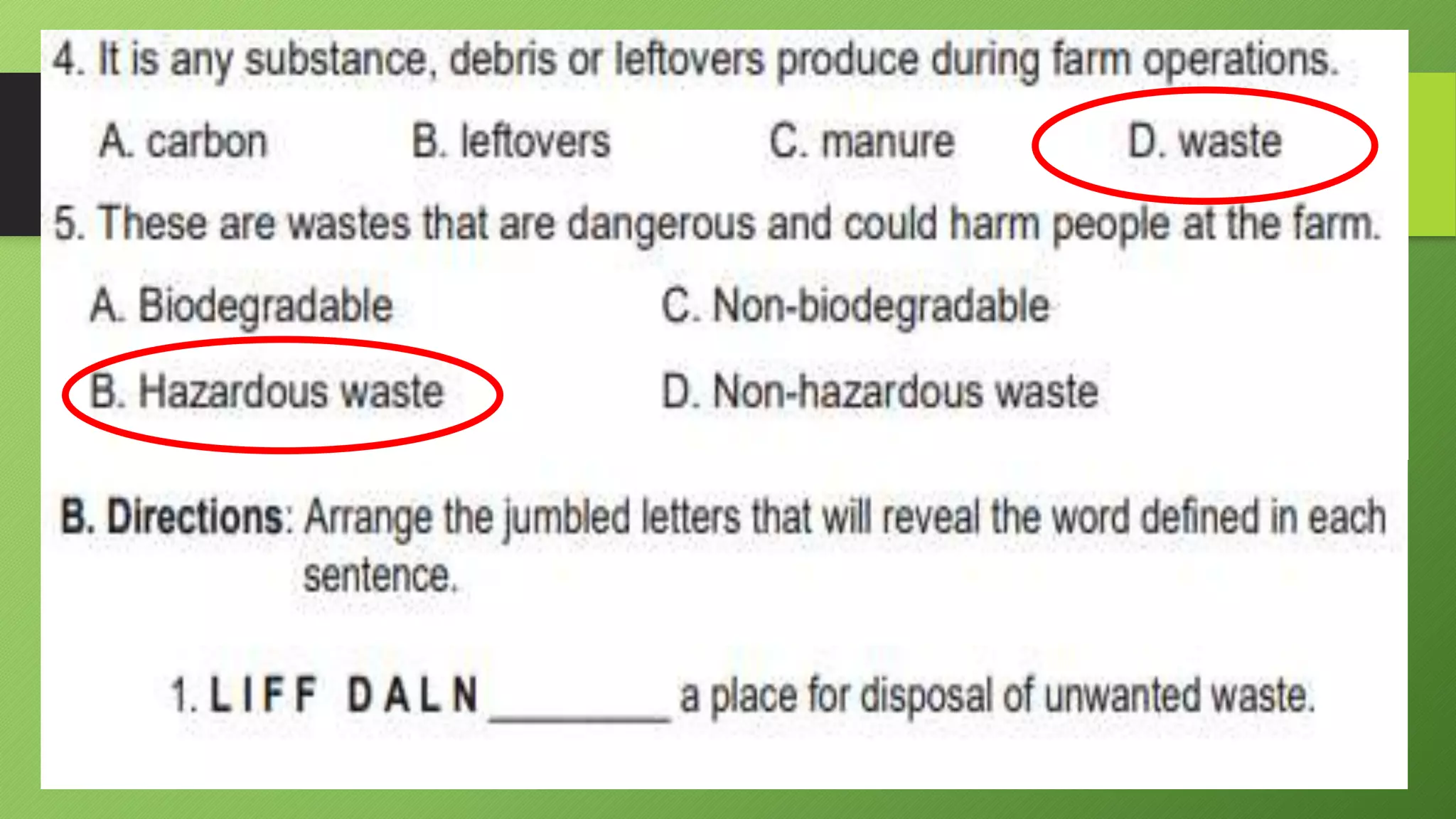
•Waste is defined as any
substance, debris, leftovers that
was produced during agricultural
works. Waste can be classified as:
Types of Agricultural Waste
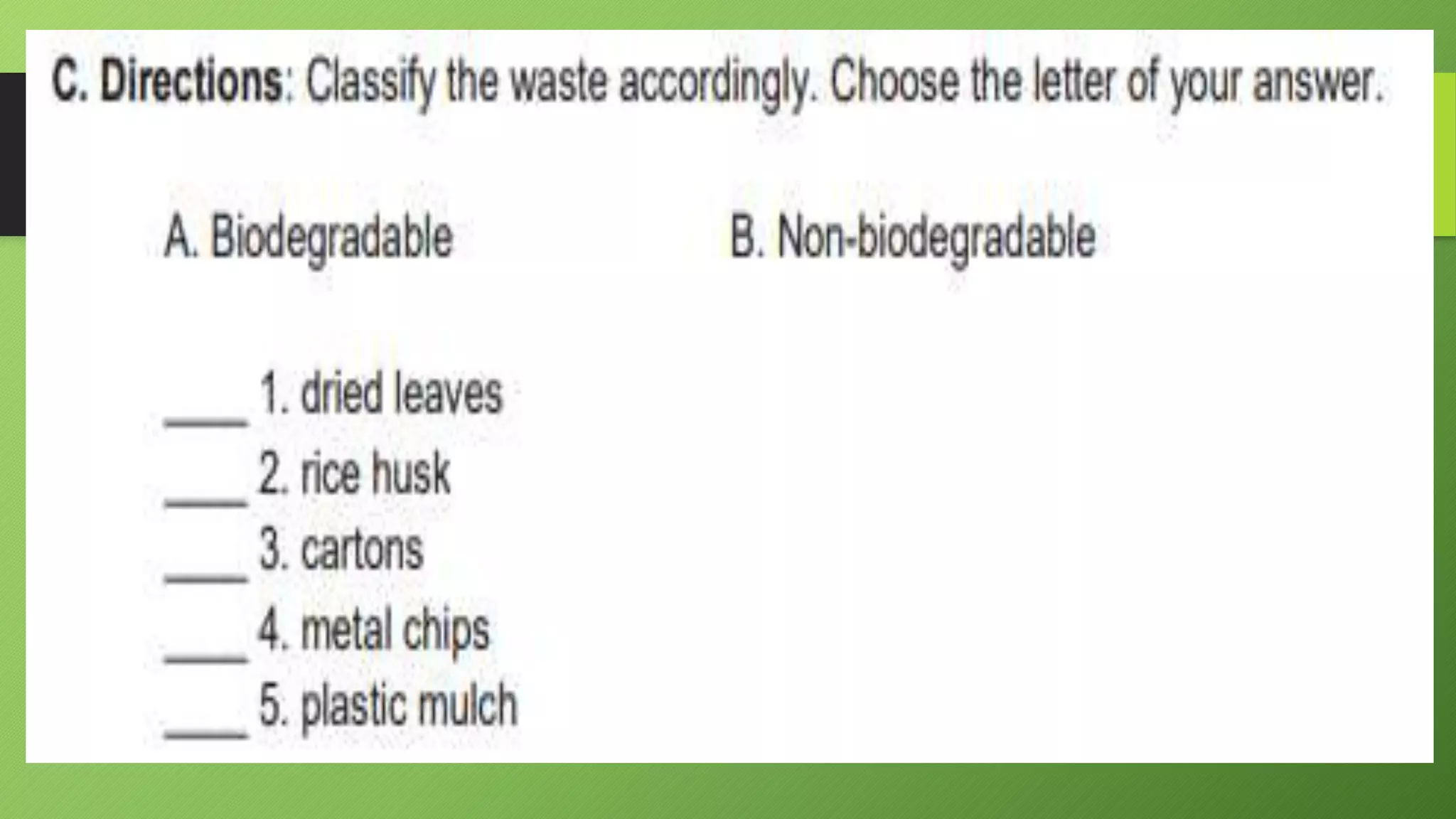
•1. Biodegradable (Organic)- wastes that
can be decompose and use as soil
enhancer (fertilizers)
•Examples are: grass cuttings, dried leaves,
twigs and small branches, egg shells, fruit
and vegetable peelings.
Types of Agricultural Waste
•2. Non-biodegradable- wastes that can be
turned into landfill or can be used for other
purpose.
•Examples are: planting materials (which may
include empty plastic bags and wrappers,
containers and others), glass, bottles, metals
and wires, Styrofoam, gallons.
Types of Agricultural Waste
•3. Hazardous Wastes- these are wastes
that are dangerous to health for it may
cause injury, death and illness.
•Examples are: broken glasses, chemical waste
obtained from using chemicals such as fertilizer,
insecticides and others, empty containers,
galvanized iron sheet, syringe
Types of Agricultural Waste
•4. Non-hazardous wastes- these are
wastes that do not gives threat on
one’s life.
•Examples are: kitchen wastes, dried
leaves, grass cuttings
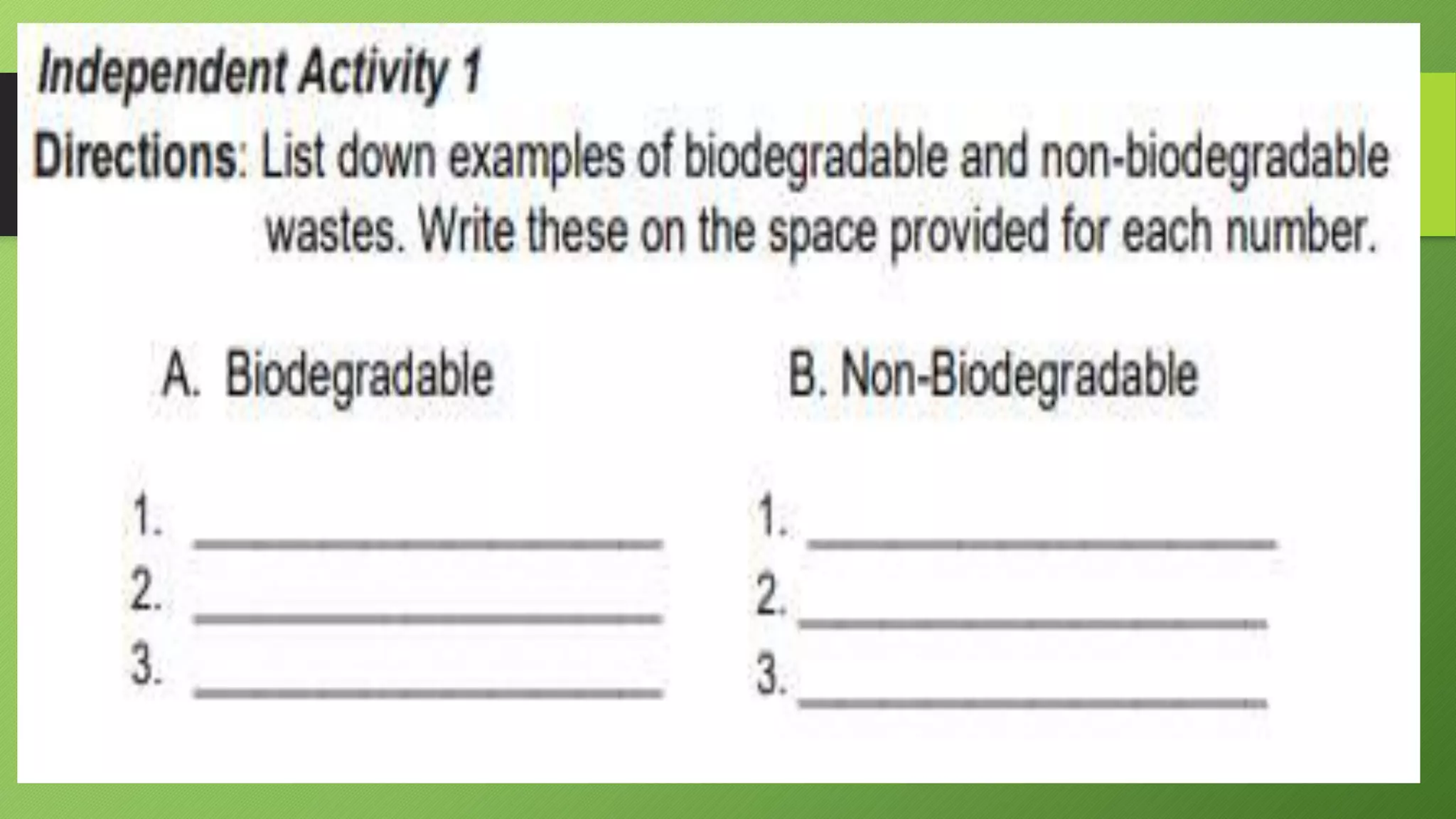
Waste Management
•Ecological Solid Waste Management Act of 2000 (RA
9003) -An act providing for an ecological solid waste
management program, creating the necessary
institutional mechanisms and incentives, declaring
certain acts prohibited and providing penalties,
appropriating funds, therefore, and for other purposes.
•One of the prohibitions of the act is the burning of all
kinds of wastes for it will cause an increase in the
temperature of air that may affect lives of all living
things.
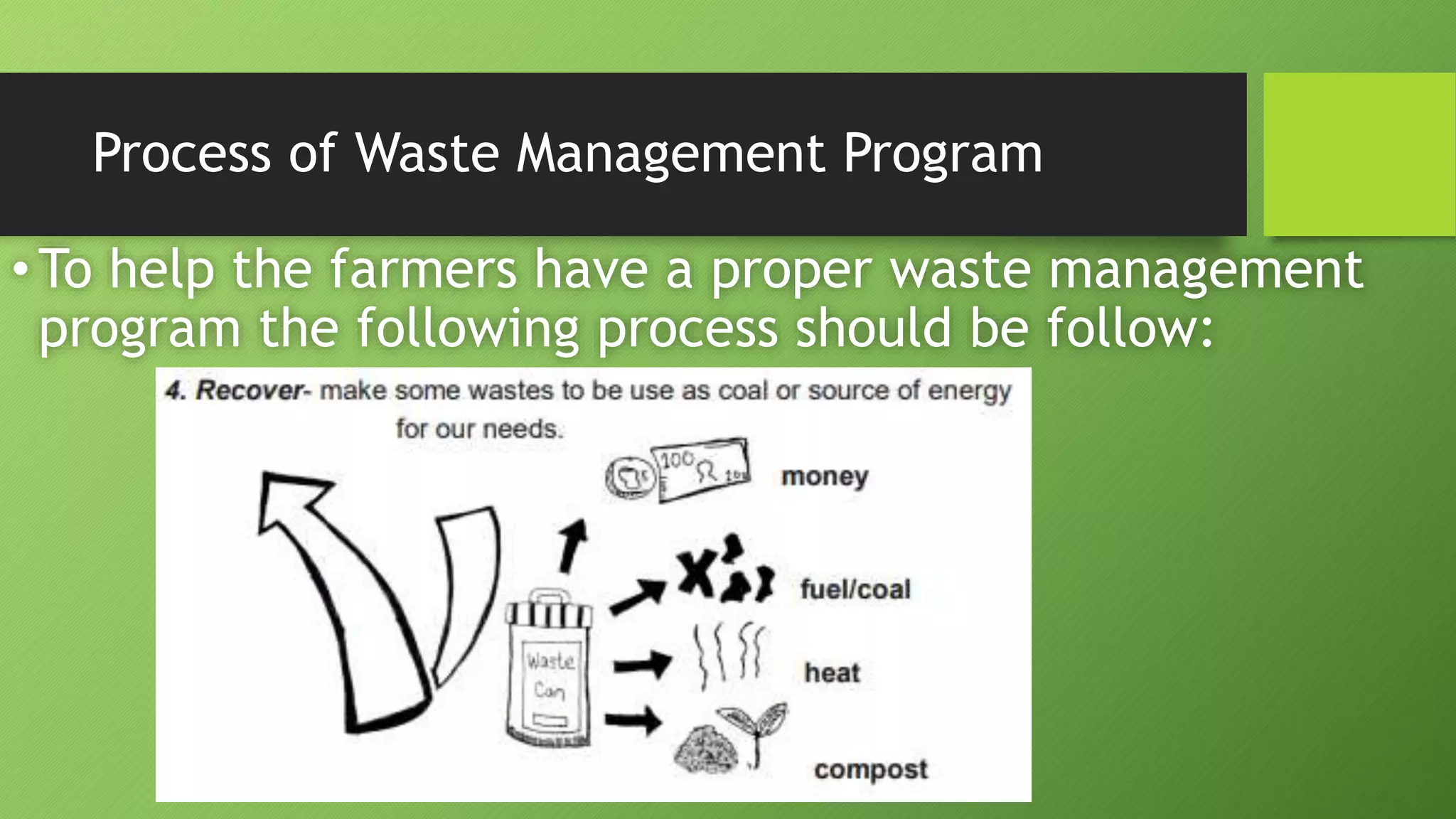
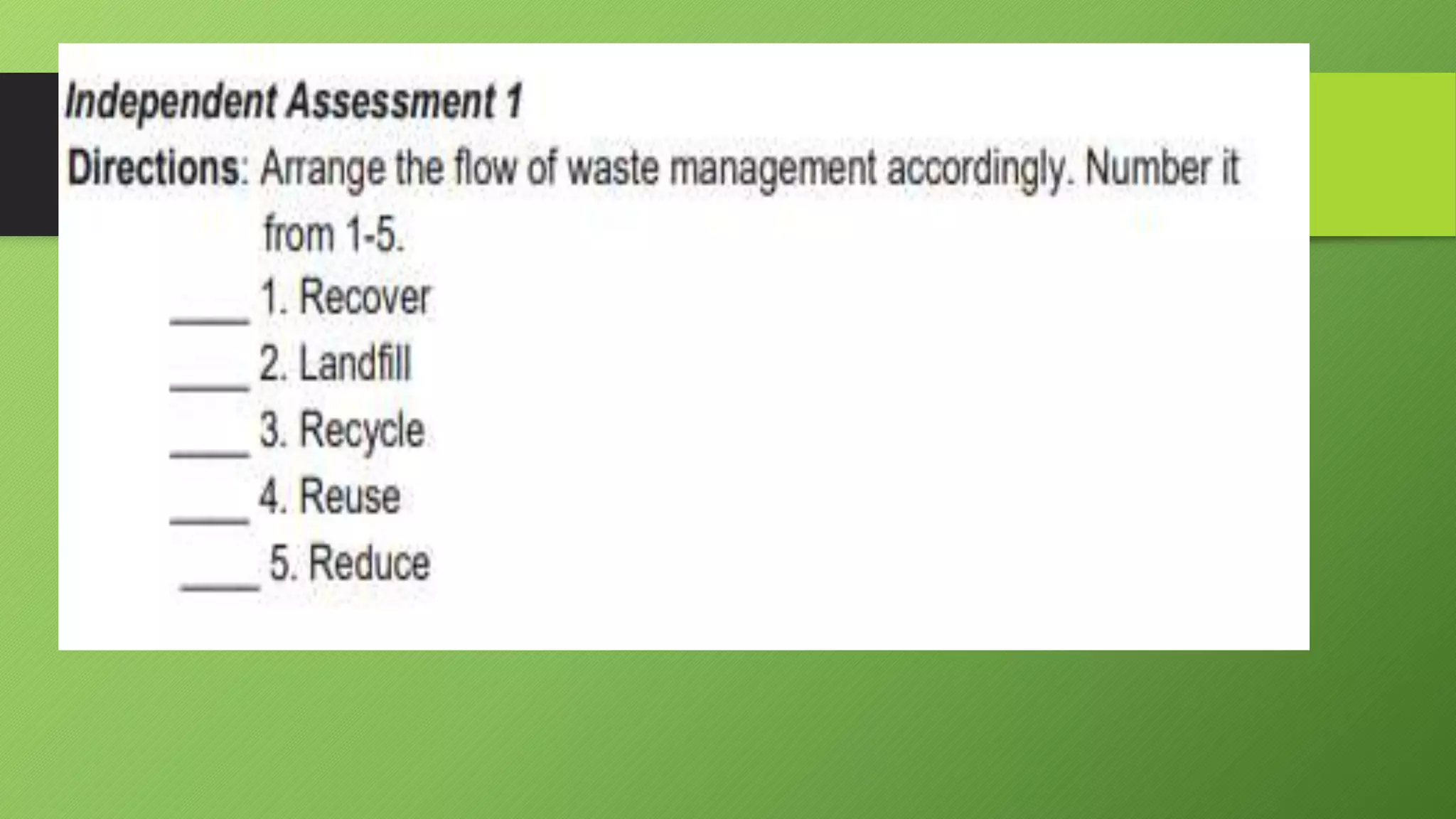
Process of Waste Management Program
•To help the farmers have a proper waste management
program the following process should be follow:
Process of Waste Management Program
•To help the farmers have a proper waste management
program the following process should be follow:
Process of Waste Management Program
•To help the farmers have a proper waste management
program the following process should be follow:
Process of Waste Management Program
•To help the farmers have a proper waste management
program the following process should be follow:
Process of Waste Management Program
•To help the farmers have a proper waste management
program the following process should be follow:
LET US REMEMBER
•Agriculture is the dirtiest component of our
economy and yet our producer of food to
live. Waste can be classified as
biodegradable, non-biodegradable,
hazardous, non- hazardous.
•Proper waste Management program in the
farm help the farmers in reducing and
handling their wastes and prevent them
from any harm.
assessment
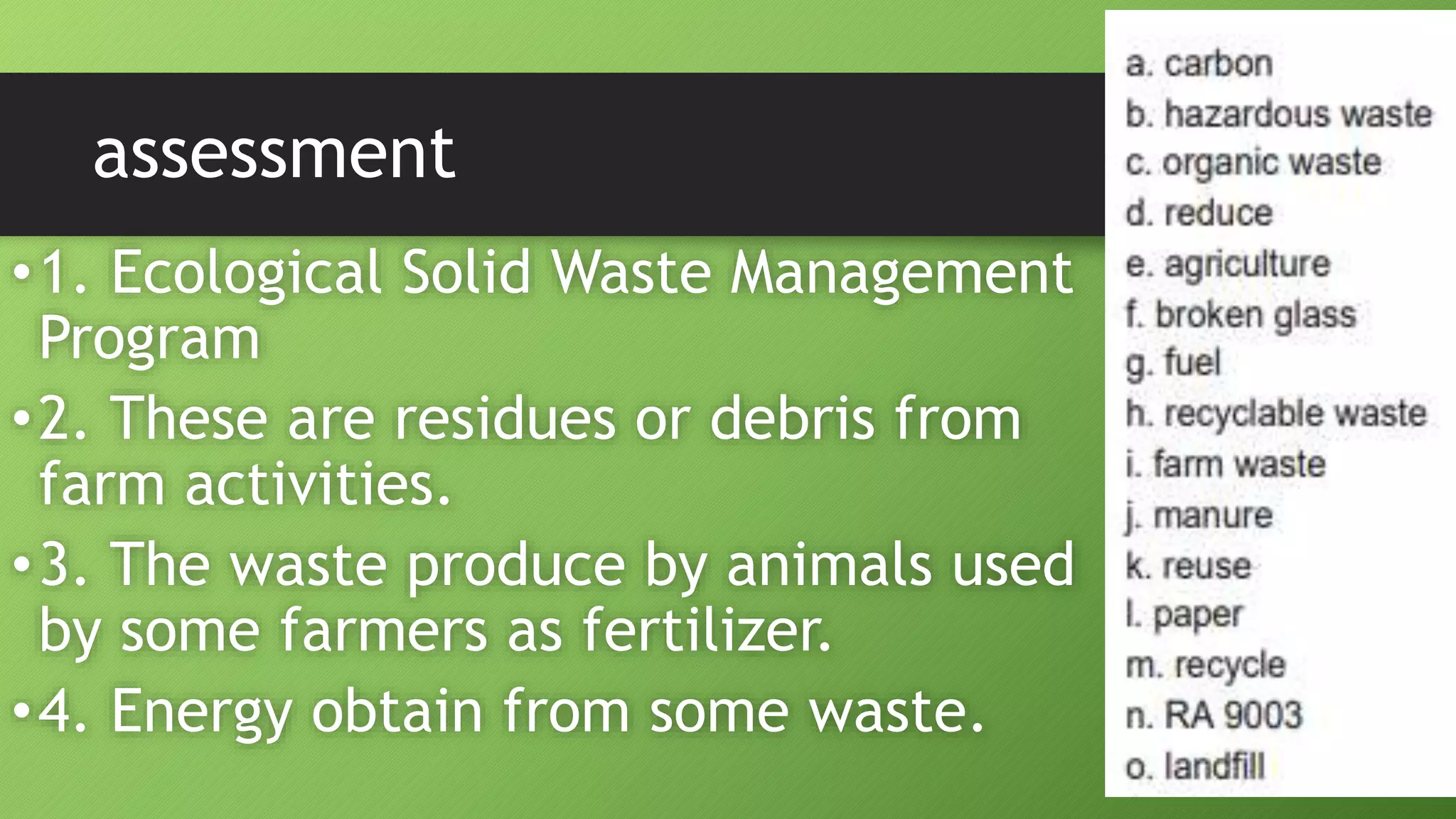
•1. Ecological Solid Waste Management
Program
•2. These are residues or debris from
farm activities.
•3. The waste produce by animals used
by some farmers as fertilizer.
•4. Energy obtain from some waste.
assessment
•5. It means to use again for other
purpose.
•6. A place where wastes are sent-off
for disposal.
•7. An example of hazardous waste.
•8. Converting waste into new look.
assessment
•9. Considered as the dirtiest
sector of economy and major
producer of foods.
•10. Harmful waste
•11. Organic compound of
biodegradable waste.
assessment
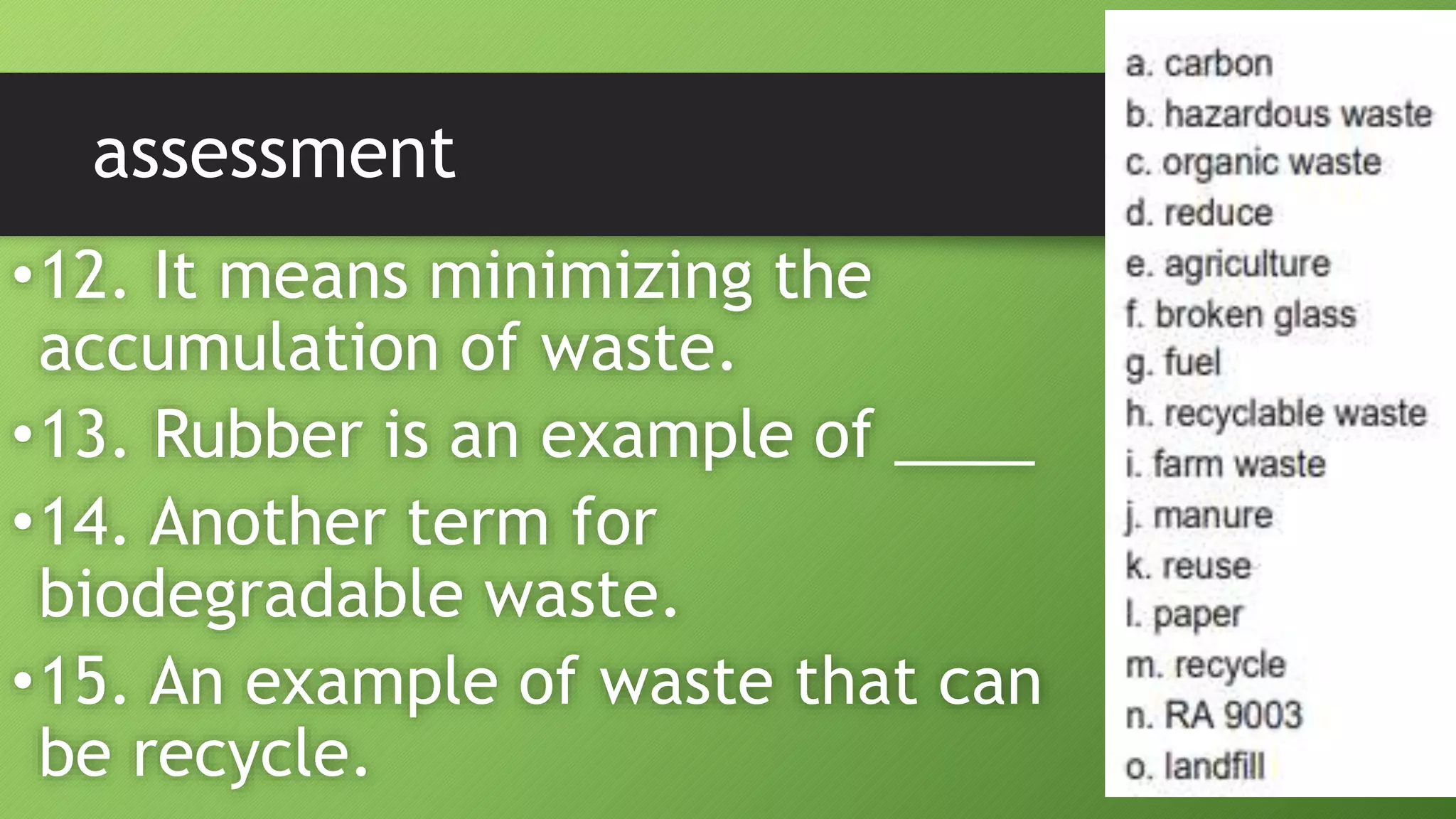
•12. It means minimizing the
accumulation of waste.
•13. Rubber is an example of ____
•14. Another term for
biodegradable waste.
•15. An example of waste that can
be recycle.
Additional Activity
•Directions: List down problems with
waste in your locality and give
possible solutions for each problem.
Write your findings in a sheet of
paper.

Grade 9 Agricrop production LO1 Waste Management.pptx

  • 1.
  • 6.
  • 7.
    Wonderful Waste! •The storyis set in the Kingdom of Travancore in India. The king of the place is organizing a feast in his palace. Thus, the cook is busy in the kitchen with the preparations for it. In order to make sure everything is being prepared in full swing, the king decides to go in for inspection. When he pays a visit to the kitchen, there is something odd that catches his attention
  • 8.
    Wonderful Waste! •He findsa lot of vegetable scraps in a basket which was of no use and treated as waste. Upon seeing this, the king orders the cook to not waste those scraps. Instead, he commands him to make use of them in a wise manner. Thus, it leaves the cook confused and baffled.
  • 9.
    Wonderful Waste! •However, uponthinking hard, he does not reach a conclusion easily. All of a sudden, a rather interesting idea comes to his mind. He takes up all the vegetable scraps and washes them and cleans them properly. Then, he starts cutting them into long strips. After all this, the cook tosses them all in a pot and lights to fire to cook it
  • 10.
    Wonderful Waste! •To thesescraps, he goes on to add grounded coconut, green chilies, and garlic plus salt. This enhances the flavor of the dish and he cooks it well. After that, the cook whips some curd and adds it to the boiling curry. Moreover, he also pours a few spoonfuls of coconut oil. These entire flavors combine to give the dish a nice aroma and look.
  • 11.
    Wonderful Waste! •Finally, hegarnishes the dish with curry leaves. And it is ready at last and everyone ends up liking the dish a lot. Thus, the cook names this dish Avial which goes on to become popular all over Kerala. And now, it is a part of a traditional Kerala feast which was once waste. (an excerpt from the story Wonderful Waste!)
  • 12.
    Wonderful Waste! •Guide Questions: •1.Why is the story entitled wonderful waste? •2. Do you have same experience with the cook in the story? What wonderful waste have you made
  • 13.
    Waste in theFarm •Problem with waste is one of the major concerns in the farm. There are farmers that did not spend time in doing a routine in keeping and disposing their wastes or debris produced during, before and after agricultural activities. •Some hazardous wastes are not treated properly and leads to risk with farmers. In some area’s farmers are practicing proper storage and disposal of wastes.
  • 14.
    Types of AgriculturalWaste •Waste is defined as any substance, debris, leftovers that was produced during agricultural works. Waste can be classified as:
  • 15.
    Types of AgriculturalWaste •1. Biodegradable (Organic)- wastes that can be decompose and use as soil enhancer (fertilizers) •Examples are: grass cuttings, dried leaves, twigs and small branches, egg shells, fruit and vegetable peelings.
  • 16.
    Types of AgriculturalWaste •2. Non-biodegradable- wastes that can be turned into landfill or can be used for other purpose. •Examples are: planting materials (which may include empty plastic bags and wrappers, containers and others), glass, bottles, metals and wires, Styrofoam, gallons.
  • 17.
    Types of AgriculturalWaste •3. Hazardous Wastes- these are wastes that are dangerous to health for it may cause injury, death and illness. •Examples are: broken glasses, chemical waste obtained from using chemicals such as fertilizer, insecticides and others, empty containers, galvanized iron sheet, syringe
  • 18.
    Types of AgriculturalWaste •4. Non-hazardous wastes- these are wastes that do not gives threat on one’s life. •Examples are: kitchen wastes, dried leaves, grass cuttings
  • 19.
    Waste Management •Ecological SolidWaste Management Act of 2000 (RA 9003) -An act providing for an ecological solid waste management program, creating the necessary institutional mechanisms and incentives, declaring certain acts prohibited and providing penalties, appropriating funds, therefore, and for other purposes. •One of the prohibitions of the act is the burning of all kinds of wastes for it will cause an increase in the temperature of air that may affect lives of all living things.
  • 20.
    Process of WasteManagement Program •To help the farmers have a proper waste management program the following process should be follow:
  • 21.
    Process of WasteManagement Program •To help the farmers have a proper waste management program the following process should be follow:
  • 22.
    Process of WasteManagement Program •To help the farmers have a proper waste management program the following process should be follow:
  • 23.
    Process of WasteManagement Program •To help the farmers have a proper waste management program the following process should be follow:
  • 24.
    Process of WasteManagement Program •To help the farmers have a proper waste management program the following process should be follow:
  • 25.
    LET US REMEMBER •Agricultureis the dirtiest component of our economy and yet our producer of food to live. Waste can be classified as biodegradable, non-biodegradable, hazardous, non- hazardous. •Proper waste Management program in the farm help the farmers in reducing and handling their wastes and prevent them from any harm.
  • 33.
    assessment •1. Ecological SolidWaste Management Program •2. These are residues or debris from farm activities. •3. The waste produce by animals used by some farmers as fertilizer. •4. Energy obtain from some waste.
  • 34.
    assessment •5. It meansto use again for other purpose. •6. A place where wastes are sent-off for disposal. •7. An example of hazardous waste. •8. Converting waste into new look.
  • 35.
    assessment •9. Considered asthe dirtiest sector of economy and major producer of foods. •10. Harmful waste •11. Organic compound of biodegradable waste.
  • 36.
    assessment •12. It meansminimizing the accumulation of waste. •13. Rubber is an example of ____ •14. Another term for biodegradable waste. •15. An example of waste that can be recycle.
  • 37.
    Additional Activity •Directions: Listdown problems with waste in your locality and give possible solutions for each problem. Write your findings in a sheet of paper.